The tradition of Swans on the Moat at The Bishop’s Palace (adjacent to Wells Cathedral) goes back to 1870’s when one of Bishop Hervey’s daughters first taught the swans to ring a bell at the Gatehouse for lunch to be fed to them by the caretakers who live in the gatehouse.
You can see the bell just beneath the window of the Gatehouse, with a rope hanging down for the swans to pull.
New generations of swans learn to ring the bell from their parents.
And Ghostsniper succeeds very well in persuading me that I don’t really need one of these myself.
I bought a Harley, of sorts, back in 1974 and I was 19 at the time.
Hanging around a marina waiting for them to finish up welding a lower unit for an Evinrude inboard/outboard engine my dad and I were rebuilding I spotted a cardboard box in a fenced in area in the back lot. Inspection showed it to contain Harley parts and a frame close by. I asked the owner about it and he said $500 and I could take it home. I went to the house and told my dad and he got all wobbly and handed me 5 crisp C-notes from his wallet. Back at the house we found the box, and 3 other boxes that went with it, contained parts from 3 old Harley’s with most of the parts going to a 49 Knucklehead. So that’s what we built. Took about 3 months from boxes to running but still had a ways to go.
With my dad next to me on his 69 Harley and me driving the 49 we headed down Gladiolus Blvd to the state inspection station to get it inspected, registered, and tagged. Going into the first curve just east of Harlem Heights the 49 locked tight at about 60 mph. If it had been the front wheel things would have gotten nasty quick but since it was the rear wheel a skid spontaneously started about the same time 20 mph were knocked off causing me to slide up onto the tank and losing my balance. The sides of the road curved down steeply and that’s where I ended up, at the bottom of the easement with both me and the bike tore up. Leaving the 49 there I rode home with my dad and got patched up then we took the truck back and picked it up and brought it home.
Under close inspection we found the engine had seized. We had spent I don’t know how many hours putting that engine together the right way. A machine shop was commissioned to blueprint the crankshaft, plane the block, barrels and heads, port and relieve the valves, etc. The barrels were bored .30 over and new pistons and wrist pins were installed. It ran really good.
As we tried to determine what went wrong, I discovered that in the bottom of the external oil tank was a small pipe leading to a pipe that fed the engine. In the bottom of that tank was a double edged razor blade that I presumed a previous owner had used to scrape off a gasket and it had fallen it. The slot in the razor blade was where the oil flowed through and in it’s limited quantity it had quickly caused the engine to heat up, swell, and seize. As this happened very quickly and was shut down very quickly the damage was minimal. No galling of the piston skirts or any of that stuff. All gaskets were removed with close attention spent on gasket removing tools and materials, and replaced and several trips around the block after assembly showed everything was alright. We got the thing registered.
I’m not a motorcycle guy. Some biker friends taught me to ride one a bit, back when I was a teenager. But I only ever owned one once.
I had a mad mathematical genius friend at Yale. He was the wealthy scion of a Southern family, but he lived by choice a life of Thoreauvian simplicity. He owned nothing beyond two shirts, two pair of jeans, and one of those unadmired little Italian cycles mendaciously labelled “Harley Davidson.” (I just looked it up. It was an “H” really made by Aermacchi.)
He roomed with some druggie friends of mine in a beach house in Milford and commuted (with difficulty) into Yale every day on that unreliable bike. We used to draw considerable amusement watching him start it. Kick (the routine would go), sputter, silence, kick, sputter, silence, kick, sputter, LOUD CURSING. Yet somehow, mysteriously, he would finally get that sucker running.
For some reason I’ve never understood, he decided I needed his bike. He had graduated and was going off to grad school, and he announced that he was selling me his Harley for $150. I don’t want it, I replied. You need it, he insisted. I’m not buying it, I said firmly.
But he simply left it at my door, when he departed town, so I concluded I owed him $150, payable when Hell froze over or the swallows came back to Capistrano or whenever.
I finally took a notion to try to ride the thing. I got my best mechanically-minded friend to help, and I climbed astride. Kick, I went. Sputter, it went. Then, silence. We kicked some more. We fiddled with it. We monkeyed with the beast for hours, but we just did not have our friend’s magic touch. We could not start it at all.
I finally successfully traded it off for an ancient shotgun to a cousin of mine, and sent my friend his $150. I concluded that Fate just did not want me owning a bike.
Elizabeth Lambert of the University of New Mexico Lobos (despite being suspended) has won a lot of fans nationally with her hard-hitting style of soccer, seen here against the Brigham Young Cougars.
Rattlesnake Ridge is a large hillside located above the I-82 highway to the south of the town of Yakima in Washington State, NW USA. The Google Earth image below shows the location of the site (at 46.524, -120.467), taken in May 2017. The image is looking towards the east – note the large active quarry on the south side of the ridge, and other signs of earlier (and smaller scale) excavation on the slope. Note also the proximity of the slope to I-82.
The latest reports suggest that the crack is widening at a rate of about 30 cm per week at present. Interestingly KIMA TV reports that the expectation is that the slope will self-stabilise:
Senior Emergency Planner Horace Ward said they have not determined a cause yet and said it’s just nature. Ward said the ridge is being monitored and they think the slide will stop itself.
“It could continue to move slowly enough to where it kind of just keeps spilling a little bit of material into the quarry until it creates a toe for itself to stop and stabilize the hillside,†he said.
The implication of this is that it is a rotational slip. However, the tension crack has quite a complex structure, with some evidence of the development of a graben structure.
Picture of a fragment of paper discovered on Queen Anne’s Revenge
National Geographic reports on a pretty clever piece of historical detective work.
A handful of paper scraps recovered from the wreck of Queen Anne’s Revenge have been identified as fragments of the 1712 book A Voyage to the South Sea, and Round the World, Perform’d in the Years 1708, 1709, 1710 and 1711, by Captain Edward Cooke.
The discovery was announced Thursday during a presentation by conservators from the Queen Anne’s Revenge (QAR) Conservation Lab at the annual meeting of the Society of Historical Archaeology held in New Orleans.
Queen Anne’s Revenge went aground outside of what is now Beaufort, North Carolina, in 1718, and Blackbeard was killed while battling British naval forces in the Pamlico Sound a few months later. The wreck of the pirate’s flagship was found by private salvagers in 1996 and excavation by the North Carolina Department of Natural and Cultural Resources began a year later.
The fragments were embedded in a wet mass of textile scraps removed from a breech-loading cannon chamber during its cleaning and conservation in 2016, according to QAR Lab conservator Erik Farrell. The wad, blackened with gunpowder residue, may have served as a gasket for the wooden tampion, a plug that protected the cannon muzzle from the elements.
Sixteen paper fragments, none larger than a U.S. quarter, were eventually identified, and seven of the fragments had legible text. As conservators gently pried the fragments of paper apart, they noticed that the text on successive layers was running in the same direction, leading them to suspect that they had the remains of several pages from the same book.
Eventually, they could make out words including “south” and fathom,” which suggested the fragments may have come from some sort of maritime or navigational text. But there was a particular word that led to the book’s ultimate identification, says QAR Lab conservator Kimberly Kenyon.
“There was one really key word that stood out: ‘Hilo.’ It was very distinctive and italicized, which might indicate a place name,” Kenyon tells National Geographic.
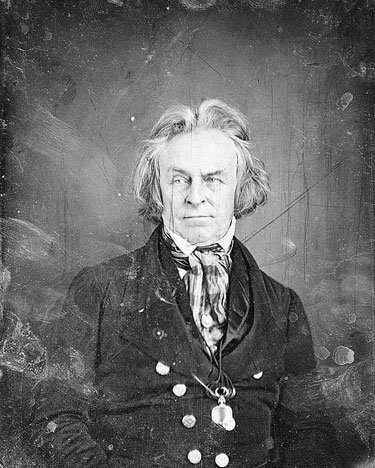
When the Salovey Administration cravenly surrendered to the snowflakes and renamed Calhoun College. After all, as (Dartmouth man) John Hinderaker notes, even hyper-progressive California is these days drawing upon John C. Calhoun’s theories of Concurrent Majorities and States’ Rights.
Who ever thought that John C. Calhoun would emerge as a key political thinker of the 21st Century? I certainly didn’t, but that is exactly what has happened.
Year of production: 1922
Engine: four-cylinder
Displacement: 1,089 cc
Power output: 45 HP (33 kW)
Top speed: 144 km/h (89 mph)
Porsche’s great tradition in the Targa Florio road race started with the “Sascha†for Austro-Daimler. The high-performance compact car, intended as the forerunner of a four-seater production model, scooped first and second places in its engine size category at the very first attempt in 1922. The manoeuvrability and efficient use of fuel by this light vehicle, which weighed only 598 kilograms, were the key to its success. The car named after the man who provided the project’s financial backing – the factory owner Alexander “Saschaâ€, Count Kolowrat – went on to record 43 competition wins. Ferdinand Porsche, too, was passionate about motor racing because it gave him the opportunity to demonstrate the fitness of his designs in extreme conditions. He pursued and established one particular principle with the “Saschaâ€: an excellent power-to-weight ratio as a key attribute of all Porsche sports cars. This means the ratio between the vehicle’s weight and its engine output in kilowatts.
The gun might actually be a Model 1908 chambered in .380, rather than the Model 1903 chambered in .32 ACP, but the latter is the original design and seems a bit more likely.
Seeing this photo, reminded me of Mark Twain’s comments on handguns in Roughing It (1872):
[Travelling West from St. Louis to Nevada:]
I was armed to the teeth with a pitiful little Smith & Wesson’s seven-shooter, which carried a ball like a homoeopathic pill, and it took the whole seven to make a dose for an adult. But I thought it was grand. It appeared to me to be a dangerous weapon. It only had one fault—you could not hit anything with it. One of our “conductors†practiced awhile on a cow with it, and as long as she stood still and behaved herself she was safe; but as soon as she went to moving about, and he got to shooting at other things, she came to grief. The Secretary had a small-sized Colt’s revolver strapped around him for protection against the Indians, and to guard against accidents he carried it uncapped. Mr. George Bemis was dismally formidable. George Bemis was our fellow-traveler.
We had never seen him before. He wore in his belt an old original “Allen†revolver, such as irreverent people called a “pepper-box.†Simply drawing the trigger back, cocked and fired the pistol. As the trigger came back, the hammer would begin to rise and the barrel to turn over, and presently down would drop the hammer, and away would speed the ball. To aim along the turning barrel and hit the thing aimed at was a feat which was probably never done with an “Allen†in the world. But George’s was a reliable weapon, nevertheless, because, as one of the stage-drivers afterward said, “If she didn’t get what she went after, she would fetch something else.†And so she did. She went after a deuce of spades nailed against a tree, once, and fetched a mule standing about thirty yards to the left of it. Bemis did not want the mule; but the owner came out with a double-barreled shotgun and persuaded him to buy it, anyhow. It was a cheerful weapon—the “Allen.†Sometimes all its six barrels would go off at once, and then there was no safe place in all the region round about, but behind it.
Mark Twain (1835-1910) lived, of course, through the percussion era when obsolete and inaccurate Allen & Thurber pepperboxes were still carried by the ill-advised, right down to the modern world of semiauto pocket pistols of John Browning’s design.
North American Moving Services 2017 American Migration Map.
Gosh, is there anything states shown in red losing the most population have in common, and anything the states shown in blue gaining the most population have in common?



 N
N