07 Jan 2024
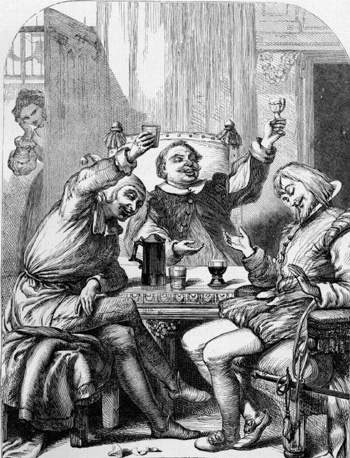
Norman Rockwell: “His First Duck”
Hunting, Norman Rockwell, Waterfowl Hunting


|
Category Archive 'Uncategorized'
06 Jan 2024
Dream of the Three KingsEpiphany, Illuminated Manuscripts, Magi, Medieval Art
—————————
06 Jan 2024
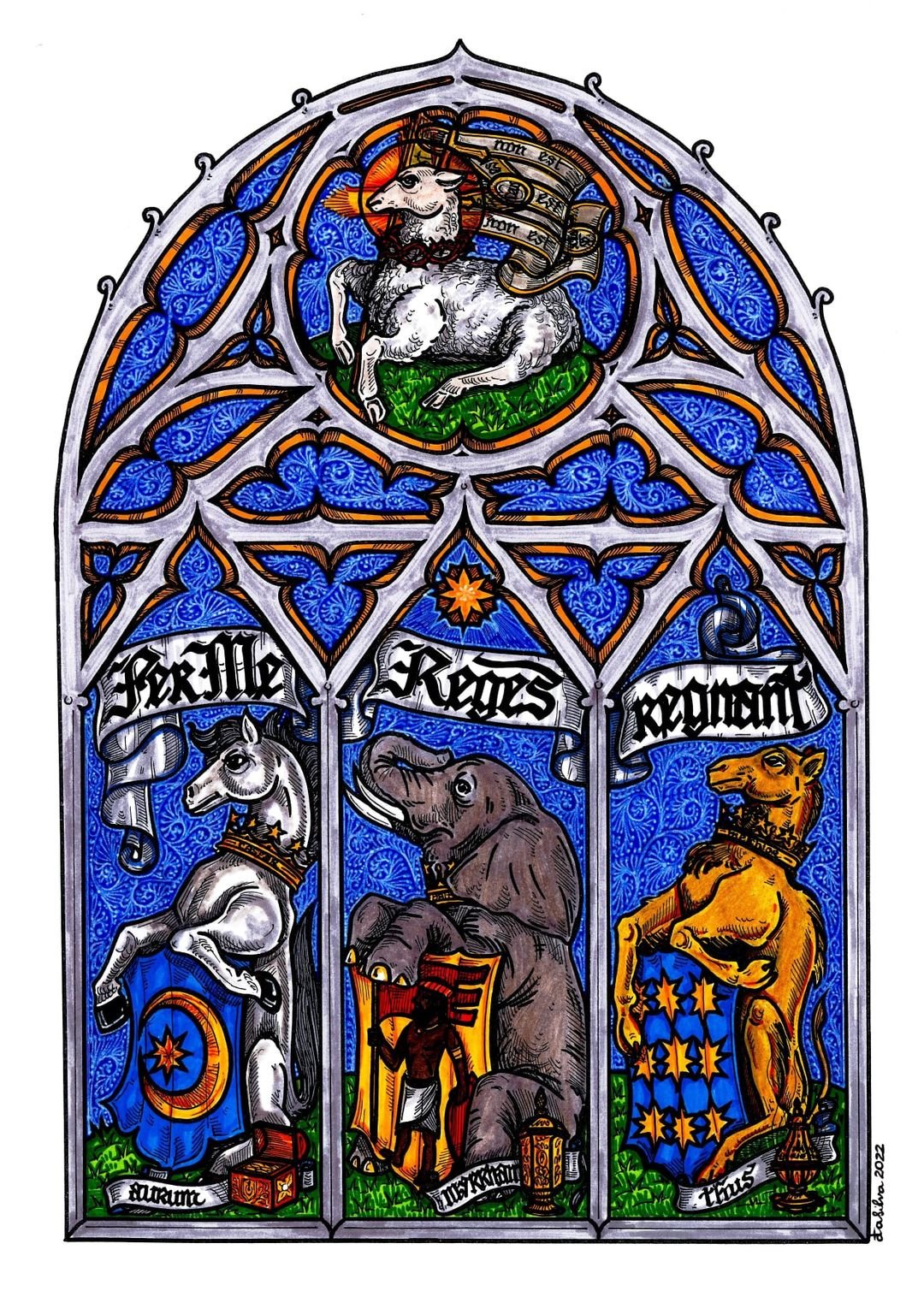
The Magi’s Coats of ArmsEpiphany, Heraldry, Magi
“Arms attributed to the Magi”, The Heraldic King’s Beasts, 2022. 06 Jan 2024
Epiphany or Twelfth NightEpiphany, History, Traditions, Twelfth Night
(From Robert Chambers, A Book of Days, 1869) Born: Richard II, King of England, 1366; Joan d’Arc, 1402; Peter Metastasio, poet, 1698; Benjamin Franklin, philosopher, Boston, U.S., 1706; David Dale, philanthropist, 1739; George Thomas Doo, engraver, 1800. Feast Day: St. Melanius, bishop, 490. St. Nilammon, Hermit. St. Peter, abbot of St. Austin’s, Canterbury, 608. TWELFTH-DAY This day, called Twelfth-Day, as being in that number after Christmas, and Epiphany from the Greek ‘‘ΕπιΦáνєια”, signifying appearance, is a festival of the Church, in commemoration of the Manifestation of Christ to the Gentiles; more expressly to the three Magi, or Wise Men of the East, who came, led by a star, to worship him immediately after his birth. (Matt. ii. 1-12.) The Epiphany appears to have been first observed as a separate feast in the year 813. Pope Julius I is, however, reputed to have taught the Church to distinguish the Feasts of the Nativity and Epiphany, so early as about the middle of the fourth century. The primitive Christians celebrated the Feast of the Nativity for twelve days, observing the first and last with great solemnity; and both of these days were denominated Epiphany, the first the greater Epiphany, from our Lord having on that day become Incarnate, or made his appearance in “the flesh;” the latter, the lesser Epiphany, from the three-fold manifestation of His Godhead—the first, by the appearance of the blazing star which conducted Melchior, Jasper, and Balthuzar, the three Magi, or wise men, commonly styled the three Kings of Cologne, out of the East, to worship the Messiah, and to offer him presents of “Gold, Frankincense, and Myrrh”—Melchior the Gold, in testimony of his royalty as the promised King of the Jews; Jasper the Frankincense, in token of his Divinity; and Balthuzar the Myrrh, in allusion to the sorrows which, in the humiliating condition of a man, our Redeemer vouchsafed to take upon him: the second, of the descent of the Holy Ghost in the form of a Dove, at the Baptism: and the third, of the first miracle of our Lord turning water into wine at the marriage in Cana. All of which three manifestations of the Divine nature happened on the same day, though not in the same year.
01 Jan 2024
Tweet of the DayGlobal Communism, Javier Milei
31 Dec 2023
New Year’s Eve or HogmanayHogmanay, New Year's Eve, Robert Burns
From Robert Chambers, A Book of Days, 1869: NEW YEAR’S EVE, OR HOGMANAY As a general statement, it may be asserted that neither the last evening of the old year nor the first day of the new one is much, observed in England as an occasion of festivity. In some parts of the country, indeed, and more especially in the northern counties, various social merry-makings take place; but for the most part, the great annual holiday-time is already past. Christmas Eve, Christmas-day, and St. Stephen’s or Boxing Day have absorbed almost entirely the tendencies and opportunities of the community at large in the direction of joviality and relaxation. Business and the ordinary routine of daily life have again been resumed; or, to apply to English habits the words of an old Scottish rhyme still current, but evidently belonging to the old times, anterior to the Reformation, when Christmas was the great popular festival:
And we hae feasted weel; Sae Jock maun to his flail again, And Jenny to her wheel.’ Whilst thus the inhabitants of South Britain are settling down again quietly to work after the festivities of the Christmas season, their fellow-subjects in the northern division of the island are only commencing their annual saturnalia, which, till recently, bore, in the license and boisterous merriment which used to prevail, a most unmistakable resemblance to its ancient pagan namesake. The epithet of the Daft [mad] Days, applied to the season of the New Year in Scotland, indicates very expressively the uproarious joviality which characterized the period in question. This exuberance of joyousness—which, it must be admitted, sometimes led to great excesses—has now much declined, but New-year’s Eve and New-year’s Day constitute still the great national holiday in Scotland. Under the 1st of January, we have already detailed the various revelries by which the New Year used to be ushered in, in Scotland. It now becomes our province to notice those ceremonies and customs which are appropriate to the last day of the year, or, as it is styled in Scotland, Hogmanay. This last term has puzzled antiquaries even more than the word Yule, already adverted to; and what is of still greater consequence, has never yet received a perfectly satisfactory explanation. Some suppose it to be derived from two Greek words, άιαμηνη· (the holy moon or month), and in reference to this theory it may be observed, that, in the north of England, the term used is Hagmenu, which does not seem, however, to be confined to the 31st of December, but denotes generally the period immediately preceding the New Year. Another hypothesis combines the word with another sung along with it in chorus, and asserts ‘Hogmanay, trollolay!’ to be a corruption of ‘Homma est né’”Trois Rois lá¡’ (‘A Man is born ‘ — ‘ Three Kings are there ‘), an allusion to the birth of our Saviour, and the visit to Bethlehem of the Wise Men, who were known in medieval times as the ‘Three Kings.’ Read the rest of this entry » 26 Dec 2023
St. Stephen CarolChristmas Carols, St. StephenFrom “Some Ancient Christmas Carols” (1822). 26 Dec 2023
A St. Stephen’s Day WassailSt. Stephen, The Wren“The wren, the wren, the king of all birds, 26 Dec 2023
Feast of St. Stephen and Boxing DayBoxing Day, Hagiography, History, St. Stephen, Traditions
From Robert Chambers, The Book of Days, 1869: Feast Day: St. Stephen, the first martyr. St. Stephen’s Day To St. Stephen, the Proto-martyr, as he is generally styled, the honour has been accorded by the church of being placed in her calendar immediately after Christmas-day, in recognition of his having been the first to seal with his blood the testimony of fidelity to his Lord and Master. The year in which he was stoned to death, as recorded in the Acts of the Apostles, is supposed to have been 33 A.D. The festival commemorative of him has been retained in the Anglican calendar. Read the rest of this entry » Welcome to
NEVER YET MELTED
Another Right-Wing Web Aggregator and Purveyor of Unpopular Opinions
 David Zincavage contact: jdz@usa.net blog advertising is good for General Bullmoose and good for the USA. 


Feeds
|