Category Archive '2016 Election'
08 Oct 2016

LawNewz provides answers to the question a lot of people are asking right now.
So, with exactly a month to go until Election Day, what happens if Trump is forced to drop out of the Presidential race? Or if the GOP forces him out? It’s a bit complicated, so let’s explain what we know about the process.
Republican National Committee Rule # 9 outlines what happens when there is a Republican nomination vacancy due to “death, declination or otherwise.â€
It basically says that there are two ways for the Republicans to re-nominate a candidate if Trump drops out. 1) They could reconvene at another convention and have all of the 2,472 delegates vote, or 2) the 168-member committee could decide with each member getting a portion of votes based on the population of the state they represent. Number 2 seems like a more likely scenario.
Seems simple? Not so fast. Since we are exactly a month away from the election, there is one major problem: The ballot deadlines have passed in nearly every state. For example, in West Virginia, the law says a candidate must withdraw “no later than eighty-four days before the general election.†With thirty days to go, we are obviously too late. Each state has different rules about what happens if there is a vacancy. So, even if the Republicans pick a new nominee, it is likely Trump’s name will appear on the ballot in most states. …
Professor Edward Foley, who is the director of election law at Moritz School of Law at Ohio State, talked to LawNewz.com about what could happen if the GOP decided to go with another Presidential candidate (for example, Mike Pence):
If Trump publicly withdraws, it makes it easier for GOP leadership to orchestrate a public plan in which to explain to the electorate that by voting for “Trump/Pence†on the ballot they are actually voting for Pence/Kasich (or Pence/_______, whoever they pick for the new V-P slot). It would be legally equivalent to the circumstance in which Trump had died, and the GOP needed to announce a replacement even though it was too late to reprint the ballots.
But Trump doesn’t need to withdraw for the GOP leadership to pursue a comparable public plan whereby they repudiate him. The RNC could attempt to invoke its own rules to declare that, over Trump’s objections, he’s no longer the party’s nominee. If the RNC were to take that route, it might put the GOP on stronger legal footing under various state laws concerning the party’s slate of presidential electors.
But from the perspective of the U.S. Constitution, and the Electoral Count Act of 1877, which are the two key pieces of federal law, it is not essential that the RNC take that kind of formal step under its own party rules. If there is a well-publicized plan in which McConnell, Ryan, and other party leaders all announce that they want the GOP presidential electors to vote for Pence for president, not Trump, and that’s what the GOP presidential electors do on December 19—in those states in which the GOP presidential electors received more popular votes that Clinton electors—then Pence (or whoever the GOP picks) is the choice that gets sent by those electors from those states to Congress for opening and counting on January 6.
It obviously matters whether or not the GOP can reach 270 Electoral College votes for Pence (or whomever they pick) under this strategy. If not—in other words, if Clinton wins enough states so that her electors have 270 or more—what the GOP electors do is irrelevant. Clinton is declared presidential-elect, assuming Congress confirms so on January 6.
07 Oct 2016

Ann Althouse & her commenters contemplate the key issues of our unappealing electoral choices.
I sort of like Trump’s lack of polish (though not really his nastiness — there’s a cruelty there that’s troubling) and if I thought he was trustworthy and demonstrated some capability in governing I’d be all for him. Though of course in a president, you do have to be careful with your words — not just in avoiding setting off financial panics (look at how closely investors consider Janet Yellen’s statements) but in diplomatic affairs as well (see Dean Acheson’s statements about our zone of interest that made Stalin and Kim think invading South Korea wouldn’t provoke major U.S. involvement). A more ‘earthy’ speaking style, with consideration of the phrasing used, is my ideal.”
Said Brando, in the comments to yesterday’s post about the preference many people seem to have for Pence’s style, the style of a career politician. I’d said: “A man with a style honed outside of politics will seem too rough, too unfinished, too strange.” I didn’t come right out and say it, but, like Brando, I sort of like Trump’s style — with the same reservations.
Here’s another helpful perspective from the comments, from Clyde:
I want someone who:
1. Is honest
2. Is savvy enough to deal with our adversaries in the world without beclowning him/herself (Clinton’s political experience did not give her such help in dealing with the Russian Reset, Benghazi, etc.)
3. Will pursue policies that will benefit the people of our country, rather than enriching him/herself, and will give the American people more freedom rather than less.
Hillary Clinton is 0-for-3. This election is a binary choice. Donald Trump might not be good, but Hillary would certainly be very, very bad, probably even worse than Obama. It doesn’t come down to whether someone is a polished politician or not. Clinton is more polished, but our adversaries would eat her lunch, just as they have with Obama. Trump? He’s used to negotiating and wheeling and dealing.
But he’s used to negotiating and wheeling and dealing where he can walk away from what he doesn’t like without worrying about the fate the other parties and where he can fold up the parts of his operations that are not profitable.
What happens when you transfer that skill to government — suddenly and at the presidential level — and when you are bursting with exuberant confidence? It seems like an insane risk.
07 Oct 2016

Jonah Goldberg explains his perspective, which is pretty much exactly what all the rest of us Movement Conservative NeverTrumpers think.
In my most selfish moments, I want Donald Trump to win the election. …
Trump got to where he is for a lot of reasons, starting with a 17-candidate collective-action problem, myriad failures of both the GOP’s establishment and anti-establishment wings, and, of course, the cold, indifferent cruelty of this meaningless, empty universe where nothing matters and the living envy the dead. But giving Trump his due, he also got to where he is because he was great at punching-up. When he took on Jeb Bush, Reince Priebus, the media, Washington, etc., he was punching up. He wasn’t just the outsider coming into town to blow things up, he was Godzilla smashing all before him. In the standard Godzilla movie there’s always that scene where the hapless Japanese army tries to lure the beast toward some electric power lines. Godzilla takes the bait and bites the power lines. But the shock doesn’t kill him, it makes him stronger! That was Trump in the primaries. Mangling metaphors somewhat, people told him “You can’t chomp those power lines! Those are the third rails of American politics!†Trumpzilla cared not, bit them, and got stronger.
But here’s the problem: Everyone thinks Godzilla is cool when he’s fighting Monster Zero or swatting away fighter jets. But when they have that close up shot of Godzilla’s clawed foot coming down on a child or a screaming woman, all of a sudden, you can’t cheer the King of Monsters. So it is with Trump: He wins when he punches up. He loses when he punches down.
And that’s Trump’s Achilles’ heel: He can’t resist punching down. He can no more stop himself from “counter-punching†the little guy than my dog can agree not to chase rabbits. (“It’s just so hoppy! I must kill it!â€) …
If Trump could stay on message, if he could be a disciplined candidate, I think he’d be ten points ahead by now. But realistically, this is no different from saying if he could control anything metal with his mind, he would be Magneto. …
Okay, so why in my selfish heart of hearts do I want Trump to win? Because that’s the only surefire way my opposition to Trump can be vindicated. If he loses, every time Hillary Clinton does something awful — which will be a lot — people will say, “If Trump were president this wouldn’t be happening,†or, “This is all the fault of the ‘Jonah Goldberg class,’†or, “If we had Mr. Trump’s broad-shouldered leadership, the grain harvests would be historic.†…
And that’s why I say that in my selfish moments, I want him to win. Contrary to all of this incessant blather that I want Hillary Clinton to win because it will be good for my bottom line, the truth is the best thing that could happen for me personally is for Trump to win and then prove to be the spectacularly awful president I am quite confident he would be. The I-told-you-sos would be delightful, the tears of some of his supporters, delicious. …
Candidate Trump can’t be managed. Everyone with any contacts in or around Trump world has heard the stories about how his staff tries to impose discipline on him. The jokes about Kellyanne Conway desperately trying to hide his phone from him to keep him off Twitter are funny because they’re true.
And yet, you’re telling me that when Trump wins despite rejecting all of this advice and actually takes possession of Air Force One, and when the Marine guards start saluting him as the band plays “Hail to the Chief,†I’m supposed to believe this staggering narcissist will suddenly become manageable? Seriously?
Moreover, throughout his entire career in business, he’s made a name for himself as a promise-breaker, welcher, and snake-oil salesman, willing to say whatever he needs to in order to close the deal. “Sure this car gets 200 miles to the gallon. Sign the check and you’ll see.†That is what the art of the deal really means for him. He’ll get the White House and he’ll say to the rest of us looking to cash in his political promises, “Try and collect.â€
Trump is not a conservative. He has some instincts that overlap with conservatism — the importance of law and order, the value of military strength etc. — but these instincts are not derived from any serious attachment to ideas or arguments. They stem from his lizard-brain machismo and his authoritarian streak. He never talks about liberty or limited government unless someone shoves it into his teleprompter. His ideas about economics and public policy are shot-through with dirigisme. He’s learned to talk the talk about free-market solutions, but in his heart he’s still the guy who believes single-payer health care works “incredibly well.†The one adviser we know he listens to is his daughter, and she is certainly no conservative. Does anyone believe he will side with Mike Pence and against her in a fight over, say, Planned Parenthood?
Read the whole thing.
05 Oct 2016
 
Harry Jaffa — Allan Bloom
Jeet Heer has an interesting article, in the New Republic, on the coastal divide between Straussians.
Charles Kesler, a professor of government at Claremont McKenna College and the editor of the Claremont Review of Books, wrote in the spring issue of the journal that America may be facing “the Weimar problemâ€: “Has the national culture, popular and elite, deteriorated so much that the virtues necessary to sustain republican government are no longer viable? America is not there yet, although when 40% of children are born out of wedlock it is not too early to wonder.†It’s no accident that this question is raised in an essay making case that Donald Trump isn’t as terrible as mainstream conservatives like William Kristol fear he is. If you live in the Weimar Republic, Kesler implicitly argues, a figure like Trump could come as a relief.
A similar mood of crisis was voiced by Angelo Codevilla, a retired professor of international relations, in a recent online essay for the Review. Codevilla argues that regime change of a terrible kind has already occurred, with the American elite destroying what was great about the country. By this account, America needs a new revolution. Codevilla supports Trump but fears that he’s not up to the task of revolutionary change required:
In fact, the United States of America was great because of a whole bunch of things that now are gone. Yes, the ruling class led the way in personal corruption, cheating on tests, lowering of professional standards, abandoning churches and synagogues for the Playboy Philosophy and lifestyle, disregarding law, basing economic life on gaming the administrative state, basing politics on conflicting identities, and much more. But much of the rest of the country followed. What would it take to make America great again—or indeed to make any of the changes that Trump’s voters demand? Replacing the current ruling class would be only the beginning.
Kesler and Codevilla are West Coast Straussians, one of two rival factions of intellectuals who revere Leo Strauss, the German-born political philosopher who died in 1973. Whereas East Coast Straussians have been heavily oriented towards establishment Republicans like George W. Bush, and thus tend to be #NeverTrump—Kristol’s Weekly Standard has been sharply anti-Trump and Paul Wolfowitz has said he might vote for Hillary Clinton—there’s considerable support for Trump among West Coast Straussians. They justify their support of Trump by saying that America is in such deep trouble it needs regime change. To borrow a Trumpian phrase: “What do you have to lose?â€
In these West Coast Straussians we see the emergence, for the first time since the Southern secessionists of the 1850s, of a group of conservative American intellectuals who advocate overthrowing the existing political order. Under Bush, Americans saw what Straussian ideas of regime change could do abroad. Under Trump, we might see the same urge for regime change applied to America itself. …
After Leo Strauss died in 1973, his followers divided into two factions, creating the infamous “Crisis of the Strauss Divided.†And the best way to understand the divide between West Coast and East Coast Straussians is through the quarrel between Harry Jaffa and Allan Bloom, who were the respective heads of the rival schools. …
The disputes between Jaffa’s West Coast Straussianism and Bloom’s East Coast Straussianism can be discussed along philosophic lines: Is America, as Jaffa believes, grounded in ancient philosophy or was the American founding, as Bloom would have it, built on the low but solid ground of early modern philosophers like Hobbes and Locke? Does the survival of America depend on the virtue of the people, as West Coast Straussians believe, or in the maintenance of constitutional norms, as East Coast Straussians believe? But the dispute can also more easily be understood in terms of the familiar social divide in the Republican Party. West Coast Straussians are the grassroots activists, grounded in social conservatism and ultra-nationalist in foreign policy. Sociologically, East Coast Straussians are more aligned with the party elite, and tend to be found in Washington think tanks and serving as career bureaucrats.
Read the whole thing.
I’m not a Straussian myself, but the nomination of Donald Trump has certainly similarly divided me from a long-time blogging kindred spirit who, coincidentally perhaps, lives on the West Coast, and many others.
I’d say, “If you live in the Weimar Republic,” you had better be pretty damned careful about allying with the ignorant and resentful mob to put into power a demagogic populist and narcissistic strongman determined to supplant previous legitimate sources of leadership and authority and contemptuous of traditional ethics as well as of constraint on the basis of theory and ideas. They elected somebody of the sort in 1932 in the real Weimar Republic, and the results were not pretty.
05 Oct 2016

Mike Pence obviously won. He was articulate, and projected a kind of simple human decency that seemed downright incongruous in midst of the 2016 presidential electoral shitstorm.
Tim Kaine made the best of a bad position by hastily interrupting Pence over 70 times whenever Pence seemed to be delivering home a strong or effective statement. Kaine was additionally assisted by moderator Elaine Quijano, who also rapidly interrupted Pence whenever he got close to scoring and who then took care to change immediately the topic under discussion. When, I wonder, will Republicans ever start insisting on taking control of political debates out of the hands of biased representatives of the mainstream media?
It was impossible to watch last night’s debate without reflecting that, if Mike Pence were running against Hillary, Hillary’s goose would be cooked, and we’d be looking forward to a GOP landslide in November.
Pence as Vice President, combined with Donald Trump’s age and corpulence, is obviously the only really good argument for voting for Trump. Now, if Donald could just be relied upon, like William Henry Harrison, to give a really lengthy inaugural address without wearing an overcoat…
Too bad for Trump that he cannot change arrangements and send in Pence for the next two debates with Hillary as his champion and surrogate. Pence is not only a very decent debater, the guy is genuinely likable.
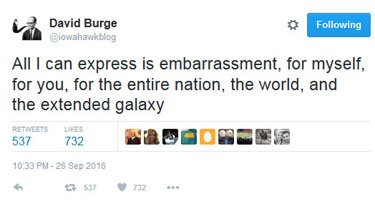
As Iowahawk put it:

04 Oct 2016
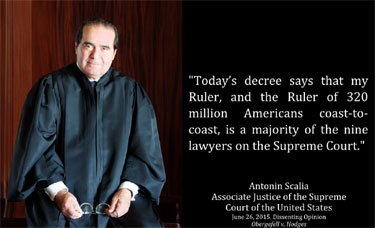
Why did low-information, not-particularly-ideological Republican voters go loco this year, reject all the qualified and genuinely principled candidates in favor of a Reality TV clown and populist demagogue?
They were fed up and simply wanted to express their animosity toward, and contempt for, the holier-than-thou, we-know-better community of fashion elite that controls the national establishment and which, under Obama, has end run the democratic process and simply imposed its will on the larger majority it contemptuously ignores again and again.
Matthew Continetti explains that the nomination of Trump is the steam explosion that occurs when all the democratic pressure release valves on the engine of government have been sealed shut by its careless operators.
This is a moment of dissociation—of unbundling, fracture, disaggregation, dispersal. But the disconnectedness is not merely social. It is also political—a separation of the citizenry from the governments founded in their name. They are meant to have representation, to be heard, to exercise control. What they have found instead is that ostensibly democratic governments sometimes treat their populations not as citizens but as irritants.
The sole election that has had any bearing on the fate of Obamacare, for example, was the one that put Barack Obama in the White House. The special election of Scott Brown to the Senate did not stop Democratic majorities from passing the law over public disapproval. Nor did the 2010, 2012, or 2014 elections prevent or slow down the various agencies of the federal government from reorganizing the health care sector according to the latest technocratic fashions.
The last big immigration law was passed under President Clinton in an attempt to reduce illegal entry. Since then the bureaucracy has been on autopilot, admitting huge numbers to the United States and unable (and sometimes unwilling) to cope with the surge in illegal immigration at the turn of the century. In 2006, 2007, and 2013, public opinion stopped major liberalizations of immigration law. Then the president used executive power to protect certain types of illegal immigrant from deportation anyway.
Coal miners have no voice in deliberations over their futures. Only the courts stand in the way of the Clean Power Plan that will end the coal industry and devastate the Appalachian economy. Congress is unable to help. The president went over the heads of the Senate by calling his carbon deal with China an “agreement†and not a treaty.
There has been no accountability for an IRS that abused its powers to target conservative nonprofits, for Hillary Clinton who disregarded national security in the operation of her private email server, for the FBI that treated Clinton with kid gloves while not following up on individuals who became terrorists. The most recent disclosures in the attack on the Pulse nightclub in Orlando, Fla., show the terrorist Omar Mateen was clearly motivated by devotion to radical Islam and to ISIS. We are only finding this out now because of a lawsuit filed by a news organization. What is the FBI afraid of?
Progressives disregard constitutional objections as outmoded artifacts of a benighted era. Who cares how Obamacare was passed or implemented, the uninsured rate is down. Why should Obama submit a treaty to the Senate when he knows it won’t be ratified; the fate of the planet is at stake. The absence of comprehensive immigration reform isn’t evidence that progressives failed to marshal a constitutional majority for passage. It’s reason for the president to test the limit of his powers. Nor does government failure result from overextension and ineptitude. It is caused by a lack of resources.
Is it really surprising that our democracy has become more tenuous as the distance between citizen and government has increased? A large portion of the electorate, it would seem, is no longer willing to tolerate a bipartisan establishment that seems more concerned with the so-called “globalist†issues of trade, migration, climate, defense of a rickety world order, and transgender rights than with the experiences of joblessness, addiction, crime, worry for one’s children, and not-so-distant memories of a better, stronger, more respected America.
These concerns are often written off as racism, or resentment, or status anxiety—as reaction, backlash, atavism, obstacles to universal progress. The same was said of McCarthy in the 1950s, the New Right in the 1970s, the Tea Party eight years ago. But in every case, including this one, the populist upsurge signified a genuine and not entirely irrational objection of a part of the electorate to its dissociation from the life of the polity.
[F]rom ..“Donald Trump and the American Crisis†by John Marini:
Those most likely to be receptive of Trump are those who believe America is in the midst of a great crisis in terms of its economy, its chaotic civil society, its political corruption, and the inability to defend any kind of tradition—or way of life derived from that tradition—because of the transformation of its culture by the intellectual elites. This sweeping cultural transformation occurred almost completely outside the political process of mobilizing public opinion and political majorities. The American people themselves did not participate or consent to the wholesale undermining of their way of life, which government and the bureaucracy helped to facilitate by undermining those institutions of civil society that were dependent upon a public defense of the old morality.
Marini refers to institutions such as the family, church, and school, institutions charged with forming the character of a citizen, of instructing him in codes of morality and service, in the traditions and history of his country, in the case of the church directing him spiritually and providing him a definitive account of the cause and purpose of life. These are precisely the institutions that have been brought under the sway of bureaucracies and courts heavily insulated from elections, from public opinion, from majority rule. And as the public has lost authority over decision-making in the private sphere, as the culture has become more alien, more bewildering, more hostile to “the old morality,†as President Clinton keeps saying rather fatuously that the fates of Kenya and Kentucky are linked, is it any wonder voters have sought out a vehicle for their disgust and opposition?
02 Oct 2016

———————

28 Sep 2016
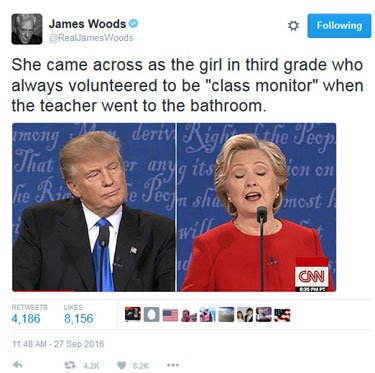
Hat tip to Don Surber.
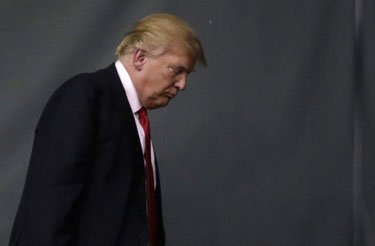
Of course, Trump came across as the spoiled rich kid who couldn’t be bothered to study and whose parents will wind up sending him to military school.
28 Sep 2016


Thomas Cole, The Course of Empire: Destruction, 1833-1836, New York Historical Society.
In Claremont Review, Angelo M. Codevilla describes how “the malfeasance of our ruling class” has transformed America and brought us to the point of this year’s disgraceful presidential election.
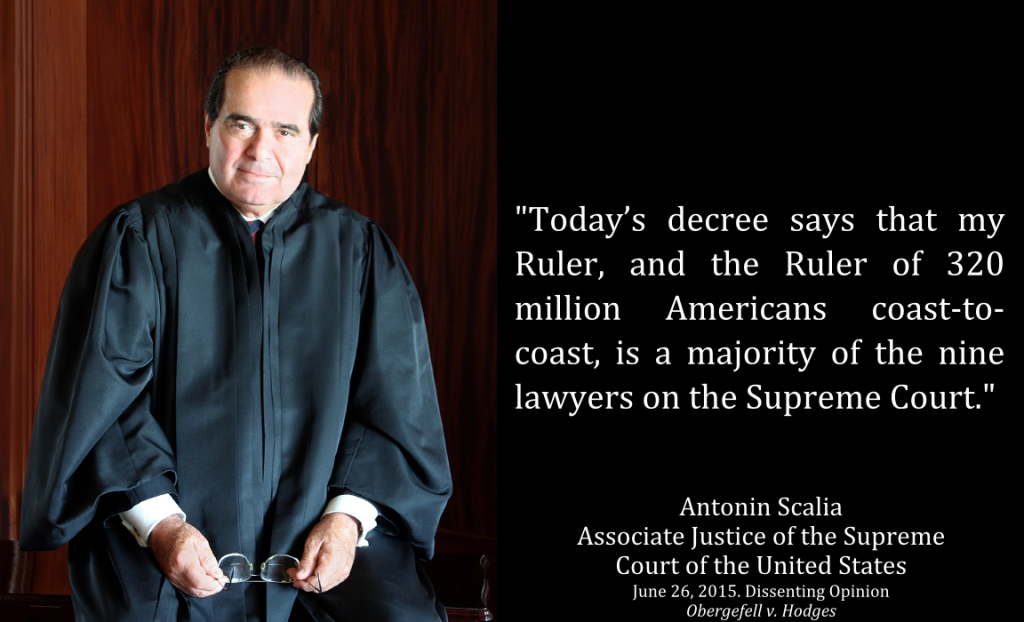
in today’s America, those in power basically do what they please. Executive orders, phone calls, and the right judge mean a lot more than laws. They even trump state referenda. Over the past half-century, presidents have ruled not by enforcing laws but increasingly through agencies that write their own rules, interpret them, and punish unaccountably—the administrative state. As for the Supreme Court, the American people have seen it invent rights where there were none—e.g., abortion—while trammeling ones that had been the republic’s spine, such as the free exercise of religion and freedom of speech. The Court taught Americans that the word “public†can mean “private†(Kelo v. City of New London), that “penalty†can mean “tax†(King v. Burwell), and that holding an opinion contrary to its own can only be due to an “irrational animus†(Obergefell v. Hodges).
What goes by the name “constitutional law†has been eclipsing the U.S. Constitution for a long time. But when the 1964 Civil Rights Act substituted a wholly open-ended mandate to oppose “discrimination†for any and all fundamental rights, it became the little law that ate the Constitution. Now, because the Act pretended that the commerce clause trumps the freedom of persons to associate or not with whomever they wish, and is being taken to mean that it trumps the free exercise of religion as well, bakers and photographers are forced to take part in homosexual weddings. A commission in the Commonwealth of Massachusetts reported that even a church may be forced to operate its bathrooms according to gender self-identification because it “could be seen as a place of public accommodation if it holds a secular event, such as a spaghetti supper, that is open to the general public.†California came very close to mandating that Catholic schools admit homosexual and transgender students or close down. The Justice Department is studying how to prosecute on-line transactions such as vacation home rental site Airbnb, Inc., that fall afoul of its evolving anti-discrimination standards. …
No one running for the GOP nomination discussed the greatest violation of popular government’s norms—never mind the Constitution—to have occurred in two hundred years, namely, the practice, agreed upon by mainstream Republicans and Democrats, of rolling all of the government’s expenditures into a single bill. This eliminates elected officials’ responsibility for any of the government’s actions, and reduces them either to approving all that the government does without reservation, or the allegedly revolutionary, disloyal act of “shutting down the government.†…
The ruling class having chosen raw power over law and persuasion, the American people reasonably concluded that raw power is the only way to counter it, and looked for candidates who would do that. Hence, even constitutional scholar Ted Cruz stopped talking about the constitutional implications of President Obama’s actions after polls told him that the public was more interested in what he would do to reverse them, niceties notwithstanding. Had Cruz become the main alternative to the Democratic Party’s dominion, the American people might have been presented with the option of reverting to the rule of law. But that did not happen. Both of the choices before us presuppose force, not law. …
In today’s America, a network of executive, judicial, bureaucratic, and social kinship channels bypasses the sovereignty of citizens. Our imperial regime, already in force, works on a simple principle: the president and the cronies who populate these channels may do whatever they like so long as the bureaucracy obeys and one third plus one of the Senate protects him from impeachment. If you are on the right side of that network, you can make up the rules as you go along, ignore or violate any number of laws, obfuscate or commit perjury about what you are doing (in the unlikely case they put you under oath), and be certain of your peers’ support. These cronies’ shared social and intellectual identity stems from the uniform education they have received in the universities. Because disdain for ordinary Americans is this ruling class’s chief feature, its members can be equally certain that all will join in celebrating each, and in demonizing their respective opponents.
And, because the ruling class blurs the distinction between public and private business, connection to that class has become the principal way of getting rich in America. Not so long ago, the way to make it here was to start a business that satisfied customers’ needs better than before. Nowadays, more businesses die each year than are started. In this century, all net additions in employment have come from the country’s 1,500 largest corporations. Rent-seeking through influence on regulations is the path to wealth. In the professions, competitive exams were the key to entry and advancement not so long ago. Now, you have to make yourself acceptable to your superiors. More important, judicial decisions and administrative practice have divided Americans into “protected classesâ€â€”possessed of special privileges and immunities—and everybody else. Equality before the law and equality of opportunity are memories. Co-option is the path to power. Ever wonder why the quality of our leaders has been declining with each successive generation?
A must read.
Your are browsing
the Archives of Never Yet Melted in the '2016 Election' Category.
/div>

Feeds
|