24 Mar 2015
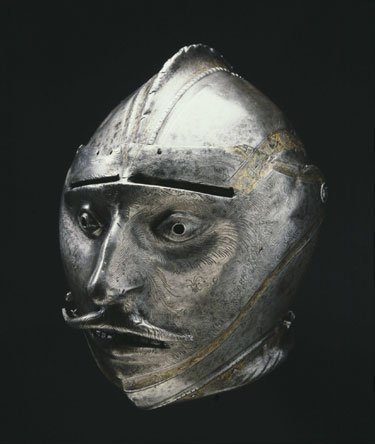
Italians Wore the Best Helmets
Arms and Armor, Italy, Renaissance

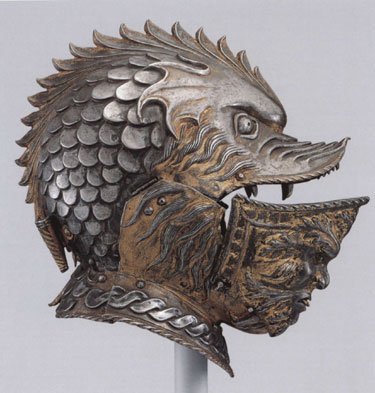
A Milanese burgonet, bearing the visage of a dragon. Musée de l’Armée, Paris.
Hat tip to Belacqui.
|
Category Archive 'Arms and Armor'
24 Mar 2015
Italians Wore the Best HelmetsArms and Armor, Italy, Renaissance
Hat tip to Belacqui. 20 Feb 2015
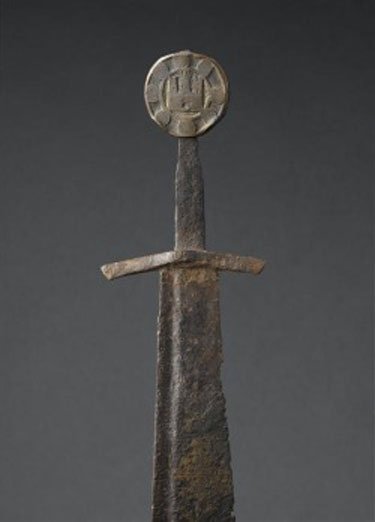
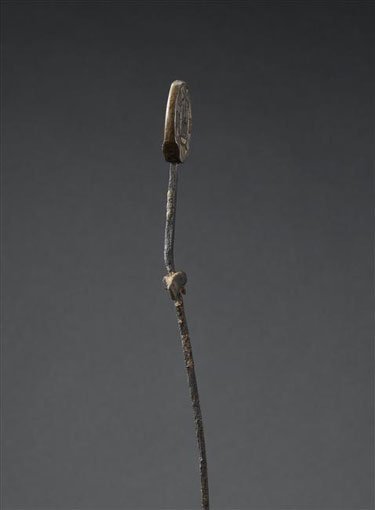
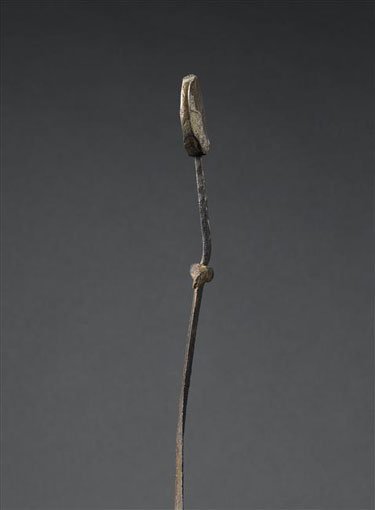
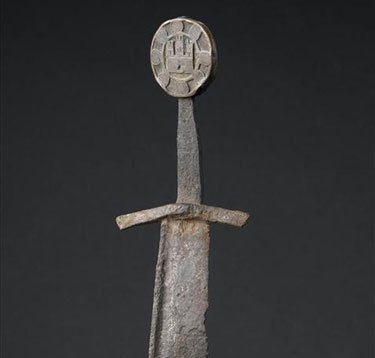
Dug FalchionArms and Armor, Falchion, France, Swords
Source: Copyright © 2015 Musée de Cluny – Musée national du Moyen Âge/Jean-Gilles Berizzi From Art of Swords. 19 Jan 2015
Gustav Vasa’s HelmetArms and Armor, Gustav I Vasa, History, Sweden
Hat tip to Collections & Recollections. 12 Jan 2015
Testing a Bronze Age SwordArms and Armor, Bronze Age, TechnologyEwart Park Phase, 700-800 B.C. Via Art of Swords. 25 Nov 2014
Bronze Age Dirk Had Been Used as a DoorstopArchaeology, Arms and Armor, Bronze Age
EDP24 has a great story.
Read the whole thing. ———————————- The British Museum’s account of its discovery differs:
Bronze Age, 1450-1300 BC Hat tip to Ratak Monodosico. 11 Nov 2014
One That Got AwayAnelace, Arms and Armor, Auction Sales, Ebay
Ebay lot 381041066398 was sitting there at $230.00 on Saturday as the auction drew toward its close at 8:27 pm. I had just bought a rifle on Gun Broker, so I was feeling a need for some restraint, but I certainly was not going to let this sell for $230.00 without bidding a bit higher. So I left an Esnipe bid somewhere near $300. It’s impossible to tell what some auctions are going to do in their final moments, when all the snipers open fire. You can bid double the current bid sometimes and still find that you came in too low. I had no idea what this dagger would fetch. It was obviously worth a great deal more than $230, but beyond that I hadn’t a clue. It sold, as things turned out, for $599.90, and I still think it was worth much more than that. ————————- The seller described it as an “Old antique Italian Hunting knife/dagger SUPER NICE RARE.”
But, what was it really? I looked through George Cameron Stone’s A Glossary of the Construction, Decoration and Use of Arms and Armor in All Countries and in All Times, Together with Some Closely Related Subjects, and my conclusion is that it was an anelace aka anelec aka anlace, a long dagger variation of the cinquedea featuring a triangular double-edged blade tapering sharply to a point: used from the 13th to the 16th centuries. This weapon was often carried at an angle at the small of the back and would be the only weapon carried in cities, at court, traveling on horseback or riding during the hunt, also used to slide between the plates of platemail armour. It does not look old enough to me to be 16th century. It has an 18th century look to me. But, I suppose, it might have been an extremely high quality 19th century reproduction. 22 Oct 2014
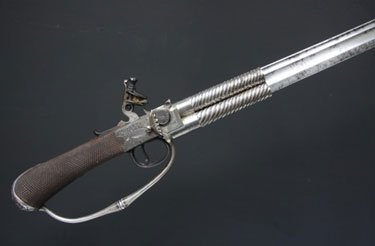
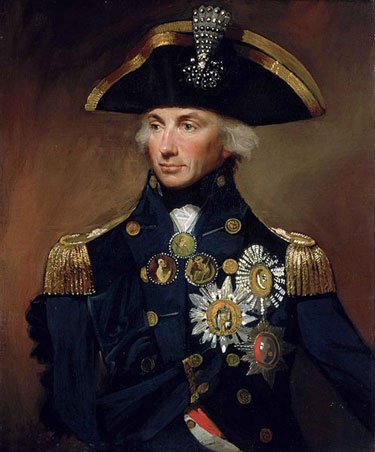
Nelson’s Double-Barreled Pistol HangerArms and Armor, Battle of Trafalgar, Horatio Nelson
Carried by Nelson at the Battle of Trafalgar, 21 October 1805. Because fighting aboard ships was likely to occur in confined spaces, Naval officers were more likely to carry a hanger (a short hunting-style sword) into battle, rather than a full-length sword. Via Ratak Monodosico. 15 Oct 2014
Folding CoachgunArms and Armor, Guns
Charles Hartley: “Amazing folding stock on a North Italian snaphaunce coach gun, made so it fits into a leg of mutton gun case. Hat tip to Karen L. Myers. 26 Sep 2014
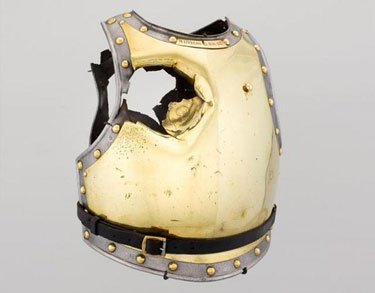
Carabinier Faveau’s CuirassArms and Armor, Carabiniers-Ã -Cheval, Waterloo
Ronald Pawly, Napoleon’s Carabiniers:
——————— Wikipedia on the Carabiniers-à-Cheval:
Hat tip to ClassicPics (Twitter) via Karen L. Myers.
06 Sep 2014
Tutenkhamun’s KnivesArchaeology, Arms and Armor, Buster Warenski, Custom Knives, Egyptology, Technology, Tutenkhamun
The 1922 discovery of the tomb of the boy pharaoh Tutenkhamun dazzled the world with the precious artifacts and funeral goods found (which still regularly draw enormous numbers of visitors to exhibitions at museums around the world). The deceased king was accompanied to the afterlife by two obviously personal favorite knives, both double-edged daggers in form, pretty close 3000-year-old equivalents of the Randall Model 2 Fighting Stiletto. What is most interesting though is that King Tut’s personal daggers were made in the Bronze Age of other metals. One knife is made of gold, hardened with copper. The American custom knife-maker Buster Warenski (1942-2005) took it as a personal challenge and successfully completed in 1987 a replica. That project required five years of work and used 32 ounces of gold. The second knife is made of iron, at a time in which the forging of primitive iron weapons was a new technology invented by the Hittites. Even in the future, when the Greeks would be besieging Troy, Achilles and the other heroes would still be armed with bronze swords and bronze-tipped spears. It’s good to be the king. Tutenkhamun possessed, and got to take with him into his tomb, the superb iron-bladed knife seen above. Modern analysis has determined that it was forged from meteoric iron, and though it lacked the complete rust-and-stain-resistance of the gold blade, it undoubtedly took a better edge and remained sharper longer. In 1300 B.C., iron would have been rarer and more expensive than gold. I think this knife may have been intentionally made with a ricasso, a flat, unsharpened area above the grip, which would allow the user to hold the blade farther forward for precision cutting. Via Karen L. Myers’ HollowLands. 20 Jul 2014
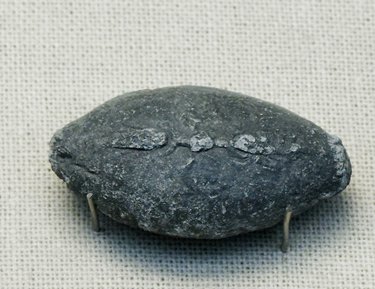
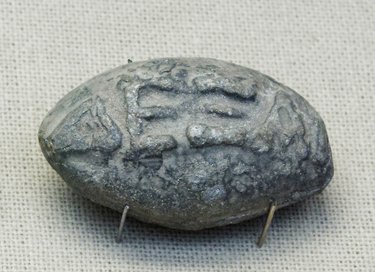
Greek Sling BulletArms and Armor, Athens, Greece
Object type: sling-bullet Museum number: 1851,0507.11 Description: Lead sling bullet; almond shape; a winged thunderbolt on one side and on the other, in high relief, the inscription DEXAI “Catch!” Culture/period: Classical Greek Date: 4thC BC Excavated/Findspot: Athens Materials: lead Dimensions: Length: 43 millimetres — Weight: 105.16 grammes 19 May 2014
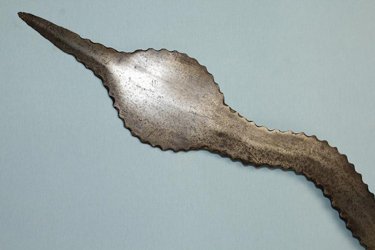
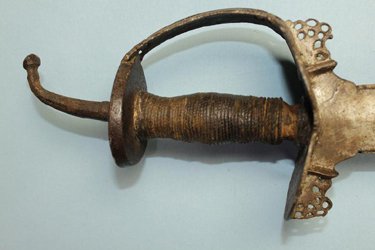
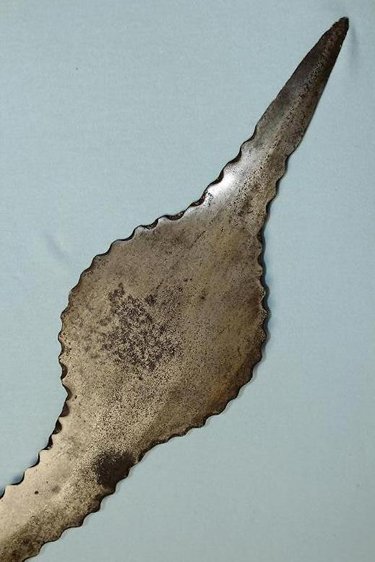
Serrated, Cobra-Headed Khanda SwordArms and Armor, India, Khanda Sword
A very rare Khanda hilted sword with serrated edge and of Cobra form This formidable example is 98cms [38.6″] long from end to end. A very rare type of Indian sword, likely from the late 18th century in good as found uncleaned condition. From Swords and Antique Weapons via Sword-Site posted by Ratak Monodosico. Welcome to
NEVER YET MELTED
Another Right-Wing Web Aggregator and Purveyor of Unpopular Opinions
 David Zincavage contact: jdz@usa.net blog advertising is good for General Bullmoose and good for the USA. 


Feeds
|