Category Archive 'Health Care Reform'
06 Dec 2009

John David Lewis, Associate Professor of Philosophy, Politics and Economics at Duke University, has actually read over the 1,990 “mindnumbing pages of legalese” constituting the democrats’ Health Care Bill.
Professor Lewis warns:
This legislation empowers the executive branch, namely the Secretary of Health and Human Services and a “Health Choices Commissioner,†to write thousands of pages of regulations, and to force Americans to comply with them. For every line in this bill, many pages of regulations will be written. As a result, the bureaucracy will expand, the final cost will be many times more than the original estimates—and the impact on American medicine will be devastating.
The overall result of this bill, if enacted, will be a complete government takeover of the health-care industry. …
In many ways the bill is a convoluted, uncoordinated list of compromises between thousand of legislators, legislative aides, and lobbyists. Yet the bill has two main thrusts, with one central meaning. The first thrust is a massive increase in government power. The second is the total rejection of the free market. The central meaning of both is the repudiation of individual rights. No longer will Americans have the liberty to preserve their own lives in the way they judge best—from now on, they will have to conform to government controls on the most intimate details of their lives. …
A text search of the bill reveals more than one hundred instances of language such as “the Secretary shall determine.â€
He also quotes the House Republican Conference list of the contemporary democrat party’s attempt to revive the policies of George III, “erecting” what the Declaration of Independence complained of as “a multitude of New Offices” resulting in there being “sent hither swarms of Officers to harrass our people, and eat out their substance.”
1. Retiree Reserve Trust Fund (Section 111(d), p. 61)
2. Grant program for wellness programs to small employers (Section 112, p. 62)
3. Grant program for State health access programs (Section 114, p. 72)
4. Program of administrative simplification (Section 115, p. 76)
5. Health Benefits Advisory Committee (Section 223, p. 111)
6. Health Choices Administration (Section 241, p. 131)
7. Qualified Health Benefits Plan Ombudsman (Section 244, p. 138)
8. Health Insurance Exchange (Section 201, p. 155)
9. Technical assistance to employees of small businesses buying Exchange coverage (Section 305(h), p. 191)
10. Insurance risk pooling to be established by Health Choices Commissioner (Section 306(b), p. 194)
11. Health Insurance Exchange Trust Fund (Section 307, p. 195)
12. State-based Health Insurance Exchanges (Section 308, p. 197)
13. Grant program for health insurance cooperatives (Section 310, p. 206)
14. “Public Health Insurance Option†(Section 321, p. 211)
15. Ombudsman for “Public Health Insurance Option†(Section 321(d), p. 213)
16. Account for receipts and disbursements for “Public Health Insurance Option†(Section 322(b), p. 215)
17. Tele health Advisory Committee (Section 1191 (b), p. 589)
18. Demonstration program providing for “culturally and linguistically appropriate services†(Sec 1222, p. 617)
19. Demonstration program for shared decision making using patient decision aids (Section 1236, p. 648)
20. Accountable Care Organization pilot program under Medicare (Section 1301, p. 653)
21. Independent patient-centered medical home pilot program under Medicare (Section 1302, p. 672)
22. Community-based medical home pilot program under Medicare (Section 1302(d), p. 681)
23. Independence at home demonstration program (Section 1312, p. 718)
24. Center for Comparative Effectiveness Research (Section 1401(a), p. 734)
25. Comparative Effectiveness Research Commission (Section 1401(a), p. 738)
26. Patient ombudsman for comparative effectiveness research (Section 1401(a), p. 753)
27. Q/A and performance improvement program for skilled nursing facilities (Section 1412 (b)(1), p. 784)
28. Q/A and performance improvement program for nursing facilities (Section 1412 (b)(2), p. 786)
29. Special focus facility program for skilled nursing facilities (Section 1413(a)(3), p. 796)
30. Special focus facility program for nursing facilities (Section 1413(b)(3), p. 804)
31. Independent monitor pilot program for skilled nursing facilities and nursing facilities (Section 1422, p. 859)
32. Demonstration program for approved teaching health centers for Medicare GME (Section 1502(d), p. 933)
33. Pilot program to develop anti-fraud compliance systems for Medicare providers (Section 1635, p. 978)
34. Special Inspector General for the Health Insurance Exchange (Section 1647, p. 1000)
35. Medical home pilot program under Medicaid (Section 1722, p. 1058)
36. Accountable Care Organization pilot program under Medicaid (Section 1730A, p. 1073)
37. Nursing facility supplemental payment program (Section 1745, p. 1106)
38. Demonstration program for Medicaid medical conditions for mental diseases (Sec 1787, p. 1149)
39. Comparative Effectiveness Research Trust Fund (Section 1802, p. 1162)
40. “Identifiable office or program†for “coordination between Medicare and Medicaid†(Section 1905, p. 1191)
41. Center for Medicare and Medicaid Innovation (Section 1907, p. 1198)
42. Public Health Investment Fund (Section 2002, p. 1214)
43. Scholarships for service in health professional needs areas (Section 2211, p. 1224)
44. Program for training medical residents in community-based settings (Section 2214, p. 1236)
45. Grant program for training in dentistry programs (Section 2215, p. 1240)
46. Public Health Workforce Corps (Section 2231, p. 1253)
47. Public health workforce scholarship program (Section 2231, p. 1254)
48. Public health workforce loan forgiveness program (Section 2231, p. 1258)
49. Grant program for innovations in interdisciplinary care (Section 2252, p. 1272)
50. Advisory Committee on Health Workforce Evaluation and Assessment (Section 2261, p. 1275)
51. Prevention and Wellness Trust (Section 2301, p. 1286)
52. Clinical Prevention Stakeholders Board (Section 2301, p. 1295)
53. Community Prevention Stakeholders Board (Section 2301, p. 1301)
54. Grant program for community prevention and wellness research (Section 2301, p. 1305)
55. Grant program for research and demonstration projects for wellness incentives (Section 2301, p. 1305)
56. Grant program for community prevention and wellness services (Section 2301, p. 1308)
57. Grant program for public health infrastructure (Section 2301, p. 1313)
58. Center for Quality Improvement (Section 2401, p. 1322)
59. Assistant Secretary for Health Information (Section 2402, p. 1330)
60. Grant program to support the operation of school-based health clinics (Section 2511, p. 1352)
61. Grant program for nurse-managed health centers (Section 2512, p. 1361)
62. Grants for labor-management programs for nursing training (Section 2521, p. 1372)
63. Grant program for interdisciplinary mental and behavioral health training (Section 2522, p. 1382)
64. “No Child Left Unimmunized Against Influenza†demonstration grant program (Section 2524, p. 1391)
65. Healthy Teen Initiative grant program regarding teen pregnancy (Section 2526, p. 1398)
66. Grant program for interdisciplinary training, education, and services for autism (Section 2527(a), p. 1402)
67. University centers for excellence in developmental disabilities education (Section 2527(b), p. 1410)
68. Grant program to implement medication therapy management services (Section 2528, p. 1412)
69. Grant program to promote positive health behaviors in underserved communities (Section 2530, p. 1422)
70. Grant program for State alternative medical liability laws (Section 2531, p. 1431)
71. Grant program to develop infant mortality programs (Section 2532, p. 1433)
72. Grant program to prepare secondary school students for health care training (Section 2533, p. 1437)
73. Grant program for community-based collaborative care (Section 2534, p. 1440)
74. Grant program for community-based overweight and obesity prevention (Section 2535, p. 1457)
75. Grant program for reducing the student-to-school nurse ratio (Section 2536, p. 1462)
76. Demonstration project of grants to medical-legal partnerships (Section 2537, p. 1464)
77. Center for Emergency Care (Section 2552, p. 1478)
78. Council for Emergency Care (Section 2552, p 1479)
79. Grant program to support demonstration programs for regionalized emergency care (Section 2553, p. 1480)
80. Grant program to assist veterans who wish to become EMT’s (Section 2554, p. 1487)
81. Interagency Pain Research Coordinating Committee (Section 2562, p. 1494)
82. National Medical Device Registry (Section 2571, p. 1501)
83. CLASS Independence Fund (Section 2581, p. 1597)
84. CLASS Independence Fund Board of Trustees (Section 2581, p. 1598)
85. CLASS Independence Advisory Council (Section 2581, p. 1602)
86. Health and Human Services Coordinating Committee on Women’s Health (Section 2588, p. 1610)
87. National Women’s Health Information Center (Section 2588, p. 1611)
88. Centers for Disease Control Office of Women’s Health (Section 2588, p. 1614)
89. Agency for Healthcare Research and Quality Office of Women’s Health Research (Section 2588, p. 1617)
90. Health Resources and Services Administration Office of Women’s Health (Section 2588, p. 1618)
91. Food and Drug Administration Office of Women’s Health (Section 2588, p. 1621)
92. Personal Care Attendant Workforce Advisory Panel (Section 2589(a)(2), p. 1624)
93. Grant program for national health workforce online training (Section 2591, p. 1629)
94. Grant program to disseminate best practices on implementing health workforce (Section 2591, p. 1632)
95. Demonstration program for chronic shortages of health professionals (Section 3101, p. 1717)
96. Demonstration program for substance abuse counselor educational curricula (Section 3101, p. 1719)
97. Program of Indian community education on mental illness (Section 3101, p. 1722)
98. Intergovernmental Task Force on Indian environmental and nuclear hazards (Section 3101, p. 1754)
99. Office of Indian Men’s Health (Section 3101, p. 1765)
100. Indian Health facilities appropriation advisory board (Section 3101, p. 1774)
101. Indian Health facilities needs assessment workgroup (Section 3101, p. 1775)
102. Indian Health Service tribal facilities joint venture demonstration projects (Section 3101, p. 1809)
103. Urban youth treatment center demonstration project (Section 3101, p. 1873)
104. Grants to Urban Indian Organizations for diabetes prevention (Section 3101, p. 1874)
105. Grants to Urban Indian Organizations for health IT adoption (Section 3101, p. 1877)
106. Mental health technician training program (Section 3101, p. 1898)
107. Indian youth telemental health demonstration project (Section 3101, p. 1909)
108. Program for treatment of child sexual abuse victims and perpetrators (Section 3101, p. 1925)
109. Program for treatment of domestic violence and sexual abuse (Section 3101, p. 1927)
110. Native American Health and Wellness Foundation (Section 3103, p. 1966)
111. Committee for the Native American Health and Wellness Foundation (Section 3103, p. 1968)
06 Dec 2009

Well, getting ObamaCare to the Senate floor cost US taxpayers $300,000,000 for Senator Mary Landrieu’s vote. Apparently they are four votes short right now, so start breaking open those piggy banks, Americans. Democrats are going to begin writing very large checks on your bank accounts to buy those missing votes.
Do you suppose the Congressional Budget Office will ever start factoring in the massive mordida involved in the passage of spending legislation as part of the overall cost estimate?
Bloomberg:
President Barack Obama plans to head to the U.S. Capitol to press Senate Democrats to agree on health legislation as lawmakers struggle to resolve disputes over issues including a proposed government-run insurance plan.
Democrats met throughout yesterday to seek an alternative to Senate Majority Harry Reid’s plan to create the new national program to cover the uninsured. Opposition within his party leaves Reid at risk of falling four votes short of the 60 he needs to pass the legislation, the most sweeping overhaul of the nation’s health-care system in more than four decades.
Obama’s scheduled visit comes as the bill’s backers need a jolt to come together, said Massachusetts Democrat John Kerry.
“We have to talk about how to put the final pieces together,†Kerry said. “It’s good to hear from the president now, because it’s getting to that stage where you have to come to a decision with your heart as well as your head.â€
Reid called the rare weekend session to meet his deadline of getting a bill by year-end. Republicans, unified in opposition, forced the Democrats yesterday to reiterate their support for cutting more than $40 billion in home health-care services funding under Medicare. It was the latest Republican effort to highlight the bill’s potential impact on the elderly.
Senate Minority Leader Mitch McConnell of Kentucky said Republicans see the debate stretching into 2010 and that they gain the more the public learns. Republicans say Obama’s visit reflects a weakening Democratic position.
“The vote tally must be going in the wrong direction,†said Senator Richard Burr, a North Carolina Republican.
05 Dec 2009
Rep. Mike Rogers (R – 8th MI) delivers a devastating critique of the democrat healthcare bill.
3:49 video
The commentator at Maggie’s Farm who signs himself Bird Dog called it “powerful stuff.”
02 Dec 2009
A Reason TV 8:43 video.
Hat tip to Glenn Reynolds (who always finds the good stuff first).
30 Nov 2009
William A. Jacobsen notes that we have five times the population, so…. would our death rate produced by service rationing limits and delays really be merely linear, or would it be exponential?
Another day, another exposé by a British newspaper about the failure of nationalized health care. This time, it’s the left-wing The Guardian reflecting on how delays in cancer care cause 10,000 unnecessary deaths each year compared to other European countries:
Up to 10,000 people die needlessly of cancer every year because their condition is diagnosed too late, according to research by the government’s director of cancer services. The figure is twice the previous estimate for preventable deaths….
Richards found that “late diagnosis was almost certainly a major contributor to poor survival in England for all three cancers”, but also identified low rates of surgical intervention being received by cancer patients as another key reason for poor survival rates.
Research by academics at Durham University led by Prof Greg Rubin has identified five types of delay in NHS cancer care: “patient delay”, “doctor delay”, “delay in primary care [at GPs’ surgeries]”, “system delay” and “delay in secondary care [at hospitals]”….
Since Britain’s population is less than one-fifth that of the U.S., the equivalent number of unnecessary deaths in the U.S. would exceed 50,000. The U.S. has cancer survival rates which exceed even the better European countries, so that number may be higher.
Keep that in mind the next time you hear Alan Grayson (D-Fla.) and others throw around fictitious numbers about how many people die in the U.S. from lack of insurance. And this week as Harry Reid and the Democrats tout how Reid’s plan will save families in the “non-group” market $500 on private insurance.
23 Nov 2009

“Those whom God wishes to destroy, he first makes mad.”
Rich Lowry looks on with astonishment as the democrats march on determinedly toward assured destruction.
This will long be a case study in the annals of abnormal political psychology. Tax hikes undid George H.W. Bush and Bill Clinton (Bush lost his presidency, Clinton his congressional majority), and Medicare cuts undid Newt Gingrich (taking the air out of his “Republican revolution”). Obama’s Democrats are prescribing themselves a strong dose of both, in an exercise in self-destructive quackery.
They believe that Obama can’t afford failure, that’s it’s the defeat of ClintonCare that killed the Democrats in 1994. But such are the grave political and substantive flaws of ObamaCare that Democrats can’t afford success or failure.
If they pass it, they have tax hikes and Medicare cuts around their necks, as well as the increased insurance premiums the bill is sure to cause. If they fail, they’ve demonstrated their own ineffectual ideological fervor, while still putting themselves on record in favor of tax increases and Medicare cuts.
The Democrats got themselves into this hellish dilemma by not taking the obvious step of scaling back the bill once it became clear it engendered fierce public resistance. Take half a loaf, disarm your critics, call it victory, hail yourselves at the signing ceremony — and come back for more later. It’s not complicated.
Instead, they’ve stayed on a maximalist course. They’ve pushed to the point where the effort could collapse — and, even if they succeed, they’ll have done themselves and the nation’s fiscal future grave harm.
This is the other element of the drama that inheres in the health-care debate: If it passes, people years and even decades from now will look back and ask, “What were they thinking?” It’s a rare opportunity to see a train wreck at its inception, as the conductors make the decisions with malice afterthought that will ramify disastrously.
Everyone agrees that the nation is on an unsustainable fiscal path. So Democrats will add a $2.5 trillion entitlement to hurry us further along the path. Tax hikes that could go to reducing the deficit they’ll plow into the new entitlement. Medicare cuts that could shore up Medicare’s own shaky finances, they’ll plow into the entitlement too (if the cuts happen at all). The new entitlement will grow at a projected 8 percent a year, and it’s only through gimmickry it’s made to look deficit neutral in the first decade. The cost curve of health care will be bent up, and insurance premiums, too, will rise. For all of this, ObamaCare will still leave 24 million people without health insurance.
If nothing else, watching the Democrats sacrifice so much on behalf of this monstrosity is fascinating, appalling — and dramatic. Common sense suggests that they shouldn’t do it. The basic laws of political physics say they can’t do it. And yet on they march.
What do Americans think? They’re against the Health Care Bill: 56% to 38%. Rasmussen.
22 Nov 2009

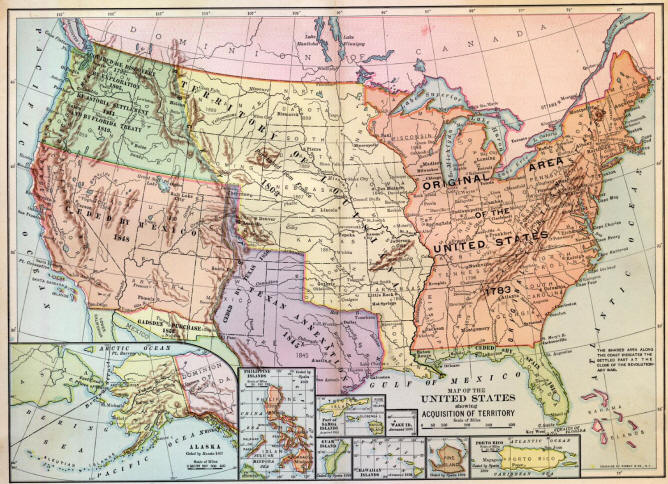
Harry Reid paid 20x the price that Thomas Jefferson paid for the entire Louisiana Territory for Mary Landrieu’s vote yesterday.
Byron York explains that getting the votes to bring ObamaCare to the floor for debate was, comparatively speaking, the easy part, and the democrat leadership barely succeeded.
(J)udging by the statements of four moderate Democrats — Lieberman, Lincoln, Landrieu, and Nelson — it will be far, far harder when the process comes to the really important vote, the one that would bring debate to a close and move on to an up-or-down vote on the Democrats’ health care plan. On Saturday, all four of those Democrats publicly threatened to side with Republicans and kill the bill before it can move to a final vote, unless their concerns are met.
“If the bill remains where it is now, I will not be able to support a cloture motion before final passage,” Sen. Joseph Lieberman said. “I’m prepared to vote against moving to the next stage of consideration as long as a government-run public option is included,” said Sen. Blanche Lincoln. “My vote to move forward on this important debate should in no way be construed by the supporters of this current framework as an indication of how I might vote as this debate comes to an end,” said Sen. Mary Landrieu. And Sen. Ben Nelson said he will “oppose the second cloture motion — needing 60 votes — to end debate, and oppose the final bill” if major changes are not made.
Some of that is the normal positioning and bargaining that takes place when big bills are considered. But the Democrats’ problems in keeping their side together, in the face of united Republican opposition, are an indicator of how public opinion is beginning to dominate the health care debate. Dozens of polls show that Americans are deeply divided over the issue, with a slight plurality opposing the Democratic health care plans currently under consideration in Congress. Clear majorities of Americans don’t believe their health care will improve under the plan, and do believe the plan will increase the deficit. Given that, Democrats are trying to pass the biggest piece of legislation in decades, one that will create an enormous and permanent new entitlement, with less than majority support among the public. And they’re racing to do it with less than a year to go before mid-term elections that most observers believe will result in fewer Democrats in Congress. No wonder it’s hard.
—————————–
Shameless giveaways of tax dollars were needed to get this far. All of Washington is laughing about how much it cost to buy Senator Mary Landieu’s vote, Dana Milbank has details.
Staffers on Capitol Hill were calling it the Louisiana Purchase.
On the eve of Saturday’s showdown in the Senate over health-care reform, Democratic leaders still hadn’t secured the support of Sen. Mary Landrieu (D-La.), one of the 60 votes needed to keep the legislation alive. The wavering lawmaker was offered a sweetener: at least $100 million in extra federal money for her home state.
And so it came to pass that Landrieu walked onto the Senate floor midafternoon Saturday to announce her aye vote — and to trumpet the financial “fix” she had arranged for Louisiana. “I am not going to be defensive,” she declared. “And it’s not a $100 million fix. It’s a $300 million fix.”
It was an awkward moment (not least because her figure is 20 times the original Louisiana Purchase price).
20 Nov 2009
Michael D. Tanner lists some of the reasons we need to defeat the democrat Health Care Bill: staggering costs resulting in higher taxes and insurance premiums for which working Americans will get lower quality and rationed services.
Just in time for Thanksgiving, Sen. Harry Reid has given us a giant turkey of a health-care bill. At 2,074 pages and more than 370,000 words, it’s officially “scored” as costing $849 billion over 10 years — $400 million per page, or $2.3 million per word.
But that doesn’t come close to measuring its true cost. The bill uses various accounting gimmicks to hide its true cost. For example the bill doesn’t include more than $200 billion needed to prevent a 21 percent cut in Medicare next year. [The CBO “score” actually assumes Reid cuts Medicare 23 percent — Ed.] That cost has been spun off into a separate bill, even though the Senate voted down that approach last month.
Moreover (as Jeffrey H. Anderson notes), much of the spending is back-loaded. The bill doesn’t start spending until 2014, and only costs $9 billion that year. But by 2019, the annual cost hits $196 billion. The minority staff of the Senate Budget Committee reports that, if you factor out all the budget gimmicks and look at the 10 years of actual implementation, the cost is closer to $2.5 trillion. …
much of the cost has simply been shifted from the federal budget onto the backs of workers, businesses and state governments. Judging by previous reforms, as much as 60 percent of the cost won’t show up in government accounting.
To pay for all the new spending, Reid would enact at least 15 new or increased taxes totaling more than $493 billion.
But the cost alone doesn’t begin to describe how intrusive this bill would be for the average American. For instance, it would require everyone to buy a government-designed insurance plan, even if it was more expensive than their current policy. Failure to comply brings a penalty of up to $6,750 for a family of four.
Another provision would mandate that employers provide insurance to their workers. If they fail to do so, and if even a single worker qualified for federal subsidies, the employer could be fined up to $750 per employee. The CBO estimates that those penalties will amount to more than $28 billion.
Unemployment is now 10.2 percent, and the Senate bill will make it more costly to hire workers. And because the penalty only applies in the case of subsidy-eligible workers, it is low-wage and unskilled workers that will suffer the most.
Of course, the plan contains the government-run “public option” that many experts believe will ultimately crowd out private insurers. And don’t be misled by Reid’s “opt-out” provision: It comes with so many restrictions that it will be nearly impossible for a state to actually opt out.
Besides, there won’t be any opting out of the taxes that will ultimately be necessary to pay for it.
Finally, the bill sets the stage for government-imposed rationing. If you think the recent controversy over mammograms is something, just wait until the dozens of new boards, commissions and agencies created by this bill get to work. The “reform” also gives the secretary of Health and Human Services broad new powers to determine “quality,” “efficiency” and “appropriate utilization.”
At first, these restrictions would only apply to government programs like Medicare, but they’d create the framework for eventual extension to private insurance.
If Reid gets the 60 votes he needs to pass this, US taxpayers, businesses and patients can expect to pay a high price for this congressional feast.
20 Nov 2009

Don Troiani, Bunker Hill
From Gateway Pundit:
Senate Democrats will only deliberate 10 hours on Saturday before they vote to nationalize one-sixth of the US economy.
The bill will nationalize the nation’s health care industry, increase costs, ration care, tax cosmetic surgery, cut Medicare, charge a monthly abortion fee, and take away your freedom.
Please take time tomorrow and Saturday to call your US Senator.
HERE IS THE PHONE LIST.
Don’t let the democrats destroy our health care system.
Support for this disastrous bill is down to 40% with 52% opposing.
18 Nov 2009
Megan McArdle reads the Centers for Medicare and Medicaid Services (CMS) report on ObamaCare and finds that the prognosis is bad. Democrats can’t simply legislate more health care loaves and fishes miraculously into existence.
(T)he most worrying item is tucked into the CMS’s “caveats and limitations of estimates” section, which is well worth reading. They point out that they, like most other agencies, are assuming a sort of frictionless universe in which 34 million new people demanding more health services increases the supply of health services in order to meet that demand. That is not, notes the CMS, a very realistic assumption:
In estimating the financial impacts of H.R. 3962, we assumed that the increased demand for health care services could be met without market disruptions. In practice, supply constraints might interfere with providing the services desired by the additional 34 million insured persons. Price reactions–that is, providers successfully negotiating higher fees in response to the greater demand–could result in higher total expenditures or in some of this demand being unsatisfied. Alternatively, providers might tend to accept more patients who have private insurance (with relatively attractive payment rates) and fewer Medicaid patients, exacerbating existing access problems for the latter group. Either outcome (or a combination of both) should be considered plausible and even probable.
The latter possibility is especially likely in the case of the higher volume of Medicaid services. Despite a provision to increase payment rates for primary care to Medicare levels, most Medicaid payments would still be well below average. Therefore, it is reasonable to expect that a significant portion of the increased demand for Medicaid would not be realized.
We have not attempted to model that impact or other plausible supply and price effects, such as supplier entry and exit or cost-shifting towards private payers. A specific estimate of these potential outcomes is impracticable at this time, given the uncertainty associated with both the magnitude of these effects and the interrelationships among these market dynamics. We may incorporate such factors in future estimates, should we determine that they can be estimated with a reasonable degree of confidence. For now, we believe that consideration should be given to the potential consequences of a significant increase in demand for health care meeting a relatively fixed supply of health care providers and services.
In other words, while we are nominally increasing the number of “the insured”, it’s not clear we’re increasing their access to health care very much. The supply of health care services is actually pretty inelastic, because it depends on relatively scarce labor. There’s already a nursing shortage, and doctors already don’t want to become GPs because the pay is mediocre, the work is routine, and the hours aren’t particularly compelling. To some extent they can be replaced by nurse practitioners–but they are neither particularly cheap, nor in endless supply. And there’s a limit to how much of our health care costs we can fix by replacing current workers with less skilled labor.
When you increase the demand for something without increasing the supply, you either get price increases, or shortages. Neither is what the authors are promising for their bills.
(Yes, yes, I know what you’re about to say . . . end the AMA cartel’s artificial restrictions on entry into the medical profession! That’s a different post, but here’s the short version: the constraint on the supply of doctors isn’t the medical school slots, but the residency slots. And we’re already importing a substantial number of doctors to fill our family practice slots, because about a third of them go unfilled during the “match”. This does not suggest that there are hordes of eager potential doctors clamoring for a crack at family practice. There’s a lot of demand for specialist slots. But creating more cardiac surgeons will not put much downward pressure on health care costs.)
But this is not an indictment of the bill’s ability to control costs, as of the ability of any bill to control costs. Controlling costs means consuming less health care. There is no magic pot of money waiting to be painlessly seized from some undeserving wretch, preferably one that voters already hate. The only way we are going to cut costs is by cutting someone’s benefits.
16 Nov 2009

Oregon democrat Earl Blumenauer made liberals happy with a New York Times editorial calling conservative critics of democrat Health Care Reform “liars” and ridiculing the very idea that what Sarah Palin referred to on Facebook as “death panels” could possibly be found in the bill passed by the House of Representatives.
The most bizarre moment came on Aug. 7 when Sarah Palin used the term “death panels†on her Facebook page. She wrote: “The America I know and love is not one in which my parents or my baby with Down syndrome will have to stand in front of Obama’s ‘death panel’ so his bureaucrats can decide, based on a subjective judgment of their ‘level of productivity in society,’ whether they are worthy of health care. Such a system is downright evil.â€
There is, of course, nothing even remotely like this in the bill.
————————————-
The Wall Street Journal, in its lead editorial today, demonstrates rather effectively the falsity of Congressman Blumenauer’s self-proclaimed injured innocence. The editorial is specifically about those “death panels,” and explains exactly what they are, what they would do, and why they are a terrible idea.
Like most of Europe, the various health bills stipulate that Congress will arbitrarily decide how much to spend on health care for seniors every year—and then invest an unelected board with extraordinary powers to dictate what is covered and how it will be paid for. White House budget director Peter Orszag calls this Medicare commission “critical to our fiscal future” and “one of the most potent reforms.”
On that last score, he’s right. Prominent health economist Alain Enthoven has likened a global budget to “bombing from 35,000 feet, where you don’t see the faces of the people you kill.”
As envisioned by the Senate Finance Committee, the commission—all 15 members appointed by the President—would have to meet certain budget targets each year. Starting in 2015, Medicare could not grow more rapidly on a per capita basis than by a measure of inflation. After 2019, it could only grow at the same rate as GDP, plus one percentage point.
The theory is to let technocrats set Medicare payments free from political pressure, as with the military base closing commissions. But that process presented recommendations to Congress for an up-or-down vote. Here, the commission’s decisions would go into effect automatically if Congress couldn’t agree within six months on different cuts that met the same target. The board’s decisions would not be subject to ordinary notice-and-comment rule-making, or even judicial review.
Yet if the goal really is political insulation, then the Medicare Commission is off to a bad start. To avoid a senior revolt, Finance Chairman Max Baucus decided to bar his creation from reducing benefits or raising the eligibility age, which meant that it could only cut costs by tightening Medicare price controls on doctors and hospitals. Doctors and hospitals, naturally, were furious.
So the Montana Democrat bowed and carved out exemptions for such providers, along with hospices and suppliers of medical equipment. Until 2019 the commission will thus only be allowed to attack Medicare Advantage, the program that gives 10 million seniors private insurance choices, and to raise premiums for Medicare prescription drug coverage, which is run by private contractors. Notice a political pattern?
But a decade from now, such limits are off—which also happens to be roughly the time when ObamaCare’s spending explodes. The hard budget cap means there is only so much money to be divvied up for care, with no account for demographic changes, such as longer life spans, or for the increasing incidence of diabetes, heart disease and other chronic conditions.
Worse, it makes little room for medical innovations. The commission is mandated to go after “sources of excess cost growth,” meaning treatments that are too expensive or whose coverage will boost spending. If researchers find a pricey treatment for Alzheimer’s in 2020, that might be banned because it would add new costs and bust the global budget. Or it might decide that “Maybe you’re better off not having the surgery, but taking the painkiller,” as President Obama put it in June.
In other words, the Medicare commission would come to function much like the National Institute for Health and Clinical Excellence, which rations care in England. Or a similar Washington state board created in 2003 to control costs. Its handiwork isn’t pretty.
Read the whole thing.
————————————-
We already addressed the “no death panels in our bill” claim long ago, when the first wave of liberal denial crested, in this August 16th posting, which quotes this perfectly accurate analysis by Cornell Law Professor William Jacobsen.
Democrats don’t like it being called a “death panel,” but the idea all along has been that their version of health care reform would avoid public debate by passing the responsibility of meeting budgetary limitations to an unelected commission which would be empowered to ration services. Many of its decisions will inevitably deny medicines, treatments, and procedures whose absence will be the equivalent of a death sentence. Americans will die because government has foreclosed their medical options. The body making such decisions and condemning Americans to deaths which might have been prevented on monetary grounds will not be a “death panel?”
Only if you are a democrat, won’t it be.
13 Nov 2009
This photo is making the rounds via viral email.

Hat tip to Rich Duff.
Your are browsing
the Archives of Never Yet Melted in the 'Health Care Reform' Category.
/div>

Feeds
|