Archive for August, 2014
05 Aug 2014

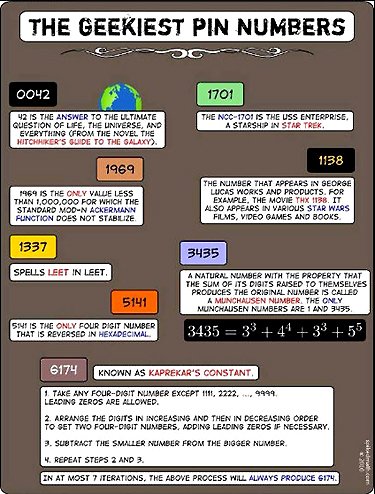
Geekiest Pin Numbers

,

GeekiestPinNumbers

Via I F*cking Love Science.

04 Aug 2014

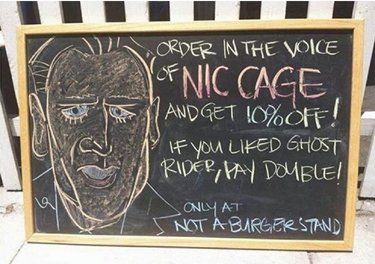
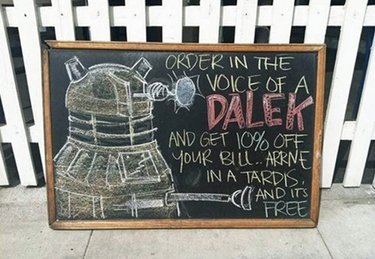
Discount Offers

, , ,

NotaBurger1
NotaBurger2
NotaBurger3
NotaBurger4
NotaBurger5

Discount offers in chalk art by Lila Roux for Not a Burger Stand in Beautiful Downtown Burbank, California.

Even more here.

04 Aug 2014

“The Guns of August”

, ,

A documentary based on the Barbara Tuchman book.

04 Aug 2014

August 4, 1914

, ,

nyt-ww1

Germany implements the Schlieffen Plan, violating Belgian Neutrality, in an attempt to outflank the French Army and gain a quick victory by knocking France out of the war.

In response to the invasion of neutral Belgium, Britain declares war on Germany.

“The lamps are going out all over Europe, we shall not see them lit again in our life-time.” remarks British Foreign Secretary Sir Edward Grey.

03 Aug 2014

Jonathan Tortoise

,

JonathanTortoise1
JonathanTortoise2

Jonathan is a Seychelles giant tortoise (Dipsochelys hololissa) residing in the grounds of the official residence of the Governor, at Plantation House, on the island of Saint Helena.

A photograph was uncovered in a collection of Boer War images showing a tortoise standing next to a war prisoner around the year 1900. On December 5, 2008, the Daily Mail published a story identifying Jonathan as the same tortoise pictured in the photograph.

Jonathan was brought to the island from the Seychelles in 1882, along with three other tortoises who are no longer with us. He was an adult tortoise at that time, so he would already have been at least 50 years old.

His minimum age is therefore 182, making him the oldest living land animal.

03 Aug 2014

The Proper Way to Divide a Parmesan Cheese

,

03 Aug 2014

Mrs. Escher’s Nightmare

EscherGif1

03 Aug 2014

Over-reaction

, , , , ,

Overreaction

Via Vanderleun.

02 Aug 2014

Re-reading “Catcher in the Rye”

,

HoldenCaulfield

Tyler Cowen and Bryan Caplan have been re-reading Catcher in the Rye (so we don’t have to).

TC:

Back then, if you didn’t use your prostitute and then tried to underpay her, she would call you a “crumb-bum. …

[W]hat the novel is really about… is impotence and also post-traumatic stress disorder. …

There is a corniness to how people thought and spoke back then which the book captures remarkably well. …

I expected not to like the re-read, but overall I thought it was pretty damn good and almost universally misunderstood.

———————-

BC
:

Other than losing his brother Allie, Holden has no external problems. He is a rich kid living in the most amazing city in the world. Rather than appreciating his good fortune or trying to make the most of his bountiful opportunities, Holden seeks out fruitless conflict. If you still doubt that happiness fundamentally reflects personality, not circumstances, CITR can teach you something. …

Although I was a teen-age misanthrope, anti-hero Holden Caulfield is more dysfunctional than I ever was. My dream was for everyone I disliked to leave me alone. Holden, in contrast, habitually seeks out the company of people he dislikes, then quarrels with them when they act as expected. …

Even if Holden’s enduring antipathy for “phonies” were justified, it’s hard to see why the epithet applies to most of its targets….

For Holden, the main symptom of phoniness is that someone appears to like something Holden doesn’t. But he never wonders, “Is it possible that other people sincerely like stuff I don’t?”

If phonies are your biggest problem, your problems are none too serious. …

I doubt Salinger was being Straussian. Like most of CITR’s fans, he thought Holden has important things to teach us. Yet the book’s deepest and most important lesson is that Holden’s thoughts are profoundly shallow and unimportant. The Holdens of the world should stop talking and start listening, for they have little to teach and much to learn.

Hat tip to Walter Olson.

02 Aug 2014

Iliad Infographics

,

Iliad-infograph
Iliad-infographic-2

More

Hat tip to Karen L. Myers.

01 Aug 2014

Bruce Lee’s Legendary One-Inch Punch

, , ,

Bruce-Lee

Remember how, in Kill Bill 2 (2004), Beatrix Kiddo (Uma Thurman) is able to break out of the coffin in which Bud buried her alive by smashing its boards, despite having only a few inches of arm room to throw a punch? Fortunately for Beatrix, her Si Fu Pei Mei had taught her Kung Fu rigorously, making her break two-inch boards starting the blow only an inch away from its target.

Terrence McCoy, in the Washington Post, reports that scientists are attempting to explain how Bruce Lee could do the same kind of thing… in real life.

It’s a punch that has captivated our imagination for decades. From the distance of one-inch, Bruce Lee could break boards, knock opponents off their feet and look totally badass doing it. It’s one of the most famous — and fabled — blows in the world.

Days ago, Popular Mechanics set out to solve the mystery behind it – and did.

Drawing upon both physical and neuro power, Lee’s devastating one-inch punch involved substantially more than arm strength. It was achieved through the fluid teamwork of every body part. It was his feet. It was hips and arms. It was even his brain. In several milliseconds, a spark of kinetic energy ignited in Lee’s feet and surged through his core to his limbs before its eventual release.

Scientists advise that you watch Lee’s movement closely. If you do, you’ll see every part of his body move. …Every bodily jerk has an apex of force. To not only maximize on that force — but to augment it — Lee perfectly synchronizes his movements, one after the other, linking them like boxcars on a train. To be sure, countless muscle men have been stronger than Lee, but few, if any, could deliver more more power than Lee with just one inch.

What makes the difference? Lee’s brain.

—————————————————–

Popular Mechanics:

To understand why the one-inch punch is more about mind than muscle, you first have to understand how Bruce Lee delivers the blow. Although Lee’s fist travels a tiny distance in mere milliseconds, the punch is an intricate full-body movement. According to Jessica Rose, a Stanford University biomechanical researcher, Lee’s lightning-quick jab actually starts with his legs.

“When watching the one-inch punch, you can see that his leading and trailing legs straighten with a rapid, explosive knee extension,” Rose says. The sudden jerk of his legs increases the twisting speed of Lee’s hips—which, in turn, lurches the shoulder of his thrusting arm forward.

As Lee’s shoulder bolts ahead, his arm gets to work. The swift and simultaneous extension of his elbow drives his fist forward. For a final flourish, Rose says, “flicking his wrist just prior to impact may further increase the fist velocity.” Once the punch lands on target, Lee pulls back almost immediately. Rose explains that this shortens the impact time of his blow, which compresses the force and makes it all the more powerful.

By the time the one-inch punch has made contact with its target, Lee has combined the power of some of the biggest muscles in his body into a tiny area of force. But while the one-inch punch is built upon the explosive power of multiple muscles, Rose insists that Bruce Lee’s muscles are actually not the most important engine behind the blow.

“Muscle fibers do not dictate coordination,” Rose says, “and coordination and timing are essential factors behind movements like this one-inch punch.”

Because the punch happens over such a short amount of time, Lee has to synchronize each segment of the jab—his twisting hip, extending knees, and thrusting shoulder, elbow, and wrist—with incredible accuracy. Furthermore, each joint in Lee’s body has a single moment of peak acceleration, and to get maximum juice out of the move, Lee must layer his movements so that each period of peak acceleration follows the last one instantly.

So coordination is key.

01 Aug 2014

Summer Down Under

,

SummerinAustralia

Your are browsing
the Archives of Never Yet Melted for August 2014.
/div>


Feeds
Entries (RSS)
Comments (RSS)
Feed Shark