Archive for December, 2016
09 Dec 2016


USS Nevada, beached and burning at Hospital Point.
James Gawron, at Ricochet, quotes Walter Lord’s Day of Infamy describing one of the braver incidents that fatal December 7th:
At 8 am on Sunday, Dec. 7, 1941, the 183 Japanese planes of the first attack wave descended on Pearl Harbor. Admiral Nagumo’s attack fleet was less than 100 miles from Pearl. Luckily the Enterprise, the huge American aircraft carrier, was at sea. Not so lucky was the fact that the American battleship fleet was anchored and inert, tied up in a neat row called Battleship Row in Pearl Harbor. The battleships were huge sitting targets. Even if someone had sounded an alarm when the planes were spotted on radar, it wouldn’t have made that much difference as it takes two hours for a battleship’s boilers to come up to full pressure so she can move properly. All of the battleships at Pearl had dead cold boilers that morning. Completely tied up at anchor, after coming up to full boiler pressure, it would have taken another 45 minutes with the help of multiple tugboats to get a battleship away from Battleship Row and moving.
It was Sunday morning and almost everyone was at Sunday morning services. However, to this fact and everything I stated in the preceding paragraph, there was one exception. The Battleship USS Nevada had about one-third of her crew and one officer and one quartermaster aboard. The boilers of the Nevada were at about half pressure. She was making repairs, even on Sunday morning.
The Japanese planes of the first attack wave descended without any warning whatsoever. Seeing the sitting ducks on Battleship Row, the pilots converged instantly for the attack on the American ships.
The Nevada was the last ship on Battleship Row in position 8. Ahead of her at anchor was the Battleship USS Arizona. In the first 15 minutes of the attack, a bomb struck the Arizona perfectly penetrating her forward deck armor and exploding her forward ammunition magazine. The entire ship detonated in a huge explosion. The explosion killed 1,117 of her crew of 1,400. Half the ship was gone and the other half was a burning inferno.
All of Pearl Harbor was mad confusion. People running everywhere trying to get to their posts, pinned down by strafing Japanese planes. On the Nevada, the highest ranking officer was Ensign Joseph Taussig, Jr. [Read his obituary] He was the youngest officer, just out of the Naval Academy and had only been on the Nevada a few days. Also aboard was Quartermaster Chief Robert Sedberry, a man with many years of experience. Ens. Taussig manned the forward anti-aircraft battery himself. A shell smashed his leg, it would later be amputated. Still conscious, he continued to command the anti-aircraft defense. Meanwhile, Sedberry and others made the decision to take the ship into action. They must swing the ship free from her berth without the aid of tugboats, without two hours to bring the ship to full steam, without a civilian harbor pilot, without the navigator, and without the captain. Sedberry manned the helm.
She got past the burning remains of the Arizona just barely. As the Nevada slowly pulled free of her anchorage and steamed down past Battleship Row wild screaming cheers were heard all over Pearl. There she was, the Nevada moving! She was heading for the harbor mouth. She was heading out to sea for the counter attack! As she got about dead center of Pearl Harbor, out of the sky came 171 Japanese planes, the second wave attack.
The Japanese pilots of the second wave were greeted by a riveting sight. Most of the American ships were in flames but a single American battleship was moving out to sea. They knew very well that this ship had 14-inch guns on board. These guns could fire accurately over 20 miles. This ship could do over 30 knots (about 35 miles per hour). In two hours at full speed, she would be in range of their attack fleet. A single 14-inch shell would pierce the unarmored deck of any of their aircraft carriers. One shot might easily sink a Japanese carrier.
The entire second wave descended on Nevada. It is interesting to note that it is not so easy to hit a moving target as it is to punch holes in a sitting duck. However, Nevada wasn’t moving that fast and there were 171 planes to get her. Soon Nevada was on fire from one end of the ship to the other. She had been torpedoed and was taking on water. Ens. Taussig, although severely wounded, continued anti-aircraft fire at the Japanese planes. Chief Quartermaster Sedberry had been radioed a final order. If the Nevada sunk in the harbor channel she would plug Pearl Harbor for a prolonged period of time. Most of the crew had already abandoned ship. The Quartermaster and a few men guided the huge ship towards Hospital Point just inside the harbor mouth to the east. There they beached the Nevada in the sand like a giant canoe. Still conscious, Taussig was carried off the ship.
What is significant about this? Why am I relating this story? Simply because human events, their outcomes and their significance, are so hard to predict. At first, you might think the Nevada‘s short but glorious cruise a total waste and insignificant. However, because she was moving when the second wave appeared, most of the Japanese planes wasted their bombs attacking her. If the Japanese pilots had instead found all of the American ships out of action, they would have immediately turned their attention to the rest of Pearl Harbor’s extensive military facilities. The dry docks most of all. Back in Tokyo, Admiral Yamamoto received the full report. He was furious about the second wave and its failure to bomb the dry docks. He said:
Because of Nevada, most of Pearl remained intact and was fully operational in short order. With Pearl Harbor’s facilities, The American fleet quickly recovered. At the Battle of Coral Sea, the Japanese found themselves to be less than invincible and suffered major damage.
Wikipedia:
Subsequently salvaged and modernized at Puget Sound Navy Yard, Nevada served as a convoy escort in the Atlantic and as a fire-support ship in four amphibious assaults: the Normandy Landings and the invasions of Southern France, Iwo Jima, and Okinawa.
09 Dec 2016

16-foot female (an invasive species record) had the remains of three deer in its system.
Sporting Classics:
Burmese pythons are the scourge of the Florida Everglades, eating anything they can fit inside their cavernous jaws. They’re known to eat deer when the opportunity arises, but one invasive serpent has officially set a world record: three deer in its gut at the same time.
In 2013 wildlife officials discovered the remains of a doe and two fawns in the belly of a 15.6-foot Burmese python. The snake was captured and later euthanized as part of a scientific study conducted by researchers from Pennsylvania’s Dickinson College, with the results of their findings being published earlier this year in the scientific journal BioInvasions Records.
“A comparative examination of bone, teeth, and hooves extracted from the fecal contents revealed that this snake consumed three white-tailed deer (Odocoileus virginianus),†wrote lead researcher Scott Boback. “This is the first report of an invasive Burmese python containing the remains of multiple white-tailed deer in its gut.â€
The paper reports that the snake likely ate the three deer at different times over an 87-day period. The presence of special teeth only present in fawns helped researchers identify the younger deer, while another tooth pointed to an animal at least 12 months in age. The growth rate of deer hooves ultimately helped the researchers determine that three deer—one older than 12 months, one 24 to 30 days old, and one roughly two weeks old—had been eaten.
Other than the hooves and teeth, researchers found a skull fragment, bits of vertebrae and appendages, and some fur, but scant else. A python is capable of digesting bone, so the remains had to be carefully examined to determine what was contained in the snake’s fecal material.
In the end, the researchers believe the snake hid from its prey in some body of water, then when they came down to drink it attacked with its backward-curving teeth and began constricting them. While pythons have been present in the Everglades since at least the 1990s, deer simply haven’t adapted to this new danger.
“Because the largest snakes native to southern Florida are not capable of consuming even mid-sized mammals, pythons likely represent a novel predatory threat to white-tailed deer in these habitats,†the researchers wrote.
Read the whole thing.
08 Dec 2016

World Tribune:
The Democrats only win the cities, the Black Belt, the Rio Grande Valley, and some Indian reservations.
That the Democrats have become the party of coastal elites is now backed up by hard data from the Nov. 8 election.
President-elect Donald Trump won 3,084 of the 3,141 counties in the United States.
Hillary Clinton won just 52 coastal counties and five “county equivalent†cities stretching from San Diego to Seattle on the West Coast and Northern Virginia to Boston on the East Coast, including two major cities – Washington, D.C and Baltimore, Maryland – included in the five “county equivalent†cities, and three major cities – Philadelphia, New York, and Boston – which are included in the 52 counties.
Clinton received 70 percent of the 18.4 million votes cast in these 52 elite coastal counties. Votes cast in those counties accounted for only 14.4 percent of the estimated 127.7 million total votes cast in the country.
08 Dec 2016

Poor Little Benjamin Ryan had to go to the Psych Ward for three days to save himself from suicide after November 8.
I found out Donald Trump had won the Electoral College while midstream in providing a urine sample for the emergency psychiatric staff of a New York City public hospital. The unlockable bathroom door in this unescapable wing was ajar, and I could hear the victorious Mike Pence’s sinister Sunday-school baritone taunting me with the truth from the hallway television.
For the preceding witching hours of election night, I had lain in a fetal position amidst a cast of anonymous men nursing their own crises, my hands clasped tightly over my ears. It wasn’t that I minded the howls of the guy nearby who was shackled to his cot and monitored by an unimpressed brood of policemen. Instead, I wanted to spare myself any word of the far greater insanity unfolding beyond the hospital walls.
Drained of tears, too tired to sleep, I stared at the fluorescent ceiling lights —which, indifferent to our suffering, remained on throughout the night — and endured the passing time by willing my thoughts to vanish into the dull glow. For a second, I imagined someone would burst in and proclaim, “It’s all right, Hillary won!†and I would bound out of bed, awoken from this nightmare.
This was all just a dream, right?
A while before, during the final hour of November 8, I had committed myself to institutional psychiatric care. A generation or two ago they would have said I was suffering a nervous breakdown: catatonic, plagued by involuntary jerking motions (my head furiously shaking “No! â€), speech patterns disjointed, weeping uncontrollably.
During the final hour of November 8, I had committed myself to institutional psychiatric care.
Terror drove me to this interrupted state. I was afraid for the nation, for the stigmatized and oppressed. I was also afraid for my own life. Because the values and principles I hold dear felt fatally incompatible with the hate and bigotry that Trumpism had come to stand for. I did not want to live in a world that would elect such a man as president.
Read the whole thing.
08 Dec 2016
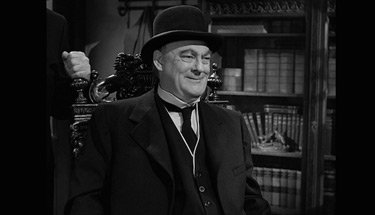
Tom Mullen defends Bedford Falls’ most misunderstood and slandered businessman.
December is upon us and that means plentiful opportunities to watch the enduring classic, It’s a Wonderful Life. Unfortunately, the overwhelming majority of viewers completely misinterpret Frank Capra’s dystopian nightmare as a heartwarming Christmas tale.
The emotional appeal of angels getting their wings is undeniable. Crying out for correction, however, are the vicious slanders regarding the film’s real hero, Henry Potter.
We first hear of Potter from George Bailey’s father, Peter Bailey, who badmouths Potter with the usual falsehoods about businessmen. But during Bailey’s envious rant, we learn something important: Henry Potter is a board member of the building and loan. We later learn Potter is, in fact, a stockholder.
That puts a somewhat different light on his subsequent motion to liquidate the business upon Peter Bailey’s death. Yes, we hear George Bailey repeating the familiar socialist tropes his father did: that Potter only wants to close the building and loan because he “can’t get his hands on it†and considers the little people cattle, etc.
But Potter responds with some rather inconvenient facts: the building and loan has been making bad business decisions, providing what we’d now call subprime loans to people who can’t pay them back.
The Baileys squander their investors’ money on a do-gooder, subprime loan scheme to make everyone a homeowner.We don’t know how Potter became a stockholder, but the Bailey Building and Loan does not appear to be a publicly traded company. The most likely explanation is Peter Bailey asked Potter for capital, just as George Bailey does later in the film, in between rounds of disparaging Potter as a greedy capitalist. That would be perfectly consistent with today’s “progressives,†who rail against capitalists out of one side of their mouths while sucking up to them for money out of the other.
But regardless of how Potter became a stockholder, Peter Bailey has a fiduciary duty to him to run the business for maximum profit, providing Potter and the other stockholders a return on their investments, something George Bailey confirms they never intended to do. Instead, the Baileys squander their investors’ money on a do-gooder, subprime loan scheme to make everyone a homeowner. It worked out in fictional Bedford Falls about as well as it did in early 2000s America.
Meanwhile, the Baileys constantly slander Potter’s rental houses as “overpriced slums.†These are the same Baileys whose housing opportunities are more expensive than Potter’s.
Their accusations constantly beg the question: If Potter’s houses are so bad, why do so many people choose to live in them? It’s constantly implied Potter’s customers have no other choice, but what exactly does that mean? Why has no one else, including any of the businessmen on the board of the Bailey Building and Loan, developed rental properties that are higher in quality, lower in price, or both?
The inescapable truth is Potter is wealthy because he provides a product that most satisfies his customers’ preferences for quality and price. If there were an opportunity to provide a higher quality product at a lower price than Potter was charging, a competitor would do so and take market share away from Potter, until Potter either raised his quality, lowered his price, or both.
The Baileys burn with resentment that so many residents of Bedford Falls prudently choose to live in Potter’s less expensive housing than buy a house they can’t afford, financed by the Baileys’ Ponzi scheme. Thus, even after shirking their fiduciary duty to run the business properly, the Baileys spend decades assaulting Potter’s character in a transparent attempt to lure away his customers.
Without Potter, a large portion of Bedford Falls would be unemployed.When the Depression hits and the Bailey Building and Loan is exposed for the fractional reserve fraud it is, Potter offers to come to the rescue with a generous offer to buy out its customers. It is noteworthy there is a run on the Bailey Building and Loan and the local bank, but Potter is financially secure enough to save them both, proving once again he is the only honorable businessman in the film.
Read the whole thing.
07 Dec 2016
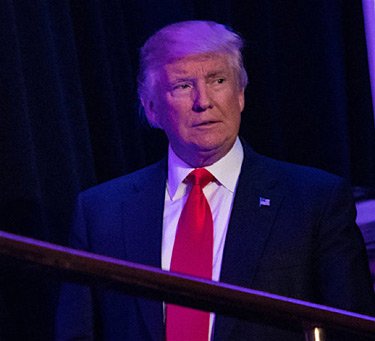
via Vanderleun: Trump looking serious, just prior to his acceptance speech on election night.
Glenn Reynolds looks at Trump’s performance so far, very early, and contends that there is much for conservatives to like, and that even (#4) the part conservatives will not like was really smart politics.
(1) Killed off dynastic politics, at least for now. If Hillary had won, 4 of the last 5 presidents would have come from two families. That’s not healthy.
(2) Kept Hillary out of the White House. She’s amazingly crooked even by DC standards, and amazingly inept even by DC standards as well. Debacles galore have been prevented by keeping her out. Plus, a Clinton presidency would have allowed the completion of the Obama Administration’s weaponization of the federal government and possibly ensured one-party rule for decades. And at the very least, it would have allowed the sorry gang that Obama and Clinton brought in (go read the Podesta emails!) to bore in for four to eight more years.
Those two reasons were reason enough to back Trump. But now let’s look at what’s happened since election night:
(3) The Mattis appointment. In one swoop, a big start toward fixing the military that Obama turned from warriors into social-justice warriors. Plus, a big blow to PC culture in general.
(4) The Carrier deal. Sure, everybody hates it — except for the voters. But it’s a promise kept, and one that makes American working-class folks feel like, finally, somebody cares. And it’s rich to see people who didn’t bat an eye at Solyndra going ballistic about $7 million over 10 years.
(5) Crushing the media’s sense of self-importance: They thought they were going to hand this election to Hillary. Now they’re realizing just how few people like or trust them, while Trump bypasses them using Twitter and YouTube. As I’ve said before, in the post-World War II era, the press has enjoyed certain institutional privileges based on two assumptions: (1) That it’s very powerful; and (2) That it will exercise that power responsibly, for the most part. Both assumptions have been proven false in this election cycle. Like many of the postwar institutional accommodations, this one will be renegotiated under Trump. It’s past time. After getting spanked in 2004 over RatherGate, the press realized with Katrina that if they all converged on the same lies they could still move the needle. Now they can’t.
(6) China. Obama’s foreign policy has been disastrous. Trump has served notice to China that we’re not abandoning our allies on the Pacific Rim. That will be noticed elsewhere, too.
(7) The transition. It was supposed to be “chaos,†but it’s been smooth and obviously well-planned. This bodes well and, among those willing to pay attention beyond SNL sketches, is changing minds.
Don’t get cocky, because he could still blow it and the press will be looking for anything they can use to destroy him, as they do with every Republican president. But for a guy less than 4 weeks out from the election, he’s doing awfully well.
Glenn’s right. Trump’s cabinet picks have been praiseworthy, in one case: outstanding. If Trump had announced that he would make Mattis Secretary of Defense before the election, I’d have voted for him.
Trump has displayed magnanimity. He told the press he would not prosecute Hillary, and he has been very seriously considering Mitt Romney for Secretary of State, despite Romney’s strong attack during the campaign and withholding of support.
Trump displayed good judgement, too, in dumping Chris Christie, who reeks of Tri-State Area sleaze.
Trump’s appointments, his organization of the transition team, and the Taiwan phone call as message to China have all demonstrated intelligence and good organizational and strategic ability.
Donald Trump has been “a riddle, wrapped in a mystery, inside an enigma.” There was no evidence in his entire previous life of any party or ideological commitment whatsoever. Trump donated generously to every major liberal democrat, and golfed and hobnobbed with them happily. In the course of his campaign, he took positions, changed his mind, and contradicted himself. It seemed impossible to rely on Trump’s promises of conservative judicial appointments, tax cuts, and other conservative policies. But he has been elected, and the conservative appointments and policy promises are still coming.
I still fear that Trump is going to disappoint badly before all this is over, but so far so good. He is demonstrating a lot more seriousness and a better character than I ever would have expected, and I find myself obliged to admit that I’ve been wrong: Trump has got real political strategic ability and he does know what he is doing.
07 Dec 2016

Donald Trump doesn’t know how to wear a suit or tie a necktie properly. He is a terrible speaker. He is a tonsorial disaster area. But, Scott Adams may be right about Trump possessing his own unique kind of political genius. His use of Twitter, for instance, is un-presidential, informal, inaccurate, careless, and frequently embarrassing, but he has tens of millions of followers who receive his messages directly, and every time he tweets he drives the establishment media crazy.
Gerard Van der Leun identified the process:
Since the election, Trump has continued to Tweet away. He’s called for Hamilton to be boycotted and flag-burning to be criminalised, and every time the same 10-part pattern unfolds and the whole thing starts again.
Each episode followed a familiar 10-part pattern:
1) Trump posts an inflammatory, highly opinionated tweet.
2) The media goes nuts.
3) Trump’s tweet then dominates the news all day.
4) The media demands he stops tweeting because it’s ‘un-presidential.’
5) Trump ignores them.
6) Conventional politicians demand he stops tweeting because it’s un-presidential.’
7) Trump ignores them too.
8) Trump wakes up next morning to every paper and cable news show talking about his tweet.
9) Trump chuckles to himself.
10) Trump tweets again.
Repeat.
07 Dec 2016

The weather was warm that Sunday in the Eastern United States. Several WWII veterans I used to know told me they remembered being outside fixing the roof or painting the house, when news of the attack came over the radio.
I grew up in Schuylkill County, Pennsylvania. The Commonwealth of Pennsylvania supplied the largest number of men who served in WWII of any of the 48 states, and Schuylkill County provided the largest number of servicemen of any county in the Commonwealth. All of my grandparents’ sons were in the service. The oldest, Joseph, was in the Navy. My father, William and his younger brother, Edward, were in the Marine Corps. Their youngest daughter, my aunt Eleanor, also served in the Marine Corps.
/div>

Feeds
|