Archive for December, 2017
04 Dec 2017

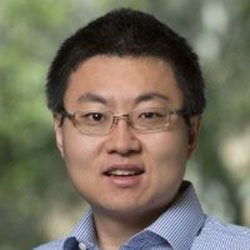
Puzhong Yao.
Puzhong Yao was born in China, but has studied and worked at some of the most elite institutions in the West, and he still finds the mindset of the Western elite strange.
[L]ike the Evangelical Christians, my life was changed by a book. Specifically, Robert Rubin’s autobiography In an Uncertain World (Random House, 2003). Robert Rubin was Goldman Sachs’s senior partner and subsequently secretary of the Treasury. Only later did I learn that certain people in the United States revere him as something of a god.
I first bought the book because I was puzzled by the title, especially coming from a man who had achieved so much. I had always thought that things happen for reasons. My parents taught me that good people get rewarded while evil gets punished. My teachers at school taught me that if you work hard, you will succeed, and if you never try, you will surely fail. When I picked up the book, I was studying math at Cambridge University and, as I looked back at the standardized tests and intense study that had defined my life until then, I could see no uncertainty.
But since reading Rubin’s book, I have come to see the world differently. Robert Rubin never intended to become the senior partner of Goldman Sachs: a few years into his career, he even handed in his resignation. Just as in Rubin’s career, I find that maybe randomness is not merely the noise but the dominant factor. And those reasons we assign to historical events are often just ex post rationalizations. As rising generations are taught the rationalizations, they conclude that things always happen for a reason. Meanwhile, I keep wondering: is there someone, sitting in a comfortable chair somewhere, flipping a coin from time to time, deciding what happens in the world? …
I don’t claim to be a modern-day Alexis de Tocqueville, nor do I have much in common with this famous observer of American life. He grew up in Paris, a city renowned for its culture and architecture. I grew up in Shijiazhuang, a city renowned for being the headquarters of the company that produced toxic infant formula. He was a child of aristocrats; I am the child of modest workers.
Nevertheless, I hope my candid observations can provide some insights into the elite institutions of the West. Certain beliefs are as ubiquitous among the people I went to school with as smog was in Shijiazhuang. The doctrines that shape the worldviews and cultural assumptions at elite Western institutions like Cambridge, Stanford, and Goldman Sachs have become almost religious. Nevertheless, I hope that the perspective of a candid Chinese atheist can be of some instruction to them. …
It was the summer of 2000. I was 15, and I had just finished my high school entrance exam in China. I had made considerable improvements from where I started in first grade, when I had the second- worst grades in the class and had to sit at a desk perpendicular to the blackboard so that the teacher could keep a close eye on me. I had managed to become an average student in an average school. My parents by then had reached the conclusion that I was not going anywhere promising in China and were ready to send me abroad for high school. Contrary to all expectations, however, I got the best mark in my class and my school. The exam scores were so good that I ranked within the top ten among more than 100,000 students in the whole city. My teacher and I both assumed the score was wrong when we first heard it.
As a consequence, I got into the best class in the best school in my city, and thus began the most painful year of my life. My newfound confidence was quickly crushed when I saw how talented my new classmates were. In the first class, our math teacher announced that she would start from chapter four of the textbook, as she assumed, correctly, that most of us were familiar with the first three chapters and would find it boring to go through them again. Most of the class had been participating in various competitions in middle school and had become familiar with a large part of the high school syllabus already. Furthermore, they had also grown to know each other from those years of competitions together. And here I was, someone who didn’t know anything or anyone, surrounded by people who knew more to begin with, who were much smarter, and who worked just as hard as I did. What chance did I have?
During that year, I tried very hard to catch up: I gave up everything else and even moved somewhere close to the school to save time on the commute, but to no avail. Over time, going to school and competing while knowing I was sure to lose became torture. Yet I had to do it every day. At the end-of-year exam, I scored second from the bottom of the class—the same place where I began in first grade. But this time it was much harder to accept, after the glory I had enjoyed just one year earlier and the huge amount of effort I had put into studying this year. Finally, I threw in the towel, and asked my parents to send me abroad. Anywhere else on this earth would surely be better.
So I came to the UK in 2001, when I was 16 years old. Much to my surprise, I found the UK’s exam-focused educational system very similar to the one in China. What is more, in both countries, going to the “right schools†and getting the “right job†are seen as very important by a large group of eager parents. As a result, scoring well on exams and doing well in school interviews—or even the play session for the nursery or pre-prep school—become the most important things in the world. Even at the university level, the undergraduate degree from the University of Cambridge depends on nothing else but an exam at the end of the last year.
On the other hand, although the UK’s university system is considered superior to China’s, with a population that is only one-twentieth the size of my native country, competition, while tough, is less intimidating. For example, about one in ten applicants gets into Oxbridge in the UK, and Stanford and Harvard accept about one in twenty-five applicants. But in Hebei province in China, where I am from, only one in fifteen hundred applicants gets into Peking or Qinghua University.
Still, I found it hard to believe how much easier everything became. I scored first nationwide in the GCSE (high school) math exam, and my photo was printed in a national newspaper. I was admitted into Trinity College, University of Cambridge, once the home of Sir Isaac Newton, Francis Bacon, and Prince Charles. …
Warren Buffett has said that the moment one was born in the United States or another Western country, that person has essentially won a lottery. If someone is born a U.S. citizen, he or she enjoys a huge advantage in almost every aspect of life, including expected wealth, education, health care, environment, safety, etc., when compared to someone born in developing countries. For someone foreign to “purchase†these privileges, the price tag at the moment is $1 million dollars (the rough value of the EB-5 investment visa). Even at this price level, the demand from certain countries routinely exceeds the annual allocated quota, resulting in long waiting times. In that sense, American citizens were born millionaires!
Yet one wonders how long such luck will last. This brings me back to the title of Rubin’s book, his “uncertain world.†In such a world, the vast majority things are outside our control, determined by God or luck. After we have given our best and once the final card is drawn, we should neither become too excited by what we have achieved nor too depressed by what we failed to achieve. We should simply acknowledge the result and move on. Maybe this is the key to a happy life.
On the other hand, it seems odd that this should be the principal lesson of a Western education. In Communist China, I was taught that hard work would bring success. In the land of the American dream, I learned that success comes through good luck, the right slogans, and monitoring your own—and others’—emotions.
RTWT
03 Dec 2017

Uptown rats are genetically different from Downtown rats, and you can even easily differentiate West Village rats from East Village rats. I can only suppose that most Upper West Side rats are probably liberal and Jewish. The Atlantic:
Manhattan’s rats are genetically most similar to those from Western Europe, especially Great Britain and France. They most likely came on ships in the mid-18th century, when New York was still a British colony. [Fordhan University grad student Matthew] Combs was surprised to find Manhattan’s rats so homogenous in origin. New York has been the center of so much trade and immigration, yet the descendants of these Western European rats have held on.
When Combs looked closer, distinct rat subpopulations emerged. Manhattan has two genetically distinguishable groups of rats: the uptown rats and the downtown rats, separated by the geographic barrier that is midtown. It’s not that midtown is rat-free—such a notion is inconceivable—but the commercial district lacks the household trash (aka food) and backyards (aka shelter) that rats like. Since rats tend to move only a few blocks in their lifetimes, the uptown rats and downtown rats don’t mix much.
When the researchers drilled down even deeper, they found that different neighborhoods have their own distinct rats. “If you gave us a rat, we could tell whether it came from the West Village or the East Village,†says Combs. “They’re actually unique little rat neighborhoods.†And the boundaries of rat neighborhoods can fit surprisingly well with human ones.
Combs and a team of undergraduate students spent their summers trapping rats—beginning in Inwood at the north tip of Manhattan and working their way south. They got permission from the New York City Department of Parks and Recreation, which gave them access to big green spaces like Central Park as well as medians and triangles and little gardens that dot the city. And they asked local residents. “More often than not, they were very, very happy to show us exactly where they had rats.†says Combs. A crowdsourced map of rat sightings also proved very helpful.
Rats, although abundant, are not easily fooled into traps. They’re wary of new objects. To entice them, the bait was a potent combination of peanut butter, bacon, and oats. And the team placed their traps near places where rats had clearly crawled. They looked for rat holes, droppings, chew marks on trash cans, and sebum marks—aka the grease tracks rats leave when they traverse the same path to the garbage over and over again.
For the DNA analysis, Combs cut off an inch or so of the rats’ tails. (Over 200 of these tails are still saved in vials in a lab freezer.) The team also took tissue samples for other researchers interested in studying how rats spread diseases through the urban environment. And some of the rats they skinned and stuffed for the collections of the Yale University Peabody Museum of Natural History, where they will join stuffed rats from 100 years ago.
RTWT
03 Dec 2017

View of the University of Leicester excavations at Ebbsfleet in 2016 showing Pegwell Bay and the cliffs at Ramsgate.
Telegraph:
The first Roman invasion of Britain by Julius Caesar in 55BC is a historical fact, with vivid accounts passed down by Tacitus, Cicero and Caesar himself.
Yet, despite a huge landing force of legionaries from 800 ships, no archaeological evidence for the attack or any physical remains of encampments have ever been found.
But now a chance excavation carried out ahead of a road building project in Kent has uncovered what is thought to be the first solid proof for the invasion.
Archaeologists from the University of Leicester and Kent County Council have found a defensive ditch and javelin spear at Ebbsfleet, a hamlet on the Isle of Thanet.
RTWT
03 Dec 2017
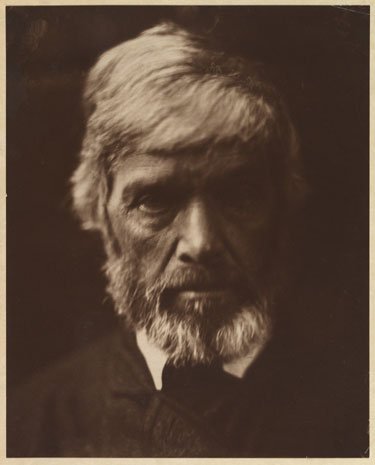
Thomas Carlyle 1795-1881
LATTER-DAY PAMPHLETS.by Thomas Carlyle NO. I. THE PRESENT TIME. [February 1, 1850.]:
I say, it is the everlasting privilege of the foolish to be governed by the wise; to be guided in the right path by those who know it better than they. This is the first “right of man;†compared with which all other rights are as nothing,—mere superfluities, corollaries which will follow of their own accord out of this; if they be not contradictions to this, and less than nothing! To the wise it is not a privilege; far other indeed. Doubtless, as bringing preservation to their country, it implies preservation of themselves withal; but intrinsically it is the harshest duty a wise man, if he be indeed wise, has laid to his hand. A duty which he would fain enough shirk; which accordingly, in these sad times of doubt and cowardly sloth, he has long everywhere been endeavoring to reduce to its minimum, and has in fact in most cases nearly escaped altogether. It is an ungoverned world; a world which we flatter ourselves will henceforth need no governing. On the dust of our heroic ancestors we too sit ballot-boxing, saying to one another, It is well, it is well! By inheritance of their noble struggles, we have been permitted to sit slothful so long. By noble toil, not by shallow laughter and vain talk, they made this English Existence from a savage forest into an arable inhabitable field for us; and we, idly dreaming it would grow spontaneous crops forever,—find it now in a too questionable state; peremptorily requiring real labor and agriculture again. Real “agriculture†is not pleasant; much pleasanter to reap and winnow (with ballot-box or otherwise) than to plough!
Who would govern that can get along without governing? He that is fittest for it, is of all men the unwillingest unless constrained. By multifarious devices we have been endeavoring to dispense with governing; and by very superficial speculations, of laissez-faire, supply-and-demand, &c. &c. to persuade ourselves that it is best so. The Real Captain, unless it be some Captain of mechanical Industry hired by Mammon, where is he in these days? Most likely, in silence, in sad isolation somewhere, in remote obscurity; trying if, in an evil ungoverned time, he cannot at least govern himself. The Real Captain undiscoverable; the Phantasm Captain everywhere very conspicuous:—it is thought Phantasm Captains, aided by ballot-boxes, are the true method, after all. They are much the pleasantest for the time being! And so no Dux or Duke of any sort, in any province of our affairs, now leads: the Duke’s Bailiff leads, what little leading is required for getting in the rents; and the Duke merely rides in the state-coach. It is everywhere so: and now at last we see a world all rushing towards strange consummations, because it is and has long been so!
 
I do not suppose any reader of mine, or many persons in England at all, have much faith in Fraternity, Equality and the Revolutionary Millenniums preached by the French Prophets in this age: but there are many movements here too which tend inevitably in the like direction; and good men, who would stand aghast at Red Republic and its adjuncts, seem to me travelling at full speed towards that or a similar goal! Certainly the notion everywhere prevails among us too, and preaches itself abroad in every dialect, uncontradicted anywhere so far as I can hear, That the grand panacea for social woes is what we call “enfranchisement,†“emancipation;†or, translated into practical language, the cutting asunder of human relations, wherever they are found grievous, as is like to be pretty universally the case at the rate we have been going for some generations past. Let us all be “free†of one another; we shall then be happy. Free, without bond or connection except that of cash-payment; fair day’s wages for the fair day’s work; bargained for by voluntary contract, and law of supply-and-demand: this is thought to be the true solution of all difficulties and injustices that have occurred between man and man.
 
To rectify the relation that exists between two men, is there no method, then, but that of ending it? The old relation has become unsuitable, obsolete, perhaps unjust; it imperatively requires to be amended; and the remedy is, Abolish it, let there henceforth be no relation at all. From the “Sacrament of Marriage†downwards, human beings used to be manifoldly related, one to another, and each to all; and there was no relation among human beings, just or unjust, that had not its grievances and difficulties, its necessities on both sides to bear and forbear. But henceforth, be it known, we have changed all that, by favor of Heaven: “the voluntary principle†has come up, which will itself do the business for us; and now let a new Sacrament, that of Divorce, which we call emancipation, and spout of on our platforms, be universally the order of the day!—Have men considered whither all this is tending, and what it certainly enough betokens? Cut every human relation which has anywhere grown uneasy sheer asunder; reduce whatsoever was compulsory to voluntary, whatsoever was permanent among us to the condition of nomadic:—in other words, loosen by assiduous wedges in every joint, the whole fabric of social existence, stone from stone: till at last, all now being loose enough, it can, as we already see in most countries, be overset by sudden outburst of revolutionary rage; and, lying as mere mountains of anarchic rubbish, solicit you to sing Fraternity, &c., over it, and to rejoice in the new remarkable era of human progress we have arrived at.
via The Framed Maelstrom.
02 Dec 2017

Yale Commons Dining Hall closed forever.
The Yale Alumni Magazine forwarded on Facebook the above image.
Commons, a nearly block-long dining hall in which Yale Freshman Classes dined together for generations was built 1901-02 in the Beaux-Art style as an architectural gesture celebrating the University’s Bicentennial.
It was originally the whole University’s dining hall, but after the construction of the residential colleges early in the 1930s (each of which had its own dining hall), Commons was used by the Freshman Class, which resided not in the colleges, but rather in the dormitory halls of the Old Campus. The Yale freshman was allowed so many meals monthly in his future residential college’s dining hall, but was expected to take most meals in Commons.
The Salovey regime has been reducing meal service in Commons for some years seeking to economize on service costs. Finally, a donation of $150 million from Steven A. Schwarzman ’69, the Blackstone Group private equity magnate, was arranged to fund the conversion of the grand dining hall into some sort of a cultural center.
I was a scholarship student and my first Bursary job consisted of making toast and busing tables at Breakfast in Freshman Commons. I was proud to be working for a bit of my tuition, and I made a point of appropriating a rose or carnation from one of the table vases for a boutonnière and displaying a foulard silk handkerchief in the breast pocket of my white serving jacket.
I entered Yale in the old 1960s days of male-only classes when coats-and-ties were required in dining halls.
After we returned from the holidays, months could go by before roads were passable and mixers started up again. A Yale freshman, by late February, might not have so much as caught sight of a young woman for six weeks or more.
I remember one particularly wintry Wednesday in that cheerless month. New Haven streets and Yale paths were icy. It was cold and sleeting outside. The sun had set long before dinner time. We were making the best of mid-week dinner in Commons, happy enough to be inside under a roof and out of New Haven’s weather.
Suddenly, the door swung open, and in walked a tall, blond classmate, wearing black tie (!) to dinner in Commons, and accompanied by an absolutely beautiful young lady in an evening gown. The Class of 1970’s collective jaw dropped. As one man, we stood up in admiration and applauded.
They may have “cultural events,” but they will never have anything in the renovated and remodeled Schwarzman Center as insouciant and superb as that glorious couple.

A few years ago.
01 Dec 2017

Himalayan brown bear
Science:
Hikers in Tibet and the Himalayas need not fear the monstrous yeti—but they’d darn well better carry bear spray. DNA analyses of nine samples purported to be from the “abominable snowman†reveal that eight actually came from various species of bears native to the area.
In the folklore of Nepal, the yeti looms large. The creature is often depicted as an immense, shaggy ape-human that roams the Himalayan hinterlands. Purported sightings over the years, as well as scattered “remains†secreted away in monasteries or held by shamans, have hinted to some that the yeti is not merely a mythical boogeyman.
But science has not borne this out so far. Previous genetic analyses of a couple of hair samples collected in India and Bhutan suggested that one small stretch of their mitochondrial DNA (mtDNA)—the genetic material in a cell’s power-generating machinery that’s passed down only by females—resembled that of polar bears. That finding hinted that a previously unknown type of bear, possibly a hybrid between polar bears and brown bears, could be roaming the Himalayas, says Charlotte Lindqvist, an evolutionary biologist at the State University of New York in Buffalo.
To find out for sure, Lindqvist and her colleagues took a more thorough look at the mtDNA of as many samples of supposed yeti remains as she could get her hands on. Some were obtained when she worked with a U.K. production crew on the 2016 documentary Yeti or Not?, which sought to sift fact from folklore. The filmmakers got hold of a tooth and some hair collected on the Tibetan Plateau in the late 1930s, as well as a sample of scat from Italian mountaineer Reinhold Messner’s museum in the Tyrolean Alps. More recent samples included hair collected in Nepal by a nomadic herdsman and a leg bone found by a spiritual healer in a cave in Tibet. The team also analyzed samples recently collected from several subspecies of bears native to the area, including the Himalayan brown bear, the Tibetan brown bear, and the black bear. Altogether, the scientists analyzed 24 samples, including nine purported to be from yeti.
Of the nine “yeti†samples, eight turned out to be from bears native to the area, the researchers report today in the Proceedings of the Royal Society B. The other sample came from a dog.
RTWT
01 Dec 2017

Barton Swaim finds the spectacle of contemporary Liberalism caught publicly embarrassed in self-contradictory moral Absolutes an endless source of entertainment.
Today’s liberal elite do not look backward for their authority—there are no scriptures and no inviolable traditions in modern liberalism. They look to the future. The rules issuing from the modern liberal clerisy are thought to be the latest manifestation of moral progress, to which educated people must adhere if they wish to be thought of as good people. So for instance American liberals can, in the space of a decade or even less, go from believing marriage is a sacred institution between one man and one woman (Hillary Clinton and Barack Obama said they believed this) to holding that it’s a contract between two people who love each other, even if those two people are of the same sex. They can embrace the latter doctrine just as fervently as they did the earlier one.
The real trouble with this system is that the clerisy, in its enthusiasm to keep up with the times, issues new rules that contradict the old rules. The conflicting nature of its demands is not news, but of late those contradictions have become acute and more obvious.
/div>

Feeds
|