I asked a longtime friend who is a USG China-watcher for a no-kidding assessment of current energy usage in PRC. Energy usage is a vital sign for the economy:
China imports are down 20% with about a year and a half strategic stockpile in tanks inland and ships in port (China has a strange habit of keeping oil at sea). In fact, their oil use is down so severely that Saudi Arabia and Russia are coordinating their reduction in oil production (which is totally ridiculous because they are both one commodity economies and are directly confronting one another for customers to balance their national budgets).
This is from Chevron yesterday:
Working to lift markets this morning is the talk of supply cuts coming from OPEC+. Signs point to OPEC+ being willing to deepen cuts amidst the decreased demand caused by the coronavirus. OPEC+ is gathering for an urgent assessment of how Asia’s coronavirus may hurt oil demand; technical experts from the OPEC+ coalition will meet at the cartel’s Vienna headquarters to evaluate the disease’s impact.Russian President Vladimir Putin and Saudi King Salman bin Abdulaziz spoke by phone and discussed the grim situation of the global hydrocarbon market, the Kremlin said in an emailed statement; both leaders confirmed their readiness to continue cooperation to keep the global oil market stable.
Crude is recovering most of yesterday’s losses this morning, but markets are still reeling from last week’s declines.
Concern continues over the effects of the coronavirus on oil demand in China and Asia, but traders seem to have priced most of those concerns into the market already. The major remaining variable is how long will the crisis continue.
Crude prices are up this morning. Crude is currently trading at $51.07, a gain of 96 cents.Fuel prices are up. Diesel is trading at $1.6049, a gain of 2.7 cents.
Gasoline is trading at $1.4892, a gain of 1.6 cents.
Basically, China was already using less energy from the tariff war and now the virus has literally shut down the Yangtze River from Wuhan eastward to Shanghai (basically Saint Louis towards New Orleans– that’s how serious it is).
Keep in mind, the impact of China’s decline in energy use is driving oil prices down to the point many important national budgets cannot meet their obligations, which will put people in the streets protesting already compromised governments (Russia is the most vulnerable, then places like Venezuela are put in even more trouble, and the whole Belt/Road thing will fall apart).
The old well doesn’t look like much – a wooden crate-like object, dilapidated, crumbling a little. But according to new research, it’s really special. A tree-ring dating technique has revealed that the oak wood used to make it was cut around 7,275 years ago.
This makes it the oldest known wooden structure in the world that’s been confirmed using this method, scientists say.
“According to our findings, based particularly on dendrochronological data, we can say that the tree trunks for the wood used were felled in the years 5255 and 5256 BCE,” explained archaeologist Jaroslav PeÅ¡ka of the Archaeological Centre Olomouc in the Czech Republic in a press statement last year.
“The rings on the trunks enable us to give a precise estimate, give [or] take one year, as to when the trees were felled.”
The well was unearthed and discovered near the town of Ostrov in 2018 during construction on the D35 motorway in the Czech Republic. Ceramic fragments found inside the well dated the site to the early Neolithic, but no evidence of any settlement structures were found nearby, suggesting the well serviced several settlements at a bit of a distance away.
It was filled with dirt, so an archaeological team carefully excavated and extracted it. It consisted of four oak poles, one at each corner, with flat planks between them. The well was roughly square, measuring 80 by 80 centimetres (2.62 feet). It stood 140 centimetres tall (4.6 feet), with a shaft that extended below ground level and into the groundwater.
Even in waterlogged conditions, the state of preservation of the wood was exceptional, showing marks from the polished stone tools used to shape each piece.
“The construction of this well is unique,” PeÅ¡ka said.
“It bears marks of construction techniques used in the Bronze and Iron ages and even the Roman Age. We had no idea that the first farmers, who only had tools made of stone, bones, horns, or wood, were able to process the surface of felled trunks with such precision.”
And that amazing state of preservation also allowed for dendrochronological (based on tree rings) and radiocarbon dating, based on radioactive isotopes of carbon.
According to these techniques, the trees that supplied wood to the flat planks on the sides of the well were felled around 7,275 years ago. That’s probably when the well was constructed. But two of the poles told a different story.
Both were felled earlier – one around 7,278 or 7,279 years ago; and the other around nine years before that. This, the researchers concluded, meant that the two posts must have been used previously, and repurposed into posts for the well.
One of the side planks also had a different age. It was quite a bit younger, felled between 7,261 and 7,244 years ago. This is likely because of a repair to the well at some point.
The Telegraph has today another of those stories that makes you want to launch some Hellfire missiles from a drone at another elite university.
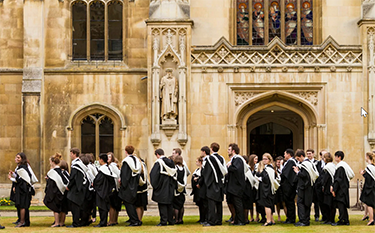
Cambridge University Students’ Union has said that having military personnel at freshers’ fair is “alarming†for attendees and could “detrimentally affect†their mental health.
Students voted to ban any societies from bringing firearms along to the fair after Stella Swain, the welfare and rights officer, argued that some people may find them “triggeringâ€.
The motion said that the presence of firearms and military personnel at the fair shows “implicit approval of their use, despite the links between military and firearms and violence on an international scaleâ€.
Ms Swain, who proposed the motion, pointed out that CUSU had previously committed to supporting efforts to “demilitarise†the university, and that freshers’ fair should not be a place for “military organisations to recruitâ€.
“The presence of firearms and military personnel at freshers’ fair is alarming and off-putting for some students, and has the potential to detrimentally affect students’ mental welfare,†the motion said.
Colonel Richard Kemp, the former commander of the British Forces in Afghanistan, labelled the motion as “pathetic, to say the very leastâ€.
Victoria Taft, at PJ Media, says what a lot of Americans are thinking this morning: “These are the people who want to make our health care and all our economic decisions for us?”
The Iowa caucus data operation just crashed and burned. That means that it could take days to get find out who actually won the Democratic contest – the first of the 2020 presidential election cycle.
Gobsmacked candidates have come out to throw confetti, drop balloons, and declare “on to New Hampshire!”
There’s nothing else to do except to declare victory and move on. No one really knows, right?
Joe Biden’s lawyers have sent the Iowa caucus organizers a sternly worded letter ordering them not to reveal the winner until the results are cleared with them.
Speculation has begun in earnest. Bernie Sanders can’t help but think that mainstream Dems are after him again and will do anything to keep him from the party nomination. Robby Mook, Hillary Clinton’s data czar and strategist from 2016, has had suspicion cast on him since he participated in conceiving of the Iowa caucus data platform with Harvard University. Or, of course, Democrats could blame the Russians again without allowing the FBI another look-see under the hood. That’ll be good for another impeachment of Trump in a second term, right?
In the short term, bring on the boo-birds.
It will take a while before the Democrats live this one down.
The Guardian reports on the latest form of self improvement catching on among female cloud people.
Freshly made pasta is drying on the wooden bannisters lining the hall of a beautiful home in Denver, Colorado. Fox-hunting photos decorate the walls in a room full of books. A fire is burning. And downstairs, a group of liberal white women have gathered around a long wooden table to admit how racist they are.
“Recently, I have been driving around, seeing a black person, and having an assumption that they are up to no good,†says Alison Gubser. “Immediately after I am like, that’s no good! This is a human, just doing their thing. Why do I think that?â€
This is Race to Dinner. A white woman volunteers to host a dinner in her home for seven other white women – often strangers, perhaps acquaintances. (Each dinner costs $2,500, which can be covered by a generous host or divided among guests.) A frank discussion is led by co-founders Regina Jackson, who is black, and Saira Rao, who identifies as Indian American. They started Race to Dinner to challenge liberal white women to accept their racism, however subconscious. “If you did this in a conference room, they’d leave,†Rao says. “But wealthy white women have been taught never to leave the dinner table.â€
Rao and Jackson believe white, liberal women are the most receptive audience because they are open to changing their behavior. They don’t bother with the 53% of white women who voted for Trump. White men, they feel, are similarly a lost cause. “White men are never going to change anything. If they were, they would have done it by now,†Jackson says.
White women, on the other hand, are uniquely placed to challenge racism because of their proximity to power and wealth, Jackson says. “If they don’t hold these positions themselves, the white men in power are often their family, friends and partners.â€
It seems unlikely anyone would voluntarily go to a dinner party in which they’d be asked, one by one, “What was a racist thing you did recently?†by two women of color, before appetizers are served. But Jackson and Rao have hardly been able to take a break since they started these dinners in the spring of 2019. So far, 15 dinners have been held in big cities across the US.
The women who sign up for these dinners are not who most would see as racist. They are well-read and well-meaning. They are mostly Democrats. Some have adopted black children, many have partners who are people of color, some have been doing work towards inclusivity and diversity for decades. But they acknowledge they also have unchecked biases. They are there because they “know [they] are part of the problem, and want to be part of the solution,†as host Jess Campbell-Swanson says before dinner starts.
Tintoretto, Presentation of Jesus at the Temple, 1550-1555, Gallerie dell Accademi, Venice
From Robert Chambers, The Book of Days, 1869:
From a very early, indeed unknown date in the Christian history, the 2nd of February has been held as the festival of the Purification of the Virgin, and it is still a holiday of the Church of England. From the coincidence of the time with that of the Februation or purification of the people in pagan Rome, some consider this as a Christian festival engrafted upon a heathen one, in order to take advantage of the established habits of the people; but the idea is at least open to a good deal of doubt. The popular name Candlemass is derived from the ceremony which the Church of Rome dictates to be observed on this day; namely, a blessing of candles by the clergy, and a distribution of them amongst the people, by whom they are afterwards carried lighted in solemn procession. The more important observances were of course given up in England at the Reformation; but it was still, about the close of the eighteenth century, customary in some places to light up churches with candles on this day.
At Rome, the Pope every year officiates at this festival in the beautiful chapel of the Quirinal. When he has blessed the candles, he distributes them with his own hand amongst those in the church, each of whom, going singly up to him, kneels to receive it. The cardinals go first; then follow the bishops, canons, priors, abbots, priests, &c., down to the sacristans and meanest officers of the church. According to Lady Morgan, who witnessed the ceremony in 1820:
‘When the last of these has gotten his candle, the poor conservatori, the representatives of the Roman senate and people, receive theirs. This ceremony over, the candles are lighted, the Pope is mounted in his chair and carried in procession, with hymns chanting, round the ante-chapel; the throne is stripped of its splendid hangings; the Pope and cardinals take off their gold and crimson dresses, put on their usual robes, and the usual mass of the morning is sung.’
Lady Morgan mentions that similar ceremonies take place in all the parish churches of Rome on this day.
It appears that in England, in Catholic times, a meaning was attached to the size of the candles, and the manner in which they burned during the procession; that, moreover, the reserved parts of the candles were deemed to possess a strong supernatural virtue:
‘This done, each man his candle lights,
Where chiefest seemeth he,
Whose taper greatest may be seen; And fortunate to be,
Whose candle burneth clear and bright: A wondrous force and might
Both in these candles lie, which if At any time they light,
They sure believe that neither storm Nor tempest cloth abide,
Nor thunder in the skies be heard, Nor any devil’s spide,
Nor fearful sprites that walk by night,
Nor hurts of frost or hail,’ &c.
The festival, at whatever date it took its rise, has been designed to commemorate the churching or purification of Mary; and the candle-bearing is understood to refer to what Simeon said when he took the infant Jesus in his arms, and declared that he was a light to lighten the Gentiles. Thus literally to adopt and build upon metaphorical expressions, was a characteristic procedure of the middle ages. Apparently, in consequence of the celebration of Mary’s purification by candle-bearing, it became customary for women to carry candles with them, when, after recovery from child-birth, they went to be, as it was called, churched. A remarkable allusion to this custom occurs in English history. William the Conqueror, become, in his elder days, fat and unwieldy, was confined a considerable time by a sickness. ‘Methinks,’ said his enemy the King of France, ‘the King of England lies long in childbed.’ This being reported to William, he said, ‘When I am churched, there shall be a thousand lights in France !’ And he was as good as his word; for, as soon as he recovered, he made an inroad into the French territory, which he wasted wherever he went with fire and sword.
At the Reformation, the ceremonials of Candlemass day were not reduced all at once. Henry VIII proclaimed in 1539:
‘On Candlemass day it shall be declared, that the bearing of candles is done in memory of Christ, the spiritual light, whom Simeon did prophesy, as it is read in. the church that day.’
It is curious to find it noticed as a custom down to the time of Charles II, that when lights were brought in at nightfall, people would say—’ God send us the light of heaven!’ The amiable Herbert, who notices the custom, defends it as not superstitious. Some-what before this time, we find. Herrick alluding to the customs of Candlemass eve: it appears that the plants put up in houses at Christmas were now removed.
Down with the rosemary and bays,
Down with the mistletoe;
Instead of holly now upraise
The greener box for show.
The holly hitherto did sway,
Let box now domineer,
Until the dancing Easter day
Or Easter’s eve appear.
The youthful box, which now hath grace
Your houses to renew,
Grown old, surrender must his place
Unto the crisped yew.
When yew is out, then birch comes in,
And many flowers beside,
Both of a fresh and fragrant kin’,
To honour Whitsuntide.
Green rushes then, and sweetest bents,
With cooler oaken boughs,
Come in for comely ornaments,
To re-adorn the house.
Thus times do shift; each thing in turn does hold;
New things succeed, as former things grow old.’
The same poet elsewhere recommends very particular care in the thorough removal of the Christmas garnishings on this eve:
‘That so the superstitious find
No one least branch left there behind;
For look, how many leaves there be
Neglected there, maids, trust to me,
So many goblins you shall see.’
He also alludes to the reservation of part of the candles or torches, as calculated to have the effect of protecting from mischief:
‘Kindle the Christmas brand, and then
Till sunset let it burn,
Which quenched, then lay it up again, Till Christmas next return.
Part must be kept, wherewith to tend
The Christmas log next year;
And where ‘tis safely kept, the fiend Can do no mischief there.’
Considering the importance attached to Candlemass day for so many ages, it is scarcely surprising that there is a universal superstition throughout Christendom, that good weather on this day indicates a long continuance of winter and a bad crop, and that its being foul is, on the contrary, a good omen. Sir Thomas Browne, in his Vulgar Errors, quotes a Latin distich expressive of this idea:
‘Si sol splendescat Maria purificante,
Major erit glacies post festum quam fait ante;
which maybe considered as well translated in the popular Scottish rhyme:
If Candlemass day be dry and fair,
The half o’ winter’s to come and mair;
If Candlemass day be wet and foul,
The half o’ winter’s gave at Yule.’
In Germany there are two proverbial expressions on this subject: 1. The shepherd would rather see the wolf enter his stable on Candlemass day than the sun; 2. The badger peeps out of his hole on Candlemass day, and when he finds snow, walks abroad; but if he sees the sun shining, he draws back into his hole. It is not improbable that these notions, like the festival of Candlemass itself, are derived from pagan times, and have existed since the very infancy of our race. So at least we may conjecture, from a curious passage in Martin’s Description of the Western Islands. On Candlemass day, according to this author, the Hebrideans observe the following curious custom:
The mistress and servants of each family take a sheaf of oats and dress it up in women’s apparel, put it in a large basket, and lay a wooden club by it, and this they call BrÃd’s Bed.; and then the mistress and servants cry three times, “BrÃd is come; BrÃd is welcome!†This they do just before going to bed, and when they rise in the morning they look among the ashes, expecting to see the impression of BrÃd’s club there; which, if they do, they reckon it a true presage of a good crop and prosperous year, and the contrary they take as an ill omen.
DOWN with rosemary and bayes,
Down with the mistleto,
Instead of holly, now up-raise
The greener box, for show.
The holly hitherto did sway;
Let box now domineere,
Until the dancing Easter-day,
Or Easter’s eve appeare.
Then youthful box, which now hath grace
Your houses to renew,
Grown old, surrender must his place
Unto the crisped yew.
When yew is out, then birch comes in,
And many flowers beside,
Both of a fresh and fragrant kinne
To honor Whitsontide.
Green rushes then, and sweetest bents,
With color oken boughs,
Come in for comely ornaments,
To re-adorn the house.
Thus times do shift; each thing his turn does hold;
New things succeed as former things grow old.
Kudos to Mitch McConnell for a good job of Senate leadership. Note that he precisely and economically corralled just the 51-49 vote needed to end the nonsense not as a tie or requiring Chief Justice Roberts to vote. Mitt Romney was permitted to thumb his nose at Trump to avenge previous Trump insults, and Susan Collins also got to vote wrong in order to propitiate all those members of her Down East constituency who threaten to burn her farm and strew her fields with salt if she should fail to vote like a democrat in crunch situations.
John Bolton is a Yale classmate of mine, with whom I used to be mildly acquainted. I tend to suspect that what happened was: some liberal hack at the NY Slimes was reading through the advance copy of Bolton’s book and pounced with avidity on some crumb that appeared to support democrat fantasies of Trump pressuring Ukraine President Zelensky. I run into liberals leaping wildly to self-gratifying conclusions and misreading texts all the time.
I think it would have served them right, if McConnell had agreed to subpoena old John Bolton for them, because I suspect JB detests those democrats about as much as I do, and my own theory is that Bolton would, however he may feel about Donald Trump, take great pleasure in delivering testimony completely adverse to everything the democrats wanted. There’d be Adam Schiff and Jerome Nadler with egg all over their faces.
Fun as that particular denoument might have been, I will concede that Mitch McConnell did the country a favor by moving more quickly to bring all this disgraceful nonsense to a quicker conclusion.
Make no mistake. This episode represents an unseemly, utterly irresponsible, completely reprehensible piece of pure political theater. The charges brought against Donald Trump were nothing but subjective nonsense. There was never the slightest iota of possibility that this impeachment would succeed in removing Trump from office. There was never going to be a two-thirds vote to remove this president in a Republican-majority Senate with a good economy and an absence of strong public support.
The whole thing was nothing but an exercise in fantasy and spite, undertaken without decent regard for due process, or the precedent they were setting, or the injury to the Constitution, simply to feed raw meat to their deranged and radical left-wing base. The democrats even proceeded in this utterly unethical and destructive course despite the massive and disastrous self-harm it inevitably entailed.
The democrat party was already in the unhappy position of having to try to defeat a successful, popular incumbent without any strong viable candidate. The current democrat field is a professional political operative’s nightmare: superannuated, crazy radical, personally repulsive, and/or amateurish and preposterously under-qualified. Why not distract the public from the presidential campaign with an impeachment circus to focus on instead? That’s bound to help. Especially when the impeachment fails, the whole thing blows up in the democrat House majority’s faces, and the public is irritated and made angry.
A famous passage from Sophocles’ Antigone is commonly rendered in English as: Those whom God would destroy, He first makes mad.
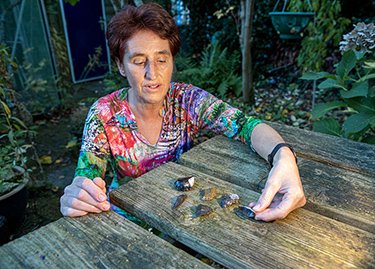
On a clear, windy autumn afternoon last October, Willy van Wingerden spent a few free hours before work walking by the sea not far from the Dutch town of Monster. Here, in 2013, the cheerful nurse found her first woolly mammoth tooth. She has since plucked more than 500 ancient artifacts from the broad, windswept beach known as the Zandmotor, or “sand engine.†She has found Neanderthal tools made of river cobbles, bone fishhooks, and human remains thousands of years old. Once, she plucked a tar-covered Neanderthal tool from the water’s edge, earning a co-author credit in the Proceedings of the National Academy of Sciences (PNAS) a few months ago.
“Sun, wind, rain, snow—I’m here 5 or 6 days a week,†she says. “I find something every day, almost.â€
Van Wingerden’s favorite beachcombing spot is no ordinary stretch of sand. Nearly half a kilometer wide, the beach is made of material dredged from the sea bottom 13 kilometers offshore and dumped on the existing beach in 2012. It’s a €70 million experimental coastal protection measure, its sands designed to spread over time to shield the Dutch coast from sea-level rise. And the endeavor has made 21 million cubic meters of Stone Age soil accessible to archaeologists.
That soil preserves traces of a lost world. During the last ice age, sea levels were 70 meters lower, and what is now the North Sea between Great Britain and the Netherlands was a rich lowland, home to modern humans, Neanderthals, and even earlier hominins. It all disappeared when glaciers melted and sea level rose about 8500 years ago.