Category Archive 'China'
11 Aug 2008

Yahoo Sports explains that, though fireworks were actually used at the Beijing Olympic Games opening ceremonies, the astonishing display broadcast around the world on television was faked, combining computer generated images with prerecorded shots of fireworks.
09 Aug 2008

Anne Applebaum caught a totalitarian news double-header on television last night.
The rise of China to the status of a major economic power and relative prosperity creates opportunities its regime is only too likely to misuse. Meanwhile, Russia was delivering a lesson on how to misuse power.
For the best possible illustration of why Islamic terrorism may one day be considered the least of our problems, look no farther than the BBC’s split-screen coverage of yesterday’s Olympic opening ceremonies. On one side, fireworks sparkled, and thousands of exotically dressed Chinese dancers bent their bodies into the shape of doves, the cosmos and more. On the other side, gray Russian tanks were shown rolling into South Ossetia, a rebel province of Georgia. The effect was striking: Two of the world’s rising powers were strutting their stuff.
The difference, of course, is that one event has been rehearsed for years, while the other, if not a total surprise, was not actually scheduled to take place this week. That, too, is significant: The Chinese challenge to Western power has been a long time coming, and it is in a certain sense predictable. As a rule, the Chinese do not make sudden moves and do not try to provoke crises.
Russia, by contrast, is an unpredictable power, which makes responding to Moscow more difficult. In fact, Russian politics have become so utterly opaque that it is not easy to say why this particular “frozen” conflict has escalated right now. …
Previous tensions, both in South Ossetia and Abkhazia, the other piece of Georgia that has declared sovereignty, have somehow been resolved without a war. Someone, clearly, wanted this one to go further.
Both sides have deeper motives for fighting. The Russians want to prevent Georgia from joining NATO, as Georgia, a Western-oriented democracy — George Bush has called the country a ” beacon of liberty” — has long wanted to do. In this, they will almost certainly succeed: No Western power has any interest in a military ally that is involved in a major military conflict with Russia.
The Georgian leadership, by contrast, had come to believe that the constant pressure of Russian aggression, coupled with the West’s failure to accept Georgia into NATO, compelled them to demonstrate “self-reliance.” President Mikheil Saakashvili has indeed been buying weapons in preparation for this moment. Those who know him say he believed a military conflict was inevitable but could be won if conducted cleverly. As of last night, with Russian soldiers fighting in South Ossetia — only a few dozen miles from Tbilisi, the Georgian capital — it seemed as though he might have miscalculated, badly. Russia has not sent 150 tanks across that border in order to lose.
Svante Cornell believes Russian behavior is all about Georgia’s potential NATO membership.
01 Aug 2008
John Murrell says foreign journalists arriving to cover the Olympics in Beijing are finding there’s more than air quality different about the local atmosphere.
Apparently, China’s promise that the 20,000 foreign journalists covering the Olympic Games would have unfettered Internet access is going the same way as its pledge to provide breathable air — up in smoke. …
Early arrivals at the main press center found themselves unable to access scores of sites on the usual topics the Chinese government prefers to keep quiet — among them Tibet, Taiwan, Tiananmen Square and the sites of Amnesty International, Radio Free Asia and several Hong Kong newspapers. “It has been our policy to provide the media with convenient and sufficient access to the Internet,†said Sun Weide, the chief spokesman for the Beijing organizing committee. “I believe our policy will not affect reporters’ coverage of the Olympic Games.†…
Meanwhile, Sen. Sam Brownback, R.-Kan., says he has documents indicating that China has forced all the major foreign-owned hotels to install spying equipment that will monitor the Net activities of journalists, athletes’ families and guests during the Games and beyond. The Public Security Bureau’s order says failure to comply could bring financial penalties, suspension of Net access, or the loss of a license to operate a hotel in China. “These hotels are justifiably outraged by this order, which puts them in the awkward position of having to craft pop-up messages explaining to their customers that their Web history, communications, searches and key strokes are being spied on by the Chinese government,†Brownback said.
I’m sure the host country will put on a lovely tribute to the Olympic ideals during the opening ceremonies, but it’s going to be awfully hard not to gag a little while watching.
24 May 2008
Depkafile reveals that China’s recent earthquake impacted a large number of Chinese facilities containing radioactive materials, including nuclear weapons plants, and a significant number of the sites impacted by the disaster remain to be secured.
Eleven days after the 7.9 magnitude earthquake struck western China, vice environment minister Wu Xiaoqing first revealed Friday, May 23, that 50 hazardous radioactive sources have been located – 35 recovered and controlled; “three more buried in rubble and 12 in dangerous buildings. At present, tests show no accidental release of radiation,†he reported as the death toll climbed past 55,000.
Two of the most badly damaged cities housed China’s secret nuclear weapons design facility – at Mianyang – and a plutonium processing facility – in Guangyuan – both close to the quake’s epicenter.
Soon after the quake struck, Chinese soldiers were sent to protect nuclear sites and preparations made for an environmental emergency.
DEBKAfile’s military sources note that the Beijing announcement did not specify the nature of the hazardous sources or disclose how they – or the secret nuclear weapons and plutonium facilities were secured – whether sealed with cement and lead like the Chernobyl reactor in Ukraine in the 80s or their contents removed to safe places.
According to the Beijing government’s official Web site, “nuclear facilities and “radioactive sources†included power plants, reactors, scientific research labs and medical treatment facilities, a big concentration of which are located in the worst hit areas.
French sources disclosed that 489 hospitals with laboratories containing radioactive materials, as well as hundreds of high-risk industries, were leveled.
Hans Kristensen, a nuclear arms expert at the Federation of American Scientists, said it was hard to believe that the military plants with nuclear materials had escaped the disaster. Other experts suspect that the damage to radioactive sites and radiation leaks may extend beyond the stricken Sichuan province.
29 Mar 2008

France24 The Observers:
Yahoo! China pasted a “most wanted” poster across its homepage today in aid of the police’s witch-hunt for 24 Tibetans accused of taking part in the recent riots. MSN China made the same move, although it didn’t go as far as publishing the list on its homepage.
Yahoo indignantly wrote France24 saying: “Yahoo! isn’t doing this. It’s Yahoo! China*.”
*Yahoo had to accept a Chinese partner, and Chinese control, to gain access to China’s market.
Hat tip to Matt Brown Hamlin
23 Mar 2008
John Mangum argues that the US Government’s failure to strengthen the dollar is a clever and deliberate (and unannounced) gambit in the economic contest between the US and China.
we must ask, why is this happening? Why have the prices of commodities like oil and gold risen so dramatically in the last year? Why has the dollar fallen so much? Normal business cycle? Bad management from the world’s financial institutions? And why hasn’t the world’s largest and strongest economy, backed by the most powerful government, been able to change the course of the situation?
Perhaps the larger picture is that the United States is waging an economic war against China.
The United States could strengthen the value of the dollar. It has not. China is hurt because now Chinese products are very expensive in the United States, and this will reduce the US trade deficit with China. China must import huge amounts of oil and strategic metals which are very much more expensive now. China holds hundreds of millions of physical dollars, the value of which is now much less.
China has refused to revalue its currency to a realistic level to improve its trade position with the United States. China has used its huge dollar reserves as a sword against the United States by threatening to sell those dollars, and thereby causing the dollar to drop in value. In effect, the United States is using China’s strength against China.
In order for China to maintain the levels of its trade with the United States, it will be forced to lower the value of its currency. However, if it does that, it faces two major problems. Foreign direct investment (FDI) into China would become less expensive, and China is worried that more and cheaper FDI would spur China’s inflation. Further, a devalued currency would reduce the profit to China for its exported goods.
If China keeps it currency at its present levels, the United States will buy less. The United States wanted a stronger yuan to reduce trade, which China was unwilling to do. That objective is now achieved by a weaker dollar.
China’s dollar holdings are worth much less when buying goods like oil and metals that China depends on for its development and growth. Further, China has been talking and trying for some time to diversify its foreign-reserve holdings form dollars to other currencies and gold. Now, their dollars are worth much less when buying gold, yen and euros. …
the “crisis†is being used to further the US economic position, long-term position, particularly with regard to China. From Sun Tzu: “All warfare is based on deception.â€
13 Mar 2008
Spook86 has some interesting observation, including a speculation that Admiral Fallon may have provoked China’s denial of port access at Hong Kong to the US Navy last Thanksgiving.
My own impression has been that Esquire’s Barnett took advantage of the Admiral’s indiscretions to produce a hit piece on Bush Administration policy using Admiral Fallon as an involuntary cat’s paw. It is heartening, of course, to see the Bush Administration actually firing someone for undermining its foreign policy. Is it possible, do you suppose, that this novel approach to personnel management may yet extend into the Departments of State and Justice and the Intelligence Community before George W. Bush leaves office?
10 Feb 2008
Sky News:
British athletes competing in this year’s Beijing Olympic Games must sign contracts banning them from talking about politics, it is reported.
Athletes must not mention politics -The clause – inserted in contracts for the first time – mean competitors must not comment on “politically sensitive” issues.
It then refers to the International Olympic Committee charter, which “provides for no kind of demonstration, or political, religious or racial propaganda in the Olympic sites, venues or other areas”.
The ban means athletes cannot discuss issues such as China’s human rights record or Tibet.
Those who refuse to sign-up face not be allowed to compete and anyone breaking the order could be sent home.
30 Dec 2007
Andrei Chang, editor of the Kanwa Defense Review Monthly, thinks that China lacks the capability of conquering Taiwan if an extended military operation is required.
By calculating the amount of fuel oil required by the Chinese navy and air force in a large-scale attack across the Taiwan Strait under high-tech conditions, it becomes apparent that such an assault could not be sustained for an extended period. …
..should high-intensity warfare break out across the Taiwan Strait, the daily fuel consumption of the PLA Air Force would be a minimum of 10,794 tons, taking into consideration only the third-generation fighters and H-6 bombers, JH-7A fighter-bombers and attackers. Actual consumption would be far greater if the large number of J-7E and J-8F serial fighters and Q-5 attackers currently in service are figured in.
The three major fleets of the PLA Navy would have a daily fuel consumption of 1,200 tons. As a result, the navy and air force would consume a total of 11,994 tons of fuel each day on average.
An initial large-scale landing operation against Taiwan would likely involve 20 divisions or brigades of amphibious, light and heavy mechanized troops. If each mechanized division or brigade needed fuel reserves for 500 kilometers, and one division or brigade consumed an average of 200 tons of fuel each day, the daily total of the 20 divisions and brigades would be 4,000 tons. Here, helicopters deployed by the ever-growing Army Aviation Forces have not been included.
The combined fuel needs of all combat forces engaged in an assault on Taiwan would amount to a minimum of 15,994 tons each day, not including the Second Artillery Forces and logistic support troops. These calculations alone indicate that the PLA forces would need a total of 240,000 tons of fuel to sustain 15 days of assault operations against Taiwan.
What is the total annual fuel consumption of the Chinese armed forces? A report published by the PLA General Logistics Department in 2007 says that the PLA forces saved 55,000 tons of oil in 2006, approximately 5.1 percent of their total consumption. Based on this figure, the total would be over 1 million tons, about 2,954 tons on average per day. It can be concluded that fuel consumption in a 15-day large-scale assault operation would surpass 20 percent of the annual total consumption of the Chinese military.
The hard fact is that China has only 7 million tons of oil reserves available for a period of conflict. The country has set its 30-day oil reserves at 10 million tons for civilian consumption, an average of 330,000 tons per day. During a 15-day assault, the country would require 4.96 million tons. The conclusion is that China’s current oil reserves could sustain a high-intensity assault operation against Taiwan for no more than 15 days.
11 Nov 2007

The Daily Mail yesterday (10 Nov 2007) reported:
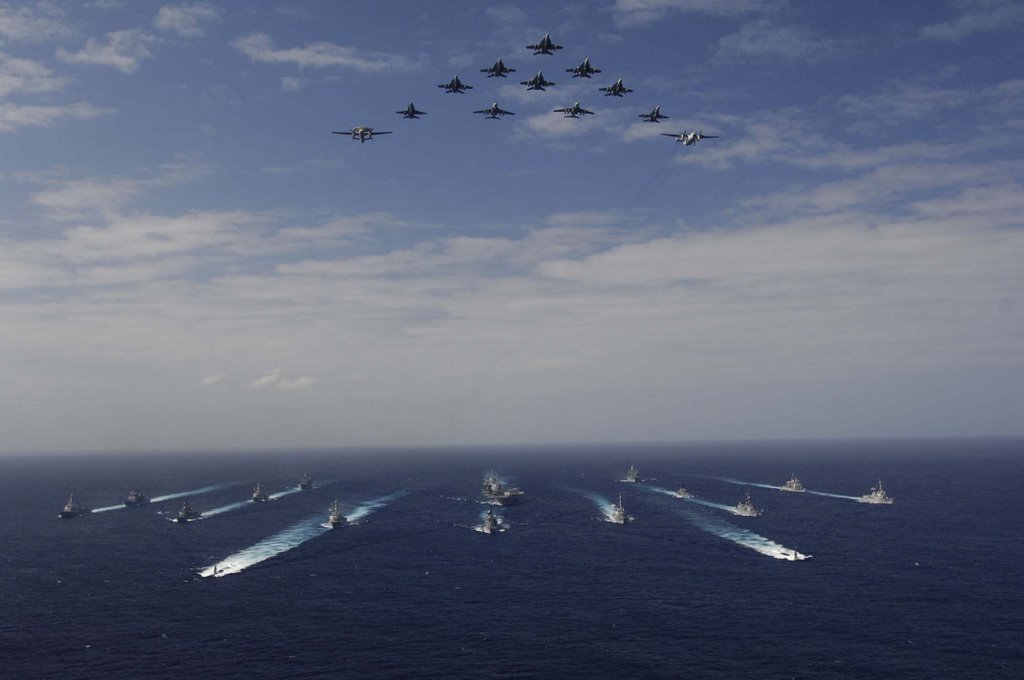
When the U.S. Navy deploys a battle fleet on exercises, it takes the security of its aircraft carriers very seriously indeed.
At least a dozen warships provide a physical guard while the technical wizardry of the world’s only military superpower offers an invisible shield to detect and deter any intruders.
That is the theory. Or, rather, was the theory.
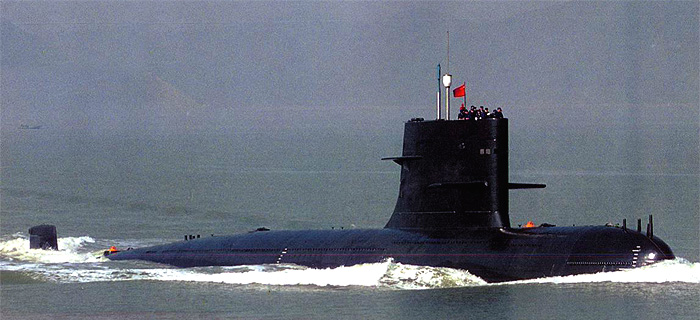
American military chiefs have been left dumbstruck by an undetected Chinese submarine popping up at the heart of a recent Pacific exercise and close to the vast U.S.S. Kitty Hawk
– a 1,000ft supercarrier with 4,500 personnel on board.
By the time it surfaced the 160ft Song Class diesel-electric attack submarine is understood to have sailed within viable range for launching torpedoes or missiles at the carrier.
According to senior Nato officials the incident caused consternation in the U.S. Navy.
The Americans had no idea China’s fast-growing submarine fleet had reached such a level of sophistication, or that it posed such a threat.
One Nato figure said the effect was “as big a shock as the Russians launching Sputnik” – a reference to the Soviet Union’s first orbiting satellite in 1957 which marked the start of the space age.
The incident, which took place in the ocean between southern Japan and Taiwan, is a major embarrassment for the Pentagon.
The lone Chinese vessel slipped past at least a dozen other American warships which were supposed to protect the carrier from hostile aircraft or submarines.
And the rest of the costly defensive screen, which usually includes at least two U.S. submarines, was also apparently unable to detect it.
According to the Nato source, the encounter has forced a serious re-think of American and Nato naval strategy as commanders reconsider the level of threat from potentially hostile Chinese submarines.
It also led to tense diplomatic exchanges, with shaken American diplomats demanding to know why the submarine was “shadowing” the U.S. fleet while Beijing pleaded ignorance and dismissed the affair as coincidence.
Analysts believe Beijing was sending a message to America and the West demonstrating its rapidly-growing military capability to threaten foreign powers which try to interfere in its “backyard”.
The People’s Liberation Army Navy’s submarine fleet includes at least two nuclear-missile launching vessels.
Its 13 Song Class submarines are extremely quiet and difficult to detect when running on electric motors.
Commodore Stephen Saunders, editor of Jane’s Fighting Ships, and a former Royal Navy anti-submarine specialist, said the U.S. had paid relatively little attention to this form of warfare since the end of the Cold War.
He said: “It was certainly a wake-up call for the Americans.
“It would tie in with what we see the Chinese trying to do, which appears to be to deter the Americans from interfering or operating in their backyard, particularly in relation to Taiwan.”
What is particularly interesting is that a nearly identical incident occurred one year ago 26 October 2006 involving a Chinese Song-class submarine and the same U.S.S. Kitty Hawk.
Also discussed by Spook86.

Photo hopefully not taken from Chinese submarine
10 Sep 2007

Norman Hsu, a bankrupt Hong Kong business, seems to have come to America and set up a shell corporation solely for the purpose of funneling large sums of money to democrat candidates, particularly Hillary.
New York Times story.
Gosh! Who do you suppose was supplying Mr. Hsu’s corporation with cash? Remember the Johnny Chung campaign contributions of the 1990s?
24 Jun 2007
The Chinese government has announced the planned construction of a blacktop highway to Everest base camp to facilitate the carrying of the 2008 Olympic Torch to the summit of the highest mountain in the world.
AP:
China plans to build a highway on the side of Mount Everest to ease the Olympic torch’s journey to the peak of the world’s tallest mountain before the 2008 Beijing Games, state media reported Tuesday.
Construction of the road, budgeted at $19.7 million would turn a 67- mile rough path from the foot of the mountain to a base camp at 17,060 feet “into a blacktop highway fenced by undulating guardrails,” the Xinhua News Agency said.
Xinhua said construction, which would start next week, would take about four months. The new highway would become a major route for tourists and mountaineers, it said.
An official from the Secretariat of the Tibetan government, who declined to give his name, confirmed the project was planned, but refused to give any details. Tibet and Nepal are the most commonly used routes up the mountain.
In April, organizers for the Beijing Summer Olympics announced ambitious plans for the longest torch relay in Olympic history—an 85,000-mile, 130-day route that would cross five continents and reach the 29,035-foot summit of Everest.
Taking the Olympic torch to the top of the mountain, seen by some as a way for Beijing to underscore its claims to Tibet, is expected to be one of the relay’s highlights.
/div>

Feeds
|