Category Archive 'Community of Fashion'
21 Dec 2011


Nerf N-Strike Barricade RV-10
Farhad Manjoo, Cornell ’00, is Slate’s Technology Columnist, so his take on toy guns, one would expect, ought to be well-informed, sophisticated, appreciative, and realistic.
A technology columnist really ought to be the sort of person who knows all about real guns. Firearms are an extremely important and interesting, downright fundamental, form of technology, after all.
But Farhad Manjoo’s holiday article in Stale this year is rather different from what one might have expected.
Nerf guns (which propel sponge rubber tipped plastic darts) frighten Manjoo and send him into a tizzy of anxiety. He describes the Nerf Barricade as “one of the most powerful toy weapons ever built, capable of sending a 3-inch foam dart hurtling 30 feet through the air, and then doing it again and again every half second.”
How does that compare, Mr. Technology Columnist, to the old Daisy Model 25 pump action BB-gun, my generation’s idea of a toy gun, which fired a copper-plated .177″ diameter BB at a velocity ranging from 375-450 fps (fast enough to break glass) from a tubular magazine as rapidly as you could pump the slide?
Shooting one’s friends in the face was regarded as verboten (you might put out an eye), but BB gun wars did regularly occur. The impact of a BB on human flesh stung smartly, even through clothing, and characteristically left a mark. It was a common form of deterrence to shoot oneself in the hand without flinching and then display the bruise. One’s interlocutor was thereby given to understand that you were not afraid of being shot with a BB gun, and was significantly less inclined to initiate hostilities.
Older generations of American boys additionally commonly played with home-made slingshots, a leather pad attached to two lengths of rubber strips cut from a discarded inner tube then affixed to a Y-forked branch. A good slingshot could propel much larger projectiles like marbles, ball bearings, or suitable rocks with good accuracy at very effectively damaging velocities.
We were bloodthirsty hunters in my boyhood, and we used to, I regret to say, kill the occasional incautious songbird with those BB guns. More becomingly, we also sometimes successfully nailed a rat found skulking in the open around the dump with our slingshots. (BBs just bounced off rats.) Try taking any variety of game with a Nerf gun.
But, it isn’t really the ballistic capabilities of the Nerf gun arsenal that sent Mr. Manjoo into a tailspin. It is, of course, the ethical considerations.
Over the past few weeks I’ve been playing with some of the new Nerf guns, and I’ve tied myself in knots thinking about whether ultrarealistic weapons are just harmless fun or whether they reveal something terribly wrong with modern American boyhood.
One feels bound to question the expertise and judgment of the technology expert who would describe the above Nerf Barricade as “ultrarealistic.” So few real firearms are made of yellow plastic, and when Mr. Manjoo expresses awed respect for a toy gun’s ability to propel a harmless foam rubber dart 30′, he seems to have lost completely any sense of proportion and relative capability between the real weapon and the toy.
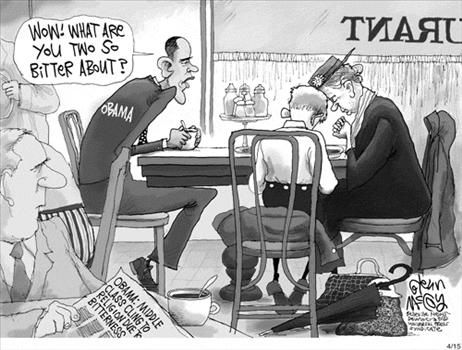
Someone who finds a harmless toy “scary” is, by my standards, an incredible wimp. And the kind of people who have all these hyper-sensitivities and moral issues over boys playing at war are prigs and decadents. Our blue state pseudo-intelligentsia resides in a haute bourgeois dreamworld, perfectly safe and far removed from the ugly realities of human conflict and criminal predation, protected by rough men they neither know nor respect, in homogeneous enclaves in which they have created their own Eloi-style culture in which gross moral self-indulgence parallels their conspicuous material well being.
29 Nov 2011

Moe Lane marvels that, after so long a time, the Democrat Party’s New Deal coalition, consisting of “unions, city machines, blue-collar workers, farmers, blacks, people on relief, and generally non-affluent progressive intellectuals,” is being pronounced dead by the New York Times. The new coalition of the American left is simply writing off the white working class, period.
Whether you agreed with the New Deal program or not, you could always actually define it in terms that were internally self-consistent. Broadly speaking, it was a broad agreement among various groups that America’s most pressing problems could be managed and ameliorated on a broad scale through ‘expert’ and judicious government intervention; and that such intervention dampened the uncertainty and anxiety that might otherwise cause societal panics and economic dislocations. Again: you don’t have to agree with that (I don’t) to recognize that it existed as a coherent policy.
But now that has gone by the wayside, to be replaced with a system that . . . apparently plans to trade support for permanent government dependency programs for minorities, in exchange for legislating the fringe progressive morality of affluent urbanites. Aside from the utter lack of an unifying intellectual or moral framework to such an arrangement, it’s unclear exactly who benefits less from it; while it’s certainly not in minority voters’ long, medium, or short-term interests to become a permanent underclass, it’s not exactly clear that minority voters are even particularly ready to vote for a progressive social policy (as an examination of recent reversals in same-sex marriage movement in California and Maryland will readily attest). But then, that is not really the goal, is it? The goal is to re-elect President Obama — which is something that poor African-American and rich liberal voters both wish to do — and if that is accomplished, then anything else is extra. Which is just as well, because nobody really expects Obama to have much in the way of coat-tails this go-round.
Jim Geraughty, in his Morning Jolt email, responds:
Ah, but look, today’s Democratic party isn’t really about addressing economic opportunity or even dealing with America’s most pressing problems. For starters, many Democrats are not persuaded in the slightest that the annual deficit, accumulating debt, and ticking time bomb of entitlements are pressing problems at all. If Democrats really expected electing Obama would solve problems, they would be angrier with him than we are. No, for most Democrats, their political party is about a cultural identity. That identity is heavily based on not being one of those people — i.e., Republicans or conservatives. As far as I can tell, there are three inviolate principles in the modern Democratic Party:
Any form of consensual sexual behavior is to be accepted — if not celebrated. With that central belief comes the policies of abortion on demand for any woman at any age free, free contraceptives in schools, and gay marriage, and the insistence that Bill Clinton’s lying under oath about Monica Lewinsky didn’t matter because it was about sex. Complaining about explicit sexual content in pop culture reaching an audience that isn’t ready for it — e.g., Tipper Gore in the 1980s — is the sign of the square and the prude. As no less an expert political philosopher than Meghan McCain told us, “the GOP doesn’t understand sex” and has “an unhealthy attitude about sex and desire.” (Republicans are supposedly repressed and sexless, even though they generally have more children.)
America is a deeply racist country, even though you have to look far and wide to find anyone who openly expresses the belief that one race is superior to another. Everybody recoils when Imus says something snide and obnoxious about the Rutgers womens’ basketball team. Racism is never found in the central tenet of affirmative action, that minorities must be judged by a lower standard, or in the until-recently all-white lineup of MSNBC, or in the claims that Clarence Thomas and Herman Cain are Uncle Toms, or in the career of Robert Byrd. The fundamental belief of the Democratic party is that racism remains a serious problem in America today, and that the problem is found entirely in the GOP.
Credentials are to be respected, and any scoffing or skepticism at, say, the Ivy League is a sign of anti-intellectualism, ignorance, jealousy, and insecurity. Those who go there are indeed the best and the brightest; undergraduate and graduate degrees from those schools are key indicators of one’s intelligence, good judgment, and overall character. The success of dropouts Bill Gates, Steve Jobs, and Mark Zuckerberg are strange anomalies, and no serious reevaluation of the higher-education system is needed. As Rush Limbaugh observed, Bill Clinton said he wanted a cabinet that “looked like America” and declared he had achieved it after assembling a group that consisted almost entirely of Ivy League-educated lawyers.
Everything else is negotiable. For a while, it appeared that Democrats were organizing themselves around the principle that almost every dispute with every other nation and group can be resolved through “tough, smart diplomacy.” But now President Obama has started killing foreigners left and right, and not too many Democrats complain at all. Obama even used a drone to kill an American citizen, Anwar al-Alwaki, with nary a peep. Don’t get me wrong, Alwaki had it coming, but this is precisely the sort of don’t-bother-me-with-legal-details-I’m-fighting-a-war philosophy that Democrats spent seven years denouncing.
You think the Democratic party cares about wealth? Come on. In their minds, George Soros spending his money to help out his political views is noble, but the Koch Brothers are evil incarnate. Higher taxes are good, but no one will complain if Tim Geithner or Charlie Rangel cut corners on paying them. One might be tempted to argue that the righteousness of unions represent an inviolate principle to Democrats, but in New York, Democratic governor Andrew Cuomo is trimming here and there and living to tell the tale.
No, the party really is about identity politics now — us vs. them. And everybody knows which side they’re on.
01 Nov 2011

Kenneth Anderson penetrates through the general confusion about what the Occupy Wall Street protests are all about and explains that what we see is the indignation of the low-end intellectual clerisy left behind by more successful representatives of the same class.
The problem the New Class faces at this point is the psychological and social self-perceptions of a status group that is alienated (as we marxists say) from traditional labor by its semi-privileged upbringing — and by the fact that it is actually, two distinct strands, a privileged one and a semi-privileged one. It is, for the moment, insistent not just on white-collar work as its birthright and unable to conceive of much else. It does not celebrate the dignity of labor; it conceived of itself as existing to regulate labor. So it has purified itself to the point that not just any white-collar work will do. It has to be, as Michelle Obama instructed people in what now has to be seen as another era, virtuous non-profit or government work. Those attitudes are changing, but only slowly; the university pipelines are still full of people who cannot imagine themselves in any other kind of work, unless it means working for Apple or Google. …
The lower tier is in a different situation and always has been. It is characterized by status-income disequilibrium, to borrow from David Brooks; it cultivates the sensibilities of the upper tier New Class, but does not have the ability to globalize its rent extraction. The helping professions, the professions of therapeutic authoritarianism (the social workers as well as the public safety workers), the virtuecrats, the regulatory class, etc., have a problem — they mostly service and manage individuals, the client-consumers of the welfare state. Their rents are not leveraged very much, certainly not globally, and are limited to what amounts to an hourly wage. The method of ramping up wages, however, is through public employee unions and their own special ability to access the public-private divide. But, as everyone understands, that model no longer works, because it has overreached and overleveraged, to the point that even the system’s most sympathetic politicians understand that it cannot pay up.
The upper tier is still doing pretty well. But the lower tier of the New Class — the machine by which universities trained young people to become minor regulators and then delivered them into white collar positions on the basis of credentials in history, political science, literature, ethnic and women’s studies — with or without the benefit of law school — has broken down. The supply is uninterrupted, but the demand has dried up. The agony of the students getting dumped at the far end of the supply chain is in large part the OWS. …
The OWS protestors are a revolt — a shrill, cri-de-coeur wail at the betrayal of class solidarity — of the lower tier New Class against the upper tier New Class. It was, after all, the upper tier New Class, the private-public finance consortium, that created the student loan business and inflated the bubble in which these lower tier would-be professionals borrowed the money. It’s a securitization machine, not so very different from the subprime mortgage machine. The asset bubble pops, but the upper tier New Class, having insulated itself and, as with subprime, having taken its cut upfront and passed the risk along, is still doing pretty well. It’s not populism versus the bankers so much as internecine warfare between two tiers of elites.
This one is a must read.
Anderson is perfectly correct. Just as in places like Egypt and Tunisia, the penchant for empire-building on the part of the Academic industry combined with the general recognition of university education as the path to success and security led the United States to run through a vastly over-inflated system of ersatz higher education a large population with resulting delusions of self importance and entitlement and no means of satisfying them. Naturally, they think the system is unjust. Those other guys, over there, they have money and power, and we, the purer, nobler spirits, who majored in Afro-American Musical Traditions or Gender Inequity Studies are working in Starbucks. It’s so not fair! Rage against the Machine!
Hat tip to Megan McArdle.
30 Oct 2011
Anne Applebaum contends that the really important class division in the United States isn’t between the infinitesimally small category of the Super Rich and everybody else, but the ever enlarging fissure between the haute bourgeoisie and the ordinary middle class.
I would argue that the growing divisions within the American middle class are far more important than the gap between the very richest and everybody else. They are important because to be “middle classâ€, in America, has such positive connotations, and because most Americans think they belong in it. The middle class is the “heartlandâ€, the middle class is the “backbone of the countryâ€. In 1970, Time magazine described middle America as people who “sing the national anthem at football games – and mean itâ€.
“Middle America†also once implied the existence of a broad group of people who had similar values and a similar lifestyle. If you had a small suburban home, a car, a child at a state university, an annual holiday on a Michigan lake, you were part of it. But, at some point in the past 20 years, a family living at that level lost the sense that it was doing “wellâ€, and probably struggled even to stay there. Now it seems you need a McMansion, children at private universities, two cars, a ski trip in the winter and a summer vacation in Europe in order to feel as if you are doing minimally “wellâ€. You also need a decent retirement fund, since what the state pays is so risible, as well as an employer who can give you a generous health-care plan, since health care is so expensive.
Anne Applebaum focuses her brief discussion on the economic gap between the community of fashion elite and the old-fashioned middle classes, but I think that the cultural and political division is even more important.
The American Upper Middle Class constitutes the constituency of Progressivism, Scientism, Statism, Collectivism. They are the people who consider eating at the newest restaurant vitally important, but who never attend church. Members of the American community of fashion elite feel more comfortable and at home in Rome and Paris than they do in Akron or Bakersfield. They are more sympathetic to Islamic insurgents overseas than they are to tax protestors at home.
A certain small number of Americans (myself and a number of the contributors to Maggie’s Farm are typical) have a foot in both camps, having acquired elite educations and expensive tastes, but somehow mysteriously having avoided complete assimilation to haute bourgeois liberalism. From our uniquely privileged perspective, it is exceptionally clear just how deep, and how bitter, the recent new class divisions really are.
It isn’t only, as Anne Applebaum notes, that the upper middle class and ordinary middle class have become increasingly distinct and different. They now really detest one another.
22 Sep 2011
Joe Queenan tells us he has had a bellyful of boasting about the rising generation’s resume-burnishing, do-good activities.
Joe is lucky that he doesn’t have to read the Yale Alumni Magazine.
Deep inside, everybody wants to talk about what a sensitive, caring, wonderful human being he is. But this is impossible when you work for a law firm that cold-calls Colombian drug dealers to see if they need any extra legal representation, when you’ve publicly boasted about cheating on your taxes, when everyone knows you’ve had an affair with an underage roadie for a Flock of Seagulls tribute band, when you’ve moved into a gated community to avoid even having to breathe the same air as minorities.
So instead, you tell people how jaw-droppingly great your children are. Britney is spending the summer working for Habitat for Humanity. So is Courtney. Dylan is in Burkina Faso, teaching local wretches how to make designer T-shirts out of organic mangoes. Aisha is interning at a company that designs noiseless, subterranean windmills. Yes, Kayla is getting a law degree, but only so she can help political prisoners from Darfur get green cards. And Caitlin and Skyler are spending junior year abroad participating in demonstrations against the governments in Athens, Damascus and Tehran, as course work for their degrees in Global Goodness Studies.
Wherever something truly wonderful is being done, these kids are at the epicenter of the action. They make the Little Sisters of the Poor look like thugs.
The upwardly moral children of the bourgeoisie are obsequiously, uncompromisingly virtuous. They ride bikes everywhere. They never eat meat. They refuse to watch television. They eat with wooden chopsticks. They only read books by authors named Jonathan who live in Brooklyn. They themselves are named Jonathan and live in Brooklyn. That is because everyone who is good and just and whip-smart and special in this society lives in Brooklyn. If you had good children like mine, you would know that. Your children probably live somewhere horrid, like Toledo, Ohio. And they’re probably named Susie or Fred.
As a mean-spirited, amoral crank who has labored mightily to raise reasonably insensitive kids, I find precociously virtuous children revolting. Luckily, I don’t have any. I don’t want my kids bailing out the faceless Trans-Caucasus masses or helping Jimmy Carter hammer nails in Detroit. I want them to be rich, so they can buy me a chalet in the Alps or at least cover my geriatric wisdom-teeth extractions. I grew up poor; I’m looking for payback.
19 Sep 2011

Maureen Dowd compares the prospective 2012 electoral contest between Rick Perry and normal American Republicans and Barack Obama and the coastal pseudo-intellectual elites to the rivalrous friendship of Tom Doniphon (John Wayne) and Ransom Stoddard (James Stewart) in John Ford’s 1962 film “The Man Who Shot Liberty Valance”
In the film, rugged rancher and man of violence John Wayne befriends the tenderfoot, man of peace, attorney James Stewart and defends him against the outlaw Liberty Valance (Lee Marvin). When the code of manhood obliges Stewart to stand up to Marvin in a gunfight. Wayne, well of aware of Stewart’s incompetence, casually plugs Marvin with his rifle from ambush at the crucial moment in the gun duel.
John Wayne chivalrously lets Stewart receive the credit for ending Liberty Valance’s local reign of terror, which carries Stewart onward into a political career ending in the US Senate. He even stands aside and allows the lawyer (who owes him his life) to marry the girl he loves.
John Ford means his film to depict his own vision of tragic Historicism, in which manly bravery and larger-than-life frontier individualism is inevitably swept away by Progress and the advance of Civilization. John Wayne’s character is obviously the better man, but he is not the man of the future. He steps aside for Stewart because he recognizes it himself.
The John Wayne character isn’t only more competent than the Jimmy Stewart character, he is wiser and nobler.
The secondary tragedy of the movie is revealed when the Stewart character who has returned in old age, covered with success and honors and still married to the girl, to the frontier town which was the original scene of events for the Wayne character’s funeral.
Jimmy Stewart tries telling the whole story of the shooting of Liberty Valance to a young reporter, and revealing that his whole career has been built on another man’s deed, and the newspaper’s editor declines to print it. “When the legend becomes fact,†the editor says, “print the legend.”
There is no expiation in confession for Stewart. His life has been built upon a lie, and he supplanted a better man in his wife’s affections, and he knows it.
Dowd simplifies John Ford’s narrative into the conflict between the Eastern egghead and the anti-intellectual.
At the cusp of the 2012 race, we have a classic cultural collision between a skinny Eastern egghead lawyer who’s inept in Washington gunfights and a pistol-totin’, lethal-injectin’, square-shouldered cowboy who has no patience for book learnin’.
Dowd goes on to examine, and find unworthy, Rick Perry’s college grades.
Studying to be a veterinarian, he stumbled on chemistry and made a D one semester and an F in another. “Four semesters of organic chemistry made a pilot out of me,†said Perry, who went on to join the Air Force.
What a pity it is that the Egghead Barack Obama has never seen fit to release any of his college or law school grades for comparison.
The self-flattering interpretation of the political conflict between democrats and Republicans, between Maureen Dowd and the rest of the community of fashion and ordinary Americans, and potentially in 2012 between Barack Obama and Rick Perry as the conflict between the forces of book learning and the uninformed is doubtless gratifying to New York Times’ readers, but personally I think the claim of members in good standing of our establishment culture to represent learning and intellectuality has a lot of problems.
The kind of learning that most of these people boast isn’t book learning at all. It’s merely Cliff Notes summary familiarity with names and what they’re famous for.
Our establishment elite does not draw its understanding and conclusions from a reservoir of learning in the traditional Western canon. Our establishment is commonly hostile to that canon, deprecatory of its value and significance, and characteristically Philistine. Establishment judgments and conclusions come much more commonly from a consensus produced by newspaper editorials and articles in journals of opinion.
Our community of fashion is not intellectually inquisitive or critical. On the contrary, it is herd-like and conformist. And it is profoundly intellectually reactionary, being totally and entirely committed to defending late 19th century ideas revolving around Utopian ameliorism effectuated via the rule of scientific experts operating under a rubric of collectivist statism.
People who are gullible enough to believe in Anthropogenic Global Warming, people who have failed to notice Socialism’s failures, people who still think that Keynesian economics will get you out of a recession are not smart. They are dumb.
The democrat party and the American community of fashion are comprised not of Eggheads, but of pseudo-intellectuals and muttonheads.
10 Sep 2011

The Metropolitan Museum of Art’s “911 Peace Story Quilt”
Mark Steyn rants understandably enough at the Saturnalia of Snivelling on the part of our wiser and better fellow countrymen belonging to the urban arts and political communities occasioned by the 10th Anniversary of the Islamic Terrorist Attacks of September 11, 2001.
Aside from firemen, Mayor Bloomberg’s official commemoration hasn’t got any room for clergy, either, what with all Executive Deputy Assistant Directors of Healing and Outreach who’ll be there. One reason why there’s so little room at Ground Zero is because it’s still a building site. As I write in my new book, 9/11 was something America’s enemies did to us; the 10-year hole is something we did to ourselves – and, in its way, the interminable bureaucratic sloth is surely as eloquent as anything Nanny Bloomberg will say in his remarks.
In Shanksville, Pa., the zoning and permitting processes are presumably less arthritic than in Lower Manhattan, but the Flight 93 memorial has still not been completed. There were objections to the proposed “Crescent of Embrace†on the grounds that it looked like an Islamic crescent pointing towards Mecca. The defense of its designers was that, au contraire, it’s just the usual touchy-feely huggy-weepy pansy-wimpy multiculti effete healing diversity mush. It doesn’t really matter which of these interpretations is correct, since neither of them has anything to do with what the passengers of Flight 93 actually did a decade ago. 9/11 was both Pearl Harbor and the Doolittle Raid rolled into one, and the fourth flight was the only good news of the day, when citizen volunteers formed themselves into an ad hoc militia and denied Osama bin Laden what might have been his most spectacular victory. A few brave individuals figured out what was going on and pushed back within half-an-hour. But we can’t memorialize their sacrifice within a decade. And when the architect gets the memorial brief, he naturally assumes there’s been a typing error and that “Let’s roll!†should really be “Let’s roll over!â€
And so we commemorate an act of war as a “tragic event,†and we retreat to equivocation, cultural self-loathing, and utterly fraudulent misrepresentation about the events of the day. In the weeks after 9/11, Americans were enjoined to ask “Why do they hate us?†A better question is: “Why do they despise us?†And the quickest way to figure out the answer is to visit the Peace Quilt and the Wish Tree, the Crescent of Embrace and the Hole of Bureaucratic Inertia.
Donald Trump is basically an idiot, but he is not a pretentious ass, so even he could see that what real leadership would have done in response to the 9/11 attacks’ destruction of New York City’s World Trade Center Towers. Real leadership would have commenced immediately on rebuilding exactly the same buildings at the identical site and location, and would have grasped the symbolic importance of putting them back up as quickly as possible, only one story taller.
Real leadership obviously didn’t, and doesn’t, exist in New York City and New York State, only obfuscating, obstructing, hot air and sanctimony and conformity producing anti-leadership. Ten years have gone by, and replacement buildings are not up yet. They have instead created an amazing anti-monument to ruin and destruction with two deep water-filled holes occupying the actual former locations of the towers. I think one deep, useless, water-filled hole must be taken to symbolize the void where the intelligence of the city, state, and regional leadership ought to have been, and the second void must represent their missing masculine qualities, the absent courage, flair, and instinctive spirit of defiance of the same: one hole symbolizes their lack of brains, the other their lack of balls.
28 Aug 2011

Malcolm Muggeridge, 1903-1990
Malcolm Muggeridge recalls, in the first volume of his autobiography, Chronicles of Wasted Time: The Green Stick : :
On one of my early birthdays I was given a toy printing-set with whose large rubber letters I was able to print off my first composition. It was a story of a train going along very fast and, to the satisfaction of the passengers, racing through the small stations along the track without stopping. Their satisfaction, however, turned to dismay, and then to panic fury, as it dawned on them that it was not going to stop at their stations either when it came to them. They raged and shouted and shook their fists, but all to no avail. The train went roaring on. At the time I had no notion what, if anything, the story signified. It just came into my mind, and the rubber letters dropped into place of themselves. Yet, as I came to see, and see now more clearly than ever, it is the story I have been writing ever since; the story
of our time. The imagination, at however rudimentary a level, reaches into the future. So its works have a prophetic quality. A Dostoevsky foresees just what a revolution will mean in Russia – in a sense, foresees the Soviet regime and Stalin; whereas a historian like Miliukov and his liberal-intellectual friends envisage the coming to pass of an amiable parliamentary democracy. Similarly, a Blake or a Herman Melville sees clearly through the imagination the dread consequences industrial¬ism and technology must have for mankind, whereas, as envisaged in the mind of a Herbert Spencer or an H. G. Wells, they can bring only expanding wealth and lasting well-being. It was not until much later that I came to identify the passengers in my train as Lord Beveridge, Sidney and Beatrice Webb, Kingsley Martin, Eleanor Roosevelt, and any number of progressive prelates, mahatmas, millionaires, regius professors and other such eminent persons.
04 Aug 2011

James Taranto, in the Wall Street Journal, explains where all the incivility is coming from.
“Terrorist,” “racist,” “uncivil,” “insane,” the list goes on–in this context, these words have no real meaning. They are mere epithets. The Obama presidency has reduced the liberal left to an apoplectic rage. His Ivy League credentials, superior attitude, pseudointellectual mien and facile adherence to lefty ideology make him the perfect personification of the liberal elite. Thus far at least, he has been an utter failure both at winning public support and at managing the affairs of the nation.
Obama’s failure is the failure of the liberal elite, and that is why their ressentiment has reached such intensity. Their ideas, such as they are, are being put to a real-world test and found severely wanting. As a result, their authority is collapsing. And if there is one thing they know deep in their bones, it is that they are entitled to that authority. They lash out, desperately and pathetically, because they have nothing to offer but fear and anger.
18 Jun 2011

The other day, Professor Bainbridge asked the philosophical question:
Why has liking Sarah Palin become a litmus test of one’s conservative bona fides?
It seems to me that I have a duty to respond to this one.
Sarah Palin’s unique combination of political star quality with her open and unabashed display of non-U (in the American sense) taste, life-style, and habits of speech; her lack of establishment affiliations and credentials; and her explicit challenge to the regime of political correctness and the national consensus of the community of fashion make Sarah Palin a potent symbolic emotional trigger in America’s contemporary regional and class conflicts and culture wars.
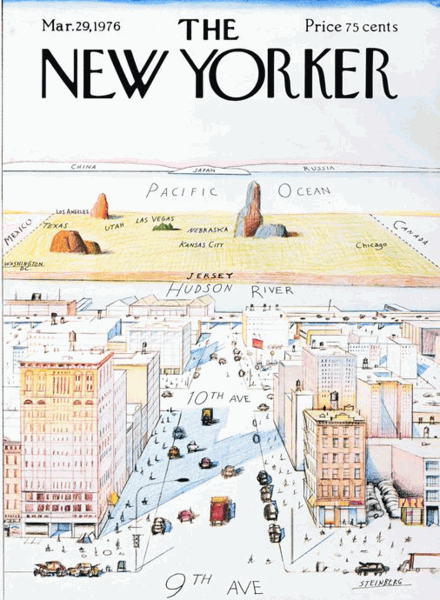
Her very presence on the national political scene constitutes a direct challenge to the hegemony of everything American U: to looking at the world from the 9th Avenue perspective of the New Yorker, to the definitional authority of the mainstream media, to the factual and moral consensus of the elite on everything from Global Warming to Gay Marriage.
The potential nomination for the presidency by a major party of somebody like Sarah Palin, her celebrity status, and her self-appointed role as national political authority constitutes not only a threat to the American establishment’s political power. It represents also a grave social insult.
The typical American haute bourgeoisie of 2012 would be as offended by the election of Sarah Palin as his counterpart in Philadelphia or Boston was in 1828 by the election of Andrew Jackson and as the Southern aristocracy was by the election of the frontier attorney referred to by his adversaries as “the Illinois ape.”
No one doubts the intelligence of President Lincoln today but, at the time, his intellect also was dismissed on the basis of his speaking with a regional accent different from that of the Eastern metropolitan elite.
They sang mockingly, at the time:
Jeff Davis rides a white horse,
And Lincoln rides a mule,
Jeff Davis is a gentleman,
And Lincoln is a fule.
In the American context, the disdain of the formally-educated elites for unpolished leaders with rustic accents is a very old story. And, in the contemporary context, the alleged intellectual inferiority and general unworthiness of political leaders with strongly conservative views is also getting to be an old story.
Ronald Reagan is remembered today as a great president. Some people would argue he was the greatest president of the last century. But the establishment elite held Ronald Reagan in little less contempt during his lifetime than it holds Sarah Palin today. Reagan was stupid, the left remarked constantly. He was a primitive, just a Hollywood actor (and of B movies at that), simplistic, incurious, banal, and naive.
The conservative thing to do is always to ignore the noises of the tribal culture of the establishment. The political and economic positions supported by conservative political leaders like Ronald Reagan and Sarah Palin are well-founded intellectually and are historically supported by considerable empirical evidence.
It is too soon to decide whether the Republican Party ought to choose Sarah Palin as its nominee next year. She has not made it clear, so far, whether she actually intends to seek its nomination.
Were she to try to run, I think she has exhibited both potential major strengths and weaknesses that give one hope for her possible success, but leave one also uncertain of her ability to succeed. If Sarah Palin fails to convince most of us that she can perform consistently at a higher level of eloquence, I’d say that she ought not to be the nominee.
Palin has already carved out for herself a useful, practically effective, and very prominent role as a political commentator. It is possible that remaining free to be herself and operating in that capacity would be more congenial to her and more compatible with her talents and inclinations than campaigning for the presidency.
In the final analysis, of course, if she were to be nominated and run against Barack Obama, she clearly comfortably passes Glenn Reynolds’ test for preferability to Barack Obama. Though I attended an Ivy League school, I grew up in the mountains of Pennsylvania hunting deer, and I retain enough of my native Alabama-of-the-North redneck identity to view the possible discomfiture of the American community of fashion by the election of Sarah Palin to the presidency with relish.
Republicans electing Sarah Palin would be in the position of Conan the Barbarian experiencing the Cimmerian best thing: “To crush your enemies, to see them driven before you, and to hear the lamentations of their women.” Those lamentations would be louder, in the case of the election of Sarah Palin, than in any other case imaginable.
12 Jun 2011

There must be something special in the water of certain small towns, like Cape Girardeau, Missouri, where guys like Rush Limbaugh and Terry Teachout come from, and Shenandoah, Pennsylvania, where I grew up, that immunizes people from there who move away to the bright lights of the big city from becoming brainwashed and totally absorbed into the community of fashion which loves big cities and itself and loathes and despises ordinary small town America.
Terry Teachout is a rara avis, an astonishing intellectual polymath who knows everything about music and the arts and who also writes seriously on politics. Terry is the unusual intellectual Bohemian, who works harder than any Wall Street Law firm associate, writing articles and books and, for a number of years, working as the Wall Street Journal’s drama critic.
Someone like Terry would typically be expected to take the New Yorker magazine’s point of view that Manhattan is the center of the universe surrounded by an insignificant cultural wasteland, some fortunate few of whose unhappy natives succeed in escaping to the metropolis.
Terry Teachout has got to be the only major professional critic in New York who would say anything like this:
I left my home town a few months after graduating from high school in 1974, and since then I’ve only returned as a visitor. Not so David, my younger brother, who chose to settle in Smalltown, U.S.A., and has never lived anywhere else. He and his wife live three blocks from my mother’s house. If there’s such a thing as a model citizen, he fills the bill with room to spare. Among countless other valuable things, he’s served two terms on the city council and is a member of the board of trustees of his church, and whenever anyone in Smalltown now has occasion to mention the name “Teachout,” they usually mean him, not me.
I’m proud of my brother’s achievements, and more than a little bit jealous of them. In particular I envy his deep roots in the soil of Smalltown. I can’t claim to feel that way about New York City, where I’ve lived for the past quarter-century but to which I have no special attachment save for my love of certain people who live there.
For me, “home” is where Mrs. T is, and that changes from day to day. We moved to a new apartment last November, but we’ve spent so little time there that most of our belongings are still packed in cardboard boxes. So far this year we’ve “lived” in upper Manhattan, rural Connecticut, various parts of Florida, and a string of hotel rooms in Chicago, San Diego, and Washington, D.C. Right now we’re in Smalltown, but we’ll be driving up to St. Louis on Thursday, and a week and a half after that we’ll be on our way to Pittsburgh.
Truth to tell, I’m about as close to rootless as you can get, and because I come from Smalltown, where people tend as a rule to grow where they’re planted and stay where they’re put, this rootlessness has always seemed strange to me. I ought to feel at home somewhere or other, but when I moved away in 1974, I lost the sense of belonging that I possessed throughout the first eighteen years of my life, and since then I’ve never managed to recapture it.
This came as a surprise to me. I always figured I’d find a job in town, marry a Smalltown girl, start a family, and become a pillar of the community. My brother did those things, but I pulled up stakes and became a rambling man, moving from city to city in search of an identity that it took me the better part of a lifetime to find, insofar as I can be said to have found it. At various times in my life I expected to become a concert violinist, a lawyer, a high school teacher, and a psychotherapist, none of which I ended up doing. Instead I’ve paid the rent by working as a bank teller, a jazz bassist, a magazine editor, an editorial writer, a biographer, and a drama critic.
My brother and I, in short, have both led typical American lives. It is fully as American to stick close to home as it is to become a wanderer, but it’s the wanderers who get most of the press, perhaps because we’re the ones who write it–and I’m not so sure it should be that way. I left home to find myself, but my brother didn’t have to leave home because he knew who he was. I call my mother every night, but he sees her every day. I write books, but he has a grown daughter. I like to think that my work may ultimately prove to have some lasting value, but I’m sure that he’s done more to make the world a better place.
Read the whole thing.
—————————–
I understand Terry’s point of view perfectly. I’m another of the smart, bookish kids who went away to college and did not come back. In my case, my hometown was dwindling into a ghost town (that’s what happens to mining towns when the industry dies), and there isn’t even a there anymore that anyone could go back to.
I’ve always been aware that I was better read, more widely informed, and had found wider horizons for myself and developed a lot more expensive tastes than the people I grew up with, but I also remain conscious that I never had to go to work in the breakers as a schoolboy or risk my life everyday in the mines to support a family. I’ve never deluded myself into believing that being luckier, more affluent, and liking foreign films translates into making somebody a higher level of being.
02 Jun 2011
Israeli Strategic Studies professor Barry Rubin recently visited the United States and experienced with the freshness of an outsider’s perspective the intensity of the indoctrination which has become a constant feature of American life.
What’s most scary in America today may be the deficit and it may be government policies, but for me the scariest thing is the way that traditional American pragmatism, an open-minded search for truth, the reliability of the media and of academia, has virtually disappeared in many cases.
I’m talking here about the media, academia, and the highly publicized public debate, not what all of the people are thinking. Clearly, a lot of people aren’t buying the conventional wisdom. But the important point is that it is the conventional wisdom, the main ideas held by the elite and government, what young people are being taught, and probably pretty much everything half of the population is hearing. I was in California, Iowa, Wisconsin, New York, Maryland, Florida, Virginia, Texas, Arizona, Oklahoma, and other places.
While this certainly doesn’t apply to all schools, the indoctrination that I’ve seen in one elementary school shocked me. If you really hear what eleven-year-olds are saying to each other you’d be amazed: accusing each other of being racists at the drop of a hat; thinking man-made global warming is a threat to their personal survival into adulthood; viewing America as evil.
If that happens in an educational system — especially in universities — indoctrination means that the more “educated†someone is, the more “stupid†they become.
The decline of professional ethics — journalists are supposed to be accurate and fair despite their personal views; professors should seek truth wherever that leads them, be open-minded, and represent accurately sources and evidence — is staggering. Large numbers of ideas are practically barred from the mass media; silly concepts are put forward that have huge holes in them but are protected from scrutiny or criticism. Some people or movements are always ridiculed; others are always exalted.
There are hundreds of examples of how this works and I see it every day. …
No matter how bad the economic situation, leadership, or policies might be, a country can recover if the people and elite are able to define the real problems and the real solutions. If the connection with reality is lost, all hope is gone. That is one of the Middle East’s central problems. Increasingly, it seems to be Europe and America’s problem, too.
The way cults work is to isolate people from reality and bombard them with a single viewpoint. The victim is cut off from other influences by being told that they are evil and thus to be disregarded. In some ways, that is what’s been happening to America in recent years.
One weakness of this structure is that the arguments it makes and the claims puts forward are so ridiculous that if exposed to articulate and reasoned responses — often, even for a mere sixty-second period — it quickly collapses logically. Its strength is that it has such strong defenses against such exposure.
Another weakness is that the use of institutions for politically motivated exploitation must remain invisible. If someone understands that universities, mass media, and other trusted institutions have been distorted out of their historical, democratic, and American norms then that’s the beginning of seeing through deception.
Read the whole thing.
Hat tip to Karen L. Myers.
Your are browsing
the Archives of Never Yet Melted in the 'Community of Fashion' Category.
/div>
Feeds
|