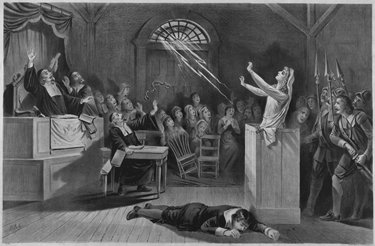
The Suicide Vest theory: let the GOP blow itself to smithereens with a Santorum nomination, then libertarians can come pick up the pieces.
Here’s my libertarian case for Rick Santorum’s nomination (though not his election). Since the early 1990s, Christian conservatives have formed an ever larger portion of the GOP. In Santorum, they would have what they have long sought: a candidate embodying their commitments to a politics of faith. Neoconservatives would also have a candidate committed to transforming the world through foreign policy and military action. The Obama-Santorum race would be more than just a struggle for power between two men. It would be a referendum on ideas and policies that have dominated the GOP for more than decade.
One recent poll has the former senator running even with Obama, but most polls have shown a decided gap of about eight points between the incumbent and Santorum. Right now the latter is not well-known to most voters. As Santorum becomes better known, he might close the gap with Obama. More likely, I think he would drive more secular and independent voters away from the GOP ticket. A ten-point Republican loss in a year when economic weakness suggested a close race would be a political disaster not just for the candidate and his party but also for the ideas they embody. Rick Santorum could be the George McGovern of his party.
Such a disaster might open the door for a different kind of GOP along lines indicated earlier, a party of free markets, moral pluralism, and realism in foreign affairs. Ron Paul has taken some steps this year toward creating such a party. He has attracted votes and inspired activism. His son or another candidate might take up the cause in 2016 and build on Paul’s achievements. Fanciful thinking? Perhaps, but it may take an electoral disaster to free the GOP from the ideas and forces that Rick Santorum represents.
Two centuries and a bit ago, Thomas Jefferson entertained hopes that explorers might yet encounter Woolly Mammoths trumpeting in the remote Western wilderness.
Frozen Mammoth remains found in Siberia have been fresh enough to be served up as a delicacy at Explorers’ Club banquets.
Now, a British tabloid, The Sun, offers a video, allegedly made last summer somewhere in Siberia, purportedly showing a living Woolly Mammoth, Mammuthus primigenius, crossing a river.
(the embed script is not editable for size, but it doesn’t seem to matter crucially)
Cryptomundo had the same thought I did. The tusks look more like a large salmon hanging from the mouth of a very large bear.
Mark Steyn comments on some of the recent national manifestations of liberal tolerance.
Liberals take the same view as the proprietors of the Dar al-Islam: Once they hold this land, they hold it forever. Notwithstanding that those who give to the foundation are specifically giving to support breast-cancer research, Komen could not be permitted to get away with disrespecting Big Abortion. We don’t want to return to the bad old days of the back alley, when a poor vulnerable person who made the mistake of stepping out of line had to be forced into the shadows and have the realities explained to them with a tire iron. Now Big Liberalism’s enforcers do it on the front pages with the panjandrums of tolerance and diversity cheering them all the way. In the wake of Komen’s decision, the Yale School of Public Health told the Washington Post’s Sarah Kliff that its invitation to Nancy Brinker to be its commencement speaker was now “under careful review.†Because God forbid anybody doing a master’s program at an Ivy League institution should be exposed to anyone not in full 100 percent compliance with liberal orthodoxy.
Heather Smith tells us that Hmong immigrant oriental hunters in the Midwest and locavore foodies looking for new thrills are converging on a new interest in squirrel hunting and eating.
Until recent decades, Americans ate squirrel meat because it was cheap, plentiful, and there, according to Hank Shaw, author of Hunt, Gather, Cook: Finding the Forgotten Feast. Domesticated animals may have been easier to catch, but, in the days before the industrialization of farming, they were expensive to raise and feed. “When Herbert Hoover promised a chicken in every pot, that was a big deal,†Shaw adds. The first edition of The Joy of Cooking, published in 1931, was heavy on the squirrel. As it moved into later and later editions, Hoover’s promise was fulfilled (by other politicians, if not Hoover himself) and chicken gradually replaced squirrel.
Shaw shot his first squirrel when he was working as a reporter for a daily paper in Minnesota. He’d made it through an underpaid stint as a cub reporter in Long Island by catching and eating his own fish. When he arrived in Minnesota, though, he could not help but take note of the squirrels. The state has such a vibrant squirrel scene that a cottage industry has grown up around trapping and removing ones that have moved into people’s homes. Shaw bought a few books about squirrel hunting off the internet, applied for a license to hunt them, and got to it.
In doing so, he placed himself on the vanguard of the re-squirreling of the American diet. Squirrel-eating has been trendy in Great Britain for half a decade now — spurred by a nationalistic fervor to kill as many as possible of the invasive American gray squirrel, which is outcompeting the domestic red squirrel (the latter had the good fortune to star in a Beatrix Potter book, one of the best ways to cement your status as charismatic megafauna). …
It’s hard to imagine more sustainable local game — squirrels are abundant, far from endangered, and don’t even require refrigeration the way that big game does. The standard rule of thumb is that one squirrel = enough meat for one dinner for one person. The squirrel is road food — the kind of prey that fed cross-country hikers, in the days before MRE and freeze-dried lentils. Squirrel is like the drive-through cheeseburger of the forest — albeit a cheeseburger that needs to be gutted first.
They’re also delicious, mostly because they eat nuts. “Rabbits — they’re grass eaters. The flavor is milder. Squirrels taste like something,†says Shaw. “It’s gamey in a good way.â€
I shot squirrels as a boy whenever I had the opportunity, but my parents had no interest whatsoever in cooking them. I always gave away my squirrels to my grandparents or neighbors, who always assured me that squirrels were delicious.
I do not believe that Pennsylvania methods of squirrel preparation had the slightest resemblance to what we see in the video below. I know that people where I lived skinned their squirrels and removed the head.
DEBKAfile recently leaked the background information behind the currently ongoing preparations for an Israeli attack on Iranian nuclear weapon facilities.
Iran has completed the development of a nuclear weapon and awaits nothing more than a sign from Supreme Leader Ayatollah Ali Khamenei to start assembling its first nuclear bomb, said Israeli Military Intelligence Chief Major General Aviv Kochavi on Thursday, February 2. Assembling a bomb would take up to a year, Kochavi estimated. With 100 kilograms of uranium enriched to 20 percent grade and another 4 tons of uranium enriched to 3.5 percent already in stock, Iran would need another two years to make four nuclear bombs.
Therefore, by the end of 2012 or early 2013 Iran may have a single nuclear bomb, but by 2015 the figure would jump to four or five.
The officer was essentially amplifying the words of his predecessor, Maj. Gen. (res.) Amos Yadlin, who said on Jan. 26 that as long ago as 2007 or 2008, Iran had already passed the point of no return in developing nuclear weapons. Kochavi agreed with him that none of the sanctions imposed thus far had persuaded Iran to slow down, least of all shut down, its drive for a nuclear weapon.
His comments coincided with the findings published Thursday by the Enterprise Institute, an American think tank, that Iran would be able to manufacture a 15-kiloton nuclear bomb as soon as August of this year, just seven months from now.
Also Thursday, Deputy Prime Minister Moshe Yaalon disclosed that the big blast at the Iranian missile base near Tehran last November blew up a new missile system with a range of 10,000 kilometers, capable of targeting the United States.
The single biggest danger in the Middle East today is not the risk of a six-day Israeli war against Iran. It is the risk that Western wishful nonthinking allows the mullahs of Tehran to get their hands on nuclear weapons. Because I am in no doubt that they would take full advantage of such a lethal lever. We would have acquiesced in the creation of an empire of extortion.
War is an evil. But sometimes a preventive war can be a lesser evil than a policy of appeasement. The people who don’t yet know that are the ones still in denial about what a nuclear-armed Iran would end up costing us all.
It feels like the eve of some creative destruction.
K.C. Johnson, at Minding the Campus, devastatingly criticized the New York Times story.
When Times readers learned from Richard Perez-Pena that “a fellow student had accused Witt of sexual assault,” how many of them realized that Yale was actually using an “expansive definition” of this otherwise commonly-understood term? How many readers further realized that Yale had designed the procedure about which Perez-Pena wrote so as to give Witt’s accuser “control over the process,” including limited or no investigation? And how many readers could have dreamed that the procedures guiding the allegation against Witt have produced the extraordinary claim that sexual assault is far, far more common on this Ivy League campus than in the fourth most dangerous city in the country? And since the Times went to print without ever speaking to Witt or (it seems) anyone sympathetic to him in the Athletic Department, didn’t the paper at the very least have an obligation to provide the context that would explain the highly unusual procedures and definitions that Yale features?
Kathleen Parker, in the Washington Post, put the New York Times’s reporting standards on trial.
A  New York Times story on Friday… essentially indicted and convicted a 22-year-old star football player on an alleged sexual assault charge by an anonymous accuser. …
[W]ith throat-clearing authority, the story begins with the young man’s name — Patrick J. Witt, Yale University’s former quarterback — and his announcement last fall that he was withdrawing his Rhodes scholarship application so that he could play against Harvard. The game was scheduled the same day as the scholarship interview.
Next we are told that he actually had withdrawn his application for the scholarship after the Rhodes Trust had learned “through unofficial channels that a fellow student had accused Witt of sexual assault.†And there goes the gavel. Case closed.
But in fact, no one seems to know much of anything, and no one in an official capacity is talking. The only people advancing this devastating and sordid tale are “a half-dozen [anonymous] people with knowledge of all or part of the story.†All or part? Which part? As in, “Heard any good gossip lately?â€
A statement Friday afternoon on Witt’s behalf denied any connection between his withdrawal from the Rhodes application process and the alleged assault. Moreover, when Witt requested a formal inquiry into the allegations, he says, the university declined. “No formal complaint was filed, no written statement was taken from anyone involved, and his request . . . for a formal inquiry was denied because, he was told, there was nothing to defend against,†according to the statement.
The Times apparently didn’t know these facts, but shouldn’t it have known them before publishing the story? It’s not until the 11th paragraph that readers even learn about the half-dozen anonymous sources. Not until the 14th paragraph does the Times tell us that “many aspects of the situation remain unknown, including some details of the allegation against Witt; how he responded; how it was resolved; and whether Yale officials who handle Rhodes applications — including Richard C. Levin, the university’s president, who signed Witt’s endorsement letter — knew of the complaint.â€
Translation: We don’t know anything, but we’re smearing this guy anyway. …
By anyone’s understanding of fairness, Witt has been unjustly condemned by nameless accusers and a complicit press.
—————————
Reuters pointed out that the Times’ own commenters overwhelmingly condemned the newspaper’s decision to print that story.
The Times has already published a follow-up story that noted “diverging stories,†but only after comments and writers began questioning the Times’ editors and the paper’s editorial process.
The simplest summation of that criticism came from a commenter named ‘mystery shopper’ who posted that running the story was “a horrible editorial decision. Ethics classes in schools of journalism around the country will use this story as an example of an ill-advised story.â€
Reader John Lucas writes: “A red light violator facing a $50 fine gets more due process than a student at Yale (or most other universities) now.â€
Reader Dave Ivers writes: “I’ve wondered what would happen if every male athlete at Yale looked around a classroom and noticed a young woman looking at them and than filed an ‘informal’ complaint. Under the Yale rules that ‘looking’ at well-built athletes could be a sexual crime. Since the athletes don’t know for sure, shouldn’t they file to protect themselves and then get victim status?â€
The denouement in which Harvard proceeded to crush the Bulldogs 45-7 seemed a sufficiently inglorious return to ordinary reality, but the Kindly Ones were not finished with Patrick Witt and Yale.
The New York Slimes, last week, published a story based on information from anonymous sources (apparently from within the administration of Yale itself), flagrantly violating that institution’s confidentiality policies, alleging that Witt’s Rhodes application had been compromised by an “informal” sexual assault charge made against Witt in September by another student. The article went on to detail a couple of minor brushes with the law on the Yale senior’s record, hinting darkly at a pattern of criminality on the part of the Yale senior.
The New York Times’ decision to destroy a college senior’s personal reputation by elevating an anonymous allegation, unsupported by any evidence and purveyed by a secondary layer of anonymous sources, to national news provoked both astonishment from ESPN and well-deserved indignation from the Wall Street Journal.
What the Times’ smear article really represents is a shocking case of toxic spillover from the radical left-wing head of the Obama Administration’s Department of Education Office for Civil Rights (OCR), Russlyn Ali‘s personal campaign to reinvigorate Title IX Anti-Discrimination enforcement on American campuses.
Her approach amounted to nothing less than arm-twisting university administrations to participate in a federally-required witch hunt against “sexual harassment,†with sexual harassment defined in the broadest possible terms to include “verbal, nonverbal, or physical conduct†in any fashion connected with sex which is “unwelcome†to someone or anyone, and asserting that harassing conduct in general may create “a hostile environment†anytime the conduct is deemed “sufficiently serious†as to interfere with some student’s ability to participate in or benefit from the school’s program.
Russlyn Ali’s notorious “Dear Colleague” letter of 4 April 2011 essentially mandates new grievance procedures, processes, and tribunals, specifically reduces standards of proof, and threatens “appropriate remedies” for noncompliance including both withdrawal of all forms of federal funding and assistance and lawsuits by the Justice Department.
The Obama Administration’s Education Department mandates on-campus inquisitions into a supposititious pattern of nation-wide victimization of female students by sexual harassment and assault. Patrick Witt, a white male member of Yale’s Delta Kappa Epsilon fraternity, ideally fits the favored profile stereotype of male harassers and assaulters. These days, a politically incorrect smart remark or an unwelcome date request can be construed as a punishable offense. Who knows who accused Witt of exactly what or why? We can, I think, tell that the charge did not rise to what we usually think of as a crime since no police complaint was made. He hasn’t been arrested or charged with any crime. The assault the Times reported was clearly one of the notional assaults prosecutable only in the kind of jurisdictions, like our university campuses, successfully annexed by the radical left, where justice consists of whatever Russlyn Ali says it is.
Despite the fairly successful efforts of the film critical establishment to bury the film version of “Atlas Shrugged,” it was announced on February 2nd, Ayn Rand’s birthday, that filming will begin in April on the second film of the Atlas Shrugged Trilogy.
The new film is scheduled to be released in October at the height of the 2012 election campaign contest.
The best line I heard about Florida came from a despondent Erick Erikson, who quipped, “It’s like we’re facing Jimmy Carter and nominating Alf Landon.â€
Now, that’s not entirely fair. After all, Landon actually won reelection as the governor of Kansas while running in a very tough year for Republicans. (Ba-dump-bump)
——————————–
Sean Trende contemplates the paradox that is the 2012 election.
As the Republican primary slogs forward, supporters of Newt Gingrich and Mitt Romney are arguing that the other candidate is “unelectable.” The reasoning regarding Gingrich tends to revolve around his horrendous favorability ratings, and a propensity for self-destruction. The rationale regarding Romney is more varied, and is well enunciated by Quin Hillyer and John Hawkins. Last Wednesday, Erick Erickson at RedState — no Romney fan — threw up his hands and declared both leading candidates unelectable. …
Arguably, we’ve never seen a situation like this before, when an unelectable incumbent draws an unelectable opponent. It’s kind of an “immovable object vs. irresistible force†scenario. In theory, neither candidate should be able to win this election, but in practice, someone must.
——————————–
Strong men wept and deranged conservatives banged their foreheads against walls and trees this week, when conservatism’s sweetheart Ann Coulter defended Romneycare.
If only the Democrats had decided to socialize the food industry or housing, Romneycare would probably still be viewed as a massive triumph for conservative free-market principles — as it was at the time.
It’s not as if we had a beautifully functioning free market in health care until Gov. Mitt Romney came along and wrecked it by requiring that Massachusetts residents purchase their own health insurance. In 2007, when Romneycare became law, the federal government alone was already picking up the tab for 45.4 percent of all health care expenditures in the country.
Until Obamacare, mandatory private health insurance was considered the free-market alternative to the Democrats’ piecemeal socialization of the entire medical industry.
In November 2004, for example, libertarian Ronald Bailey praised mandated private health insurance in Reason magazine, saying that it “could preserve and extend the advantages of a free market with a minimal amount of coercion.”
A leading conservative think tank, The Heritage Foundation, helped design Romneycare, and its health care analyst, Bob Moffit, flew to Boston for the bill signing.
Romneycare was also supported by Regina Herzlinger, Harvard Business School professor and health policy analyst for the conservative Manhattan Institute. Herzlinger praised Romneycare for making consumers, not business or government, the primary purchasers of health care. …
No one is claiming that the Constitution gives each person an unalienable right not to buy insurance.
States have been forcing people to do things from the beginning of the republic: drilling for the militia, taking blood tests before marriage, paying for public schools, registering property titles and waiting in line for six hours at the Department of Motor Vehicles in order to drive.
There’s no obvious constitutional difference between a state forcing militia-age males to equip themselves with guns and a state forcing adults in today’s world to equip themselves with health insurance.
Oy, veh!
——————————–
Jeff Greenfield predicts that anti-Romney conservatives will not go down without a fight, and that there’ll be plenty of battles at the GOP Convention in August.
A candidate can pick up a fair share of delegates in many states by targeting his campaign on a district-by- district basis. This also means that, statistically at least, it will be harder for Mitt Romney to wrap up the nomination early.
Finally, the rules open the door to a contentious convention, if not a contested one.
Why? Because if there’s sentiment for a fight over a platform plank, or whether convention rules outlaw winner-take- all voting, all the dissidents need is 25 percent of the votes in the respective committees — a mark the combined anti-Romney forces might well achieve. Further, if Gingrich wants his name put in nomination, all he needs is a plurality of delegates — not a majority — in five states. He already has that plurality in South Carolina and may yet pick up pluralities in four more states along the way.
If those adamantly opposed to Romney wind up with this kind of strength, it means they will have the power to start rules fights or demand the gold standard be included in the platform. They may be able to offer their own vice-presidential nominee or throw the timing of important speeches into chaos.
——————————–
Jonah Goldberg looks philosophically at a possible Romney nomination.
Let me try to offer some solace. Even if Romney is a Potemkin conservative (a claim I think has merit but is also exaggerated), there is an instrumental case to be made for him: It is better to have a president who owes you than to have one who claims to own you.
A President Romney would be on a very short leash. A President Gingrich would probably chew through his leash in the first ten minutes of his presidency and wander off into trouble. If elected, Romney must follow through for conservatives and honor his vows to repeal Obamacare, implement Representative Paul Ryan’s agenda, and stay true to his pro-life commitments.
Moreover, Romney is not a man of vision. He is a man of duty and purpose. He was told to “fix†health care in ways Massachusetts would like. He was told to fix the 2002 Olympics. He was told to create Bain Capital. He did it all. The man does his assignments.
In this light, voting for Romney isn’t a betrayal, it’s a transaction. No, that’s not very exciting or reassuring for those who’d sooner see monkeys fly out their nethers than compromise again. But such a bargain may just be necessary before judgment day comes.








 . Domesticated animals may have been easier to catch, but, in the days before the industrialization of farming, they were expensive to raise and feed. “When Herbert Hoover promised a chicken in every pot, that was a big deal,†Shaw adds. The first edition of The Joy of Cooking, published in 1931, was heavy on the squirrel. As it moved into later and later editions, Hoover’s promise was fulfilled (by other politicians, if not Hoover himself) and chicken gradually replaced squirrel.