Archive for December, 2014
03 Dec 2014
New trailer for next year’s Star Wars movie:
—————————–
Colbert defends new light sabre design.
03 Dec 2014

And here’s a compilation of European Jokes.
Example: Swedish Finn joke: “The difference between a Finnish wedding and a Finnish funeral is that at a funeral there’s one person not having vodka.â€
02 Dec 2014

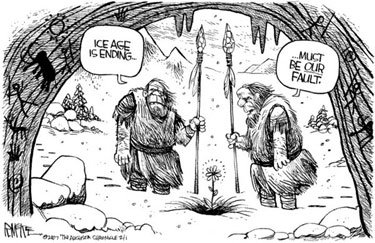
Victor Davis Hanson describes Global Warming as one example of the intellectual bankruptcy of liberalism.
Take also global warming — for Secretary of State John Kerry, the world’s greatest challenge.Once the planet did not heat up in the last 18 years, and once the ice of the polar caps did not melt away, global warming begat climate change. The new nomenclature was a clever effort to link all occasional weather extremities to some underlying and fundamental climate disruption. Brilliant though the strategy was — the opposites of cold/hot, drought/deluges, and calm/storms could now all be used as proof of permanent climate change — global warming finally was hoist on its own petard: If it caused everything, then it caused nothing.
So, in the end, what was global warming? It seems to have grown up largely as a late-20th-century critique of global market capitalism by elites who had done so well by it that they had won the luxury of caricaturing the very source of their privilege. Global warming proved a near secular religion that filled a deep psychological longing for some sort of transcendent meaning among mostly secular Western grandees. In reality, the global-warming creed had scant effect on the lifestyles of the high priests who promulgated it. Al Gore did not cut back on his jet-fueled and lucrative proselytizing. Obama did not become the first president who, on principle, traveled with a reduced and green entourage. Solyndra did not run a model transparent company as proof of the nobility of the cause. As in the case of illegal immigration, the losers from the global-warming fad are the working and middle classes, who do not have the capital to be unharmed by the restrictions on cheap, carbon-based fuels.
Read the whole thing.
01 Dec 2014

Michael Yon has a go at explaining why any time police open fire, they shoot to kill.
Many people innocently ask why Officer Wilson did not shoot Michael Brown in the legs. The answer could stretch for pages. More succinctly, a couple handfuls of reasons:
1) This ain’t the movies
2) Most police do not fire their weapons much. Most are not great shots.
3) The officer would have to be an incredible shot to be crazy enough to fire wounding shots.
4) Nearly all firefights are “stress shoots.” The other guy is moving. Heart pounding. Often breathless. Officer Wilson in Ferguson had just been punched in the face during a wrestling match for his pistol, according to Wilson.
5) Bullets that miss can hit someone else.
6) You always are low on ammo. Do not waste a single bullet.
7) Time spent reloading is dangerous
8) I have seen many people shot who kept fighting. Shot with weapons far more powerful than any officer’s pistol. Many police and combat troops have seen this and will verify.
9) Police and Soldiers never train to shoot to wound. (None that I know of.) Technically, officers will say they shoot to stop the threat but this is legal semantics. They are trained to fire center mass. All combat shots are center mass of any hittable part of the target. If you see only a foot, shoot the foot. If you see a chest — aim for the middle. If the officer is pointing his pistol at someone, he is one click away from going lethal to stop the threat. There is no in between. I have never seen a target at any military, police or civilian range, that designates legs as a target.
10) This ain’t the movies.
The whole thing.
———————————–
I don’t think Michael’s explanation is fully accurate or complete. I’d say that other factors playing a key role include:
1. The politicization of police recruiting. In the old days, experienced police chose at will men like themselves to become cops. Their key criteria were size, strength, and combativeness. The kind of man who got into the police was a tough guy who knew he was tougher than 99% of common criminals and who was not afraid of them. The policeman was typically recruited from the same ethnic or cultural community as the older police.
Today, police recruiting is bureaucratized and politicized. Women and minorities, and now even queers, have to be “represented” in the police force. The old-time principles of selection were discarded years ago, so your typical cop today is no longer the toughest guy in town. He’s just some average schlub looking for a paycheck and pension.
The days of “One Ranger (or one Pennsylvania State Policeman) for one riot” are over. Today’s timid police don’t like to serve civil papers without SWAT Team back-up and an armored car. They are scared to death of frequently large and aggressive African American members of the criminal underclass.
2. In days of yore, the policeman was commonly a gun enthusiast. He carried (in most parts of the country) a Colt or Smith & Wesson .38 Special six-shot revolver. He was a dead shot and thought himself perfectly adequately armed. Nearly all police went through entire careers drawing a weapon only once or twice and never shooting anybody. The policeman dealt with nearly all resistance with his fists.
Needless to say, police are completely discouraged today from relying on their fists, and the police officer who beat up the likes of Michael Brown could get into pretty much as much trouble for hitting him as he would for shooting him dead, dead, dead.
3. The Federal Government took over police training and created national standards and procedures. These, today, include police carrying semi-automatic pistols with large magazines and police being trained to shoot “for center body mass,” i.e. being trained to shoot to kill, period, as well as being encouraged, when they shoot, to spray and pray, to empty the (typically 10-to-15-round) magazine at other fellow.
Some of this is simply the transplanting of military-style training for war into the context of civilian police work, but there is obviously additionally at work fear of litigation. The cop who shoots Stagger Lee in the leg knows that, down the road, there is a live possibility of having to face a live Stagger Lee in the courtroom, equipped with slick attorneys, and lying his ass off. If Stagger Lee is deceased, he is never going to sue anybody personally, and the mouth of the potential complainant with the best ability to contest the cop’s version of events is permanently sealed. The truth of the matter is that our polarized, politicized, and litigious modern society has persuaded police, when matters proceed to shooting, to prefer to take no live prisoners.
I’d say that Michael Yon’s theses are largely bogus. It may be that, in the heat of real combat, a crazed jihadi or some other Third World primitive, high on ganja and/or bloodlust, may keep fighting after being shot a time or two, but the typical American low life is just an ordinary criminal and a coward. Shoot one of them in the leg, and you’ll see him scream in pain and the fight drain right out of him. I know, because I once did shoot one… in the leg. Not being FBI-trained, I thought it unnecessary to shoot to kill.
01 Dec 2014

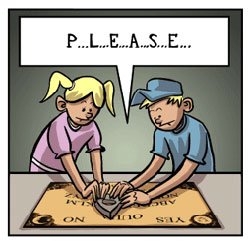

Baby Boomers will increasingly find handy David Eagleman’s 2006 start-up, Deathswitch described at Wired.
“At the beginning of the computer era, people died with passwords in their heads.â€
It was an administrative nightmare, with emails, photos, diaries, and financial information locked away for all eternity simply because people kept crossing into the beyond with the only set of keys. Eventually, Eagleman writes, a solution emerged: software called Death Switches that would detect a person’s demise and send prewritten, postmortem emails to next of kin, sharing passwords. But it didn’t take long, Eagleman goes on, for people to realize they could communicate more than passwords. They could say good-bye or get in the last word of an argument.
As it turns out, Eagleman wasn’t just writing fiction. In 2006 he launched a real-life startup, Deathswitch, to provide the service. Subscribers are prompted periodically via email to make sure they’re still alive. When they fail to respond, Deathswitch starts firing off their predrafted notes to loved ones. The company now has thousands of users and effectively runs itself. Among the perks of a premium Deathswitch account is the ability to schedule emails for delivery far in the future: to wish your wife a happy 50th wedding anniversary, for example, 30 years after you left her a widow.
Death is the original other dimension—a parallel universe that, for millennia, we have anxiously tried to understand. As software, Deathswitch is relatively simple, but as a tool in that millennia-long project it can feel spine-chillingly disruptive. Eagleman has jury-rigged a way for people to speak from beyond that inviolable border and—for those of us still sticking it out on this side—to feel we’re being spoken to. It’s another example of technology enabling things that previously would have seemed magic.
Hat tip to the Dish.
01 Dec 2014

Nautilus profiles the great man, thusly:
Describing his life, shortly before his death, Newton put his contributions this way: “I don’t know what I may seem to the world, but, as to myself, I seem to have been only like a boy playing on the sea shore, and diverting myself in now and then finding a smoother pebble or a prettier shell than ordinary, whilst the great ocean of truth lay undiscovered before me.â€
One thing Newton never did do, actually, was play at the seashore. In fact, though he profited greatly from occasional interaction with scientists elsewhere in Britain and on the Continent—often by mail—he never left the vicinity of the small triangle connecting his birthplace, Woolsthorpe, his university, Cambridge, and his capital city, London. Nor did he seem to “play†in any sense of the word that most of us use. Newton’s life did not include many friends, or family he felt close to, or even a single lover, for, at least until his later years, getting Newton to socialize was something like convincing cats to gather for a game of Scrabble. Perhaps most telling was a remark by a distant relative, Humphrey Newton, who served as his assistant for five years: he saw Newton laugh only once—when someone asked him why anyone would want to study Euclid.
Newton had a purely disinterested passion for understanding the world, not a drive to improve it to benefit humankind. He achieved much fame in his lifetime, but had no one to share it with. He achieved intellectual triumph, but never love. He received the highest of accolades and honors, but spent much of his time in intellectual quarrel. It would be nice to be able to say that this giant of intellect was an empathetic, agreeable man, but if he had any such tendencies he did a good job suppressing them and coming off as an arrogant misanthrope. He was the kind of man who, if you said it was a gray day, would say, “no, actually the sky is blue.†Even more annoying, he was the kind who could prove it. Physicist Richard Feynman voiced the feelings of many a self-absorbed scientist when he wrote a book titled, What Do You Care What Other People Think? Newton never wrote a memoir, but if he had, he probably would have called it I Hope I Really Pissed You Off, or maybe, Don’t Bother Me, You Ass.
———————–
Lock, Stock, & History is similiarly irreverent.
Today we consider the great scientist Isaac Newton to be one of the greatest geniuses of history. After all he developed many laws and theories in the fields of physics, optics, mathematics, and astronomy which are still very relevant today. However if you actually met Sir Isaac Newton today, I guarantee you would think him to be a nutjob.
While Newton is celebrated today for his many scientific breakthroughs, his works in other, less scientific fields are largely forgotten. A dedicated alchemist and occultist, Newton spent much of his time working on experiments that are today mostly considered outright bizarre. A devoted follower of many interesting occult sects, Newton spent years trying to determine the “sacred geometry†of Solomon’s Temple, with hopes of mathematically divining the secrets of God. He also spent much time and energy trying to find and de-crypt the “Bible Codeâ€. In a detailed study of the Bible, Newton made a prediction for the end of world using the chronology of the Holy Book. According to Newton, the world should come to an end in 2060 AD. Newton calculated the end of the world specifically “to put a stop to the rash conjectures of fanciful men who are frequently predicting the time of the end, and by doing so bring the sacred prophesies into discredit as often as their predictions fail.†Eat your hearts out Mayans!
Of all of Newton’s discoveries, from gravity to refraction of light, from divining the location of Atlantis to discovering how to communicate with angels, Newton believed his most important work was in creating the Philosopher’s Stone. Newton believed that with the Philosophers Stone he could have everlasting life and be able to turn lead into gold. He spent years, if not decades studying the work of the noted alchemist Nicholas Flammel and other alchemists, with the believe that he was about to make a breakthrough at any moment. In fact, to Newton the discovery of the Philosopher’s Stone was so important that all his other discoveries were trivial when compared to his work in alchemy. His obsession with the stone caused him to have a weird set of priorities. After developing calculus, he kept his results to himself for over 30 years because he didn’t think it was important and “disliked intellectual mattersâ€.
Finally some of Newton’s experiments were just downright kooky and creepy. According to writings in his notebook, one experiment involved him sticking a needle into his eyeball and twirling it around to analyze how light traveled through his optic nerve,
I tooke a bodkine (needle) & put it betwixt my eye & [the] bone as neare to [the] backside of my eye as I could: & pressing my eye [with the] end of it (soe as to make [the] curvature a, bcdef in my eye) there appeared severall white darke & coloured circles r, s, t, &c. Which circles were plainest when I continued to rub my eye [with the] point of [the] bodkine, but if I held my eye & [the] bodkin still, though I continued to presse my eye [with] it yet [the] circles would grow faint & often disappeare untill I removed [them] by moving my eye or [the] bodkin.
In another strange experiment, Newton stared directly at the sun for as long as he could bare with the same objective of his “needle experimentâ€.
While dedicated to the discovery of the Philosopher’s Stone, his work would all be in vain as he died in 1727. He never did figure out how to turn lead into gold.
/div>

Feeds
|