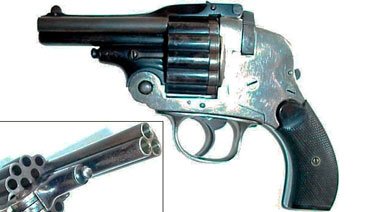
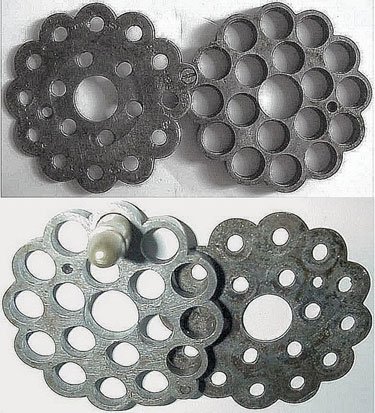
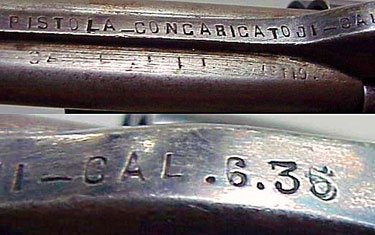
“A revolver made in Spain [Italy], probably as a single piece because none of my friends and I remember ever seeing one, nor did I find something in the literature. To load the 6.35mm/.25 ACP pistol cartridge the cylinder has two connected rings in which one can insert the cartridges and closing the second ring, the cartridges are safely stored – similar today’s speed-loader. On the back of the strap is a switch, center position will hit the inner circle, left position six hits skipping one in the outer circle and after pushing to the right the firing pin will hit the remaining six cartridges. Under the switch is additional a safety blocking the hammer. It is a tip-down or break-open system similar the Smith & Wesson models. The 3″ barrel has a fixed front sight and the above pictured description. The cylinder and barrels are blued, the frame is nickel plated, the checkered hard rubber grips are crisp. The former owner doesn’t know about the background, only he claims it is an unique revolver. In good working order and fine condition.”
Captain Cook’s famous ship has seemingly been discovered in the US 230 years since it was sold, sunk and forgotten.
The Endeavour is one of the most famous ships in naval history and was used by Captain James Cook to discover the East Coast of Australia in 1770.
The last sighting of the Endeavour was around 1778 when it is believed the ship was sold, renamed the Lord Sandwich, and then used to transport British troops during the American Revolution.
Archaeologists believe they have found the scuttled remains of the Endeavour in Newport Harbour, Rhode Island.
The Rhode Island Marine Archaeology Project made the discovery, saying the ship was scuttled in the harbour by British forces in the lead up to the Battle of Rhode Island in 1778.
RIMAP said it was ’80 to 100 per cent certain’ that the remains it has discovered belonged to the Endeavour.
Plato, copy of a bust by Silanion, Musei Capitolini.
Andrew Sullivan is back, in New York magazine, telling us that the current election reminds him of something.
As this dystopian election campaign has unfolded, my mind keeps being tugged by a passage in Plato’s Republic. It has unsettled — even surprised — me from the moment I first read it in graduate school. The passage is from the part of the dialogue where Socrates and his friends are talking about the nature of different political systems, how they change over time, and how one can slowly evolve into another. And Socrates seemed pretty clear on one sobering point: that “tyranny is probably established out of no other regime than democracy.†What did Plato mean by that? Democracy, for him, I discovered, was a political system of maximal freedom and equality, where every lifestyle is allowed and public offices are filled by a lottery. And the longer a democracy lasted, Plato argued, the more democratic it would become. Its freedoms would multiply; its equality spread. Deference to any sort of authority would wither; tolerance of any kind of inequality would come under intense threat; and multiculturalism and sexual freedom would create a city or a country like “a many-colored cloak decorated in all hues.â€
This rainbow-flag polity, Plato argues, is, for many people, the fairest of regimes. The freedom in that democracy has to be experienced to be believed — with shame and privilege in particular emerging over time as anathema. But it is inherently unstable. As the authority of elites fades, as Establishment values cede to popular ones, views and identities can become so magnificently diverse as to be mutually uncomprehending. And when all the barriers to equality, formal and informal, have been removed; when everyone is equal; when elites are despised and full license is established to do “whatever one wants,†you arrive at what might be called late-stage democracy. There is no kowtowing to authority here, let alone to political experience or expertise.
The very rich come under attack, as inequality becomes increasingly intolerable. Patriarchy is also dismantled: “We almost forgot to mention the extent of the law of equality and of freedom in the relations of women with men and men with women.†Family hierarchies are inverted: “A father habituates himself to be like his child and fear his sons, and a son habituates himself to be like his father and to have no shame before or fear of his parents.†In classrooms, “as the teacher … is frightened of the pupils and fawns on them, so the students make light of their teachers.†Animals are regarded as equal to humans; the rich mingle freely with the poor in the streets and try to blend in. The foreigner is equal to the citizen.
And it is when a democracy has ripened as fully as this, Plato argues, that a would-be tyrant will often seize his moment.
He is usually of the elite but has a nature in tune with the time — given over to random pleasures and whims, feasting on plenty of food and sex, and reveling in the nonjudgment that is democracy’s civil religion. He makes his move by “taking over a particularly obedient mob†and attacking his wealthy peers as corrupt. If not stopped quickly, his appetite for attacking the rich on behalf of the people swells further. He is a traitor to his class — and soon, his elite enemies, shorn of popular legitimacy, find a way to appease him or are forced to flee. Eventually, he stands alone, promising to cut through the paralysis of democratic incoherence. It’s as if he were offering the addled, distracted, and self-indulgent citizens a kind of relief from democracy’s endless choices and insecurities. He rides a backlash to excess—“too much freedom seems to change into nothing but too much slavery†— and offers himself as the personified answer to the internal conflicts of the democratic mess. He pledges, above all, to take on the increasingly despised elites. And as the people thrill to him as a kind of solution, a democracy willingly, even impetuously, repeals itself.
Claire Berlinski contemplates Donald Trump’s recent Foreign Policy speech and finds that he is really preaching the same doctrine of American withdrawal from world leadership and decline that Barack Obama was.
Trump’s speech made him seem to me Obama’s natural successor, and made me decide that neither are the aberrations I thought they were. Both reflect an external reality: the relative loss of American power. Both envision a limited role for America in the world. Trump’s wrapping Obama’s view of the world in the American flag, and making it palatable to people who weren’t willing to hear it from Obama, but it’s the same message. We’re no longer able to be a benevolent global hegemon. Indeed, we never were a benevolent hegemon. The world will be fine, and so will we, without our efforts to lead it. If we’re an exceptional country at all, our destiny is to lead by example, not force. “America First†is not an accidental slogan. Trump certainly knows where it comes from, and I suspect most Americans at least intuit it.
Trump in many ways echoes the themes of Obama’s first presidential campaign:
We tore up what institutions they had and then were surprised at what we unleashed. Civil war, religious fanaticism, thousands of Americans and just killed be lives, lives, lives wasted. Horribly wasted. Many trillions of dollars were lost as a result. The vacuum was created that ISIS would fill. Iran, too, would rush in and fill that void much to their really unjust enrichment.
They have benefited so much, so sadly, for us. Our foreign policy is a complete and total disaster.
… we have lost thousands of American lives, spent nearly a trillion dollars, alienated allies and neglected emerging threats – all in the cause of fighting a war for well over five years in a country that had absolutely nothing to do with the 9/11 attacks.
And with just a few changes in tone,
I am running for President because it’s time to turn the page on a failed ideology and a fundamentally flawed political strategy, so that we can be intelligent about keeping our country safe. I stood up and opposed the Iraq war from the start, and said that we needed to fight al Qaeda.
Hillary Clinton says she’s passed a “Commander in Chief test†– not because of the decisions she’s made, but because of all the years she’s spent in Washington. But here is the truth, folks, believe me: there is a gap in this country – a gap between people who claim to be tough on national security, and how unsafe we are because of their stupid, disastrous decisions. Our foreign policy is a complete and total disaster.
The war in Iraq enriched Iran, continuing its nuclear program and threatening our ally, Israel. Instead of the new Middle East we were promised, we got nothing. The war in Iraq has enriched North Korea, which built new nuclear weapons and even tested one.
The above passage is Obama in 2008, with a few words changed so that the voice sounds more like Trump’s, although the meaning is intact.
A world — including me — that’s been looking at Obama for eight years and wondering if the American century is over is now watching the Trump campaign and realizing that it’s long since past. Come 2016, Trump or Hillary Clinton will be in the White House. Clinton is explicitly running on “more of Obama’s foreign policy.†Trump is implicitly running on the same promise, and proposing to get there at warp speed.
A lion devouring a Nubian, crafted during the 19th dynasty possibly as a fly-whisk handle, symbolizing the valiant ruler of Egypt subjugating the Nubians to protect his country and avert chaos. Metropolitan Museum.
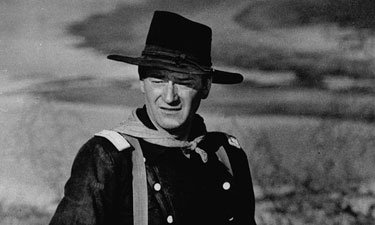
Whiny-minority democrats in the California State Assembly rejected a holiday honoring John Wayne, because the actor (who died in 1979) had been conservative and had made a couple of un-pc comments (one of them probably a joke) decades and decades ago.
What a California lawmaker intended as a benign resolution honoring a late, world-renowned movie icon exploded into an emotional debate over decades-old racist comments.
The state Assembly defeated the official ode to John Wayne Thursday after several legislators described statements he made about racial minorities and his support for the anti-communist House Un-American Activities Committee and John Birch Society.
Republican State Assemblyman Matthew Harper of Huntington Beach sought to declare May 26, 2016, as John Wayne Day to mark the day the actor was born.
“He had disturbing views towards race,” objected Assemblyman Luis Alejo, D-Watsonville, leading off a 20-minute debate.
Alejo cited a 1971 interview with Playboy in which Wayne talked disparagingly about blacks.
“I believe in white supremacy until the blacks are educated to a point of responsibility. I don’t believe in giving authority and positions of leadership and judgment to irresponsible people,” he told the magazine.
Assemblyman Mike Gipson, D-Carson, who is black, said he found Wayne’s comments personally offensive.
Assemblywoman Lorena Gonzalez, D-San Diego, cited his comments defending white Europeans’ encroachment on American Indians who Wayne once said “were selfishly trying to keep it for themselves.”
All of which proves that, back then, John Wayne was perfect right about their kind. You read this kind of thing and think: The sooner North Korea perfects delivery systems able to reach California the better. Cut the continent off at the Sierras and float those communists out to sea.
Animal lovers got a shock yesterday when a webcam broadcasting pictures of a bald eagle nest in Pittsburgh showed the adult eagles feeding somebody’s domestic cat to their chicks.
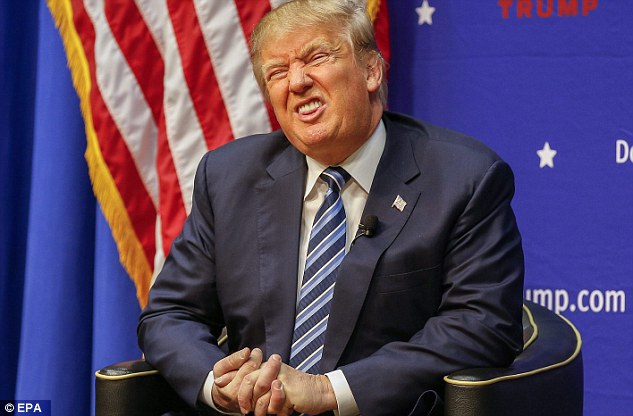
Politico thought it would be good if everyone actually understood the reality of Donald Trump, so they convened some experts on Trump’s career and biography, five Trumpologists who covered him professionally: Wayne Barrett, a longtime Village Voice reporter; Gwenda Blair, a bestselling author; Pulitzer Prize-winning journalist Michael D’Antonio; Harry Hurt III, an author and videographer; and Timothy L. O’Brien, a writer and editor at Bloomberg.
Three Excerpts:
1:
Michael Kruse: I’d like to start talking about Donald by talking about Fred Sr. and going back to the very beginning, to Jamaica Estates [the Queens neighborhood where Donald grew up]. What do people need to know? What should we know about Donald because of his father, because of that relationship?
Harry Hurt III: I ran into Fred at Coney Island, with his secretary-mistress, one day, and he usually went to a place called Gargiulo’s down in that area. But that was closed that day, and so I was with my researcher and we tailed them over to the original Nathan’s hot dog stand. Donald was flying somewhere at the time, and we overheard Fred wipe some mustard off his lip, like this here, and he said, “I hope his plane crashes.†And I looked at my researcher, and I said, “Did you hear what I just heard?†He said, “Yes, I did.†I said, “Well, that’s my man. That’s Fred. The apple don’t fall far from the tree.â€
2:
Barrett: Well, you know, with all this Tea Party anger that he’s appealing to now, he was the original bailout. I mean, the banks could have put him under any day. They took tremendous losses in those negotiations and deals. So they saved him. He was too big to fail.
Hurt: He was the original “too big to fail.â€
Barrett: He’s the consummate example of what his voters rail against.
O’Brien: I remember Trump’s finance chief Steve Bollenbach, who worked through the debt for him, said he had this conversation one day where they were going to take the yacht. And they didn’t want to take the yacht. And the light suddenly went on in their heads: The banks actually don’t want to control all these assets. They want him to operate out of it, and they both thought, “Wow.†That was the moment when they realized they had leverage.
You know, everything he does now, he doesn’t need loans to do any of it. The golf courses are owned by the members. They pay fees that finance it. He gets a salary from NBC from The Apprentice, and he gets licensing fees for everything else. I mean, there’s some projects, like the Chicago hotel—he got bank debt for that. Deutsche Bank loaned into that one.
Barrett: But he’s gone from the 18th floor to the 18th hole.
[Laughter.]
Blair: It was branding. It was the early branding that kicked in for him. He spent the ’80s getting that brand going. So he buys the shuttle, he buys the yacht, he buys the Plaza Hotel, everything—
O’Brien: The Generals.
Blair: The New Jersey Generals, which gets him onto the sports pages, which gets him up to a national level. So the branding he had in place, so by the time the first bankruptcy comes up, the brand is the thing they don’t want to let go of. They don’t want to foreclose and not have the name, which is so counterintuitive that the mind boggles. Like, wait a minute. This guy is in corporate bankruptcy, but his name—but that’s how it was. He could get the over-the-barrel piece for the banks, and he’s been doing it ever since. It’s the over-the-barrel piece which he did with the Republican Party now. How do you get them so they can’t get rid of you, they can’t let you go? And he’s really good at that.
Barrett: Well, the thing was that the banks wouldn’t complain, either. When they cut the deal with him, if they didn’t go on to a prosecutor—I mean, all of the financials that he gave the banks were totally false.
Hurt: And they’re liable for that, for not doing their due diligence.
Barrett: Yes. They were so embarrassed that they never went to a prosecutor. Clearly, there could have been a case made.
3:
O’Brien: The other thing, too, that I think the media has to hold his feet to the fire on is he’s gotten away with this notion that he’s a superior deal-maker, and a very successful businessman. I thought about it after he went after the Iran deal. He said, “Obama negotiated this horrible deal with Iran. It’s a bad deal, and when I get to Washington, there won’t be bad deals anymore. I’m a great deal-maker.†And then the reality, the objective reality, is that he’s been a horrible deal-maker. His career is littered with bad deals. And yet, he’s essentially now a human shingle. He’s not someone who’s a particularly adept deal-maker, if you look at his whole career.
Kruse: A human shingle, because there were the bad deals that brought him down in the early to mid-’90s, right?
O’Brien: What he was left with was licensing his name. So he licenses his name on mattresses and underwear and vodka and buildings, among other products.
Kruse: He made this transition from being an actual businessman, a person who does deals, some of which were good, to a grand promoter of his own name.
O’Brien: And the reality TV version of a successful businessman.
Barrett: This is the ultimate promotion of his own name. This is the ultimate brand.
Kruse: But the fact is that there is a middle ground. There is, basically, 1990-ish to 1995 where he is a failure.
O’Brien: He’s in desperate straits. He almost had to go personally bankrupt.
Kruse: The success is that he didn’t die a business death. The success was survival.
O’Brien: And he was a survivor, to his credit. He survived.
Kruse: Why, though, wasn’t that failure?
O’Brien: Because of The Apprentice. I think singularly because of The Apprentice. But he was a joke in between 1993 and 2003.
Blair: You know that family legacy, that family culture of “never give up.†He never said he was a failure. Everybody else said, “This guy is going down. He’s filed for bankruptcy. This is terrible,†but he didn’t say that. He continued to say he was the best of the best, the biggest of the biggest, and he went on. I think that’s a huge piece of that.
Barrett: I tell the tale towards the end of the book about after the settlement with Ivana, he goes to meet with John Scanlon, who was a New York publicist of some skill, and tries to hire Ivana’s publicist to now represent him, and tells John, who is now dead, “I’m going to make a giant comeback, and I want to be on the cover of Time again, and I want you to handle it.â€
So he’s already thinking that way, in that very down moment of his life, but he knew he had bilked the banks. The banks put him back up on the pedestal. They didn’t have to, but it took a while to climb up that ladder.
D’Antonio: What about the fact that Fred died and that money became available?
O’Brien: Which totally insulated him from a lot of problems, that inheritance that he got from Fred. At one point, he needed his siblings to extend him a loan. I think it was the hard reality of family money.
D’Antonio: The first thing I think that you credit him with is this creation of himself, which is very American, this idea that I’m going to imagine what I’m going to be, I’m going to tell the world that I’m it before I am it, and then the world is going to help me become it. And he did it.
O’Brien: Think about the genesis of The Apprentice. The show got launched because Mark Burnett [the producer of The Apprentice], as an immigrant to the United States, is selling blue jeans in Venice, California, barely making it. He doesn’t have any faith in himself and reads this book called The Art of the Deal, and he thinks, “Wow, this is the bible of how you make it in America.†And then whatever it is, 25, 30 years later, he does Survivor. That’s a huge hit. He becomes a force in the TV industry, and he thinks, “I’m going to go back to the godfather of my success, Donald Trump, and I’m going to create a TV show that embodies the inspiration I felt from The Art of the Deal.†And that’s how The Apprentice gets launched, because The Art of the Deal, as Wayne knows, didn’t comport with reality, and The Apprentice is just a TV version of The Art of the Deal. It’s a total distortion of reality.
Glasser: So it’s a TV show about a book about a guy who was an invented character.
O’Brien: Yes.
Glasser: That’s now led to a campaign based on the TV show based on the book.
O’Brien: About a man who’s saying he’s a politician, who could probably never really deliver on everything he’s saying.
D’Antonio: So it’s all about this autobiography, which isn’t auto, and it isn’t a biography—which is, you know, only in America.