Archive for February, 2022
11 Feb 2022


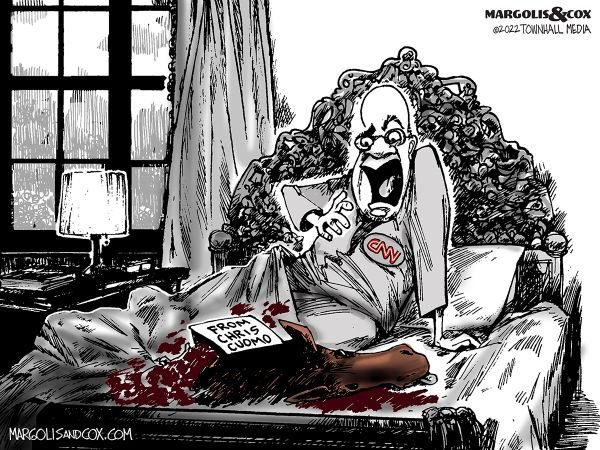
The Ceausescus facing the firing squad.
We live in remarkable times. The Establishment Left has gone so far off the rails that it has actually turned several of the most active and talented left-wing journalists into outsider opponents.
Matt Taibbi (one of the most conspicuous examples of the honest leftist, like George Orwell, who has had enough and changed sides) sees History repeating itself again (this time as Comedy).
On the morning of the 21st of December, 1989, Romanian General Secretary Nicolae Ceaușescu was in a foul mood. The Berlin Wall had fallen, and Mikhail Gorbachev and George H.W. Bush had recently announced the end of the Cold War, making the end of Ceaușescu’s rule inevitable, though he couldn’t see this yet. Worse, his security leaders had just failed to violently put down protests in the city of Timisoara, a fact that enraged his wife Elena.
“You should have fired on them, and had they fallen, you should have taken them and shoved them into a cellar,” she said. “Weren’t you told that?”
Long one of the world’s most vicious dictators, Ceaușescu’s most recent plan for winning over the heartland was forcing half the country’s villagers to destroy their own homes — with pick-axes and hammers, if they couldn’t afford a bulldozer — and packing them into project apartments in new “agro-industrial towns,” for a “better future.” Despite this, and his long history of murder, terror, and spying, Ceaușescu to the end did not grasp that his unpopularity had an organic character. He was convinced ethnically Hungarian “terrorists” were behind the latest trouble.
After reaching the balcony of Bucharest’s Central Committee building to give a speech that December day, he’s genuinely surprised when the crowd turns on him. When he tells them to be quiet, he’s befuddled by their refusal, saying, “What, you can’t hear?” Elena jumps in and yells, “Silence!”, to which Ceaușescu, hilariously, replies, “Shut up!” The crowd listens to neither of them.
Paul Kenyon’s Children of the Night describes the morbid black comedy that ensued. The Ceaușescus and a motley gang of undead apparatchiks that included the “morbidly obese Prime Minister, Emil Bobu” later tried to load into a single helicopter — Bobu “waddled, walrus-like, to the rear” Kenyon writes — but there were too many of them, and the copter barely got off the ground. “Where to?” asked the pilot, and nobody knew, because there was no plan, since none of them had ever considered the possibility of this happening.
The sky was full of stuff, including other helicopters, which were dropping leaflets on the crowd giving what Kenyon described as a Marie Antoinette-like order to ignore “imperialist conspiracies” and return home “to a Christmas feast.” Four days later, a firing squad put the Ceaușescus against a wall and gave them their final, solid lead Christmas presents.
Ceaușescu’s balcony will forever be a symbol of elite cluelessness. Even in the face of the gravest danger, a certain kind of ruler will never be able to see the last salvo coming, if doing so requires any self-examination. The neoliberal political establishment in most of the Western world, the subject of repeat populist revolts of rising intensity in recent years, seems to suffer from the same disability.
There may be no real-world comparison between a blood-soaked monster like Ceaușescu and a bumbling ball-scratcher like Joe Biden, or an honorarium-gobbling technocrat like Hillary Clinton, or a Handsome Dan investment banker like Emmanuel Macron, or an effete pseudo-intellectual like Justin Trudeau. Still, the ongoing inability of these leaders to see the math of populist uprisings absolutely recalls that infamous scene in Bucharest. From Brexit to the election of Donald Trump to, now, the descent of thousands of Canadian truckers upon the capital city of Ottawa to confront Trudeau, a consistent theme has been the refusal to admit — not even to us, but to themselves — the numerical truth of what they’re dealing with.
Trudeau is becoming the ultimate example. Truckers last month began protesting a January 22nd rule that required the production of vaccine passports before crossing the U.S.-Canadian border. Canadian truckers are reportedly 90% vaccinated, above the country’s 78% total, a key detail that’s been brazenly ignored by media in both countries determined to depict these more as “anti-vax” than “anti-mandate” protests (which seem to be about many things at once, but that’s another story). When an angry convoy descended upon the capital, Trudeau dismissed them in a soliloquy that can only be described as inspired political arson:
The small fringe minority of people who are on their way to Ottawa, who are holding unacceptable views that they are expressing, do not represent the views of Canadians…who know that following the science and stepping up to protect each other is the best way to ensure our rights, our freedoms, our values as a country.
A near-exact repeat of the “basket of deplorables” episode, Trudeau’s imperious description of “unacceptable” views instantly became a rallying cry, with people across the country lining the streets to cheer truckers while self-identifying as the “small fringe minority.” Everyone from high school kids to farmers and teachers and random marchers carrying jerrycans of fuel joined in as Trudeau’s own words were used to massively accelerate his troubles.
RTWT
08 Feb 2022
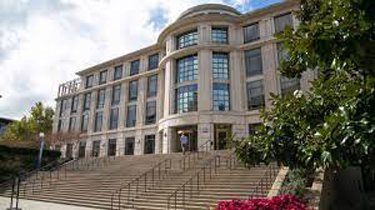
Georgetown Law
Max Eden, at AEI, informs us that Georgetown Law coddles ;eft-wing students who respond to reading a comment they do not like by demanding “reparations,” “free food,” “and a place to cry”(!) by suspending a distinguished professor.
Georgetown University Law Center had long been at the bottom of the law school world’s elite “Top-14” rankings. It maintained its worst-of-the-best status largely by the draw of its physical location in Washington, D.C. It finally slipped below UCLA this year, just when Georgetown Law distinguished itself above and beyond even top-ranked Yale Law in a category not ranked by US News and World Report: leadership. To wit: Georgetown Law Dean William Treanor has proven himself, almost beyond a reasonable doubt, to be the single weakest leader in American higher education.
An examination of Treanor’s leadership by a jury of his peers should convict him of this weighty charge. Last March, someone leaked a video of professor Sandra Sellers lamenting that black students tended to score poorly on her examinations. Treanor publicly condemned her without speaking to her. Georgetown then violated its own policy and American Association of University Professors’ guidelines and fired Sellers without any due process.
I asked Treanor: Why condemn Sellers before speaking with her? Was there an empirical basis for her lamentation? If there was, then why would he find lamenting an empirical truth to be “abhorrent?” I also asked him to comment on what a Georgetown Law student told me: “[B]ecause of [Treanor’s] action, [students] are now terrified of providing any personal opinion or even putting forward ideas ‘for the sake of argument’ in [Georgetown Law] classes for fear that someone might clip their speech and post a video on social media to destroy their reputation and career.”
Treanor provided no comment. He did, however, publicly vow to consider requiring all students to study Critical Race Theory (CRT), to make professor tenure contingent on CRT-inspired “diversity, equity and inclusion” criteria, and insisted that he was “dedicated to the important work that lies ahead.”
In recent weeks, Treanor has rededicated himself to that work. Read the rest of this entry »
07 Feb 2022
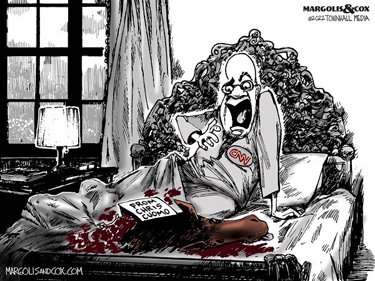
Emerald Robinson is unsympathetic, looking on as CNN craters.
here have been so many scandals recently at America’s least favorite cable news network CNN that it’s hard to remember them all — they’ve multiplied like the ex-husbands of the Kardashian clan. Who can keep up with all the jokes now? Just take the most recent one: the forced resignation of CNN’s president Jeff Zucker. The first scandal is that not one, but two women were interested in being romantically involved with Jeff Zucker — who could be described, generously, as the least attractive man in the Eastern Seaboard. (I’ve been unable to confirm whether both women were legally blind when they met Zucker.)
The second scandal is that the woman who was romantically linked with Jeff Zucker, Allison Gollust, was not only romantically involved with Zucker for a decade but that the pair were personally involved in PR crisis management for New York Governor Andrew Cuomo. This included “calling him to do news segments with his brother Chris Cuomo and even coaching him on what to say during his infamous COVID briefings” according to the New York Post.
Why was the top executive of a cable news network coaching an elected official? Perhaps because his girlfriend had previously been the communications director for Governor Cuomo? Perhaps because Governor Cuomo’s brother hosted a nightly news program for CNN? Perhaps because CNN has always operated as the cable news wing of the Democrat Party under Zucker’s direction? In terms of ethical violations at CNN, we are spoiled for choice.
Let’s not forget the scale of the scandal that Zucker and Gollust were aiding and abetting Andrew Cuomo to escape: he had ordered that COVID patients should be placed into New York nursing homes. (There’s absolutely no reason to do that unless you want to spread the disease to the elderly.) Then Cuomo and his team intentionally withheld nursing home death data during the Trump Administration. In other words, Zucker and Gollust helped Governor Cuomo’s cover-up of COVID-19 nursing home deaths while ostensibly employed by CNN to inform the public of such cover-ups. It’s hard to imagine a more serious ethical breach at a media outlet.
What was the reaction, you ask, of CNN’s staff to Jeff Zucker’s resignation and the serious ethical breaches behind it? They all got together for a staff meeting and defended Zucker of course. (We know this because most of them leaked details to other media outlets like the New York Times.) This might be surprising to anyone who thought people like Brian Stelter and Jake Tapper and Don Lemon were actually journalists and not just a motley crew of misfits that were hired by Zucker over the years. Did anyone really trust these people to give them information anymore? Since CNN has lost 90% of its audience, the answer to that question is a resounding no.
RTWT
04 Feb 2022

” I came by there five years ago and where I shot the pheasant there was a hot dog place and filling station and the north prairie, where we hunted snipe in the spring and skated on sloughs when they froze in the winter, was all a subdivision of mean houses, and in town, the house where I was born was gone and they had cut down the oak trees and built an apartment house close out against the street. So I was glad I went away from there as soon as I did. Because when you like to shoot and fish you have to move often and always farther out and it doesn’t make any difference what they do when you are gone.”
— E. Hemingway.
02 Feb 2022
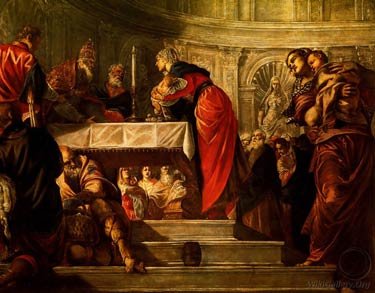
Tintoretto, Presentation of Jesus at the Temple, 1550-1555, Gallerie dell Accademi, Venice
From Robert Chambers, The Book of Days, 1869:
From a very early, indeed unknown date in the Christian history, the 2nd of February has been held as the festival of the Purification of the Virgin, and it is still a holiday of the Church of England. From the coincidence of the time with that of the Februation or purification of the people in pagan Rome, some consider this as a Christian festival engrafted upon a heathen one, in order to take advantage of the established habits of the people; but the idea is at least open to a good deal of doubt. The popular name Candlemass is derived from the ceremony which the Church of Rome dictates to be observed on this day; namely, a blessing of candles by the clergy, and a distribution of them amongst the people, by whom they are afterwards carried lighted in solemn procession. The more important observances were of course given up in England at the Reformation; but it was still, about the close of the eighteenth century, customary in some places to light up churches with candles on this day.
At Rome, the Pope every year officiates at this festival in the beautiful chapel of the Quirinal. When he has blessed the candles, he distributes them with his own hand amongst those in the church, each of whom, going singly up to him, kneels to receive it. The cardinals go first; then follow the bishops, canons, priors, abbots, priests, &c., down to the sacristans and meanest officers of the church. According to Lady Morgan, who witnessed the ceremony in 1820:
‘When the last of these has gotten his candle, the poor conservatori, the representatives of the Roman senate and people, receive theirs. This ceremony over, the candles are lighted, the Pope is mounted in his chair and carried in procession, with hymns chanting, round the ante-chapel; the throne is stripped of its splendid hangings; the Pope and cardinals take off their gold and crimson dresses, put on their usual robes, and the usual mass of the morning is sung.’
Lady Morgan mentions that similar ceremonies take place in all the parish churches of Rome on this day.
It appears that in England, in Catholic times, a meaning was attached to the size of the candles, and the manner in which they burned during the procession; that, moreover, the reserved parts of the candles were deemed to possess a strong supernatural virtue:
‘This done, each man his candle lights,
Where chiefest seemeth he,
Whose taper greatest may be seen; And fortunate to be,
Whose candle burneth clear and bright: A wondrous force and might
Both in these candles lie, which if At any time they light,
They sure believe that neither storm Nor tempest cloth abide,
Nor thunder in the skies be heard, Nor any devil’s spide,
Nor fearful sprites that walk by night,
Nor hurts of frost or hail,’ &c.
The festival, at whatever date it took its rise, has been designed to commemorate the churching or purification of Mary; and the candle-bearing is understood to refer to what Simeon said when he took the infant Jesus in his arms, and declared that he was a light to lighten the Gentiles. Thus literally to adopt and build upon metaphorical expressions, was a characteristic procedure of the middle ages. Apparently, in consequence of the celebration of Mary’s purification by candle-bearing, it became customary for women to carry candles with them, when, after recovery from child-birth, they went to be, as it was called, churched. A remarkable allusion to this custom occurs in English history. William the Conqueror, become, in his elder days, fat and unwieldy, was confined a considerable time by a sickness. ‘Methinks,’ said his enemy the King of France, ‘the King of England lies long in childbed.’ This being reported to William, he said, ‘When I am churched, there shall be a thousand lights in France !’ And he was as good as his word; for, as soon as he recovered, he made an inroad into the French territory, which he wasted wherever he went with fire and sword.
At the Reformation, the ceremonials of Candlemass day were not reduced all at once. Henry VIII proclaimed in 1539:
‘On Candlemass day it shall be declared, that the bearing of candles is done in memory of Christ, the spiritual light, whom Simeon did prophesy, as it is read in. the church that day.’
It is curious to find it noticed as a custom down to the time of Charles II, that when lights were brought in at nightfall, people would say–‘God send us the light of heaven!’ The amiable Herbert, who notices the custom, defends it as not superstitious. Some-what before this time, we find. Herrick alluding to the customs of Candlemass eve: it appears that the plants put up in houses at Christmas were now removed.
Down with the rosemary and bays,
Down with the mistletoe;
Instead of holly now upraise
The greener box for show.
The holly hitherto did sway,
Let box now domineer,
Until the dancing Easter day
Or Easter’s eve appear.
The youthful box, which now hath grace
Your houses to renew,
Grown old, surrender must his place
Unto the crisped yew.
When yew is out, then birch comes in,
And many flowers beside,
Both of a fresh and fragrant kin’,
To honour Whitsuntide.
Green rushes then, and sweetest bents,
With cooler oaken boughs,
Come in for comely ornaments,
To re-adorn the house.
Thus times do shift; each thing in turn does hold;
New things succeed, as former things grow old.’
The same poet elsewhere recommends very particular care in the thorough removal of the Christmas garnishings on this eve:
‘That so the superstitious find
No one least branch left there behind;
For look, how many leaves there be
Neglected there, maids, trust to me,
So many goblins you shall see.’
He also alludes to the reservation of part of the candles or torches, as calculated to have the effect of protecting from mischief:
‘Kindle the Christmas brand, and then
Till sunset let it burn,
Which quenched, then lay it up again, Till Christmas next return.
Part must be kept, wherewith to tend
The Christmas log next year;
And where ‘tis safely kept, the fiend Can do no mischief there.’
Considering the importance attached to Candlemass day for so many ages, it is scarcely surprising that there is a universal superstition throughout Christendom, that good weather on this day indicates a long continuance of winter and a bad crop, and that its being foul is, on the contrary, a good omen. Sir Thomas Browne, in his Vulgar Errors, quotes a Latin distich expressive of this idea:
‘Si sol splendescat Maria purificante,
Major erit glacies post festum quam fait ante;
which maybe considered as well translated in the popular Scottish rhyme:
If Candlemass day be dry and fair,
The half o’ winter’s to come and mair;
If Candlemass day be wet and foul,
The half o’ winter’s gave at Yule.’
In Germany there are two proverbial expressions on this subject: 1. The shepherd would rather see the wolf enter his stable on Candlemass day than the sun; 2. The badger peeps out of his hole on Candlemass day, and when he finds snow, walks abroad; but if he sees the sun shining, he draws back into his hole. It is not improbable that these notions, like the festival of Candlemass itself, are derived from pagan times, and have existed since the very infancy of our race. So at least we may conjecture, from a curious passage in Martin’s Description of the Western Islands. On Candlemass day, according to this author, the Hebrideans observe the following curious custom:
The mistress and servants of each family take a sheaf of oats and dress it up in women’s apparel, put it in a large basket, and lay a wooden club by it, and this they call Brύd’s Bed.; and then the mistress and servants cry three times, “Brύd is come; Brύd is welcome!” This they do just before going to bed, and when they rise in the morning they look among the ashes, expecting to see the impression of Brύd’s club there; which, if they do, they reckon it a true presage of a good crop and prosperous year, and the contrary they take as an ill omen.
——————————————————————
Groundhog Day is simply a modern commercialized adaptation of the earlier weather traditions associated with the Christian feast day.
/div>
Feeds
|