07 Oct 2021


Hakai Magazine:
The first time James Terry heard the legend of Makin Island’s three boulders was in 2012. Romano Reo, a retired chief surveyor from the Kiribati Lands and Survey Department, emailed him and relayed the story of a fabled king who once lived on an island that is now part of the Republic of Kiribati in the central Pacific Ocean. In the story, people on the nearby Makin Island brought the king a gift of fruit. But the fruit was rotten, and the king, enraged by the affront, sent three giant waves to punish the Makin Islanders. Each wave carried a huge rock toward the shore. As the deluge crashed down, the terrified islanders begged for forgiveness. The king relented, stopping the third wave just in time.
The story grabbed Terry because, as a geoscientist at Zayed University in the United Arab Emirates, he had a thing about offshore boulders. He wondered if the story was, in fact, more than a story. It was possible that the tale about the angry king, passed down by the island’s Indigenous Micronesians, might be a geomyth—a legend that encodes true information about an area’s geological past.
And so, in June 2018, Terry and fellow researchers went to Makin Island to find out. They introduced themselves to the locals, making a traditional offering of tobacco to their ancestors. With their guidance, the researchers were led to Makin’s southern shores. There, standing proudly and almost entirely out of the water during low tide, were two massive rocks.
“They’re just sitting all alone, these isolated, huge boulders,” says Terry. Each of the rocks has a name. Arranged in a line, roughly east to west, are Tokia, a boulder 22 meters in circumference, and Rebua, slightly smaller at 18.5 meters. The third stone, Kamatoa, is the largest. Roughly 39 meters in circumference—broader than a school bus is long—Kamatoa is always underwater. It is the king’s mercy.
While on the trip, they unexpectedly met Tobeia Kabobouea, a man in his 60s who holds the position of the Wiin te Maneaba, or traditional storyteller. The man is a “living archive,” as Terry and his colleagues write in a recent paper. Noticing the scientists’ interest in the stones, Kabobouea offered to recite a story.
He proceeded to narrate a different tale from the one Terry had heard years earlier by email. The Wiin te Maneaba told the story of a Makin Island man who was cheated by his community. His neighbors on a nearby island had an ability to summon and hunt dolphins, but gave the Makin Island man only the internal organs—never the tastier meat. Out of anger, the man called three waves, each carrying a huge stone, and sent them hurtling toward the villagers. Eventually, he felt remorse and halted the final and most destructive wave.
That’s two distinct—yet strikingly similar—accounts of gigantic waves bearing Tokia, Rebua, and Kamatoa to their present resting places. Read the rest of this entry »
05 Oct 2021

In Foreign Affairs, Michael Beckley and Hal Brands explain why the Chinese Miracle is soon going to be over.
China’s multidecade ascent was aided by strong tailwinds that have now become headwinds. China’s government is concealing a serious economic slowdown and sliding back into brittle totalitarianism. The country is suffering severe resource scarcity and faces the worst peacetime demographic collapse in history. Not least, China is losing access to the welcoming world that enabled its advance.
Welcome to the age of “peak China.” Beijing is a strong revisionist power that wants to remake the world, but its time to do so is already running out. This realization should not inspire complacency in Washington—just the opposite. Once-rising powers frequently become aggressive when their fortunes fade and their enemies multiply. China is tracing an arc that often ends in tragedy: a dizzying rise followed by the specter of a hard fall.
Read the rest of this entry »
05 Oct 2021

High Country News reports on a clever method of finding out.
Brown bears are fattening up for winter hibernation in Alaska’s Katmai National Park and Preserve. And starting today, thousands of viewers from around the world will tune in for Fat Bear Week to watch the bears gobble fish from the Brooks River, estimate how well they’re packing on the pounds, and then vote for the portliest in a single elimination bracket.
But just how fat are those fat bears? A winner will be crowned Oct. 5, but webcam viewers — almost 650,000 cast votes last year — and actual visitors — 15,000 came to Brooks Falls to see the bears in 2019 — are just guesstimating. But there’s hope for achieving greater accuracy: GIS specialist Joel Cusick is pioneering a new technique for calculating the bears’ weight that has broader implications for noninvasive wildlife research.
The idea came to Cusick, who works for the National Park Service in Alaska, in 2018, while he was working on mapping and surveying at Katmai. A terrestrial lidar scanner, which uses lasers to determine distance and other measurements, was on hand to measure buildings. That’s the device traditional civil engineers use, but when Cusick wandered down to Brooks Falls and stood on a viewing platform 300 feet away from the bears, inspiration hit. He thought: Why not use the scanner to measure a bear’s surface volume instead?
“I got a laser return from the butt of Otis, one of the more famous brown bears up there,” Cusick said. “I thought, ‘Wow, this just might work.’”
Lidar, which stands for “light detection and ranging,” emits beams of light to measure three-dimensional objects or areas. When light waves hit an object, they bounce off and return to the sensor. Computers then use the speed of light to calculate the distance between the sensor and all the points. That figure is then processed using software that can model a three-dimensional object. Scanners have become standard technology that is deployed from the ground, the sky and satellites to measure vegetation growth. Now, they’re being used to measure bears’ length, height and girth.
RTWT
04 Oct 2021

From The World in the Balance: The Historic Quest for an Absolute System of Measurement by Robert Crease (2011), quoted in the London Review of Books.
The geeks at the Massachusetts Institute of Technology are fond of merry japes, locally known as ‘hacks’. One of the more memorable happened one night in October 1958 when an MIT fraternity had the idea of initiating new members by making them measure a bridge over the Charles River connecting the Cambridge campus with Boston. Crossing the bridge was often a wet, windy and unpleasant business and it was thought that students returning at night from downtown would like to know, by visible marks and with some precision, how far they still had to go. The older fraternity brothers decided to use one of the new pledges as a rule, and selected Oliver R. Smoot, the shortest of the lot at 5ft 7in. The other pledges laid Smoot out at one end of the bridge, marked his extent with chalk and paint, then picked him up and laid him down again, spelling out the full measurement every ten lengths, and inscribing the mid-point of the bridge with the words ‘halfway to Hell’. In this way, it was determined that the span was 364.4 smoots long, ‘plus or minus one ear’ (to indicate measurement uncertainty).
The hack was too good to let fade away, so every now and then the fraternity makes its pledges repaint the markings. You might think this isn’t the sort of vandalism the police would tolerate, but they do. The smoot markings soon became convenient in recording the exact location of traffic accidents, so (as the story goes) when the bridge walkways needed to be repaved in 1987, the Massachusetts Department of Public Works directed the construction company to lay out the concrete slabs on the walkway not in the customary six-foot lengths but in shorter smoot units. Fifty years after the original hack, the smoot markers have become part of civic tradition: the City of Cambridge declared 4 October 2008 ‘Smoot Day’. MIT students ran up a commemorative plaque on a precision milling machine and created an aluminium Smoot Stick which they deposited in the university’s museum as a durable reference standard: the unit-smoot is now detached from the person-Smoot. Through the legions of MIT graduates driving global high-tech culture, the smoot has travelled the world. If you use Google Earth, you can elect the units of length in which you’d like distances measured: miles, kilometres, yards, feet – and smoots.
RTWT
02 Oct 2021
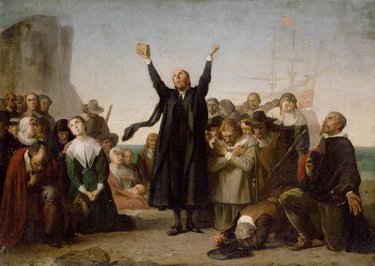
Recent Harvard grad Carine Hajjar has bad news and some intelligent observations on the deplorable state of universities today, including in particular the most prestigious.
Before the Cold War, universities were run by faculty: “From the perspective of 100 years ago,” says Goldstein, “the idea that a faculty member would have his speech suppressed by the university was difficult to conceptualize.” During the Cold War, higher education was laden with research grants, one of the factors leading to the bureaucratization of the modern university. From 2007 to 2018, public degree-granting postsecondary schools in the U.S. generated a revenue of $671 billion. “The amount of money involved in higher education in the U.S. was slightly more than all the software we sell and electricity combined,” notes Goldstein. The result? “Universities don’t reflect the interest of the faculty anymore, they have the priorities of a corporation.”
The idea of university corporatism as an impetus for illiberalism is not new. In 2015, Fredrik deBoer, who had just completed a Ph.D. at Purdue, wrote a piece for the New York Times on the pernicious effects of corporatism on campus, stating that “a constantly expanding layer of university administrative jobs now exists at an increasing remove from the actual academic enterprise.”
Academic freedom is not optimal for market share. “Tranquility and profitability tend to win out over truth and inquiry,” says Goldstein. Controversial views (even if factually accurate) can disturb the corporate equilibrium. This may be one of the reasons why universities are increasingly dedicated to a new concept: “safetyism,” a term coined by FIRE’s founders, Greg Lukianoff and Jonathan Haidt in their book The Coddling of the American Mind. Educators’ telos is no longer only knowledge; it’s ensuring that students feel “safe.”
But what is “safe”? Goldstein deals with cases where students claim to feel “unsafe” when presented with certain arguments in class. But can one really equate words — statements, claims, hypotheses — to physical safety? “It isn’t as if somebody saying words will make you explode into a fine mist,” as Goldstein says.
“Safe” in modern parlance seems to be about being on the “correct” side of an issue. That side is no longer simply the one on the left. Pinker shared a story with me about a hiring process he was involved in. The candidate, in Pinker’s words, “was a kind of middle-of-the-road liberal Democrat.” His political orientation did not matter; he violated a pillar of the orthodoxy. “He was skeptical about affirmative action,” which got him “branded as an extreme right-winger.” I asked if this was the reason the candidate was not hired. “It went into it,” among other factors.
Larry Summers, former president of Harvard, told me that certain topics demand more homogeneity than others: “We’re comfortable accepting a fairly wide range of views on U.S.–China foreign policy but we’re not comfortable accepting a wide range of views on affirmative action.” Other taboos include certain positions on race, gender, and colonialism. Summers shared a hypothetical: “If someone did research that showed that it’s better for children to spend more time with their mothers during the first six years of their life during the day, you’d have to be an extraordinarily brave person to do that on Harvard’s campus.”
How did we get here? Wasn’t the once-whimsical soft Marxism of college enough? Pinker offered a psychological explanation, mentioning the work of his former postdoctoral student, Peter DiScioli, on the human creation of groups. Humans have a propensity to compete for prestige as well as a fear of being in the “more vulnerable coalition.” So they join the mob lest they be the target of the mob. It’s a phenomenon that occurs in witch hunts, cultural revolutions, and political purges: “Anyone can be a victim if they themselves don’t join the ‘denouncers.’” This can be extrapolated to universities-turned-corporations, which, seeking to avoid controversy, are happy to oblige denouncers.
Ironically, the hippie-student-against-the-man crowd is driving this whole corporate tilt. “It’s easiest for [administrators] if they cave. . . . No skin off their nose if the universities are less able to investigate questions of truth and falsity and explanation,” said Pinker. They’re more worried about appeasing the “left-leaning students protesting outside their office.”
Why is this woke crowd powerful enough to dictate university incentives? Humans, in general, want to be on the “right” side of history. “We’re all moralistic animals,” said Pinker. But that doesn’t mean objective morality: “Moralistic efforts are those that attempt to claim superiority and demonize opponents.” We go for what is perceived as moral. The Harper’s open letter touched on this: There’s a “vogue for public shaming” and a “tendency to dissolve complex policy issues in a blinding moral certainty.”
So long as this “vogue” continues, profit-seeking entities will comply. Safetyism and moralism go hand in hand: Universities can avoid controversy by tolerating mob mentality. It’s similar to the virtue-signaling you’re seeing in corporate America (think woke Coke). It’s trendy, it’s safe, and it sells.
After all, what’s more corporate than appearing moral?
RTWT
30 Sep 2021

Via LithHub:
After social norms had been inconveniently interrupted by the Second World War, presentations at court were revived by George VI in 1947. But the business was less exclusive, less glamorous than before. And it felt uncomfortably anachronistic in a postwar Britain which was struggling with rationing and bomb damage. The presentation party went into a slow decline until finally, in November 1957, the lord chamberlain’s office announced that there would be no more presentations after the following year’s Season. “The present time is one of transition in the sense that the traditional barriers of class have been broken down,” admitted the author of a rueful leading article in the Times the following day. “It has long ceased to be true to say that the Court is the centre of an aristocracy, the members of which form a clearly recognizable section of the community.” Princess Margaret was more succinct: “We had to put a stop to it,” she said. “Every tart in London was getting in.”
So 1958 was to be the last royal Season, and anxious social commentators predicted that its demise heralded the end of the Season altogether. In fact, the hectic round of social activities continued into the 1960s, with the overlapping worlds of aristocracy and plutocracy simply getting on with the business of bringing out their daughters and advertising their availability for marriage. Traditional fixtures were maintained—Queen Charlotte’s Ball, the Royal Caledonian Ball, both held at the Grosvenor House Hotel in Mayfair—as were the great sporting occasions—Royal Ascot, Henley Royal Regatta, Wimbledon, and the Royal International Horse Show at White City Stadium.
There were also the private events, the cocktail parties, the “small dance” in Holland Park or Hampstead, perhaps shared between two or three debutantes, the grand ball with royal guests. There were around a hundred private dances each year well into the 1960s. Mothers whose own debuts had taken place in prewar days went for familiar venues—stalwarts like the Hyde Park Hotel and Claridge’s, the Ritz, the Dorchester. Others, with impressive addresses in Mayfair or Belgravia or Chelsea, opted for their own town houses.
But around half of the coming-out dances held both before and after the end of presentations at court didn’t take place in London at all. In 1956, for instance, Lady Cynthia Asquith gave a ball for her granddaughter at Stanway House in Gloucestershire, the Jacobean country home of her nephew Francis, Earl of Wemyss and March. Also in Gloucestershire, Mrs J. H. Dent-Brocklehurst gave a ball for her daughter Catharine at the family’s 15th-century seat of Sudeley Castle. The Marchioness of Abergavenny brought out her daughter, Lady Anne Nevill, at Eridge Park in Sussex; Mrs Bromley-Davenport did the same for her daughter at Capesthorne Hall in Cheshire, which had belonged to the Davenport family since the mid-18th century.
The country house was coming to rival the traditional hotel and the Mayfair mansion as a fashionable venue for a coming-out ball, as indeed it had been for years both in Ireland, where the season revolved around the Dublin Horse Show in August, and in Scotland, where the best of the Northern Season’s autumnal entertainments had always taken place in private homes. And while the country house made for a very different experience—guests were more likely to meet with country doctors, inebriated clergymen, and horse-mad matrons rather than the determinedly sophisticated types that might be found at the big London dances—it was usually a pleasant one.
“The best dances were in the country, in some castle or huge house,” remembered Angela Huth, who came out in 1956. Fiona MacCarthy, who came out two years after Angela and, like Angela, went on to forge a distinguished career as a writer, reckoned that “the Season only came alive out in the country.” People dressed less formally and were generally more relaxed. “In the last hour or two of a good party in the country, as dawn rose on dancing partners sleepily entwined on the dance floor in the garden, even girls who had their reservations about the Season felt fortunate indeed.” Angela Huth agreed: “The unforgettable part of the country dances was the return to the house at which we were staying to find the brilliance of the previous evening veiled in early mist, melancholy wisteria drooping more heavily, mourning doves cooing—all so uniquely English that tears came to tired eyes.”
Links
More or Less Sound Blogs
A Mind Aroused
Aaron’s cc
ABFreedom
Ace of Spades HQ
Albion’s Seedlings
Alphecca
American Conservative, The (Buchananite Paleocons)
American Nihilist Underground Society
Amused Cynic
An Antique Dealer’s Blog
Andrew Cusack
Ankle Biting pundits
Anti-Idiotarian Rottweiler
Art of the Blog
Assistant Village Idiot
Assistant Village Idiot
Augean Stables
Austin Bay Blog
Becker-Posner Blog
Begging to Differ
Bidinotto Bog, The
Big Lizards.net
Black and Right
BlameBush!
Blue Crab Boulevard
Brainster
Brussels Journal, The
Brutally Honest
Captain’s Journal, The
Carnage And culture
Cato at Liberty
Cato Unbound
Cave of the Curmudgeon
Chaos in Motion
Chequer-Board of Nights and Days, A
Chicago Boyz
Claremont Institute
Clarity & Resolve
Clayton Cramer’s Blog
Cobb–Curious,Skeptical,Analytical
Cold Fury
Colonel Robert Neville Always Dresses For Dinner
Conblogeration
Confederate Yankee
Conspiracy to Keep You Poor and Stupid
Corner – National Review Online
CounterIntelligence Center
Coyote Blog
Crosspatch Chronicle
Cubachi
CultureGrrl
Daily Pundit
Daisy Cutter
Dalrock
Damnum Absque Injuria
Dangerous Times
David Bellavia
David Frum
David Thompson
Dean’s World
Death By 1000 Papercuts
Democracy Reform
Dennis the Peasant
Diminished Expectations
Dinocrat.com
Don Surber
Doug Ross
Dust in the Light
Eject! Eject! Eject!
Enchiridion Militis
Error Theory
ex-Liberal in Hollywood
Faster, Please (Michael Ledeen)
FKIN
Flit(tm)
Flopping Aces
Forward Movement (Jules Crittenden)
Fraters Libertas
Front Porch Republic
Future Uncertain, The
Gates of Vienna
Gateway Pundit
Gays Defending Marriage
Greg R. Lawson's Blog
Grouchy Old Cripple
Hog on Ice
Horsefeathers
Hugh Hewitt
Ideas
IMAO
In Mala Fide
In the Bullpen
INDC Journal
Interested-Participant
Irish Pennants
Isegoria
Jack Lewis
Jawa Report, The
JayReding.Com
Jeremayakovka
Jeremy Lott
Jon Swift
Just One Minute
Ken McCracken
Kim du Toit
Kobayashi Maru
Law of the Bad Premise
Left Exposed
Likelihood of Success
Lileks
Lone Pony
Make Haste Slowly (Trad)
Man Without Qualities
Mark Levin
Mike Stopa
Modern Art Notes
Mr. Blonde’s Garage
Musings of the Geek with a .45
Nation of Riflemen, A
New Majority (David Frum) -Neocon Sellout Blog
Nickie Goombah
No End But Victory
No Left Turns
Obsidian Order
Oh, That Liberal Media!
One Cosmos
One Hand Clapping
Only Republican in San Francisco, The
Other Things Amanzi
Outside the Beltway
Palmetto Pundit
Patterico’s Pontifications
Pileus
Point Five
PoliPundit.com
Political Horizons
Political Teen, The
PostLiberal Blog, The
ProfessorBainbridge.Com
Prospero; the Home of the Generative Thought Experiment
Protein Wisdom
QandO
Radio Blogger
Rage Against the Kakistocracy
Rantingprofs
Reason Online – Hit and Run
RedState.org
Republican Dan
Revolutionary War Veteran’s Association Weblog
Revolver Guy
Riding Sun
Right Reason
Right Wings News
Rightwing Nuthouse
Roger L. Simon
Room 12A
Samizdata.net
SayUncle
Scylla & Charybdis
Secular Right
Shot in the Dark
Shrinkwrapped
Solid Surfer, The
Soxblog
stikNstein
Stop Obama
Stop the ACLU
Strange Women Lying in Ponds
Sultan Knish
Sweetness & Light
Taki’s Top Drawer
Tech Central Station
The Buck Stops Here
Three Rounds Brisk
TigerHawk
Tim Chapman Blog
TKS
Tom Delay
Tongue Tied
Transterrestrial Musings
Unqualified Offerinds
Unqualified Reservations (Mencius Moldbug)
Vanishing American
VariFrank
Victor Davis Hanson
View from the Right
ViewPointJournal.Com
Vince aut Morire
Vodka Pundit
War and Piece
Watcher of Weasels
Weapons of Mass Destruction
Western Confucian
What Would Charles Martel Do?
Will Wilkinson
Winds of Change
Wizbang
Xavier Thoughts (Pawn Shop Guns!)
YARGB – Flares into Darkness
Blogs From the Philippines
Pinoy Stupid
Blogs From Israel
Zionist Conspiracy
Blogs From Russia
Mat Rodina
Blogs From Japan
Gaijin Mama
Blogs From Germany
Observing Hermann
/div>

Feeds
|