[T]he only good Hell to be in right now is poet Mary Jo Bang’s innovative, new translation of Dante’s Inferno (Graywolf), illustrated with drawings by Henrik Drescher. Bang’s thrillingly contemporary translation of the first part (the juiciest part) of Alighieri’s 14th-century poem The Divine Comedy is indeed epic. While staying true to Alighieri’s interpretations of religious faith, the bounds of morality, and the soul’s journey toward God, Bang’s sin-soaked voyage through the circles of Hell teems with references to such latter-day personages as John Wayne Gacy, South Park’s Eric Cartman, Stephen Colbert, Emily Dickinson, Sylvia Plath, and the Rolling Stones.
—————————-
Bomb magazine has a not-very-exciting excerpt, consisting of Satan himself at the very bottom of Hell’s abyss. Only the usual Judas, Cassius, and Brutus appear, alas! I had been hoping to find the Archfiend this time munching on Andrew Sullivan, while making a mess of David Frum, Charles Johnson, and John Cole, but I suppose Mary Jo Bang doesn’t personally care about defectors from the political right, and all those guys are alive anyway.
If you want a serious translation of the Inferno, I would recommend the version by John Ciardi.
At the urging of Valerie Jarrett, President Barack Obama canceled the operation to kill Osama bin Laden on three separate occasions before finally approving the May 2, 2011 Navy SEAL mission, according to an explosive new book scheduled for release August 21. …
Miniter, a two-time New York Times best-selling author, cites an unnamed source with Joint Special Operations Command who had direct knowledge of the operation and its planning.
Obama administration officials also said after the raid that the president had delayed giving the order to kill the arch-terrorist the day before the operation was carried out, in what turned out to be his fourth moment of indecision. At the time, the White House blamed the delay on unfavorable weather conditions near bin Laden’s compound in Abbottabad, Pakistan.
But when Miniter obtained that day’s weather reports from the U.S. Air Force Combat Meteorological Center, he said, they showed ideal conditions for the SEALs to carry out their orders.
“President Obama’s greatest success was actually his greatest failure,†Miniter told The Daily Caller Friday. â€Leading From Behind,“ he said, traces the arc of six key Obama administration decisions, and shows how the president made them — and, often, failed to make them.
When I tried to open the Daily Caller link this morning, Firefox initially blocked access, warning that this site had been reported as a site distributing malware.
It is evident that someone on the left was sufficiently angry and alarmed by the Daily Caller’s scoop that a false malware complaint was filed to deter traffic.
One winces when one reads: “Recently the Yale University library unceremoniously junked its old card catalogue drawers, filling a large dumpster with them.”
David A. Bell, in the New Republic, describes how cataclysmic change is coming to libraries everywhere and discusses what all this is likely to mean.
For how long will providing access to physical books remain a central mission for libraries? Even as reading on screens becomes more and more common, the number of books easily available in electronic form seems likely to increase, and a consensus for allowing some form of free access to “library copies†of digital files seems likely to emerge. True, the legal wrangling over Google Books has shown worrisome signs of stretching out, Bleak House– fashion, toward the next century. But with the digital files of copyrighted books already in existence, and with money to be made from their distribution, it still seems probable that within twenty years or so, it will be possible to download virtually any book ever printed, anywhere, to any device. The chances will be better for readers with access to some sort of subscription service—most often through universities where they study, or have faculty positions. But even for those without this sort of privileged access, some form of free access may very well emerge. And then, what future for libraries?
One nightmare scenario is all too easy to imagine. The year is 2033, and the Third Great Recession has just struck. Although voters have finally turned the Tea Party out of office in Washington, the financial situation remains dire across the country. New York City in particular faces skyrocketing deficits as a result of the most recent Wall Street wipeout, and the bankruptcy of Goldman Chase. In City Hall, a newly elected mayor casts a covetous glance at the grand main branch of the New York Public Library. Think how much money the city could save by selling it, along with the thirty remaining branch libraries scattered throughout the five boroughs. After strenuous negotiations, the mayor announces a deal with Googlezon, under which the company will make fifty electronic copies of any book in its database available at any one time to city residents, for two-week free rentals on the reading device of their choice. Two years later, where the main branch library once stood, the mayor proudly cuts the ribbon at the opening of the Bryant Park Mall. As for the services once performed by actual librarians, these have now been replaced by a cloud software package, with customer service representatives standing by online in case of technical difficulties (most of them physically located in suburban Manila).
In truth, such a turn of events would hardly rank with the burning of the Great Library of Alexandria in the annals of cultural vandalism. If it came to pass, readers would still enjoy, between the new electronic “lending library†and the public domain titles accessible through the Digital Public Library of America, a larger and more complete library at their fingertips (literally!) than exists today in any single locality. It would not be the barbaric destruction of knowledge. It would be the democratization of knowledge on a scale unimaginable in the pre-Internet age. The benefits are not to be discounted.
Yet the sacrifices entailed—the loss of physical libraries, and of librarians—would still be massive and culturally tragic.
I don’t personally give a rat’s ass about those “library communities” of his, but I certainly agree that the transition is going to be revolutionary and not without losses and pain.
From my own viewpoint as a researcher and regular user of major libraries, I wonder if the experts and planners managing the Great Revolution transitioning us from printed paper to electronic files sufficiently appreciate the crucial importance of preserving and maintaining access to serial publications.
It is very common for enormously larger quantities and much more detailed information on many subjects to have been preserved in ephemeral articles and letters in newspapers and magazines than ever actually made it onward to be preserved between the covers of actual books.
Serial publications are additionally characteristically cheaply printed on rapidly deteriorating acid-filled paper and weekly publications are typically folio sized. Not only are serials prone to be overlooked as a relatively insignificant afterthought by professional librarians. Their preservation is more costly and more difficult than that of most books.
“How do you read a two-thousand-year-old manuscript that has been erased, cut up, written on and painted over [i.e., a palimpsest]? With a powerful particle accelerator, of course! Ancient books curator William Noel tells the fascinating story behind the Archimedes palimpsest, a Byzantine prayer book containing previously-unknown original writings from ancient Greek mathematician Archimedes and others.”
[T]he moral disenchantment that Bloom called relativism is not the problem it was in 1987. Indeed, college-bound American kids now grow up in world that is almost medieval in its degree of moral enchantment. Their moral reflex is anxiously conditioned to an ever-growing list of worries and provocations: smoking, safe sex, chastity, patriotism, faith, religious freedom, bullying, diversity, drugs, crime, violence, obesity, binge drinking. Almost no problem goes un-talked about, un-taught from, un-ruled on. These lessons are convincingly yoked to real-life concerns about safety, health, and happiness, not to mention all those things that, as the song says, will go down on their permanent records.
For kids entering college fully trained in this liturgy of prudence and niceness, which I am anxiously imparting to my own young children, it’s not Bloom’s censoriousness they will resist. It’s his decadence. …
Bloom’s esoteric project asks today’s students to estrange themselves from an identity that they, their parents, and their teachers, along with their ministers and rabbis and shrinks, their camp counselors and art tutors and soccer coaches, have been constructing since these kids were born, and with a degree of political and moral awareness that everyone involved is darned proud of. These are good kids. Try telling a college sophomore who founded his school’s anti-sweatshop movement that his enthusiasms are callow, his convictions harmful to a true education of the soul, and that he should instead join you on a freaky trip into the true mind of Thucydides.
J.K. Rowling’s publisher revealed yesterday the title and release date of her new non-Harry-Potter, adult novel.
The title is The Casual Vacancy, and it will be going on sale September 27, 2012.
Her publisher, Little, Brown Book Group describes the new book as “blackly comic, thought-provoking and constantly surprising.”
The plot:
When Barry Fairweather dies unexpectedly in his early forties, the little town of Pagford is left in shock.
Pagford is, seemingly, an English idyll, with a cobbled market square and an ancient abbey, but what lies behind the pretty façade is a town at war.
Rich at war with poor, teenagers at war with their parents, wives at war with their husbands, teachers at war with their pupils…Pagford is not what it first seems.
And the empty seat left by Barry on the parish council soon becomes the catalyst for the biggest war the town has yet seen. Who will triumph in an election fraught with passion, duplicity and unexpected revelations?
Ernest Hemingway was not only the generally recognized greatest American writer of fiction of his time, Hemingway seemed to have deliberately crafted his life to parallel and underline his art, emphasizing and exemplifying the same themes of manliness and confronting the same life and death questions. Hemingway became thusly, not only the great novelist, but a code hero, the equivalent of Achilleus or Beowulf as well as Nick Adams, in his own right.
When the great man, at 7 AM one July morning fifty years ago, crept out of bed, found the key to the closet where his wife Mary had locked away his firearms, took out his Boss best-grade double-barreled 12 gauge, inserted two rounds of high brass number 6s, braced the gun butt on the floor of his house’s foyer, placed his forehead against the barrels, and reached down and fired both barrels, Hemingway’s vast audience of readers and admirers experienced an international catharsis as the epic suddenly concluded and the curtain came down the tragedy.
Paul Hendrickson takes Hemingway’s 38-foot Wheeler cabin cruiser, the Pilar, built for him in 1934, as the metonymic focus and symbol of the final 27-year 3-month trajectory of the author’s literary career and life.
Few great writers have received such a tribute, featuring massive and intensely focused research (Hendrickson can lovingly describe the details of the room where Hemingway used to stay in the Ambus Mundos Hotel as well as tell you which models of Vom Hofe and Hardy reels he fished); ground-breaking criticism (Hendrickson argues very persuasively that it was Hemingway, in Green Hills of Africa (1935), who invented the non-fiction novel, not Capote or Mailer thirty years later); or anything like this sympathetic and deeply personal tribute in finely crafted prose worthy of its own subject.
In the final analysis, Hendrickson is writing to explain and to defend Hemingway’s crack-up, all the famous outrageous incidents of egotism, bullying, and vainglory, all the drink and all the damnation. His prologue’s title, “Amid So Much Ruin, Still the Beauty,” could have been the title of the whole book.
Hendrickson writes:
I have come to believe deeply that Ernest Hemingway, however unpost-modern it may sound, was on a lifelong quest for sainthood, and not just literary sainthood, and that at nearly every turn, he defeated himself. How? “By betrayals of himself, and what he believed in,” as the dying writer, with the gangrene going up his leg, says so bitterly in “The Snows of Kilimanjaro,” one of Hemingway’s greatest short stories. Why the self-defeating betrayal of high humanistic aspirations? The seductions of celebrity and the sin of pridefulness and the curses of megalomania and the wastings of booze and, not least, the onslaughts of bipolarism must amount to a large part of the answer. Hemingway once said in a letter to his closest friend in the last two decades of his life, General Buck Lanham, whom he had come to know on the battlefield as a correspondent in World War II: “I have always had the illusion it was more important, or as important, to be a good man as to be a great writer. May turn out to be neither. But would like to be both.”
I also believe there was so much more fear inside Hemingway than he ever let on, that it was almost always present, by day and more so by night, and that his living with it for so long was ennobling. The thought of self-destruction trailed Hemingway for nearly his entire life, like the tiny wakes a child’s hand will make when it is trailed behind a rowboat in calm water—say, up in Michigan.
Many years ago, Norman Mailer wrote a sentence about Hemingway that has always struck me as profound: “It may even be that the final judgment on his work may come to the notion that what he failed to do was tragic, but what he accomplished was heroic, for it is possible he carried a weight of anxiety within him from day to day which would have suffocated any man smaller than himself.” The great twentieth-century critic Edmund Wilson, a contemporary of Hemingway’s, who admired him early and had contempt for him late, wrote in his journals of the 1960s: “He had a high sense of honor, which he was always violating; he evidently had a permanent bad conscience.”
I repeat: best book of 2011, and best Hemingway biography/appreciation out there.
A nice Xmas present for sportsmen from Ron Black: his “The Mardale Hunt: A History,” a 166-page downloadable electronic text of the history of the oldest, and most famous, of the Lakeland Fell Shepherds’ Meets. This is the kind of simple, hard-bitten North Country hunting associated with John Peel: foot-following foxhounds on the often pretty vertical landscape of the Lakeland Fells.
Hunting in Mardale is a fundamental and immemorial feature of the season.
[T]he shepherds’ meeting at Mardale ” wasn’t founded in’t memory of man.” That the shepherds gave up a week to ‘ raking ‘ the fells and bringing down to the Dun Bull the sheep that were not their own. That though there is a Shepherds’ Guide with all the lug-marks and smit marks of the various flocks in it, it is very seldom referred to, for all the shepherds ken the marks as well as they ken their own bairns. From the time whereof the memory of man runneth not to the contrary, a hunt succeeded by a good dinner ushers in the shepherds’ ceremony of ‘ swortn ‘ the sheep; and after the sorting a hound trail and pigeon shooting at clay pigeons affords diversion till daylight fades; then tea is served and the shepherds who determine ‘to remain on spree,’ as they call it, instead of driving their sheep home, make a night of it. I gathered from the old farmers that they thought ‘ nowt ‘ to the hound-trail and pigeon shooting. They wur new-fanglements and mud varra weel be dispensed wid.’
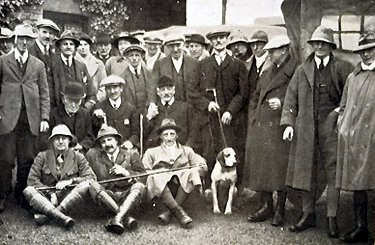
By the early years of the last century, the fame of the Mardale Shepherds Meet had spread and visiting sportsman often attended and participated.
For years the Mardale Meet’s popularity relied on the reputation of Joe Bowman (Hunty or Auld Joe) and his Ullswater Foxhounds. Visitors travelled to the meet from all parts of the country and some the world, they travelled in a variety of ways-“Rolls-Royces, carriages, horseback and on foot walking over the high mountain passes sometimes in bad weather (snow was not uncommon) and my Great Uncle Brait and Trimmer his hound actually got lost on the tops in bad weather. Trimmer subsequently won his trail. Expensive furs, kid gloves and silver mounted walking sticks mingled at the meet with woollen clothing, hand made walking sticks and fustian jackets. Most people walked and the general view was summed up by Tommy Fishwick who was once heard to say to a friend “Yan wants nowt wi’ riding as lang as yan legs ‘ell carry yan.â€
Hinchcliffe quotes that after a good days sport, huntsmen, shepherds, visitors, sheep dogs and terriers (hounds were not admitted) all turn towards the Dun Bull for a meal.
In the evening, a smoking contest took place. Skelton records “ the main portion of the pack, cast off in the large dining room and every room in the house filled with overflow meetings-or rather concertsâ€
The big room was the focal point, a tray was sent round and money subscribed for the evening’s refreshment. Each individual orders his choice of drink and the chairman pays out of the general pool. Toast’s and song follow in quick succession. The chairman selects the singer and everyone is supposed to sing at least one song and there was an element of pride in singing one that had not already been sung that evening. If the song had a good swing or chorus the men got particularly enthusiastic, the shepherds beating the tables with their sticks in time to the tune and the sheep-dogs and terriers howling either in enthusiasm or execration, no man knows which.
One song often sung paid tribute to the renowned local huntsman.
JOE BOWMAN
Down at Howtown we met with Joe Bowman at dawn,
The grey hills echoed back the glad sound of his horn,
And the charm of it’s note sent the mist far away
And the fox to his lair at the dawn of the day.
Chorus
When the fire’s on the hearth and good cheer abounds
We’ll drink to Joe Bowman and his Ullswater hounds,
For we’ll never forget how he woke us at dawn
With the crack of his whip and the sound of his horn.
Then with steps that were light and with hearts that were gay
To a right smickle spot we all hasten away,
The voice of Joe Bowman, how it rings like a bell
As he cast off his hounds by the side of Swarth Fell.
The shout of the hunters it startled the stag
As the fox came to view on the lofty Brook crag,
“Tally-Ho†cried Joe Bowman, “the hounds are away,
O’er the hills let us follow their musical bayâ€.
Master Reynard was anxious his brush for to keep,
So he followed the wind oe’r the high mountain steep,
Past the deep silent tarn to the bright running beck,
Where he hoped by his cunning to give us a check.
Though he took us oe’r Kidsey we held to his track,
For we hunted my lads with the Ullswater Pack
Who caught the fox and effected a kill,
By the silvery stream of the bonny Ramps Gill.
Now his head’s on the crook and the bowl is below,
And we‘re gathered around by the fire’s warming glow,
Our songs they are merry, our choruses high,
As we drink to the hunters who joined in the cry.
When this song is sung at Ullswater, the third verse should be given as follows:
The shout of the hunters it startled the stag,
As the fox came to view on the lofty Brook Crag,
“Tally-Ho†We’re away, o’er the rise and the fell,
Joe Bowman, Kit Farrar, Will Milcrest and all.
Robert Krulwich, at an NPR blog, offers a translation of Leonardo’s personal To-Do list from some point early in the 1490s.
It’s an interesting list, testifying to its author’s remarkably broad range of practical and abstract interests, and as Maggie Koerth-Baker notes admiringly, to his recognition of superior expertise in the possession of others.
I think it’s pretty interesting that of the nine tasks shown, six involve consulting and learning from other people. Leonardo da Vinci needs to find a book. Leonardo da Vinci needs to get in touch with local merchants, monks, and accountants who he hopes can help him better understand concepts within their areas of expertise.
Leonardo da Vinci knows he doesn’t know everything.
I think that’s a big deal.
The fact that questions Leonardo intends to address so commonly include notes of just how he intends to obtain the necessary information is, I think, likely to make many of us with experience in research smile in recognition of a kindred spirit.
The British Province of the Society of Jesus (the Jesuits) is clearly determined to raise a great deal of money. The Jesuits have arranged to sell to the British Library for £9m ($14.3m) the oldest surviving European book, the Stonyhurst Gospel, St. Cuthbert‘s own copy of the Gospel of St. John, a 7th century manuscript originally buried with the saint on the island of Lindisfarne in 687.
Lindisfarne was depopulated of its monks when the Danes sacked the island in 875. The saint’s relics were carried away and moved from one location in the north of England to another over the course of the next century. St. Cuthbert was finally reburied in the “White Church” built in 995 as the predecessor to Durham Cathedral.
The manuscript was discovered in 1104 when St. Cuthbert’s coffin was opened in the course of transporting his remains to a shrine behind the altar of the newly built cathedral.
St. Cuthbert’s shrine was destroyed in the time of the dissolution of the monasteries under Henry VIII, and the gospel manuscript at that point passed into private hands. George Lee, the third Earl of Lichfield (d. 1772) is the first recorded modern owner. Lichfield gave the manuscript to Reverend Thomas Phillips (d. 1774) who donated it to the English Jesuit College at Liège on 20 June 1769. The manuscript has been owned since 1769 by the Society of Jesus (British Province) and was formerly in the library of Stonyhurst College. The manuscript has been on loan to the British Library since the 1970s.
Christie’s negotiated the sale, as a result of which the manuscript will continue to be displayed half the time at the British Library and the other half at Durham Cathedral, referred to in the news articles as (God help us!) a UNESCO world heritage site in Durham.
Twelfth century painting of St Cuthbert in Durham Cathedral.
St. Cuthbert (feast day: March 20) is the patron saint of the North of England and was England’s most popular saint in the period before the martyrdom of Thomas Becket in 1170. His banner was carried into battle against the Scots up to the time of the Reformation, and in the Middle Ages the inhabitants of the Palatinate of Durham were referred to as haliwerfolc “the saint’s people.”
The Codex Calixtinus, reported stolen last Wednesday, is a 12th century manuscript, the earliest known version of a text constituting a guide and reference book for pilgrims to the Cathedral of the Apostle St. James the Great . The book, known also as Liber Sancti Jacobi, or the Book of Saint James, contains sermons, accounts of miracles, liturgical texts connected with devotions to Saint James, the patron saint of Spain, and some very important pieces of polyphonic music. The pilgrim’s guide contains descriptions of the route, advice on sights to be seen along the way, and descriptions of local customs.
The manuscript is believed to have been taken by professional thieves from a safe in the cathedral’s archives the previous Sunday (July 3) night.
Congaudeant catholici [Rejoice together, Catholics], the first known polyphonic chant for three voices, composed by Magister Albertus Parisiensis [Albert of Paris, cantor of Notre Dame Cathedral, in the 12th century, from the missing Codex Calixtinus.
Who would have imagined that Knife Collecting guru Bernard Levine is a Harvard ’69 dropout, who became an expert on knives as a way of surviving in the city on the Bay back in the era of the Summer of Love?
In February 1969, Levine headed west, looking to connect with a love interest in San Francisco—who promptly returned east to enroll in college. He knocked about the city for a couple of years, working as a stevedore and in construction. His first job, hanging sheetrock, had five other Harvard students on the site. “I realized that I wasn’t strong enough to do this kind of work,†he says, “and that it wasn’t getting me far enough away from Harvard!â€
He tried a small business gathering wild yarrow stalks in the hills near San Francisco, which natural food stores sold in bundles of 50 because dividing piles of yarrow is a classical method of consulting the I Ching. “Then they found a lower-priced source,†Levine says. “That was my first lesson in business.â€
In September 1971, a couple at the house Levine lived in invited him to come to a flea market; they were moving and had some items to sell. He went to a Goodwill store to find something he might sell at the flea market, and purchased a box of old knives for $3.00—30 knives, as it turned out, at a dime each. “I knew less than nothing about knives,†he says. “The little I knew was wrong. But I spread my knives out on a cloth and was overwhelmed by people.â€
Levine learned that there were knife collectors, and the brand names that were collectible. “It was a revelation,†he admits. He continued selling knives at flea markets on weekends. “It turned out to be much longer hours than any job,†he says. “I’d spend all week scrounging up knives and on Friday bring them to a cutlery shop in North Beach where they’d restore them for me. The grandfather there—born in Romania in 1885—taught me a lot about the European cutlery business in the early twentieth century.
“My great love in school had been history,†he says. “Old knives are a good window into history, and a window that looks out in every direction.†From the very first day, Levine recorded every knife he sold, including brand markings and a description, eventually logging 13,000 entries.




 , Richard Miniter writes that Obama canceled the “kill†mission in January 2011, again in February, and a third time in March. Obama’s close adviser Valerie Jarrett persuaded him to hold off each time, according to the book.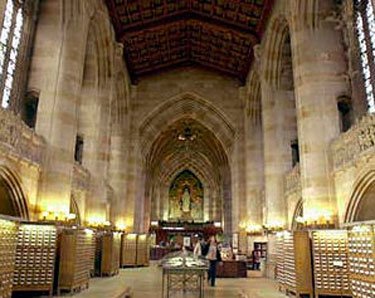


 , and it will be going on sale September 27, 2012.
 .
. (1935), who invented the
 (to be published February 7 of next year), the author explains that Leonardo da Vinci carried a notebook on his belt in which he constantly sketched or left memoranda to himself.


 is a key reference in any collector’s library and Bernard Levine’s earlier
  is a classic book on a very special subject.


