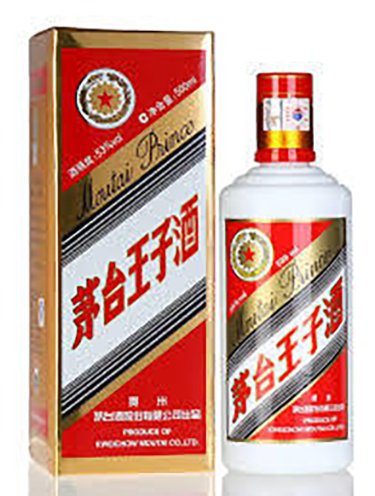
The Wall Street Journal introduces us to a Chinese spirit ranked high as a status symbol in the mystic East, whose taste is both admired and despised.
China’s Kweichow Moutai Co. has become the world’s most valuable liquor company thanks to a fiery spirit that can cost nearly $400 a bottle.
The spirit is baijiu, a Chinese liquor made by fermenting sorghum or other grains in brick or mud pits. The company’s version, known simply as Moutai, has a long association with China’s Communist leaders, and has become a homegrown status symbol for affluent Chinese.
One drawback: many people can’t stand it.
The taste is “very much like ethanol,†said Jenny Miao, a 26-year-old market researcher in Shanghai. At dinners with clients, she said she sometimes has to toast with Moutai, but will then drink water to wash away the aftertaste.
Baijiu detractors say the taste reminds them of paint stripper or kerosene, especially the cheap varieties. It does have many genuine fans, who laud baijiu’s complexity and distinct flavor varieties—strong, light, soy-sauce, and rice aroma.
One liquor website describes Moutai as having “a silky mouthfeel†and says it carries “an undertone of baking spice.†Other reviewers say the drink conjures tastes of nuts, sesame paste, mushrooms, cheese, and dark chocolate.
Moutai is usually served in tiny glasses that contain about a third of an ounce of the spirit. Shots are frequently downed to show respect for someone making a toast. People in China say “gan bei†before drinking, which literally means “dry cup.â€
I asked a longtime friend who is a USG China-watcher for a no-kidding assessment of current energy usage in PRC. Energy usage is a vital sign for the economy:
China imports are down 20% with about a year and a half strategic stockpile in tanks inland and ships in port (China has a strange habit of keeping oil at sea). In fact, their oil use is down so severely that Saudi Arabia and Russia are coordinating their reduction in oil production (which is totally ridiculous because they are both one commodity economies and are directly confronting one another for customers to balance their national budgets).
This is from Chevron yesterday:
Working to lift markets this morning is the talk of supply cuts coming from OPEC+. Signs point to OPEC+ being willing to deepen cuts amidst the decreased demand caused by the coronavirus. OPEC+ is gathering for an urgent assessment of how Asia’s coronavirus may hurt oil demand; technical experts from the OPEC+ coalition will meet at the cartel’s Vienna headquarters to evaluate the disease’s impact.Russian President Vladimir Putin and Saudi King Salman bin Abdulaziz spoke by phone and discussed the grim situation of the global hydrocarbon market, the Kremlin said in an emailed statement; both leaders confirmed their readiness to continue cooperation to keep the global oil market stable.
Crude is recovering most of yesterday’s losses this morning, but markets are still reeling from last week’s declines.
Concern continues over the effects of the coronavirus on oil demand in China and Asia, but traders seem to have priced most of those concerns into the market already. The major remaining variable is how long will the crisis continue.
Crude prices are up this morning. Crude is currently trading at $51.07, a gain of 96 cents.Fuel prices are up. Diesel is trading at $1.6049, a gain of 2.7 cents.
Gasoline is trading at $1.4892, a gain of 1.6 cents.
Basically, China was already using less energy from the tariff war and now the virus has literally shut down the Yangtze River from Wuhan eastward to Shanghai (basically Saint Louis towards New Orleans– that’s how serious it is).
Keep in mind, the impact of China’s decline in energy use is driving oil prices down to the point many important national budgets cannot meet their obligations, which will put people in the streets protesting already compromised governments (Russia is the most vulnerable, then places like Venezuela are put in even more trouble, and the whole Belt/Road thing will fall apart).
Here is the plot of Hamlet in a nutshell: The soldiers who meet the Ghost of Hamlet’s murdered father on the ramparts of Elsinore Castle were not posted there by accident: As they explain in the play’s opening lines, the King of Norway, young Fortinbras, will invade Denmark soon, and they are set as lookouts. The Ghost comes along and distracts them and young Hamlet, and the dramatis personae engage in various machinations until, at the end, all of them lay dead on the stage. Just as Hamlet expires, who should enter but Fortinbras, who asks: “Who’s in charge here? Uh, everybody’s dead. I guess I am.â€
Shakespeare’s audience doubtless rolled in the aisles. Fortinbras, the play’s shadow protagonist, typically is cut from modern productions (for example, the 1948 Laurence Olivier film version), which makes the rest of the action meaningless. Such is the atrophy of the modern sense of humor.
In our present version of Hamlet, the role of Fortinbras is played by Xi Jinping. China wants dominant position in what it calls the Fourth Industrial Revolution – the transformation of economic life by ubiquitous high-speed communications and artificial intelligence. Industrial robots that talk to each other and work out industrial processes without human input, mining robots operated via 5G by technicians with virtual reality visors, a global medical system powered by real-time uploads of the vital signs of a billion smartphone users and digitized health records, autonomous vehicles, e-commerce and e-finance links easing the retail transactions of billions of people will become standard over the next two decades.
Meanwhile, the United States has invested virtually nothing in the driver of this revolution, namely high-speed, infinite-capacity and zero-latency broadband. Less than 1% of all venture capital investments are now devoted to hardware. The American tech giants are content to invest in high-return, infinitely-scalable software and leave the physics to Asia. In 2015 America shipped about 30% of semiconductors worldwide, but barely 10% today.
No American company offers 5G manufacturing equipment, which has become a Chinese monopoly. Huawei dominates the market with a 30% market share, but its two largest competitors, Ericsson and Nokia, depend on a Chinese supply chain, offering equipment with the same components, but a Scandinavian label and a higher price. …
Fortinbras invaded Hamlet’s Denmark. His modern avatar Xi Jinping doesn’t covet Cleveland, but aims for a controlling position in the decisive technologies of the 21st century. The United States is busy with the twists and turns of a macabre political plot that serves as a distraction from the main thread of the plot. As I wrote on January 26, the Pentagon last week abandoned attempts to further restrict US component sales to Huawei, arguing (correctly) that they would hurt American tech companies more than they would hurt China. And now the United Kingdom has asked Washington, “What have you done for us lately?â€
The United States should cancel an aircraft carrier or two and announce a whatever-it-takes, Manhattan Project-style program to build out its own 5G capacity. Short of that, it has no choice but to reconcile itself to the mediocrity of its circumstances.
Sundance, at Conservative Tree House, contends that Trump has a larger policy goal in the case of China than is generally understood.
China controls North Korea; essentially as a proxy province. As a result Beijing controls the messaging from the DPRK. Chinese Chairman Xi Jinping is the captor and North Korean Chairman Kim Jong-un is the captive – it’s essentially a hostage dynamic. The historic objective has been to use DPRK aggression as a hedge against the west.
Predictably there was going to come a moment when Chairman Xi realized the trade negotiations by his adversary, President Trump, were a hall of mirrors. The U.S. President has played China by using their own panda-mask strategy against them.
President Trump achieved his goal when no-one was paying attention. The goal was a decoupling from China on economic terms. Strategic decoupling has been underway for over a year. There is no actual intent to reach a trade deal with China where the U.S. drops the tariffs and returns to holding hands with a happy panda playing by new rules. This fictional narrative is a figment of fantasy being sold by a financial media that cannot fathom a U.S. President would be so bold as to just walk away from China.
For almost three years U.S. President Trump has been working on two connected objectives: (1) removing the threat posed by North Korea by severing the ability of Beijing to use the proxy province as a weapon (Kim is hostage to China); and (2) deconstructing the growing economic influence of China.
Both issues are directly connected to U.S. national security; and both issues are being approached by President Trump through the use of economic leverage to achieve national security results.
The Dongfeng-41 is a 7,672 mph intercontinental ballistic missile [carrying 10 nuclear warheads]that is said to have the furthest range of any nuclear missile and could reach the US in 30 minutes.
Fast Company notes that Red China’s social credit system is quietly being emulated in Western societies by tech companies, acting on the basis of their own political prejudices and entirely on their own authority.
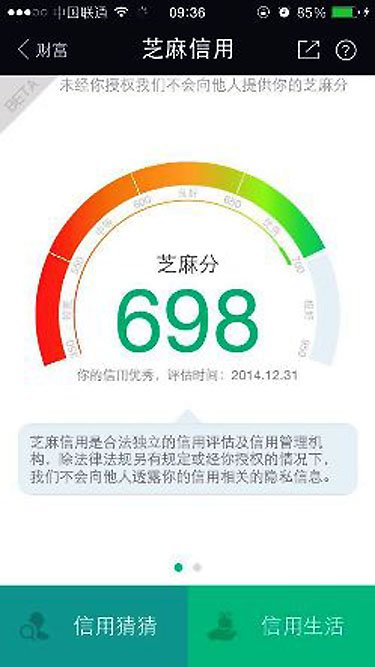
Have you heard about China’s social credit system? It’s a technology-enabled, surveillance-based nationwide program designed to nudge citizens toward better behavior. The ultimate goal is to “allow the trustworthy to roam everywhere under heaven while making it hard for the discredited to take a single step,†according to the Chinese government.
In place since 2014, the social credit system is a work in progress that could evolve by next year into a single, nationwide point system for all Chinese citizens, akin to a financial credit score. It aims to punish for transgressions that can include membership in or support for the Falun Gong or Tibetan Buddhism, failure to pay debts, excessive video gaming, criticizing the government, late payments, failing to sweep the sidewalk in front of your store or house, smoking or playing loud music on trains, jaywalking, and other actions deemed illegal or unacceptable by the Chinese government.
It can also award points for charitable donations or even taking one’s own parents to the doctor.
Punishments can be harsh, including bans on leaving the country, using public transportation, checking into hotels, hiring for high-visibility jobs, or acceptance of children to private schools. It can also result in slower internet connections and social stigmatization in the form of registration on a public blacklist.
China’s social credit system has been characterized in one pithy tweet as “authoritarianism, gamified.â€
At present, some parts of the social credit system are in force nationwide and others are local and limited (there are 40 or so pilot projects operated by local governments and at least six run by tech giants like Alibaba and Tencent).
Beijing maintains two nationwide lists, called the blacklist and the red list—the former consisting of people who have transgressed, and the latter people who have stayed out of trouble (a “red list†is the Communist version of a white list.) These lists are publicly searchable on a government website called China Credit.
The Chinese government also shares lists with technology platforms. So, for example, if someone criticizes the government on Weibo, their kids might be ineligible for acceptance to an elite school.
Public shaming is also part of China’s social credit system. Pictures of blacklisted people in one city were shown between videos on TikTok in a trial, and the addresses of blacklisted citizens were shown on a map on WeChat.
Some Western press reports imply that the Chinese populace is suffocating in a nationwide Skinner box of oppressive behavioral modification. But some Chinese are unaware that it even exists. And many others actually like the idea. One survey found that 80% of Chinese citizens surveyed either somewhat or strongly approve of social credit system.
Many Westerners are disturbed by what they read about China’s social credit system. But such systems, it turns out, are not unique to China. A parallel system is developing in the United States, in part as the result of Silicon Valley and technology-industry user policies, and in part by surveillance of social media activity by private companies.
Here are some of the elements of America’s growing social credit system.
The New York State Department of Financial Services announced earlier this year that life insurance companies can base premiums on what they find in your social media posts. That Instagram pic showing you teasing a grizzly bear at Yellowstone with a martini in one hand, a bucket of cheese fries in the other, and a cigarette in your mouth, could cost you. On the other hand, a Facebook post showing you doing yoga might save you money. (Insurance companies have to demonstrate that social media evidence points to risk, and not be based on discrimination of any kind—they can’t use social posts to alter premiums based on race or disability, for example.)
The use of social media is an extension of the lifestyle questions typically asked when applying for life insurance, such as questions about whether you engage in rock climbing or other adventure sports. Saying “no,†but then posting pictures of yourself free-soloing El Capitan, could count as a “yes.â€
A company called PatronScan sells three products—kiosk, desktop, and handheld systems—designed to help bar and restaurant owners manage customers. PatronScan is a subsidiary of the Canadian software company Servall Biometrics, and its products are now on sale in the United States, Canada, Australia, and the United Kingdom.
PatronScan helps spot fake IDs—and troublemakers. When customers arrive at a PatronScan-using bar, their ID is scanned. The company maintains a list of objectionable customers designed to protect venues from people previously removed for “fighting, sexual assault, drugs, theft, and other bad behavior,†according to its website. A “public†list is shared among all PatronScan customers. So someone who’s banned by one bar in the U.S. is potentially banned by all the bars in the U.S., the U.K., and Canada that use the PatronScan system for up to a year. (PatronScan Australia keeps a separate system.)
Judgment about what kind of behavior qualifies for inclusion on a PatronScan list is up to the bar owners and managers. Individual bar owners can ignore the ban, if they like. Data on non-offending customers is deleted in 90 days or less. Also: PatronScan enables bars to keep a “private†list that is not shared with other bars, but on which bad customers can be kept for up to five years.
PatronScan does have an “appeals†process, but it’s up to the company to grant or deny those appeals.
Thanks to the sharing economy, the options for travel have been extended far beyond taxis and hotels. Uber and Airbnb are leaders in providing transportation and accommodation for travelers. But there are many similar ride-sharing and peer-to-peer accommodations companies providing similar services.
Airbnb—a major provider of travel accommodation and tourist activities—bragged in March that it now has more than 6 million listings in its system. That’s why a ban from Airbnb can limit travel options.
Airbnb can disable your account for life for any reason it chooses, and it reserves the right to not tell you the reason. The company’s canned message includes the assertion that “This decision is irreversible and will affect any duplicated or future accounts. Please understand that we are not obligated to provide an explanation for the action taken against your account.†The ban can be based on something the host privately tells Airbnb about something they believe you did while staying at their property. Airbnb’s competitors have similar policies.
It’s now easy to get banned by Uber, too. Whenever you get out of the car after an Uber ride, the app invites you to rate the driver. What many passengers don’t know is that the driver now also gets an invitation to rate you. Under a new policy announced in May: If your average rating is “significantly below average,†Uber will ban you from the service.
You can be banned from communications apps, too. For example, you can be banned on WhatsApp if too many other users block you. You can also get banned for sending spam, threatening messages, trying to hack or reverse-engineer the WhatsApp app, or using the service with an unauthorized app.
WhatsApp is small potatoes in the United States. But in much of the world, it’s the main form of electronic communication. Not being allowed to use WhatsApp in some countries is as punishing as not being allowed to use the telephone system in America.
This article fails to note the censorship and deplatforming regimes quite thoroughly already in place in giant social media sites like Facebook and Twitter, or the censorship of conservative speech by Google, or the removal of firearms videos by YouTube, or the denial of banking services to firearms dealers by a number of big banks. In the West, we get soft authoritarianism via Capitalism.
Li Ziqi, young Chinese girl, has become a huge celebrity through her videos which demonstrate beautifully the preparation of traditional Chinese foods.
Li Ziqi said in an interview, “I am shooting about my imaginary life in the future.†In an elegant traditional Hanfu, she appears in a place like Utopia, surrounded by a landscape with an old-fashioned attractiveness, all natural ingredients, simple and practical cooking utensils, traditional yet retro cooking steps that fascinate her audience deeply. It helps to relax a lot of people who are living a busy urban life. Her videos with an ancient style are very eye-catching, just like being washed by a chilly wind. The word “traditional†describes her videos the best.
All by her own effort, Li Ziqi has explored a whole new area of short videos – making delicious meals in an ancient style. Watching her videos may make you feel like traveling in a time machine, as if a versatile beautiful lady from ancient China has come to the modern Internet world. Her videos have also made her audience dream of “Taoyuan Meng†(the dream of Utopia) as well.
The Independent reports on a surprising breakthrough in our understanding of Qin Dynasty China.
Ancient Greeks artists could have travelled to China 1,500 years before Marco Polo’s historic trip to the east and helped design the famous Terracotta Army, according to new research.
The startling claim is based on two key pieces of evidence: European DNA discovered at sites in China’s Xinjiang province from the time of the First Emperor in the Third Century BC and the sudden appearance of life-sized statues.
Before this time, depictions of humans in China are thought to have been figurines of up to about 20cm.
But 8,000 extraordinarily life-like terracotta figures were found buried close to the massive tomb of China’s First Emperor, Qin Shi Huang, who unified the country in 221BC.
The theory – outlined in a documentary, The Greatest Tomb on Earth: Secrets of Ancient China, to be shown on BBC Two on Sunday – is that Shi Huang and Chinese artists may have been influenced by the arrival of Greek statues in central Asia in the century following Alexander the Great, who led an army into India.
But the researchers also speculated that Greek artists could have been present when the soldiers of the Terracotta Army were made.
One of the team, Professor Lukas Nickel, chair of Asian art history at Vienna University, said: “I imagine that a Greek sculptor may have been at the site to train the locals.â€
Other evidence of connections to Greece came from a number of exquisite bronze figurines of birds excavated from the tomb site. These were made with a lost wax technique known in Ancient Greece and Egypt.
There was a breakthrough in sculpture particularly in ancient Athens at about the time when the city became a democracy in the 5th century BC.
Previously, human figures have been stiff and stylised representations, but the figures carved on the Parthenon temple were so life-like it appeared the artists had turned stone into flesh.
Their work has rarely been bettered – the techniques used were largely forgotten until they were revived in the Renaissance when artists carved statues in the Ancient Greek style, most notably Michelangelo’s David.
Dr Li Xiuzhen, senior archaeologist at the tomb’s museum, agreed that it appeared Ancient Greece had influenced events in China more than 7,000km.
“We now have evidence that close contact existed between the First Emperor’s China and the West before the formal opening of the Silk Road,†the expert said.