Dan Greenfield turns out another brilliant essay as a better epitaph than New York’s long-time alternative newspaper really deserves.
The passing of the Village Voice, its thick greasy pages smudged with desperate cries for attention in between glossy cigarette ads and phone sex ads, also coincides with the passing of the bohemian nature of the East Village, now little more than tall glowering condos and coffee shops. To those residents who showed up there in the 70’s and 80’s bearing art school portfolios and a burning desire to be part of the “Scene”, it’s one more triumph of the capitalist running dogs over the “People”.
But the real reason that the Village Voice is dead is because the alternative media is dead and the alternative media is dead because there is nothing for it to be an alternative to. New Yorkers can just as easily read shrill rants about the NYPD in the Daily News, pretentious movie reviews for artsy films at The Onion and leftist denunciations of the War on Terror in the New York Times.
The way that the Village Voice used to cover Republicans is now the way that every media outlet, but the handful that aren’t part of the liberal collective, covers Republicans. Every mainstream media outlet is opposed to fighting terrorism, opposed to the police and opposed to any notion of balance in reporting. And every outlet is churning out the same tired 24/7 coverage of something provocative a Republican allegedly said because every outlet wants to be the Village Voice, the ink-stained pamphleteer on the corner screaming about capitalist pigs before heading off to a concert at CBGB’s, also as dead as the Village Voice and the rest of the East Village.
Newsweek, once the paragon of middlebrow inoffensiveness, now does the kind of covers that the Village Voice used to do. It still hasn’t run a picture of Bush drinking the blood out of the green neck of the Statue of Liberty, but, if Romney wins, you can expect that as the March cover. And by then even that might be considered tame.
If anyone deserves credit for killing the Village Voice, it’s George W. Bush, who was its unwitting cover boy more often than Obama has appeared on the cover of Essence. Under Bush the entire media became alternative and the alternative media became supplementary to requirements. When mainstream newspapers give positive reviews to books and movies that envision Bush’s assassination, cheerlead anti-war rallies run by militant Trotskyites and demand unilateral surrender in the War on Terror; what possible territory is left for the alternative media to explore?
All that was left for the alternative media was to run yet another profile of a new bar where people drink the tears of Ecuadoran children purchased through fair trade while looking at themselves doing it in video monitors as an artistic commentary on capitalism. And these days that’s what the internet is for.
The left dominates the media, the universities, Hollywood, the arts, all the engines and apparatuses of communication and creation of culture. Jonathan Chait, in New York magazine, freely admits what everybody knows, and openly gloats.
You don’t have to be an especially devoted consumer of film or television (I’m not) to detect a pervasive, if not total, liberalism. Americans for Responsible Television and Christian Leaders for Responsible Television would be flipping out over the modern family in Modern Family, not to mention the girls of Girls and the gays of Glee, except that those groups went defunct long ago. The liberal analysis of the economic crisis—that unregulated finance took wild gambles—has been widely reflected, even blatantly so, in movies like Margin Call, Too Big to Fail, and the Wall Street sequel. The conservative view that all blame lies with regulations forcing banks to lend to poor people has not, except perhaps in the amateur-hour production of Atlas Shrugged. The muscular Rambo patriotism that briefly surged in the eighties, and seemed poised to return after 9/11, has disappeared. In its place we have series like Homeland, which probes the moral complexities of a terrorist’s worldview, and action stars like Jason Bourne, whose enemies are not just foreign baddies but also paranoid Dick Cheney figures. The conservative denial of climate change, and the low opinion of environmentalism that accompanies it, stands in contrast to cautionary end-times tales like Ice Age 2: The Meltdown and the tree-hugging mysticism of Avatar. The decade has also seen a revival of political films and shows, from the Aaron Sorkin oeuvre through Veep and The Campaign, both of which cast oilmen as the heavies. Even The Muppets features an evil oil driller stereotypically named “Tex Richman.â€
In short, the world of popular culture increasingly reflects a shared reality in which the Republican Party is either absent or anathema. That shared reality is the cultural assumptions, in particular, of the younger voters whose support has become the bedrock of the Democratic Party. …
[The] capacity to mold the moral premises of large segments of the public, and especially the youngest and most impressionable elements, may or may not be unfair. What it is undoubtedly is a source of cultural (and hence political) power. Liberals like to believe that our strength derives solely from the natural concordance of the people, that we represent what most Americans believe, or would believe if not for the distorting rightward pull of Fox News and the Koch brothers and the rest. Conservatives surely do benefit from these outposts of power, and most would rather indulge their own populist fantasies than admit it. But they do have a point about one thing: We liberals owe not a small measure of our success to the propaganda campaign of a tiny, disproportionately influential cultural elite.
The New York Times’ idea of a conservative, Harvard-man Ross Douthat warmly defends the practice of the establishment community of fashion elite “using every means at its disposal short of banning speech outright” to coercively change American culture and the private views and opinions of Americans generally in directions it deems more enlightened.
Douthat is nowhere nearly as offended as such liberals as Kevin Drum, Andrew Sullivan, and Glenn Greenwald by quasi-legal harassment of heretics by politicians on the fashionable side.
As always, the solution to noxious ideas like the ones from this chicken CEO are to rebut them, not use state power to suppress them. The virtue of gay equality has become increasingly recognized in the U.S. because people have been persuaded of its merits, not because state officials, acting like Inquisitors, forced people to accept it by punishing them for their refusal.
Greenwald and I have been over this ground a bit before, so I’ll say again what I said then: This is an idealized view of how cultures change, and it doesn’t acknowledge the link between law and culture, and the crucial role that [emphasis added -jdz] stigma, harassment and legal sanctions can play in changing attitudes and behavior. The cause of gay marriage has indeed advanced because many millions of people have been persuaded of its merits: No cause could move so swiftly from the margins to the mainstream if it didn’t have appealing arguments supporting it and powerful winds at its back. But it has also advanced, and will probably continue to advance, through social pressure, ideological enforcement, and legal restriction. Indeed, the very language of the movement is explicitly designed to exert this kind of pressure: By redefining yesterday’s consensus view of marriage as “bigotry,†and expanding the term “homophobia†to cover support for that older consensus as well as personal discomfort with/animus toward gays, the gay marriage movement isn’t just arguing with its opponents; it’s pathologizing them, raising the personal and professional costs of being associated with traditional views on marriage, and creating the space for exactly the kind of legal sanctions that figures like Thomas Menino and Rahm Emanuel spent last week flirting with.
This reality is not a judgment on the cause of gay marriage itself. Many admirable causes, including the cause of civil rights for African-Americans, have advanced through a similar legal and social redefinition of what constitutes acceptable opinion, and obviously gay people have historically been the victims, rather than the victimizers, where the human tendency to use law and custom to pathologize difference and marginalize dissent from respectable opinion is concerned. But it’s naive to think that gay marriage is only winning because of the power of sweet reason, and that the climate created by the bluster of figures like Menino and Emanuel isn’t a big part of the story as well. When David Blankenhorn, heretofore one of the leading critics of same-sex marriage, wrote last month that he was “bending the knee†on the issue, it was an explicit nod to this reality: Causes advance by persuading people to change their minds, but they win their final, sweeping victories by inducing people who haven’t really changed their mind to simply give up the fight. And there’s no surer way to gain that kind of victory than by adding legal hassles — or even just the threat of legal hassles — to the list of reasons why the fight isn’t worth having anymore.
The Jesuits used to say: if the ends are lawful, so are the means lawful. Obviously many prominent representatives of our elite establishment agree, and consider themselves empowered on the basis of their own allegedly superior moral insight to forcibly cram any change in morals, culture, faith, or opinion that they believe to be desirable right down the throats of their less powerful and influential fellow citizens, because they can and because it makes them feel so righteous and so powerful.
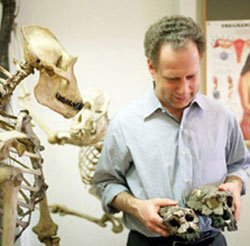
Daniel E. Lieberman, Professor of Human Evolutionary Biology, Harvard University
It was not for nothing that the late William F. Buckley, Jr. declared: “I would rather be governed by the first two thousand people in the Boston telephone directory than by the two thousand people on the faculty of Harvard University.”
Daniel E. Lieberman, a Harvard-educated Anthropologist who has managed to segue smoothly from his native social science to teaching Evolutionary Biology, won recent top marks in Scientism, the inappropriate and hubristic application of scientific theories to political and moral issues, when in a New York Time’s editorial last week, he informed readers that Evolution was voting in favor of Mayor Bloomberg’s soft drink ban specifically and government coercion in general.
Lessons from evolutionary biology support the mayor’s plan: when it comes to limiting sugar in our food, some kinds of coercive action are not only necessary but also consistent with how we used to live. …
Since sugar is a basic form of energy in food, a sweet tooth was adaptive in ancient times, when food was limited. However, excessive sugar in the bloodstream is toxic, so our bodies also evolved to rapidly convert digested sugar in the bloodstream into fat. Our hunter-gatherer ancestors needed plenty of fat — more than other primates — to be active during periods of food scarcity and still pay for large, expensive brains and costly reproductive strategies (hunter-gatherer mothers could pump out babies twice as fast as their chimpanzee cousins).
Simply put, humans evolved to crave sugar, store it and then use it. For millions of years, our cravings and digestive systems were exquisitely balanced because sugar was rare. Apart from honey, most of the foods our hunter-gatherer ancestors ate were no sweeter than a carrot. The invention of farming made starchy foods more abundant, but it wasn’t until very recently that technology made pure sugar bountiful.
The food industry has made a fortune because we retain Stone Age bodies that crave sugar but live in a Space Age world in which sugar is cheap and plentiful. …
We humans did not evolve to eat healthily and go to the gym; until recently, we didn’t have to make such choices. But we did evolve to cooperate to help one another survive and thrive. Circumstances have changed, but we still need one another’s help as much as we ever did. For this reason, we need government on our side, not on the side of those who wish to make money by stoking our cravings and profiting from them. [Emphasis added] We have evolved to need coercion.
Professor Lieberman neglects to explain how Evolution effectively draws the line between acceptable, desirable, and morally justifiable forms of state coercion, including taxes, regulations, and special paternalistic supervision of children, and even more effective and draconian measures, for instance, the Khmer Rouge marching the overweight urban inhabitants of Cambodia back into the country at machine gun point, aimed at “restoring a natural part of our environment. ”
He doesn’t offer any general principled account of why Evolution supports this and doesn’t support that precisely because he hasn’t got one. Professor Lieberman simply assumes that Evolution and Science (and Progress and the God of History) is embodied in the world by the consensus of people like himself, by the current opinions of the educated elite community of fashion.
One can find the scientific way of deciding things simply by reading the editorial pages of the Times.
All this, of course, is rubbish. The opinions and theories of Evolutionary Biology (let alone Anthropology) are anything but set in stone. Someone may discover next week the intense Neolithic cultivation of sugar beets in the Fertile Crescent. Medicine may decide that obesity is really caused by a particular gene, and that the specifics of diet play only a small role.
In the 1950s, Evolution would have decreed that you must drink milk to cure ulcers produced by the unnatural stress of modern capitalist life. Our latest information contends that bacteria are to blame and milk-drinking doesn’t do a thing.
More importantly, though, mere scientific facts are incapable of addressing philosophical questions of individual rights and the proper role and limits of the powers of government. Those issues have nothing to do with imaginary dietary teleologies and have to be debated on an entirely different level.
Scientism, the presumptuous attempt to misapply scientific theories or data in contexts in which they cannot possibly be determinative, is actually, I would argue, decisive evidence of bad education and intellectual incompetence.
It has been recognized for many decades now, certainly back to the 1960s or 1970s when Bill Buckley offered his famous apothegm concerning the faculty of Harvard, that there exists a tremendous and thoroughly alarming disconnect between our establishment intelligentsia and wisdom and common sense. Professor Lieberman is simply the most recent in a long series of wise fools.
Attention, bitter clingers leading out-of-it lives in fly-over states, It’s not too late! Vogue editrix-in-chief Anna Wintour is descending from Olympus to offer you a (very, very small) chance to rub elbows with her and other prominent fashionistas at an Obama Campaign fundraising dinner being held at Sarah Jessica Parker’s Manhattan manse. All you have to do is donate $15 (or more) to the 2012 Obama Re-election Campaign.
————————————-
Alas! The economy is so bad that you probably don’t have $15 to spare. You probably don’t read Vogue. And many of you hopeless hillbillies out there may not even have heard of Anna Wintour.
This trailer for the 2006 film “The Devil Wears Prada,” in which Meryl Streep plays a slightly fictionalized version of La Wintour, will serve as a quick introduction.
Dan Greenfield describes the symbiotic relationship of three key manifestations of modernity.
Universalizing college has not universalized education; it has not made us a better educated country, only a dumber one. Universal education has led to dumbed-down education and meaningless degrees. The only way we could keep moving more and more students up the ladder was by making the ladder as short as possible. Promotion, populist education and educators who barely knew more than the students have taken care of the rest.
A college degree was once a mark of distinction, now it’s a checkmark even for jobs that don’t have any innate reason for requiring it, and fortunes have been spent by government and students just to “stay in place” with the jobs of yesterdays high school graduates going to tomorrow’s college grads.
The primary purpose of a degree in many fields is to provide demonstrable proof to prospective employers that you aren’t an idiot. A high school degree once served that purpose. Now not even a college degree does. But with a surplus of job-seekers, it’s a useful way to winnow down the stack of applications to people who can analyze the heteronormative subtext of a detergent commercial and have few options for employment because of their massive student loan debt.
Treating college as the new high school hasn’t benefited students who waste four years of their lives and pick up staggering debts which make it harder for them to buy homes and start families, but it has benefited the liberal arts infrastructure, which, despite the liberal spin, is just as good at handing out useless degrees with no career path as any for-profit college. And it has benefited the Democratic Party, which rightly sees college campuses as recruitment grounds and liberal-voter-training seminars. …
Manhattan, home to Barnard, its sibling Columbia, NYU, Pace, and dozens of others, has one leading line of work, the restaurant business. The restaurant business doesn’t require a degree, just the willingness of pretty white people with student debt to wait tables at below minimum wage, and of some of the city’s three million illegal aliens to work illegally in the back. The city used to make things, now it makes sandwiches for Chinese tourists going to see a Disney musical on Broadway. Students dissatisfied with the low wages are, according to the erratically reliable New York Post, working at strip clubs. Fidel Castro boasted, that in Cuba, even the prostitutes have university degrees. Adopting the socialist degrees for everyone approach means we can now say the same thing.
[T]he moral disenchantment that Bloom called relativism is not the problem it was in 1987. Indeed, college-bound American kids now grow up in world that is almost medieval in its degree of moral enchantment. Their moral reflex is anxiously conditioned to an ever-growing list of worries and provocations: smoking, safe sex, chastity, patriotism, faith, religious freedom, bullying, diversity, drugs, crime, violence, obesity, binge drinking. Almost no problem goes un-talked about, un-taught from, un-ruled on. These lessons are convincingly yoked to real-life concerns about safety, health, and happiness, not to mention all those things that, as the song says, will go down on their permanent records.
For kids entering college fully trained in this liturgy of prudence and niceness, which I am anxiously imparting to my own young children, it’s not Bloom’s censoriousness they will resist. It’s his decadence. …
Bloom’s esoteric project asks today’s students to estrange themselves from an identity that they, their parents, and their teachers, along with their ministers and rabbis and shrinks, their camp counselors and art tutors and soccer coaches, have been constructing since these kids were born, and with a degree of political and moral awareness that everyone involved is darned proud of. These are good kids. Try telling a college sophomore who founded his school’s anti-sweatshop movement that his enthusiasms are callow, his convictions harmful to a true education of the soul, and that he should instead join you on a freaky trip into the true mind of Thucydides.
This liberal bumper sticker expresses typical community of fashion attitudes.
Scott Locklin explains to democrats why working class Americans vote Republican “against their economic interest.”
Your average member of the lunchpailetariat is acutely aware that those who are presently in charge of the Democratic Party hate him. Rednecks are villainized in the media, in academia, and in the private lives of folks who think they know better because of their sociology class. Many of the problems minorities experience in American society are laid at the feet of working-class white people. The irony is that these pallid scapegoats are politically powerless, unlike the latte tribe that demonizes them. Hating rednecks is the anti-Semitism of Democratic asses.
On the rare occasion when Democrats attempt to communicate with their white Neanderthal brethren, it is broadcast on a carrier wave of pure condescension. The left has a sort of collective Tourette syndrome involving frequent mention of sexism, racism, and gay rights. These subjects are meaningless to hourly laborers who lack the leisure time to nurse nihilistic resentments against Western Civilization.
The corporate oligarchs and neocon goons who control the Republican Party obviously have financial and political interests which are not aligned with those of the white working classes. But they also do not demonize or condescend to peckerwoods who drive pickups and go fishing. It isn’t that Republican ideas are great for the lunchpailetariat or anyone else, but their lack of seething hostility makes them preferable to Democrats.
Lefties should only be confused about the white proles who still vote for them. The left’s “Why don’t you loooove me anymore?†routine with the white working class reminds me of a friend’s crazy-ex-girlfriend story. She cheated on him, lit his car on fire, and gave him the clap. She used to get drunk and scream into his answering machine at 4AM. Then she wondered why he never called back.
Norman Rockwell, Saturday Evening Post cover, August 27, 1960 (click to enlarge)
As the paintings of Norman Rockwell frequently attest, pre-1960s America was not nearly so thoroughly divided by class as today’s America.
We recently linked the New Criterion article by Charles Murray, excerpted from his forthcoming book, on the damaging impact to both sides of class separation in contemporary America.
To illustrate his theses, Mr. Murray subsequently offered a 25 Question test, designed to indicate exactly how isolated from ordinary America the individual subject may be.
Murray’s test seems pretty accurate, as I got a score of 67, placing me in the “ï¬rst- generation middle-class person with working-class parents and average television and moviegoing habits” category, which is quite right. I’m the descendant of Turn-of-the-Last-Century Lithuanian immigrants, and grew up in the Anthracite coal mining town of Shenandoah, Pennsylvania. My father and grandfathers were coal miners. As a consequence, I think Murray is right in believing that I’m much less infatuated with the moral and intellectual superiority of the urban community of fashion.
P.J. O’Rourke isn’t fooled. The American elites claim to represent the interests of the poor in order to credential their own class’s power grabs as a worthy cause, but their real attitude toward people who fail to perform satisfactorily in the meritocratic rat race is one of utter contempt and complete intolerance.
[P]oor people don’t have a lot of pleasures. Sure, they have more sex than progressive elites. But somehow, for poor people, the sex always ends up in illegitimate children or HIV or some bum of a boyfriend instead of leading to, as it does for elites, a Reichian release of primordial cosmic energy or the wonderful self-fulfillment and midlife reawakening of a new divorce. And, yes, the poor have drugs and alcohol, but these bring them nothing but grief. They’re not at all like the subtle and refined delights of a 300-bottle wine cellar or the therapeutic relief from Zoloft, Lexapro, Elavil, Ambien, Halcion, Xanax, beta blockers, Levitra, and Cialis.
And poor people do have a lot of troubles. Sometimes, when you’ve got a crap job and are going to get laid off from it besides and your crack-head daughter has three kids by four fathers and your oldest son is on the front in Afghanistan and your youngest son can’t decide which drug crew to join and the cable company has cut off service and somebody’s jimmying the twelfth lock on the sheet-metal door, you’d like to sit down on your own damn chair in your own damn kitchen and have a smoke.
Well, forget it. The progressive elites are already charging you $7 for that pack of king-size filter tips, and pretty soon they’re going to add the price of eviction. Because they hate your guts.
The elites who denounce poverty despise the poor. Their every high-minded, right-thinking “poverty program†proves this detestation—from the bulldozing of vibrant tenement communities to the drug law policing policies that send poor kids to prison and rich kids to rehab to the humiliation of food stamps and free school lunches to the loathsome inner-city public schools where those free lunches are slopped onto cafeteria trays.
Charles Murray, in the New Criterion, discusses the threat of American upper middle class arrogance and provincialism to American exceptionalism.
As recently as half a century ago, Americans across all classes showed only minor differences on the Founding virtues. When Americans resisted the idea of being thought part of an upper class or lower class, they were responding to a reality: there really was such a thing as a civic culture that embraced all of them. Today, that is no longer true. Americans have formed a new lower class and a new upper class that have no precedent in our history. American exceptionalism is deteriorating in tandem with this development. …
The members of America’s new upper class tend not to watch the same movies and television shows that the rest of America watches, don’t go to kinds of restaurants the rest of America frequents, tend to buy different kinds of automobiles, and have passions for being green, maintaining the proper degree of body fat, and supporting gay marriage that most Americans don’t share. Their child-raising practices are distinctive, and they typically take care to enroll their children in schools dominated by the offspring of the upper middle class—or, better yet, of the new upper class. They take their vacations in different kinds of places than other Americans go and are often indifferent to the professional sports that are so popular among other Americans. Few have served in the military, and few of their children either.
Worst of all, a growing proportion of the people who run the institutions of our country have never known any other culture. They are the children of upper-middle-class parents, have always lived in upper-middle-class neighborhoods and gone to upper-middle-class schools. Many have never worked at a job that caused a body part to hurt at the end of the day, never had a conversation with an evangelical Christian, never seen a factory floor, never had a friend who didn’t have a college degree, never hunted or fished. They are likely to know that Garrison Keillor’s monologue on Prairie Home Companion is the source of the phrase “all of the children are above average,†but they have never walked on a prairie and never known someone well whose IQ actually was below average.
When people are making decisions that affect the lives of many other people, the cultural isolation that has grown up around America’s new upper class can be disastrous. It is not a problem if truck drivers cannot empathize with the priorities of Yale law professors. It is a problem if Yale law professors, or producers of the nightly news, or CEOs of great corporations, or the President’s advisors, cannot empathize with the priorities of truck drivers. …
Tocqueville, when explaining why the American system ensured that a despot could never successfully divide Americans against each other, wrote that “local freedom . . . perpetually brings men together, and forces them to help one another, in spite of the propensities which sever them. In the United States, the more opulent citizens take great care not to stand aloof from the people. On the contrary, they constantly keep on easy terms with the lower classes: they listen to them, they speak to them every day.†That’s not true any more. Our propensities do sever us, and the new upper class shows no inclination to reach out across the widening divide. And so the unraveling of the civic culture in Fishtown occurs without the knowledge or the concern of Belmont, let alone with any attempt by Belmont to assist the people of Fishtown who are still trying to do the right thing. Fishtown is flyover country, or those ugly suburbs that the people of the new upper class view from afar as they drive from their enclave in Greenwich to their office in midtown Manhattan.
Professor Stephen G. Bloom: “I’ve lived in many places, lots of them foreign countries, but none has been more foreign to me than Iowa.”
Stephen G. Bloom, a professor at the University of Iowa, in the Atlantic, describes with wonder and deep contempt the bizarre and backward culture of the state in which he disapprovingly resides.
Whether a schizophrenic, economically-depressed, and some say, culturally-challenged state like Iowa should host the first grassroots referendum to determine who will be the next president isn’t at issue. It’s been this way since 1972, and there are no signs that it’s going to change. In a perfect world, no way would Iowa ever be considered representative of America, or even a small part of it. Iowa’s not representative of much. There are few minorities, no sizable cities, and the state’s about to lose one of its five seats in the U.S. House because its population is shifting; any growth is negligible. Still, thanks to a host of nonsensical political precedents, whoever wins the Iowa Caucuses in January will very likely have a 50 percent chance of being elected president 11 months later. Go figure.
Maybe Ambrose Bierce described it right when he called the U.S. president “the greased pig in the field game of American politics.” For better or worse, Iowa’s the place where that greased pig gets generally gets grabbed first. …
Iowa is a throwback to yesteryear and, at the same time, a cautionary tale of what lies around the corner.
Which brings up my dog. And here’s why: My dog is a kind of crucible of Iowa.
What does Hannah, a 13-year-old Labrador, have to do with an analysis of the American electoral system and how screwy it is that a place like Iowa gets to choose — before anyone else — the person who may become the next leader of the free world?
For our son’s eighth birthday, we wanted to get him a dog. Every boy needs a dog, my wife and I agreed, and off we went to an Iowa breeding farm to pick out an eight-week-old puppy that, when we knelt to pet her, wouldn’t stop licking us. We chose a yellow Lab because they like kids, have pleasant dispositions, and I was particularly fond of her caramel-color coat. Labs don’t generally bite people, although they do like to chew on shoes, hats, and sofa legs. Hannah was Marley before Marley.
Our son, of course, got tired of Hannah after a couple of months, and to whom did the daily obligation of walking the dog fall?
That’s right. To me.
And here’s the point: I can’t tell you how often over the years I’d be walking Hannah in our neighborhood and someone in a pickup would pull over and shout some variation of the following:
“Bet she hunts well.”
“Do much hunting with the bitch?”
“Where you hunt her?”
To me, it summed up Iowa. You’d never get a dog because you might just want to walk with the dog or to throw a ball for her to fetch. No, that’s not a reason to own a dog in Iowa. You get a dog to track and bag animals that you want to stuff, mount, or eat.
That’s the place that may very well determine the next U.S. president.