Boldini painting of grande horizontale subsequently sold at auction for £1.78 million
The Daily Mail describes a Belle Époque Parisian apartment, locked up at the time of the WWII German advance on the French capital which has remained unopened for over 70 years.
Inside the Paris apartment untouched for 70 years: Treasure trove finally revealed after owner locked up and fled at outbreak of WWII.
Caked in dust and full of turn-of-the century treasures, this Paris apartment is like going back in time.
Having lain untouched for seven decades the abandoned home was discovered three years ago after its owner died aged 91.
The woman who owned the flat, a Mrs De Florian, had fled for the south of France before the outbreak of the Second World War.
She never returned and in the 70 years since, it looks like no-one had set foot inside.
The property was found near a church in the French capital’s 9th arrondissement, between Pigalle red light district and Opera.
Experts were tasked with drawing up an inventory of her possessions which included a painting by the 19th century Italian artist Giovanni Boldini.
One expert said it was like stumbling into the castle of Sleeping Beauty, where time had stood still since 1900. ‘There was a smell of old dust,’ said Olivier Choppin-Janvry, who made the discovery.
But he said his heart missed a beat when he caught sight of a stunning tableau of a woman in a pink muslin evening dress.
The painting was by Boldini and the subject a beautiful Frenchwoman who turned out to be the artist’s former muse and Mrs de Florian’s grandmother, Marthe de Florian, a beautiful French actress and socialite of the Belle Époque.
RAF officer Francis R.L. Mellersh (1922-1996) reads John Buchan’s thriller Greenmantle and smokes his pipe, while getting in a haircut between fighter sorties to intercept the Luftwaffe.
Boots loosened, pipe in mouth, reading his book, being attended to by a servant, the pilot resembles a medieval knight resting between the lists at a tournament.
David Frum got hold of the photo from the pilot’s daughter, who tells us:
We have the original of the photo, and the book (he was crazy about John Buchan) and that bloody pipe killed him in the end at 72. I’m afraid those who have been to war and daily diced with death are rather cavalier with their health. I’ll tweet you a pic of him in his 60s…the red hair’s faded to strawberry blonde but still recognisably the chap getting his hair cut.
file
Instead of resuming his Oxford studies at the end of the war he remained in the RAF for another 30 plus years and flew right until the end (often with the Red Arrows – stress!). He reached Air Vice Marshal and was Assistant Chief of the Defence Staff. He was a very modest man, very laid-back (that photo says it all) and spoke little of the war.
You’ll like this bit. My grandfather, his father, was a WW1 ace and was on the sortie which downed the Red Baron. Forensic historians of course now say he was shot from the ground…my grandfather’s eye witness account is often quoted. We have a little box made from Richthofen’s propeller wood. He too made a career of the RAF, was in charge of operations in Burma etc in WW2 and, at one point, my father’s boss…somewhat disastrously! He died in a bizarre accident shortly after retiring…ironic given he survived the RB.
My grandfather was AVM Sir Francis (FJW) Mellersh, nickname “Tog” and my father AVM Francis (FRL) Mellersh, known always as Togs (nanny’s nickname ie. “of Tog”). Quite ridiculous. I have their obituaries and citations and some extracts from Aces High etc as well as my father’s log book filled in somewhat irreverently. He flew Beaufighters, Mosquitoes and Spitfires.
David Frum adds:
Francis Mellersh was twice awarded Britain’s Distinguished Flying Cross and was recommended for the Victoria Cross.
He was quite a successful night-fighter pilot, ending the war with a tally of eight destroyed and one probable, however, during 1944, he destroyed 39, possibly 42, V-1 flying bombs. …
Citation for the award of the Distinguished Flying Cross.
“Flying Officer Francis Richard Lee MELLERSH (105145), Royal Air Force Volunteer ‘Reserve, No.600 Squadron.
This officer is a tenacious and skilful fighter and has destroyed 5 enemy aircraft in combat. On 1 occasion in April,1943, during a patrol off Algiers at dusk, he encountered a large formation of enemy aircraft. In the ensuing engagement, Flying Officer Mellersh shot down 2 of them. Although his aircraft was badly damaged he flew it to base. More recently, in July, 1943, Flying Officer Mellersh destroyed 2 enemy aircraft during 1 sortie. This officer has set a praiseworthy example.â€
(London Gazette – 20 August 1943)
Citation for the award of the Bar to the Distinguished Flying Cross
“Flight Lieutenant Francis Richard Lee MELLERSH, D.F.C. (1105145), R.A.F.V.R., 96 Sqn.
This officer has proved himself, to be a night fighter pilot of outstanding ability and determination and his skill and keenness have set an excellent example. Flight Lieutenant Mellersh has completed many sorties and has destroyed eight enemy aircraft; he has also destroyed a large number of flying bombs.â€
(London Gazette – 3 October 1944)
———————————
This is obviously the cover of the book he is reading.
A Canadian World War II enthusiast says that he has deciphered the message after realizing that a code book held the key to the encryption. Gord Young, editor for the history group Lakefield Heritage Research, says the 1944 note uses a simple World War I code to give information about German troop positions in the area around Normandy, France. …
Young, however, said that the code is not complex, and that people who are trying to decrypt it are “over thinking.â€
The code, according to Young’s account, belonged to 27-year-old Sgt William Scott, who was placed in Normandy to report on German positions. Scott was killed a few weeks later and buried in a Normandy war cemetery. …
According to Young, the decrypted message reads:
“Artillery observer at ‘K’ Sector, Normandy. Requested headquarters supplement report. Panzer attack – blitz. West Artillery Observer Tracking Attack.
“Lt Knows extra guns are here. Know where local dispatch station is. Determined where Jerry’s headquarters front posts. Right battery headquarters right here.
“Found headquarters infantry right here. Final note, confirming, found Jerry’s whereabouts. Go over field notes. Counter measures against Panzers not working.
“Jerry’s right battery central headquarters here. Artillery observer at ‘K’ sector Normandy. Mortar, infantry attack panzers.
“Hit Jerry’s Right or Reserve Battery Here. Already know electrical engineers headquarters. Troops, panzers, batteries, engineers, here. Final note known to headquarters.â€
Jo Teeuwisse of Amsterdam has overlaid WWII photographs over many identical locations today in France, the Netherlands, and Italy with startlingly evocative results.
Peter Kirsanow has some fun placing the Obama approach to foreign policy in a historical perspective.
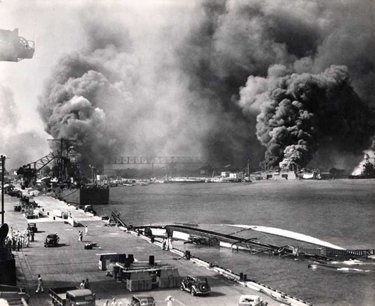
Cambridge, Mass. — Celebrated historian Bertram Oxley has uncovered a memorandum from former Japanese Emperor Hirohito to Admiral Yamamoto dated December 6, 1941, showing that the Japanese attack on Pearl Harbor was motivated by an offensive film made by Charlie Chaplin ridiculing Japanese cuisine.
“Contrary to historical accounts over the last seventy years,†Professor Oxley said in an interview today with the BBC, “What appeared to be a meticulously planned surprise attack was actually a spontaneous demonstration by moderate sushi connoisseurs in the Imperial Navy in response to a hateful and offensive movie. Thereafter, extremist elements within the Japanese military co-opted the spontaneous attack, transforming it into the overseas contingency operation sometimes referred to as ‘World War II.’â€
The discovery has created a sensation in scholarly circles. “This is a remarkable find,†declared Reginald Smythe, chairman of the Progressive Historians Assocation and former Obama State Department official. “Had President Roosevelt condemned this movie — instead of uttering that infernal ‘Day of Infamy’ provocation — the war could have been avoided and millions of lives would have been saved.â€
Reached at his home in Houston, former President George H. W. Bush, an aviator in the Pacific during the war, expressed skepticism. “It’s simply inconceivable that the Japanese First Air Fleet, with six aircraft carriers, could have staged a spur of the moment attack on an island thousands of nautical miles from the Japanese homeland with such stealth and precision.†Most experts dismissed Mr. Bush’s remarks, however, since it’s widely understood that World War II was primarily his son’s fault.
White House spokesman Jay Carney, asked this afternoon about the memo’s discovery stated, “Of course, hindsight’s 20-20. But one can only wonder how much pain and suffering could have been averted had FDR simply apologized to Hirohito at the outset.â€
Probably found were examples of the 7.5 cm leichtes GebirgsInfantereiGeschütz 18 Mountain howitzer, which could be disassembled into six to ten packloads weighing 74.9 kg. or under.
RIA Novosti reports that some German WWII artillery pieces were found recently intact and in good working order.
Police in a mountainous region of southern Russia have found five German World War II-era artillery guns along with ammunition for them.
The guns – 76-millimeter cannon – are in good condition, according to police in Kalbardino-Balkaria Republic, the location of Mount Elbrus, the tallest mountain in Europe.
“If they fell into the wrong hands, they could be used as intended,†Elbrus police chief Muslim Bottayev said, adding that military engineers would soon remove the weapons and ammunition to a safe location.
The guns were discovered near the Donguz-Orun pass at an elevation of 9,184 feet by officers from the Elbrus District Police Department jointly with members of the Memorial Elbrus society.
The find included eight 76-mm artillery shells, four hand grenades, three mines and 500 small-arms rounds abandoned when the Wehrmacht withdrew from the area.
Meanwhile, the Telegraph reported recently on an even more interesting find on the Western front.
The wreck of a huge Luftwaffe transport plane that was shot down by a British fighter in the Second World War has been found off the coast of Sardinia, according to a team of Italian researchers.
It is believed to be the only surviving example of the Messerschmitt 323 “Giant”, a massive aircraft that was designed to carry tanks, half-tracks and artillery into battle.
The Germans initially intended to use the plane in the planned invasion of Britain, Operation Sea Lion, but it was cancelled and the aircraft instead saw action in other theatres such as North Africa and the Mediterranean.
The Me-323 was on its way from a German base in Sardinia to the city of Pistoia in Tuscany when it was shot down by a Bristol Beaufighter long-range fighter plane on July 26, 1943.
It crashed into the sea off the Maddalena islands, an idyllic archipelago of low islands and sandy beaches that is popular with sailors and holidaymakers.
A small team led by Cristina Freghieri, a diver and amateur historian, claims to have discovered the wreck at a depth of 200ft.
A bomb disposal team has detonated an American bomb left over from World War II found in the German city of Munich.
The detonation happened shortly before 22:00 local time (20:00 GMT) in the Schwabing district and was heard across the city, local media report.
There are reports that sparks from the explosion caused the roofs of some neighbouring buildings to catch fire.
The bomb was discovered on Monday night by building workers at the site of an old bar that was being demolished.
Overnight, 2,500 residents were evacuated from the area closest to the bomb, with others living further away being told to stay in their homes.
Experts decided it was not possible to make the device safe because of its unusual fuse, which operated by means of a chemical reaction rather than the mechanical device that many Allied World War II bombs used.
The bomb was described as a highly explosive, a 550lb (250kg) device dropped by the Americans.
It is not unusual for big, unexploded bombs to be discovered in Germany, the BBC’s Stephen Evans reports.
About 600 tonnes of unexploded ordnance are discovered in Germany every year.
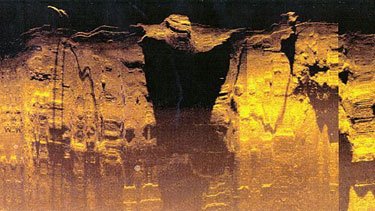
Rumours of a World War II German submarine at the bottom of the river have been around for years, but a sonar image may prove that it’s more than just a bump on a log.
Brian Corbin, a diver from Happy Valley Goose Bay, and others were searching the river bottom with side-scanning sonar for three men lost over Muskrat Falls back in 2010 when they came across what appears to be a submarine.
“We were looking for something completely different, not a submarine, not a U-boat — I mean, no one would ever believe that was possible,†Brian Corbin told CBC News.
It certainly wasn’t unheard for German U-boat to be operating off the coast of Labrador and Newfoundland, Nova Scotia and New Brunswick during the war targeting convoys to Great Britain. One reached as far upriver on the St. Lawrence as Rimouski, some 300 km from Quebec City.
“I think it is possible,†Wyman Jacque, town manager for Happy Valley Goose Bay, told the Star Thursday.
Jacque said the U-boat could have quite easily made the trip inland on Labrador’s largest estuary to the shipping port of Happy Valley Goose Bay from the coast and he added the Churchill River before it was dammed back in the 1970s might well have been deep enough to allow the Germans sailors to get to the area of the Falls.
The Churchill River empties into what is known as Lake Melville, a salt water body of water where Happy Valley Goose Bay is located. Muskrat Falls is about 26 kilometres from Lake Melville.
“I can tell you that I have seen the sonar and the outline . . . and you can actually see an outline of what appears to be . . . a submarine,†Jacque said.
The German Embassy in Ottawa, which has been contacted about the possible find, has confirmed that as many as 50 U-boats were unaccounted for when the war ended in 1945.
[S]earchers believe they’ve found a World War II German submarine at the bottom of a Canadian river, 60 miles from the ocean.
What appears to be a German U-boat was first spotted at the bottom of the Churchill River in Labrador two years ago by searchers using sonar to locate three men who had gone over Muskrat Falls, the Canadian Broadcasting Corp. reported Wednesday.
“We were looking for something completely different, not a submarine, not a U-boat — I mean, no one would ever believe that was possible,” Brian Corbin told the CBC. “It was a great feeling when we found it.”
Corbin said the object appears to be a 150-foot-long vessel.
The German government says it would be “sensational and unusual” for one of its submarines to have ended up so far inland, though it concedes it’s possible, the CBC reported.
“We do know that German U-boats did operate in that region,” Georg Juergens, deputy head of mission for the German Embassy in Ottawa, told the CBC. “We must brace ourselves for surprises.”
Juergens said the whereabouts of more than a dozen WWII U-boats may still be unknown. He said it would be “against our tradition and our naval customs” to raise the wreckage if it does prove to be a German sub.
“This site then would be declared a war grave at sea,” he said.
———————
The loss of German U-boat personnel in WWII was something like 75%.
It is not really difficult to understand Poles being offended, when at the presentation of a posthumous American valor award for Jan Karski, a Polish officer who risked his life obtaining knowledge of the Holocaust and then carried that information to the Western Allies, President Barack Obama referred to Karski being “smuggled into a Polish death camp.”
The Commonwealth of Poland-Lithuania served as homeland to the overwhelming majority of European Jewry for six centuries until that country was invaded, wiped from the map, and occupied by Prussia, Austria, and Russia at the end of the 18th century.
Jews lived for all those centuries in Poland-Lithuania as a self-governing estate under the protection of royal charters which granted Jews privileges and immunities nearly equal to those of the noble estate.
The witches’ brew of demagogic populist ideologies of the late 19th century, Socialism and Nationalism, impacted occupied Poland and Lithuania, as they did the rest of Central and Eastern Europe, dividing classes, ethnicities, and religious groups, but the so-often-alluded-to Polish antisemitism was far less virulent than elsewhere. During the Nazi-era persecution of the Jews, Poles themselves were on the receiving end of nearly equivalent scale murder and atrocities, but nevertheless Poles, like Karski, did much more on behalf of the Jews than citizens of any other occupied country.
Routine reference to “Polish death camps” by the ignorant and reflexively biased naturally deeply offend Poles.
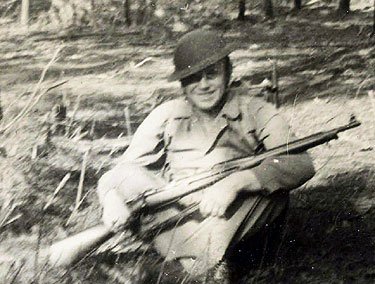
William G. Zincavage, Fall 1942, after graduating Marine Corps Boot Camp
Military Police, North Carolina, Fall 1942
First Amphibious Corps, Third Marine Division, Special Troops:
Solomon Islands Consolidation (Guadalcanal), Winter-Spring 1943
New Georgia Group Operation (Vella LaVella, Rendova), Summer 1943
Third Amphibious Corps, Third Marine Division, Special Troops:
Marianas Operation (Guam), Summer 1944
Fifth Amphibious Corps, Third Marine Division, Special Troops:
Iwo Jima Operation, February-March 1945 (Navy Unit Commendation)
North American Campaign Medal
Asiatic-Pacific Campaign Medal with Four Bronze Stars
Good Conduct Medal
——————————————————–
While recovering from malaria after the Battle of Iwo Jima, he looked 70 years old.
——————————————————–
But he was back to normal in December of 1945, when this photo was taken shortly before he received his discharge.
At Stanford, back in 1987, Christopher Hitchens was introduced by the egregious Edward Said to the estimable critic of the novel Ian Watt.
Watt pointed out the window to the large number of Japanese students visible on Stanford’s campus, and remarked thoughtfully: “I know it’s silly to say so, but it still makes me feel odd sometimes.”
[Ian Watt, you see, was ] one of the few survivors of The Bridge On The River Kwai, The Burma Railroad, Changi Jail in Singapore, and other Hirohito horrors that I still capitalize in my mind. He admitted later that, detecting other people’s reserve after returning home from these wartime nightmares, he had developed a manner of discussing them apotropaically, as it were, so as to defuse them a bit. And he told me the following tale, which I set down with the hope that it captures his memorably laconic tone of voice:
Well, we were in a cell that was probably built for six but was holding about sixteen of us. There wasn’t much food and we hadn’t been given any water for quite a while. The heat was absolutely ferocious. Dysentery had begun to take its toll, which was distinctly disagreeable at such close quarters…
Added to this unpleasantness, we could hear one of our number being rather badly beaten by the Japanese guards, with rifle-butts it I seemed, in their guardroom down the corridor. At this rather trying moment one of my young subalterns, who’d managed to fall asleep, started screaming and flailing and yelling. He was shouting: “No, no—please don’t… Not any more, not again, Oh God please.” Hideous noises like that. I had to take a snap decision to prevent panic, I so I ordered the sergeant to slap him and wake him up. When he came to, he apologized for being a bore but brokenly confessed that he’d dreamed he was back at Tonbridge.










 .
.


