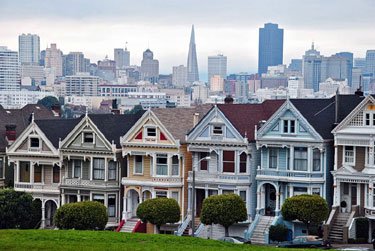
Judith Miller discusses the odd culture of America’s Cool Grey City of Love as San Francisco commemorates the 1967 origin of the Counter-Culture which today dominates the city.
It is San Francisco’s smug self-satisfaction that so enrages critics like Michael Anton, the San Francisco native who now works for the Trump White House in national-security communications. In a blistering 2015 critique in the Claremont Review of Books, Anton asserted that “San Francisco values†had come to reflect little more than a “confluence of hippie leftism and filthy lucre,†a marriage of convenience between “old-time materialism and hippie ‘morality.’ †What kept the Summer of Love veneer going for so long, he asserted, is the implicit deal between the high-tech oligarchs and the hippie rank-and-file. “The latter not only decline to use their considerable propaganda skills to vilify the former, but cheerfully glorify and whitewash them,†he wrote. “The oligarchs in turn subsidize the lefties through nonprofits and make-work jobs†and, more important, “take their cues from them on matters of politics not directly contrary to their economic interests.†Both groups benefit from what he called this “socio-intellectual money laundering.†The resulting policies have done little to create opportunities for an aspiring middle class that is neither elite nor bohemian.
Anton is not wrong about the less savory aspects of the counterculture. A notable omission in the city’s much touted tradition of “tolerance,†for instance, is that it rarely extends to politics. There is no welcome mat out for Republicans, especially conservatives. Student mobs at Berkeley boast about preventing conservative scholars from speaking on campus. Socially liberal but fiscally conservative activists like David Crane, who worked as Governor Arnold Schwarzenegger’s finance director, struggle to raise funds for candidates willing to question the pension burdens being imposed on future generations by San Francisco liberals in the name of “workers’ rights.†Several Republican city residents confided that they would never display a Trump/Pence sticker on their car or home window for fear of vandalism.
VDare is Nativist, which seems ironic to me considering the fact that its run by a Limey immigrant, and it very obviously relishes indulging in the sort of divisive rhetoric characteristic of less savory elements of the Alt-Right. But… we are living in a time when only the likes of John Derbyshire has guts enough to speak the obvious truth out loud.
Last night Tucker Carlson did a segment on looting in the flooded city of Houston; or rather, on the outraged reaction to ABC journalist Tom Llamas, who had calmly and factually reported the looting.
“What about our society has changed so much that noting that you’re watching [the looting] is somehow a thoughtcrime?†asked Carlson. …
The segment was decorated with video clips showing the actual looting. So far as I could tell, the looters were all black.
Yet this did not come up. In a 4m37s segment, the word “black†did not occur. Nor did any of the common euphemisms for “black†or “blacks.â€
Why not? Because, as the late Larry Auster told us, blacks are sacred objects in our state religion. Criticism of them is received as a species of blasphemy.
As I watched these two talking heads blathering on about “nihilism†and “the destruction of objective values,†I kept hearing, in my mind’s ear, the voice of my old South African colleague cutting through the baloney: “It’s the blecks, dear fellow, it’s the blecks.†That was, in fact, the answer to all the questions they were chewing over so earnestly.
It’s a bit depressing to see that even Tucker Carlson, one of the more fearless of our heterodox commentators, believes he has to cleave to convention on this. …
So here’s my question: When a person inside the state religion observes the orthodoxies like this, is he at all aware how deeply weird it looks to us outside?
If you cannot bring yourself to mention, perhaps even to think, obvious true facts, then the world you are living in is to some degree a make-believe world, and you yourself are, to that same degree, slightly nuts.
Ad Hominem:
This is the best logical fallacy, and if you disagree with me, well, you suck.
Appeal to False Authority:
Your logical fallacies aren’t logical fallacies at all because Einstein said so. Einstein also said that this one is better.
Appeal to Emotion:
See, my mom, she had to work three jobs on account of my dad leaving and refusing to support us, and me with my elephantitis and all, all our money went to doctor’s bills so I never was able to get proper schooling. So really, if you look deep down inside yourself, you’ll see that my fallacy here is the best.
Appeal to Fear:
If you don’t accept Appeal to Fear as the greatest fallacy, then THE TERRORISTS WILL HAVE WON. Do you want that on your conscience—that THE TERRORISTS WILL HAVE WON because you were a pansy who didn’t really think that Appeal to Fear was worth voting for, and you wanted to vote for something else? Of course not, and neither would the people you let die because THE TERRORISTS WILL HAVE WON.
Stephen Clarkson remembers stopping a terrorist attack at the Glasgow Airport back in 2007.
It was when he got up that I realised he was an attacker. …
He tried to get to the jeep’s boot – apparently, it was full of petrol bombs. The police were trying to stop him, but he kept kicking at their legs. As they fought, they moved towards me. One of the officers used pepper spray, and my eyes were streaming. The next time I opened them, this lunatic was coming in my direction.
When you’re involved in something like that, it’s hard to remember afterwards exactly how it went. You just act on instinct. My partner, Gillian, had recently passed away, after battling cancer. I had watched her fight like hell to survive, and these characters were trying to take people’s lives as if they meant nothing. It enraged me, as did having pepper spray in my eyes, to be honest. So I went for him.
I threw my full weight into it. My arm and shoulder met his chest and he clattered down. I stood on his legs while the police cuffed him. One officer shouted at me, “Who are you? Get out of here.†That annoyed me. Who am I? I’m the one who’s just put him on his backside. …
I’m a builder, and went back to work the next day. I’ve honestly never lost a moment’s sleep over what happened.
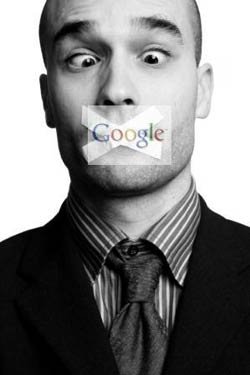
[W]e at TPM – and some version of this is the case for the vast majority of publishers – are connected to Google at almost every turn. … Running TPM absent Google’s various services is almost unthinkable. Like I literally would need to give it a lot of thought how we’d do without all of them. Some of them are critical and I wouldn’t know where to start for replacing them. In many cases, alternatives don’t exist because no business can get a footing with a product Google lets people use for free.
But here’s where the rubber really meets the road. The publishers use DoubleClick. The big advertisers use DoubleClick. The big global advertising holding companies use Doubleclick. Everybody at every point in the industry is wired into DoubleClick. Here’s how they all play together. The adserving (Doubleclick) is like the road. (Adexchange) is the biggest car on the road. But only AdExchange gets full visibility into what’s available. (There’s lot of details here and argument about just what Google does and doesn’t know. But trust me on this. They keep the key information to themselves. This isn’t a suspicion. It’s the model.) So Google owns the road and gets first look at what’s on the road. So not only does Google own the road and makes the rules for the road, it has special privileges on the road. One of the ways it has special privileges is that it has all the data it gets from search, Google Analytics and Gmail. It also gets to make the first bid on every bit of inventory. Of course that’s critical. First dibs with more information than anyone else has access to. (Some exceptions to this. But that’s the big picture.) It’s good to be the king. It’s good to be a Google.
There’s more I’ll get to in a moment but the interplay between DoubleClick and Adexchange is so vastly important to the entirety of the web, digital publishing and the entire ad industry that it is almost impossible to overstate. Again. They own the road. They make the rules for the road. They get special privileges on the road with every new iteration of rules.
In recent years, the big new things are various kinds of private deals and private markets you can set up to do business in different ways with advertisers. That uses Google architecture and they take a percentage. How much of a percentage does Google take on what I was referring to above – the so-called open auction? No one knows.
Now Google can say – and they are absolutely right – that every month they send checks for thousands and millions of dollars to countless publishers that make their journalism possible. And in general Google tends to be a relatively benign overlord. But as someone who a) knows the industry inside and out – down to the most nuts and bolts mechanics – b) someone who understands at least the rudiments of anti-trust law and monopoly economics and c) can write for a sizable audience, I can tell you this.: Google’s monopoly control is almost comically great. It’s a monopoly at every conceivable turn and consistently uses that market power to deepen its hold and increase its profits. Just the interplay between DoubleClick and Adexchange is textbook anti-competitive practices.
There’s one way that Google is better than Facebook. When Facebook is getting a bigger and bigger share of the advertising pie, that money is almost all going to Facebook. There are some small exceptions but that’s basically the case. When Google is making insane amounts of money on advertising, it’s not really the same since a huge amount of that advertising is running on websites which are getting a cut. Still, the big story is that Google and Facebook now have a dominant position in the entirety of the advertising ecosystem and are using their monopoly power to take more and more of the money for themselves.
We’re basically too small for Google to care about. So I wouldn’t say we’ve had any bad experiences with Google in the sense of Google trying to injure us or use its power against us. What we’ve experienced is a little different. Google is so big and so powerful that even when it’s trying to do something good, it can be dangerous and frightening.
Here’s an example.
With the events of recent months and years, Google is apparently now trying to weed out publishers that are using its money streams and architecture to publish hate speech. Certainly you’d probably be unhappy to hear that Stormfront was funded by ads run through Google. I’m not saying that’s happening. I’m just giving you a sense of what they are apparently trying to combat. Over the last several months we’ve gotten a few notifications from Google telling us that certain pages of ours were penalized for ‘violations’ of their ban for hate speech. When we looked at the pages they were talking about they were articles about white supremacist incidents. Most were tied to Dylann Roof’s mass murder in Charleston.
Now in practice all this meant was that two or three old stories about Dylann Roof could no longer run ads purchased through Google. I’d say it’s unlikely that loss to TPM amounted to even a cent a month. Totally meaningless. But here’s the catch. The way these warnings work and the way these particular warnings were worded, you get penalized enough times and then you’re blacklisted.
Now, certainly you’re figuring we could contact someone at Google and explain that we’re not publishing hate speech and racist violence. We’re reporting on it. Not really. We tried that. We got back a message from our rep not really understanding the distinction and cheerily telling us to try to operate within the no hate speech rules. And how many warnings until we’re blacklisted? Who knows?
If we were cut off, would that be Adexchange (the ads) or DoubleClick for Publishers (the road) or both? Who knows?
If the first stopped we’d lose a big chunk of money that wouldn’t put us out of business but would likely force us to retrench. If we were kicked off the road more than half of our total revenue would disappear instantly and would stay disappeared until we found a new road – i.e., a new ad serving service or technology. At a minimum that would be a devastating blow that would require us to find a totally different ad serving system, make major technical changes to the site to accommodate the new system and likely not be able to make as much from ads ever again. That’s not including some unknown period of time – certainly weeks at least – in which we went with literally no ad revenue.
Needless to say, the impact of this would be cataclysmic and could easily drive us out of business.
Now it’s never happened. And this whole scenario stems from what is at least a well-intentioned effort not to subsidize hate speech and racist groups. Again, it hasn’t happened. So in some sense the cataclysmic scenario I’m describing is as much a product of my paranoia as something Google could or might do. But when an outside player has that much power, often acts arbitrarily (even when well-intentioned) and is almost impossible to communicate with, a significant amount of paranoia is healthy and inevitable.
I give this example only to illustrate the way that Google is so powerful and so all-encompassing that it can actually do great damage unintentionally.
NYM is obviously a lot smaller than TPM, and unlike TPM, tries to operate without outside funding. This is undoubtedly severely limiting. I pay for expenses out of pocket, and can’t afford subscriptions to costly research services. I have no interns or assistants. I don’t make anything more than pocket change, and therefore blogging is just a small avocation and minor duty for me. A more serious blog, making a real income, would contain a lot more original writing and research.
Sometime back, I used to make something like $150-200 a couple of times a year from Google Adsense. One day Google’s Ads disappeared. It took me six months or so to notice (sigh!). And when I looked into what had happened, this was roughly four years ago, I found I had been given an ultimatum from Google. I had to remove a posting and beg to be forgiven, and then I might have my ads restored.
I sent the Google Adsense team a foreign language literary reference, “Ich heisse Götz von Berlichingen,” inviting them to kiss my ass. I have since done without Google Adsense.
Josh Marshall is right, I think, to be concerned with the power wielded these days by a handful of corporations which have arrived at positions of control over speech and communications incidentally in the course of the more conventional corporate drive for profit and market control.
Companies like Google are demonstrably not above applying Planetary-sized corporate muscle to enforce standards not only of speech, but of opinion, reflecting the mere prejudices and whims of corporate chieftains applied robotically by lesser imps deep in the depths of their own bureaucracy.
Libertarians like myself would normally be found arguing that Google isn’t really a monopoly, you can use Duck Duck Go or Bing instead, and contending that corporations have a right to make their own terms. Today, however, we have corporations possessed, ephemerally perhaps, of dominant position gate-keeping kinds of power, appointing themselves as universal censors of speech and political opinion they do not like. They are literally able to silence people they look upon unfavorably, and they are therefore, in reality, exercising governmental powers without anybody ever having voted and elected them.
The Civil Rights Bill of 1964 applied an older Common Law doctrine of Public Accommodations being required to serve everyone. There is no reason that the same doctrine shouldn’t be applied to the likes of Google, Yahoo, and Go Daddy.
Alexandra Lange, a Yalie Architecture grad, reviews Peter Salovey’s new recently-opened colleges.
The colleges, designed by Robert A. Stern Architects (Melissa DelVecchio was the design partner), were intended as a kind of time travel. I graduated from Yale in 1994, and I could not remember what occupied the triangular block during my time, so undistinguished were its contents, but I do remember the deep sigh of having classes nearby “up Science Hill.†In order to shrink that distance psychologically, the university asked the architects to make more of what it had down below: James Gamble Rogers’s ten colleges of the 1930s, in a mix of Gothic, Renaissance and Georgian styles. Rogers loved a visual trick to create coherence, akin to that of the tower. My own college, Pierson, is red brick Georgian on the inside, but it has a grey neo-Gothic wrapper on Elm Street to match its neighbors across the road.
On a recent visit, as I toured the colleges, ducking in and out of courtyards and vaulted tunnels, I felt respect for the thoroughness of the pastiche. Franklin is roughly triangular, with one big rectangular and two small wedge-shaped courtyards within. Murray… is more regular, with three courtyards enfilade. The bricks, the slate roofs, the gates, the lawns: all very charming. The small courtyards are quaint; the giant courtyards, camera-ready for graduation.
The architects at RAMSA learned their lessons well, and have employed every possible means to make the new colleges as charming as the old. No one could argue that they are being assigned second-best. Given a few years, and a little grime, most people may not even realize these are from 2017.
The illusion dispels once you go indoors, and the conflict between the twentieth and twenty-first centuries begins to sap the energy from the rooms. The problem is scale, mostly. These residential colleges—what other universities might call “dorms,†but with the addition of on-site faculty housing, dining and recreation facilities, and generous courtyards—were built to accommodate a 15 percent increase in Yale’s undergraduate student body. Because the freshman dormitories on Old Campus can’t be expanded, the freshman of these colleges will live with the upperclassmen, meaning every facility needs to be sized for 450 students. That’s larger than all but the largest of Yale’s existing colleges, which were built in a simpler time—socially and mechanically.
So the public rooms at the Head of College’s house, where s/he might hold a lecture or a dinner, are sized for a 400-strong buffet line to march through the pantry. The hallways and doorways are wider so that all of the rooms and gender-neutral bathrooms are accessible. The architects, working to combine Yale’s preferred room configuration— suites of singles and doubles off a common room—with contemporary fire regulations had to create long hallways, which the old colleges’ design studiously avoid.
Student rooms were fine: three times the size of my freshman dorm room, with a vestigial chair rail and elaborately paneled doors, the world outside seen through leaded glass. The intimacy and delicacy of the tight neo-Gothic spaces (which could also be dark and uncomfortable) was gone. In its place, I often felt like I was at the hotel next to a university, which apes its style as a branding exercise.
The dining hall at Franklin College feels enormous, its bulk broken down by side nooks, housed in little classically-fronted rooms that can each seat 20 to 25 students. The chairs, the moldings, the round window providing a view: Everything felt gigantic, puffed up to cover the baronial proportions of the room.
The dining hall was one of few places the architects were expressing some native personality—postmodernism rather than historicism—via the deep moldings around every opening, the flamboyant round lighting fixtures, the chairs with their own rows of arches on the backs.
Stern’s choice of a Cole Porter (Yale College 1913) quote above the non-working fireplace, “It was just one of those things,†seemed to be trying to express joie de vivre, but that was not what I felt. The room felt wrong, proportionally, functionally, spiritually. Wouldn’t it have been nice to have a female alum quoted above the fireplace at the first opportunity? Or someone more beloved by the classes of the 2010s? Why build a non-working fireplace at all, especially opposite a 21st-century working kitchen? Why build such an enormous room at all, another place for haunches to be speared, when co-eds today would rather eat a salad on the lawn? The disconnect between the look and the mechanics showed through the skin.
I do not believe that residential colleges built in 2017 should look like those built between the first two World Wars, in turn an Americanization of Gothic colleges built in England in the fifteenth century. Who taught me to believe this? Yale, where I was educated in the history of architecture in buildings designed for the university by Louis Kahn and Paul Rudolph.
There is, of course, plenty to infuriate intelligent older alumns.
Firstly, the preposterous names. One college is named for the worthy-enough Benjamin Franklin, as a concession to to the whim of Frankin Templeton Investments founder Charles B. Johnson ’54 who wrote the check. The problem is: Benjamin Frankin has no real connection to Yale.
The name of the second college is far worse. I’d prefer that it were named for Benjamin Franklin’s dog, rather than some colored lesbian who once attended the Law School, whom nobody not a communist had ever previously heard of. This level of Affirmative Action up-sucking to Identity Groups is just plain nauseating.
The deliberately non-working fireplaces are a nice symbol of today’s Yale, constituting a perfect example of the wussification of the place (some utter nincompoop fire marshal back in the 1980s, after most of two centuries in which working fireplaces had failed to burn down the university, concluded that fireplaces were a fire hazard, so Yale obediently closed them all up), along with offering an extremely apt metaphor for Yale itself. Yale being these days to real Education what a non-working fireplace is to Warmth & Light.