Archive for August, 2019
11 Aug 2019

Jim Hoft has for us the complete list of Clinton associates who died mysteriously or committed suicide before testifying, and he just added Jeffrey Epstein.
The documents described how Bill Clinton held a private party on Jeffrey Epstein’s pedophile island.
Clinton made at least 27 times trips on Jeffrey Epstein’s private plane. Most of those flights were with underage girls.
Despite a previous attempt on his life just three weeks ago the prison guards skipped the 30 minute required checks on Epstein’s cell last night.
Early [yesterday] morning they found him dead.
Jeffrey Epstein is the latest in a long list of Clinton family associates and acquaintances who died mysteriously or committed suicide before their public testimony.
RTWT
10 Aug 2019

Beginning in the 1970s, some of the writers and editors who became known as neoconservatives observed changes in the American elite. The tradition of liberal internationalism, which held individual liberty as the preeminent value and believed in equality of opportunity, as well as a safety net, was under assault. A rising generation of activists charged liberal internationalism with hypocrisy: not only abroad, where intervention in Vietnam had run aground, but also at home, where formal equality under the law had not produced substantive results. Something was wrong with America, the students said. Only a fundamental transformation of our nation would set things aright.
Neoconservatives called this incipient elite the “new class.” It consists, Irving Kristol wrote in 1975, “of scientists, lawyers, city planners, social workers, educators, criminologists, sociologists, public health doctors, etc.—a substantial number of whom find their careers in the expanding public sector rather than the private.” To that list one might add journalists, professors, post-docs, adjuncts, foundation officers, and a great number of programmers, managers, human resource officers, and CEOs. The neoconservatives never defined the “new class” precisely—something their critics pointed out. The category was meant to be a catchall, a handy description of the well-schooled professionals who began their long march through America’s academic, media, entertainment, government, and corporate institutions in the aftermath of 1968.
“Mass higher education has converted this movement into something like a mass movement proper,” Kristol said, “capable of driving a president from office (1968) and nominating its own candidate (1972).” The year before Kristol wrote those words, the new class had sent another president packing. The new class grew in size and influence. It was not a select few working behind the scenes. It was not a conspiracy. Its motives were genuine—but also genuinely different from the liberal internationalism of FDR, Truman, Kennedy, LBJ, and Humphrey. “Members of the new class,” Kristol wrote, “do not ‘control’ the media, they are the media—just as they are our educational system, our public health and welfare system, and much else.”
When neoconservatives began analyzing the new class, around 10 percent of American adults had earned a bachelor’s degree or higher. About a quarter of all jobs were in manufacturing. Today, the percentage of college graduates has doubled while manufacturing employment has plunged. The new class of college-educated professionals and managers has expanded, and its aspirations, values, and ideals are ever more present in our culture and politics.
Kristol was careful to say that the new class was not monolithic: “It contains men and women who are not necessarily ‘pro-business,’ and who may not be much interested in business at all, but who are interested in individual liberty and limited government, who are worried about the collectivist tendencies in the society.” But in recent years the portion of the new class that subscribes to the old liberal internationalism has receded into the background.
What was once an intra-new-class fight over the size and scope of government has become a struggle to define the American nation between the new class on one hand and Donald Trump, his national populists, and a few new-class fellow travelers on the other. The new class has incredible resources at its disposal, from the expansive and appealing ideology of “diversity, equity, and inclusion” to communications, tech, state and local governments, bureaucracies, and the courts. Trump has a Twitter account, half of a cable network, Mitch McConnell, the Supreme Court, and 63 million voters.
One reason the battle is so pitched is that, as the new class multiplied in numbers and strength, the divide between it and the rest of the country grew into the Mariana Trench. The culture of the new class, which originates in Charles Murray’s “super-zips” and extends into the suburbs, has little in common with, speaks even a different language than, residents of exurban and rural America whose votes go to Trump.
It is on the issue of guns that this incomprehension is most pronounced. The cable news anchors expressing frustration and disbelief that the latest shooting may not result in tighter regulation of firearms are sincere. They live safe and satisfying lives without guns; why can’t the rest of the country do the same? Yet the spokesmen for “doing something” do not appreciate the equal sincerity of gun owners, whose weapons are not just possessions but also, on some level, part of their identity.
Guns are especially frustrating to the new class because they are the rare case where the courts, which normally are its ally, have not achieved its objectives. The Heller decision (2008) irks Democrats to no end because the Supreme Court said that Second Amendment guarantees rule out some forms of regulation. Gun owners have been adept at using the language of rights—usually the preferred means of the new class—to attain ends the new class abhors. That has forced advocates of gun control back into the democratic arena, where the new class has so often been repudiated.
No amount of evidence showing the inefficacy of gun control, or the virtues of alternative policies, will convince the new class to drop its crusade for regulation. That is not just because guns are safety hazards. It is because guns remind the new class that it has not succeeded in imposing the values of one part of the country, and one segment of the population, on the rest.
HT: Instapundit.
10 Aug 2019

Chadwick Moore, in the Spectator, helps out the NYT by writing their apology to Times subscribers for them.
Dear Valued Subscriber,
For a mere $39.99 a month, about what you pay your Guatemalan nanny, you depend on us for thought-provoking personal reassurance, award-winning arrogance, hard-hitting sycophancy, and up-to-the-minute coverage of Orange Man – who is very, very bad.
The New York Times remains the world’s most prestigious Viewpoint Validation Service because we understand the crippling emptiness permeating the wealthy liberal soul – we are that emptiness – and you entrust us to make you feel good, smart and worthy every day.
While News and Opinion whisper watered-down postgrad nothings in your ear, Style and Dining guarantee you’ll be validated on the outside, as well as inside. Style and Dining remain committed to informing you on exactly what Brooklyn thought was cool three years ago. While the city that is our namesake – and the place you’ve built your entire identity around – might be a dead, stale cultural wasteland that no one cares about anymore, our Travel section reminds you that you’re a global citizen. Times subscribers don’t have homes, they have bases.
But even the pre-eminent VVS is vulnerable to mistakes.
As some of you are aware, we failed in our commitment to ferociously guard the sanctity of your echo chamber this week. A headline appeared on our front page suggesting Orange Man spoke against racism. While the headline was factual, it was a flagrant betrayal of the service you expect us to provide and we literally stopped the presses to fix it.
We listened to our readers on how to proceed from there. The headline writer was an elderly holdover from the days when we were a newspaper. But today’s lovepaper business is different. Inspired by the Texas revolutionary Joaquin Castro, our editorial board decided to take out a full page ad in our own paper to publish his home address and pictures of his family. Then we mobilized our 52,247 interns to brigade his employer, us, with phone calls to report that we have a racist in our ranks. The writer was immediately fired. Our interns, known as TimesHelpers, chucked milkshakes at him as he sadly strolled through the lobby with his little NPR tote bag full of desktop knick knacks. Just as he reached the door we unchained Sarah Jeong and watched gleefully as she dismembered and ate him alive.
Our customers’ pomposity and fragility are important to us. We don’t use words like ‘neurotic’ and ‘repellant’ to describe our readers the way shopkeepers, waiters, and dry-cleaners might. We think your quirkiness is the natural byproduct of the cosmopolitan, emotionally lavish life that you lead.
We know if we aren’t delivering our best, every hour of every day, somewhere a Yale grad might lose an argument if she can’t reference our content as the final authority. The Times subscriber understands that reading about something makes you a better person than doing something. You depend on us to be informed daily about the wretched lives of blacks and immigrants as a fair tradeoff for keeping them out of your own communities and schools.
Point of privilege, when tens of thousands of you threatened to cancel your subscription this week, we had a chuckle. You were never going to leave. Our authority is the only thing that gives you authority. And, besides, where else would you go, the Washington Post? That lovepaper is named after a slave owner. And it’s not like you’re going to subscribe to the Wall Street Nazi.
But we still listened to your grievances. Because of your diverse needs, on Monday we will launch the most intimate Viewpoint Validation Service on earth with TimesPersonal. Our new premium service will give platinum members the option to select how they’d like to see a story reported before they read it. Platinum members will be able to pick from options like, ‘Skip to the white nationalism,’ ‘What’s the real estate value,’ and ‘Trump’s fault.’ TimesPersonal comes with our new TimesTrauma feature that algorithmically eliminates potentially triggering content from your personal edition of the Times. Going forward, subscribers can log-in to our TimesRapeWhistle portal to flag content they feel may have been published without consent from the greater Times community.
We know that from the first day you picked up our product, you’ve seen us as not just a newspaper but a social status accelerant. We will never forget our commitment to selling our subscribers more than just words, but personal brand and identity. In these dark and divided times, where 63 million white supremacists use the internet to ridicule their moral superiors with things called ‘memes,’ we have an even more important calling: to protect your truth.
Sincerely,
Dean Baquet
Minister of Feels, The New York Times Viewpoint Validation Service
he/him
HT: Guy de la Boer.
08 Aug 2019

Pere Llobera (Spanish, b. 1970), The puma attacking the plein-air artist, 2012.
07 Aug 2019

Natalia Dashan brilliantly explains why the Radical Left is winning at elite schools like Yale and everywhere else in the National Establishment.
Western elites are not comfortable with their place in society and the responsibilities that come with it, and realize that there are deep structural problems with the old systems of coordination. But lacking the capacity for an orderly restructuring, or even a diagnosis of problems and needs, we dive deeper into a chaotic ideological mode of coordination that sweeps away the old structures.
When you live with this mindset, what you end up with is not an establishment where a woke upper class rallies and advocates for the rights of minorities, the poor, and underprivileged groups. What you have is a blind and self-righteous upper class that becomes structurally unable to take coordinated responsibility. You get stuck in an ideological mode of coordination, where no one can speak the truth to correct collective mistakes and overreaches without losing position.
This ideology is promulgated and advertised by universities, but it doesn’t start or stop at universities. All the fundraisers. All the corporate events. The Oscars. Let’s take down the Man. They say this in front of their PowerPoints. They clink champagne glasses. Let’s take down the Man! But there is no real spirit of revolution in these words. It is all in the language they understand—polite and clean, because it isn’t really real. It is a performative spectacle about their own morale and guilt.
If you were the ruler while everything was burning around you, and you didn’t know what to do, what would you do? You would deny that you are in charge. And you would recuperate the growing discontented masses into your own power base, so that things stay comfortable for you.
Yale students, if they weren’t powerful when they came in (and most of them were), they gain power by being bestowed a Yale degree. What would you do with this power? You don’t want to abuse it; you’re not outright evil. No, you want something different. You want to be absolved of your power. You are ashamed of your power. Why should you have it, and not somebody else—maybe somebody more deserving? You never really signed up for this. You would rather be somebody normal. But not, “normal,†normal. More like normal with options and vacations and money “normal.†Normal but still powerful. Or you want to be something even better than normal. You want to be the underdog. There is always a certain strange sense of pleasure in being an underdog. Expectations are lower. Whenever you accomplish anything at all—it is an accomplishment. You would rather have a narrative story of “coming up from the bottom.†Someone who not only does not have the responsibility of power, but someone who has a right to feel resentful of those who do. And better yet—someone who can use this resentment as a tool for self-interest.
How do Yale students give up their power? They do this in one of two ways. One way is termed selling out. This usually means taking a high-paying job at an institution that is at worst blatantly unethical, and at best not intentionally idealistic. A consulting job, a meaningless tech job, or a position at an investment bank. This is generally seen as the selfish route.
But there is more to selling out that nobody talks about. These jobs are the dream jobs of the middle class. They’re not supposed to be jobs for the sons and daughters of millionaires and billionaires—these kids don’t actually need the money. They want independence from their parents and proof that they can make it on their own—and prestigious work experience—but they have wealth acquired through generations that they can always fall back on. These people are generally as harmless as the middle class—which is to say completely harmless. They keep to themselves. They quietly grow their bank accounts and their 401ks. And just like the real middle class, they don’t want to risk their next promotion through being too outspoken. They have virtually no political power. This mindset is best encapsulated by: “I’ll go with the program. Please leave me alone to be comfortable and quietly make money.â€
They effectively become middle class, because there is no longer any socially esteemed notion of upper class. They have a base of power, of f-you money, that they could use to become something greater than just another office worker or businessperson. But there is no script for that, no institutional or ideological support. What would it even mean to be an esteemed, blue-blooded aristocrat in 2019? So they take the easy and safe way.
How else do Yale students give up their responsibility?
They go in the other direction. These are the people who call themselves idealists and say they want to save the world. They feel the weight of responsibility from their social status—but they don’t know how to process and integrate this responsibility into their lives properly. Traditionally, structurally well-organized elite institutions would absorb and direct this benevolent impulse to useful purpose. But our traditional institutions have decayed and lost their credibility, so these idealists start looking for alternatives, and start signalling dissociation from those now-disreputable class markers.
But the capacity to really think through what an alternative should look like, and create one, is so rare as to be effectively nonexistent. Instead, idealists are forced to take the easy way of just going along with dominant ideological narratives of what it means to do good. They feel guilty about their wealth and privileges, and feel that they won’t be doing their part unless they do something very altruistic, and the idealistic ideologies reinforce these feelings. So they go overboard, and rush headlong into whatever they are supposed to do. They purport to speak for and be allied with underprivileged groups. They get their professors fired for minor infractions. They frantically tear down whatever vestiges of the old institutions and hierarchies that they can, and conspicuously feel guilty about the rest.
These are the people who buy clothes from Salvation Army and decline your Sunday brunch invitation because it’s too expensive, sometimes with the implication that they are saving their money to donate to more effective causes, if they aren’t pretending not to have it. They are the people who might attack or cut off their friends for ideological reasons. They discharge their personal responsibility by sacrificing everything outside of their distant mission, including friendships and social fabric.
It’s an understandable impulse. After all, given the state of legacy institutions, what else are you going to do with the energy of idealism? But ultimately, by going along with the narratives of an ideology that can efficiently capture these impulses, but has no structural ability to deliver on its promises, just diverts more energy from what a normal benevolent elite should be doing.
These people might sometimes say that they are “tired of fightingâ€â€”but this is not the full truth. Fighting is fun. It is always very fun to be a warrior—to have something you believe in that guides you. To be part of a tribe, working for the good of mankind. To be revered and respected for being on the bleeding edge of the paradigm.
Especially when you’re winning.
A must-read.
06 Aug 2019

Nathan Heller
Leave it to the New Yorker to assign appraisal of some automotive-think books to a Jewish nerd who doesn’t know how to drive and who is afraid of cars.
Was the Automotive Era a Terrible Mistake?
For a century, we’ve loved our cars. They haven’t loved us back.
According to Heller, the triumph of the internal combustion engine was just another expression of toxic masculinity. He looks forward approvingly, from his Blue perspective, to a future of self-driving cars. No more autonomy. No more individualism. What could be more Blue State? What could be better?
You kind of wonder if the New Yorker would have given John Ruskin space for a column on making love to a woman or assigned Helen Keller to review Impressionist paintings.
Come friendly bombs and fall on Brooklyn!
06 Aug 2019

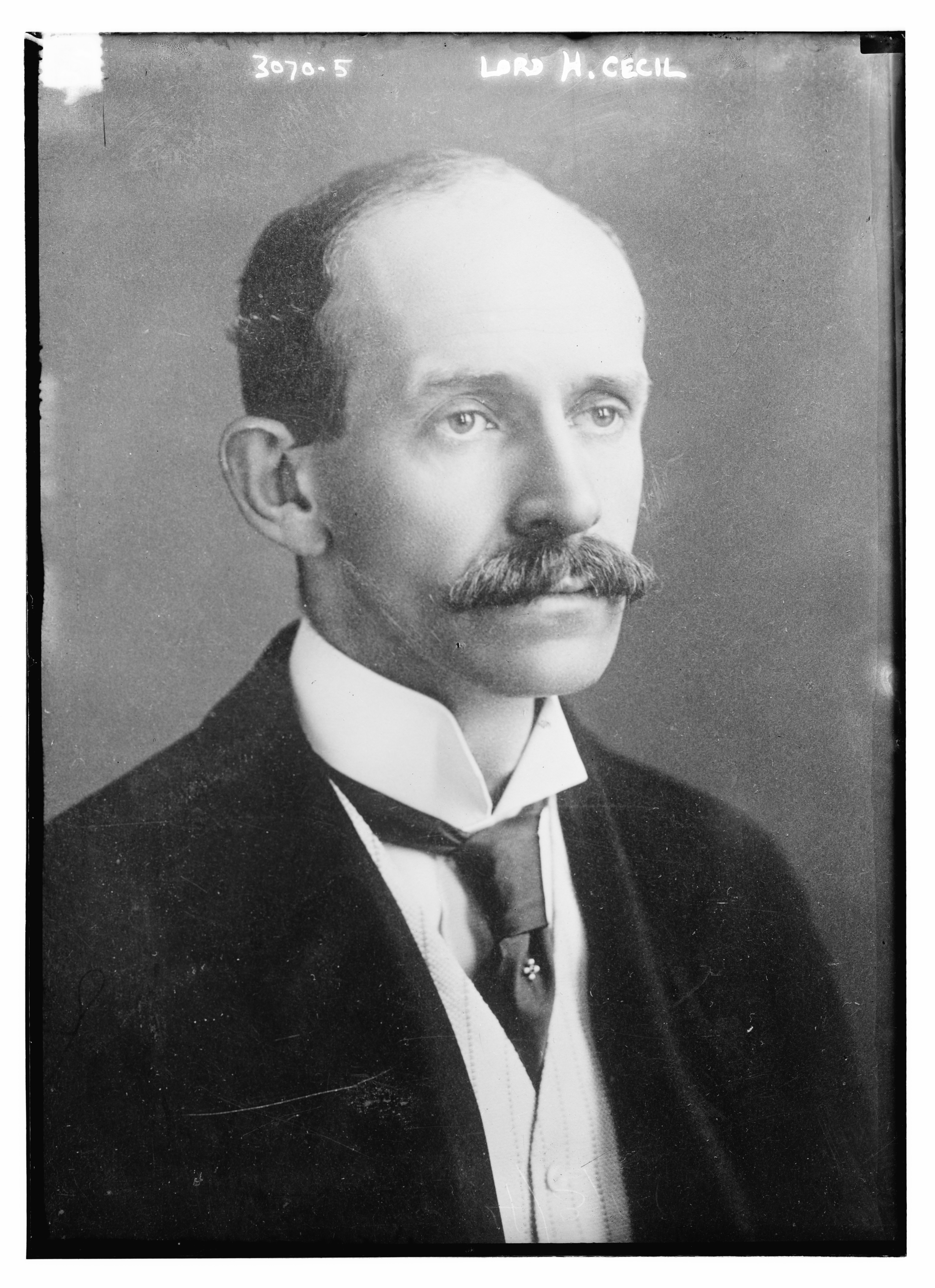
Hugh Cecil, Baron Quickwood 1869-1956
I think that controversy, particularly acrimonious controversy, is one of the privileges of a civilized life.
06 Aug 2019

Benjamin Parsons Symons, 1785-1878 (Warden, Wadham College 1831-1871)
To his younger colleagues in the Senior Common Room:
“You don’t drink as much as your grandfathers spilled.â€
/div>

Feeds
|