“A gentleman will be wearing tweeds weathered to the same consistency as the suit of armour his ancestor wore at Agincourt.”
The twelfth of August, known as the Glorious Twelfth, the first day of grouse hunting season was established by the Scotch Game Act of 1773.
In honor of which, and in order to keep it in print, NYM is republishing, Gerald Warner’s 11 August 2008 Telegraph essay, “Better to kill a fellow gun than wing a beater.”
This week sees a significant date in the British sporting calendar — and it has nothing to do with the Olympics. The Twelfth will inaugurate the grouse-shooting season, though it also becomes legal to take a pot at snipe and ptarmigan if that is your bag. For dedicated sportsmen, the driven grouse, flying high, is the quarry of choice.
Grouse shooting is still conducted on some scale, despite the problems that have afflicted it in recent years. There are 746 upland properties in Britain, covering nine million acres, that shoot grouse and 459 of them are grouse moors. The sport supports the employment of 700 grouse keepers and represents 12 per cent of total United Kingdom shooting provision, which contributes £1.6 billion to the economy.
So we are talking about a significant economic activity. That, however, is not the atmosphere on the moors, among the participants in a sport that, second only to hunting, is the essence of Britain (one feels compelled to eschew Gordon Brown’s horrid, synthetic neologism “Britishnessâ€). The heather is in bloom and there is a feeling of keen anticipation. Of course, the shooting will actually be better in a month’s time, when the birds have been fully nourished and matured, but the Twelfth has a ritual significance that cannot be gainsaid.
This is still rather a smart sport: even the grouse has a double-barrelled name: Lagopus lagopus scoticus. There is a correspondingly acute awareness of social nuances among the guns themselves. A novice kitted out in brand-new knickerbockers and deerstalker might as well wear one of those conference badges saying “Hedge fund managerâ€. A gentleman will be wearing tweeds weathered to the same consistency as the suit of armour his ancestor wore at Agincourt.
If he has been obliged to replace his Barbour since last season, he may take the precaution of driving his tractor over it several times. Nor should the olfactory sense be neglected: if you cannot out-stink the wet gun-dogs, your bona fides may be suspect. It should be noted, too, that protocol dictates that shooting another gun dead is an unfortunate accident; winging a beater or, worse, a keeper is unforgivable.
It is not necessarily ill-bred to shoot a human quarry: some of our best-born sportsmen had form. The Duke of Wellington was more lethal on the moor than on the battlefield. While visiting Lord Granville in 1823, he accidentally shot him in the face. When shooting at Lady Shelley’s, he hit one of her tenants who was hanging out her washing. “My lady, I’ve been hit!†moaned the victim. To which Lady Shelley replied: “You have endured a great honour today, Mary — you have the distinction of being shot by the Duke of Wellington.†More recently, Willie Whitelaw notoriously winged a keeper and simultaneously shot an old friend in the buttocks, after which he courteously gave up shooting.
Shooting, like hunting, has its distinctive humour and literature, including the cartoons of Mark Huskinson and books such as Douglas Sutherland’s The English Gentleman’s Good Shooting Guide. The classic works of fiction are surely JK Stanford’s chronicles of that veteran sporting gun Colonel the Hon George Hysteron-Proteron, known to fellow members of his club as “The Old Grouse-Cockâ€, whose game book ran to 20 volumes after he had shot “about 200,000 headâ€.
Such prolific slaughter would be condemned today. A common complaint is that roaring boys from the City are ruining shooting with their vulgar drive for extravagantly big bags. Over-shooting may be frowned on, but historically there are precedents that are far from plebeian. By the time the 2nd Earl of Malmesbury died in 1841, he had killed 10,744 partridges, 8,862 pheasants, 4,694 snipe and 1,080 woodcock — but no grouse: in Georgian times, it was wall-to-wall partridge. In accomplishing this record, he had fired more than four tons of cartridges.
In the succeeding generations the 6th Lord Walsingham shot 1,070 grouse in one day on Blubberhouse Moor in Yorkshire in 1888. He fired 1,510 cartridges during 20 drives and twice killed three birds with a single shot. In the following January, he shot the most varied bag ever recorded: 191 kills of 19 different species, ranging from 65 coots to a rat and a pike shot in shallow water. The seal of royal approval was given to large bags when George V downed more than 1,000 pheasants in one day in 1913.
The scale of events on Tuesday will be much more modest. Ticks, parasitic worms, floods and raptors have taken a heavy toll of the grouse. In Scotland, long regarded as the doyen of upland game terrain but plagued with problems, this season is predicted to be slightly better than last, but it is very patchy. Grouse stocks are reported to be up by somewhere between 20 per cent and 50 per cent in the Lammermuirs, but further north the ticks have done a lot of damage.
Yet the devotees will have their sport, rewarded for all their efforts by that heart-quickening moment when the sky first fills with the quarry. It is the timeless experience that, years ago, caused the Duke of Sutherland’s loader to exclaim excitedly: “Grace, Your Grouse!â€
A more modern complement to the outdoor sport is the competition among restaurants to be the first to serve grouse on August 12. In 1997, this reached a new pitch of extravagance when the first birds shot on a Scottish moor were rushed to Heathrow and transported on Concorde to New York where, thanks to supersonic flight and the five-hour time difference, they were served to diners at the Restaurant Daniel the same day. A similar extravagance featured a courier parachuting into the grounds of a gourmet hotel to deliver grouse.
The Twelfth is a day for extravagance, nostalgia and enjoyment. Here’s to good sport for now, and the perpetuation of a great British rural tradition.
Andrea Widburg puts the Kamala Harris choice into its correct perspective.
Biden’s choice of Kamala Harris to be his running mate shows the shallowness of the Democrats’ talent pool. Biden handicapped himself by explicitly pledging to ignore men and then implicitly bowing to the demand that his female choice be black. However, it’s still somewhat shocking that, out of all the black, female, Democrat politicians in America, the best he could do was Kamala.
What’s most striking about Kamala is that, like Barack Obama, she has nothing in common with the American black experience. Despite her slamming the race card on the table, the only thing she shares with the generic “black vote” is skin color.
Kamala did not come from a family that has traveled through generations of the American black experience. There’s no history of Southern slavery, no Reconstruction, and no being part of the endless variety of post-Reconstruction stories. Some blacks struggled through the Jim Crow South, some reveled in the Harlem Renaissance, some roped cows in the Wild West, some were part of the single biggest American migration when they moved to the upper Midwest, some embraced the middle class, and some got sucked into the undertow of the underclass. Each is an American story.
Kamala’s bio, by contrast, brings her closer to me: like me, she’s a first-generation immigrant who is the child of very educated parents (although her upbringing was more affluent than mine). Her mother is a high-caste East Indian breast cancer scientist, while her father is a Jamaican-born economist who is an emeritus professor at Stanford. Like me, Kamala grew up in liberal enclaves that were anything but racist (although Kamala also spent many years growing up outside the U.S. in Montreal).
Other than that, the only differences are that her skin is dark and she’s a leftist, while my skin is light and I’m conservative. And I never slept my way to the middle the way she did. But other than that…
Book contracts routinely include a “failure to perform†clause. Contracts that come with a reported $65 million advance, such as the one signed by Barack and Michelle Obama in February 2017 with Penguin Random House (PRH), will inevitably include such a clause.
Among the most common of such failures is the failure to complete a contracted work by an agreed-upon deadline. PRH is staring down one such failure right now. At the time the Obama deal was made in early 2017, insiders were telling Publishers Weekly that books by both Michelle and Barack would be released in fall 2018.
Michelle’s book did great, although Insanity Wrap believes there might have been some sales shenanigans as is sometimes the case with Democrat-penned political biographies.
That aside, here we are nearly two years after Barack’s deadline, and the publisher still has nothing to publish:
“The delay is wreaking havoc with print scheduling and of course budget planning,†one publishing insider told me. “The enormous advance is starting to ‘raise’ concerns within the publisher. While Michelle’s book performed well, Obama needs to deliver the book and sales to make the overall deal worthwhile.”
Back in the early ’90s, Obama took a $125,000 advance for a book on race and voting rights he never finished, although he did manage to hand in “bloated, yet incomplete drafts.†He also never repaid the advance, claiming he had too much student debt.
Some of the pages Obama did turn in, he wrote on a third-party’s dime:
He also did some writing at the offices of his new employer, Davis, Miner, Barnhill & Galland, the town’s leading civil rights firm. Some of his new colleagues were reportedly less than thrilled to see their young associate, feet up on his desk, doodling on his book on company time. The named partners, however, indulged him.
Insanity Wrap is impressed: Obama managed to get two organizations to pay him for a book he never wrote.
Pennsylvanians all tend to be addicted to the high quality pastry products of Philadelphia’s Tastycake Baking Company. Tastycake pies are, in particular, renowned for their long keeping and their role as the perfect universal iron ration. You can eat them for breakfast, lunch, or dinner.
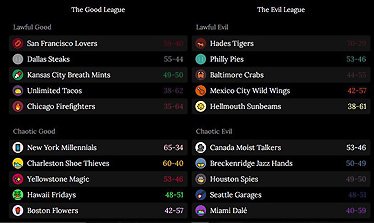
Now, what do you know? the Inquirer reports that Tastycake Pies are the mascot of a blaseball team.
While pro sports are getting back underway (Go Flyers!), Philadelphia already has a team that’s won two championships this year — and they did it with a three-headed dog for a catcher, a third baseman who’s actually seven gnomes in a single uniform, and a starting pitcher who “was cloned from a Cretaceous Period trombone preserved in amber found in a Peruvian mine.â€
The Pies — who play for their “flans†in Tastykake Stadium (aka “The Ovenâ€) under the direction of Coach Hoagie Schuylkill — are the first back-to-back champions of Internet League Blaseball, which is a weeks-old “absurdist, player-driven, corruptible, online game of baseball,†according to creators Sam Rosenthal, Joel Clark, and Stephen Bell of The Game Band, a Los Angeles-based video game studio. The team answered questions via email from The Inquirer.
Games among the 20 teams in the league, like the Canada Moist Talkers and the Breckenridge Jazz Hands, are simulated on the hour every hour by a program that writes out every play as it happens on a game log on the score board (â€Kennedy Cena hits a Single!â€).
Each regular season starts on Monday and ends Friday, with the postseason on Saturday. The Pies won the first two seasons, making them not only the first team to win Blaseball but also the first team to win back-to-back championships. But last season (i.e., last week) the Pies just couldn’t slice it and they were beaten out in the semifinals by the Hades Tigers.
In a Dungeons & Dragons-like twist to the game, it’s the Blaseball fans who choose a team to support and then create the lore surrounding that team and its players using Discord (a group-chatting platform), Blaseball Wikipedia fan pages, and social media.
“The key difference between Blaseball and baseball is player participation. Gambling is allowed and encouraged. Players will earn and lose virtual Blaseball currency by placing bets on games, and they’ll cash in earnings to make changes to the league,†Rosenthal said. “The teams, the players on the team, the rosters, and even the rules of the game can be changed by the community.â€
Forbes has a report informing us that someone took a long and detailed look at the largest power plant in the United States with deliberation and undoubted malign intent.
Documents gained under the Freedom of Information Act show how a number of small drones flew around a restricted area at Palo Verde Nuclear Power Plant on two successive nights last September. Security forces watched, but were apparently helpless to act as the drones carried out their incursions before disappearing into the night. Details of the event gives some clues as to just what they were doing, but who sent them remains a mystery.
Details of the events were obtained from the Nuclear Regulatory Commission by Douglas D. Johnson on behalf of the Scientific Coalition for UAP Studies (SCU) using the Freedom of Information Act (FOIA). The SCU’s main interest is in anomalous aerospace phenomena, what other people term UFOs. In this case though the flying objects were easily identifiable as drones, although their exact mission and origin are unknown. Johnson passed the information to The War Zone who give a detailed account.
Palo Verde Nuclear Power Plant is the largest in the U.S., producing over three gigawatts, 35% of Arizona’s total power capacity. It supplies electricity to Phoenix and Tucson, as well as San Diego and Los Angeles. It is a critical piece of strategic infrastructure; during the 2003 Iraq War, National Guard troops were deployed to Palo Verde to defend against a possible terrorist threat. In normal times, as with other nuclear installations, it is protected by armed security guards.
ADVERTISING
The armed guards, gates, fences and barriers were useless on the night of September 29th. According to the official report:
“Officer noticed several drones (5 or 6) flying over the site. The drones are circling the 3 unit site inside and outside the Protected Area. The drones have flashing red and white rights [sic] and are estimated to be 200 to 300 hundred [sic] feet above the site. It was reported the drones had spotlights on while approaching the site that they turned off when they entered the Security Owner Controlled Area. Drones were first noticed at 20:50 MST and are still over the site as of 21:47 MST. Security Posture was normal, which was changed to elevated when the drones were noticed.â€
The drones departed at 22:30, eighty minutes after they were first spotted. The security officers estimated that they were over two feet in diameter. This indicates that they were not simply consumer drones like the popular DJI Phantom, which have a flight endurance of about half an hour and is about a foot across, but something larger and more capable. The Lockheed Martin Indago, a military-grade quadcopter recently sold to the Swiss Army, has a flight endurance of about seventy minutes and is more than two feet across. At several thousand dollars apiece minimum, these are far less expendable than consumer drones costing a few hundred. All of which suggests this was not just a prank.
The next night events were repeated:
“Four (4) drones were observed flying beginning at 20:51 MST and continuing through the time of this report (21:13 MST). As occurred last night, the drones are flying in, through, and around the owner-controlled area, the security owner-controlled area, and the protected area. Also, as last night, the drones are described as large with red and white flashing lights.â€
Local police from Maricopa County were dispatched to find the drone operators, but with no success. The site is reportedly due to receive drone detection gear, but not counter-drone jammers or other defensive equipment that might stop such incursions.
Despite this incident, two months later the NRC decided not to require drone defenses at nuclear plants, asserting that small drones could not damage a reactor or steal nuclear material. It is highly likely that such sites are still vulnerable to drone overflights.
Chu Teh-Chun or Zhu Dequn (24 October 1920 – 26 March 2014) was a Chinese-French abstract painter acclaimed for his pioneering style integrating traditional Chinese painting techniques with Western abstract art. …
Chu Teh-Chun was born in 1920 in the town of Baitu in Xiao County, which was then in Jiangsu province but now part of Anhui province. In 1935 he entered the National School of Fine Arts (now China Academy of Art) in Hangzhou, Zhejiang, graduating in 1941. At the school he studied Chinese painting under Pan Tianshou and Western art under Fang Ganmin and Wu Dayu, who were prominent Chinese artists trained in France. …
The Daily Beast reports on academic activists rallying to the defense of the latest recognized marginalized minority.
Michael Eisen, editor of eLife—a well-regarded open access scientific journal for the biomedical and life sciences—made a joke about a humble roundworm, thereby cracking open the seventh seal and ushering forth… wormageddon. …
Most people took the joke in stride, or used it as an opportunity to spread the good word about nematodes. But the worm gang runs deep. Multiple researchers were not amused by Dr. Eisen’s joke, and their responses spiraled off in increasingly disproportionate directions. Some of these were scoldings about the propriety of using the word “fuck†in a public context, and whether “Academic Twitter†upholds appropriate levels of professionalism by accepting “frat boy†humor. One team went so far as to publicly reconsider submitting a paper to eLife. Others complained that the editor of a journal was publicly disparaging a study species. …
[A] day after Eisen had opened the can of titular worms, and amid the flood of C. elegans jokes washing around Twitter—things had escalated in a bizarre direction. As mystified observers raised the question over whether C. elegans researchers were taking the whole thing a bit seriously, a small handful of researchers responded by arguing that jokes about worms were in some way equivalent to jokes about women and people of color. …
By far the most prolific poster in this vein was Ahna Skop, associate professor of genetics at the University of Wisconsin-Madison and previous recipient of a Diversity, Equality and Inclusion-based award in 2018. Dr. Skop—who did not respond to a request for comment by The Daily Beast—argued extensively that making jokes about worms was merely the tip of the iceberg when it came to making jokes about marginalized identities, or an example of a ‘bystander effect’, a psychological theory arguing that individuals are less likely to offer help to a victim in a crowd. (For is it not said: First they came for the worm people, and I said nothing, as I was not a worm person?)
In the resulting threads, Dr. Skop—who identifies as “part Eastern Band Cherokee†and “disabled with EDSâ€â€”and others consistently failed to publicly respond to Black scientists like herpetologist Chelsea Connor, who tried to point out that this was a ridiculous conflation. In a private communication Connor shared with The Daily Beast, Skop doubled down, arguing that as she had previously been harmed by entrenched sexism, her concerns regarding the worm joke were justified.