Yaroslav Trofimov, in the Wall Street Journal, explains that Biden withdrew the air support too soon that is essential for the supply and defense of the US-style Afghan military we created and trained.
You can’t defeat superior numbers of less effectively armed troops unless you can keep the food, water, ammunition, and medical supplies coming in, and unless you can clobber human wave attack with air support. Take that support away and you lose.
This spectacular failure stemmed from built-in flaws of the Afghan military compounded by strategic blundering of the government of Afghan President Ashraf Ghani. The Taliban, meanwhile, took advantage of the U.S.-sponsored peace talks to deceive Kabul about their intentions as they prepared and executed a lighting offensive.
The Afghan army fighting alongside American troops was molded to match the way the Americans operate. The U.S. military, the world’s most advanced, relies heavily on combining ground operations with air power, using aircraft to resupply outposts, strike targets, ferry the wounded, and collect reconnaissance and intelligence.
In the wake of President Biden’s withdrawal decision, the U.S. pulled its air support, intelligence and contractors servicing Afghanistan’s planes and helicopters. That meant the Afghan military simply couldn’t operate anymore. The same happened with another failed American effort, the South Vietnamese army in the 1970s, said retired Lt. Gen. Daniel Bolger, who commanded the U.S.-led coalition’s mission to train Afghan forces in 2011-2013.
“There is always a tendency to use the model you know, which is your own model,” said Gen. Bolger, who now teaches history at North Carolina State University. “When you build an army like that, and it’s meant to be a partner with a sophisticated force like the Americans, you can’t pull the Americans out all of a sudden, because then they lose the day-to-day assistance that they need,” he said.
The lure is a Whopper Plopper and the Creature From the Black Lagoon is a Wels Catfish (Siluris glanis). These things can grow up to 5 m. (16 ft) and a maximum weight of over 300 kg. (660 lb).
Unlike the Germans with their ponderous celebration of Goethe and Schiller, or the French with their adulation of Molière or Victor Hugo, the English celebrate their favourite authors with a lighter touch. Societies dedicated to the lovers of the works of a given author are common, but are generally private, amateur and low-key. Groups of amiable middle-aged to elderly bibliophiles with no particular academic pretension but a love for, and a generally encyclopaedic knowledge of, the writing of a particular person get together to enjoy convivial company and, as often as not, a posh dinner in London or Oxford once a year. Organisations such as the Sherlock Holmes Society or the Trollope Society publish slightly recherché background papers, such as Why Holmes Went German at St James’s Hall: The Reason Behind His Musical Taste, or From Winchester to Barsetshire: Anthony Trollope’s links with Hampshire. Addresses at formal events organised by these clubs are likely to be witty and reasonably erudite, but not over-intellectual or over-taxing on the audience.
What you won’t get from any of these amateur gatherings is anything like the high-pressure, jargon-ridden writing one sees in academic journals, or the deadly serious arguments, incomprehensible to non-initiates, that one increasingly hears in university lecture halls. They are emphatically societies, not research institutes.
Or at least most of them are. In the last year something very curious seems to have overtaken one of them, the Tolkien Society, founded in 1969 to celebrate the life and work of the author of the Lord of The Rings. Until 2020 the society was what you might expect: talks on music and Tolkien’s landscape, naming astronomical bodies after Tolkien place-names, the elvish language, and so on.
This year, by contrast, it has gone full-on woke, as witness the programme for its 2021 Annual Seminar, beginning on Saturday week. A straw in the wind came with the announcement of the theme, which read more than anything else like a formal call for papers from some new university anxious to make its mark on modernity with a trail-blazing conference. Contributions were demanded on Tolkien’s approach to colonialism and neo-colonialism, representation of race, gender, sexuality and the rest in Tolkien, and so on.
This call was answered with appropriate gusto. The programme for the event is too large to reproduce here: but we can give a flavour of it. It kicks off with Gondor in Transition: A Brief Introduction to Transgender Realities in The Lord of the Rings. We then have delights such as “The Burnt Hand Teaches Most About Fire”: Applying Traumatic Stress and Ecological Frameworks to Narratives of Displacement and Resettlement Across Cultures in Tolkien’s Middle-earth; and The Lossoth: Indigeneity, Identity, and Antiracism. The second day continues with more in the same vein: “Something Mighty Queer”: Destabilizing Cishetero Amatonormativity in the Works of Tolkien; Questions of Caste in The Lord of the Rings and its Multiple Chinese Translations; and something which should puzzle anyone, Hidden Visions: Iconographies of Alterity in Soviet Bloc Illustrations for The Lord of the Rings.
This menu, more appropriate to a series of dreary staff seminars in a second-rate polytechnic than an event set up for a club of book-lovers, has already attracted deserved derision.
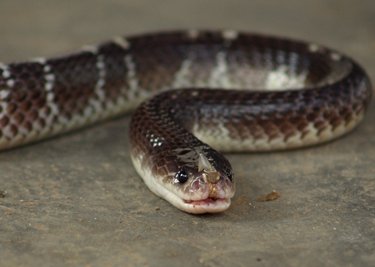
A 65-year-old drunk man chewed on a snake after it bit him in Bihar’s Nalanda district.
The man was identified as Rama Mahto, a resident of Madhodeh village under Chandi police station.
The incident took place on Sunday and he died on Monday morning.
The family of the deceased told police that Rama Mahto, who was under the influence of liquor, was sitting in front of his house when a baby snake (Karait) bit him on his leg.
Mahto managed to capture the snake and chewed it in a bid to to take revenge.
“While chewing the baby snake, Mahato was bitten more than 10 times on his face.
“After that he pulled out the snake and put it on a nearby tree. We asked him to go to the hospital for treatment but he refused and went to sleep.
“Mahto claimed that it was a baby and it would not be poisonous. He was found dead on Monday morning, ,” said Bhuson Prasad, president of Madhodeh Panchayat Samit.
The boys from Top Gear get away with taking hypercars through little tiny streets in Italian cities for laughs, but I suspect they measure first. This guy did not.
This video is an example of being too close to a bull moose and how quickly they can decide to charge on you.
It is from Clear Creek County. The individual just by chance came upon the bull walking along a willow bottom heading towards a lake. pic.twitter.com/Z2usuHpPit