Dream of the Three Kings, from ‘Salzburg Missal’, Regensburg ca. 1478-1489 (München, Bayerische Staatsbibliothek, Clm 15708 I, fol. 63r).
—————————

Dream of Three Wise Men. Capital from Autun cathedral. Sculptor: Gislebertus, circa 1120-1135 A.D.
|
06 Jan 2022
Dream of the Three KingsEpiphany, Illuminated Manuscripts, Medieval Art
—————————
06 Jan 2022
Epiphany or Twelfth NightEpiphany, History, Traditions, Twelfth Night
(From Robert Chambers, A Book of Days, 1869) Born: Richard II, King of England, 1366; Joan d’Arc, 1402; Peter Metastasio, poet, 1698; Benjamin Franklin, philosopher, Boston, U.S., 1706; David Dale, philanthropist, 1739; George Thomas Doo, engraver, 1800. Feast Day: St. Melanius, bishop, 490. St. Nilammon, Hermit. St. Peter, abbot of St. Austin’s, Canterbury, 608. TWELFTH-DAY This day, called Twelfth-Day, as being in that number after Christmas, and Epiphany from the Greek ‘‘ΕπιΦáνєια”, signifying appearance, is a festival of the Church, in commemoration of the Manifestation of Christ to the Gentiles; more expressly to the three Magi, or Wise Men of the East, who came, led by a star, to worship him immediately after his birth. (Matt. ii. 1-12.) The Epiphany appears to have been first observed as a separate feast in the year 813. Pope Julius I is, however, reputed to have taught the Church to distinguish the Feasts of the Nativity and Epiphany, so early as about the middle of the fourth century. The primitive Christians celebrated the Feast of the Nativity for twelve days, observing the first and last with great solemnity; and both of these days were denominated Epiphany, the first the greater Epiphany, from our Lord having on that day become Incarnate, or made his appearance in “the flesh;” the latter, the lesser Epiphany, from the three-fold manifestation of His Godhead—the first, by the appearance of the blazing star which conducted Melchior, Jasper, and Balthuzar, the three Magi, or wise men, commonly styled the three Kings of Cologne, out of the East, to worship the Messiah, and to offer him presents of “Gold, Frankincense, and Myrrh”—Melchior the Gold, in testimony of his royalty as the promised King of the Jews; Jasper the Frankincense, in token of his Divinity; and Balthuzar the Myrrh, in allusion to the sorrows which, in the humiliating condition of a man, our Redeemer vouchsafed to take upon him: the second, of the descent of the Holy Ghost in the form of a Dove, at the Baptism: and the third, of the first miracle of our Lord turning water into wine at the marriage in Cana. All of which three manifestations of the Divine nature happened on the same day, though not in the same year.
04 Jan 2022
And Some of Us thought Gen X SuckedDecadence, Der Untergang des Abenlandes, Effeminate Males, Gen Z
The Daily Mail reports happily on our handbaskets speedy progress toward Hell.
RTWT and then go out and throw up in the street. 02 Jan 2022
What If Gun Companies Were Big Chain Restaurants?Amusement, Guns, Restaurants
HT: Karen L. Myers. 01 Jan 2022
Choki: Sunrise at New YearEishosai Choki, Japanese Art, New Years Day, Ukiyoe
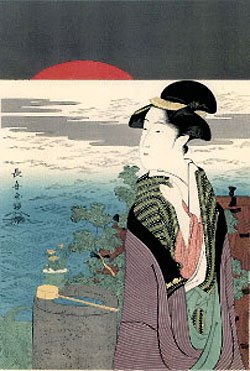
A bijin (beautiful woman), presumably a courtesan, has risen early to greet the rising sun of the New Year at the waterfront at Fukagawa in Edo. The woman is adjusting the top of her kimono to protect against the chill of the early morning. In the lower-left is a blossoming fukujuso plant, emblematic of the New Year. 31 Dec 2021
Remembering Harry ReidHarry Reid, Obituaries
A FB Friend’s analysis of career politician HARRY REID’s wealth: “He went to into politics at a young age, did not come from wealth, worked for the government his entire working life and amassed a 10-20 million net worth on government salary. To put this in perspective Reid’s salary as a Senator ranged from 40-160k per year. Which means he netted about 30-110k before he spent a dollar on food, shelter, and transportation. To amass 10 million in wealth on that salary is impossible without corruption!” ——————- “Show me a man that gets rich by being a politician, and I’ll show you a crook.” — Harry Truman. ——————- Lawrence Person tries writing an obituary:
31 Dec 2021
New Year’s Eve or HogmanayHistory, Hogmanay, New Year's Eve, Robert Burns, Traditions
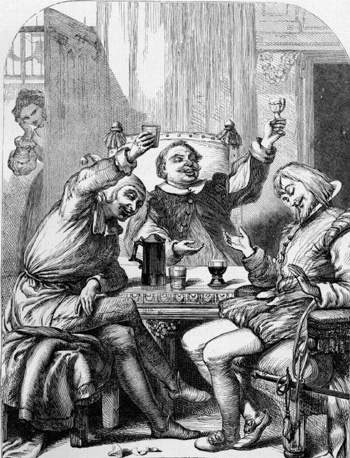
From Robert Chambers, A Book of Days, 1869: NEW YEAR’S EVE, OR HOGMANAY As a general statement, it may be asserted that neither the last evening of the old year nor the first day of the new one is much, observed in England as an occasion of festivity. In some parts of the country, indeed, and more especially in the northern counties, various social merry-makings take place; but for the most part, the great annual holiday-time is already past. Christmas Eve, Christmas-day, and St. Stephen’s or Boxing Day have absorbed almost entirely the tendencies and opportunities of the community at large in the direction of joviality and relaxation. Business and the ordinary routine of daily life have again been resumed; or, to apply to English habits the words of an old Scottish rhyme still current, but evidently belonging to the old times, anterior to the Reformation, when Christmas was the great popular festival:
And we hae feasted weel; Sae Jock maun to his flail again, And Jenny to her wheel.’ Whilst thus the inhabitants of South Britain are settling down again quietly to work after the festivities of the Christmas season, their fellow-subjects in the northern division of the island are only commencing their annual saturnalia, which, till recently, bore, in the license and boisterous merriment which used to prevail, a most unmistakable resemblance to its ancient pagan namesake. The epithet of the Daft [mad] Days, applied to the season of the New Year in Scotland, indicates very expressively the uproarious joviality which characterized the period in question. This exuberance of joyousness—which, it must be admitted, sometimes led to great excesses—has now much declined, but New-year’s Eve and New-year’s Day constitute still the great national holiday in Scotland. Under the 1st of January, we have already detailed the various revelries by which the New Year used to be ushered in, in Scotland. It now becomes our province to notice those ceremonies and customs which are appropriate to the last day of the year, or, as it is styled in Scotland, Hogmanay. This last term has puzzled antiquaries even more than the word Yule, already adverted to; and what is of still greater consequence, has never yet received a perfectly satisfactory explanation. Some suppose it to be derived from two Greek words, άιαμηνη· (the holy moon or month), and in reference to this theory it may be observed, that, in the north of England, the term used is Hagmenu, which does not seem, however, to be confined to the 31st of December, but denotes generally the period immediately preceding the New Year. Another hypothesis combines the word with another sung along with it in chorus, and asserts ‘Hogmanay, trollolay!’ to be a corruption of ‘Homma est né’”Trois Rois lá¡’ (‘A Man is born ‘ — ‘ Three Kings are there ‘), an allusion to the birth of our Saviour, and the visit to Bethlehem of the Wise Men, who were known in medieval times as the ‘Three Kings.’ But two additional conjectures seem much more plausible, and the reader may select for himself what he considers the most probable. One of these is, that the term under notice is derived from Hoggu-nott, Hogenat, or Hogg-night, the ancient Scandinavian name for the night preceding the feast of Yule, and so called in reference to the animals slaughtered on the occasion for sacrificial and festal purpose word hogg signifying to kill. The other derivation of Hogmanay is from ‘Au gui menez’ (‘To the mistletoe go’), or ”Au gui l’an neuf’ ‘ (‘To the mistletoe this New Year ‘), an allusion to the ancient Druidical ceremony of gathering that plant. In the patois of Touraine, in France, the word used is Aguilanneu; in Lower Normandy, and in Guernsey, poor persons and children used to solicit a contribution under the title of Hoguinanno or 0guinano; whilst in Spain the term, Aguinaldo, is employed to denote the presents made at the season of Christmas. In country places in Scotland, and also in the more retired and primitive towns, it is still customary on the morning of the last day of the year, or Hogmanay, for the children of the poorer class of people to get themselves swaddled in a great sheet, doubled up in front, so as to form a vast pocket, and then to go along the streets in little bands, calling at the doors of the wealthier classes for an expected dole of oaten-bread. Each child gets one quadrant section of oat-cake (some-times, in the case of particular favourites, improved by an addition of cheese), and this is called their hogmanay. In expectation of the large demands thus made upon them, the housewives busy themselves for several days beforehand in preparing a suitable quantity of cakes. The children on coming to the door cry, ‘Hogmanay!’ which is in itself a sufficient announcement of their demands; but there are other exclamations which either are or might be used for the same purpose. One of these is: ‘Hogmanay, Trollolay, Give us of your white bread, and none of your gray.’ And another favourite rhyme is:
And dinna think that we are beggars; For we are bairns come out to play, Get up and gie’s our hogmanay!’ The following is of a moralising character, though a good deal of a truism:
And deal your bread to them that ‘s here; For the time will come when ye’ll be dead, And then ye’ll neither need ale nor bread.’ The most favourite of all, however, is more to the point than any of the foregoing :
Gie’s my cakes, and let me rin!’ It is no unpleasing scene, during the forenoon, to see the children going laden home, each with his large apron bellying out before him, stuffed full of cakes, and perhaps scarcely able to waddle under the load. Such a mass of oaten alms is no inconsiderable addition to the comfort of the poor man’s household, and enables him to enjoy the New-year season as much as his richer neighbours. In the primitive parish of Deerness, in Orkney, it was customary, in the beginning of the present century, for old and young of the common class of people to assemble in a great band upon the evening of the last day of the year, and commence a round of visits throughout the district. At every house they knocked at the door, and on being admitted, commenced singing, to a tune of its own, a song appropriate to the occasion. The following is what may be termed a restored version of this chant, the imagination having been called on to make up in several of the lines what was deficient in memory. The ‘Queen Mary’ alluded to is evidently the Virgin:
We’re a’ here Queen Mary’s men; And we ‘re come here to crave our right, And that’s before our Lady. The very first thing which we do crave, Goodwife, gae to your butter-ark, Ten mark, ten pund, Gang to your awmrie, gin ye please, And syne bring here a sharping-stane, Ye’ll cut the cheese, and eke the round, Gae fill the three-pint cog o’ ale, We houp your ale is stark and stout, Ye ken the weather’s snow and sleet, Our shoon’s made o’ mare’s skin, The inner-door being opened, a tremendous rush was made ben the house. The inmates furnished a long table with all sorts of homely fare, and a hearty feast took place, followed by copious libations of ale, charged with all sorts of good-wishes. The party would then proceed to the next house, where a similar scene would be enacted. How they contrived to take so many suppers in one evening, heaven knows ! No slight could be more keenly felt by a Deerness farmer than to have his house passed over unvisited by the New-year singers. The doings of the guisers or guizards (that is, masquers or mummers) form a conspicuous feature in the New-year proceedings throughout Scotland. The favourite night for this exhibition is Hogmanay, though the evenings of Christmas, New-year’s Day, and Handsel Monday, enjoy like-wise a privilege in this respect. Such of the boys as can lay any claim to the possession of a voice have, for weeks before, been poring over the collection of ‘excellent new songs,’ which lies like a bunch of rags in the window-sill; and being now able to screech up ‘Barbara Allan,’ or the ‘Wee cot-house and the wee kail-yardie,’ they determine upon enacting the part of guisers. For this purpose they don old shirts belonging to their fathers, and mount mitre-shaped casques of brown paper, possibly borrowed from the Abbot of Unreason; attached to this is a sheet of the same paper, which, falling down in front, covers and conceals the whole face, except where holes are made to let through the point of the nose, and afford sight to the eyes and breath to the mouth. Each vocal guiser is, like a knight of old, attended by a sort of humble squire, who assumes the habiliments of a girl, ‘with an old-woman’s cap and a broomstick, and is styled ‘Bessie: Bessie is equal in no respect, except that she shares fairly in the proceeds of the enterprise. She goes before her principal, opens all the doors at which he pleases to exert his singing powers; and busies herself, during the time of the song, in sweeping the floor with her broomstick, or in playing any other antics that she thinks may amuse the indwellers. The common reward of this entertainment is a halfpenny, but many churlish persons fall upon the unfortunate guisers, and beat them out of the house. Let such persons, however, keep a good watch upon their cabbage-gardens next Halloween! The more important doings of the guisers are of a theatrical character. There is one rude and grotesque drama which they are accustomed to perform on each of the four above-mentioned nights; and which, in various fragments or versions, exists in every part of Lowland Scotland. The performers, who are never less than three, but sometimes as many as six, having dressed themselves, proceed in a band from house to house, generally contenting themselves with the kitchen for an arena; whither, in mansions presided over by the spirit of good-humour, the whole family will resort to witness the spectacle. Sir Walter Scott, who delighted to keep up old customs, and could condescend to simple things without losing genuine dignity, invariably had a set of guisers to perform this play before his family both at Ashestiel and Abbotsford. The drama in question bears a close resemblance, with sundry modifications, to that performed by the mummers in various parts of England, and of which we have already given a specimen. Such are the leading features of the Hogmanay festivities in Scotland. A similar custom to that above detailed of children going about from house to house, singing the Hagmena chorus, and obtaining a dole of bread or cakes, prevails in Yorkshire and the north of England; but, as we have already mentioned, the last day of the year is not in the latter country, for the most part, invested with much peculiar distinction. ——————————– Marred by an annoying advertisement, but still moving, the Scottish Parliament (with Sean Connery present) sings Auld Lang Syne. 29 Dec 2021
Guardian Cancels Person-of-the-Year Poll Because J.K. Rowling Was WinningGuardian, J.K. Rowling, Media Dishonesty, Transgenderism
29 Dec 2021
Of Course!Crime, Drive-by Shootings, Racial Politics, The Law, Washington State
Fox News (not the Babylon Bee) reports on another democrat milestone in establishing Racial Equity.
Links
News
Culture
Most Linked
Technology
Philosophy
Economics
Cuisine
Intel
Virginia
Architecture
More or Less Sound Blogs
Sound Female-Written Blogs
MilBlogs
Legal
Sporting and Natural History
Blogs From Britain
Blogs From France
Blogs From Europe
Blogs From Iraq
Blogs From Latin American
Unsound, Irrational, and Deluded
College Circle Blogs
Blogs from, or Reporting on, Belarus
Comic Strips
Blogs from Mauritius
Weather
Blogs From the Philippines
Photography Blogs
Blogs From Israel
Defies Categorization
Yale College 1970 Blogs
Racial blogs
Blogs From Russia
Blogs From Japan
Linguistics
Statistics
Shrink Blogs
Games
Macho Blogs
Security
Blog Fodder
Business
Blogs From Germany
Photo Blogs
Welcome to
NEVER YET MELTED
Another Right-Wing Web Aggregator and Purveyor of Unpopular Opinions
 David Zincavage contact: jdz@usa.net blog advertising is good for General Bullmoose and good for the USA. 


Feeds
|