
08 Dec 2023
Vivek Makes a Good Argument
Christie Spar, January 6, Vivek Ramaswamy

This is delicious. https://t.co/8zQfPioYN1
— Scott Adams (@ScottAdamsSays) December 7, 2023
06 Dec 2023
Feast of St. Nicholas
Hagiography, History, St. Nicholas, Traditions

St. Nicholas, bishop of Myra, d. 6 December 345 or 352
St. Nicholas was reportedly born in the city of Patara in Lycia in Asia Minor, heir to a wealthy family. He succeeded an uncle as bishop of Myra.
Nicholas left behind a legend of secret acts of benevolence and miracles (in Greek, he is spoken of as “Nikolaos o Thaumaturgos” — Nicholas the Wonder-Worker).
One of the saint’s prominent legends asserts that, in a time of famine, he foiled the crime of Fourth Century Sweeney Todd, an evil butcher who kidnapped and murdered three children, intending to market their remains as ham. St. Nicholas not only exposed the murder, but healed and resurrected the children intact.
Nicholas is also renowned for providing dowries for each of three daughters of an impoverished nobleman,who would otherwise have been unable to marry and who were about to be forced to prostitute themselves to live. In order to spare the sensibilities of the family, Nicholas is said to have secretly thrown a purse of gold coins into their window on each of three consecutive nights.
St. Nicholas’ covert acts of charity led to a custom of the giving of secret gifts concealed in shoes deliberately left out for their receipt on his feast day, and ultimately to the contemporary legend of Santa Claus leaving gifts in stockings on Christmas Eve.
St. Nicholas evolved into one of the most popular saints in the Church’s calendar, serving as patron of sailors, merchants, archers, thieves, prostitutes, pawnbrokers, children, and students, Greeks, Belgians, Frenchmen, Romanians, Bulgarians, Georgians, Albanians, Russians, Macedonians, Slovakians, Serbians, and Montenegrins, and all residents of Aberdeen, Amsterdam, Barranquilla, Campen, Corfu, Freiburg, Liverpool, Lorraine, Moscow, and New Amsterdam (New York).
His relics were stolen and removed to Bari to prevent capture by the Turks, and are alleged to exude a sweet-smelling oil down to the present day.
04 Dec 2023
Unhappy Zoomer Has Encountered Adult Life
Adult Life, Commuting, Millennials, Work
@brielleybelly123 im also getting sick leave me alone im emotional ok i feel 12 and im scared of not having time to live
29 Nov 2023
A Classic Jim Harrison Story
1968 World Poetry Conference, Jim Harrison, Poetry

The young Jim Harrison.
Jim Harrison’s mentor at Michigan got him hired as his assistant when he assumed the chairmanship of the English Department at Stony Brook. This led to the goat-footed young Harrison becoming coordinator of the World Poetry Conference.
The gourmand Harrison “spared no expense,” and went enormously over-budget splurging on cold lobster, serious wine, and vodka. The results were impressive to say the least.
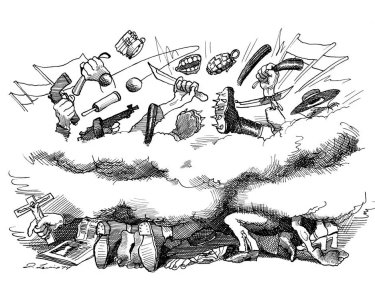
One Saturday evening in 1968, the poets battled on Long Island. Drinks spilled into the grass. Punches were flung; some landed. Chilean and French poets stood on a porch and laughed while the Americans brawled. A glass table shattered. Bloody-nosed poets staggered into the coming darkness.
Allen Ginsberg fell to his knees and prayed.
The World Poetry Conference at Stony Brook University was almost over.
Charles Simic, in 2014, remembered:
The biggest and the most illustrious gathering of poets I have ever attended took place in June of 1968 at the Stony Brook World Poetry Conference. There were 108 poets present, according to Jim Harrison, who organized it together with Louis Simpson and others. Most were American, but there was also a sizeable foreign contingent. It was the only attempt in this country, as far as I know, to bring together such a wide range of poets, young and old, from mainstream to avant-garde and those who eluded classification. What that meant for anyone attending the conference was that every poet one admired or hated was likely to be there in person. Fortunately, unless their faces were recognizable from photographs, most could keep their anonymity, since name tags, the kind one may see at vacuum cleaner salesmen’s conventions, were unthinkable at this gathering of the famous and not-so-famous. Still there were tip offs. One could usually guess from someone’s clothes and the length of hair what kind of poetry they fancied, but not always, of course. West Coast poets of all ages by and large dressed more casually than Midwestern and Eastern ones, many of whom could pass for bankers or advertising executives. There were also a few dandies in the crowd, like my friend James Tate, who wore a crumpled white linen suit, as if he had been spending his time in his fashionable haunt on the French Riviera and not Kansas City, where he came from.
The festival started amiably enough with a dinner of fresh lobster, polite introductions all around, and small talk. But as the evening progressed the manners of the participants began to deteriorate somewhat and one could see people whispering in small groups and looking suspiciously over their shoulders. Of course, there was a lot of drinking. Harrison claims he went $50,000 over the budget for food and wine, and I believe him. …
Back at Louis Simpson’s house in Stony Brook, during the farewell party on the last night of the conference, a fight broke out. People were standing in pairs or groups on the huge lawn sipping their drinks and, without any hint that something was about to happen, fists started flying. When a few tried to break it up, a punch would head in their direction and they would in turn join the melee. I stood on the porch watching in astonishment with the Chilean poet Nicanor Parra and the French poet Eugène Guillevic. They were delighted by the spectacle and assumed that this is how American poets always settled their literary quarrels; I tried to tell them that this was the first time I had seen anything like that and it scared the hell out of me, but they just laughed. Looking back, I, too, have to admit that what we saw was pretty funny.
As soon as the fight started, Allen Ginsberg went down on his knees and began chanting some Buddhist prayer for peace and harmony among all living creatures, which not only distracted those fighting, but also startled a few puzzled couples who had discreetly retreated into the bushes during the party and were now returning in a hurry with their clothes in disarray. As for what started the fight in the first place, even the ones who had bloody noses had no idea, though later that night I heard it may have been an insult to someone’s girlfriend or wife that led to a bottle of champagne being broken over their head. Whatever the reason, there was never another meeting of warring poetry tribes to ascertain whether what we witnessed was an explosion of collective animosity or a defense of an unknown woman’s honor.
Jim Harrison clearly was never intended for a career as an academic administrator.
23 Nov 2023
The Real Story of Thanksgiving
History, Thanksgiving
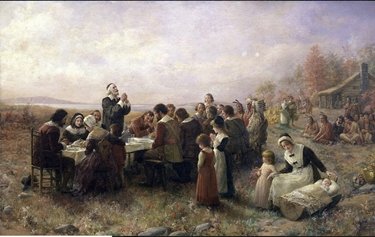
Mike Franc, at Human Events in 2005, identified the real reason for celebration at the first Thanksgiving.
Writing in his diary of the dire economic straits and self-destructive behavior that consumed his fellow Puritans shortly after their arrival, Governor William Bradford painted a picture of destitute settlers selling their clothes and bed coverings for food while others “became servants to the Indians,” cutting wood and fetching water in exchange for “a capful of corn.” The most desperate among them starved, with Bradford recounting how one settler, in gathering shellfish along the shore, “was so weak– he stuck fast in the mud and was found dead in the place.”
The colony’s leaders identified the source of their problem as a particularly vile form of what Bradford called “communism.’ Property in Plymouth Colony, he observed, was communally owned and cultivated. This system (“taking away of property and bringing [it] into a commonwealth’) bred “confusion and discontent” and “retarded much employment that would have been to [the settlers’] benefit and comfort.”
Just how did the Pilgrims solve the problem of famine? In addition to receiving help from the local Indians in farming, they decided allow the private ownership of individual plots of land.
On the brink of extermination, the Colony’s leaders changed course and allotted a parcel of land to each settler, hoping the private ownership of farmland would encourage self-sufficiency and lead to the cultivation of more corn and other foodstuffs.
As Adam Smith would have predicted, this new system worked famously. “This had very good success,” Bradford reported, ‘for it made all hands very industrious.” In fact, “much more corn was planted than otherwise would have been” and productivity increased. “Women,” for example, “went willingly into the field, and took their little ones with them to set corn.”
The famine that nearly wiped out the Pilgrims in 1623 gave way to a period of agricultural abundance that enabled the Massachusetts settlers to set down permanent roots in the New World, prosper, and play an indispensable role in the ultimate success of the American experiment.
A profoundly religious man, Bradford saw the hand of God in the Pilgrims’ economic recovery. Their success, he observed, “may well evince the vanity of that conceit–that the taking away of property– would make [men] happy and flourishing; as if they were wiser than God.’ Bradford surmised, ‘God in his wisdom saw another course fitter for them.”
The real story of Thanksgiving is the triumph of capitalism and individualism over collectivism and socialism, which is the summation of the story of America.
23 Nov 2023
The Real Meaning of Thanksgiving Via Buffy
"Buffy the Vampire Slayer", Human Sacrifice With Pie, Thanksgiving, Traditions
———————————
23 Nov 2023
A Proclamation
George Washington, History, Thanksgiving

As published in the Massachusetts Centinel, Wednesday, October 14, 1789


11 Nov 2023
Martinmas aka Armistice Day aka Veterans Day
Armistice Day, Hagiography, Martinmas, Traditions, Veterans Day

–An annual post–
WWI came to an end by an armistice arranged to occur at the eleventh hour of the eleventh day of the eleventh month of 1918. The date and time, selected at a point in history when mens’ memories ran much longer, represented a compliment to St. Martin, patron saint of soldiers, and thus a tribute to the fighting men of both sides. The feast day of St. Martin, the Martinmas, had been for centuries a major landmark in the European calendar, a date on which leases expired, rents came due; and represented, in Northern Europe, a seasonal turning point after which cold weather and snow might be normally expected.
It fell about the Martinmas-time, when the snow lay on the borders…
—Old Song.

From Robert Chambers, The Book of Days, 1869:
St. Martin, the son of a Roman military tribune, was born at Sabaria, in Hungary, about 316. From his earliest infancy, he was remarkable for mildness of disposition; yet he was obliged to become a soldier, a profession most uncongenial to his natural character. After several years’ service, he retired into solitude, from whence he was withdrawn, by being elected bishop of Tours, in the year 374.
The zeal and piety he displayed in this office were most exemplary. He converted the whole of his diocese to Christianity, overthrowing the ancient pagan temples, and erecting churches in their stead. From the great success of his pious endeavours, Martin has been styled the Apostle of the Gauls; and, being the first confessor to whom the Latin Church offered public prayers, he is distinguished as the father of that church. In remembrance of his original profession, he is also frequently denominated the Soldier Saint.
The principal legend, connected with St. Martin, forms the subject of our illustration, which represents the saint, when a soldier, dividing his cloak with a poor naked beggar, whom he found perishing with cold at the gate of Amiens. This cloak, being most miraculously preserved, long formed one of the holiest and most valued relics of France; when war was declared, it was carried before the French monarchs, as a sacred banner, and never failed to assure a certain victory. The oratory in which this cloak or cape—in French, chape—was preserved, acquired, in consequence, the name of chapelle, the person intrusted with its care being termed chapelain: and thus, according to Collin de Plancy, our English words chapel and chaplain are derived. The canons of St. Martin of Tours and St. Gratian had a lawsuit, for sixty years, about a sleeve of this cloak, each claiming it as their property. The Count Larochefoucalt, at last, put an end to the proceedings, by sacrilegiously committing the contested relic to the flames.
Another legend of St. Martin is connected with one of those literary curiosities termed a palindrome. Martin, having occasion to visit Rome, set out to perform the journey thither on foot. Satan, meeting him on the way, taunted the holy man for not using a conveyance more suitable to a bishop. In an instant the saint changed the Old Serpent into a mule, and jumping on its back, trotted comfortably along. Whenever the transformed demon slackened pace, Martin, by making the sign of the cross, urged it to full speed. At last, Satan utterly defeated, exclaimed:
Signa, te Signa: temere me tangis et angis:
Roma tibi subito motibus ibit amor.’In English—
‘Cross, cross thyself: thou plaguest and vexest me without necessity;
for, owing to my exertions, thou wilt soon reach Rome, the object of thy wishes.’The singularity of this distich, consists in its being palindromical—that is, the same, whether read backwards or forwards. Angis, the last word of the first line, when read backwards, forming signet, and the other words admitting of being reversed, in a similar manner.
The festival of St. Martin, happening at that season when the new wines of the year are drawn from the lees and tasted, when cattle are killed for winter food, and fat geese are in their prime, is held as a feast-day over most parts of Christendom. On the ancient clog almanacs, the day is marked by the figure of a goose; our bird of Michaelmas being, on the continent, sacrificed at Martinmas. In Scotland and the north of England, a fat ox is called a mart, clearly from Martinmas, the usual time when beeves are killed for winter use. In ‘Tusser’s Husbandry, we read:
When Easter comes, who knows not then,
That veal and bacon is the man?
And Martilmass beef doth bear good tack,
When country folic do dainties lack.’Barnaby Googe’s translation of Neogeorgus, shews us how Martinmas was kept in Germany, towards the latter part of the fifteenth century
‘To belly chear, yet once again,
Doth Martin more incline,
Whom all the people worshippeth
With roasted geese and wine.
Both all the day long, and the night,
Now each man open makes
His vessels all, and of the must,
Oft times, the last he takes,
Which holy Martin afterwards
Alloweth to be wine,
Therefore they him, unto the skies,
Extol with praise divine.’A genial saint, like Martin, might naturally be expected to become popular in England; and there are no less than seven churches in London and Westminster, alone, dedicated to him. There is certainly more than a resemblance between the Vinalia of the Romans, and the Martinalia of the medieval period. Indeed, an old ecclesiastical calendar, quoted by Brand, expressly states under 11th November: ‘The Vinalia, a feast of the ancients, removed to this day. Bacchus in the figure of Martin.’ And thus, probably, it happened, that the beggars were taken from St. Martin, and placed under the protection of St. Giles; while the former became the patron saint of publicans, tavern-keepers, and other ‘dispensers of good eating and drinking. In the hall of the Vintners’ Company of London, paintings and statues of St. Martin and Bacchus reign amicably together side by side.
On the inauguration, as lord mayor, of Sir Samuel Dashwood, an honoured vintner, in 1702, the company had a grand processional pageant, the most conspicuous figure in which was their patron saint, Martin, arrayed, cap-Ã -pie, in a magnificent suit of polished armour; wearing a costly scarlet cloak, and mounted on a richly plumed and caparisoned white charger: two esquires, in rich liveries, walking at each side. Twenty satyrs danced before him, beating tambours, and preceded by ten halberdiers, with rural music. Ten Roman lictors, wearing silver helmets, and carrying axes and fasces, gave an air of classical dignity to the procession, and, with the satyrs, sustained the bacchanalian idea of the affair.
A multitude of beggars, ‘howling most lamentably,’ followed the warlike saint, till the procession stopped in St. Paul’s Churchyard. Then Martin, or his representative at least, drawing his sword, cut his rich scarlet cloak in many pieces, which he distributed among the beggars. This ceremony being duly and gravely performed, the lamentable howlings ceased, and the procession resumed its course to Guildhall, where Queen Anne graciously condescended to dine with the new lord mayor.
10 Nov 2023
No Marine Corps Ball This Year
Iran, Israel, Middle East, USMC
🔴BREAKING U.S. Marine Corps Central Command(under @CENTCOM ) cancels 248th Ball due to "unforeseen operational commitments." pic.twitter.com/M9NGuHOLg5
— Angry_GenX_Wolf (@PKellyHardwa822) November 1, 2023
——————————-
General McPhillips is the USMC Central Command, i.e. the Middle East, head honcho, so it’s pretty easy to understand what those “unforeseen operational commitments” pertain to.



