Two linguistics professors recently contended that English ought to be classified as a Scandinavian language. (Norwegian) News in English:
Jan Terje Faarlund, a professor of linguistics at the University of Oslo (UiO), told research magazine Apollon that new studies show English “as we know it today†to be a “direct descendant of the language Scandinavians used†after settling on the British Isles during and after the Viking Age. …
Faarlund and his colleague Joseph Emonds, a guest professor at UiO from Palacky University in the Czech Republic, believe they can now prove that English is a Scandinavian language belonging to the group of northern Germanic languages that also include Danish, Swedish, Icelandic and Faroese, spoken on the Faroe Islands.
Their research and conclusions are brand new and break with those of earlier linguistic professors who believe English is rooted in “Old English,†also known as the Anglo-Saxon language believed brought to the British Isles by settlers from northwestern and central Europe. Faarlund claims Scandinavians settled in the area long before French-speaking Normans conquered the British Isles in 1066.
Faarlund and Edmonds also contend that Old English and modern English are two very different languages. “We think Old English simply died out,†Faarlund told Apollon. “Instead, the Nordic language survived, strongly influenced by Old English.â€
While many native English-speakers struggle to learn Norwegian, Faarlund believes it’s no coincidence that Scandinavians, especially Norwegians, learn English relatively easily. “It’s true that many of the English words resemble our own (in Norwegian, for example),†Faarlund said. “But there’s more behind it: Even the fundamental structure of the language is amazingly similar to Norwegian. We often avoid mistakes that others (speaking other languages) make in English, because the grammar is much the same.â€
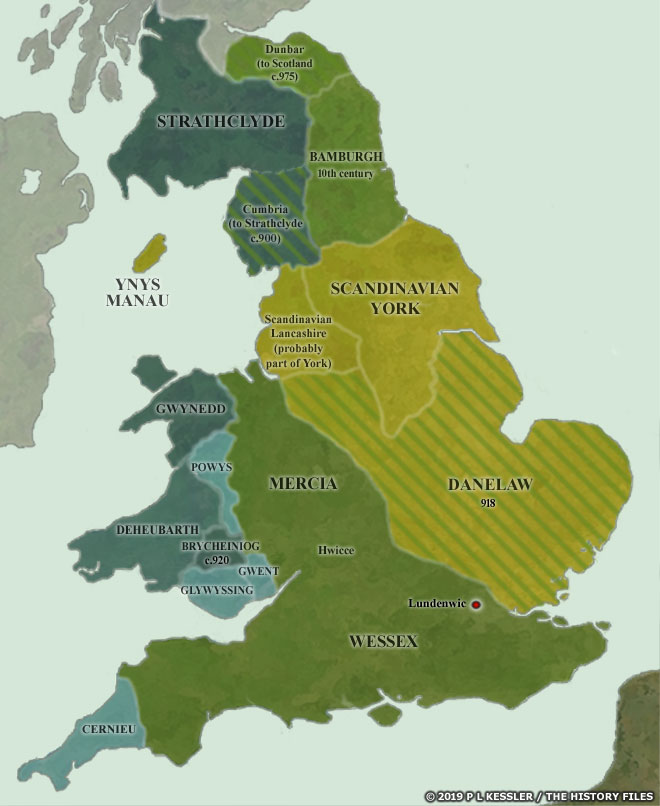
Scandinavian settlers, Faarlund notes, gained control towards the end of the 9th century of an area known as Danelagen, which forms parts of Scotland and England today. Faarlund stressed that “an extremely important geographic point in our research†is that the East Midlands in England, where he says the modern English language developed, was part of the relatively densely populated southern portion of Danelagen.
Edmonds and Faarlund also contend that sentence structure in what developed into modern English is Scandinavian, not western Germanic as previously believed. Both today’s Scandinavian languages place the object after the verb, for example, unlike German and Dutch which place the verb at the end of a sentence. Possessive forms can also be the same in both the Scandinavian languages and English, which also can end sentences with a preposition and split infinitives. While that’s sometimes frowned upon in other variations of modern English such as American English, Faarlund argues it’s not possible in German, Dutch or Old English.
All this, he claims, boosts the similarities between Norwegian and English, for example, and the differences between other Germanic languages and English. “The only reasonable explanation is that English is a Nordic language, and that this language is a continuation from the Norwegian-Danish language used in England from the Middle Ages,†Faarlund told Apollon. “Why the residents of the British Isles chose the Nordic grammar, though, is a matter of speculation.â€
Ed West, at Breitbart, argues that “Game of Thrones” provides a better education in Medieval History than you’ll get at one of our PC universities these days.
Most historical fiction basically features a protagonist with 21st century values wearing a codpiece; I gave up on the Tudors when Cardinal Wolsey started giving a lecture on why we needed a ‘European community’. Most people in Britain think the EU is a pretty stupid idea today; in the 16th century it would have been inconceivable, even if Wolsey’s Treaty of London talked about ‘perpetual peace’ in Europe (a peace that was broken almost immediately, because that’s how things were).
Even the most sympathetic characters in Thrones, and I won’t give any spoilers for season four, end up doing some appalling things in the later books, not because they’re villains but because that’s the way the world was then, and how it is for much of humanity today. Bloody awful.
But there is a deeper implication for the success of Thrones; most people in England would be pretty ignorant about these historical parallels, because of the revolution in history teaching that took place in the dark, sexually weird decade that was the 1970s, part of a wider cultural revolution aimed at transforming western societies (and which has its parallel in the US).
Whereas my father’s generation would have learned about the kings of England at school, the bloody battles and usurpations, the poisonings, the tortures and the love affairs, and King Harold getting shot in the eye, by the time I was taught the subject the sort of questions we were asked went along the lines of ‘How would the social changes experienced during the 15th century have impacted on a female weaver living in Norfolk?’ Or ‘Look at Source A and Source B; what differences can you spot and why might that have been? Anyway, children, next term we’ll be reading about the Nazis. Again.’
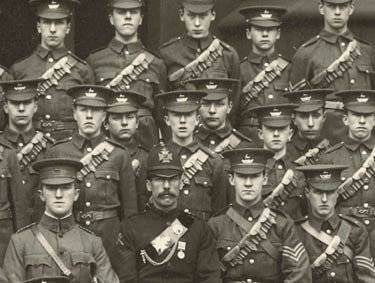
A school photo of the schoolboy J.R.R. Tolkien in Cadet Corps uniform recently made the British papers after being unearthed from the archives of his old school in Birmingham.
The Kind Edward School Cadet Corps had just been founded in march of 1907, and had the honor of being inspected by Lord Roberts of Kandahar in April.
Not many years later, most of these boys would find themselves as junior officers with the life expectancy of a mayfly on the Western Front. Tolkien participated in the Battle of the Somme, specifically in the assaults on the Schwaben Redoudt and the Leipzig salient, but happily survived, when so many others did not, because he was incapacitated by trench fever. He spent the rest of the war alternating between hospitals and garrison duty, having been found medically unfit for further front-line service.
Michael W. Hannon, in First Things, serves up some serious history demonstrating that Americans have recently been legislating privileges and remodeling the fundamental institutions of Society in favor of an imaginary category of beings.
Heterosexuals, like typewriters and urinals …, were an invention of the 1860s. Contrary to our cultural preconceptions and the lies of what has come to be called “orientation essentialism,†“straight†and “gay†are not ageless absolutes. Sexual orientation is a conceptual scheme with a history, and a dark one at that. It is a history that began far more recently than most people know, and it is one that will likely end much sooner than most people think.
Over the course of several centuries, the West had progressively abandoned Christianity’s marital architecture for human sexuality. Then, about one hundred and fifty years ago, it began to replace that longstanding teleological tradition with a brand new creation: the absolutist but absurd taxonomy of sexual orientations. Heterosexuality was made to serve as this fanciful framework’s regulating ideal, preserving the social prohibitions against sodomy and other sexual debaucheries without requiring recourse to the procreative nature of human sexuality.
On this novel account, same-sex sex acts were wrong not because they spurn the rational-animal purpose of sex—namely the family—but rather because the desire for these actions allegedly arises from a distasteful psychological disorder. As queer theorist Hanne Blank recounts, “This new concept [of heterosexuality], gussied up in a mangled mix of impressive-sounding dead languages, gave old orthodoxies a new and vibrant lease on life by suggesting, in authoritative tones, that science had effectively pronounced them natural, inevitable, and innate.â€
Sexual orientation has not provided the dependable underpinning for virtue that its inventors hoped it would, especially lately. Nevertheless, many conservative-minded Christians today feel that we should continue to enshrine the gay–straight divide and the heterosexual ideal in our popular catechesis, since that still seems to them the best way to make our moral maxims appear reasonable and attractive.
These Christian compatriots of mine are wrong to cling so tightly to sexual orientation, confusing our unprecedented and unsuccessful apologia for chastity with its eternal foundation. We do not need “heteronormativity†to defend against debauchery. On the contrary, it is just getting in our way.
Michel Foucault, an unexpected ally, details the pedigree of sexual orientation in his History of Sexuality. Whereas “sodomy†had long identified a class of actions, suddenly for the first time, in the second half of the nineteenth century, the term “homosexual†appeared alongside it. This European neologism was used in a way that would have struck previous generations as a plain category mistake, designating not actions, but people—and so also with its counterpart and foil “heterosexual.â€
Psychiatrists and legislators of the mid- to late-1800s, Foucault recounts, rejected the classical convention in which the “perpetrator†of sodomitical acts was “nothing more than the juridical subject of them.†With secular society rendering classical religious beliefs publicly illegitimate, pseudoscience stepped in and replaced religion as the moral foundation for venereal norms. To achieve secular sexual social stability, the medical experts crafted what Foucault describes as “a natural order of disorder.â€
“The nineteenth-century homosexual became a personage,†“a type of life,†“a morphology,†Foucault writes. This perverted psychiatric identity, elevated to the status of a mutant “life form†in order to safeguard polite society against its disgusting depravities, swallowed up the entire character of the afflicted: “Nothing that went into [the homosexual’s] total composition was unaffected by his sexuality. It was everywhere present in him: at the root of all his actions because it was their insidious and indefinitely active principle.â€
The imprudent aristocrats encouraging these medical innovations changed the measure of public morality, substituting religiously colored human nature with the secularly safer option of individual passion. In doing so, they were forced also to trade the robust natural law tradition for the recently constructed standard of “psychiatric normality,†with “heterosexuality†serving as the new normal for human sexuality. Such a vague standard of normality, unsurprisingly, offered far flimsier support for sexual ethics than did the classical natural law tradition.
There is a similar piece, looking at homosexuality from an anthropological perspective by David Benkof at Daily Caller.
[B]efore the 19th century nobody was called “gay.†… While various societies had different ways of thinking about and expressing gender, love, and desire, homosexuality was generally something one could do, not something one could be.
Almost as many countries arrogate the honour of having been the natal soil of St. Patrick, as made a similar claim with respect to Homer. Scotland, England, France, and Wales, each furnish their respective pretensions: but, whatever doubts may obscure his birthplace, all agree in stating that, as his name implies, he was of a patrician family. He was born about the year 372, and when only sixteen years of age, was carried off by pirates, who sold him into slavery in Ireland; where his master employed him as a swineherd on the well-known mountain of Sleamish, in the county of Antrim. Here he passed seven years, during which time he acquired a knowledge of the Irish language, and made himself acquainted with the manners, habits, and customs of the people. Escaping from captivity, and, after many adventures, reaching the Continent, he was successively ordained deacon, priest, and bishop: and then once more, with the authority of Pope Celestine, he returned to Ireland to preach the Gospel to its then heathen inhabitants.
The principal enemies that St. Patrick found to the introduction of Christianity into Ireland, were the Druidical priests of the more ancient faith, who, as might naturally be supposed, were exceedingly adverse to any innovation. These Druids, being great magicians, would have been formidable antagonists to any one of less miraculous and saintly powers than Patrick. Their obstinate antagonism was so great, that, in spite of his benevolent disposition, he was compelled to curse their fertile lands, so that they became dreary bogs: to curse their rivers, so that they produced no fish: to curse their very kettles, so that with no amount of fire and patience could they ever be made to boil; and, as a last resort, to curse the Druids themselves, so that the earth opened and swallowed them up. …
The greatest of St. Patrick’s miracles was that of driving the venomous reptiles out of Ireland, and rendering the Irish soil, for ever after, so obnoxious to the serpent race, that they instantaneously die on touching it. Colgan seriously relates that St. Patrick accomplished this feat by beating a drum, which he struck with such fervour that he knocked a hole in it, thereby endangering the success of the miracle. But an angel appearing mended the drum: and the patched instrument was long exhibited as a holy relic. …
When baptizing an Irish chieftain, the venerable saint leaned heavily on his crozier, the steel-spiked point of which he had unwittingly placed on the great toe of the converted heathen. The pious chief, in his ignorance of Christian rites, believing this to be an essential part of the ceremony, bore the pain without flinching or murmur; though the blood flowed so freely from the wound, that the Irish named the place St. fhuil (stream of blood), now pronounced Struill, the name of a well-known place near Downpatrick. And here we are reminded of a very remarkable fact in connection with geographical appellations, that the footsteps of St. Patrick can be traced, almost from his cradle to his grave, by the names of places called after him.
Thus, assuming his Scottish origin, he was born at Kilpatrick (the cell or church of Patrick), in Dumbartonshire. He resided for some time at Dalpatrick (the district or division of Patrick), in Lanarkshire; and visited Crag-phadrig (the rock of Patrick), near Inverness. He founded two churches, Kirkpatrick at Irongray, in Kireudbright; and Kirkpatrick at Fleming, in Dumfries: and ultimately sailed from Portpatrick, leaving behind him such an odour of sanctity, that among the most distinguished families of the Scottish aristocracy, Patrick has been a favourite name down to the present day.
Arriving in England, he preached in Patterdale (Patrick’s dale), in Westmoreland: and founded the church of Kirkpatrick, in Durham. Visiting Wales, he walked over Sarn-badrig (Patrick’s causeway), which, now covered by the sea, forms a dangerous shoal in Carnarvon Bay: and departing for the Continent, sailed from Llan-badrig (the church of Patrick), in the island of Anglesea. Undertaking his mission to convert the Irish, he first landed at Innis-patrick (the island of Patrick), and next at Holmpatrick, on the opposite shore of the mainland, in the county of Dublin. Sailing northwards, he touched at the Isle of Man, sometimes since, also, called. Innis-patrick, where he founded another church of Kirkpatrick, near the town of Peel. Again landing on the coast of Ireland, in the county of Down, he converted and baptized the chieftain Dichu, on his own threshing-floor. The name of the parish of Saul, derived from Sabbal-patrick (the barn of Patrick), perpetuates the event. He then proceeded to Temple-patrick, in Antrim, and from thence to a lofty mountain in Mayo, ever since called Croagh-patrick.
He founded an abbey in East Meath, called Domnach-Padraig (the house of Patrick), and built a church in Dublin on the spot where St. Patrick’s Cathedral now stands. In an island of Lough Deng, in the county of Donegal, there is St. Patrick’s Purgatory: in Leinster, St. Patrick’s Wood; at Cashel, St. Patrick’s Rock; the St. Patrick’s Wells, at which the holy man is said to have quenched his thirst, may be counted by dozens. He is commonly stated to have died at Saul on the 17th of March 493, in the one hundred and twenty-first year of his age.
Poteen, a favourite beverage in Ireland, is also said to have derived its name from St. Patrick: he, according to legend, being the first who instructed the Irish in the art of distillation. This, however, is, to say the least, doubtful: the most authentic historians representing the saint as a very strict promoter of temperance, if not exactly a teetotaller. We read that in 445 he commanded his disciples to abstain from drink in the day-time, until the bell rang for vespers in the evening. One Colman, though busily engaged in the severe labours of the field, exhausted with heat, fatigue, and intolerable thirst, obeyed so literally the injunction of his revered preceptor, that he refrained from indulging himself with one drop of water during a long sultry harvest day. But human endurance has its limits: when the vesper bell at last rang for evensong, Colman dropped down dead—a martyr to thirst. Irishmen can well appreciate such a martyrdom; and the name of Colman, to this day, is frequently cited, with the added epithet of Shadhack—the Thirsty.
‘In Burgo Duno, tumulo tumulantur in uno,
Brigida, Patricius, atque Columba pins.’
Which may be thus rendered:
‘In the hill of Down, buried in one tomb,
Were Bridget and Patricius, with Columba the pious.’
The shamrock, or small white clover (trifolium repens of botanists), is almost universally worn in the hat over all Ireland, on St. Patrick’s day. The popular notion is, that when St. Patrick was preaching the doctrine of the Trinity to the pagan Irish, he used this plant, bearing three leaves upon one stem, as a symbol or illustration of the great mystery. To suppose, as some absurdly hold, that he used it as an argument, would be derogatory to the saint’s high reputation for orthodoxy and good sense: but it is certainly a curious coincidence, if nothing more, that the trefoil in Arabic is called skamrakh, and was held sacred in Iran as emblematical of the Persian Triads. Pliny, too, in his Natural History, says that serpents are never seen upon trefoil, and it prevails against the stings of snakes and scorpions. This, considering St. Patrick’s connexion with snakes, is really remarkable, and we may reasonably imagine that, previous to his arrival, the Irish had ascribed mystical virtues to the trefoil or shamrock, and on hearing of the Trinity for the first time, they fancied some peculiar fitness in their already sacred plant to shadow forth the newly revealed and mysterious doctrine. …
In the Galtee or Gaultie Mountains, situated between the counties of Cork and Tipperary, there are seven lakes, in one of which, called Lough Dilveen, it is said Saint Patrick, when banishing the snakes and toads from Ireland, chained a monster serpent, telling him to remain there till Monday.
The serpent every Monday morning calls out in Irish, ‘It is a long Monday, Patrick.’
That St Patrick chained the serpent in Lough Dilveen, and that the serpent calls out to him every Monday morning, is firmly believed by the lower orders who live in the neighbourhood of the Lough.
Dan Greenfield yesterday published a special Purim essay which repays reading even by gentiles.
Purim began when a narrow-minded fanatic refused to bow to the Grand Vizier of a multicultural empire. Jewish leaders hurriedly reassured him that this fanatic was in no way representative of their values of tolerance and appeasement. Hadn’t they attended the feast where the sacred vessels of their own people were used to serve spirits to the mob? Rather than anticipating the return to their land at the end of the prophesied seventy year period of exile, they had cheered the brutish tyrant and made Sushan, his capital, into their new holy city.
The illusion of history is that every age brings with it the end of history, a new age whose awesome achievements break with the past and usher in a boundless future. And then the walls come crashing down and the new era of history ends up buried under the rubble of time.
History never ends. That is the lesson of the Holocaust, of Purim and of countless other horrifying intrusions of the old into the new. The shining new era that begins with grand public spectacles and displays of the power and might of an empire, ends with corpses and men and women fighting and running for their lives.
This all-white tracking dog was so well-regarded in the Middle Ages that many family crests feature its image. Some historians believe William the Conquerer brought the breed to England in 1066. The loyal hound was slow but had a great sense of smell and was often used in battle and for law enforcement. The Talbot went extinct around the 16th century.
Young Osama bin Ladin (second from the right, in blue bell bottoms) vacationing with his family in Sweden in the early 1970s.
This arresting image of the young conformistically Western counter-cultural Osama happily posing in the midst of a family shopping expedition in Sweden completely undermines the authenticity of the older bin Ladin’s self-assumed role of warrior-prophet. The photo demonstrates that Osama bin Lain was never anything but a spoiled, rich and thoroughly Westernized resident of the modern world using old-time cultural stereotypes to glamorize a cynical and calculated program of terrorism aimed at accessing personal political power.
This kind of opportunistic reversion to a deep-in-culture primitive image of leadership is actually a tactic we’ve seen before. The astute Winston Churchill recognized Ghandi as another practitioner of the same kind of fraud.
“It is alarming and also nauseating to see Mr. Gandhi, a seditious middle temple lawyer, now posing as a fakir of a type well known in the east, striding half-naked up the steps of the viceregal palace, while he is still organizing and conducting a defiant campaign of civil disobedience, to parley on equal terms with the representative of the king-emperor.”