Category Archive 'Pennsylvania'
03 Mar 2018


Yesterday was one of those days.
We woke up to a chilly house. The winds roaring like a freight train overnight knocked the power out. Happily, though, we are in Pennsylvania and the lights (and the furnace) were back on at 9:00 A.M.
When our seven-month-old-but-monstrously-huge Taigan puppy came back from his first morning outing, he had something sticking out of his nose. Short little spikes? Some kind of burrs? Karen brought me some needle-nose pliers and held him, and I reached out and extracted three in one swipe. The puppy yipped.
On close examination, the little spikes proved to be tiny porcupine quills. It seemed strange that he had only three, right in the nose, and they were all short and about an inch long. Did he meet a baby porcupine? we wondered. Or did he just reach out and sniff one’s head?
But it was not to be quite so simple. A bit later, I saw in his profile view one more quill, bent against his nose.
Efforts to restrain this 75-pound seven-month Central Asian puppy failed. We could not hold him and keep his head still. He had to go to the Vet and be sedated, for one tiny quill.
Well, this morning the dogs were barking about something, when I got up. I looked out the back door and there was a full-sized adult porcupine sitting high in a tree about 50 yards or so from the back door.
I had Karen bring me a Winchester Model 1892 .25-20 Saddle-Ring Carbine (made in 1915) that I acquired in a recent auction and a box of cartridges. The trick would be figuring out where exactly you had to hold.
I fired a shot, which I thought went high. My second shot, held lower, seemed possibly to have struck. The porcupine seemed perturbed. Karen wanted to try her hand. She took aim and definitely hit him. The porcupine began trying to descend. I tried another shot, aiming distinctly below the varmint’s body, and that one really had an impact. The porcupine was hard hit and its paw was shaking in distress. I fired one more time and this last one knocked him right out of the tree.
The .25-20 is clearly an anemic round, not a lot more powerful than a .22 Long Rifle, but it is a good round for this kind of thing. It makes little noise and it took the porcupine a long time to figure out he was being shot at. Long enough for Karen and me to figure out the sights on an unfamiliar new gun.
So perish all our enemies!
(Porcupines are kind of cute but the injuries they can inflict on a dog are horrific. That last one quill yesterday also cost a hundred fifty bucks for veterinary services.)

29 Jan 2018

Teresa Mull, like me, is a native of Pennsylvania Coal Country.
This winter, I went back to the woods. The backwoods.
My homeland is Central Pennsylvania, and I returned there to celebrate Christmas with the family and to help out with the coal furnace during the bleakest time of year (more on that later). Hunter S. Thompson spent a stint of his youth in my native neck of the woods, “in an abandoned coal town†as he put it, and deemed it “barren…[where nobody else] was between the ages of fifteen and fifty.†He wrote to a friend of the region’s “mountains of coal dust, dirty old people, ancient wrecks of houses†and said the experience was like “having a nightmare.â€
James Carville famously labeled the stretch of land between Philadelphia and Pittsburgh as “…Alabama without the blacks. They didn’t film The Deer Hunter there for nothing,†while also noting “The state has the second-highest concentration of NRA members, behind Texas.†Others refer to it, both affectionately and derogatorily, as “Pennsyltucky.â€
Thompson’s rural Pennsylvania gig was early on in his career, before, I think, his literary licensing and drug use were firing in full force, and I can attest that his descriptions are, even now, spot-on. As far as Carville’s assessment goes, despite being a Democrat, he’s not too far off either. Hunter safety class was a required part of my Catholic school’s curriculum in the second grade. SECOND GRADE. And the first two days of deer season were always school holidays.
Central PA is indeed a forgotten part of the country, with tired, old mountains, dreary weather, a generally pessimistic populace, an overgrown, unkempt natural beauty, and archaic everything. But it’s not completely charmless. It is home, after all.
Returning to Pennsyltucky during the winter months means enduring the Eternal Grey—days you’re not sure are really days exactly; more like sepia extensions of early dusk. One great cloud amasses its forces in early November and lingers over the sun until at least Easter, at which point it habitually snows.
The snow does make the Appalachian dilapidation very pretty, covering rusty, run-down, soggy, boggy, moldy things with a pure, clean blanket of white stuff. It doesn’t last though. Like a Catholic fresh from the confessional, a day or two’s time is enough to gather a layer of grime. Growing up, “don’t eat the snow†was a rule not because animals made it yellow (though they did), but because chimneys pouring out rich, black smoke left a layer of soot on top (and still do).
Hunting is a popular pastime here and camouflage is acceptable year-round and in all circumstances. Camo is seen at the gym (I know one regular who sports camo knee sleeves), at proms and weddings, on cars and in them. Camo, like guns, goes with everything. A billboard greets me on my way into town advertising camo coffee cups (if that isn’t dedication, I don’t know what is). It’s a wonder more people don’t accidentally collide with each other!
Going to the gun store is another popular regional pastime, even when hunting season is still months away. Here you can meet the “bitter†people Barack Obama referenced in 2008 who “cling to guns or religion.†The last time I was at my neighborhood guns and ammo shop, I overheard a gruff customer justify his purchase of another firearm to his wife by saying, “Trump’s not gonna be in office forever,†and then, apropos of nothing, “LIBERAL A**HOLES!â€
RTWT
She’s right that the small cities and towns that used to be flourishing are all hollowed out today, their Main Streets abandoned, and the post-WWII brain drain to the cities is still continuing, but Central Pennsylvania is actually a nice place to retire.
The people are friendly. Taxes are low. The scenery is only slightly inferior to Vermont’s. We have the best trout steams in the East. The pheasants have gone extinct, but we have good grouse shooting, and plenty of deer and turkey. If you win the ticket lottery, you can even shoot an elk. And everywhere you look there are Trump signs.
18 Dec 2017

We had hired a local Amish crew last Summer to install a new steel roof on the 1812 log cabin. Naturally, they finally showed up to work the day following our first six inch snowfall of the season, and even a bit of snow falling that day did not keep them from working.
We are both retired now, so we are finally getting to stay full-time out here at the 300-acre Central Pennsylvania farm we purchased as a vacation place thirty years ago.
Karen’s photos are here.
21 Nov 2017

Daily Call:
The Pennsylvania Senate is advancing legislation to make the Eastern hellbender the official state amphibian, as researchers say its population is shrinking because of pollution.
The bill passed, 47-2, and heads to the House.
According to the Center for Biological Diversity, the hellbender is an aquatic salamander that can grow up to two feet long, making them the largest North American amphibian. They are nocturnal and prefer shallow, clear and fast streams with rocks to live under.
RTWT
I know the Great Hellbender (Cryptobranchus alleganiensis) very well, having frequently met up with him on the Loyalsock, and I can testify to his fully deserving the status of State Amphibian.
17 Oct 2016
I am currently in residence at my farm in the foothills of the Allegheny Mountain in Central Pennsylvania. My neighbor, Bud, just stopped by to visit and chat. Like just about everybody else in these parts, Bud has been an enthusiastic Trump supporter.
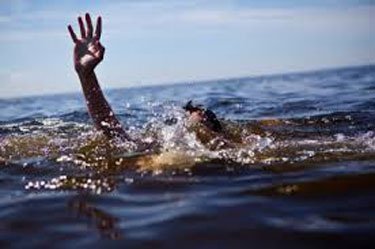
Today, though, Bud seemed a bit discouraged by the ineffectiveness of The Donald’s campaign effort. When I inquired how he was enjoying following the campaign contest, Bud replied bitterly: “Who wants to watch a drowning rat?”
12 Jun 2016

Morning Call:
Allentown police confirmed local officials corralled an alligator around 7 p.m. Friday after hours tracking it through the Lehigh Canal. On Saturday morning, the reptile was on its way to a preserve in the Poconos.
Travis Benitez, 18, spotted the 31/2-foot gator while fishing in the canal. The teen said he’s been fishing in the canal since he was 7 years old and “never saw anything like that in my life.”
The gator prompted lots of activity. Police got a call around noon. City officials called for assistance from reptile and wildlife experts and tried to get the alligator to the bank. Keith Galvin of Galvin Wildlife Control of the Lehigh Valley tried to hook the alligator, which he says is a humane way to get the reptile out of the water.
“It won’t hurt him, he has alligator skin,” he said as he tried to capture the gator.
The rescue operation proved to be challenging because of the dense seaweed-like grass lining the water. Also, the alligator blended in with the canal with only its eyes rising above the water.
When a fisherman spotted an alligator in the Lehigh Canal in Allentown earlier this month, it made for a few tense hours as authorities tried to corral the carnivore. Keith E. Galvin Sr., of Galvin Wildlife Control in Upper Macungie Township, eventually was successful in hooking the gator and then turned it over to a reptile preserve in the Poconos.
A plastic crate, typically used to carry a large dog, was ready for the gator once it was corralled.
While Allentown won’t be confused for the Florida Everglades, there have been alligators captured in the waters of the Queen City in the past.
In September 2009, Allentown police, a city fire marshal and animal control officers captured a 6-foot alligator — believed to be the biggest ever found in the Lehigh Valley — sunning itself on the bank of the Jordan Creek
In the Spring of last year, an alligator was sighted in the Monongahela River in Western Pennsylvania.
10 Jun 2016
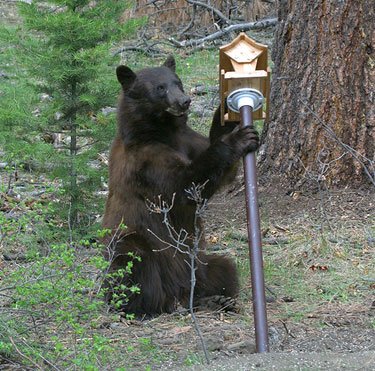
Not unlike the scene just outside our window last night.
Around 10:15 PM EST, Karen and I had just finished watching Vincent Price hamming it up in House of Seven Gables (1963), when our saluki (who had already had his last outside call for the evening) was found peering intently out the window.
Outside the window were three bird-feeders on poles standing in a small clearing and our dog had previously detected an opossum visiting at night to mop up fallen seeds lying on the ground. He had developed a real enthusiasm for that possum, and kept looking for him weeks after the varmint had been last seen.
Last night, though, Uhlan was looking out the window so intently that I suspected his beloved possum had finally returned. Karen went over to the window and looked, and saw that two poles were bent over and two rifled feeders were lying on the ground.
She retrieved the flashlight from the other end of the room and handed it to me. When I aimed the light out the window, the culprit was visible. It was a fully-grown black bear, sitting about ten feet from the house and looking guilty.
This was not the first time that bears had raided our birdfeeders. I had previously vowed revenge, and I had a .44 Magnum Smith & Wesson all ready for just such an occasion, sitting on a bookcase near the door, its first two chambers loaded with ratshot.
I reached for the revolver, but soft-hearted Karen intervened on the criminal’s behalf, saying “Don’t you shoot that bear!”
Sigh! What can you do? I’d been looking forward to applying a load of number 12 ratshot where it would do the most good, but wives are wives. I contented myself with opening the door and firing a shot out into the (empty) front field. The loud report and the flame (visible at night) issuing from the barrel naturally made some impression of Mr. Bear, who (as Karen who had been watching, reported) levitated out of the area in great haste.
Previously, one or another bear had absconded with two feeders, which were not seen again or found long afterward totally destroyed. This time, we recovered all the feeders fully intact, and one of them was even still full of sunflower seeds.
People 1: Bears: 0
30 Sep 2015
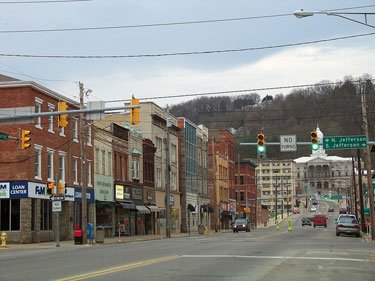
Kittaning, county seat of Armstrong County
Only in Our State
Clinton County (County Seat, Lock Haven) comes in first. (Applause!)
Lackawanna (Scranton), Luzerne (Hazleton), Monroe (Stroudsburg), and Huntingdon (Huntingdon) all get in there. Sadly, my native county, Schuylkill, does not even make this list. It would have in the old days. My hometown in its prime had more barrooms than Philadelphia, typically six per block: each corner building and one in the middle of the block on either side of the street.
31 Aug 2015
We have gotten used to reading about these little-kid-expelled-from-school-for-possession-of-a-pocket-knife happening in the suburbs of New England or California, but in Pennsylvania?
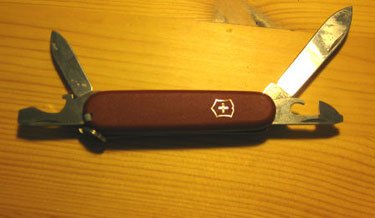
Recently a ten-year-old female violinist was expelled from the toney Valley School of Ligonier because the young musician was found to be using a Swiss Army Knife to remove broken strings from her violin bow.
Her parents consequently attempted to enroll her in the public school for their local district, but found her admission jeopardized by the report of her expulsion for “bringing weapons onto school property” from the young lady’s previous school.
All this nincompoopery is connected, in Pennsylvania, to a Safe School Act (passed in 1995, and amended in 1997 and subsequently added to) which in the case of a student expelled due to a weapon or drugs being brought on to school property, obligates other schools to apply the same expulsion. The parents are suing on the basis that these zero tolerance policies have inflicted on their daughter a “defamatory stigma.â€
TribLive
Centre Daily Times
The Violin Channel
01 Jun 2015
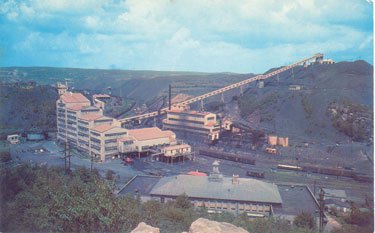
The St. Nicholas Breaker in its operating days.(click on picture for larger image)
The old St. Nicholas Coal Breaker, built 1930-1931, once the largest and most productive coal breaker in the world, is being demolished this year, after sitting idle and abandoned for over 50 years.
WNEP story
UndergroundMiners.com remembers:
The St. Nicholas Breaker, located just out side of Mahanoy City, was constructed in 1931 and began operating in 1932. Half of the village of Suffolk was relocated in order to create room for the largest coal breaker in the world. 20 miles of railroad track were laid, 3,800 tons of steel and more than 10,000 cubic yards of concrete were used. A mile and a half of conveyor lines, 25 miles of conduit, 26,241 square feet of rubber belting, 118 miles of wire and cable and 20 miles of pipe were installed. When they constructed the breaker, they split it into two sides and each side could be operated independently, producing 12,500 tons of coal a day. The coal, once dumped, took just 12 minutes to pass through the entire breaker.
More photos.

More recent photo of abandoned breaker.
18 May 2015

(photo: Karen L. Myers) click on pictures for larger versions.
A few days ago, my neighbor who does my mowing was cutting in the neglected field above the cabin when he flushed a woodcock, who was obviously a mother woodcock because she landed nearby and began performing the old “I’m-a-poor-injured-woodcock-with-a-broken-wing.-I’m-delicious-and-easy-to-catch.- Come,-follow-me!” routine.
So Bud turned off the mower, looked around, and spotted her four chicks. He then ran down to the house to tell us of his discovery, and Karen went up there with her camera and photographed the brood.
The four young woodcock were admirably camouflaged and Karen reports that they followed mother’s instructions and remained perfectly frozen, with the exception of all the little bright brown eyes which followed Karen’s every movement.
Naturally, mowing operations were suspended and the nosy humans all withdrew to allow Mother Woodcock to retrieve her brood and escort them back into the nearby woods.
————–
I was quite surprised to learn that woodcock bred on our Central Pennsylvania farm. I can’t recall ever seeing a woodcock outside of hunting season in the Fall. I always thought they bred up in Maritime Canada and only migrated to Pennsylvania.
But the Wikipedia entry says that they breed all the way down to Northern Virginia, and in some cases as far south as Florida and Texas. (!) “Most hens lay four eggs,” the entry reports.

(photo: Karen L. Myers)
11 Apr 2015
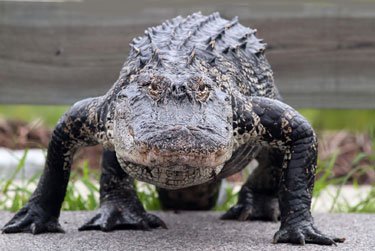
When Pennsylvanians refer to an “Allegheny alligator,” they normally mean Necturus maculosus, a foot-and-a-half long dark salamander, with external, Christmas-tree-like red gills. But this week there have been two sightings reported of a real six-to-seven foot alligator (Alligator mississipiensis) in Western Pennsylvania’s Monongahela River, the one which joins the Allegheny River at Pittsburgh to form the Ohio.
WPIX:
The Southwest Regional Police Department is investigating an unconfirmed sighting of an alligator in the Monongahela River in Belle Vernon, Fayette County.
Authorities said a man on a boat reported that he saw what he believed was an alligator around midnight Tuesday.
He described the animal as approximately 6 to 7 feet long, swimming upstream against the current.
“He saw what he believed to be a log, going upstream about 10 or 15 feet from the shoreline,†Southwest Regional Police Chief John Hartman said. “He took his spotlight out and shined it on the log. He said he saw the head of an alligator, about 7 inches out of the water, two eyes and a tail.â€
Upon investigation, police determined that a possible earlier sighting of the animal was made at approximately 2 p.m. Tuesday.
“I didn’t see teeth or anything. I didn’t think it was an alligator or nothing,†said Josh Adams.
Adams said he was applying for a job when he experienced the interesting sighting.
“After I put in my application, I went for a little walk. I seen a little duck and thought, ‘Awe, that’s cool,’ then it went under real fast and it didn’t come back up,†said Adams.
Southwest Regional Police Department is working with the U.S. Coast Guard, the Pennsylvania Fish and Boat Commission and the Pittsburgh Zoo.
Neighbors said they’re glad authorities are taking this seriously, because they are, too.
But how the heck could a gator survive the bitter cold winter we just had in Pennsylvania?
Your are browsing
the Archives of Never Yet Melted in the 'Pennsylvania' Category.
/div>

Feeds
|





