Archive for October, 2009
21 Oct 2009

That cute little Pixar lamp stomps the letter I in those opening credits, but you’ve never seen the full story.
1:32 video
Hat tip to Karen L. Myers.
21 Oct 2009

It’s strange to see a presidential administration openly attacking a news organization for criticizing them and, in a country whose mainstream media is notorious for its liberal partisanship, White House characterizations of Fox News as being somehow unique in “having a perspective” produced gales of laughter in some circles.
Open fights between incumbent presidents and the press have not typically worked out favorably for the first. Remember Richard Nixon? So why was the sophisticated and professionally skilled Obama administration doing this?
The Politico explains, it’s all about containment. They are advancing a rationale the MSM can use to marginalize Fox News, so that the establishment liberal media can pretend to righteousness while sitting on stories Fox is covering which are disadvantageous to the Obama Administration and the left.
A White House attempt to delegitimize Fox News – which in past times would have drawn howls of censorship from the press corps – has instead been greeted by a collective shrug.
That’s true even though the motivations of the White House are clear: Fire up a liberal base disillusioned with Obama by attacking the hated Fox. Try to keep a critical news outlet off-balance. Raise doubts about future Fox stories.
But most of all, get other journalists to think twice before following the network’s stories in their own coverage.
“We’re doing what we think is important to make sure news is covered as fairly as possible,” a White House official told POLITICO, noting how the recent ACORN scandal story started because Fox covered it “breathlessly for weeks on end.â€
“And then you had a couple days of breast-beating from The Washington Post and The New York Times about whether or not they were fast enough on the ACORN story,†the official said. “And it’s like: Wait a second, guys. Let’s make sure that we keep perspective on what are the most important stories, and what’s being driven by a network that has a perspective. Being able to make that point has been important.â€
To some media observers, it’s almost the definition of a “chilling effect†– a governmental attempt to steer reporters away from negative coverage – but the White House press corps has barely uttered a word of complaint.
That could be because of the perception among some journalists that Fox blurs the line between reporting and commentary – making it seem like not the most sympathetic victim.
Fox denies its news coverage is slanted, and even White House aides say the network’s top correspondent there, Major Garrett, is a straight shooter. But in its non-news hours, Fox mixes in a steady diet of criticism of President Barack Obama by its prominent conservative commentators Bill O’Reilly, Sean Hannity and Glenn Beck. It’s a formula that works for Fox, with the highest ratings in cable news. …
(F)ormer Fox News Washington Bureau chief Brit Hume seemed to be reveling in the attacks by Obama’s aides.
“This is an effort in effect to quarantine Fox News and to discourage other media outlets from picking up on stories that originate here,†Hume said on “The O’Reilly Factor.†“My guess is it won’t work….Look at Glenn Beck, he’s having a field day with this.â€
Their intellectual dishonesty is breathtaking, but I don’t think this is really going to work. The MSM already thought Fox News was illegitimate, and was already happy to spike any inconvenient news stories it thought it could. The MSM will only pick up a story damaging to the left (examples: Monica Lewinsky, ACORN tax fraud advice) when it has already achieved a kind of critical mass which makes it impossible not to cover it. Only the New York Times has the arrogance to bury anything it doesn’t like anytime.
21 Oct 2009
A concert pianist may get as little as $20,000 for a Carnegie Hall appearance. One of the stagehands made $530,044 in 2008.
That kind of compensation for semi-skilled manual labor can only result from union power rising to the level of extortion. Imagine what staggering sum total of dollars is siphoned annually out of the operating budgets of all the concert halls, museums, and theaters in New York City, and how much richer that city’s cultural life would be if workers were paid conventionally generous wages and the currently misappropriated surplus applied to delivering more exhibitions and performances to the public.
Bloomberg
20 Oct 2009

“Of course he wants to vote the Democratic ticket!” (Harpers, 1876)
Party labels are essential in elections in order to assure black democrats win. If black democrats don’t win, and black Republicans should accidentally be elected, black voters are being deprived of their electoral will, according to Eric Holder’s Department of Justice.
Welcome to the post-racial America we were assured would come into being upon the election of America’s first black president.
Washington Times:
Voters in this small city decided overwhelmingly last year to do away with the party affiliation of candidates in local elections, but the Obama administration recently overruled the electorate and decided that equal rights for black voters cannot be achieved without the Democratic Party.
The Justice Department’s ruling, which affects races for City Council and mayor, went so far as to say partisan elections are needed so that black voters can elect their “candidates of choice” – identified by the department as those who are Democrats and almost exclusively black.
The department ruled that white voters in Kinston will vote for blacks only if they are Democrats and that therefore the city cannot get rid of party affiliations for local elections because that would violate black voters’ right to elect the candidates they want.
Several federal and local politicians would like the city to challenge the decision in court. They say voter apathy is the largest barrier to black voters’ election of candidates they prefer and that the Justice Department has gone too far in trying to influence election results here.
Stephen LaRoque, a former Republican state lawmaker who led the drive to end partisan local elections, called the Justice Department’s decision “racial as well as partisan.”
“On top of that, you have an unelected bureaucrat in Washington, D.C., overturning a valid election,” he said. “That is un-American.”
The decision, made by the same Justice official who ordered the dismissal of a voting rights case against members of the New Black Panther Party in Philadelphia, has irritated other locals as well. They bristle at federal interference in this city of nearly 23,000 people, two-thirds of whom are black.
20 Oct 2009

Vladimir Putin has described the demise of the Soviet Empire as “the greatest geopolitical catastrophe” of the 20th century.
Putin is not alone in declining to celebrate the defeat of Communism. Spiegel reports that Barack Obama is opting out of going to Berlin to celebrate the 20th Anniversary of the Berlin Wall coming down.
The unhappy task of keeping a stiff upper lip while pretending to celebrate the victory of a Republican conservative and a Polish pope over socialism will devolve upon the unfortunate Hillary Clinton.
US President Barack Obama has shelved his plans to attend festivities marking the 20th anniversary of the fall of the Berlin Wall. Secretary of State Hillary Clinton will reportedly take his place at the Nov. 9 celebrations.
Germany is going to have to wait longer than expected for US President Barack Obama’s first official visit. Citing government sources in Berlin, Reuters reported on Friday that Obama will not attend the anniversary festivities marking two decades since the fall of the Berlin Wall. The event will take place on Nov. 9 — just two days before Obama embarks on a long-planned trip to Asia on Nov. 11.
20 Oct 2009

My liberal friends would scoff at the idea of there being any similarity at all, but their ideological affinity is recognized even in China, and a souvenir vendor in the Communist capital is exploiting the obvious resemblance quite profitably.
CRI:
A souvenir shop in the popular Houhai tourist area of Beijing has recently become quite famous because it is selling products with the image of U.S. President Barack Obama’s face imprinted over that of China’s late leader Mao Zedong, CCTV.com reports.
T-shirts and pouches with the “Oba Mao” design, a creative idea by shop owner Liu Mingjie, have attracted the attention of many foreign tourists.
“We usually sell souvenirs printed with historical figures,” Liu said. “Oba Mao is my new creation. The souvenirs with this logo are quite popular among visitors, foreign tourists in particular.”
20 Oct 2009

Southern flying squirrel emerges from beneath dog dish (Photographs: Karen L. Myers)
Karen heard activity in the dining room ceiling yesterday evening, and the cats were definitely interested.
When I came downstairs this morning, I found the white cat, Petra, had managed to enter the off-limits living room by leaping over the cat gate and had trapped herself inside. A little while later, Karen found the source of all the nocturnal activity.
A flying squirrel (Glaucomys volans — the Southern variety) had gotten itself cornered by the housecats at the dining room fireplace.
We herded the squirrel into the kitchen and in the direction of the backdoor. While it was considering making a break for it, instead of turning the corner, to hide under the Hoosier cabinet, Karen cleverly popped a metal dog dish over it.
All we had to do then was slide the 2010 Master of Foxhounds calendar (still wrapped in cellophane) under the dog dish, and voilá! the squirrel was safely confined and portable.
We took him out to an old stone foundation in the backyard, where I slid the calendar aside just enough to allow an exit.
This is actually the second flying squirrel successfully evicted unharmed in the three years we’ve been here.

Released from captivity, and not permitted to climb my trouser leg, the prisoner bounds away
20 Oct 2009

19th century Pathans
The Pathans (as they used to call them in English), or Pashtuns (as is preferred currently), the largest ethnic group (c. 42,000,000 people) without a state, are the hosts of al Qaeda and Taliban’s prime recruiting base. Their inhospitable mountainous tribal homelands are the base of the insurgency in Afghanistan and the safe refuge of Islamic terrorism.
In their very significant paper No Sign until the Burst of Fire: Understanding the Pakistan-Afghanistan Frontier, Thomas H. Johnson and M. Chris Mason address the issue at length, providing a quick background in history and ethnology, and explaining how Pakistan and the United States created the problem in the first place by facilitating the preaching of jihad to oppose the Soviet Occupation of Afghanistan. The authors contend that efforts to impose external authority on the Pashtuns only provoke greater fanaticism and more enthusiastic resistance, and argue that the key to defeating Islamic extremism among the Pashtun tribes consists of strengthening indigenous self-rule and conducting diplomatic relations with the tribes in a fashion consistent with a Pashtun perspective and sense of honor very different from our own.
According to tradition, members of the Pashtun Hill Tribes who inhabit the FATA (Federally Administered Tribal Area) are descendents of Karlan, a foundling adopted as the fourth son of Qais Abdur Rashid, a contemporary of the Prophet Mohammed and the ur-ancestor of the Pashtun ethnic group. The Hill Tribes, or Karlanri, include many of the most warlike tribes, such as the Afridis, Daurs, Jadrans, Ketrans, Mahsuds, Mohmands, and Waziris. Of all the Pashtun tribes, the Waziris of greater Waziristan (a region that includes North Waziristan Agency, South Waziristan Agency, and the Bermol District of Afghanistan’s Paktika Province) are reputed to be the most conservative and irascible. The Waziris pride themselves on never having paid taxes to any sovereign and never having their lands, which they consider veiled, or in purdah, conquered. (Considered good but unreliable fighters by the British during the colonial era, the Waziris and several other tribes were prohibited de facto from enlisting in native regiments of the Indian Army.)
Historically, the rural Pashtuns have dominated their neighbors and have avoided subjugation or integration by a larger nation. As one elderly Pashtuntribesman told Mountstuart Elphinstone, a British official visiting Afghanistan in 1809, “We are content with discord, we are content with alarms, we are content with blood . . . we will never be content with a master.†This characteristic makes Pashtuns the perfect insurgents.
With more than 25 million members, the Pashtun represent one of the largest tribal groups in the world. …
Pashtuns identify themselves in terms of their familial ties and commitments, and have a fundamentally different way of looking at the world. As the preeminent Afghan scholar M. Jamil Hanifi wrote in 1978: “The Afghan individual is surrounded . . . by concentric rings consisting of family, extended family, clan, tribe, confederacy, and major cultural-linguistic group. The hierarchy of loyalties corresponds to these circles and becomes more intense as the circle gets smaller . . . seldom does an Afghan, regardless of cultural background, need the services and/or the facilities of the national government. Thus, in case of crisis, his recourse is to the kinship and, if necessary, the larger cultural group. National feelings and loyalties are filtered through the successive layers.â€
Pashtuns engage in social, political, and economic activities within these concentric rings; this engagement prevents government-oriented institutions from gaining a foothold in tribal areas.24 This segmentation is one reason why, historically, no foreign entity—whether Alexander, the British, the Soviets, the Afghans, or the Pakistanis—has been able to reconcile the Pashtun to external rule. During the nineteenth century, at the height of its imperial power, Great Britain struggled and failed to subject the Pashtuns to state authority. Even the most brutal of these foreign incursions, the Soviet occupation of Afghanistan in the 1980s, failed to subjugate the Pashtuns—despite genocidal military tactics and a massive commitment of military personnel and firepower that killed more than a million Pashtuns and drove at least 3 million more into exile in Pakistan and Iran. …
The obstinacy of the Pashtun tribes and the inability of the British Empire to control them led to a border policy of “masterly inactivity†that essentially used the tribesmen as a buffer between India’s northern frontier and the approaching Russian Empire in Central Asia. Successive Pakistani and Afghan governments were no more successful than the British or the Russians, and the designation of this region as a kind of tribal no man’s land over generations created the loose political system of tribal autonomy in the FATA seen today. Indeed the name for this area is actually a misnomer. It is not federally administered in any sense of the word. Constitutionally, Islamabad has never maintained legal jurisdiction over more than 100 meters to the left and right of the few paved roads in the tribal areas. …
Why have the Pashtuns provided a safe haven for the Taliban and al-Qaida, while their neighbors along the same border have proven so resistant to such religious radicalization?…
The explanation for the Pashtuns’ provision of safe haven to the Taliban and al-Qaida lies in their unique social code, known as Pashtunwali: a set of values and unwritten, but universally understood, precepts that define Pashtun culture. Pashtunwali, literally translated, means “the way of the Pashtun.†For U.S. policymakers seeking to address the challenges of the Pashtun tribal areas, an understanding of the core principles of this cultural value system is crucial. Pashtunwali is the keystone of the Pashtuns’ identity and social structure, and it shapes all forms of behavior from the cradle to the grave. Its rules are largely responsible for the survival of the Pashtun tribes for more than 1,000 years, but they remain little understood in the West. As Charles Allen writes, “[Pashtunwali is] an uncompromising social code so profoundly at odds with Western mores that its application constantly brings one up with a jolt.†A Pashtun must adhere to this code to maintain his honor and retain his identity. The worst obscenity one Pashtun can call another is dauz, or “person with no honor.†In a closed, interdependent rural society, a Pashtun family without honor becomes a pariah, unable to compete for advantageous marriages or economic opportunities, and shunned by the other families as a disgrace to the clan. …
Intrinsically flexible and dynamic, Pashtunwali has core tenets that include self-respect, independence, justice, hospitality, forgiveness, and tolerance. Not all Pashtuns embody the ideal type defined by Pashtunwali, but all respect its core values and admire—if sometimes grudgingly—those who do. When hillmen come down out of the mountains to buy staples in the bazaar of a valley town, with their long fighting knives visible in their waistbands, the towns-people are likely to sneak admiring glances and mutter something to their friends about “real Pashtuns.†…
For centuries, these interlocking elements of the unwritten code of the Pashtun—freedom, honor, revenge, and chivalry—have defeated every effort to subdue the Pashtuns and supersede Pashtunwali with a more codified and centralized rule of law. Nevertheless,Western policymakers continue to ignore or to downplay the primacy of these fundamental cultural values in their efforts to shape strategies for southern Afghanistan and northern Pakistan, while the Taliban and al-Qaida use them for recruitment, shelter, and social mobilization.
19 Oct 2009

Middle East
The combination of Turkish state-run television’s recently debuted prime-time drama, Ayrilik “Farewell,” depicting Israeli Defence Force soldiers as bloodthirsty war criminals murdering women and children with the announcement of a long-term Turkish strategic alliance with Syria, and the Erdogan government causing the cancellation of NATO military exercises may all be signs of a major and permanent rupture in relations between Turkey and the Western Alliance.
London Times:
Israel’s relations with Turkey plunged to a new low yesterday after Turkish state television aired a fictional series showing troops murdering Palestinian children during last winter’s Gaza war.
Ties between the two strategic regional allies had already taken a serious blow this week when Turkey demanded that Israel be excluded from military exercises that it was staging with US and Nato allies. The US was forced to cancel the war games.
———————————
Caroline Glick thinks we have lost Turkey.
Once the apotheosis of a pro-Western, dependable Muslim democracy, this week Turkey officially left the Western alliance and became a full member of the Iranian axis.
It isn’t that Ankara’s behavior changed fundamentally in recent days. There is nothing new in its massive hostility toward Israel and its effusive solicitousness toward the likes of Syria and Hamas. Since the Islamist AKP party first won control over the Turkish government in the 2002 elections, led by AKP chairman Recip Tayyip Erdogan, the Turks have incrementally and inexorably moved the formerly pro-Western Muslim democracy into the radical Islamist camp populated by the likes of Iran, Syria, Hizbullah, al-Qaida and Hamas. …
Once the apotheosis of a pro-Western, dependable Muslim democracy, this week Turkey officially left the Western alliance and became a full member of the Iranian axis.
It isn’t that Ankara’s behavior changed fundamentally in recent days. There is nothing new in its massive hostility toward Israel and its effusive solicitousness toward the likes of Syria and Hamas. Since the Islamist AKP party first won control over the Turkish government in the 2002 elections, led by AKP chairman Recip Tayyip Erdogan, the Turks have incrementally and inexorably moved the formerly pro-Western Muslim democracy into the radical Islamist camp populated by the likes of Iran, Syria, Hizbullah, al-Qaida and Hamas.
———————————
Spook86 would like to think all this simply represents a diplomatic feint aimed at covering up some impending activities involving Turkish airspace, but I suspect he is too optimistic.
A regular military exercise involving the U.S., Israel, Italy, Turkey (and other NATO elements) was suddenly cancelled last week, just days before it was scheduled to begin.
The U.S. suddenly scrapped plans for the Antolian Eagle drill after Ankara announced plans to pull-out of the exercise, citing participation by Israeli Air Force units. Turkish officials told their counterparts in Tel Aviv they could not abide IAF participation in the exercise, believing the Israeli jets would be the same ones that bombed Palestinian targets in Gaza earlier this year, during Operation Cast Lead.
According to the Jerusalem Post (and Israeli Radio), the final cancellation came after U.S. and other NATO members threatened to pull out if the IAF was not allowed to participate. …
There is a chance that the new “rift” between Tel Aviv and Ankara in genuine, and rooted in Turkey’s reaction to the Israeli campaign in Gaza. But there is also the very real possibility that the exercise cancellation is a hint of things to come–an operation that may require access to Turkish airspace, without the “formal” approval of the general staff, or the civilian government.
19 Oct 2009
Peter Bergin, in the New Republic, explains the centrality of Afghanistan to the US effort defeat Islamic terrorism.
(Najibullah) Zazi, a onetime coffee-cart operator on Wall Street and shuttle-van driver at the Denver airport, was planning what could have been the deadliest terrorist attack in the United States since September 11. Prior to his arrest last month, the FBI discovered pages of handwritten notes on his laptop detailing how to turn common, store-bought chemicals into bombs. If proven guilty, Zazi would be the first genuine Al Qaeda recruit discovered in the United States in the past few years.
The novel details of the case were sobering. Few Americans, after all, were expecting to be terrorized by an Al Qaeda agent wielding hair dye. But it was perhaps the least surprising fact about Zazi that was arguably the most consequential: where he is said to have trained.
In August 2008, prosecutors allege, Zazi traveled to Pakistan’s tribal regions and studied explosives with Al Qaeda members. If that story sounds familiar, it should: Nearly every major jihadist plot against Western targets in the last two decades somehow leads back to Afghanistan or Pakistan. The first World Trade Center bombing in 1993 was masterminded by Ramzi Yousef, who had trained in an Al Qaeda camp on the Afghanistan-Pakistan border. Ahmed Ressam, who plotted to blow up LAX airport in 1999, was trained in Al Qaeda’s Khaldan camp in Afghanistan. Key operatives in the suicide attacks on two U.S. embassies in Africa in 1998 and the USS Cole in 2000 trained in Afghanistan; so did all 19 September 11 hijackers. The leader of the 2002 Bali attack that killed more than 200 people, mostly Western tourists, was a veteran of the Afghan camps. The ringleader of the 2005 London subway bombing was trained by Al Qaeda in Pakistan. The British plotters who planned to blow up passenger planes leaving Heathrow in the summer of 2006 were taking direction from Pakistan; a July 25, 2006, e-mail from their Al Qaeda handler in that country, Rashid Rauf, urged them to “get a move on.” If that attack had succeeded, as many as 1,500 would have died. The three men who, in 2007, were planning to attack Ramstein Air Base, a U.S. facility in Germany, had trained in Pakistan’s tribal regions.
And yet, as President Obama weighs whether to send more troops to Afghanistan, the connection between the region and Al Qaeda has suddenly become a matter of hot dispute in Washington. We are told that September 11 was as much a product of plotting in Hamburg as in Afghanistan; that Al Qaeda and the Taliban are quite distinct groups, and that we can therefore defeat the former while tolerating the latter; that flushing jihadists out of one failing state will merely cause them to pop up in another anarchic corner of the globe; that, in the age of the Internet, denying terrorists a physical safe haven isn’t all it’s cracked up to be.
These arguments point toward one conclusion: The effort to secure Afghanistan is not a matter of vital U.S. interest. But those who make this case could not be more mistaken. Afghanistan and the areas of Pakistan that border it have always been the epicenter of the war on jihadist terrorism-and, at least for the foreseeable future, they will continue to be. Though it may be tempting to think otherwise, we cannot defeat Al Qaeda without securing Afghanistan.
A young Osama Bin Laden first arrived in the region around 1980 to wage jihad against the Soviets; he would spend most of his adult life in Afghanistan and Pakistan. Al Qaeda leaders have, since the ’80s, developed deep relationships with key Taliban commanders based along the Afghanistan-Pakistan border, such as Gulbuddin Hekmatyar and members of the Haqqani family. Bin Laden’s deputy, Ayman Al Zawahiri, has even married into a local tribe. …
Al Qaeda’s leaders are themselves keenly aware of the importance of maintaining a safe haven. The very words Al Qaeda mean “the base” in Arabic; and, as bin Laden explained in an interview with Al Jazeera in 2001, the name is not a reference to some kind of abstract foundation but, rather, to a physical spot for training: “Abu Ubaidah Al Banjshiri [an early military commander of Al Qaeda] created a military base to train the young men to fight. … So this place was called ‘The Base,’ as in a training base, and the name grew from this.”
But it isn’t just a safe haven that Al Qaeda wants; it is a state. As Zawahiri explained shortly after September 11 in his autobiographical Knights Under the Prophet’s Banner, “Confronting the enemies of Islam, and launching jihad against them require a Muslim authority, established on a Muslim land that raises the banner of jihad and rallies the Muslims around it. Without achieving this goal our actions will mean nothing.” No wonder Al Qaeda remains so committed to Afghanistan-and so deeply invested in helping the Taliban succeed.
18 Oct 2009

Peter Berkowitz discusses prominent cases in recent years of the response to controversy at Duke, Yale, and Harvard, in each of which instances faculty and administrators failed to defend freedom of thought and expression or members of their own community against the excesses of political correctness.
Professors have a professional interest in—indeed a professional duty to uphold—liberty of thought and discussion. But in recent years, precisely where they should be most engaged and outspoken they have been apathetic and inarticulate.
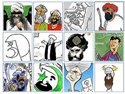
Consider Yale. On Oct. 1, the university hosted Danish cartoonist Kurt Westergaard. His drawing of Muhammad with a bomb in his turban became the best known of 12 cartoons published by the Danish newspaper Jyllands-Posten in September 2005. That led to deadly protests throughout the Muslim world. On the same day, at an unrelated event, Yale hosted Brandeis Prof. Jytte Klausen. Her new book, “The Cartoons that Shook the World,” was subject in August to a last minute prepublication decision by Yale President Richard Levin and Yale University Press to remove not only the 12 cartoons but also all representations of Muhammad, including respected works of art. …
To be sure, Yale’s censorship—the right word because Yale suppressed content on moral and political grounds—raised difficult questions. Can’t rights, including freedom of speech and press, be limited to accommodate other rights and goods? What if reprinting the cartoons and other depictions gave thugs and extremists a new opportunity to inflame passions and unleash violence? Can’t the consequences of the cartoons’ original publication be understood without reproducing them? Weren’t the cartoons really akin, as Yale Senior Lecturer Charles Hill pointed out in a letter to the Yale Alumni magazine, to the depictions of Jews as grotesque monsters that successive American administrations have sought to persuade Arab newspapers to cease publishing? And isn’t it true, as Mr. Hill also observed, that Yale’s obligation to defend free speech does not oblige it to subsidize gratuitously offensive or intellectually worthless speech?
These are good questions—to which there are good answers.
Rights are subject to limits, but a right as fundamental to the university and the nation as freedom of speech and press should only be limited in cases of imminent danger and not in deference to speculation about possible violence at an indeterminate future date. One can’t properly evaluate Ms. Klausen’s contention that the cartoons were cynically manipulated without assessing with one’s own eyes whether the images passed beyond mockery and ridicule to the direct incitement of violence.
Even if the cartoons exhibited a kinship to anti-Semitic caricatures, it would cut in favor of publication: a scholar would be derelict in his duties if he published a work on anti-Semitic images without including examples. And finally, if Yale chooses to publish a rigorous analysis of the Danish cartoon controversy, which affected the national interest and roiled world affairs, then the university does incur a scholarly obligation to include all the relevant information and evidence including the cartoons at the center, regardless of whether they are in themselves gratuitously offensive and intellectually worthless.
The wonder is that Yale’s censorship has excited so little debate at Yale. The American Association of University Professors condemned Yale for caving in to terrorists’ “anticipated demands.” And a group of distinguished alumni formed the Yale Committee for a Free Press and published a letter protesting Yale’s “surrender to potential unknown billigerents” and calling on the university to correct its error by reprinting Ms. Klausen’s book with the cartoons and other images intact. But the Yale faculty has mostly yawned. Even the famously activist Yale Law School has, according to its director of public affairs, sponsored no programs on censorship and the university.
Alas, there is good reason to suppose that in its complacency about threats to freedom on campus the Yale faculty is typical of faculties at our leading universities. In 2006, even as the police had barely begun their investigation, Duke University President Richard Brodhead lent the prestige of his office to faculty members’ prosecution and conviction in the court of public opinion of three members of the Duke lacrosse team falsely accused of gang raping an African-American exotic dancer. It turned out they were being pursued by a rogue prosecutor. To be sure, it was only a vocal minority at Duke who led the public rush to judgment. But the vast majority of the faculty stood idly by, never rising to defend the presumption of innocence and the requirements of fair process. Perhaps Duke faculty members did not realize or perhaps they did not care that these formal and fundamental protections against the abuse of power belong among the conditions essential to the lively exchange of ideas at the heart of liberal education.
Similarly, in 2005, Harvard President Lawrence Summers sparked a faculty revolt that ultimately led to his ouster by floating at a closed-door, off-the-record meeting the hypothesis—which he gave reasons for rejecting only a few breaths after posing it—that women were poorly represented among natural science faculties because significantly fewer women than men are born with the extraordinary theoretical intelligence necessary to succeed at the highest scientific levels. Before he was forced to resign, Mr. Summers did his part to set back the cause of unfettered intellectual inquiry by taking the side of his accusers and apologizing repeatedly for having dared to expose an unpopular idea to rational analysis. Apart from a few honorable exceptions, the Harvard faculty could not find a principle worth defending in the controversy over Mr. Summer’s remarks.
As the controversies at Yale, Duke and Harvard captured national attention, professors from other universities haven’t had much to say in defense of liberty of thought and discussion either. This silence represents a collective failure of America’s professors of colossal proportions. What could be a clearer sign of our professors’ loss of understanding of the requirements of liberal education than their failure to defend liberty of thought and discussion where it touches them most directly?
What indeed?
18 Oct 2009

Leonardo da Vinci, Portrait of Young Girl in Profile
The London Time describes how sophisticated forensic techniques were able to authenticate a portrait profile drawing in inks and chalks as the work of Leonardo da Vinci.
The 33 x 23cm (13 x 9in) picture, in chalk, pen and ink, appeared at auction at Christie’s, New York, in 1998, catalogued as “German school, early 19th centuryâ€. It sold for $19,000 (£11,400). Now a growing number of leading art experts agree that it is almost certainly by Leonardo da Vinci and worth about £100 million.
Carbon dating and infra-red analysis of the artist’s technique are consistent with such a conclusion, but the most compelling evidence is that fragment of a fingerprint.
Peter Paul Biro, a Montreal-based forensic art expert, found it while examining images captured by the revolutionary multispectral camera from the Lumière Technology company. …
The fingerprint corresponds to the tip of the index or middle finger, and is “highly comparable†to one on Leonardo’s St Jerome in the Vatican. Importantly, St Jerome is an early work from a time when Leonardo was not known to have employed assistants, making it likely that it is his fingerprint.
Martin Kemp, Emeritus Professor of History of Art at the University of Oxford, is convinced and recently completed a book about the find (as yet unpublished). He said that his first reaction was that “it sounded too good to be true — after 40 years in the business, I thought I’d seen it allâ€. But gradually, “all the bits fell into place.â€
Professor Kemp has rechristened the picture, sold as Young Girl in Profile in Renaissance Dress, as La Bella Principessa after identifying her, “by a process of eliminationâ€, as Bianca Sforza, daughter of Ludovico Sforza, Duke of Milan (1452-1508), and his mistress Bernardina de Corradis. He described the profile as “subtle to an inexpressible degreeâ€, as befits the artist best known for the Mona Lisa.
If it is by Leonardo, it would be the only known work by the artist on vellum although Professor Kemp points out that Leonardo asked the French court painter Jean Perréal about the technique of using coloured chalks on vellum in 1494.
The picture was bought in 1998 by Kate Ganz, a New York dealer, who sold it for about the same sum to the Canadian-born Europe-based connoisseur Peter Silverman in 2007. Ms Ganz had suggested that the portrait “may have been made by a German artist studying in Italy … based on paintings by Leonardo da Vinciâ€. …
Carbon-14 analysis of the vellum gave a date range of 1440-1650. Infra-red analysis revealed stylistic parallels to Leonardo’s other works, including a palm print in the chalk on the sitter’s neck “consistent … to Leonardo’s use of his hands in creating texture and shadingâ€, according to Mr Biro.
/div>
Feeds
|





