Archive for October, 2013
17 Oct 2013

The Favorites of the Emperor Honorius

,


John William Waterhouse, The Favorites of the Emperor Honorius, 1883, Art Gallery of South Australia, Adelaide

Via Ratak Monodosico.

16 Oct 2013

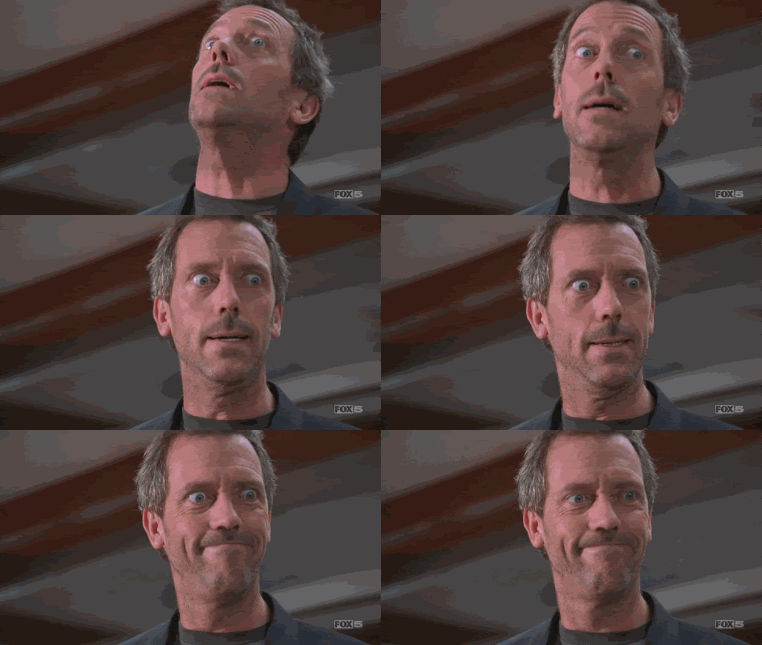
Dr. House Reacts to the Obamacare Launch

, ,

Buzzfeed

Hat tip to James Harberson.

16 Oct 2013

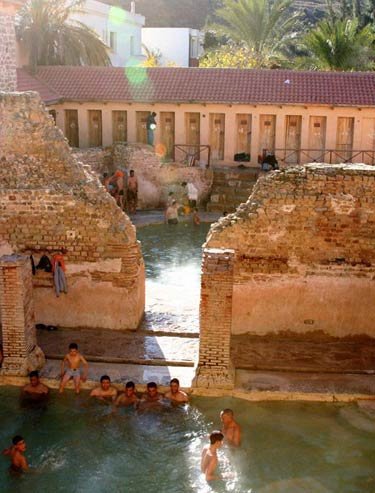
Roman Bathhouse Still in Operation

,

In Khenchela, a town in northeastern Algeria, a Roman bathhouse built in the First Century remains in active daily use today.

BBC News

Hat tips to Karen L. Myers, Bird Dog, and Anne Althouse.

16 Oct 2013

Spiders!

, ,

Projection mapping an office to look like a giant spider infestation.

Via Ratak Monodosico.

16 Oct 2013

It’s Good to Own the Press

, , , ,

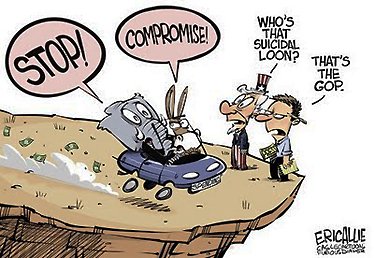
Jim Geraghty (via email) explains why democrats think they don’t need to compromise.

[T]he president probably doesn’t really want a default . . . but that doesn’t mean he’s willing to do much to avoid one. He’s probably confident he’ll win the blame game afterwards — he has good reason to think that! — and this scenario would undoubtedly give him a clear, concise message from here until November 2014: “House Republicans destroyed the economy.” In fact, from November 1, 2013 until January 20, 2017, President Obama would cite his built-in excuse:The U.S. government’s failure to pay money it owes did irrevocable damage to the confidence of investors around the globe, an obstacle that not even his enlightened, innovative, unprecedented, wise, and munificent policies could overcome.

This is what happens when you have a bunch of elected leaders who are so convinced they can win a crisis that they aren’t that interested in preventing the crisis. Or that they seem to welcome crises, believing they’re all opportunities in disguise.

This ultimately all can be laid at the feet of the mainstream media, or whatever you like to call it these days: The New York Times, the Associated Press, Time, the network news crews, and so on. They’ve created a political environment of near-zero accountability.

We live in an atmosphere where Democrats aren’t worried about any of their decisions backfiring, because they know the mainstream coverage will always give them the benefit of the doubt, hammer their opponents, and gloss over or downplay their worst moments. The flip side of the coin is a “Tea Party caucus” (for lack of a better term) that has absolutely no fear of getting bad press — because they feel/suspect/know they’ll get negative coverage no matter what they do. Most of these guys shrug at the Morning Joe panel unanimously denouncing them as fools and unhinged extremists, because they think the only way that panel won’t denounce them as fools and extremists is if they stop being conservatives. A lot of those House members feel they might as well vote their principles and draw the hardest line possible — because if you’re going to get bad coverage, you might as well get bad coverage while fighting for a good cause.

16 Oct 2013

The Art of Scottish Fencing

, ,

15 Oct 2013

Even Wyoming Bison Object to the Spite House’s National Park Shutdown

, ,

15 Oct 2013

George Friedman: The Founders and the Shutdown

, , , , , ,


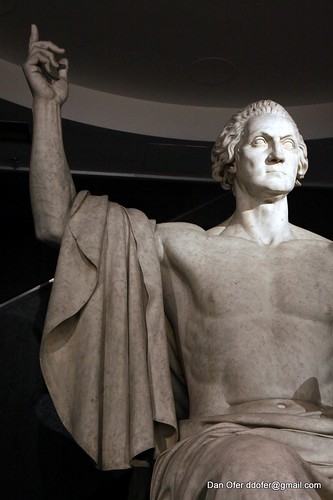
Detail, Horatio Greenough, George Washington Attired in Roman Toga, 1841, National Museum of American History

Stratfor’s George Friedman thinks seriously about what the founders would have thought about the partisan stalemate in Washington.

The founders needed to bridge the gaps between the need to govern, the fear of tyranny and the uncertainty of the future. Their solution was not in law but in personal virtue. The founders were fascinated by Rome and its notion of governance. Their Senate was both a Roman name and venue for the Roman vision of the statesman, particularly Cincinnatus, who left his farm to serve (not rule) and then returned to it when his service was over. The Romans, at least in the eyes of the founders if not always in reality, did not see government as a profession but rather as a burden and obligation. The founders wanted reluctant rulers.

They also wanted virtuous rulers. Specifically they lauded Roman virtue. It is the virtue that most reasonable men would see as praiseworthy: courage, prudence, kindness to the weak, honoring friendship, resolution with enemies. These were not virtues that were greatly respected by intellectuals, since they knew that life was more complicated than this. But the founders knew that the virtues of common sense ought not be analyzed until they lose their vigor and die. They did not want philosopher-kings; they wanted citizens of simple, clear virtues, who served reluctantly and left gladly, pursued their passions but were blocked by the system from imposing their idiosyncratic vision, pursued the ends of the preamble, and were contained in their occasional bitterness by the checks and balances that would frustrate the personal and ideological ambitions of others.

The Founding Father who best reflects these values is, of course, George Washington. Among the founders, it is he whom we should heed as we ponder the paralysis-by-design of the founders’ system and the current conundrum threatening an American debt default. He understood that the public would be reluctant to repay debt and that the federal government would lack the will to tax the public to pay debt on its behalf. He stressed the importance of redeeming and discharging public debt. He discouraged accruing additional debt and warned against overusing debt.

However, Washington understood there would be instances in which debt had to be incurred. He saw public credit as vital and therefore something that ought to be used sparingly — particularly in the event of war — and then aggressively repaid. This is not a technical argument for those who see debt as a way to manage the economy. It is a moral argument built around the virtue of prudence.

After these excellent observations, though, George reaches a dubious conclusion.

I think the founders would have questioned the prudence of our current debt. They would ask if it were necessary to incur, and how and whether it would be paid back. They would also question whether economic growth driven by debt actually strengthens the nation. In any case, I think there is little doubt they would be appalled by our debt levels, not necessarily because of what it might do to the economy, but because of what it does to the national character. However, because they were moderate men they would not demand an immediate solution. Nor would they ask for a solution that undermines national power.

As for federally mandated health care, I think they would be wary of entrusting such an important service to an entity they feared viscerally. But they wouldn’t have been fanatical in their resistance to it. As much as federally mandated health care would frighten them, I believe fanaticism would have frightened them even more.

The question of a default would have been simple. They would have been disgusted by any failure to pay a debt unless it was simply impossible to do so. They would have regarded self-inflicted default — regardless of the imprudence of the debt, or health care reform or any such subject — as something moderate people do not contemplate, let alone do.

So, by this analysis (which I think is drawn unconsciously from the poisoned well of the establishment media), even though Obamacare and an ever-increasing and unsustainable public debt are both classic examples of the kind of fundamentally destructive perils to the Republic which the framers devised the Constitution specifically to avoid, good men must refrain from fully utilizing the House’s power of the purse to restrain the radicals and the corrupt because refusing to write checks to cover the debts they irresponsibly and uncontrollably pile up would mean the good men were being “immoderate.” Uh, huh!

Sorry, but I think it is appropriate to quote Justice Jackson to Mr. Friedman: “The Constitution is not a suicide pact.” And a one-sided political philosophy which demands that the forces of conservatism, liberty, and fiscal prudence must be moderate and cannot fight totally ruthless opponents who shrink from nothing with all their means simply guarantees that the democrats are always going to win.

When we have one of these policy confrontations, I would say, “Republicans, what would the democrats do?” The answer is: everything and anything necessary to win. In political wars, it is desirable to maintain a standard of behavior. It is desirable to set an example of moderation. But to set any kind of example, to have any impact on the future, to be remembered by history, you actually do have to win. Nobody, long years afterwards, says, they lost, but they were so well-mannered and restrained in their manner of being defeated that we are building them this monument.

We have, in this country, an ongoing political struggle between two parties. The Republican Party is commonly comprised of well-meaning, civic-minded and moderate men, successful businessmen, Rotarians who went on into public service. The democrat party, on the other hand, is full of machine politicians, of ruthless bastards with limitless ambition, of demagogues and crooks. Republicans would like to do politics in the genteel way you play a game of croquet. Democrats are professional, organized, and utterly and totally determined to win every time at any cost. We are doing politics as an obligation and a duty. They are doing politics to make a living. If a typical Republican leaves office, he is happy to go home. If a typical major democrat pol were to leave politics, he’d be in the gutter or in jail. The Republican Party is going to keep losing until its leaders realize that they are really fighting for the survival of the Republic and that they have to fight these people with no holds barred.

Read the whole thing.

15 Oct 2013

Animals Stealing Food

,

Begins with the famous walking-on-two-legs raccoon sequence.

14 Oct 2013

Schubert: Der Lindenbaum, D.911, 5

, , , ,

The inimitable Gerhard Hüsch accompanied by Hans Udo Müller in 1933.

14 Oct 2013

XKCD Meets Ayn Rand

, , ,

Hat tip to Karen L. Myers.

14 Oct 2013

Raising the Debt Limit

, , ,

Your are browsing
the Archives of Never Yet Melted for October 2013.
/div>


Feeds
Entries (RSS)
Comments (RSS)
Feed Shark