The New York Post tells us that a crucial 28 pages of the government’s report on 9/11 have been classified and not revealed to the American public.
Gee, what information about which state do you suppose those redacted pages contain?
After the 9/11 attacks, the public was told al Qaeda acted alone, with no state sponsors.
But the White House never let it see an entire section of Congress’ investigative report on 9/11 dealing with “specific sources of foreign support†for the 19 hijackers, 15 of whom were Saudi nationals.
It was kept secret and remains so today.
President Bush inexplicably censored 28 full pages of the 800-page report. Text isn’t just blacked-out here and there in this critical-yet-missing middle section. The pages are completely blank, except for dotted lines where an estimated 7,200 words once stood (this story by comparison is about 1,000 words).
A pair of lawmakers who recently read the redacted portion say they are “absolutely shocked†at the level of foreign state involvement in the attacks.
Reps. Walter Jones (R-NC) and Stephen Lynch (D-Mass.) can’t reveal the nation identified by it without violating federal law. So they’ve proposed Congress pass a resolution asking President Obama to declassify the entire 2002 report, “Joint Inquiry Into Intelligence Community Activities Before and After the Terrorist Attacks of September 11, 2001.â€
Some information already has leaked from the classified section, which is based on both CIA and FBI documents, and it points back to Saudi Arabia, a presumed ally.
The Saudis deny any role in 9/11, but the CIA in one memo reportedly found “incontrovertible evidence†that Saudi government officials — not just wealthy Saudi hardliners, but high-level diplomats and intelligence officers employed by the kingdom — helped the hijackers both financially and logistically. The intelligence files cited in the report directly implicate the Saudi embassy in Washington and consulate in Los Angeles in the attacks, making 9/11 not just an act of terrorism, but an act of war.
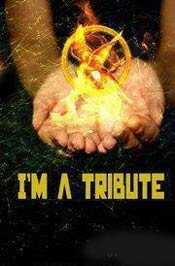
Peter Blair contends that popular fiction written for young people is prone to channel directly from the culture’s psyche. The replacement of the Harry Potter series in the bestseller list with Hunger Games books may indicate that the popular attitude toward authority has grown increasingly negative.
The Hunger Games and Harry Potter are among the two most successful and influential cross-media franchises in recent decades. The books were widely read, the movies widely watched, and the arrival of a new book or movie in the series was a big cultural moment. When pop culture objects become as wildly popular as these two series, they often take on a greater importance and resonance than those who occasioned them intended. We can only speculate, but in light of the enduring success of the latest Hunger Games movie, Catching Fire, it’s possible to read the evolution between these two series as a sort of hardening of heart toward government that reflects the increasing anger Americans feel towards political authority.
No twerking in this one. Instead Miley Cyrus delivers a pop culture defense of Zionism. “It’s our LAND we can BUILD where we want
It’s our LAND we can PRAY WHERE we want. It’s our LAND we can LIVE HOW we want.” And she sagely counsels: “Don’t take nothing from JOHN KERRY.”
It’s snowing here in the Bald Eagle Valley, and we’re predicted to get 6-to-10″. When the satellite dish is thoroughly covered, there’ll be no more Internet until somebody goes out and shovels it off, and our dish is down in a field along a run on the other side of the driveway, and I don’t plan to deal with it until it stops snowing.
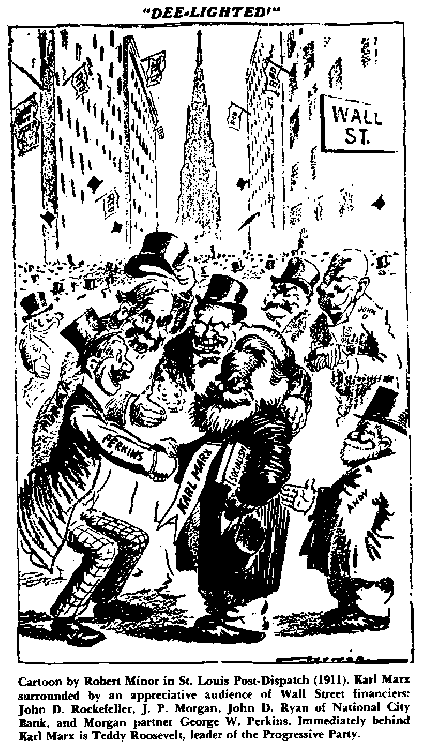
John Hinderaker finds the donor list for Barack Obama’s favorite think tank includes lots of Very Big Corporations.
The Center for American Progress is a left-wing organization that is closely associated with the Obama administration. Its principal product is a web site called Think Progress. Think Progress is part of the internet cesspool that modern liberalism has become. Written by hack left-wing bloggers, it is bitterly hostile to free enterprise. It is a low-rent site that traffics in the most absurd smears and conspiracy theories. Many have wondered for some years who finances far-left web sites like Think Progress. As of today, we know at least part of the answer, as CAP released its corporate donor list for the first time. …
[The corporate list includes:]
* Akin Gump Strauss Hauer & Feld LLP, one of Washington’s most powerful lobbyists.
* American Iron and Steel Institute
shutterstock_93355207* America’s Health Insurance Plans, or AHIP
* Apple Inc.
* AT&T
* Bank of America
* Blackstone, one of the largest multinational private equity firms
* Blue Cross Blue Shield Association
* Citigroup
* The Coca-Cola Company
* Comcast NBCUniversal
* CVS Caremark Inc.
* Eli Lilly and Company
* Facebook
* GE
* Goldman Sachs
* Google
* Japan Bank for International Cooperation
* Microsoft Corporation
* Northrop Grumman, defense contractor
* PepsiCo
* Samsung
* Taipei Economic and Cultural Representative Office in the United States
* Time Warner Inc.
* Walmart
* Wells Fargo
I doubt that there is any conservative organization that can boast a remotely comparable list of corporate supporters. CAP’s disclosure is a timely reminder that large corporations are not, in general, supporters of free enterprise. Many of them love to partner with government to suppress innovation and competition. Koch Industries stands alone, as far as I know, as a relatively large company that actually supports free enterprise as a matter of principle. Which is why corporatist America, through disreputable organizations like the Center for American Progress, has waged unremitting warfare against Koch.
UK Independent, News > Environment, Charles Onians, Monday 20 March 2000:
Snowfalls are now just a thing of the past
Britain’s winter ends tomorrow with further indications of a striking environmental change: snow is starting to disappear from our lives.
Sledges, snowmen, snowballs and the excitement of waking to find that the stuff has settled outside are all a rapidly diminishing part of Britain’s culture, as warmer winters – which scientists are attributing to global climate change – produce not only fewer white Christmases, but fewer white Januaries and Februaries.
The first two months of 2000 were virtually free of significant snowfall in much of lowland Britain, and December brought only moderate snowfall in the South-east. It is the continuation of a trend that has been increasingly visible in the past 15 years: in the south of England, for instance, from 1970 to 1995 snow and sleet fell for an average of 3.7 days, while from 1988 to 1995 the average was 0.7 days. London’s last substantial snowfall was in February 1991.
Global warming, the heating of the atmosphere by increased amounts of industrial gases, is now accepted as a reality by the international community. Average temperatures in Britain were nearly 0.6°C higher in the Nineties than in 1960-90, and it is estimated that they will increase by 0.2C every decade over the coming century. Eight of the 10 hottest years on record occurred in the Nineties.
However, the warming is so far manifesting itself more in winters which are less cold than in much hotter summers. According to Dr David Viner, a senior research scientist at the climatic research unit (CRU) of the University of East Anglia,within a few years winter snowfall will become “a very rare and exciting event”.
“Children just aren’t going to know what snow is,” he said.
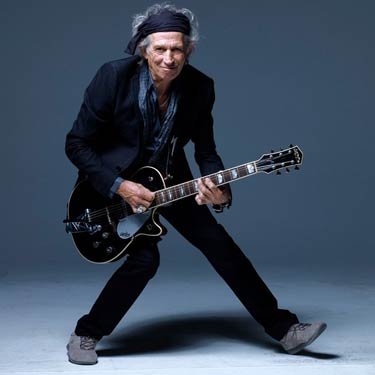
Keith Richards tells the Wall Street Journal that the opening chords of Street Fighting Man were intended to imitate the sound of French police sirens.
Around this time, I became fascinated by one of the early cassette tape recorders made by Philips. The machine was compact, so it was portable, and it had this little stick microphone, which would allow me to capture song ideas on the fly. So I bought one, but as I watched the small tape-cartridge reels turn, I began to think of the machine not as a dictation device but as a mini recording studio. The problem is I couldn’t use an electric guitar to record on it. The sound just overwhelmed the mike and speaker. I tried an acoustic guitar instead and got this dry, crisp guitar sound on the tape—the exact sound I had been looking for on the song.
At the time, I was experimenting with open tunings on the guitar—you know, tuning the strings to form specific chords so I could bang out the broadest possible sound. That’s how I came up with “Street Fighting Man’s” opening riff—even before I bought the Philips. I based the rest of the song’s melody on the tone pattern of those odd sirens French police cars use [sings the siren and lyrics to illustrate].
Sometime in early ’68, I took the Philips recorder into London’s Olympic Sound Studios and had Charlie [Watts] meet me there. Charlie had this snap drum kit that was made in the 1930s. Jazz drummers used to carry around the small kit to practice when they were on the bus or train. It had this little spring-up hi-hat and a tambourine for a snare. It was perfect because, like the acoustic guitar, it wouldn’t overpower the recorder’s mike. I had Charlie sit right next to the mike with his little kit and I kneeled on the floor next to him with my acoustic Gibson Hummingbird. There we were in front of this little box hammering away [laughs]. After we listened to the playback, the sound was perfect.
On that opening riff, I used enormous force on the strings. I always did that and still do. I’m looking at my hands now and they look like Mike Tyson’s. They’re pretty beat up. I’m not a hard hitter on the strings—more of a striker. It’s not the force as much as it is a whip action. I’m almost releasing the power before my fingers actually meet the strings. I’m a big string-breaker, since I like to whip them pretty hard.
You can kind of hear the siren motif, if you try, but I think the opening principally creates a powerful sense of expectation of near-term melodic gratification and fulfillment.
Barbara Branden, first biographer of Ayn Rand, died Wednesday at age 84. Astonishingly a laudatory obituary written by James Peron was published on the Puffington Host .
One of the great figures in modern libertarianism has died today: Barbara Branden. Barbara, 84, was born in Winnipeg, Canada. It was there that she met her husband, Nathaniel Branden. And, while the couple divorced, Barbara was close to Nathaniel her entire life.
Barbara and Nathaniel became friends because of their mutual admiration for Ayn Rand’s novel The Fountainhead. While a student at the University of California, Los Angeles, Nathaniel wrote a fan letter to Rand, who worked as a scriptwriter in the area. Rand called him and invited him to visit her home. On the second visit he brought Barbara with him. They married in 1954.
During the writing of Atlas Shrugged, Barbara was one of the small circle of friends allowed to read the manuscript while it was in process. In 1958 she and Nathaniel organized the Nathaniel Branden Institute, to present systematic presentations of Rand’s Objectivist philosophy. Barbara gave a series of lectures on Principles of Efficient Thinking.
She and Nathaniel divorced but remained friends for the rest of their lives. In 1984 she published a biography of Rand, The Passion of Ayn Rand, which was later made into a film with Helen Mirren and Eric Stoltz. Barbara was not entirely pleased with the film.
Barbara remained active in Objectivist and libertarian circles for her entire life. She offered a nuanced, always sympathetic perspective on Ayn Rand. While sometimes critical, she never lost her admiration for Ayn. Even though the Brandens had an acrimonious split with Rand, after a relationship between Ayn and Nathaniel ended, Barbara always told me that, knowing everything she knew then, she would do it all over again.