Archive for 2016
07 Oct 2016

rangordnung:
Marx had asked “Is Achilles possible with gunpowder and lead?†Jünger has answered, “That was my problem.â€
06 Oct 2016


I still don’t like Trump, but as the residents of Savannah said when they heard that Sherman burned Atlanta: “Some things show that there’s good in everyone.”
The flood of Trump-fearing American liberals sneaking across the border into Canada has intensified in the past week, sparking calls for increased patrols to stop the illegal immigration. The Republican Presidential campaign is prompting an exodus among left-leaning citizens who fear they’ll soon be required to hunt, pray, and live according to conservative ideas about the Constitution.
Canadian border farmers say it’s not uncommon to see dozens of sociology professors, global warming activists, and “green†energy proponents crossing their fields at night. “I went out to milk the cows the other day, and there was a Hollywood producer huddled in the barn,†said Southern Manitoba farmer Red Greenfield, whose acreage borders North Dakota. “The producer was cold, exhausted and hungry. He asked me if I could spare a latte and some free-range chicken. When I said I didn’t have any, he left before I even got a chance to show him my screenplay, eh?†In an effort to stop the illegal aliens, Greenfield erected higher fences, but the liberals scaled them. He then installed loudspeakers that blared Rush Limbaugh across the fields, but they just keep coming.
Officials are particularly concerned about smugglers who meet liberals near the Canadian border, pack them into electric cars, and drive them across the border where they are simply left to fend for themselves after the battery dies.â€A lot of these people are not prepared for our rugged conditions,†an Ontario border patrolman said. “I found one carload without a single bottle of Perrier drinking water. They did have a nice little Napa Valley cabernet, though, and some kale chips.â€
When liberals are caught, they’re sent back across the border, often wailing loudly that they fear assassination from Trump high hairers. Rumors have been circulating about plans being made to build re-education camps where liberals will be forced to drink domestic beer and study the Constitution.
In recent days, liberals have turned to ingenious ways of crossing the border. Some have been disguised as senior citizens taking a bus trip to buy cheap Canadian prescription drugs. After catching a half- dozen young vegans in blue-hair wig disguises, Canadian immigration authorities began stopping buses and quizzing the supposed senior citizens about Perry Como and Rosemary Clooney to prove that they were alive in the ’50s.
“If they can’t identify the accordion player on The Lawrence Welk Show, we become very suspicious about their age,†an official said.Canadian citizens have complained that the illegal immigrants are creating an organic-broccoli shortage, buying up all the Barbara Streisand c.d.’s, and renting all the Michael Moore movies. “I really feel sorry for American liberals, but the Canadian economy just can’t support them,†an Ottawa resident said. “How many art-history majors does one country need?â€
Hat tip to David Roth.
06 Oct 2016
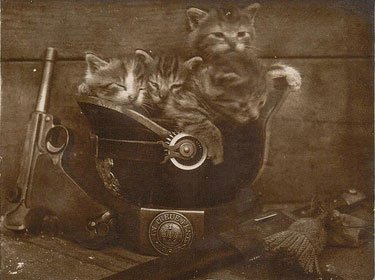
“In Treue Fest” (“Firm in Fidelity”) on belt-buckle is the motto of Bavaria.
Hat tip to Karen L. Myers.
06 Oct 2016

Ryszard Lugutko, Professor of philosophy at the Jagellonian University in Cracow.
From The Demon in Democracy: Totalitarian Temptations in Free Societies by Ryszard Legutko.
Liberal and democratic thought had been, from the very beginning –- with few exceptions -– minimalist when it came to its image of the human being. The triumph of liberalism and democracy was supposed to be emancipatory also in the sense that man was to become free from excessive demands imposed on him by unrealistic metaphysics invented by an aristocratic culture in antiquity and the Middle Ages. In other words, an important part of the message of modernity was to legitimize a lowering of human aspirations. Aspiring to great goals was not ruled out in particular cases, but greatness was no longer inscribed in the essence of humanity. The main principle behind the minimalist perspective was equality: from the point of view of a liberal order one cannot prioritize human objectives. Only the means can be prioritized in terms of efficiency, provided this does not jeopardize the rules of peaceful cooperation. …
There were, as I’ve said, exceptions to this view –- few, but worth noting. Among the eighteenth century authors, Kant, who defended liberalism, set up high standards for humanity; in the 19th century, John Stuart Mill and T.H. Green had similar intentions. The last two aptly perceived the danger of mediocrity that the democratic rule was inconspicuously imposing on modern societies. They both believed –- differences notwithstanding -– that some form of liberalism, or rather, a philosophy of liberty, was a possible remedy to the creeping disease of mediocrity. Mill remained under the partial, albeit indirect influence of German Romanticism, and thus attributed a particular role to great, creative individuals whose exceptionality or even eccentricity could –- in a free environment -– pull men out of a democratic slumber.
But these ideas did not find followers, and liberal democratic thought and practice increasingly fell into the logic of minimalism. Lowering the requirements is a process that has no end. Once people become used to disqualifying certain standards as too high, impractical, or unnecessary, it is only a matter of time before natural inertia takes its course and even the new lowered standards are deemed unacceptable. One can look at the history of liberal democracy as a gradual sliding down from the high to the low, from the refined to the coarse. Quite often a step down as been welcomed as refreshing, natural, and healthy, and indeed it sometimes was. But whatever the merits of this process of simplification, it too often brought vulgarity to language, behavior, education, and moral rules. The growing vulgarity of form was particularly striking, especially in the last decades, moving away from sophistication and decorum. A liberal-democratic man refused to learn these artificial and awkward arrangements, the usefulness of which seemed to him at first doubtful, and soon -– null. He felt he had no time for them, apparently believing that their absence would make life easier and more enjoyable. In their place he establish new criteria: use, practicality, usefulness, pleasure, convenience, and immediate gratification, the combination of which turned out to be a deadly weapon against the old social forms. The old customs crumbled, and so did rules of propriety, a sense of decorum, a respect for hierarchy.
Read the rest of this entry »
06 Oct 2016
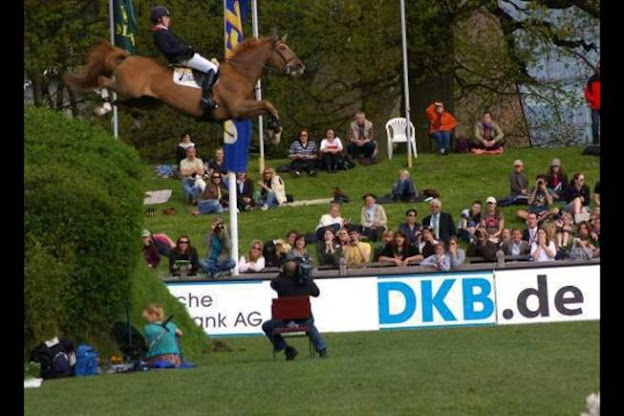
Ben Maher of Great Britian on Alfredo during Day 2 of the 79th German Dressage and Jumping Derby 2008 at Klein Flottbek Derby Park on May 02, 2008 in Hamburg, Germany.
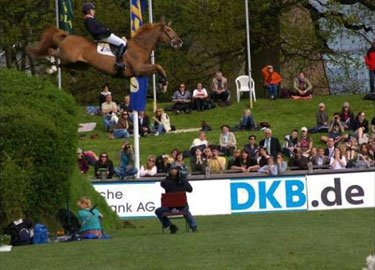
When there’s no turning back.

Unhappy landing for the rider. Horse was fine.
05 Oct 2016
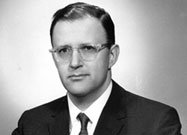 
Harry Jaffa — Allan Bloom
Jeet Heer has an interesting article, in the New Republic, on the coastal divide between Straussians.
Charles Kesler, a professor of government at Claremont McKenna College and the editor of the Claremont Review of Books, wrote in the spring issue of the journal that America may be facing “the Weimar problemâ€: “Has the national culture, popular and elite, deteriorated so much that the virtues necessary to sustain republican government are no longer viable? America is not there yet, although when 40% of children are born out of wedlock it is not too early to wonder.†It’s no accident that this question is raised in an essay making case that Donald Trump isn’t as terrible as mainstream conservatives like William Kristol fear he is. If you live in the Weimar Republic, Kesler implicitly argues, a figure like Trump could come as a relief.
A similar mood of crisis was voiced by Angelo Codevilla, a retired professor of international relations, in a recent online essay for the Review. Codevilla argues that regime change of a terrible kind has already occurred, with the American elite destroying what was great about the country. By this account, America needs a new revolution. Codevilla supports Trump but fears that he’s not up to the task of revolutionary change required:
In fact, the United States of America was great because of a whole bunch of things that now are gone. Yes, the ruling class led the way in personal corruption, cheating on tests, lowering of professional standards, abandoning churches and synagogues for the Playboy Philosophy and lifestyle, disregarding law, basing economic life on gaming the administrative state, basing politics on conflicting identities, and much more. But much of the rest of the country followed. What would it take to make America great again—or indeed to make any of the changes that Trump’s voters demand? Replacing the current ruling class would be only the beginning.
Kesler and Codevilla are West Coast Straussians, one of two rival factions of intellectuals who revere Leo Strauss, the German-born political philosopher who died in 1973. Whereas East Coast Straussians have been heavily oriented towards establishment Republicans like George W. Bush, and thus tend to be #NeverTrump—Kristol’s Weekly Standard has been sharply anti-Trump and Paul Wolfowitz has said he might vote for Hillary Clinton—there’s considerable support for Trump among West Coast Straussians. They justify their support of Trump by saying that America is in such deep trouble it needs regime change. To borrow a Trumpian phrase: “What do you have to lose?â€
In these West Coast Straussians we see the emergence, for the first time since the Southern secessionists of the 1850s, of a group of conservative American intellectuals who advocate overthrowing the existing political order. Under Bush, Americans saw what Straussian ideas of regime change could do abroad. Under Trump, we might see the same urge for regime change applied to America itself. …
After Leo Strauss died in 1973, his followers divided into two factions, creating the infamous “Crisis of the Strauss Divided.†And the best way to understand the divide between West Coast and East Coast Straussians is through the quarrel between Harry Jaffa and Allan Bloom, who were the respective heads of the rival schools. …
The disputes between Jaffa’s West Coast Straussianism and Bloom’s East Coast Straussianism can be discussed along philosophic lines: Is America, as Jaffa believes, grounded in ancient philosophy or was the American founding, as Bloom would have it, built on the low but solid ground of early modern philosophers like Hobbes and Locke? Does the survival of America depend on the virtue of the people, as West Coast Straussians believe, or in the maintenance of constitutional norms, as East Coast Straussians believe? But the dispute can also more easily be understood in terms of the familiar social divide in the Republican Party. West Coast Straussians are the grassroots activists, grounded in social conservatism and ultra-nationalist in foreign policy. Sociologically, East Coast Straussians are more aligned with the party elite, and tend to be found in Washington think tanks and serving as career bureaucrats.
Read the whole thing.
I’m not a Straussian myself, but the nomination of Donald Trump has certainly similarly divided me from a long-time blogging kindred spirit who, coincidentally perhaps, lives on the West Coast, and many others.
I’d say, “If you live in the Weimar Republic,” you had better be pretty damned careful about allying with the ignorant and resentful mob to put into power a demagogic populist and narcissistic strongman determined to supplant previous legitimate sources of leadership and authority and contemptuous of traditional ethics as well as of constraint on the basis of theory and ideas. They elected somebody of the sort in 1932 in the real Weimar Republic, and the results were not pretty.
05 Oct 2016

or

05 Oct 2016

Not only have US negotiations with Russia over Syria broken down and Russia has cancelled a major arms control agreement concerning plutonium, now we learn that Russia is taking serious steps to prepare its population to survive a nuclear war with the West.
The Independent:
The Russian government has launched a nationwide civil defence training exercise to ensure the country is properly prepared in the event of a nuclear, chemical and biological attack from the West.
Amid growing international tensions, particulary over Russia’s conduct in Syria, the Defence Ministry-run Zvezda TV network announced last week: “Schizophrenics from America are sharpening nuclear weapons for Moscow.”
Lasting three days, the exercise bing run by the Ministry for Civil Defence, Emergencies and Elimination of Consequences of Natural Disasters (EMERCOM) will involve 200,000 emergency personnel and the co-operation of 40 million civilians. …
“The drill will rehearse radiation, chemical and biological protection of the personnel and population during emergencies at crucial and potentially dangerous facilities.
“Fire safety, civil defence and human protection at social institutions and public buildings are also planned to be checked.
“Response units will deploy radiation, chemical and biological monitoring centers and sanitation posts at the emergency areas, while laboratory control networks are going to be put on standby.”
Relations between Russia and the West continue to deteriorate with Vladimir Putin suspending an agreement with the US over the disposal of surplus weapons-grade plutonium, BBC reports.
Read the whole thing.
Apart from all the racial healing, you have got to admire the Obama Administration’s reset of relations with Russia and its great strides in the direction of world peace. Maybe Sweden will give Barry a second Nobel Peace Prize before he leaves office.
05 Oct 2016

Mike Pence obviously won. He was articulate, and projected a kind of simple human decency that seemed downright incongruous in midst of the 2016 presidential electoral shitstorm.
Tim Kaine made the best of a bad position by hastily interrupting Pence over 70 times whenever Pence seemed to be delivering home a strong or effective statement. Kaine was additionally assisted by moderator Elaine Quijano, who also rapidly interrupted Pence whenever he got close to scoring and who then took care to change immediately the topic under discussion. When, I wonder, will Republicans ever start insisting on taking control of political debates out of the hands of biased representatives of the mainstream media?
It was impossible to watch last night’s debate without reflecting that, if Mike Pence were running against Hillary, Hillary’s goose would be cooked, and we’d be looking forward to a GOP landslide in November.
Pence as Vice President, combined with Donald Trump’s age and corpulence, is obviously the only really good argument for voting for Trump. Now, if Donald could just be relied upon, like William Henry Harrison, to give a really lengthy inaugural address without wearing an overcoat…
Too bad for Trump that he cannot change arrangements and send in Pence for the next two debates with Hillary as his champion and surrogate. Pence is not only a very decent debater, the guy is genuinely likable.
As Iowahawk put it:

04 Oct 2016
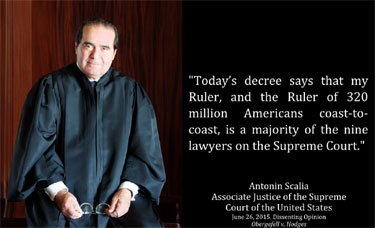
Why did low-information, not-particularly-ideological Republican voters go loco this year, reject all the qualified and genuinely principled candidates in favor of a Reality TV clown and populist demagogue?
They were fed up and simply wanted to express their animosity toward, and contempt for, the holier-than-thou, we-know-better community of fashion elite that controls the national establishment and which, under Obama, has end run the democratic process and simply imposed its will on the larger majority it contemptuously ignores again and again.
Matthew Continetti explains that the nomination of Trump is the steam explosion that occurs when all the democratic pressure release valves on the engine of government have been sealed shut by its careless operators.
This is a moment of dissociation—of unbundling, fracture, disaggregation, dispersal. But the disconnectedness is not merely social. It is also political—a separation of the citizenry from the governments founded in their name. They are meant to have representation, to be heard, to exercise control. What they have found instead is that ostensibly democratic governments sometimes treat their populations not as citizens but as irritants.
The sole election that has had any bearing on the fate of Obamacare, for example, was the one that put Barack Obama in the White House. The special election of Scott Brown to the Senate did not stop Democratic majorities from passing the law over public disapproval. Nor did the 2010, 2012, or 2014 elections prevent or slow down the various agencies of the federal government from reorganizing the health care sector according to the latest technocratic fashions.
The last big immigration law was passed under President Clinton in an attempt to reduce illegal entry. Since then the bureaucracy has been on autopilot, admitting huge numbers to the United States and unable (and sometimes unwilling) to cope with the surge in illegal immigration at the turn of the century. In 2006, 2007, and 2013, public opinion stopped major liberalizations of immigration law. Then the president used executive power to protect certain types of illegal immigrant from deportation anyway.
Coal miners have no voice in deliberations over their futures. Only the courts stand in the way of the Clean Power Plan that will end the coal industry and devastate the Appalachian economy. Congress is unable to help. The president went over the heads of the Senate by calling his carbon deal with China an “agreement†and not a treaty.
There has been no accountability for an IRS that abused its powers to target conservative nonprofits, for Hillary Clinton who disregarded national security in the operation of her private email server, for the FBI that treated Clinton with kid gloves while not following up on individuals who became terrorists. The most recent disclosures in the attack on the Pulse nightclub in Orlando, Fla., show the terrorist Omar Mateen was clearly motivated by devotion to radical Islam and to ISIS. We are only finding this out now because of a lawsuit filed by a news organization. What is the FBI afraid of?
Progressives disregard constitutional objections as outmoded artifacts of a benighted era. Who cares how Obamacare was passed or implemented, the uninsured rate is down. Why should Obama submit a treaty to the Senate when he knows it won’t be ratified; the fate of the planet is at stake. The absence of comprehensive immigration reform isn’t evidence that progressives failed to marshal a constitutional majority for passage. It’s reason for the president to test the limit of his powers. Nor does government failure result from overextension and ineptitude. It is caused by a lack of resources.
Is it really surprising that our democracy has become more tenuous as the distance between citizen and government has increased? A large portion of the electorate, it would seem, is no longer willing to tolerate a bipartisan establishment that seems more concerned with the so-called “globalist†issues of trade, migration, climate, defense of a rickety world order, and transgender rights than with the experiences of joblessness, addiction, crime, worry for one’s children, and not-so-distant memories of a better, stronger, more respected America.
These concerns are often written off as racism, or resentment, or status anxiety—as reaction, backlash, atavism, obstacles to universal progress. The same was said of McCarthy in the 1950s, the New Right in the 1970s, the Tea Party eight years ago. But in every case, including this one, the populist upsurge signified a genuine and not entirely irrational objection of a part of the electorate to its dissociation from the life of the polity.
[F]rom ..“Donald Trump and the American Crisis†by John Marini:
Those most likely to be receptive of Trump are those who believe America is in the midst of a great crisis in terms of its economy, its chaotic civil society, its political corruption, and the inability to defend any kind of tradition—or way of life derived from that tradition—because of the transformation of its culture by the intellectual elites. This sweeping cultural transformation occurred almost completely outside the political process of mobilizing public opinion and political majorities. The American people themselves did not participate or consent to the wholesale undermining of their way of life, which government and the bureaucracy helped to facilitate by undermining those institutions of civil society that were dependent upon a public defense of the old morality.
Marini refers to institutions such as the family, church, and school, institutions charged with forming the character of a citizen, of instructing him in codes of morality and service, in the traditions and history of his country, in the case of the church directing him spiritually and providing him a definitive account of the cause and purpose of life. These are precisely the institutions that have been brought under the sway of bureaucracies and courts heavily insulated from elections, from public opinion, from majority rule. And as the public has lost authority over decision-making in the private sphere, as the culture has become more alien, more bewildering, more hostile to “the old morality,†as President Clinton keeps saying rather fatuously that the fates of Kenya and Kentucky are linked, is it any wonder voters have sought out a vehicle for their disgust and opposition?
/div>

Feeds
|