01 Aug 2016


St. Paul’s
What with the rebellion of the low-information voter and the ascent of Donald Trump, the white working class is in the news a lot these days and everyone is reading J.D. Vance’s Hillbilly Elegy (previously mentioned here), a personal eulogy from an upwardly-mobile ex-Marine to his rust-bucket hometown and left-behind family and friends.
The perfect counterpoint book to read, I think, is Shamus Rahman Khan’s Privilege: The Making of an Adolescent Elite at St. Paul’s School.
J.D. Vance describes how History and Culture have failed our society’s losers.
Shamus Rahman Khan describes, with a mixture of astonishment and congratulatory applause, just how one of the absolutely snobbiest and most expensive secondary boarding schools in America (the place that educated John Kerry and Doonesbury’s Gary Trudeau) educates future winners in a combination of graceful personal ease, the ability to fake your way through anything you don’t actually know, and a nihilistic belief in the complete equality of all things (excluding only your own special elite status).
St. Paul’s often touts its academic program as the best in the nation. In its advertising literature, the school boasts that it has “the highest level of scholarship” and that its “students stand at the top of their peer group in terms of academic preparation.” And according to eager administrators and lackadaisical adolescents alike, the centerpiece of St. Paul’s academic program is undoubtedly the humanities. The humanities program introduces students to the history, literature, and thoughts of different moments in world history. The humanities division describes in some project is an interdisciplinary, multi-vocal investigation of “great questions.” …
This program, significantly, does not teach students to know “things.” The emphasis is not on memorizing historical events, for example. Instead it is on cultivating “habits of mind,” which encourage a particular way of relating both to the world and to each other. …
The enormity of this program is both thrilling and terrifying. The thought of knowing all of that, being swept up and carried through the tide of history, is tantalizing. It is also the product of St. Paul’s hubris. How can any one person possibly teach everything..? As I prepared to teach my own class at the school, I soon found out that I was asking the wrong question. Of course the expectations were ridiculous. No high schooler could ever learn all that the course offers. The more important question, I eventually realized, is much harder to answer: what this mean to present material in this way to teenagers?
Perhaps the point is not really to know anything. The advantage the St. Paul’s installs instills in its students is not a hierarchy of knowledge. As we have seen, knowledge is no longer the exclusive domain of the elite. And these days, information flows so freely that to use it to exclude others is increasingly challenging. By contrast, the important decisions required for those who lead are not based on knowing more but instead are founded in habits of mind. St. Paul’s teaches that everything can be accomplished through these habits, even while still in high school. What strikes me as presumptuous, even shocking, about this vision of the world is taken for granted by pretty much every teenager at St. Paul’s.
Though I marveled at how impossible it seemed to teach students all these things, the school itself seems largely unconcerned about this. Indeed, St. Paul’s approach seems closer to Plato’s outline of education in Republic. Building upon his famous cave metaphor, Plato tells us, “Education isn’t what some people declare it to be, namely putting knowledge of the souls that lack it, like putting sight into blind eyes …” ..In short, education is not teaching students things they don’t know. Rather it is teaching them to think their way through the world. …
“I don’t actually know much,” an alumnus told me after he finished his freshman year at Harvard. “I mean, well, I don’t know how to put it. When I’m in classes all these kids next to me know a lot more than I do. Like about what actually happened in the Civil War. Or what France did in World War II. I don’t know any of that stuff. But I know something they don’t. It’s not facts or anything. It’s how to think. That’s what I learned in humanities.”
“What do you mean how to think?” I asked.
“I mean I learned how to think bigger. Like everyone else at Harvard knew about the Civil War. I didn’t. But I knew how to make sense of what they knew about the Civil War and apply it. So they knew a lot about particular things. I knew how to think about everything.”
The emphasis of the St. Paul’s curriculum is not on “what you know” but on “how you know it.” Teaching ways of knowing rather than teaching the facts themselves, St. Paul’s is able to endow its students with marks of the elite –ways of thinking or relating to the world– that ultimately help make up privilege. As the exclusionary practices of old the become unsustainable, something new has emerged from within the elite. …
[S]tudents learn to consume from an enormous variety of sources. They learn to work and “interact” with art, literature, history, from the popular to the scholarly, and have a huge range of materials their disposal. For example, one of the major assignments in Humanities III is to compare “Beowulf” to Steven Spielberg’s “Jaws.” Students are asked to think about the ways in which Beowulf is a monster [Beowulf is the hero. Grendel is the monster. –JDZ] that man must confront, just as “Jaws”‘s monster prowls the waters of humanity (and perhaps even our own internal waters [And the BS keeps on flowing. –JDZ]). The goal is not to endow the students with a kind of highbrow elite knowledge. Rather, they are taught to move with ease to the broad range of culture, to move with felicity from the elite to the popular. They learn to be cultural egalitarians. The lesson to students is that you can talk about “Jaws” in the same way you can talk about “Beowulf.” Both become cultural resources to draw upon. And most important, the world is available to you –from high literature to horror films. They’re not things that are “off-limits” –limits are not structured by the relations of the world around you; they are in you. Students are not to stand above the mundane, perhaps lowbrow horror flick. Instead they are taught the importance of engaging with all aspects of culture, of treating the high and low with respect and serious engagement. As our future elite, the students are taught not to create fences and moats but instead to relentlessly engage with the varied world around them.
The consequences of St. Paul’s philosophy can be seen all over campus, evident even in how students carry themselves. Students have the sense that they could do it. The world is a space to be navigated and renegotiated, not a set of arrangements or a list of rules that are imposed upon you. The students are taught that they are special, and they begin to realize this specialness. This is a kind of self-fulfilling prophecy –thinking everything is possible just might make it so.
01 Aug 2016





The Dornier DO X 1929-1932 was the largest, heaviest, and most luxurious seaplane ever built. It was built to carry 66 passengers on long-distance flights or 100 on short flights with luxurious accommodations up to the standards set by the top-end steamship liners. There were three decks, which featured a smoking room with bar, a dining salon, and seating for the 66 passengers which could also be converted to sleeping berths for night flights.
A series of unlucky, non-fatal accidents occurred during the planes’s first flights, the Depression ruined Dornier’s marketing plan, and manufacturing was suspended after only the first three examples had been built.
01 Aug 2016

Adrian Markovich Volkov, ДуÑль Пушкина Ñ Ð”Ð°Ð½Ñ‚ÐµÑом [Duel between Alexander Pushkin and Georges d’Anthès], 1869, Pushkin Museum, St. Petersburg.
8 February 1837 — The 37-year-old poet fought a duel with Georges-Charles de Heeckeren d’Anthès, a French officer serving with the Chevalier Guard Regiment who had attempted to seduce the poet’s wife. Pushkin fell, wounded in the lower right abdomen, but was able to return fire from the ground, wounding Anthès in the arm. Pushkin died two days later.
31 Jul 2016
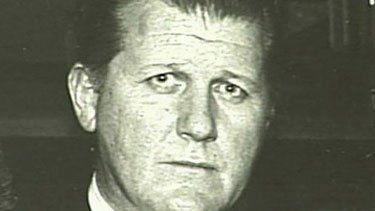
Frank Sheeran, “The Irishman” 1920-2003
Eric Shawn believes that his investigation proves that he found the man who killed Jimmy Hoffa.
It was a hot July afternoon, nearly 92 degrees, when Teamsters president and labor icon Jimmy Hoffa is said to have opened the rear door of a maroon 1975 Mercury in the parking lot of the Machus Red Fox restaurant in Bloomfield Hills, Mich. and climbed in.
He was never seen again.
The FBI has expended countless resources in the ensuing decades in the hopes of finally solving this enduring American mystery with no success.
But I believe, based on my 2004 investigation, that Frank Sheeran did it. …
Sheeran, known as “The Irishman,” told me that he drove with Hoffa to a nearby house where he shot him twice in the back of the head. Our investigation subsequently yielded the corroboration, the suspected blood evidence on the hardwood floor and down the hallway of that house, that supports Frank’s story.
31 Jul 2016

1943 Boeing-Stearman Model 75
Philip Handleman, in the Wall Street Journal, vents over the disrespect for WWII heroism, and other people’s property, that’s rife in America these days.
The military used my Boeing Stearman, built in 1943, to instruct eager cadets in the basics of airmanship, a skill desperately needed in the war against ruthless totalitarian foes. Near war’s end, the aircraft wound up at the Livermore, Calif., naval air station. It was assigned to the shore establishment of the USS Bunker Hill, one of the most battle-hardened aircraft carriers of the Pacific campaign. …
When I stop to think of the young men who flew this magnificent wood-and-fabric creation in its heyday, I get goosebumps. They were the swashbuckling daredevils of the Greatest Generation, tempting fate in the open air. They vanquished vicious enemies and set the country on a trajectory to longstanding aerospace pre-eminence.
With such a patriotic introduction, you would think that the people strolling across the ramp would be especially respectful. Indeed, most passersby were polite, pausing to gaze in quiet awe at the authentically restored biplane in the bright-yellow paint scheme used by the Navy in the early war years. Others, usually on crutches or confined to wheelchairs, stopped to share splendid memories of learning to fly in an aircraft like mine.
Unfortunately, a small but persistent stream of attendees approached my Stearman with a sense of entitlement. Parents let their preteens thrust their hands against the biplane’s fabric. Some raised their children, with feet dragging across the wing, to get a peek inside one of the two open cockpits, as if the 73-year-old trainer were a jungle gym. When I defended the aircraft, telling the pokers and prodders to cut it out, some parents indignantly stared. I wondered if those libertines would tolerate me groping their minivans in a supermarket parking lot.
It struck me how this indulgent attitude differed from the culture of selflessness embraced by the cadets who trained in the biplane. Personal restraint and self-discipline have been spurned in favor of the mentality that says anything goes.
31 Jul 2016

Kuriosistas: Cretaceous dinosaur footprints on vertical wall of quarry at Cal Orcko near the city of Suvre, Bolivia.
30 Jul 2016

Recently released view of Jupiter’s south pole from the Juno spacecraft.
30 Jul 2016

Alexis C. Madrigal, in the Atlantic, describes reading about the astonishing impact of the Paperback Revolution.
I’m reading a fascinating book called Two-Bit Culture: The Paperbacking of America, published in 1984 by the popular historian Kenneth C. Davis. …
I was absolutely dumbfounded by his description of the publishing business in 1931. He draws on a “landmark survey of publishing practices” carried out by one Orin H. Cheney, a banker, as a service to the National Association of Book Publishers.
Among the normal complaints about book publishers selection processes, we find this staggering stat about the retail business of selling books (emphasis added).
“In the entire country, there were only some four thousand places where a book could be purchased, and most of these were gift shops and stationary stores that carried only a few popular novels,” Davis writes. “In reality, there were but five hundred or so legitimate bookstores that warranted regular visits from publishers’ salesmen (and in 1931 they were all men). Of these five hundred, most were refined, old-fashioned ‘carriage trade’ stores catering to an elite clientele in the nation’s twelve largest cities.”
Furthermore, two-thirds of American counties — 66 percent! — had exactly 0 bookstores. It was a relatively tiny business centered in the urban areas of the country. Did some great books come out back then? Of course! But they were aimed only at the tiny percentage of the country that was visible to publishers of the time: sophisticated urban elites. It wasn’t that people couldn’t read; by 1940, UNESCO estimated that 95 percent of adults in America were literate. No, it’s just that the vast majority of adults were not considered to be part of the cultural enterprise of book publishing. People read stuff (the paper, the Bible, comic books), just not what the publishers were putting out.
I’m old enough to remember all this first-hand.
When I was a boy, the only books for sale in our town consisted of one short shelf of children’s book series (Hardy Boys, Tom Swift, Bobbsey Twins, Happy Hollisters) and classics intended for kids (Treasure Island, Huckleberry Finn, Robinson Crusoe, Black Beauty, Little Women) at Hook’s, our local greeting card and gift shop plus one revolving metal rack of paperbacks, Mickey Spillaine, James M. Cain, Erskine Caldwell, invariably featuring some partially-unclothed bosomy blonde.
I was about 8-years-old when I was surprised to find a brand-new rack of paperbacks near the checkout counter in Newberry’s Five-and-Ten-Cent Store on North Main. I made my first personal book purchase that day, buying Charles Dickens’ A Christmas Carol for 45 cents.
Books were extremely difficult to obtain. I exhausted the resources of the Shenandoah Library, and would take buses to search the libraries in Pottsville and Jim Thorpe. I once walked five miles each way, over the mountain to Ringtown to pick up a Life of Washington someone offered me for free. (Rather a cornball story, but true).
Four or five years later, a paperback bookstore opened next to the Strand Movie Theater on South Main, and my self-education via the Signet Classics was off and running. I read fast and obsessively and when I entered college, I had already read a lot more than your typical Ivy League graduate.
I still accumulate books obsessively, and my wife and I own so many that we have to maintain two storage facilities outside the home to house them all.
My guess is that even provincial autodidacts in future will never be so obsessed with book acquisition and ownership as myself. The Paperback Revolution delivered quite a lot of the literature of the world into my hands for only a small price. Today, the Internet can deliver most books published before 1925 in eBook form absolutely free.
No one will ever need to buy a great big set of Dickens or of the Waverly Novels any more. They are all right there, just a few mouse clicks away.
Links
More or Less Sound Blogs
A Mind Aroused
Aaron’s cc
ABFreedom
Ace of Spades HQ
Albion’s Seedlings
Alphecca
American Conservative, The (Buchananite Paleocons)
American Nihilist Underground Society
Amused Cynic
An Antique Dealer’s Blog
Andrew Cusack
Ankle Biting pundits
Anti-Idiotarian Rottweiler
Art of the Blog
Assistant Village Idiot
Assistant Village Idiot
Augean Stables
Austin Bay Blog
Becker-Posner Blog
Begging to Differ
Bidinotto Bog, The
Big Lizards.net
Black and Right
BlameBush!
Blue Crab Boulevard
Brainster
Brussels Journal, The
Brutally Honest
Captain’s Journal, The
Carnage And culture
Cato at Liberty
Cato Unbound
Cave of the Curmudgeon
Chaos in Motion
Chequer-Board of Nights and Days, A
Chicago Boyz
Claremont Institute
Clarity & Resolve
Clayton Cramer’s Blog
Cobb–Curious,Skeptical,Analytical
Cold Fury
Colonel Robert Neville Always Dresses For Dinner
Conblogeration
Confederate Yankee
Conspiracy to Keep You Poor and Stupid
Corner – National Review Online
CounterIntelligence Center
Coyote Blog
Crosspatch Chronicle
Cubachi
CultureGrrl
Daily Pundit
Daisy Cutter
Dalrock
Damnum Absque Injuria
Dangerous Times
David Bellavia
David Frum
David Thompson
Dean’s World
Death By 1000 Papercuts
Democracy Reform
Dennis the Peasant
Diminished Expectations
Dinocrat.com
Don Surber
Doug Ross
Dust in the Light
Eject! Eject! Eject!
Enchiridion Militis
Error Theory
ex-Liberal in Hollywood
Faster, Please (Michael Ledeen)
FKIN
Flit(tm)
Flopping Aces
Forward Movement (Jules Crittenden)
Fraters Libertas
Front Porch Republic
Future Uncertain, The
Gates of Vienna
Gateway Pundit
Gays Defending Marriage
Greg R. Lawson's Blog
Grouchy Old Cripple
Hog on Ice
Horsefeathers
Hugh Hewitt
Ideas
IMAO
In Mala Fide
In the Bullpen
INDC Journal
Interested-Participant
Irish Pennants
Isegoria
Jack Lewis
Jawa Report, The
JayReding.Com
Jeremayakovka
Jeremy Lott
Jon Swift
Just One Minute
Ken McCracken
Kim du Toit
Kobayashi Maru
Law of the Bad Premise
Left Exposed
Likelihood of Success
Lileks
Lone Pony
Make Haste Slowly (Trad)
Man Without Qualities
Mark Levin
Mike Stopa
Modern Art Notes
Mr. Blonde’s Garage
Musings of the Geek with a .45
Nation of Riflemen, A
New Majority (David Frum) -Neocon Sellout Blog
Nickie Goombah
No End But Victory
No Left Turns
Obsidian Order
Oh, That Liberal Media!
One Cosmos
One Hand Clapping
Only Republican in San Francisco, The
Other Things Amanzi
Outside the Beltway
Palmetto Pundit
Patterico’s Pontifications
Pileus
Point Five
PoliPundit.com
Political Horizons
Political Teen, The
PostLiberal Blog, The
ProfessorBainbridge.Com
Prospero; the Home of the Generative Thought Experiment
Protein Wisdom
QandO
Radio Blogger
Rage Against the Kakistocracy
Rantingprofs
Reason Online – Hit and Run
RedState.org
Republican Dan
Revolutionary War Veteran’s Association Weblog
Revolver Guy
Riding Sun
Right Reason
Right Wings News
Rightwing Nuthouse
Roger L. Simon
Room 12A
Samizdata.net
SayUncle
Scylla & Charybdis
Secular Right
Shot in the Dark
Shrinkwrapped
Solid Surfer, The
Soxblog
stikNstein
Stop Obama
Stop the ACLU
Strange Women Lying in Ponds
Sultan Knish
Sweetness & Light
Taki’s Top Drawer
Tech Central Station
The Buck Stops Here
Three Rounds Brisk
TigerHawk
Tim Chapman Blog
TKS
Tom Delay
Tongue Tied
Transterrestrial Musings
Unqualified Offerinds
Unqualified Reservations (Mencius Moldbug)
Vanishing American
VariFrank
Victor Davis Hanson
View from the Right
ViewPointJournal.Com
Vince aut Morire
Vodka Pundit
War and Piece
Watcher of Weasels
Weapons of Mass Destruction
Western Confucian
What Would Charles Martel Do?
Will Wilkinson
Winds of Change
Wizbang
Xavier Thoughts (Pawn Shop Guns!)
YARGB – Flares into Darkness
Blogs From the Philippines
Pinoy Stupid
Blogs From Israel
Zionist Conspiracy
Blogs From Russia
Mat Rodina
Blogs From Japan
Gaijin Mama
Blogs From Germany
Observing Hermann
/div>
Feeds
|