
28 Feb 2016
What Exactly Happened to These People?
2016 Election, Donald Trump

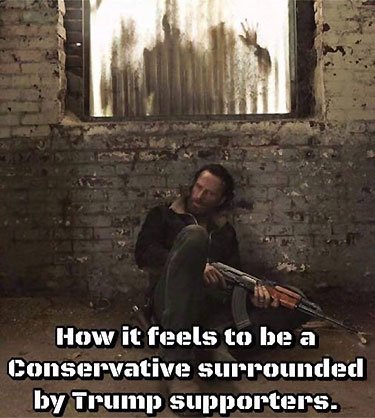
Well, in any event, Trump suppporters aren’t getting my brain.
27 Feb 2016
Women Are Destroying Civilization
19th Amendment, Decline and Fall, Der Untergang das Abendlandes, Feminism
27 Feb 2016
Byzantine Shipwreck
Archaeology, Byzantium, Shipwrecks

Byzantine shipwreck from the end of 4th century (Yenikapi,Turkey). The ship was loaded with pickled fry (a type of small fish), almonds, walnuts, hazels, muskmelon seeds, olives, peaches and pine cones and roman sauce – garum.
27 Feb 2016
4-Bore Stopping Rifles
4-Bores, Guns, Stopping Rifles
Another fascinating video (23:57) from Forgotten Arms:

26 Feb 2016
How To Tell If You’re In a Flannery O’Connor Story
Books, Flannery O'Connor, Satire

From The Toast:
You are over 75 and you hate every person you’ve ever met, or else you’re 14 and you’ve just seen something horrible. …
At least one of your front teeth is missing, and you think you look marvelous.
Something dreadful happened at the rest stop. …
Ever since you returned from the North, you take enormous pride in being both unmarried and ugly. …
None of the children you know have been bathed in the last week.
You are sitting on public transportation across from a total stranger. It is obvious to everyone onboard that he hates you. …
You are indifferent to the murder you’ve just committed.
Your relationship with your adult children is fraught and unpleasant, possibly because of the Civil War.
You are trying to get to Atlanta.
In Retrospect, We Shouldn’t Have Pulled the Car Over
You suspect a Baptist is lying to you. …
Everyone who moved to town before you is a saint.
Everyone who moved to town after you is a scourge.
A close relative was horribly disfigured in a hunting accident. Everyone agrees she had it coming.

26 Feb 2016
Trump’s Tax Returns
2016 Election, Donald Trump, How Wealthy Is Trump?

These days, candidates for the presidency are expected to release financial data, including their past tax returns. Jim Geraughty points out that, judging by past performance, releasing data revealing the actual amount of his wealth is likely to be something The Donald doesn’t want to do.
Trump has been been bragging for years about being a billionaire, and he’s has even sued people who said he isn’t one, but even in court he has declined to reveal the truth.
[A] few years ago, Trump refused to release un-redacted tax returns, even when it could help him win a $5 billion libel lawsuit against a New York Times reporter and author. If Trump was unwilling to release his returns in that circumstance, how likely is it that Trump will release them before Election Day?
Just for your info, tax returns have 0 to do w/ someone’s net worth. I have already filed my financial statements w/ FEC. They are great! — Donald J. Trump (@realDonaldTrump) February 25, 2016
Trump’s wealth is a key part of his public image, his status in the eyes of his fans, and his self-image. On July 15, Trump issued a statement declaring, “As of this date, Mr. Trump’s net worth is in excess of TEN BILLION DOLLARS.†(Capital letters in original.)
In October, Forbes magazine offered its own assessment of the mogul’s wealth, concluding, “After interviewing more than 80 sources and devoting unprecedented resources to valuing a single fortune, we’re going with a figure less than half that — $4.5 billion, albeit still the highest figure we’ve ever had for him.†They pointed out that in 2014, Trump’s organization provided documentation for cash and cash equivalents of $307 million. This year his team claimed to have $793 million in cash, but were unwilling to provide documentation.
Listing all the net-worth figures Trump has claimed over the years, Gawker compared them with the significantly smaller sums indicated by available financial information.
But the most glaring evidence… comes from Trump’s 2007 libel lawsuit against New York Times reporter Tim O’Brien. In his book TrumpNation: The Art of Being The Donald, O’Brien wrote:
Three people with direct knowledge of Donald’s finances, people who had worked closely with him for years, told me that they thought his net worth was somewhere between $150 million and $250 million. By anyone’s standards this still qualified Donald as comfortably wealthy, but none of these people thought he was remotely close to being a billionaire.
Trump contended that passage was a lie and damaged his reputation. Trump fought, lost in court, appealed, and lost again. If Trump’s fortune is multiple billions as he contends, one or two tax returns would have demonstrated the three sources were wildly off-base.
In a recent interview with National Review’s Ian Tuttle, O’Brien said, “The case dragged on for as long as it did because he wouldn’t comply with discovery requests. He wouldn’t turn over the tax returns, then the tax returns came in almost so completely redacted as to be useless.â€
The New Jersey Superior Court in its decision offered a blistering rebuke to Trump, contending that there was no good reason to conclude that O’Brien’s sources were being dishonest:
O’Brien has certified that he re-interviewed his three confidential sources prior to publishing their net worth estimates, and he has produced notes of his meetings with them both in 2004 and in 2005. The notes are significant, in that they provide remarkably similar estimates of Trump’s net worth, thereby suggesting the accuracy of the information conveyed. Further, the accounts of the sources contain significant amounts of additional information that O’Brien was able to verify independently.
Even worse, the court concluded that Trump was an untrustworthy source for estimates of his own net worth: “It is indisputable that Trump’s estimates of his own worth changed substantially over time and thus failed to provide a reliable measure against which the accuracy of the information offered by the three confidential sources could be gauged.â€
The three-judge panel essentially called the mogul a liar: “The materials that Trump claims to have provided to O’Brien were incomplete and unaudited, and did not contain accurate indications of Trump’s ownership interests in properties, his liabilities, and his revenues, present or future.â€
26 Feb 2016
Heidegger’s Ghosts
Anti-Rationalism, Anti-Westernism, Martin Heidegger
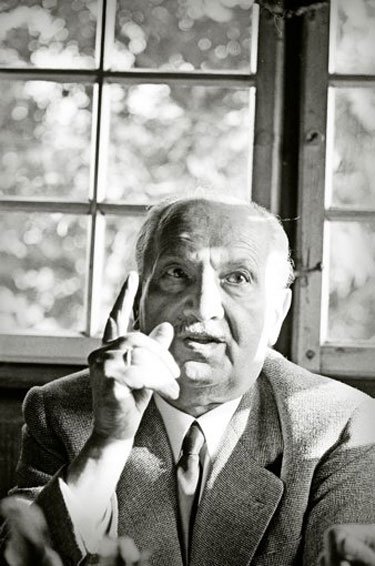
Martin Heidegger at his house in Todtnauberg, January 1966
Alexander Duff, in the American Interest, notes that every contemporary form of irrational opposition to Western Liberalism, Capitalism, and Democracy draws upon the intellectual influence of the Swabian sexton’s son, educated by the charity of the Church of Rome, who in the 1930s betrayed his Church and presided happily over the National Socialist Gleichschaltung (“bringing into conformity”) of his university.
A specter haunts the post-Cold War liberal order—the specter of radical spiritual malaise. This discontent with or downright opposition to the Western-originated, universalist claims of the broadly liberal cultural, economic, and political order takes diverse forms. One can detect it among Iranian revolutionary theocrats, Russian imperialist ideologues, white supremacist “Identitarians,†European neo-fascists, identity-politics partisans, and anti-foundationalist intellectuals of many stripes. But standing behind some of the leading intellectual and political figures in this mélange of counter-liberalism is one animating mind, that of Martin Heidegger.
Since the end of the Cold War, it has been an open question whether any organizing political principle could successfully vie with the liberal consensus of a secular state, limited by democratic accountability and the rule of law. To date, neither the remnants of Soviet-style communism, authoritarian capitalism, reactionary fascism, nor Islamic theocracy have achieved a successful combination of military strength and political legitimacy even among their own citizens, let alone among sympathizers in the world at large. But the political legacy of Martin Heidegger—if the strange and conflicting paths of his influence can be so termed—points to a combination that is sufficiently threatening to liberal democracy to be taken seriously, precisely because of the breadth of its evident appeal abroad and at home.
This is because Heidegger’s thought, while not lending itself to any politically cohesive opposition to the liberal West in a manner that characterized Marxism, recommends itself to virtually every variety of particularist opponent of Western universalism. For those inspired by Heidegger, the universalist claims upon which the liberal order is based are too thin, too weak, and too ignoble to provide tangible and meaningful sources of human identity.
25 Feb 2016
What If?
2016 Election, Conspiracy Theories, Donald Trump, Hillary Clintom, William Clinton

Pals
The American people tend to get tired of listening to most presidents after two terms, and by then they are usually itching to throw the incumbent party out of the White House and give the other team a chance. Barack Obama has not succeeded in pulling America out of the recession which began with the housing crash in 2008, and he has not endeared himself. He has really just polarized and embittered the country by his arrogant left-wing partisanship.
So it doesn’t take a crystal ball to know that in 2016 Fate favors the Republican presidential nominee. On top of all that, the democrat party bench is extraordinarily short of candidates. They have the dark horse (not even actually a democrat until very recently) Hippie socialist from Vermont, Bernie Sanders, every American’s crazy Jewish communist uncle. And they have Hillary.
Barack Obama was Fortune’s gift to the democrat party: attractive; well-spoken with a good vocabulary and a pleasing announcer’s voice; well-mannered and skilled at delivering the impression of calm, reasonability, and moderation; and, best of all, black and not merely black, but black laundered and pressed into the most excellent Ivy League form by Columbia and Harvard. All the king’s horses and all the king’s men couldn’t save the 2008 election for poor elderly John McCain. He found himself running with a stock market crash, hanging like an albatross around his own and his party’s neck, and against the Flavor-of-the-Month, a shiny new Pop Culture sensation roughly as popular in 2008 as the Beatles in 1964.
Hillary Clinton in 2016 is obviously completely different from Barack Obama in 2008. Obama entered the campaign surrounded by imaginary butterflies and unicorns. Hillary enters on her broom, accompanied by flying monkeys. Barack Obama was so lovable that every adolescent girl in America, male and female, young and old, had a crush on him. NBC’s Chris Matthews famously found his leg trembling with nearly homoerotic adoration of Obama. Nobody’s leg will be quivering for the old and wrinkly Hillary.
Obama was the Magic Negro, the wise friend from another race whose acceptance of you proves that you are exceptionally worthy, and whose aid brings about your survival or your victory in your quest. Hillary is every man’s shrewish wife, the pot-throwing termagant who drives all of America out to the nearest saloon to drown our collective sorrows. Hillary is the mean old lady, heading up the Ladies’ League For Social Reform that is going to ban everything that’s fun. Obama was Chingachgook, Queequeg, and a younger version of every Morgan Freeman character. Hillary is Lady Macbeth.
It would take a miracle effectuated by a political genius of the first water to make Hillary electable, especially in this unfavorable year. The Republican presidential nominee in 2016 has the key to the Oval Office in his pocket as long as he is normally presentable and can walk and talk.
Maybe Hillary can win after all, though, because it just so happens that she is married to a political genius of the first water.
24 Feb 2016
What Would Hamilton Do?
1800 Election, 2016 Election, Alexander Hamilton, Donald Trump, Hillary Clinton

Tom Nichols argues quite persuasively, and on the basis of good precedent, for the unthinkable in the event that the election comes down to Trump versus Hillary.
A few years ago, The Federalist’s publisher, Ben Domenech, suggested that conservatives consider dumping the “Buckley Rule,†the late William F. Buckley’s admonition always to choose the most conservative candidate who can win. As Ben pointed out, things have changed since Buckley first issued this advice, including that the elite determination of “who can win†is often flawed. The Buckley Rule, for example, might have led to supporting Charlie Crist—you may shudder at will—instead of Marco Rubio in the 2010 Florida Senate race.
In its place, Ben raised the possibility of a “Hamilton Rule,†named after Alexander Hamilton. Although both were Federalists, Hamilton despised John Adams and his coterie among his own party to the point where he was willing to lose the election of 1800. “If we must have an enemy at the head of government,†Hamilton said in exasperation, “let it be one whom we can oppose, and for whom we are not responsible.â€
In other words: Better to lose to a true enemy whose policies you can fight and repudiate, rather than to a false friend whose schemes will drag you down with him. This is a painful choice, but it also embraces realism while protecting the possibility of recovery in the future. The need to live to fight another day is why conservatives should adopt a Hamilton Rule if, God forbid, the choice comes down to Hillary and Trump.
My hands almost could not type those words, because I think Hillary Clinton is one of the worst human beings in American politics. She has few principles that I can discern, other than her firm conviction that she deserves the Oval Office for enabling and then defending her sexually neurotic husband. She lies as easily as the rest of us breathe. She has compromised national security through sheer laziness at best, and corrupt intent at worst. If elected, she will enrich Wall Street and raid the public coffers while preaching hateful doctrines of identity politics to distract America’s poor and working classes.
But Trump will be worse. Morally unmoored, emotionally unstable, a crony capitalist of the worst kind, Trump will be every bit as liberal as Hillary—perhaps more so, given his statements over the years. He is by reflex and instinct a New York Democrat whose formal party affiliation is negotiable, as is everything about him. He has little commitment to anything but himself and his “deals,†none of which will work in favor of conservatives or their priorities.
His judicial appointments will likely be liberal friends from New York. His Great Wall of Mexico will never be built, and employers will go right on hiring cheap labor and outsourcing jobs, just as Trump does with his made-in-Mexico suits. His China Smoot-Hawley Tariff will never be implemented. His administration, led by a vulgar, aging man-child who is firmly pro-abortion, who jokes about having sex with his daughter, and brags about his wealth, will hurt the poorest and most vulnerable among us—including the unborn.
Trump, of course, will dissemble and whine about all these eventual failures. His fans will excuse him, as they do now, but they have short attention spans and will vanish in later midterm elections and future presidential contests. His white nationalist supporters, clinging to him like lice in the fur of an angry chimp, will shake their fists along with him for a time, until they too eventually slink away. By 2020, his core constituency will be a tiny sliver of what’s left of the white working class, pathetically standing at the gates of empty factories they thought Trump would re-open.
More to the point, after four years of thrashing around in the Oval Office like the ignorant boor he is, voters will no longer be able distinguish between the words “Trump,†“Republican,†“conservative,†and “buffoon.†He will obliterate Republicans further down the ticket in 2016 and 2020, smear conservatism as nothing more than his own brand of narcissism, and destroy decades of hard work, including Ronald Reagan’s legacy.
Read the whole thing.
I must admit that he has a point.
The normal operations of American two-party politics fail to protect the country from crooks, scoundrels, liars, and complete shits. In 2004, the democrats nominated a traitor for the presidency. In 2008, they elected a totally-unqualified community organizer, i.e. a professional agitator. We have had worthless playboys (JFK), vulgarian shit-kicker crooks (LBJ), a lachrymose neurotic (Nixon), a wholly incompetent prig (Carter), and an amusing scoundrel (Clinton) as presidents in my lifetime. We have elected plenty of egotists, but we have never elected to the chief magistracy any spoiled and unhinged egomaniacs not reliably connected to reality. The system at least saw to that.
In the case of Donald Trump, we are dealing with a completely unprecedented phenomenon. Every past president, however unethical, deluded, or malevolent, could be relied upon to operate within certain broad bounds of conventionality. None of them, for instance, was ever going to cancel the next election and remain in office.
Hillary is a crook and a liar, to be sure, but Hillary in the final analysis is just a corrupt, left-wing democrat. Donald Trump, on the other hand, is something out of the nation’s Hollywood nightmares. Donald Trump is Willie Stark from “All the King’s Men” (1949). Donald Trump is “Lonesome” Rhodes from “A Face in the Crowd” (1957). Donald Trump is the barbarian outsider swept into power by popular emotion, operating completely outside conventional norms, mores, and expectations. Donald Trump talks happily of forcibly deporting 12 million people. No normal American politician would try to do something like that. Trump might. And there isn’t really any telling what else someone like Donald Trump might do.
24 Feb 2016
Trump Can Be Stopped
2016 Election, Donald Trump, Roger Kimball
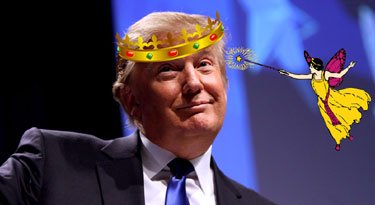
Roger Kimball argues that the spell can be broken, Trump can be stopped, if his Republican opponents fight back and start telling the truth about him.
Donald Trump was never impossible. Nor is he now inevitable. It would be useful to have some of Donald Trump’s golf partners step forward. On Monday, a well placed friend told me that over the years he had run into many of Trump’s partners on the links. “He doesn’t only cheat in every game,” my friend said, “He cheats on every hole. You can hear the splash of a ball going into the pond. But when his partners catch up to Trump, they find him standing over his ball on the fairway, claiming that that’s where the ball landed.” This is of a piece with Trump’s sullied reputation as a businessman. I have heard from several sources that his common procedure is to pay his creditors 75% or 80% of what he owes them and then, when they ask for the balance, tell them to sue. I suspect we will be hearing a lot about Donald Trump’s business practices in the coming weeks. By all accounts, it will tell the story of an unscrupulous bully and cheat. Much has been made of Trump’s populist appeal. That appeal will vanish, I predict, once Trump’s character is subject to the scrutiny it deserves.
Exactly a month ago, I wrote about Trump and “the madness of crowds.” The phrase was from Charles Mackay’s classic book, Extraordinary Popular Delusions and the Madness of Crowds. For the moment, I noted, Trump occupies that empyrean of seeming invulnerability that occasionally cloaks movements of ecstatic enthusiasm. Point out Trump’s past support for Hillary, for Obama, for Chuck Schumer and Nancy Pelosi, mention his abuse of eminent domain to grab private property for his casinos, and his acolytes will respond, “He just did what he had to do to make his business succeed.†Couldn’t John Gotti have said the same thing?
Mackay was writing about such curiosities as Tulipomania in 17th-century Holland, when a single bulb could, briefly, be traded for the price of a mansion, or various money or stock schemes like the South Sea Bubble or the Mississippi Scheme or the (perhaps more pertinent in this case) “the popular admiration for great thieves.†A common thread of these admonitory tales, I noted, “is the giddy rapidity of ascent followed by sudden and cataclysmic collapse once the spell is broken, which it always is.” The $64,000 question, of course, is exactly when the rude awakening will come. I pray it will not be too late.
Read the whole thing.



