A rare coin dealer in California has concluded that a grainy image of legendary gunman Billy the Kid playing croquet is the real thing and could be worth as much as $5 million.
That is not bad for a photo purchased by Randy Guijarro of Freemont, Calif. for $2 as a part of a miscellaneous lot at a Fresno junk shop in 2010… The company is negotiating a private sale of the photo. …
The 4×5-inch tintype – which depicts Billy the Kid and several members of his gang, The Regulators, relaxing in the summer of 1878 – will be the subject of a two-hour documentary airing Sunday on the National Geographic Channel.
Taken just one month after the tumultuous Lincoln County War came to an end, it offers a rare window into the lives of these gunmen. Rather than a threatening outlaw, Billy the Kid seems to be enjoying some downtime following… a wedding.
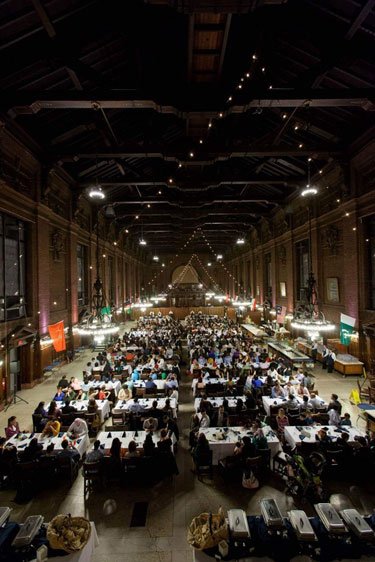
Yale University, founded in 1701 as a collegiate school to prepare young men for the Congregational ministry in Connecticut, I learned today, has been holding lavish Eid (the feast held at the end of a month of fasting by the followers of Mahound) Banquets for the past fourteen years.
This Buzzfeed article, written relying on slang and cultural references post-pubescents are unlikely to understand, particularly singled out female Saracens for praise, alleging that a group of young women of differing races and nationalities who posed for photographs in various traditional ethnic get-ups were “flawless,” “taking charge,” and expressing simultaneously religious convictions and a slang obscenity addressed to people questioning a supposed right to combine a Yale education with affiliation with a sect theologically committed to the forcible conversion or extermination of Congregationalists.
An African young lady named Emi Mahmoud was lauded as “the Number One Poet in the World” having been declared “champion” of the “2015 World Poetry Slam.” I looked it up and discovered that this event, held in Albuquerque, involved 72 of the “best women poets in slam” competing over two nights for a championship. Despite the presence of lots of FAQs, I was completely unable to determine what a slam is.
Bien pensant institutions like Yale absolutely preen over the diversity of it all, having representatives of all sorts of tribes and cultures on campus, studying away for credentials which operate as pass keys into the upper reaches of haute bourgeois Western consumerist society. The presence of all these exotic specimens at Yale simultaneously demonstrates the global reach of Mother Yale, the truly magnificent tolerance and condescension of her administrative authorities, and the inevitable universal triumph of their values and the system they so comfortably preside over.
Personally, I think the ten Congregationalist ministers who met in Saybrook and pooled their books to found that collegiate school in 1701 are spinning in their graves.
Vladimir Putin wears a t shirt with a Russian Regional Sports Festival competitor insignia, while Obama wears a Young Pioneers (Russian boy scouts equivalent) uniform. Putin says: “Be Ready!” While Obama says, admiringly feeling Putin’s bicep: “Strong Uncle Volodya!”
Christopher Columbus (detail), from Alejo Fernández, La Virgen de los Navegantes, circa 1505 to 1536, Alcázares Reales de Sevilla.
In his magisterial biography, Admiral of the Ocean Sea, 1942, Samuel Elliot Morrison observes:
[Christopher Columbus did] more to direct the course of history than any individual since Augustus Caesar. …
The voyage that took him to “The Indies” and home was no blind chance, but the creation of his own brain and soul, long studied, carefully planned, repeatedly urged on indifferent princes, and carried through by virtue of his courage, sea-knowledge and indomitable will. No later voyage could ever have such spectacular results, and Columbus’s fame would have been secure had he retired from the sea in 1493. Yet a lofty ambition to explore further, to organize the territories won for Castile, and to complete the circuit of the globe, sent him thrice more to America. These voyages, even more than the first, proved him to be the greatest navigator of his age, and enabled him to train the captains and pilots who were to display the banners of Spain off every American cape and island between Fifty North and Fifty South. The ease with which he dissipated the unknown terrors of the Ocean, the skill with which he found his way out and home, again and again, led thousands of men from every Western European nation into maritime adventure and exploration.
The whole history of the Americas stem from the Four Voyages of Columbus; and as the Greek city-states looked back to the deathless gods as their founders, so today a score of independent nations and dominions unite in homage to Christopher the stout-hearted son of Genoa, who carried Christian civilization across the Ocean Sea.
“He pasado mi vida entre las nubes y amo todavÃa las criaturas que se defienden y huyen. (Guardo en la memoria el fantasma de una paloma inalcanzable que palpita para mÃ.) Hacia ella sigo volando, cada vez con menos brÃo. De noche, cavilo entre la rapiña y la ternura en un paisaje de rocas vacÃas.â€
“I have spent my life in the clouds and still love the creatures who defend themselves and flee. (I keep in memory the ghost of an unattainable dove that beats for me.) To keep it flying, each time with less verve. At night, I brood between the violence and tenderness in a landscape of empty rocks.”
Scientific American reports that a Japanese math genius, three years ago, quietly posted the proof to an important number theory conjecture. The problem is that his proof is so abstruse that nobody else can understand it.
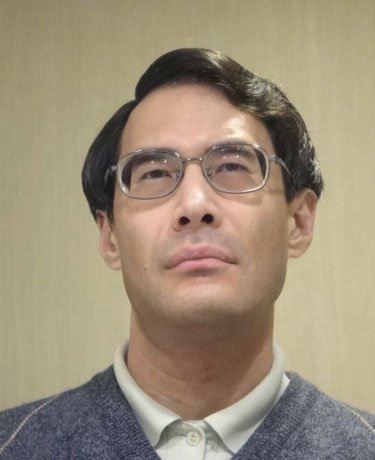
Sometime on the morning of August 30 2012, Shinichi Mochizuki quietly posted four papers on his website.
The papers were huge—more than 500 pages in all—packed densely with symbols, and the culmination of more than a decade of solitary work. They also had the potential to be an academic bombshell. In them, Mochizuki claimed to have solved the abc conjecture, a 27-year-old problem in number theory that no other mathematician had even come close to solving. If his proof was correct, it would be one of the most astounding achievements of mathematics this century and would completely revolutionize the study of equations with whole numbers.
Mochizuki, however, did not make a fuss about his proof. The respected mathematician, who works at Kyoto University’s Research Institute for Mathematical Sciences (RIMS) in Japan, did not even announce his work to peers around the world. He simply posted the papers, and waited for the world to find out.
Probably the first person to notice the papers was Akio Tamagawa, a colleague of Mochizuki’s at RIMS. He, like other researchers, knew that Mochizuki had been working on the conjecture for years and had been finalizing his work. That same day, Tamagawa e-mailed the news to one of his collaborators, number theorist Ivan Fesenko of the University of Nottingham, UK. Fesenko immediately downloaded the papers and started to read. But he soon became “bewilderedâ€, he says. “It was impossible to understand them.â€
Fesenko e-mailed some top experts in Mochizuki’s field of arithmetic geometry, and word of the proof quickly spread. Within days, intense chatter began on mathematical blogs and online forums (see Nature). But for many researchers, early elation about the proof quickly turned to scepticism. Everyone—even those whose area of expertise was closest to Mochizuki’s—was just as flummoxed by the papers as Fesenko had been. To complete the proof, Mochizuki had invented a new branch of his discipline, one that is astonishingly abstract even by the standards of pure maths. “Looking at it, you feel a bit like you might be reading a paper from the future, or from outer space,†number theorist Jordan Ellenberg, of the University of Wisconsin–Madison, wrote on his blog a few days after the paper appeared.
Three years on, Mochizuki’s proof remains in mathematical limbo—neither debunked nor accepted by the wider community. Mochizuki has estimated that it would take an expert in arithmetic geometry some 500 hours to understand his work, and a maths graduate student about ten years. So far, only four mathematicians say that they have been able to read the entire proof.
Vacationers returning to Beijing on the 50-lane highway (!) suddenly encountered a newly-installed checkpoint forcing traffic to merge down to 20-lanes. Thousands of cars were trapped for hours. (Their government at work!)