Built to celebrate the company’s 175th anniversary, the Patek Philippe Grandmaster Chime Ref. 5175 is so complicated that it is absolutely fascinating to watch it being designed and built.
Remember all the talk about the “cowardly dentist” who killed a lion outside Hwange Park in Zimbabwe? Well, another lion just killed a professional hunter guiding a group of tourists armed with cameras in the same park. Apparently the guide, Quinn Swales, stepped between the charging lion and his tourists and did his best to stop the charge with his heavy rifle. He failed and the lion got him.
A safari guide has been mauled to death by a lion in the same Zimbabwean national park where Cecil the lion was killed by hunters.
Quinn Swales was taking guests on a photographic walking safari in Hwange national park at dawn on Monday when he was charged by the male, according to the Camp Hwange lodge. The 40-year-old Zimbabwean saved his guests but died of his injuries.
Hwange was home to Cecil the lion before he was killed last month… by American dentist Walter Palmer, triggering a global wave of revulsion and anger.
Camp Hwange announced on its Facebook page: “It is with deep regret and great sadness that we are able to confirm the death of Quinn Swales, a Camp Hwange professional guide, who was fatally mauled by a male lion whilst out on a walking safari this morning.
“We can confirm that Quinn did everything he could to successfully protect his guests and ensure their safety, and that no guests were injured in the incident.â€
The safari industry paid tribute to Swales. Media reports quoted Shelley Cox, of African Bush Camps, as saying: “Quinn’s actions in successfully protecting the lives of his guests is heroic and reminiscent of his outstanding guiding skills, experience and training. It is certainly a tragedy and a loss to the guiding fraternity and tourism industry.â€
———————
The Telegraph has a few more detail, messes up a rifle caliber designation, and gives Simba a pet name.
Mr Swales was employed by Camp Hwange, a four-year-old photographic safari company, and was registered with Zimbabwe’s Professional Hunters and Guides Association.
Other guides in the area said Mr Swales would have been carrying a hunting rifle of at least .375 mm [sic, not metric -JDZ] to protect his clients and himself. …
“I understand the animal went for his shoulder and probably hit the jugular. The clients – I think they were from New Zealand – radioed the alarm back from the vehicle which was nearby. As far as I know they were all walking at the time of the attack.”
He said a helicopter was sent immediately after the distress call came in, but nothing could be done. “It picked up his body. This is a highly professional company. Brilliant operation. We will find out more accurate details in the next day or two.”
A source from the wildlife industry told the Telegraph he believed that the lion was a male named Naka.
“This lion had by all accounts been behaving aggressively for some time. It was even attacking safari vehicles,” said another tour operator from Hwange. “As far as we know he bled to death.”
A safari guide who helped to train the victim described him as “a very good guy†who started working for Camp Hwange early this year.
“Quinn was obviously going to be a great guide,” he said. “I have seen him in the bush and he was very good.”
A professional hunter who worked in the area said the guide’s gun would also be checked to see if he managed to fire it. “We don’t yet know if he managed to fire a shot at the lion, or whether he was overwhelmed before he could shoot,†he said. “This is terrible, and it is quite a rare event.”
Another Hwange National Park safari operator said he would not do game walks because he was “terrified of lionsâ€. “But tourists want to walk with wildlife,” he added.
Richard Canton Woodville Jr., Poniatowski’s Last Charge at Leipzig, 1912, Collection Henry Graves & Co.
As a reward for his past military services, on October 16, during the Battle of Leipzig, Jozef Poniatowski was made a Marshal of France and entrusted with the duty of covering the French Army’s retreat. He defended Leipzig, losing half his corps in the attempt, finally falling back slowly upon a bridge over the Weisse Elster River, near Leipzig. In the general confusion, the French blew up the bridge before he could reach it. Poniatowski tried to escape by swimming but, covered with wounds, drowned in the river, 18 October 1813.
When you get admitted to an elite university, you receive “the freshman packet,” a large envelope containing a guide to the campus, a course catalog, various brochures inviting you to join organizations or buy things… and a suggested reading list for the summer. At some point, after you arrive on campus in the Fall, there is going to be a Freshman introductory meeting at which the suggested book(s) are going to be discussed. In other words, you will be tested on the reading(s).
In my day, at Yale, the suggested book was Jacques Monod’s “Chance and Necessity“.
I was, I fear, naive as an incoming freshman. I read it as a rather turgid, Continental recounting of the Miller-Urey Experiment, involving the creation of amino acids (the building blocks of life) by passing electrical charges through a mixture of methane, ammonia, water, and hydrogen gases in a closed container. In reality, “Chance and Necessity” was an attempt to dispel my (non-existent at that point) religious faith in order to replace it with the proper sort of faith in materialism and scientism which a good member of the establishment elite ought to have.
Jacques Monod, the Nobel Prize winning biochemist, allies himself, in the title of this admirable treatise, to the atomist Democritus, who held that the whole universe is but the fruit of two qualities, chance and necessity. Interpreting the laws of natural selection along purely naturalistic lines, he succeeds in presenting a powerful case that takes into account the ethical, political and philosophical undercurrents of the synthesis in modern biology. Above all, he stresses that science must commit itself to the postulate of objectivity by casting aside delusive ideological and moral props, even though he enjoins, at the same time, that the postulate of objectivity itself is a moral injunction. He launches a bitter polemic against metaphysical and scientific vitalisms, dismissing them as obscurantist. … He refutes teleological explanations of nature as being contrary to the postulate of objectivity, drawing attention to self-constructing proteins as teleonomic agents, followed by an explanation of the role of nucleic acids, reproduction and invariance. This leads him to dismiss Judaeo-Christian religiosity, which accords man a significant role as being created in God’s image, as a nauseating and false pietism and he even goes so far as to recommend eugenic reform. Writing with great clarity and flair, and often in a forceful and idiosyncratic idiom, he puts forward a compelling case.
——————————
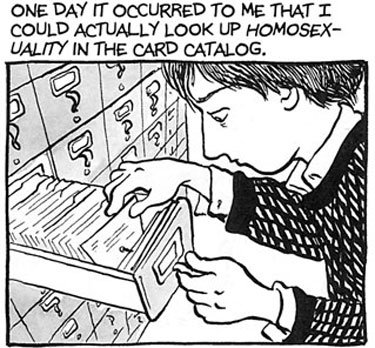
Plus ça change, plus c’est la même chose. I was reading today that incoming freshmen at Duke also have summertime suggested readings, and that certain unenlightened members of the Duke Class of 2019 have had the temerity to resist reading this year’s choice, a graphic novel, titled “Fun Home“.
Several incoming freshmen decided not to read “Fun Home†because its sexual images and themes conflicted with their personal and religious beliefs. Freshman Brian Grasso posted in the Class of 2019 Facebook page July 26 that he would not read the book “because of the graphic visual depictions of sexuality,†igniting conversation among students. The graphic novel, written by Alison Bechdel, chronicles her relationship with her father and her issues with sexual identity.
“I feel as if I would have to compromise my personal Christian moral beliefs to read it,†Grasso wrote in the post.
Many first-year students responded to the post, expressing their thoughts on Grasso’s discomfort with the novel. Some defended the book’s images as having literary value and said that the book could broaden students’ viewpoints.
“Reading the book will allow you to open your mind to a new perspective and examine a way of life and thinking with which you are unfamiliar,†wrote freshman Marivi Howell-Arza.
However, several freshmen agreed with Grasso that the novel’s images conflicted with their beliefs. Freshman Bianca D’Souza said that while the novel discussed important topics, she did not find the sexual interactions appropriate and could not bring herself to view the images depicting nudity.
Freshman Jeffrey Wubbenhorst based his decision not to read the book on its graphic novel format.
“The nature of ‘Fun Home’ means that content that I might have consented to read in print now violates my conscience due to its pornographic nature,†he wrote in an email.
Grasso said that many students privately messaged him thanking him for the post and agreeing with his viewpoint. He explained that he knew the post would be controversial but wanted to make sure students with similar Christian beliefs did not feel alone, adding that he also heard from several students with non-Christian backgrounds who chose not to read the book for moral reasons.
“There is so much pressure on Duke students, and they want so badly to fit in,†he said. “But at the end of the day, we don’t have to read the book.â€
The summer reading book selection committee expected that the novel would be contentious among its readers, said senior Sherry Zhang, a member of the committee and co-chair of the First-Year Advisory Counselor Board. The debate generated by Grasso’s post was “very respectful and considerate,†Zhang said.
This autobiography by the author of the long-running [comic] strip, Dykes to Watch Out For, deals with her childhood with a closeted gay father, who was an English teacher and proprietor of the local funeral parlor (the former allowed him access to teen boys). Fun Home refers both to the funeral parlor, where he put makeup on the corpses and arranged the flowers, and the family’s meticulously restored gothic revival house, filled with gilt and lace, where he liked to imagine himself a 19th-century aristocrat. … Bechdel’s talent for intimacy and banter gains gravitas when used to describe a family in which a man’s secrets make his wife a tired husk and overshadow his daughter’s burgeoning womanhood and homosexuality. His court trial over his dealings with a young boy pushes aside the importance of her early teen years. Her coming out is pushed aside by his death, probably a suicide.
In 1966, those-who-know-better were trying to get rid of your religious superstitions and make you into a good secular materialist believer in progressive scientism and the rule of experts. Today, the goal is to get rid of that old-fashioned religion-based morality and to make you into a politically correct and appropriately sensitive and respectful admirer and supporter of the LBGTQ movement, if not LBGTQ yourself.
Airman First Class Spencer Stone, National Guardsman Alek Skarlatos, U.S. student Anthony Sadler, and British businessman Chris Norman who took down the Moroccan terrorist on the high-speed train to Paris have been made Knights of the French Legion of Honor, France’s highest award for valor.
The Daily Mail has a more detailed account of the action on the train than any I’ve seen previously.
Apparently, it was an unnamed French banker who first confronted the gunman. A 51-year-old American musician came to his aid and wrestled the AK-47 out of the Moroccan’s hands, whereupon the terrorist took out a Luger pistol and shot him in the neck. It was after all that that the three younger Americans piled in, restrained the gunman, and beat him unconscious.
Mr Moogalian, 51, originally from Virginia in the U.S., came to aid of a French banker known only as ‘Damien A’ who was initially confronted by El-Khazzani during the attack on Friday.
Acting instinctively to protect his wife Isabella Risacher, he ripped the Kalashnikov assault rifle from El-Khazzani who then drew a handgun and shot him in the back of the neck.
Mr Moogalian, a musician in a band called Secret Season, feared he was going to die after suffering massive blood loss.
His sister, Julia, told The Daily Telegraph: ‘He made sure his wife was hidden behind a seat.
‘He did manage to get the weapon away from the gunman. But the gunman then pulled another gun and shot my brother.
‘There’s a video of him saying ‘help me’ – he thought he was losing so much blood he would die.’
Mr Moogalian, a keen cyclist, is being treated in hospital and may have lost some use his left arm after suffering nerve damage.
—————————–
I think it was right that the Government of France made these awards, but I think the Republic of France really has sufficient manpower and resources to have arranged for Airman Stone and Guardsman Skarlatos to have been provided with dress uniforms to be worn at the ceremony, and I think the French Republic could have afforded to buy Mr. Sadler a suit and tie.
From a Newsday story about working as an usher in NYC’s theater district:
Among memories of gallows humor, Scanlon [an usher] remembers the time some poor man died in the audience of the Kerr Theatre. As the gurney took the corpse out and his wife followed, two people hurried down to take their better seats. “It’s so New York,” he says, not in an entirely disapproving way.”
“Being attacked by Geoffrey Howe was like being savaged by a dead sheep.”
In June 1978, Labour chancellor of the exchequer Denis Healey was forced to defend his record in office after shadow chancellor Sir Geoffrey Howe tabled a motion which sought to reduce the chancellor’s salary by half. Healey likened his rival’s rhetorical onslaught to “being savaged by a dead sheep”. The government won the vote on the motion by only five votes.
Entertaining “Local Hero-ish” (1983) fantasies of escaping from the rat race to live the simple life in a quaint Scottish village? Ever dreamt of running your own bookshop? The Guardian reports that you can try out your fantasies during vacation this year for a mere £150 a week.
[A]ll those who … who yearn to spend their days amongst the pristine spines and glossy covers of a small bookshop, what might be the perfect holiday retreat has just been listed on AirBnB: the opportunity to become a bookseller for a week or two.
For the sum of £150 a week, guests at The Open Book in Wigtown, Scotland’s national book town, will be expected to sell books for 40 hours a week while living in the flat above the shop. Given training in bookselling from Wigtown’s community of booksellers, they will also have the opportunity to put their “own stamp†on the store while they’re there. “The bookshop residency’s aim is to celebrate bookshops, encourage education in running independent bookshops and welcome people around the world to Scotland’s national book town,†says the AirBnB listing.
The Open Book is leased by the Wigtown book festival from a local family. Organisers have been letting paying volunteers run the shop for a week or two at a time since the start of the year, but opened the experience up to the world at large this week when they launched what they are calling “the first ever bookshop holiday experience†on AirBnB.
“I wouldn’t call it a working holiday,†said Adrian Turpin, director of the Wigtown book festival. “It’s a particular kind of holiday [for people] who don’t feel that running a bookshop is work. It’s not about cheap labour – it’s about offering people an experience … It’s one of those great fantasies.â€
The money is “just essentially to cover our costsâ€, said Turpin, admitting that “it can be a hard life, selling books in a small town, so it’s not a holiday for everybodyâ€.
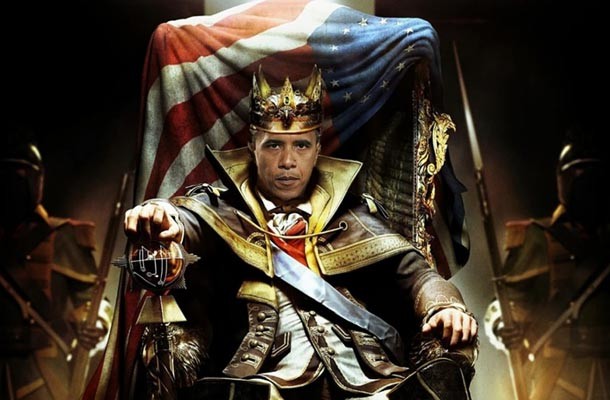
Matthew Continetti tells us that Barack Obama began planning his post-Presidency as far back as February of 2012, right after his reelection, meeting and dining with billionaire hedge fund managers, technology executives, Toni Morrison, and Hollywood director Stephen Spielberg in order to have them assist in “develop[ing] a ‘narrative’ for [the president] in the years after he leaves office.”
Continetti does not envy all the caviar and Haut Brion. In fact, he visualizes Obama’s billionaire-infested planning dinners as using the same caterer who provided the menu for Luis Bunuel’s The Exterminating Angel (1962).
I tried to imagine the scene as President Obama sat back in his chair, sipped his first extra-dry Grey Goose martini of the night, and asked this hand-selected group of bold-faced names, seemingly plucked at random from Time magazine’s “100 Most Influential†issue, what he should do with his life. The pomposity, the self-importance, the snide remarks, the raised eyebrows, the sidelong glances, the oblique references to Taos and Nantucket and St. Tropez and Telluride, the mutual self-regard, the flattering small-talk, the knowing head-nods and chin-pulls, the pretentious lips-pursing—all of this combustible vanity squeezed into the pressure-cooker of the residential dining room. It’s a wonder the house didn’t explode.
Because it’s a trick question: conversations about Obama’s future are really cues to celebrate his past. To cheer his accomplishments, list the ways he has changed this country, explain his historical and geopolitical importance, lament the obstacles he’s encountered from recalcitrant conservatives, obstructionist Republicans, nativist, racist, sexist, backward elements of the population, recount how he overcame them, joke about how he deserves a vacation, mention the best courses he has yet to play, ponder the work of social justice and transformation that must still be done, affirm that history is, indeed, on the side of progress.
And this conversation goes on—on and on and on—with digressions into the latest fads in Silicon Valley and the nuttiest invention Khosla can come up with after two Manhattans, with genuflections at the altar of Elon Musk, explications of the markets from Doerr, Lasry, and Hoffman, mysterious oracular pronouncements from Toni Morrison, bird-like regurgitations of the latest Paul Krugman and Fareed Zakaria columns (how envious Fareed must be that he wasn’t invited!), tedious on-the-one-hand-on-the-other lectures from the president on the lead story in the Times, the most recent editorials in the Washington Post, late night comedy he found unfair, clever “This is Sportscenter†commercials, episodes of Game of Thrones and Homeland, Ta-Nehisi Coates, Michael Jordan’s handicap—and with caustic put-downs from Michele, partisan bromides from Longoria, witticisms spiced with anecdotes from academic studies no one besides Gladwell has read, and bottle after bottle of wine, course after course after course of chewy overcooked hard to swallow smugness.
And then, when you’ve grown tired, when the Grenache is making you sleepy, when all you want to do is retire to the Oprah suite at the Ritz Carlton for a dirty movie and shuteye, the president forbids you to leave. You can be one of the most powerful people in the world, manage thousands of employees, but he won’t let you go. You’re stuck! Around midnight, we learn, Reed Hoffman said kindly to President Obama, “Feel free to kick us out.†And the president replied, snidely, “I’ll kick you out when it’s time.†And Hoffman sat down, like a disciplined child, because what could he do—even the cofounder of LinkedIn can’t walk out on the president of the United States. So the conversation went on, according to the Times, “well past 2 a.m.â€
Trapped in a room with a collection of pompous and entitled people utterly convinced of their brilliance and moral purity, whose conversation ranges from what’s in this month’s Atlantic to what’s in this week’s Economist, who haven’t been told No in years—and then being informed that there is no escape? This, friends, is the vision of hell that greeted me in Monday’s paper: not of other people but of self-important ones, in a well-appointed house with no exit, eating an organic gluten-free farm-to-table meal and endlessly repeating the conventional wisdom as if they were coming to it for the first time. To look at the plans for Obama’s retirement is not just to see that big-dollar fundraising never stops. It is to peek inside the Bobo abyss, to visit the purgatory of the coastal elite—to enter, in horror, the balsamic inferno.