Category Archive 'Books'
16 Nov 2013

100 Greatest Novels (From the Perspective of 1898)

, ,


“Three Editors” — Shorter as caricatured by Spy (Leslie Ward) in Vanity Fair, December 1894.

Clement K. Shorter (1857-1926) was editor of the Illustrated London News, a prominent journalist, book collector, and critic (specializing in the Brontes). In 1898, in The Bookman, he published a chronological list of the 100 Greatest Novels, restricting himself to one title per author, and excluding living authors, though he felt obliged to include an addendum of eight works by “writers whose reputations are too well established for their juniors to feel towards them any sentiments other than those of reverence and regard.”

TLS blog:

1. Don Quixote – 1604 – Miguel de Cervantes

2. The Holy War – 1682 – John Bunyan

3. Gil Blas – 1715 – Alain René le Sage

4. Robinson Crusoe – 1719 – Daniel Defoe

5. Gulliver’s Travels – 1726 – Jonathan Swift

6. Roderick Random – 1748 – Tobias Smollett

7. Clarissa – 1749 – Samuel Richardson

8. Tom Jones – 1749 – Henry Fielding

9. Candide – 1756 – Françoise de Voltaire

10. Rasselas – 1759 – Samuel Johnson

11. The Castle of Otranto – 1764 – Horace Walpole

12. The Vicar of Wakefield – 1766 – Oliver Goldsmith

13. The Old English Baron – 1777 – Clara Reeve

14. Evelina – 1778 – Fanny Burney

15. Vathek – 1787 – William Beckford

16. The Mysteries of Udolpho – 1794 – Ann Radcliffe

17. Caleb Williams – 1794 – William Godwin

18. The Wild Irish Girl – 1806 – Lady Morgan

19. Corinne – 1810 – Madame de Stael

20. The Scottish Chiefs – 1810 – Jane Porter

21. The Absentee – 1812 – Maria Edgeworth

22. Pride and Prejudice – 1813 – Jane Austen

23. Headlong Hall – 1816 – Thomas Love Peacock

24. Frankenstein – 1818 – Mary Shelley

25. Marriage – 1818 – Susan Ferrier

26. The Ayrshire Legatees – 1820 – John Galt

27. Valerius – 1821 – John Gibson Lockhart

28. Wilhelm Meister – 1821 – Johann Wolfgang von Goethe

29. Kenilworth – 1821 – Sir Walter Scott

30. Bracebridge Hall – 1822 – Washington Irving

31. The Epicurean – 1822 – Thomas Moore

32. The Adventures of Hajji Baba – 1824 – James Morier (“usually reckoned his best”)

33. The Betrothed – 1825 – Alessandro Manzoni

34. Lichtenstein – 1826 – Wilhelm Hauff

35. The Last of the Mohicans – 1826 – Fenimore Cooper

36. The Collegians – 1828 – Gerald Griffin

37. The Autobiography of Mansie Wauch – 1828 – David M. Moir

38. Richelieu – 1829 – G. P. R. James (the “first and best” novel by the “doyen of historical novelists”)

39. Tom Cringle’s Log – 1833 – Michael Scott

40. Mr. Midshipman Easy – 1834 – Frederick Marryat

41. Le Père Goriot – 1835 – Honoré de Balzac

42. Rory O’More – 1836 – Samuel Lover (another first novel, inspired by one of the author’s own ballads)

43. Jack Brag – 1837 – Theodore Hook

44. Fardorougha the Miser – 1839 – William Carleton (“a grim study of avarice and Catholic family life. Critics consider it the author’s finest achievement”)

45. Valentine Vox – 1840 – Henry Cockton (yet another first novel)

46. Old St. Paul’s – 1841 – Harrison Ainsworth

47. Ten Thousand a Year – 1841 – Samuel Warren (“immensely successful”)

48. Susan Hopley – 1841 – Catherine Crowe (“the story of a resourceful servant who solves a mysterious crime”)

49. Charles O’Malley – 1841 – Charles Lever

50. The Last of the Barons – 1843 – Bulwer Lytton

51. Consuelo – 1844 – George Sand

52. Amy Herbert – 1844 – Elizabeth Sewell

53. Adventures of Mr. Ledbury – 1844 – Elizabeth Sewell

54. Sybil – 1845 – Lord Beaconsfield (a. k. a. Benjamin Disraeli)

55. The Three Musketeers – 1845 – Alexandre Dumas

56. The Wandering Jew – 1845 – Eugène Sue

57. Emilia Wyndham – 1846 – Anne Marsh

58. The Romance of War – 1846 – James Grant (“the narrative of the 92nd Highlanders’ contribution from the Peninsular campaign to Waterloo”)

59. Vanity Fair – 1847 – W. M. Thackeray

60. Jane Eyre – 1847 – Charlotte Brontë

61. Wuthering Heights – 1847 – Emily Brontë

62. The Vale of Cedars – 1848 – Grace Aguilar

63. David Copperfield – 1849 – Charles Dickens

64. The Maiden and Married Life of Mary Powell – 1850 – Anne Manning (“written in a pastiche seventeenth-century style and printed with the old-fashioned typography and page layout for which there was a vogue at the period . . .”)

65. The Scarlet Letter – 1850 – Nathaniel Hawthorne

66. Frank Fairleigh – 1850 – Francis Smedley (“Smedley specialised in fiction that is hearty and active, with a strong line in boisterous college escapades and adventurous esquestrian exploits”)

67. Uncle Tom’s Cabin – 1851 – H. B. Stowe

68. The Wide Wide World – 1851 – Susan Warner (Elizabeth Wetherell)

69. Nathalie – 1851 – Julia Kavanagh

70. Ruth – 1853 – Elizabeth Gaskell

71. The Lamplighter – 1854 – Maria Susanna Cummins

72. Dr. Antonio – 1855 – Giovanni Ruffini

73. Westward Ho! – 1855 – Charles Kingsley

74. Debit and Credit (Soll und Haben) – 1855 – Gustav Freytag

75. Tom Brown’s School-Days – 1856 – Thomas Hughes

76. Barchester Towers – 1857 – Anthony Trollope

77. John Halifax, Gentleman – 1857 – Dinah Mulock (a. k. a. Dinah Craik; “the best-known Victorian fable of Smilesian self-improvement”)

78. Ekkehard – 1857 – Viktor von Scheffel

79. Elsie Venner – 1859 – O. W. Holmes

80. The Woman in White – 1860 – Wilkie Collins

81. The Cloister and the Hearth – 1861 – Charles Reade

82. Ravenshoe – 1861 – Henry Kingsley (“There is much confusion in the plot to do with changelings and frustrated inheritance” in this successful novel by Charles Kingsley’s younger brother, the “black sheep” of a “highly respectable” family)

83. Fathers and Sons – 1861 – Ivan Turgenieff

84. Silas Marner – 1861 – George Eliot

85. Les Misérables – 1862 – Victor Hugo

86. Salammbô – 1862 – Gustave Flaubert

87. Salem Chapel – 1862 – Margaret Oliphant

88. The Channings – 1862 – Ellen Wood (a. k. a. Mrs Henry Wood)

89. Lost and Saved – 1863 – The Hon. Mrs. Norton

90. The Schönberg-Cotta Family – 1863 – Elizabeth Charles

91. Uncle Silas – 1864 – Joseph Sheridan Le Fanu

92. Barbara’s History – 1864 – Amelia B. Edwards (“Confusingly for bibliographers, she was related to Matilda Betham-Edwards and possibly to Annie Edward(e)s . . .”)

93. Sweet Anne Page – 1868 – Mortimer Collins

94. Crime and Punishment – 1868 – Feodor Dostoieffsky

95. Fromont Junior – 1874 – Alphonse Daudet

96. Marmorne – 1877 – P. G. Hamerton (“written under the pseudonym Adolphus Segrave”)

97. Black but Comely – 1879 – G. J. Whyte-Melville

98. The Master of Ballantrae – 1889 – R. L. Stevenson

99. Reuben Sachs – 1889 – Amy Levy

100. News from Nowhere – 1891 – William Morris

And those lucky living eight:

An Egyptian Princess – 1864 – Georg Ebers

Rhoda Fleming – 1865 – George Meredith

Lorna Doone – 1869 – R. D. Blackmore

Anna Karenina – 1875 – Count Leo Tolstoi

The Return of the Native – 1878 – Thomas Hardy

Daisy Miller – 1878 – Henry James

Mark Rutherford – 1881 – W. Hale White

Le Rêve – 1889 – Emile Zola

——————————

I thought the list was very interesting as a testament of conventional (if somewhat retarditaire) critical opinion of the period. I was also most delighted to be provided with listings of so many now-forgotten titles, once greatly admired, and immediately proceeded to start collecting and reading them. It is interesting see how the fortunes of (most, but not all) individual novels and authors commonly go up and down. The novel-most-admired-in-1898 is commonly forgotten in 1930. Autre temps, autre livres!

Our list was clearly complied at a time when the reputation of several of the great Russians had yet to catch on. Mark Twain was clearly too vulgar and colonial to have attracted the admiration of Clement K. Shorter. I thought most of his list was predictable, but I really relished hearing about all the unfamiliar titles, all those Walter-Scott-inspired historical novels. Even better, these older books tend to be free these days. Just download the ebook to your reader and go.

10 Nov 2013

Which Literary Genre Would Best Represent Your Views?

, ,


QUIZ

My results:

You Scored as Western

Westerns are stories about living on the frontiers of North America, Australia, or Asia. They tend to be about history, nation, and individual achievement. Examples include the Last of the Mohicans.

Western
92%
Science Fiction
75%
Mystery
71%
Horror
67%
Epic
63%
Coming-of-Age
54%
Cyberpunk
54%
Romance (Love Stories)
46%

07 Oct 2013

Women Are Kinkier Than You Know

, ,

A couple of Texas coeds have struck gold by delivering the goods to an eager-but-under-served market for erotica.

29 Sep 2013

Stamps??

, , , ,

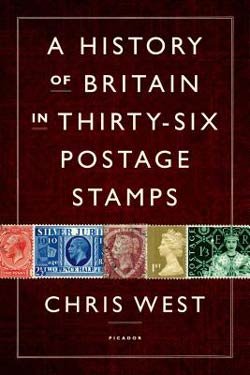
IndieBound sings its praises:

A History of Britain in Thirty-six Postage Stamps tells the rich, layered, and breathtaking history of England through thirty-six of its fascinating, often beautiful, and sometimes eccentric postage stamps. West shows that stamps have always mirrored the events, attitudes, and styles of their time. Through them, one can glimpse the whole epic tale of an empire unfolding. From the famous Penny Black, printed soon after Queen Victoria’s coronation, to the Victory! stamp of 1946, anticipating the struggle of postwar reconstruction—A History of Britain in Thirty-six Postage Stamps is a hugely entertaining and idiosyncratic romp, told in Chris West’s lively prose.

On their own, stamps can be curiosities, even artistic marvels; in this book, stamps become a window into the larger sweep of history.

————————-

Sadie O. Stein, in Paris Review, also praises it.

I have a terrible feeling that A History of Britain in Thirty-Six Postage Stamps may be a hard sell for some readers. But trust me: Chris West’s cultural history is fast paced and engaging, and the organizing principle takes the narrative in all kinds of unexpected directions. Sure, there’s a little light philately in there, but even those who only communicate electronically will be glad they picked it up.

So I guess I have to read it, despite having zero interest in stamps.

Via Madame Scherzo.

21 Sep 2013

J.D. Salinger Left Behind Five Books

, ,

J.D. Salinger is dead, and therefore unable to prevent Shane Salerno from making a documentary film about him. The new film is being accompanied by the publication of a biography co-authored by the director and David Shields.

Cornel Bonca, in the LA Review of Books, tells us about both the move and the book, and assures us that “J.D. Salinger would have hated every single word and frame in both of them. Hated them, felt enraged, betrayed, flayed by them.”

The big news, though, is that the book spills the beans about the contents of the literary legacy that the self-exiled and reclusive author had been working on in secret for over half a century.

Salinger left behind five complete manuscripts of mostly new material, and there are plans afoot to publish them in book form, one a year, starting in 2015. The Salinger estate has not confirmed anything, but Shields and Salerno assure us that the “information was provided, documented, and verified by two independent and separate sources.” It gives one pause that these sources refuse to identify themselves — the book and film openly identify 99 percent of the sources of the rest of their material — but the news is such a bombshell that Shields’s and Salerno’s reputations clearly ride on it: if these books don’t see the light of day, Shields and Salerno will look like Geraldo Rivera opening up Al Capone’s vault. Assuming they’re on the level, though, this is the biggest literary “get” of the American 21st century. The books include a World War II novel featuring Sergeant X from “From Esme,” the most intriguing character outside Holden and the Glass family that Salinger ever created. It includes a novella, in diary form, written by a World War II counterintelligence officer — Salinger’s job during the war — “culminating in the Holocaust.” Given Salinger’s war experience and his painstaking writing process, these two works could conceivably add up to a contribution to American World War II literature on a par with the work of Mailer, Jones, Heller, and Pynchon. A third manuscript is, we’re told, a “manual of Vedanta,” a book explaining Vedanta Hinduism (and presumably, its relation to Salinger’s work), “with short stories, almost fables, woven into the text.” Finally, there are two compilations, one entitled The Family Glass, gathering all the published Glass stories together with five new stories about Seymour, the last of which “deals with Seymour’s life after death.” Given that once Salinger got going on the Glasses, his “stories” inevitably metastasized into novellas, this book is likely to be a real tome, and might conceivably be the greatest contribution Salinger makes to American letters, dealing as it must, with the question of how to live a genuine spiritual life in a postwar, post-Holocaust world. Then there’s the final book, which Shields and Salerno describe as “a complete history of the Caulfield family,” gathering Catcher, six previously published (and I would imagine, wholly rewritten) Caulfield stories written in the early-to-mid 1940s, as well as new stories featuring, presumably, Holden, Phoebe, Allie, and D.B. Caulfield. Five new Salinger books! Doubtless, they will make us entirely reconceive Salinger’s current oeuvre. If the books are even close in quality to Catcher or Franny & Zooey, they might reroute the course of late 20th-century American literature.

23 Aug 2013

Famous People’s Bookplates

, , ,

35 (mostly) interesting examples on Buzzfeed.

I’d rate Calvin Coolidge’s the best.

————————————-

But I’d most like to own a book containing this one.

17 Aug 2013

Coping With Rejection

, , , , ,

Brits do it so well.

Hat tip to Steve Bodio.

08 Aug 2013

Lunching with Orson

, , ,


Orson Welles with Henry Jaglom.

Orson Welles was renowned for his keen wit, sharp tongue, and profound sense of personal grievance. Consequently, Welles’ lunch-time collected commentary, compiled in the recently published My Lunches with Orson, will inevitably be a treasure trove of good lines.

Peter Apsden, in the Financial Times, gives us a few good excerpts:

Orson Welles was stymied at virtually every stage of his career by those whom he believed to be inferior and, in consequence, terminally unsympathetic to him. Welles wrote the template for the way in which arrogance and insecurity fuel each other to produce breakdown. There was the stellar ambition of Citizen Kane (1941), and then immediate and lengthy decline. His physique swelled, his patience shortened, his friends, or “friends”, scarpered. He ended his days at his regular hang-out, Hollywood’s Ma Maison restaurant, draping himself, as Gore Vidal once described, in ‘bifurcated tents to which, rather idly, lapels, pocket flaps, buttons were attached in order to suggest a conventional suit’.

Which is where we find him in My Lunches With Orson, Peter Biskind’s sensitively edited account of Welles’s conversations with Henry Jaglom. The British-born actor and director became Welles’s regular lunch partner and confidante, and taped their dialogues over a couple of years before Welles’s death in 1985. This is Welles riffing uninhibitedly on his life and times, lurching from mischief to melancholy, and it is riveting. I defy anyone not to feel moved by its narrative arc of greatness laid low by its own luminosity.

The book is already attracting attention for its waspish indiscretions. Here is Welles on Woody Allen: ‘I can hardly bear to talk to him. He has the Chaplin disease. That particular combination of arrogance and timidity sets my teeth on edge.’ On Laurence Olivier: ‘Larry is very – I mean, seriously – stupid.’ On the pianist Arthur Rubinstein: ‘The greatest cocksman … [he] walked through life as though it was one big party.’ On Rear Window (1954): ‘Everything is stupid about it. Complete insensitivity to what a story about voyeurism could be … Vertigo. That’s worse.’

But beyond those headlines, there are fascinating pointers to how Welles viewed himself, and his work. What, asks Jaglom, did they think of Kane in England? ‘It was not gigantically big in England. Auden didn’t like it,’ replies Welles, obviously preferring to stew on the verdict of a single poet rather than the bathetic business of box office returns. ‘I always knew that Borges … hadn’t liked it,’ he continues. ‘He said that it was pedantic, which is a very strange thing to say about it, and that it was a labyrinth. And that the worst thing about a labyrinth is when there’s no way out. And this is a labyrinth of a movie with no way out.’ And then we can imagine that famously booming voice turn warm with the sudden discovery of a good joke.
‘Borges is half-blind. Never forget that.’

————————-

One more interesting paragraph from John Powers, at NPR:

If you love old movies, My Lunches with Orson is like being handed a big tin of macadamia nuts — you just keep devouring it. Welles talks about everything from the secret side of Katharine Hepburn — she talked dirty and was hot to trot — to how The Godfather is ‘the glorification of a bunch of bums who never existed.’ He knows this because he used to bed the same showgirls real gangsters did. Although a lifelong man of the left, Welles says the right-wingers in Hollywood were much nicer people — especially John Wayne, who was a prince.

29 Jul 2013

America the Nice

, , , ,

Jay Nordlinger, in one of the most enthusiastically fulsome reviews I’ve ever read, quotes one of the characters in Mark Helprin’s new novel In Sunlight and in Shadow making a post-WWII prediction.

Humankind, or at least American-kind, will lose its edge as we produce more and more pipsqueaks and everyone gets nice. Whole generations of pipsqueaks will be so f***ing nice you won’t be able to tell a man from a woman. It will get worse and worse as people mistake nice for good. Hitler was nice, supposedly, most of the time. A lot of good that did. Luxury and prosperity breed pipsqueaks. A century from now the country won’t even be able to defend itself.”

23 Jul 2013

Raymond Chandler’s Birthday

, ,

There was a desert wind blowing that night. It was one of those hot dry Santa Anas that come down through the mountain passes and curl your hair and make your nerves jump and your skin itch. On nights like that every booze party ends in a fight. Meek little wives feel the edge of the carving knife and study their husbands’ necks. Anything can happen. You can even get a full glass of beer at a cocktail lounge.

——————————-

There are blonde and blondes and it is almost a joke word nowadays. All blondes have their points, except perhaps the metallic ones who are as blonde as a Zulu under the bleach and as to disposition as soft as a sidewalk. There is the small cute blonde who cheeps and twitters, and the big statuesque blonde who straight-arms you with an ice-blue glare. There is the blonde who gives you the up-from-under look and smells lovely and shimmers and hangs on your arm and is always very, very tired when you take her home. She makes that helpless gesture and has that goddamned headache and you would like to slug her except that you found about the headache before you invested too much time and money and hope in her. Because the headache will always be there, a weapon that never wears out and is as deadly as the bravo’s rapier or Lucrezia’s poison vial.

There is the soft and willing alcoholic blonde who doesn’t care what she wears as long as it is mink or where she goes as long as it is the Starlight Roof and there is plenty of dry champagne. There is the small perky blonde who is a little pale and wants to pay her own way and is full of sunshine and common sense and knows judo from the ground up and can toss a truck driver over her shoulder without missing more than one sentence out of the editorial in the Saturday Review. There is the pale, pale blonde with anemia of some non-fatal but incurable type. She very languid and very shadowy and she speaks softly out of nowhere and you can’t lay a finger on her because in the first place you don’t want to and in the second place she is reading the Wasteland or Dante in the original, or Kafka or Kierkegaard or studying Provencal. She adores music and when the New York Philharmonic is playing Hindemith she can tell you which one of the six bass viols came in a quarter of a beat too late. I hear Toscanini can also. That makes two of them.

And lastly there is the gorgeous show piece who will outlast three kingpin racketeers and then marry a couple of millionaires at a million a head and end up with a pale rose villa at Cap d’Antibes, and Alfa Romeo town car complete with pilot and co-pilot, and a stable of shopworn aristocrats, all of whom she will treat with the affectionate absentmindedness of an elderly duke saying good night to his butler.

——————————-

I’m an occasional drinker, the kind of guy who goes out for a beer and wakes up in Singapore with a full beard.

17 Jul 2013

Dustjacket Dating

, , ,


New Yorker cover, November 8, 2004.

Elyse Moody offers a literary alternative to Missed Connections.

ve been asking myself some basic questions: What do I like? Reading. What am I looking for in a date? Someone who enjoys books and talking about them, and who can strike up good conversations with strangers. An idea started to gel. Maybe if I’m choosy about what I read on my longish interborough commute, the right guy—one with superlative taste who’s curious enough to make a move—will be drawn to me by the tractor beam the open book in my hands emits.

I ran this idea by my therapist, and she started nodding excitedly. “Books are such a great crutch,” she said. “I think of them like props.”

Exactly.

So this strategy’s been clinically endorsed. I’ve reviewed my journals, made a list of the most attractive qualities of potential soul mates past (setting aside their less desirable traits—e.g., substance addiction, monomaniacal narcissism, commitment phobia), and distilled it into archetypes of the charming men I hope to meet, if fate wills it, somewhere in the New York City public transit system.

Her choice of lures, however, struck me as far from the most interesting or effective, especially if you desire to strike up an acquaintance with “Ivy League smart” males. I think of Saul Bellow myself as an over-rated, excessively promoted ethnic writer. If I saw a girl reading Tom Robbins, I would shudder and walk quietly away. Eudora Welty is a representative of the grotesque-and-invariably-depressing school of Southern writing, and the sight of her dustjackets will probably work on most men in a decidedly anaphrodisaical manner.

10 Jul 2013

Christine Granville, British Secret Agent

, , , , ,


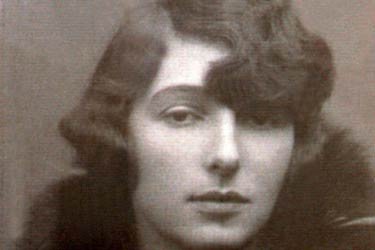
Maria Krystyna Janina Skarbek, GM, OBE, Croix de guerre aka Christine Granville

Clare Mulley’s The Spy Who Loved, previously published in Britain, has just been released in the US. It is the biography of Christine Granville, née Maria Krzystina Skarbek, a Polish aristocrat who became one of the most daring and successful British secret agents of WWII. According to Wikipedia, Christine Granville may have been the model for Ian Fleming’s Vesper Lynd.

Emma Garman reviews it with appropriate admiration in the Book Beast:

[While] traveling in South Africa [and she] heard the news that Germany had invaded Poland, Christine harbored not the tiniest qualm about leaving… in a rush to defend her beloved homeland. Presenting herself to British Intelligence in London—“a flaming Polish patriot … expert skier and great adventuress,” according to their records—Christine volunteered to ski into Nazi-occupied Poland armed with British propaganda. Her fervent aim, writes Mulley, was “to bolster the Polish spirit of resistance at a time when many Poles believed they had been abandoned to their fate.”

That mission, carried out with a Polish Olympic skier turned mountain courier, set the tone for Christine’s career in its sheer wildness. Heading out from Czechoslovakia during the coldest winter in living memory, with snow four meters deep, the pair traversed the 2,000-meter-high Tatra Mountains, seeing two dead bodies on their way and later hearing that, on the night they reached the border, more than 30 people had died in the mountains trying to escape Poland. Then, once on a Warsaw-bound train, Christine’s nerve did not desert her: realizing that armed guards were doing spot checks of passengers’ possessions, she directed the beam of her preternaturally bewitching allure onto a uniformed Gestapo officer. Would he mind, she wondered, carrying the package of black-market tea that she was bringing her mother? He happily obliged, and so her sheaf of illicit documents—which, if discovered, would have led to merciless interrogation followed by the firing squad—reached their destination.

Such boldfaced aplomb would be deployed time and time again in dealing with the Nazis. When working for SOE (Special Operations Executive, the secret wartime sabotage unit) in the Alps, where she trekked between the French and Italian sides and transmitted vital information about enemy activity, Christine was stopped by the German frontier patrol. In her hand she held a silk map of the region, given to agents to avoid the giveaway rustle of paper in pockets. With no hope of concealing it, she casually shook the fabric out and used it to replace the headscarf she was wearing, greeting the soldiers in French as if she were simply a local on an errand. Another time she and Andrzej Kowerski, her on-off lover and frequent partner in crime, were arrested and interrogated by Gestapo officers in Budapest. Christine had been suffering from flu, so she exaggerated her hacking cough and bit her tongue so hard that she appeared to be bringing up blood. Presumed to be infected with tuberculosis—potentially fatal and frighteningly infectious—she and Kowerski were released.

Christine’s most jaw-dropping act of heroism would occur in August 1944: with a bounty on her head and her face having graced “Wanted Dead or Alive” posters, she strolled into a Gestapo-controlled French prison and, posing as another woman entirely, secured an interview with a corruptible gendarme. Every iota of her charm and resourcefulness coming into play, Christine successfully arranged to break out three colleagues—including her lover du jour, the 29-year-old Belgian-British agent Francis Cammaerts—who were about to be executed. “Good reading,” an SOE officer wrote on the cover note of Cammaerts’ subsequent report, “I am going to make sure that I keep on Christine’s side in future.” “So am I,” another scribbled in reply. “She frightens me to death.”

—————————————————–

2012 review from the Spectator by Alistair Horne, titled “Bravest of the Brave:”

Of all the women agents who risked their lives in Nazi-occupied Europe in the second world war, Polish-born Krystyna must surely rate as one of the bravest of the brave. As they used to say in army vernacular, the George Medal (which was about as close to a VC as a foreign national could get), the OBE and the Croix de Guerre did not exactly ‘come up with the rations’.

Churchill is alleged to have rated Skarbek his ‘favourite spy’. The reason? In spring 1941 she passed minute details to London of Hitler’s plans for Barbarossa, the invasion of Russia. Churchill forwarded them on to Stalin, who promptly binned them.

Krystyna’s father was from the lesser Polish aristocracy, but her mother was Jewish (she was eventually swallowed up by the Holocaust) — a fact that would have made Krystyna’s repeated journeys under the noses of the Gestapo infinitely more dangerous.

Six times she trekked and skied across the Tatras, ‘exfiltrating’ high-risk Polish refugees into neutral Hungary, accompanied by her one-legged, long-term lover, Andrzej Kowerski (aka Andrew Kennedy). Seldom conducting an operation without a lover (proof of the 007 notion that sex and extreme peril often make for inseparable bed-mates), Krystyna’s reckless exploits smacked more of the age of Baroness d’Orczy than of the vile century of Heinrich Himmler.

Several of the witnesses in Clare Mulley’s scintillating and moving book, such as the late Paddy Leigh Fermor, testify to the fact that Krystyna did indeed thrive, quite irrationally, on danger. With her ‘fierce, almost blind pride,’ she reminded one British officer of the Polish cavalry that had charged Nazi Panzers in 1939. Arrested in Hungary, on one occasion she bit her tongue so hard as to draw blood, persuading the interrogators that she had TB. They released her.

Krystyna’s most legendary exploit came in summer 1944, in southern France, pending the Allied invasion. Her British boss (and also, naturally, lover), Francis Cammaerts (DSO, Croix de Guerre, Légion d’Honneur), one of SOE’s top operatives, had fallen into a trap and was awaiting imminent execution. She located his cell by humming ‘Frankie and Johnny’. Cammaerts responded by singing the refrain. Then Krystyna presented herself boldly to the milice officer holding Cammaerts, as a British agent—and a niece of General Montgomery, no less — sent to obtain the release of the prisoners. The invasion, she persuaded Cammaert’s captors, was but hours away and terrible reprisals would be exacted if the prisoners were killed. Coupled with Krystyna’s devastating charm, the ruse worked. All three agents walked free.


Maria Skarbek’s Polish coat of arms

Your are browsing
the Archives of Never Yet Melted in the 'Books' Category.
/div>


Feeds
Entries (RSS)
Comments (RSS)
Feed Shark