Category Archive 'Books'
06 Jul 2013


My wife Karen Myers recently started writing fantasy novels. Karen is a technical early-adopter, so, typically, she has opted for Independent Publishing, and is an active reader and correspondent these days in Indie Publication forums.
One of her Indie correspondents recommended to Karen the hot new Indie-published book these days. Its title is The Girl Who Would Be King.
Taxonomically, GWWBK is a Young Adult fantasy, but I think it is really a comic book/graphic novel, which (at the moment) is lacking its illustrations. GWWBK is the story of two orphaned girls, one good, one bad, who both discover that they possess superhuman strength and healing abilities.
The good redhead, Bonnie Braverman, devotes her newly discovered talents to fighting crime and helping people in distress. The bad blonde, Lola Lefever, becomes a serial killer, equips herself with a gang of criminals, and has a go at making herself King of Los Angeles.
The two girls share a mysterious link and are inevitably destined to fight.
Another review is here.
Highly recommended light fiction.
01 Jul 2013

William Faulkner
Tim Parks, in the Bedwetters’ Review of Books, tries connecting some writers’ careers and characteristic themes with the manner and occasion of their deaths.
I expect it would have been too easy to discuss poor old Papa Hemingway and his 12 gauge Boss, but he did offer an amusing take on old Bill Faulkner.
[L]et’s consider William Faulkner.
Throughout his life, when asked for biographical details Faulkner would begin by saying he was the great grandson of the Old Colonel, a man renowned for his courage, temper, energy, and vision. And a writer to boot. In contrast Faulkner saw his own father as a nobody and a loser, an opinion he seemed to share with his mother, to whom he remained close throughout his life, having coffee with her most afternoons and never missing a family Christmas if he could help it. From his earliest days he was eager to present himself as bold and courageous, inventing in 1918 a bizarre story of having crashed a warplane while celebrating the end of the war. For years he affected a limp supposedly resulting from the crash, though at the time he had never piloted a plane at all. His brother was actually wounded in the war. Faulkner’s first novel focuses on a soldier returning home a hero, but so badly wounded that he dies.
Like Thomas Hardy, Faulkner eventually invented a fictional territory of his own where his novels could all take place in relation to each other. Acts of courage in Yoknapatawpha County—usually a very physical, manly courage, but also the courage to claim the woman you really desire—end up, as in Hardy’s novels, in wounds, disaster, and death. Like Hardy, Faulkner married a woman he was eager to betray but never able to walk out on. Community in the South is presented as a tremendous insuperable burden that one can neither escape nor overcome. The only freedom available is the freedom, the courage, to live slightly apart, not to engage, with the world or women, like Ike McCaslin, hero of The Bear.
Over the years Faulkner’s writing became both a solution to and a representation of the conflicting impulses that tormented him. His stylistic experimentalism became an act of courage in itself, allowing him to criticize the genuinely war-wounded and mythically courageous Hemingway for lacking the fortitude to write courageously, or to risk failure. Yet Faulkner’s experimentation is never liberating: his prose gives us the impression of a wild, would-be heroic energy pushing through an impossibly dense medium, shoving aside negative after negative to reach the brief respite of a positive verb, losing itself in a heavy slime of ancestors and ancient wrongs. It is not a world in which one could hope to become the courageous man Faulkner wished to be. From the black community, Faulkner told a friend, we can learn “resignation.â€
One major difference between the patterns that guide Hardy’s and Faulkner’s writing is the latter’s relationship with alcohol, which, more than a mere disinhibitor making courage possible, becomes a sort of courage in itself. However adventurous and ferociously provocative, his writing was not enough to satisfy Faulkner’s need to feel courageous. Throughout his life he drank epically, heroically. In the hunting camp that is the setting of The Bear we hear that
the bottle was always present, so that after a while it seemed to him that those fierce instants of heart and brain and courage and wiliness and speed were concentrated and distilled into that brown liquor which not women, not boys and children, but only hunters drank, drinking not of the blood they had spilled but some condensation of the wild immortal spirit, drinking it moderately, humbly even, not with the pagan’s base hope of acquiring the virtues of cunning and strength and speed, but in salute to them.
Whisky and writing intertwine throughout Faulkner’s life, feeding each other, blocking each other, never allowing him to achieve any stability, always acting out a salute to other men he feared he could not resemble. By the time he was fifty the end seemed inevitable. There are only so many times one can dry out in a clinic and fall drunk off a horse. It was actually something of a miracle that Faulkner outlived his dear mother for a year before one more courageous binge, one more salute to the truly brave, as he saw it, did him in, aged sixty-five.
30 May 2013

James Erwin
James Erwin seems a little embarrassed at how easy it was for him to turn an intriguing historical question into a literary phenomenon and a big money deal with Hollywood.
Rome, Sweet Rome wikipedia article
It was on my lunch hour; I’d just gone on Reddit.com (a website where people submit content and then vote it up or down depending on if they like it) and saw a question: “Could a battalion of US marines destroy the entire Roman empire?â€
I thought to myself, “Oh, that sounds like a fun story.†So I just started writing.
I started at noon and I was done by 1pm. I’d expected that maybe a hundred nerds would read it and enjoy it, and that some people would have had a fun lunch hour because of me. Instead, it changed the trajectory of my life. By the time I went home at five it’d had a quarter-of-a-million readers, a week later I had a manager, and a week after that I had a contract with Warner Brothers. They brought me on to write a treatment, and then a screenplay based on that treatment.
Read the whole thing.
04 May 2013

Phys.org:
Researchers from the University of Warwick and the Université François-Rabelais Tours have identified the first manuscript known to have belonged to the eminent French essayist, Michel de Montaigne.
Read more at: http://phys.org/news/2013-05-manuscript-discovery-montaignes-library.html#jCp
Of Montaigne’s celebrated library, thought to have contained around 1,000 books, only 101 are known to have survived. Until now, no manuscript (other than Montaigne’s own annotations in printed works) was known to bear the mark of the writer’s provenance.
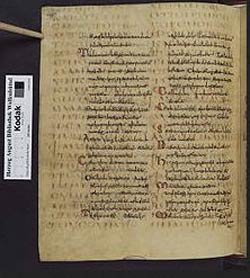
The sixteenth-century manuscript, held at the Herzog August Bibliothek at Wolfenbüttel, contains copious notes by an unknown individual based on lectures on Roman law by the distinguished jurisprudent and historian François Baudouin. Montaigne’s Latin signature ‘Michaël Montanus’ is clearly visible on the manuscript’s title page.
Ingrid De Smet of the Centre for the Study of the Renaissance, University of Warwick, explained the significance of her discovery:
“The identification of Montaigne’s ownership of this work is exciting for the study of sixteenth-century French intellectual culture. It confirms Montaigne’s legal interests and potentially opens new vistas for the reading of his essays and the understandings of his political views.”
01 May 2013

Winston Churchill as a boy owned, played with, and undoubtedly cast and painted lead soldiers. He owned something like 1500 hundred of them –probably one of the largest juvenile collections ever on the planet–, and no one ever thought Churchill intellectually impaired.
The Left, as we all know, has Science on its side, and its regime of experts intends to govern us guided by the insights delivered by established science.
The Left’s supposedly science-based policies, however, have a tendency to resemble primitive superstition, frequently incorporating Ousiaphobia (My own neologism: “the fear of substances”) which in every way resembles the sort of fear that primitive natives manifest toward things declared taboo by tribal witchdoctors.
Our own witchdoctors come with Ph.D.s, of course, and our politicians enthusiastically embody taboos in legislation. One particularly notorious example was the Consumer Product Safety Improvement Act (CPSIA) of 2008 which banned ever-more-minute levels of the taboo element LEAD (symbol: Pb) in children’s toys, &c.
That particularly absurd piece of legislation had much more far-reaching implications than banning the importation of toys painted with lead paint from China. It effectively prohibited the sale of used (and antique) toys carrying traces of the forbidden metal, and when the law (passed under George W. Bush, mind you) went into effect early in 2009, it was thought also to ban all children’s books printed before 1985, because (oogah, boogah!) back then printers’ ink contained minute quantities of lead. The act banned lead in levels of 300 parts per million, and the Consumer Product Safety Commission promised that it would enforce the ban since “[g]iven the way that kids tear and chew through library books… it’s unlikely that libraries have many children’s books that are more than 24 years old.”
Our federal government has declared all children’s books printed before 1985 taboo on the basis of the belief that children customarily eat books.
Apparently, the book purge is still underway, four years later. A commenter on a publishing blog (read by my wife) reported yesterday.
My regional library system got hit hard by the requirement to riff all the older kids books (lead in the ink, natch). That really flubbed up their budget. I suspect they are not alone in this. The Friends of the Library group has stepped up and done a lot, but I’ve noticed the number of new acquisitions is declining.
Most people in America go to school for sixteen long years. They get science courses, and learn that Darwin proved that life arose spontaneously by chance, and that Natural Selection is good as a basis for rejecting traditional religion, but is absolutely not to be tolerated in human society. I presume everyone gets Chemistry courses and learns that lead is an element, is a metal, and is heavy. Chemistry courses probably inform people today that compounds of heavy metals tend to be very poisonous, but it is clear that the relationship, or lack thereof, between very poisonous and “300 parts in a million” is very evidently not made clear. Neither is the obvious necessity of employing common sense and testing theories against historical fact.
If exposure to books with infinitesimal amounts of lead in the ink they are printed with really impacted children, every youngster who was so foolhardy as to devote significant time to reading would have to be presumed to have damaged his intelligence. In reality, it’s the children who read a lot who went on to get scholarships to Yale.
Winston Churchill monkeyed around with lead during his childhood on a scale which would obviously appall today’s scientific experts. You can bet that he handled, fondled, ordered and re-ordered, and played with every single one of those 1500 lead soldiers. He undoubtedly was additionally equipped with molds for making more of them, and he doubtless, like most hobbyists of his ilk, poured melted lead and cast his own lead soldiers which he then trimmed, tidied up, and painted. The boy Churchill’s hands were, you can count on it, soiled with lead on many a day.
I fished with lead sinkers as a boy, and during some periods, I too used a lead pot, casting my own sinkers. I also learned to handload ammunition, and cast bullets. Amazingly Churchill lived to the age of 90, and I’ve made it into my sixth decade myself.
07 Jan 2013

Elizabeth Wurtzel grew up in the New York projects, but got herself a scholarship to private school and went on to graduate from Harvard. She later attended Yale Law School, graduating at age 40, apparently having been admitted on the basis of her writing career, despite atrocious Law Board scores.
Wurtzel had earlier “made a career of her emotions” quite successfully, writing Rock criticism and publishing an autobiographical novel of addiction that became a bestseller and was made into a movie starring Christina Ricci. All that ought to get anybody into Yale Law.
She shared connoisseurship of depression with the late David Foster Wallace and worked for left-wing superlawyer David Boies.
2012 apparently did not go so well for the poor girl, and that bad year prompted her to pen this highly amusing rant about her own “one night stand of life.”
I had found myself vulnerable to the worst of New York City, because at 44 my life was not so different from the way it was at 24. Stubbornly and proudly, emphatically and pathetically, I had refused to grow up, and so I was becoming one of those people who refuses to grow up—one of the city’s Lost Boys. I was still subletting in Greenwich Village, instead of owning in Brooklyn Heights. I had loved everything about Yale Law School—especially the part where I graduated at 40—but I spent my life savings on an abiding interest, which is a lot to invest in curiosity. By never marrying, I ended up never divorcing, but I also failed to accumulate that brocade of civility and padlock of security—kids you do or don’t want, Tiffany silver you never use—that makes life complete. Convention serves a purpose: It gives life meaning, and without it, one is in a constant existential crisis. If you don’t have the imposition of family to remind you of what is at stake, something else will. I was alone in a lonely apartment with only a stalker to show for my accomplishments and my years.
I was amazed to discover that, according to The Atlantic, women still can’t have it all. Bah! Humbug! Women who have it all should try having nothing: I have no husband, no children, no real estate, no stocks, no bonds, no investments, no 401(k), no CDs, no IRAs, no emergency fund—I don’t even have a savings account. It’s not that I have not planned for the future; I have not planned for the present. I do have a royalty account, some decent skills, and, apparently, a lot of human capital. But because of choices I have made, wisely and idiotically, because I had principles or because I was crazy, I have no assets and no family. I have had the same friends since college, although as time has gone on, the daily nature of those relationships has changed, such that it is not daily at all. But then how many lost connections make up a life? There is my best friend from law school, too busy with her toddler; the people with whom I spent New Year’s in a Negril bungalow not so long ago, all lost to me now; every man who was the love of my life, just for today; roommates, officemates, classmates: For everyone who is near, there are others who are far gone.
Please understand: I live specifically, with intent. The intent is, I know now, not at all specific, except that I have no ability to compromise. Most people say that as a statement of principle, but in my case, it is about feeling trapped when I am doing something I don’t like, and it is probably more childish than anything else. I likely do the right things for the wrong reasons. But it has also meant that I have not disciplined myself into the kinds of commitments that make life beyond the wild of youth into a haven of calm. I am proud that I have never so much as kissed a man for any reason besides absolute desire, and I am more pleased that I only write what I feel like and it has been lucrative since I got out of college in 1989. I had the great and unexpected success of Prozac Nation in 1994, and that bought me freedom. And I have spent that freedom carelessly, and with great gratitude. Why would I do anything else? I did not expect, not ever, to be scared to death.
I was born with a mind that is compromised by preternatural unhappiness, and I might have died very young or done very little. Instead, I made a career out of my emotions. And now I am just quarreling with normal. I believe in true love and artistic integrity—the kinds of things that should be mentioned between quotation marks—as absolutely now as I did in ninth grade. But even I know that functional love includes a fair amount of falsity, or no one would get through morning coffee, and integrity is mostly a heroic excuse to avoid the negotiating table. But I can’t let go. I live in the chaos of adolescence, even wearing the same pair of 501s. As time goes by.
Read the whole thing.
Hat tip to Walter Olson (via Facebook).
02 Jan 2013

An Cathach [“the Battler”] of St. Columba, the oldest surviving manuscript in Ireland, and the second oldest Latin psalter in the world, Royal Irish Academy.
Matt Rubinstein, in the Australian Book Review last Fall, prefaced a lengthy discussion of the impact of the arrival of the eBook and consequent issues concerning intellectual property and book piracy with a fascinating account of a 6th Century case of book piracy involving two saints which led to actual battle.
The most precious manuscript held by the Royal Irish Academy is RIA MS 12 R 33, a sixth-century book of psalms known as an Cathach (‘The Battler’), or the Psalter of St Columba. It is believed to be the oldest extant Irish psalter, the earliest example of Irish writing – and the world’s oldest pirate copy. According to tradition, St Columba secretly transcribed the manuscript from a psalter belonging to his teacher, St Finian. Finian discovered the subterfuge, demanded the copy, and brought the dispute before Diarmait, the last pagan king of Ireland. The king decreed that ‘to every cow belongs her calf’, and so the copy of a book belonged to the owner of the original. Columba appealed the decision on the battlefield, and defeated Finian in a bloody clash at Cúl Dreimhne. No trace remains of Finian’s original manuscript, if it ever existed. Only ‘The Battler’ survives.
Finian v Columba is difficult to reconcile with modern copyright law. The psalms in question were attributed to God, revealed to David, and translated by St Jerome in the fourth century, so Finian’s claim to copyright in the work is unclear. It may be that the pagan Diarmait simply free-associated his judgment from the calfskin of the Cathach’s pages. But any want of judicial rigour is surely redeemed by the king’s early intuition that there is something valuable about a book beyond its physical self, that it has spirit as well as flesh and a soul beyond its body – as well as by the delicious consequences of an actual military war being fought, at least in part, over a single illegal copy, and of that outlawed copy becoming a national treasure.
————————-
Wikipedia:
Tradition asserts that, sometime around 560, St. Columba became involved in a quarrel with Saint Finnian of Movilla Abbey over a psalter. Columba copied the manuscript at the scriptorium under Saint Finnian, intending to keep the copy. Saint Finnian disputed his right to keep the copy. The dispute eventually led to the pitched Battle of Cúl Dreimhne in 561, during which many men were killed. A synod of clerics and scholars threatened to excommunicate him for these deaths, but St. Brendan of Birr spoke on his behalf with the result that he was allowed to go into exile instead. Columba suggested that he would work as a missionary in Scotland to help convert as many people as had been killed in the battle. He exiled himself from Ireland, to return only once, many years later.
Columba’s copy of the psalter has been traditionally associated with the Cathach of St. Columba.
31 Dec 2012

Everyone knows that the code-hero career of Ernest Hemingway ended with the great man putting a shotgun to his own forehead, after years of infidelity to a series of wives, disgraceful episodes of bullying, and embarrassing displays of drunkenness and vanity. By the time Hemingway pulled the trigger on his 12-gauge Boss, it was all gone for him: the powerful athletic physique and once superlative health, the unsurpassed ability to produce clear and elegant English prose, even the penetrating insight and cool lucidity underlying his impeccably stoical point of view.
He had essentially prophesied his own end in his great 1938 short story The Snows of Kilimanjaro:
He had destroyed his talent himself. Why should he blame this woman because she kept him well? He had destroyed his talent by not using it, by betrayals of himself and what he believed in, by drinking so much that he blunted the edge of his perceptions, by laziness, by sloth, and by snobbery, by pride and by prejudice, by hook and by crook. …What was his talent anyway? It was a talent all right but instead of using it, he had traded on it. It was never what he had done, but always what he could do. And he had chosen to make his living with something else instead of a pen or a pencil.
Paul Hendrickson takes Hemingway’s 38-foot Wheeler cabin cruiser, the Pilar, built for him in 1934, as the center and symbol of the final 27-year, 3-month trajectory of the author’s literary career and life, and chronicles Hemingway’s whole sad end game, the struggle of the human being to live up to his own masterfully-designed and brilliantly-marketed personal myth, his failure, crack-up, and decline. Yet, Hendrickson sympathizes and finds in Hemingway’s process of personal self-destruction still ever so much to pity and admire. As he puts it in the title of his prologue: “Amid So Much Ruin, Still the Beauty.”
Few great writers have ever received such an extraordinary tribute. Hemingway’s Boat represents the product of massive and intensely focused research. Hendrickson can lovingly describe the details of the room where Hemingway used to stay in the Ambus Mundos Hotel, as well as tell you exactly which models of Vom Hofe and Hardy salt water reels he fished. Hendrickson even throws in some rather significant and ground-breaking criticism, arguing quite persuasively that it was Hemingway, in Green Hills of Africa (1935), who really invented the non-fiction novel, not Capote or Mailer thirty years later). Hemingway’s Boat is, in the final analysis, a passionate and deeply personal eulogy to a great man delivered in finely crafted prose that is worthy of its own subject.
—————————————-

It has been a very long time since anyone has produced a fishing memoir as good as Luke Jennings’ Blood Knots.
Jennings, who I found is, oddly enough, dance critic for the Observer, describes the (exotic to Americans) bildungsroman of an ordinary British angler, who starts off –like the rest of us– with cheap tackle and humble access to low quality, near-home angling opportunities before gradually progressing to more exciting waters and nobler quarry.
In Jennings’ case, we get some astonishingly exciting accounts of how much sporting excitement can be found in pike and carp, barbel, tench and rudd. Luke Jennings can make the encounter with a canal-bred pike lurking off a London tow-path read like Jim Corbett stalking a man-eater in the Himalayan foothills.
But Blood Knots is not only a fishing book. It is an account of the coming of age and moral education, in today’s modern world, of a surprisingly exotic survival: the recusant Catholic gentleman. Jennings’ family, as he puts it, was of “bookish gentry, each beggaring itself to pay for the education of the next… born of windy vicarages and dusty cantonments.”
His first powerful influence was his father, a Hussar officer awarded the Military Cross for pressing home an armored attack at Ijsselstein in September of 1944, despite two tanks being shot out from under him. The second, as the saying goes, “brewed up,” and Jennings’ father only lived because he was thrown out of the tank by the explosion. He was badly burned. The scars on his face remained highly visible, and Mrs. Jennings had to dress his burned fingers every day for the fifty years of their marriage.
Jennings attended the (Benedictine) Ampleforth College, and provides this testimony to its unmodern ethos.
Father Paul Neville, the former headmaster of Ampleforth, was once talking to a fellow principal who informed him expansively that his own establishment’s purpose was ‘to prepare boys for life.’ ‘Ah,’ said Father Paul quietly. ‘Ours is to prepare them for death.'”
At Ampleforth, Jennings met his second major influence, a recent Ampleforth graduate named Robert Nairac, then serving as junior master.
It was important to know whom you were dealing with and so, on the first night of the autumn term, three of us cooked up a excuse to knock on the new master’s door. We trooped in to be greeted by a tough-looking figure with unkempt black hair and a cheerful grin. He was lying on his bed in his shirtsleeves, smoking. Around him, on the sheets, lay the constituent parts of a twelve-bore shotgun and a pair of cleaning rods. On top of the chest of drawers was a falconer’s leather gauntlet, the fingers dark with dried blood, and a battered fishing-bag in which I could see a jumble of wire traces and pike lures. With the small sash-window closed, the air was heavy with gun oil and Balkan tobacco.
Nairac proved a superb sporting mentor immersing Jennings in “the rituals of the field sports” and “the near mystical sense of place and history that, on occasion, can accompany them.”
The same Robert Nairac, a few years later, became part of history. After Oxford, he joined the Grenadier Guards, and worked undercover against the Provisional IRA terrorists in Ireland. In May of 1977, while visiting a pub to gather intelligence, he was abducted, brutally tortured, and finally murdered by the IRA. His body was never found.
Blood Knots is the best kind of fishing memoir, the kind of book that demonstrates the necessary role of active participation in the processes of Nature in fulfilling essential needs in the cultivated human being’s spiritual life.
12 Dec 2012

Suw Charman-Anderson, in Forbes, notes a watershed moment in the world of books and readers. For the first time, a book self-published by its author has broken through traditional barriers and gained the attention of important establishment book reviews.
[T]his week, the New York Times, one of the most important source of book reviews, published a long and enthusiastic review of a self-published book, Alan Sepinwall’s The Revolution Was Televised. Based on his TV criticism blog, What’s Alan Watching, Sepinwall’s book:
analyzes a dozen “great millennial dramas†that have forged a new golden age in TV: bold, innovative shows that have pushed the boundaries of storytelling, mixed high and low culture, and demonstrated that the small screen could be an ideal medium for writers and directors eager to create complex, challenging narratives with “moral shades of gray.â€
But the New York Times’ Michiko Kakutani wasn’t the only mainstream book critic to write about Sepinwall’s book. USA Today carried an interview with Sepinwell at the end of November, Time published a review of its own, The Huffington Post carried a review, so did the New Yorker.
Sepinwall got the kind of coverage that most traditionally published authors can only dream of. To some extent, this might just be reviewers reviewing another reviewer, a little bit of moral support from your friends, except Sepinwall’s friends have very big megaphones. But at the same time, it illustrates that the idea of a division between ‘traditionally published’ and ‘self-published’ is becoming a ridiculous construct with no meaning whatsoever. …
The reasons that self-published books don’t get reviewed boil down, I think, to the lack of infrastructure. A traditional publishing company can get to know different reviewers and send them the books that they think will go down best with that person. And the reviewer works on the assumption that what he or she is sent by the publisher has to be at least half-decent and thus worth opening. This whole process works because it’s mediated and because of the assumption that a third party stamp of approval for a book guarantees minimum levels of quality. …
[R]eviewers depend on publishers acting as winnowers, sorting out the wheat from the chaff, and at least attempting to make sure that they are sent books they are actually interested in. It’s this weeding out process that’s missing in self-publishing.
This is bound to be only the first instance of what will before very long become normal.
Technology has made self publication and book distribution easy, inexpensive, and available to anyone.
Even successful and well-established popular authors like Barry Eisler as far back as 2011 have found the economics and creative control offered by self publishing to be irresistible. (Eisler was interviewed here about his at-the-time astonishing decision to dump his relatively prestigious print publisher and move off into the new frontier of electronic self publication.)
13 Sep 2012
Most readers probably remember the Archimedes Palimpsest, the discovery of the survival of seven treatises by the Greek mathematician Archimedes, including his The Method which solved several problems using methods anticipating the Integral Calculus developed by Isaac Newton and Gottfried Leibnitz in the 17th Century, in a palimpsest used to record a 13th century Byzantine prayerbook.
Palimpsests are pages of manuscripts or scrolls from which earlier writings have been scraped away, so that the parchment could be reused to record a different text. This medieval form of recycling inadvertently makes the recovery of the eliminated earlier texts possible when modern sophisticated methods of imaging are used.
The Washington Post recently reported that a team, headed by Michael Toth, a former DOD imaging expert, is working systematically on a project which is examining the very large collection of manuscripts preserved over the centuries in the Greek Orthodox monasteries of the Sinai.
The more prominent legible words are 1,200 years old and are interesting enough, but they are not what the scientists are here for. The team is really after the overwritten text from centuries earlier, last seen by the person who scraped it away to recycle the precious animal-skin parchment.
Such erased texts are known as palimpsests, and until their pages enter the imaging room, no one alive now or, in many cases for more than a millennium, can say for sure what has been hidden. The work is tedious, like carefully brushing away sand at a traditional archaeology dig, but the promise of what can be found is a powerful motivator.
This is Toth and his colleagues’ most ambitious project to date, and it is just one component of a major transformation under way in the desert. The team is working within the stone walls of the Sacred and Imperial Monastery of the God-Trodden Mount of Sinai — St. Catherine’s for short.
For 17 centuries, the Greek Orthodox Christian monks here have protected an unparalleled trove of manuscripts. Now the monastery is in a multimillion-dollar push to physically and digitally protect its treasures and make them easily accessible, in most cases for the first time, to scholars around the world.
In the process, the monks will establish a model for the preservation of irreplaceable ancient manuscripts in a world where more and more of them are threatened by the chaos of war and revolution.
Read the whole thing.
The possibilities are fascinating. We know of countless lost classical works which we moderns would love to get our hands on, poems by Sappho, plays by Aeschylus and Sophocles, the dialogues of Aristotle and the treatises of Plato, that might very possibly have seemed of indifferent interest to Eastern churchmen of the Dark Ages and which could easily have been selected to be scraped away and overwritten with some, at the time seemingly more pertinent, religious text.
/div>

Feeds
|





