For every Southern boy fourteen years old, not once but whenever he wants it, there is the instant when it’s still not yet two o’clock on that July afternoon in 1863, the brigades are in position behind the rail fence, the guns are laid and ready in the woods and the furled flags are already loosened to break out and Pickett himself with his long oiled ringlets and his hat in one hand probably and his sword in the other looking up the hill waiting for Longstreet to give the word and it’s all in the balance, it hasn’t happened yet, it hasn’t even begun yet, it not only hasn’t begun yet but there is still time for it not to begin against that position and those circumstance which made more men than Garnett and Kemper and Armistead and Wilcox look grave yet it’s going to begin, we all know that, we have come too far with too much at stake and that moment doesn’t need even a fourteen-year-old boy to think This time. Maybe this time with all this much to lose than all this much to gain: Pennsylvania, Maryland, the world, the golden dome of Washington itself to crown with desperate and unbelievable victory the desperate gamble, the cast made two years ago.
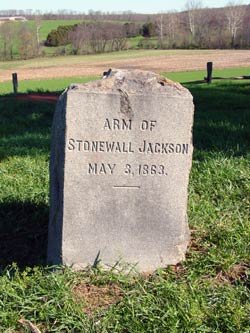
Randon Billings Noble (Now, that is a Southern name!) commemorates the 150th Anniversary of the Battle of Chancellorsville and Stonewall Jackson’s accidental wounding and death by searching for the internment site of General Jackson’s amputated arm.
I was walking through a cornfield in search of a cemetery in the middle of Virginia. A fox trotted across the path in front of me and disappeared in the forest of stalks with barely a rustle. I was searching for Stonewall Jackson’s lost arm. …
In Chancellorsville, 150 years later, the story of this arm is surprisingly well documented. A large quartz boulder marks the place where Jackson fell and signs along Route 3 mark the “Wounding of Jackson†and “Jackson’s Amputation.†But the cemetery in which the arm was buried is not marked. I knew that an aide had taken the arm to his own family graveyard, and I learned from one of the markers that the cemetery was called Ellwood, but I didn’t know where it was—only that it was nearby.
I drove through Chancellorsville National Military Park with my eyes open for anything that looked like it might lead to a cemetery. Late in the day, in a gray misty rain, having already given up, I pulled into a driveway to turn around and stopped short at a rusty iron gate with soldered block letters, E L L W O O D.
I hesitated. It was clearly a locked gate, but a faint trail led around it and continued through dense woods. While I didn’t want to trespass, I didn’t want to retreat either. The mystery of the arm was too great; I left the car in the driveway.
May 2, 1863, was one of the greatest days of Robert E. Lee’s military career. It was also one of the worst. A little after 5:00 that afternoon a Confederate flank attack led by Lt. Gen. Thomas J. “Stonewall†Jackson had slammed into the Union right flank at the Battle of Chancellorsville. It was key to what would be Lee’s greatest victory. But later that night General Jackson, Lee’s “right arm,†was badly wounded in a case of mistaken identity.
The attack should not have worked. General Lee divided his army in the face of an enemy that had more than twice his numbers. It was something a military leader should never do. The Union army even saw the flanking march being made. Instead of attacking, which likely would have brought disaster upon the Southern forces, maybe even destroying the Army of Northern Virginia, the Federals were happy with what they thought was a Confederate retreat.
When Jackson’s men burst out of the woods upon the unsuspecting Union flank, the soldiers in blue crumbled. The attack overwhelmed them and the Rebels pushed hard, taking advantage of their success. The only thing stopping them was the fading light.
The men were tired from their twelve-mile dusty march through the Wilderness and the following attack. Darkness brought on a welcome reprieve, but it wasn’t to last. Jackson, always aggressive, was not finished. He had the enemy ahead of him on the ropes and he wanted to finish him off.
Night attacks in the Civil War were rare. But Jackson saw an opportunity to inflict a damaging blow to the enemy. The following night was to be a full moon, so on the 2nd it should be quite bright. In preparation for the continued assault, Jackson, Maj. Gen. A. P. Hill, and a party of aides and guides rode out in front of the Confederate line to reconnoiter.
Two months later, had Jackson survived the Battle of Chancellorsville, he would have been in command of his Corps, which would have arrived down the Carlisle Pike in the middle of the afternoon of July 1st at Gettysburg on the flank of Buford’s Cavalry and the Union First Corps who were, at that point, beginning to retreat.
Jackson would have seized the opportunity aggressively, unlike his successor Ewell, and would undoubtedly have pursued and driven the Union forces, denying them possession of the high ground of Cemetery Ridge and Culp’s Hill. The First Day of Gettysburg would then have been the only day of Gettysburg, and would have represented a significant Confederate victory on Northern soil. There would have been no Second Day: no indecisive struggle at the Peach Orchard, Devil’s Den, and Little Round Top, and no Third Day: no Pickett’s Charge.
Mead would have retreated to the Pipe Clay Creek in Maryland, but he would soon have found himself under intense pressure from Lincoln to attack the Confederates in order to save Northern cities, like Philadelphia, from occupation. A Northern attack on well-chosen Confederate defensive position would probably have led to another debacle like Fredericksburg. Two major defeats on Northern soil, the destruction of the railroad bridge over the Susquehanna which linked the East and West, the fall of a major Northern city, such a string of events might well have brought European recognition and a negotiated peace.
The bishop of New Orleans reputedly began a prayer shortly after the war: “O Lord, when Thou didst decide to defeat the Confederate States of America, Thou first had to remove Thy servant Stonewall Jackson.”
Juanita Tudor Lowrey, 86, receives a federal pension for being the daughter of Civil War veteran Hugh Tudor.
One squishy liberal I know was posting an editorial on Facebook yesterday which complained that the government was not doing enough for veterans.
Why! In fact, the government in 2013 is still actually paying survivor benefits to two (or possibly 10) living offspring of veterans of the War Between the States.
The Civil War payments are going to two children of veterans — one in North Carolina and one in Tennessee — each for $876 per year.
Surviving spouses can qualify for lifetime benefits when troops from current wars have a service-linked death. Children under the age of 18 can also qualify, and those benefits are extended for a lifetime if the person is permanently incapable of self-support due to a disability before the age of 18.
(Her father, Hugh) Tudor moved with his unit through Kentucky and Tennessee to the East Coast. He probably would have participated in Gen. William Tecumseh Sherman’s march to the sea except that an apparent case of the measles kept him back.
Born in Iowa in 1847, the son of Welsh immigrants lived in Missouri most of his life. That he has a daughter proudly talking about him in the year 2012 is a remarkable mathematical stretch, but not a stretch of the truth.
After the war, Lowrey’s father settled in Dawn, Mo., a farming community south of Chillicothe, with his wife, Elizabeth Watkins. They had been married 50 years when she died in 1917. They had no children.
Three years later, at age 73, Tudor married 36-year-old Mary Morgan, who hadn’t been married before but who had known “Mr. Tudor” her whole life.
Besides romance, Lowrey says, probably there were practical concerns. He likely needed a housekeeper and she security. And it seemed he still fancied having children.
Indeed, to the new union came two daughters, HuDean Grace in 1924 and Juanita Mary in 1926.
General Gordon is clearly intentionally turned so as to avoid exposing the wounded side of his face.
Defending the sunken road, known as “Bloody Lane,” at the Battle of Antietam, Brigadier General John B. Gordon was commanding the 6th Alabama Regiment. In his 1903 memoir, he describes being wounded repeatedly.
General Gordon, nonetheless, survived the battle, and the war, and lived until 1904.
My extraordinary escapes from wounds in all the previous battles had made a deep impression upon my comrades as well as upon my own mind. So many had fallen at my side, so often had balls and shells pierced and torn my clothing, grazing my body without drawing a drop of blood, that a sort of blind faith possessed my men that I was not to be killed in battle. This belief was evidenced by their constantly repeated expressions: “They can’t hurt him.†“He’s as safe one place as another.†“He’s got a charmed life.â€
If I had allowed these expressions of my men to have any effect upon my mind the impression was quickly dissipated when the Sharpsburg storm came and the whizzing Minies, one after another, began to pierce my body.
The first volley from the Union lines in my front sent a ball through the brain of the chivalric Colonel [Charles C.] Tew, of North Carolina, to whom I was talking, and another ball through the calf of my right leg. On the right and the left my men were falling under the death-dealing crossfire like trees in a hurricane. The persistent Federals, who had lost so heavily from repeated repulses, seemed now determined to kill enough Confederates to make the debits and credits of the battle’s balance-sheet more nearly even. Both sides stood in the open at short range and without the semblance of breastworks, and the firing was doing a deadly work. Higher up in the same leg I was again shot; but still no bone was broken. I was able to walk along the line and give encouragement to my resolute rifle-men, who were firing with the coolness and steadiness of peace soldiers in target practice. When later in the day the third ball pierced my left arm, tearing asunder the tendons and mangling the flesh, they caught sight of the blood running down my fingers, and these devoted and big-hearted men, while still loading their guns, pleaded with me to leave them and go to the rear, pledging me that they would stay there and fight to the last. I could not consent to leave them in such a crisis. The surgeons were all busy at the field-hospitals in the rear, and there was no way, therefore, of stanching the blood, but I had a vigorous constitution, and this was doing me good service.
A fourth ball ripped through my shoulder, leaving its base and a wad of clothing in its track. I could still stand and walk, although the shocks and loss of blood had left but little of my normal strength. I remembered the pledge to the commander that we would stay there till the battle ended or night came. I looked at the sun. It moved very slowly; in fact, it seemed to stand still.
I thought I saw some wavering in my line, near the extreme right, and Private [Benjamin F.] Vickers, of Alabama, volunteered to carry any orders I might wish to send. I directed him to go quickly and remind the men of the pledge to General Lee, and to say to them that I was still on the field and intended to stay there. He bounded away like an Olympic racer; but he had gone less than fifty yards when he fell, instantly killed by a ball through his head. I then attempted to go myself, although I was bloody and faint, and my legs did not bear me steadily. I had gone but a short distance when I was shot down by a fifth ball, which struck me squarely in the face, and passed out, barely missing the jugular vein. I fell forward and lay unconscious with my face in my cap; and it would seem that I might have been smothered by the blood running into my cap from this last wound but for the act of some Yankee, who, as if to save my life, had at a previous hour during the battle, shot a hole through the cap, which let the blood out.
I was borne on a litter to the rear, and recall nothing more till revived by stimulants at a late hour that night.
Major Innes Randolph’s defiant “I’m a Good Old Rebel” song (1914) boasted of Northern casualties inflicted and expressed regret that Southern resistance had not piled up an even larger score.
I followed old Mars’ Robert
For four year, near about,
Got wounded in three places
And starved at Pint Lookout;
I cotched the rheumatism
A campin’ in the snow,
I killed a chance of Yankees,
I’d like to kill some mo’.
Three hundred thousand Yankees
Is stiff in Southern dust;
We got three hundred thousand
Before they conquered us;
They died of Southern fever
And Southern steel and shot,
I wish we got three million
Instead of what we got.
A new examination of Civil War enumerated losses, reported in the New York Times, contends that Major Randolph came closer to his expressed goal than was previously thought.
For 110 years, the numbers stood as gospel: 618,222 men died in the Civil War, 360,222 from the North and 258,000 from the South — by far the greatest toll of any war in American history.
But new research shows that the numbers were far too low.
By combing through newly digitized census data from the 19th century, J. David Hacker, a demographic historian from Binghamton University in New York, has recalculated the death toll and increased it by more than 20 percent — to 750,000.
The new figure is already winning acceptance from scholars.
Lee is wearing the sword in this famous picture. (click on each image for larger version)
The Museum of the Confederacy in Richmond is planning to re-locate a presentation sword made in Paris by Louis-Francois Devisme* as a gift to General Robert E. Lee to a new museum branch located at Appomattox, the site of Lee’s surrender in April of 1865.
Future museum branches are planned for Hampden Roads and the Fredericksburg area.
Lee naturally remained in possession of his sword after the surrender at Appomattox in accordance with General Grant’s generous terms which allowed Confederate officers to retain their sidearms.
The Lee family loaned the sword to the museum in 1918, and permanently bequeathed it in 1982.
—————————————-
*Louis-François Devisme, gunmaker and inventor, is recorded in Paris between 1843 and 1870, first at 12 rue de Helder and then (ca 1850) at 36 Boulevard des Italiens. He is remembered today principally for the highly decorated pieces produced for a succession of Paris Exhibitions, and for the Great Exhibition in London in 1851 at Crystal Palace, for which he was awarded numerous medals. He ranks as one of the most accomplished of the 19th-century Parisian arms makers.
The Battle of Gettysburg, generally looked upon as the turning point of the Civil War, occurred over three days, July 1 – July 3, 1863.
The first day of Gettysburg consisted of a meeting engagement, in which fate favored the Union. Elements of A.P. Hill’s Corps ran into veteran Union cavalry armed with repeating carbines occupying a good defensible position on a ridge. Reinforcements arrived for both sides, but the Union forces which arrived first consisted of the best troops in the Union Army, Reynolds‘ First Corps, including the renowned Iron Brigade. Nonetheless, the Confederate infantry eventually drove the Union forces back, compelling them to retreat to the next ridge line east of the town. The first day of the Battle of Gettysburg ended with a significant Confederate victory.
On the second day, Confederate forces attacked both the left and right ends of the Union line, attempting to turn the Army of the Potomac’s flank. But the Union positions on high ground were strong, the Confederate attacks were delayed and not ideally coordinated, and the Union defense held. The second day’s fighting of the Battle of Gettysburg ended in an indecisive stalemate.
On the third day, Robert E. Lee choose to emulate the offensive strategy adopted by Napoleon successfully at both Wagram and Borodino, a full-scale frontal attack on the enemy center intended to break his line decisively and to drive him from the field in full retreat. Lee sent Pickett’s Division and six brigades from A.P. Hill’s Corps, nearly 13,000 men, to advance and break the Union center. Pickett’s Charge failed, and the third day of Gettysburg resulted in a decisive Confederate defeat.
Robert E. Lee’s decision to order a frontal attack has provoked endless re-examination and criticism.
In the latest issue of The Gettysburg Magazine, Dr. Carl Coppolino proposes a medical explanation for General Lee’s misjudgment.
I don’t put any stock in these kinds of explanations myself, but there may be something valid in the mention of Lee’s heart trouble. The possibility that Lee’s cardiac illness played a role at Gettysburg has been offered before. Mainwaring, Tribble 1992.
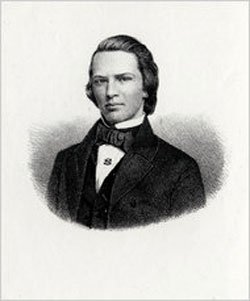
Brigadier General Thomas Jackson was still wearing his blue uniform.
The cannonade of Fort Sumter occurred way back on April 12th. There have occurred a few minor battles in remote locations, but so far the War for Southern Independence or the War to Preserve the Union, depending upon how you look at it, has not amounted to very much. But 150 years ago today the first great battle of the war took place.
I expect they had nicer weather for it that day.
As far back as May, the military high commands of both the Union and the Confederacy had envisioned a climactic battle occurring with a Union advance from Washington to come to grips with Confederate forces along the banks of Bull Run near the railroad junction of Manassas and the Warrenton Pike.
The commanders, for the Union, Brig. Gen. Irvin McDowell, for the Confederacy, Gen. Pierre Gustave Toussaint Beauregard, were both classmates of the West Point Class of 1838. Perhaps therefore it was not surprising that both commanders proposed essentially the same strategy.
Both generals intended to flank the opposing army on the left, roll up its lines, and thereby defeat it. Both generals failed to reckon with the difficulty of achieving complex military evolutions with inexperienced troops and staffs. Had both initiated their attacks at exactly the same time, spectators might have seen the two armies engage and begin to revolve, one around the other, like dancers.
As it happened, McDowell initiated his advance a little earlier, but the Confederacy was to be more favored by fate.
At 9 AM, the tardy Beauregard received a dispatch from a signal officer, reporting that he saw “a body of [Union] troops crossing Bull Run two miles above the Stone Bridge.” He observed both infantry and artillery.
Beauregard was caught unprepared, but as Douglas Southall Freeman observes, in “Lee’s Lieutenants:”
[T]he threat of a Federal turning movement far above the Stone Bridge had been met by the convergence of four small columns [those of Evans, Bee, Hampton, and Jackson]. Each had moved swiftly and to precisely the right point, but none had acted on specific orders or with the full knowledge of the Generals at field headquarters.”
When Beauregard hurried to the front, and arrived atop “an eminence from which was visible a wide range of smoke-covered landscape,’
In front was a long, curving Federal front, ablaze at intervals with musketry fire and artillery. To the right and North… on an adjoining ridge, a short, thin line of Confederate infantry was in action. … To the left… admirably placed behind the crest of the hill, was a waiting Confederate Brigade. Some of its men were lying down; others were in ranks. Near the center of this perfectly aligned Brigade, six field guns were barking viciously at the enemy. In the rear of these troops and streaming backward over the shoulder of the ridge to the North, were broken units that had evidently been in the fight.”
As his men, routed and in panic, fled toward safety and the rear, the desperate Brig. Gen. Barnard Bee attempting to stop their flight, placed himself in their path, and pointed with his sword toward that “perfectly aligned” Brigade. “There,” he cried, “stands Jackson, like a stone wall. Rally behind the Virginians.”
Faced with the approaching victorious Union infantry, Jackson commanded his Brigade to reserve its fire until they approached within 50 yards, then to fire and charge with the bayonet. “And when you charge,” Jackson instructed, “yell like Furies.”
The approaching Northern infantry ranks were shattered by well-aimed fire, and then the strange cry of Southern foxhunters broke from 1700 throats.
Jackson later reported with satisfaction that his Brigade “met the thus far victorious enemy and turned the fortunes of the day.” The Union Army broke into a disorganized mob, abandoning weapons and supplies, and fleeing back to Washington.
Despite the high temperatures, there are being conducted commemorative ceremonies and reenactments today. Washington Post
Charles Francis Adams, Jr. (center) with other officers of the 1st Massachusetts Cavalry, 1864
The loquacious yet always gnomic Mencius Moldbug today served up a series of summer reading recommendations apparently intended to put the reader in a Mid-19th Century frame of mind.
Moldbug’s enticing reading list features political thought, travel accounts of Antebellum America, and some selections sympathetic to the perspective of the Confederacy.
I immediately perused (former Union officer) Charles Francis Adams Jr.’s 1902 defense of Robert E. Lee, Shall Cromwell Have a Statue? with much enjoyment.
Readers would be well-advised to try reading some (or all) of Moldbug’s selections.
Randall Lee Gibson (above) was valedictorian of the Yale Class of 1853. He had been born a member of the planter aristocracy of Kentucky and Louisiana. He was a keen secessionist and fought for the Confederacy, serving first as an artillery captain then as colonel of the 13th Louisiana Volunteer Infantry Regiment.
Randall Gibson was the descendant of one Gideon Gibson, who arrived in the Colony of South Carolina in 1730 and who was “a skilled tradesman, had a white wife and … owned land and slaves in Virginia and North Carolina.” Gideon Gibson obtained land grants from the governor of South Carolina and he and his descendants married into the white planter class on the Western frontier. By the 1790s, the Gibson family had forgotten its African origin and ascribed a family tendency toward a dark complexion to Gypsy or Portuguese descent.
Randall Gibson fought at Shiloh. His regiment saw action with the Army of Tennessee at Chicamauga. Gibson ultimately made it all the way to the rank of Brigadier General in the Confederate Army. He fought in the Atlanta Campaign and ended the war defending the city of Mobile.
After the war and Reconstruction, Gibson was elected to Congress as a democrat from 1875 to 1883 and served as senator from 1883 to until his death in 1892. He was a trustee of Tulane and a hall at Tulane University is named for him.
Reading all this moved the Atlantic’s race blogger Ta-Nehisi Coates to observe: