An anonymous Harvard coed published an angry letter in the Crimson, asserting that she was giving up and will be moving off-campus next semester because Harvard failed to prosecute, or even remove from the same residential house, the male student she claims sexually assaulted her roughly a year ago.
The young lady’s account of the alleged assault reads:
He was a friend of mine and I trusted him. It was a freezing Friday night when I stumbled into his dorm room after too many drinks. He took my shirt off and started biting the skin on my neck and breast. I pushed back on his chest and asked him to stop kissing me aggressively. He laughed. He said that I should “just wear a scarf†to cover the marks. He continued to abuse my body, hurting my breast and vagina. He asked me to use my mouth. I said no. I was intoxicated, I was in pain, I was trapped between him and the wall, and I was scared to death that he would continue to ignore what I said. I stopped everything and turned my back to him, praying he would leave me alone. He started getting impatient. “Are you only going to make me hard, or are you going to make me come?†he said in a demanding tone.
It did not sound like a question. I obeyed.
Shortly after I reported my sexual assault to my House staff, I was told by a senior member of the College administration that the Administrative Board was very unlikely to “issue a charge†against my assailant and to launch a thorough investigative process because my assailant may not have technically violated the school’s policy in the student handbook. Even though he had verbally pressured me into sexual activity and physically hurt me, the incident did not fall within the scope of the school’s narrow definition of sexual assault.
Her indignation over that incident and the failure of the Harvard Administration to avenge her honor, she claims have caused her to develop a mental illness.
I’m writing this piece as I’m sitting in my own dining hall, only a few tables away from the guy who pressured me into sexual activity in his bedroom, one night last spring. My hands are trembling as they hover across the keyboard. I’m exhausted from fighting for myself. I’m exhausted from sending emails to my resident dean, to my House Master, to my Sexual Assault/Sexual Harassment tutors, to counselors from the Office of Sexual Assault Prevention and Response, to my attorney. I’m exhausted from asking for extensions because of “personal issues.†I’m exhausted from avoiding the laundry room, the House library and the mailroom because I’m scared of who I will run into.
More than anything, I’m exhausted from living in the same House as the student who sexually assaulted me nine months ago.
I’ve spent most of 2013 fighting the Harvard administration so that they would move my assailant to a different House, and I have failed miserably. Several weeks ago, in a grey room on the fourth floor of the Holyoke Center, my psychiatrist officially diagnosed me with depression. I did not budge, and I was not surprised. I developed an anxiety disorder shortly after moving back to my House this fall, and running into my assailant up to five times a day certainly did not help my recovery.
“How about we increase your dose from 100 to 150 milligrams a day,†my psychiatrist said in a mechanical, indifferent voice. Sure thing.
This morning, as I swallowed my three blue pills of Sertraline and tried to forget about the nightmares that haunted my night, I finally admitted it to myself: I have lost my battle against this institution. Seven months after I reported what happened, my assailant still lives in my House. I am weeks behind in the three classes I’m taking. I have to take sleeping pills every night to fall and stay asleep, and I routinely get nightmares in which I am sexually assaulted in public. I cannot drink alcohol without starting to cry hysterically. I dropped my favorite extracurriculars because I cannot find the energy to drag myself out of bed. I do not care about my future anymore, because I don’t know who I am or what I care about or whether I will still be alive in a few years. I spend most of my time outside of class curled up in bed, crying, sleeping, or staring at the ceiling, occasionally wondering if I just heard my assailant’s voice in the staircase. Often, the cough syrup sitting in my drawer or the pavement several floors down from my window seem like reasonable options.
—————————-
This item came to my attention because several female Yale undergraduates from a fraternal group I belong to were circulating it and discussing it from a feminist point of view.
The whole business sounds very sad, and we older people find it very easy to be critical of today’s hook-up culture in which young women are apparently commonly expected to deliver sexual gratification to male associates as a routine courtesy at the conclusion of any shared social experience, however slight.
Nonetheless, it is bound to strike any sensible adult as obvious that it is impossible for third parties simply to accept the subjective account of one party to such a private encounter as completely factual and veracious. It is inevitable that two people will have different viewpoints and there can be no objective witnesses to a romantic liaison. It is part of the nature of relations between the sexes, too, that romantic encounters may be filled with mutual misunderstandings and may not infrequently lead to animosity and regret.
Just as young ladies are very liable to be confused and too easily pressured into doing things they may later regret, young men are too frequently liable to be loutish, uncouth, and simple-mindedly optimistic in interpreting the willingness of their partner. In earlier periods of history, these problems were widely recognized and young ladies were firmly advised to avoid finding themselves alone and intoxicated in the company of any young man.
When one reads this young lady’s anonymous account, one tends to think that she must be an example of the modern type of person who wants to have things both ways. She wants a modern sexually-liberated society, in which dormitories are coeducated, in which college authorities have withdrawn any pretension to acting in loco parentis or supervising the morals and behavior of undergraduates in any way, but when she finds herself regretting getting drunk, accompanying a young man she obviously did not know as well as she thought she did to his room, alone and at night, and then giving in to some sort of less-than-life-or-death pressure and finally doing something she regrets, she blames everyone but herself. Frankly, one feels obliged to reflect aloud: if society and your college are not going to have power over you or be in charge of protecting your virtue, then that task is really simply left to you.
Beyond that, I would say that pretty much everybody, when young, gets drunk a time or two and then does things he (or she) will inevitably regret. That kind of unfortunate experience ought to lead to a firm resolve in future to avoid levels of intoxication which might untowardedly influence one’s own behavior and to a certain amount of temporary personal chagrin. It should not lead to a campus-wide political campaign of agitation aimed at personal revenge, to the neglect of one’s studies, or to an obsession over one’s personal wrongs leading to mental illness.
This young lady fails to observe the obvious. When someone takes an unfortunate incident like this and proceeds to inflate it into a grievance making her the equivalent of one of the principals in a Jacobean drama, when she allows herself to get carried away with self-entitlement and self-righteousness to the point of striking such lurid and dramatic public poses over what must be essentially the kind of unfortunate private transaction which goes on routinely every day at colleges in today’s fallen world, when she wages a year-long campaign of this kind, no rational person is going to take her seriously as a reliable witness or responsible complainant.
Let me get this straight… Ivygate reports that two Yale students complained of being “sexually assaulted” while attending a BDSM Party. What did they think those riding crops were for?
Last week, Yale students received two university-wide Clery Act emails informing them that two Yale students were victims of “sexual assault by an acquaintance, who is also a Yale student†at the Sigma Phi Epsilon house on February 8th. February 8th was the night of the annual “Dom†party thrown by the Women in Power Society (WIPS), a secret society, which was held in the SigEp house.
The “Dom†party is an infamous, no-cellphones-allowed event. From what we hear, people dress up in BDSM gear and porn is projected on the walls as hot freshmen guys pass around drinks. Interestingly, it’s also generalized as one of the safer party SigEp hosts: there is a closed guest list with doors closing at 11 pm and everyone (besides those hot freshmen boys) is over 21-years-old.
For two assaults to happen on a night that typically gets by without major public notice is surprising–but only considering its history of safety. Dom is a party full of porn, S&M, and lots of alcohol, after all.
Yale Police Department Chief Ronnell Higgins reported the two statements in separate emails to the University community on Feb. 19 and Feb. 21. The messages stated that the alleged assaults occurred at the Sigma Phi Epsilon fraternity house, and the second email corrected the first by reporting that they were both said to have taken place on Feb. 8.
“I write to let [the University community] know that the Yale Police received an anonymous report today that a second Yale student was the victim of a sexual assault by an acquaintance, who is also a Yale student,†Higgins said in the Feb. 21 email.
On Feb. 22, President of the Yale Sigma Phi Epsilon chapter Andrew Goble ’15 issued a statement saying the fraternity allowed another student group to lease a room in its house for a private event on Feb. 8. The statement said the event was open to guests of that organization, which remained unnamed.
“The members of Yale’s SigEp chapter were shocked and saddened to hear allegations that sexual assault may have occurred in our facility on an evening when the chapter had leased event space to another campus organization,†Goble said in the statement. “At this time, SigEp does not believe that the allegations are against members of their chapter.†…
On the same night of Feb. 8, a private party in connection with the Women in Power Society (WIPS) senior society, took place at the SigEp fraternity house. Nine students interviewed said that party had a “dominatrix†theme. Several attendees declined to provide additional details about the annual party.
The WIPS said in a statement to the News, “We are not commenting out of respect for the privacy of the individuals involved in this situation.â€
A student who attended the party and spoke on the condition of anonymity said the WIPS’ mission is to promote female empowerment.
Esther Zuckerman poses as a SWUG. My commenters are often smarter than I am. One of them, unlike me, noticed that Esther Zuckerman actually used a picture of Tina Fey to illustrate the SWUG type. The “NBC” under the photo should have been a clue. Sigh.
The term goes back a couple of years, but the SWUG concept only recently attracted major attention as the result of a lengthy think piece in the Yale Daily News by Raisa Bruner exploring the culture, the pros and cons, and all possible nuances of SWUGdom, its relationship to Feminism, SWUGdom as fate, as life-phase, as life-style, and as identity.
—————————————–
Yale definitely teaches young people how to play theme and variations on a concept, and Ms. Bruner’s piece caught the attention of one Justin Rocket Silverman (Now that is a millenial generation name!) who, writing in The Cut brought all this to the attention of the World Outside Yale.
Yale senior Raisa Bruner [is] kind of tired of the free-wheeling frat hookup culture that’s so compelling to younger students. The guys know this about women her age, she says, and so they don’t generally hit on senior girls. If she went to Sigma Nu, she’d watch her male classmates focus on that infinitely more fun classmate, the female freshman.
Bruner is a self-identified SWUG — a senior washed up girl. As she explained in a recent feature in the Yale Daily News, to be a SWUG is to embrace “the slow, wine-filled decline of female sexual empowerment as we live out our college glory days. Welcome to the world of the ladies who have given up on boys because they don’t so much empower as frustrate, satisfy as agitate.â€
She and her fellow SWUGs are women who don’t bother dressing up for class, or even for fancy parties (though they might still attend them), don’t seek out meaningful (or even just sexual) relationships, spend weekends at their shared homes drinking in the company of other self-identified SWUGs, and feel utter apathy about their personal lives — all at the age of 21.
—————————————–
Gawker decided that all this SWUG stuff really amounted to just a pose and a demand for some attention.
Declaring “‘I don’t give a fuck’ at the right moment,” does not a “more complex person” make. Rather than embracing personal growth internally, there is a clamorous, exaggerated declaration that growing out of a social scene is the equivalent of being “washed-up” in the face of other’s halcyon days. Overall, SWUG-life appears to be a melodramatic desire to make an identity out of boredom and dissatisfaction with the collegiate social scene.
—————————————–
Esther Zuckerman (Y’ 12), at the Atlantic, tells us that she was already a SWUG as a junior two years ago.
I first heard about the term SWUG during my junior year when I was working at the Daily News. From what I can recall, it was described to me as having been coined by a group of girls in the senior class, and I hated it. Yale had been debating treatment of women on campus all year—the school was about to face a Title IX investigation—and the idea of calling any girls on campus “washed-up” was to me offensive and demeaning (the specific words I used in a heated Gchat conversation), even if some fellow women had used the label on themselves.
But I changed my mind on SWUGs as I sort of realized I was one. Looking back through my Gmail inbox today, I crossed into my senior year, when, for me and my friends, SWUG came to be a way we described an attitude that we already possessed. SWUG meant getting meatball subs on a snowy night. SWUGs watched an episode of New Girl twice in a row with a lot red wine. SWUGs baked brownies. In our version of SWUG, an idol might be Liz Lemon, to whom Jack Donaghy once said: “Big night, Lemon? Let me guess meatball sub extra, bottle of NyQuil, TiVo Top Chef, a little miss Bonnie Raitt, lights out.” My fellow would-be SWUGs and I listened to a lot of “I Can’t Make You Love Me.” We cared about our academics and our future careers, but when it came to our social lives in the confines of Yale, well, we, as seniors, couldn’t care less.
—————————————–
The whole SWUG business may have really been put on the map at Yale by a Daily News article by Chloe Drimal, published last September, titled: Profile of a SWUG.
You’ve all met one. They’re usually at penny shots promptly at 11 p.m. come Wednesday night, and are then found in Durfee’s around 1 p.m. the next day, buying every liquid they can get their hands on.
I was jealous of them when I was a freshman. They were on a nickname basis with the hottest guys at Yale and danced at the bar of DKE with their shirts off. But looking back on it, I realize the boys were trying to get with the freshmen, not the SWUGs. …
She’s the girl who Kevin, the bartender at Toad’s, hugs when she stumbles in Wednesday night. She’ll dance like no one’s looking. She’s a SWUG. She doesn’t care. Tommy at Box 63 and Compadre at Amigos will both give her free shots on occasion; they are not doing this for freshman girls — only for SWUGs.
She’s the girl in the Zeta basement, before the Coach Reno era, who is biting into a can with her teeth to shotgun on a Sunday. Although she could never beat the Zeta boys in a shotgun, she can beat most ADPhi boys.
She’s the girl who knows the code to get into DKE. She knows the code for ADPhi. (If any single senior girl has the key to Zeta, she may want to seek help.) Facebook bores her. She uses Facebook to find out different football players’ birthdays and plugs them into an astrology website to test their compatibility. She is compatible with no one.
She’s the girl who promised she would never hook up with someone younger than her but now finds herself texting sophomore boys who unavoidably turn her down. She thinks this is funny. She thinks about getting a vibrator; she may already have a vibrator. It may be better than that sophomore boy.
She doesn’t need to walk home late at night and chance getting mugged by a New Haven local because she will just sleep on a couch in one of the frats. The late night crew at G-Heav knows to start making her an egg and cheese when they see her stumble through the door, and sometimes they will allow her to dance behind the counter and crack an egg herself. Again, they don’t do this for the young, hot, freshman girls — only SWUGs.
She’s the girl who tells her friends she is going to have a “friendship night.†When they ask what this means she explains she is going to make a guy want her and then turn him down. She gets drunk and wakes up next to the guy she was going to turn down. She knows this will go nowhere, as she has already plugged his birthday into the compatibility website, and their score was a two. She makes up a short lie about a meeting and asks him to leave her room and then goes back to bed. She doesn’t return his texts. She’s a SWUG.
She is the last one at every party, because hey — who is she going home with? She’s not afraid to dance on tables and knows the top floor of any frat always has the cleanest bathroom. She is wise. She is hot, whether the boys believe it or not. She doesn’t give a hoot. She’s single because she wants to be; her daddy told her there’s more fish in the sea. She is a SWUG, and SWUG life is pretty awesome.
Drimal’s glorification of the SWUG made her in a campus celebrity, profiled by the Yale Herald.
—————————————–
If anyone is not totally SWUGed out at this point, he can turn to some more discussions which appeared in the Oldest College Daily.
—————————————–
On a personal note, we had hook ups at Yale in my day, but we did not have either the term or the identical hook up culture. I think that, as I remember it, quite a lot of female seniors in those days had long since taken anticipated Susan Patton’s advice and were in long-term relationships with Yale men.
The SWUG concept reminds me of the characteristic resentment of ordinarily-groomed-and-dressed Yale girls toward male friends’ dates from outside Yale.
The girl from Smith staying over at Yale would arrive at breakfast nicely dressed, in full make-up, hair in perfect order, and her escort’s female Yale friends and neighbors would glower and make faces, regarding his date’s superior efforts at presentation as personal affronts.
Yale girls all tended to think dating outside Yale constituted both punishable treason and firm evidence of bad taste. I once took a date to a performance of Carl Orff’s Carmina Burana, in which my current wife was singing in the chorus, and found Karen was using every opportunity that my then girlfriend’s eyes were averted to make faces at me.
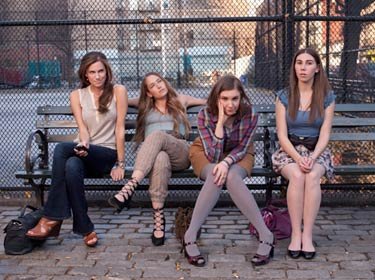
Betsey Woodruff, in National Review, identifies Lena Dunham’s HBO comedy Girls as a cultural canary-in-the-coal-mine which, if observed carefully, could have told you where the recent presidential election was heading.
At its core, Girls feels like a deliberate, dissective examination of a group of people who stubbornly refuse to grow up and are lucky enough to be able to pull it off. The main thing Dunham’s characters share is the idea that just because they exist, somebody else should give them stuff. In and of itself, depicting that isn’t at all a bad thing. Girls is an interesting project, it’s well executed, and it can be really, really funny. Look, I like Girls, and I’m excited about the second season.
But Dunham’s stupid little YouTube ad for the president might have ruined it all for me. That’s because she sounds like she’s channeling her character, Invasion of the Body Snatchers–style. They share the same baffling, naïvely egomaniacal understanding of justice — they both seem to think that because they exist, the universe needs to make sure that all the sex they choose to have is consequence-free.
You can almost argue that Lena Dunham sees President Obama as the perfect surrogate for everything missing in her characters’ lives: He’s their gentle lover, supportive parent, and empathetic friend. He’s special. He won’t let them down. He’s Prince Charming. And that kind of defeats the purpose of feminism.
You’d think the feminist elevation of agency would result in women who take pride in being responsible for their own bodies. You’d hope that telling women that they can do whatever they want would imply that they’re responsible for what they do. You’d think serious feminists would argue that true empowerment is something you lay claim to, not something the federal government dispenses in all its benevolence. But for Dunham, that doesn’t seem to be the case.
In fact, for all practical purposes, the patriarchy no longer decides whom American women can sleep with and when. That’s great. But if you don’t want men in Washington telling you how to use your sexuality, you shouldn’t expect them to subsidize it. But Dunham seems to actually believe they should. Dunham makes tons of money, and I’m quite confident she can afford to pay for her own birth control. But she doesn’t seem to take pride in that; it’s not what her characters aspire to, and given her foray into the delightful world of presidential-election ads, it doesn’t seem to be something she aspires to, either.
Second-wave feminists lionized the independent woman who paid her own rent and busted through glass ceilings and ran for Congress. Being totally self-sufficient was the goal. The idea was that women didn’t need men, whether those men were their fathers or husbands or boyfriends or presidents. By contrast, Dunham’s new vision of women as lady parts with ballots is infantilizing and regressive.
So Girls isn’t the eschaton, and neither is one vapid YouTube video. But if Dunham’s show were a metaphorical canary in a metaphorical coal mine, it would be struggling pretty hard right now. There’s a reason it’s called Girls, not Women.
Donald Sensing observes that the great paid-for-contraceptives brouhaha is intended by democrats to persuade silly women to vote on the basis of group politics.
In the Democrat mind, sex without sex’s consequences are the only thing that women should think about when they approach a voting booth. Finney and Thompson, et. al., actually think that unless the government makes sure that women’s sex lives are unencumbered, then a woman simply cannot manage her job, housing or children. Sex rules all else.
The Democrat party truly cannot comprehend a woman going to vote who is more concerned about the dent in her paycheck caused by $5-per-gallon gasoline than finding free condoms, or who worries about the future impoverishment of her children and grandchildren because of Obama’s borrow and spend binges more than she worries about buying the Pill, or whose most pressing concern is not sexual liberty, but a college-graduate son or daughter who has moved back to live with mom because s/he can’t find a job and therefore can’t make student loan payments and rent at the same time.
Not in the Dems’ world view is a woman who pays her mortgage every month but who know that her home’s market value is less than the mortgage principal remaining, and stupidly thinks that this is more important to her future (and thus her voting) than getting morning-after pills. There is no room in Democrat gender-identity politics for a woman who has been married to one man for 35 years and so never thinks about getting free contraceptives or an abortion (that is, what Dems say is “basic health care”) but who is intensely concerned with her elderly parents’ net worth falling as inflation rises.
No, these women simply do not authentically exist in the Democrat universe. Such women simply have not heard the full message that there should be nothing more important to a woman than sex, sex, sex.
To the Democrat party, women are simply sex objects, though with political and statist rather than fleshly purposes. But objects is all they are. That’s the real message that countless women get very well and strongly reject.
Caroline May, at the Daily Caller, quoted several opinions: those of Doug Lanpher, the executive director of the national DKE organization; Amy Siskind, president and co-founder of the feminist New Agenda; Robert Shipley, senior vice president of the Foundation for Individual Rights in Education (FIRE); and Hans Bader, Counsel for Special Projects at the Competitive Enterprise Institute on the peculiar action of the Yale University Administration in awarding new sanctions (banning the fraternity Delta Kappa Epsilon from the Yale campus for five years) in May in connection with a controversial initiation ritual last October. Despite denials by an obviously mendacious university spokesman, all agreed that Yale was acting in specific response to federal pressure.
So, why is the Federal government’s Department of Education twisting the arm of Mother Yale to beat up on DKE for a frankly sophomoric minor incident?
It seems that DKE was deliberately selected to serve as an example to demonstrate the renewed advance of Title IX federal enforcement, a key element of coercive social engineering fundamental to the strategic agenda of the democrat party’s radical leftwing base.
The complaint about an atmosphere at Yale allegedly hostile to ladies conveniently materialized early last month, from a small group representing in a Yale context the same strategic agenda at precisely the same time when the Obama Administration’s Assistant Secretary of Education for Civil Rights, Russlynn Haneefa Ali, issued a “Dear Colleague” letter to essentially every college and university in the land, declaring a federal witch hunt against “sexual harassment” to be underway, defining sexual harassment in the broadest possible terms to include “verbal, nonverbal, or physical conduct” in any fashion connected with sex which is “unwelcome” to someone or anyone, and asserting that harassing conduct in general may create “a hostile environment” anytime the conduct is deemed “sufficiently serious” as to interfere with some student’s ability to participate in or benefit from the school’s program.
Instances of witchcraft presumably would be similarly worthy of federal intervention if someone engaged in verbal, nonverbal, or physical magic unwelcome to the alleged victim which created a hostile environment or interfered with a student’s studies.
Universities are not currently obligated to abjure witchcraft, to hire a particular person to receive complaints from persons claiming to have been hexed, and they are not federally required to conduct judicial inquiries into witchcraft complaints or to entertain spectral evidence, but Russlynn Ali’s Dear Colleague letter did decree that, in cases of sexual harassment, the federal government intends to require an official witch-hunter and an entire set of judicial apparatus and procedures be created, complete with victim counseling and support services. Additionally, universities are going to have to keep elaborate sets of records and keep Big Sister intimately informed about how many witches (Excuse me! sexual harassers) they have caught and punished and all the things they are doing to suppress heresy (Excuse me! sexual harassment).
With the threat of federal grant money potentially being withheld, you can count on the Yale Administration to jump eagerly through the hoops of political correctness and the Yale Executive Committee confidentiality policy be damned. The Yale Daily News reports the ultimate denouement of last October’s terrible fraternity initiation chant nightmare.
In an email to students and faculty Tuesday afternoon, Yale College Dean Mary Miller informed the University community about the Executive Committee’s actions concerning the controversial Delta Kappa Epsilon pledge incident Oct. 13. After a full proceeding, Miller said, the Committee found that the Yale DKE chapter had violated the Undergraduate Regulations by threatening and intimidating others that night, when pledges were instructed to chanted phrases such as “No means yes, yes means anal†on Old Campus. The Committee also found several DKE brothers had breached the same regulations, resulting in individual penalties.
“Although it is unusual to send a memorandum regarding a particular Executive Committee decision to the Yale community, a wide range of community members have been affected by this incident,” Miller said in the email. “As a result, I have decided to share the Committee’s decisions regarding this case.”
Although Miller revealed that the Committee issued individual sanctions to fraternity members, federal and University privacy policies prevented her from communicating further details about these disciplinary actions, she said. But Miller did disclose that the Committee imposed penalties on the Yale DKE chapter — despite its status as an unregistered student organization — that prevent it from recruiting new members or holding any events on campus for five years. The sanctions also limit the group’s ability to communicate with the student body and use the Yale name in connection with DKE. …
The Committee has formally asked that the fraternity’s national organization suspend the chapter for five years. After the Old Campus incident, DKE’s national organization promptly directed the Yale chapter to stop all pledge activities, including the initiation of new members. But the ban was lifted in early November, less than one month after it was imposed.
If, after five years, the fraternity has adhered to these measures and registers as an undergraduate organization, the Committee suggests that the Yale College Dean’s Office lift the penalties.
Although the national organization has yet to receive a formal request for suspension from the University, Executive Director of DKE International Douglas Lanpher said the measures detailed in Miller’s e-mail to the Yale community were “excessive” and that the fraternity’s headquarters would want to appeal the decision if possible.