12 Aug 2019
Somebody Has to Do It
1881 Census, Britain, History, Occupations


HT: This Isn’t Happiness.
|
Category Archive 'History'
12 Aug 2019
Somebody Has to Do It1881 Census, Britain, History, Occupations
HT: This Isn’t Happiness. 29 Jul 2019
“Rich in Highly Individual Commanders”Algernon Charles Fiesché Heneage, Arthur Wilson, Britain, Gerard Noel, History, Reginald Charles Prothero, Robert Arbuthnot, Royal Navy, William Packenham
James Morris, in Pax Brittanica (1968), described some British Naval Officers of the late Victorian Era.
21 Jul 2019
Liberals and the Space ProgramDecline and Fall, History, Liberalism, NASA, Space Program, Steven Hayward
The New York Times’ derisive response to the 50th Anniversary of America’s triumphant landing on the Moon made the blood of many people boil, but really wasn’t anything new. The liberalism of the American Establishment moved significantly in the direction of the rancid radical Left in the six years between the death of JFK and the Apollo space crew’s moon landing. Even as far back in 1969, as Steven Hayward notes, the liberals were turning against the Space Program.
11 Jul 2019
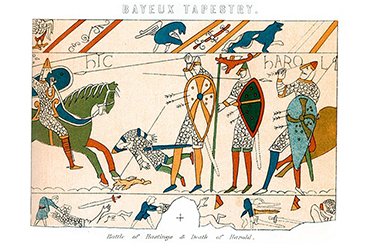
More Reparations NeededHistory, Reparations, Ressentiment, Sahil Matani, Slavery, The Norman Conquest
Sahil Matani points out, tongue firmly in cheek, that, as it is now proposed to compensate hereditary victims of Slavery, it can easily be argued that the same principle ought to be applied even more broadly, going back in History even farther, and farther, and farther.
03 Jul 2019
Pickett’s ChargeCivil War, Gettysburg, History
Today is the 156th Anniversary of the Third Day of the decisive Battle of Gettysburg.
——————————————————–
——————————————————— “Dr. Joseph Hold of the 11th Mississippi, Davis’ brigade, anticipated that the afternoon would be busy and set up his dressing station early in a shelter behind Seminary Ridge. . .When the cannonade opened and the Federals’ guns replied, stretcher bearers, crouching low, began bringing in the wounded. Among the first was an athletic young man with reddish golden hair, “a princely fellow,†the doctor called him, with a calm manner and a delightful smile, one of that gay, turbulent company that had left with the University Greys of Oxford to form Company A of the 11th Mississippi. “The physician examined the left arm, cut off at the elbow, and offered encouragement. “‘Why, doctor, that isn’t where I am hurt.’ The boy pulled back a blanket and showed where a shell had ripped deep across his abdomen, carrying away much that was vital. ‘I am in great agony,’ he said, still smiling. ‘Let me die easy, dear doctor.’ “But before the lad had drunk the cup containing the concentrated solution of opium, the doctor held up his right arm so he could write: ‘My dear mother. . .Remember that I am true to my country and my regret at dying is that she is not free. . .you must not regret that my body cannot be obtained. It is a mere matter of form anyhow. . .Send my dying release to Miss Mary. . .’ He signed, JERE S. GAGE, Co. A, 11 Miss. By that time, the letter was covered with blood. “Then he raised his cup to a group of soldiers. ‘I do not invite you to drink with me,’ he remarked wryly, then with fervor, ‘but I drink a toast to you, the Southern Confederacy, and to victory’ * * * “Then Pickett stood in front of his division and gave the final word ‘Charge the enemy and remember old Virginia.’ His voice was clear and strong as he spoke the order: ‘Forward! Guide center! March’ . . . “‘I don’t want to make this charge,’ Longstreet declared emphatically. ‘I don’t believe it can succeed. I would stop Pickett now, but that General Lee has ordered it and expects it.’ “Further remarks showed he wanted some excuse for calling off the whole attack. “But Longstreet and Alexander had lost control. As they talked, the turf trembled about them and the long line of grey infantry broke from the woods. First came Garnett’s Virginians, the general in front, his old blue overcoat buttoned tightly around his neck. Abreast was Kemper’s trim line marching majestically into the open fields, the fifes piping ‘Dixie,’ the ranks in nearly perfect alignment. Far to the left could be heard the drum rolls of the Carolina regiments – Pettigrew and Trimble were in motion. The hour of the generals had passed. The infantrymen from the Richmond offices and Pearisburg farmlands, the ‘greys’ from the halls of ‘Old Miss’ and the ‘flower of the Cape Fear section,’ had taken the Confederate cause into their hands. * * * “The assaulting column consisted of 41 regiments and one battalion. . .Nineteen of the regiments were from Virginia, 15 from North Carolina, 3 each from Tennessee and Mississippi, and one regiment and one battalion from Alabama. * * * “Garnett, with a big voice issuing from his frail body, road ahead of his line regulating the pace, admonishing his men not to move too rapidly. From the skirmish line, Captain Shotwell obtained one of the rare views of the Confederate advance: the ‘glittering forest of bright bayonets,’ the column coming down the slope ‘in superb alignment,’ the ‘murmur and jingle’ and ‘rustle of thousands of feet amid the stubble’ which stirred up a cloud of dust ‘like the dash of spray at the prow of a vessel.’ “In front of Pickett flew the blue banner of the Old Dominion with the motto, ‘Sic semper Tyrannis,†and the Stars and Bars of the Confederacy (the red battle flag with its blue cross not yet being in general use). The regimental flags flapped. A soft warm wind was blowing from the land they loved.†–Glenn Tucker, “High Tide at Gettysburg.” 03 Jul 2019
Lee’s GambleCivil War, Gettysburg, History, Pickett's Charge, William Faulkner
For every Southern boy fourteen years old, not once but whenever he wants it, there is the instant when it’s still not yet two o’clock on that July afternoon in 1863, the brigades are in position behind the rail fence, the guns are laid and ready in the woods and the furled flags are already loosened to break out and Pickett himself with his long oiled ringlets and his hat in one hand probably and his sword in the other looking up the hill waiting for Longstreet to give the word and it’s all in the balance, it hasn’t happened yet, it hasn’t even begun yet, it not only hasn’t begun yet but there is still time for it not to begin against that position and those circumstance which made more men than Garnett and Kemper and Armistead and Wilcox look grave yet it’s going to begin, we all know that, we have come too far with too much at stake and that moment doesn’t need even a fourteen-year-old boy to think This time. Maybe this time with all this much to lose than all this much to gain: Pennsylvania, Maryland, the world, the golden dome of Washington itself to crown with desperate and unbelievable victory the desperate gamble, the cast made two years ago. —William Faulkner, Intruder in the Dust, 1948. 26 Jun 2019
Norman Stone, 8 March 1941 –19 June 2019History, Norman Stone, Obituaries, The Guardian, The Telegraph
Richard J. Evans, in The Guardian, really unloaded on the conservative historian Norman Stone in an obituary.
20 Jun 2019
“The Lonely Valley”History, Pennsylvania, The Region
Nice article on the foundation of the mining industry and the founding of towns in the Valley of the Mahanoy Creek, Schuylkill County, Pennsylvania by Jake Wynn. I grew up in Shenandoah. My father’s family had settled in Mahanoy City.
Walter Winchell, back in the Prohibition Era, referred to Shenandoah as “the Only Western Town in the East.” 27 May 2019
Confederate Veteran Poses With Fighter Jet, 1955Civil War, History, Photography, William Lundy
HT: Vanderleun. 21 Apr 2019
EasterEaster, History, Traditions
From Robert Chambers, The Book of Days, 1869: Easter Easter, the anniversary of our Lord’s resurrection from the dead, is one of the three great festivals of the Christian year,—the other two being Christmas and Whitsuntide. From the earliest period of Christianity down to the present day, it has always been celebrated by believers with the greatest joy, and accounted the Queen of Festivals. In primitive times it was usual for Christians to salute each other on the morning of this day by exclaiming, ‘Christ is risen;’ to which the person saluted replied, ‘Christ is risen indeed,’ or else, ‘And hath appeared unto Simon;’—a custom still retained in the Greek Church. The common name of this festival in the East was the Paschal Feast, because kept at the same time as the Pascha, or Jewish passover, and in some measure succeeding to it. In the sixth of the Ancyran Canons it is called the Great Day. Our own name Easter is derived, as some suppose, from Eostre, the name of a Saxon deity, whose feast was celebrated every year in the spring, about the same time as the Christian festival—the name being retained when the character of the feast was changed; or, as others suppose, from Oster, which signifies rising. If the latter supposition be correct, Easter is in name, as well as reality, the feast of the resurrection. Though there has never been any difference of opinion in the Christian church as to why Easter is kept, there has been a good deal as to when it ought to be kept. It is one of the moveable feasts; that is, it is not fixed to one particular day—like Christmas Day, e. g., which is always kept on the 25th of December—but moves backwards or forwards according as the full moon next after the vernal equinox falls nearer or further from the equinox. The rule given at the beginning of the Prayer-book to find Easter is this: ‘Easter-day is always the first Sunday after the full moon which happens upon or next after the twenty-first day of March; and if the full moon happens upon a Sunday, Easter-day is the Sunday after.’ The paschal controversy, which for a time divided Christendom, grew out of a diversity of custom. The churches of Asia Minor, among whom were many Judaizing Christians, kept their paschal feast on the same day as the Jews kept their passover; i. e., on the 14th of Nisan, the Jewish month corresponding to our March or April. But the churches of the West, remembering that our Lord’s resurrection took place on the Sunday, kept their festival on the Sunday following the 14th of Nisan. By this means they hoped not only to commemorate the resurrection on the day on which it actually occurred, but also to distinguish themselves more effectually from the Jews. For a time this difference was borne with mutual forbearance and charity. And when disputes began to arise, we find that Polycarp, the venerable bishop of Smyrna, when on a visit to Rome, took the opportunity of conferring with Anicetas, bishop of that city, upon the question. Polycarp pleaded the practice of St. Philip and St. John, with the latter of whom he had lived, conversed, and joined in its celebration; while Anicetas adduced the practice of St. Peter and St. Paul. Concession came from neither side, and so the matter dropped; but the two bishops continued in Christian friendship and concord. This was about A.D. 158. Towards the end of the century, however, Victor, bishop of Rome, resolved on compelling the Eastern churches to conform to the Western practice, and wrote an imperious letter to the prelates of Asia, commanding them to keep the festival of Easter at the time observed by the Western churches. They very naturally resented such an interference, and declared their resolution to keep Easter at the time they had been accustomed to do. The dispute hence-forward gathered strength, and was the source of much bitterness during the next century. The East was divided from the West, and all who, after the example of the Asiatics, kept Easter-day on the 14th, whether that day were Sunday or not, were styled Qiccertodecimans by those who adopted the Roman custom. One cause of this strife was the imperfection of the Jewish calendar. The ordinary year of the Jews consisted of 12 lunar months of 292 days each, or of 29 and 30 days alternately; that is, of 354 days. To make up the 11 days’ deficiency, they intercalated a thirteenth month of 30 days every third year. But even then they would be in advance of the true time without other intercalations; so that they often kept their passover before the vernal equinox. But the Western Christians considered the vernal equinox the commencement of the natural year, and objected to a mode of reckoning which might sometimes cause them to hold their paschal feast twice in one year and omit it altogether the next. To obviate this, the fifth of the apostolic canons decreed that, ’ If any bishop, priest, or deacon, celebrated the Holy Feast of Easter before the vernal equinox, as the Jews do, let him be deposed.’ At the beginning of the fourth century, matters had gone to such a length, that the Emperor Constantine thought it his duty to take steps to allay the controversy, and to insure uniformity of practice for the future. For this purpose, he got a canon passed in the great Ecumenical Council of Nice (A.D. 325), that everywhere the great feast of Easter should be observed upon one and the same day; and that not the day of the Jewish passover, but, as had been generally observed, upon the Sunday afterwards. And to prevent all future disputes as to the time, the following rules were also laid down:
‘That the full moon happening upon or next after the twenty-first of March, shall be taken for the full moon of Nisan.’ ‘That the Lord’s-day next following that full moon be Easter-day.’ ‘But if the full moon happen upon a Sunday, Easter-day shall be the Sunday after.’ As the Egyptians at that time excelled in astronomy, the Bishop of Alexandria was appointed to give notice of Easter-day to the Pope and other patriarchs. But it was evident that this arrangement could not last long; it was too inconvenient and liable to interruptions. The fathers of the next age began, therefore, to adopt the golden numbers of the Metonic cycle, and to place them in the calendar against those days in each month on which the new moons should fall during that year of the cycle. The Metonie cycle was a period of nineteen years. It had been observed by Meton, an Athenian philosopher, that the moon returns to have her changes on the same month and day of the month in the solar year after a lapse of nineteen years, and so, as it were, to run in a circle. He published his discovery at the Olympic Games, B.C. 433, and the cycle has ever since borne his name. The fathers hoped by this cycle to be able always to know the moon’s age; and as the vernal equinox was now fixed to the 21st of March, to find Easter for ever. But though the new moon really happened on the same day of the year after a space of nineteen years as it did before, it fell an hour earlier on that day, which, in the course of time, created a serious error in their calculations. A cycle was then framed at Rome for 84 years, and generally received by the Western church, for it was then thought that in this space of time the moon’s changes would return not only to the same day of the month, but of the week also. Wheatley tells us that, ‘During the time that Easter was kept according to this cycle, Britain was separated from the Roman empire, and the British churches for some time after that separation continued to keep Easter according to this table of 84 years. But soon after that separation, the Church of Rome and several others discovered great deficiencies in this account, and therefore left it for another which was more perfect.’—Book on the Common Prayer, p. 40. This was the Victorian period of 532 years. But he is clearly in error here. The Victorian period was only drawn up about the year 457, and was not adopted by the Church till the Fourth Council of Orleans, A.D. 541. Now from the time the Romans finally left Britain (A.D. 426), when he supposes both churches to be using the cycle of 84 years, till the arrival of St. Augustine (A.D. 596), the error can hardly have amounted to a difference worth disputing about. And yet the time the Britons kept Easter must have varied considerably from that of the Roman missionaries to have given rise to the statement that they were Quartodecimans, which they certainly were not; for it is a well-known fact that British bishops were at the Council of Nice, and doubtless adopted and brought home with them the rule laid down by that assembly. Dr. Hooke’s account is far more probable, that the British and Irish churches adhered to the Alexandrian rule, according to which the Easter festival could not begin before the 8th of March; while according to the rule adopted at Rome and generally in the West, it began as early as the fifth. ‘They (the Celts) were manifestly in error,’ he says; ‘but owing to the haughtiness with which the Italians had demanded an alteration in their calendar, they doggedly determined not to change.’—Lives of the Archbishops of Canterbury, vol. i. p. 14. After a good deal of disputation had taken place, with more in prospect, Oswy, King of Northumbria, determined to take the matter in hand. He summoned the leaders of the contending parties to a conference at Whitby, A.D. 664, at which he himself presided. Colman, bishop of Lindisfarne, represented the British church. The Romish party were headed by Agilbert, bishop of Dorchester, and Wilfrid, a young Saxon. Wilfrid was spokesman. The arguments were characteristic of the age; but the manner in which the king decided irresistibly provokes a smile, and makes one doubt whether he were in jest or earnest. Colman spoke first, and urged that the custom of the Celtic church ought not to be changed, because it had been inherited from their forefathers, men beloved of God, &c. Wilfrid followed:
The King, turning to Colman, asked him, ‘Is it true or not, Colman, that these words were spoken to Peter by our Lord?’ Colman, who seems to have been completely cowed, could not deny it. ‘It is true, 0 King.’ ‘Then,’ said the King, ‘can you shew me any such power given to your Columba? ’ Colman answered, ’ No.’ ‘You are both, then, agreed,’ continued the King, are you not, that these words were addressed principally to Peter, and that to him were given the keys of heaven by our Lord?’ Both assented. ‘Then,’ said the King, ‘I tell you plainly, I shall not stand opposed to the door-keeper of the kingdom of heaven; I desire, as far as in me lies, to adhere to his precepts and obey his commands, lest by offending him who keepeth the keys, I should, when I present myself at the gate, find no one to open to me.’ This settled the controversy, though poor honest Colman resigned his see rather than submit to such a decision. On Easter-day depend all the moveable feasts and fasts throughout the year. The nine Sundays before, and the eight following after, are all dependent upon it, and form, as it were, a body-guard to this Queen of Festivals. The nine preceding are the six Sundays in Lent, Quinquagesima, Sexagesima, and Septuagesima; the eight following are the five Sundays after Easter, the Sunday after Ascension Day, Whit Sunday, and Trinity Sunday. EASTER CUSTOMS The old Easter customs which still linger among us vary considerably in form in different parts of the kingdom. The custom of distributing the ‘pace’ or ‘pasche ege,’ which was once almost universal among Christians, is still observed by children, and by the peasantry in Lancashire. Even in Scotland, where the great festivals have for centuries been suppressed, the young people still get their hard-boiled dyed eggs, which they roll about, or throw, and finally eat. In Lancashire, and in Cheshire, Staffordshire, and Warwickshire, and perhaps in other counties, the ridiculous custom of ‘lifting’ or ‘heaving’ is practised. On Easter Monday the men lift the women, and on Easter Tuesday the women lift or heave the men. The process is performed by two lusty men or women joining their hands across each other’s wrists; then, making the person to be heaved sit down on their arms, they lift him up aloft two or three times, and often carry him several yards along a street. A grave clergyman who happened to be passing through a town in Lancashire on an Easter Tuesday, and having to stay an hour or two at an inn, was astonished by three or four lusty women rushing into his room, exclaiming they had come ‘to lift him.’ ‘To lift me!’ repeated the amazed divine; ‘what can you mean?’ ‘Why, your reverence, we’re come to lift you, ‘cause it’s Easter Tuesday.’ ‘Lift me because it’s Easter Tuesday? I don’t understand. Is there any such custom here?’ ‘Yes, to be sure; why, don’t you know? all us women was lifted yesterday; and us lifts the men today in turn. And in course it’s our rights and duties to lift ‘em.’ After a little further parley, the reverend traveller compromised with his fair visitors for half-a-crown, and thus escaped the dreaded compliment. In Durham, on Easter Monday, the men claim the privilege to take off the women’s shoes, and the next day the women retaliate. Anciently, both ecclesiastics and laics used to play at ball in the churches for tansy-cakes on Eastertide; and, though the profane part of this custom is happily everywhere discontinued, tansy-cakes and tansy-puddings are still favourite dishes at Easter in many parts. In some parishes in the counties of Dorset and Devon, the clerk carries round to every house a few white cakes as an Easter offering; these cakes, which are about the eighth of an inch thick, and of two sizes —the larger being seven or eight inches, the smaller about five in diameter— have a mingled bitter and sweet taste. In return for these cakes, which are always distributed after Divine service on Good Friday, the clerk receives a gratuity- according to the circumstances or generosity of the householder. 13 Mar 2019
Puritan ChecklistAmusement, History, Puritans
Rank historical figures by Puritan points:
HT: Tim of Angle. Welcome to
NEVER YET MELTED
Another Right-Wing Web Aggregator and Purveyor of Unpopular Opinions
 David Zincavage contact: jdz@usa.net blog advertising is good for General Bullmoose and good for the USA. 


Feeds
|