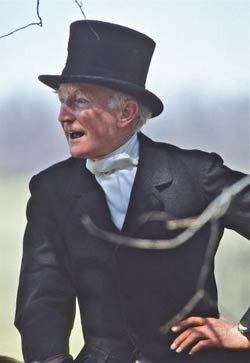
D. Harcourt Lees Jr. of Warrenton, known to many as the quintessential Virginia gentleman, died at home Sunday, July 21, after a brief illness.
Mr. Lees, 91, for decades owned and operated an insurance and real estate firm. He was a past president of the Fauquier County Chamber of Commerce and the Fauquier Club and a former director of The Fauquier Bank. He was a longtime member of Warrenton Rotary Club.
He had a lifelong passion for horse sports. Mr. Lees served as the Warrenton Hunt Master of Foxhounds from 1968 to 1981. He continued to ride to the hounds until 2001.
A Warrenton native, he loved practical jokes and parties.
Mr. Lees and the late Billy Wilbur made their legendary “Midnight Ride†after a hunt ball in the 1950s. On horseback and still in tuxedos, they visited a half-dozen farms, procuring cocktails along the way.
A 1997 profile in The Fauquier Citizen, described Mr. Lees’ impeccable manners. Always well dressed — or “turned out†— he bowed and tipped his hat when meeting friends and strangers on the street.
“His manners are flawless,†the late Byrd Greene told Don Del Rosso, who wrote the newspaper profile. “But they’re manners from the heart; he’s a gentleman because it’s inside of him.â€
55-year-old Scott Entsminger died on July 4th. He was a passionate Cleveland Browns and he left a special request for his funeral, as the Columbus Dispatch reports.
He retired from General Motors after 32 years of service. He was an accomplished musician, loved playing the guitar and was a member of the Old Fogies Band. A lifelong Cleveland Browns fan and season ticket holder, he also wrote a song each year and sent it to the Cleveland Browns as well as offering other advice on how to run the team. He respectfully requests six Cleveland Browns pall bearers so the Browns can let him down one last time.
Slightly used motor and transmission of C250 Mercedes Benz
Jack Baruth, at The Truth About Cars, seemed just as broken-hearted as I am, but is just a trifle more tastefully discreet at concealing his feelings.
The writing-about-writing crowd is abuzz with discussion about the rather unusual death of Buzzfeed/RollingStone/Gawker writer Michael Hastings. Mr. Hastings, whose name is never mentioned in the press without the immediate mention that he was “the fearless journalist whose reporting brought down the career of General Stanley McChrystalâ€, died in a single-car accident in Los Angeles yesterday morning. This in and of itself is not unusual, but the circumstances of the crash and its aftermath won’t do anything to quiet the conspiracy theorists who are already claiming that the military-industrial complex found a way to cap the guy. …
Mercedes-Benz USA is no doubt sweating bullets over this one. An eyewitness report says that Mr. Hastings was driving at an excessive rate of speed down a suburban street when his car “suddenly jackknifed†and hit a tree “with the force of a bombâ€. The Benzo, which by the wheels and quarter-panel appears to be the relatively prosaic but cheerfully stylish C250 four-cylinder turbo coupe, proceeded to throw its powertrain out of the engine bay, immediately catch fire in a manner typically reserved for episodes of “Miami Viceâ€, and burn its driver until said driver was charred beyond recognition. …
Mr. Hastings’ aggressively Democrat-friendly storytelling has the Internet already considering the idea that his death was engineered somehow. I can’t say it’s totally unlikely. As noted above, the reported (and videotaped) behavior of the C250 was not in line with what we’d expect. On the other hand, surely it’s expected that a respected, mature writer on non-automotive topics won’t be barreling through a suburb so fast that any tree he hits will cause his car to burst into flames, right? We’ll keep an eye on this to see what, if anything, develops.
Michael Hastings was killed in a car crash in Los Angeles. The single car accident happened at about 0425. He crashed into a tree and was burned beyond recognition. He was 33.
Mr. Hastings was the war correspondent whose Rolling Stone article led to the firing of General Stanley McChrystal, who at the time was the top General in Afghanistan.
Although Hastings was widely read, no serious war correspondents took him seriously, or at least not the ones I know. … Hastings was like an undisciplined hitman with a pen and license to kill. One of his gonzo articles damaged the career and reputation of Lieutenant General Bill Caldwell, for no cause. My sense was that he picked fights with key people mostly to draw attention. Though Hastings was not respected among war correspondents, it is sad to see a man die so young so horribly. Just why he crashed into a tree at 0425 remains unknown. No doubt the conspiracies will begin to fly.
New Joke: What do you call a metrosexual Rolling Stone attack dog journalist’s explosive collision with an LA palm tree? A good start.
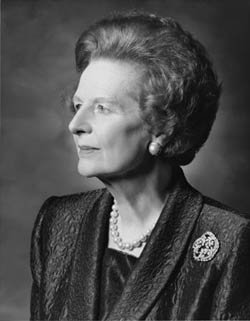
Thatcher reversed the course of Britain’s economic stagnation and decline, ending the long post-war reign of Socialism over Britain. Unfortunately, like her American counterpart Ronald Reagan, she failed to leave behind a worthy successor, and Labour was able to regain power and resume its work of destroying Britain’s culture, economy, civilization, and traditions.
Bret Stephens remembers Michael Kelly, the American journalist killed ten years ago south of Baghdad Airport, traveling embedded with the US Army’s Third Division. His jeep came under enemy fire, and the driver lost control while trying to evade and went into a canal. Kelly drowned along with his driver, becoming the first American journalist to lose his life during the war.
Wouldn’t you know that it would be a reporter like Kelly who got killed, not one of the usual verminous breed?
Kelly treated a column as a sword, the obvious and most worthy purpose of which was to stab, slice, decapitate and—once he really got going—utterly disembowel the objects of his contempt.
Which objects? The pompous, the dishonest, the phony, the self-satisfied, the morally safe and smug, the debauched, the downright evil. To speak more precisely: Al Gore, Bill Clinton, Frank Sinatra, Mr. Gore again, the news media in general, Ted Kennedy, Yasser Arafat. And, of course, Hollywood, which pretty much exemplified all the above-mentioned qualities.
Kelly didn’t just deride these people and institutions. Before he could skewer them, he had to capture them. Writing about Oscar night, he catches Jack Nicholson “leering and sprawling paunchily in his ringside chair like an especially dissolute pasha waiting for his next lap dance.” From an early profile of Bill Clinton: “When he spoke, perception was not only reality. It was a reality that changed, quicksilver quick, from eye to eye and ear to ear.” Of one of Mr. Gore’s debate performances against George W. Bush: “It was much like the most infuriating of all husbandly marital-argument tactics. You know the one—where you play the part of the patient but pained party in the obvious right, too much a gentleman to say that your wife is spewing pure rubbish, but communicating utter contempt through creative breathing.”
Reading Kelly, I used to wonder: Did his power of observation explain his moral judgments, or was it the other way around? Usually (though few of us columnists will admit it), we make our judgments and then find our evidence. I don’t think this was true of Kelly: He was like a man born with a preternatural sense of smell. He couldn’t help smelling it. And he could smell it from a mile away.
Take his view of Frank Sinatra. Everyone loved Old Blue Eyes and mourned him when he died in 1998. Everyone except Michael Kelly.
Kelly hated Frank because Frank had invented Cool, and Cool had replaced Smart. What was Smart? It was Humphrey Bogart in Casablanca: “He possesses an outward cynicism, but at his core he is a square. . . . He is willing to die for his beliefs, and his beliefs are, although he takes pains to hide it, old-fashioned. He believes in truth, justice, the American way, and love. . . . When there is a war, he goes to it. . . . He may be world weary, but he is not ironic.”
Cool was something else. “Cool said the old values were for suckers. . . . Cool didn’t go to war; Saps went to war, and anyway, cool had no beliefs he was willing to die for. Cool never, ever, got in a fight it might lose; cool had friends who could take care of that sort of thing.”
It never, ever would have occurred to me to make the distinction until I read Kelly’s column. And then I understood Sinatra. And then I understood Kelly, too.
Kelly, who was killed 10 years ago as an embedded journalist just outside of Baghdad, was Smart. When the war came, he, too, went to it. Few columnists in America had argued as passionately, and none as cogently, for the overthrow of Saddam Hussein.
“To march against the war is not to give peace a chance,” he wrote six weeks before his death. “It is to give tyranny a chance.”
Renowned British cat burglar Peter Scott warned the Telegraph in 1994 that he would consider it “a massive disappointment” if his passing were to be overlooked by its obituary writing staff. The Telegraph did not disappoint him.
Scott stole jewels, furs and artworks worth more than £30 million. He held none of his victims in great esteem (“upper-class prats chattering in monosyllablesâ€). The roll-call of “marks†from whom he claimed to have stolen valuables included Zsa Zsa Gabor, Lauren Bacall, Elizabeth Taylor, Vivien Leigh, Sophia Loren, Maria Callas and the gambling club and zoo owner John Aspinall. “Robbing that bastard Aspinall was one of my favourites,†he recollected. “Sophia Loren got what she deserved too.â€
Scott stole a £200,000 necklace from the Italian star when she was in Britain filming The Millionairess in 1960. Billed in the newspapers as Britain’s biggest jewellery theft, it yielded Scott £30,000 from a “fenceâ€. After Miss Loren had pointed at him on television saying: “I come from a long line of gipsies. You will have no luck,†Scott lost every penny in the Palm Beach Casino at Cannes.
In the 1950s and 1960s he pinpointed his targets by perusing the society columns in the Daily Mail and Daily Express. Nor did he ease up with the approach of middle-age; in the 1980s he was still scaling walls and drainpipes. In one Bond Street caper alone he stole jewellery worth £1.5 million, and in 1985 he was jailed for four years. On his release he expanded his social horizons by becoming a celebrity “tennis bumâ€, a racquet for hire at a smart London club where — as he put it in his autobiography — he coached still more potential “rich pratsâ€.
By the mid-1990s, Scott had served 12 years in prison in the course of half a dozen separate stretches, and claimed to have laid down his “cane†[jemmy] and retired from a life of crime.
But in 1998 he was jailed for another three and a half years for handling, following the theft of Picasso’s Tête de Femme from the Lefevre Gallery in Mayfair the year before. To the impassive detectives who arrested him, Scott quoted a line from WE Henley: “Under the bludgeonings of chance, my head is bloody but unbowed.†He often drew on literary allusions, quoting Confucius, Oscar Wilde and Proust.
Scott was also a past-master in self-justification of his crimes and misdemeanours: “The people I burgled got rich by greed and skulduggery. They indulged in the mechanics of ostentation — they deserved me and I deserved them. If I rob Ivana Trump, it is just a meeting of two different kinds of degeneracy on a dark rooftop.â€
In his memoirs, Gentleman Thief (1995), Scott admitted to an even stronger motivation than fear as he contemplated another “jobâ€: “Even now, after 30 years, it was a sexual thrill.†There was the additional satisfaction in his assumption that the millions reading about his exploits in the papers were silently cheering him on.
the late Harry Stamps with unknown woman. (His sister-in-law, Betty Williams, writes to explain that the photo shows Harry with his wife of 50 years photographed together after the destruction of their home by Hurricane Katrina in 2005.)
The obituary of Harry Stamps, written by his daughter Amanda for the Gulfport Mississippi Sun-Herald, is being linked everywhere and is widely described “as the best obituary ever.”
Harry Weathersby Stamps, ladies’ man, foodie, natty dresser, and accomplished traveler, died on Saturday, March 9, 2013.
Harry was locally sourcing his food years before chefs in California starting using cilantro and arugula (both of which he hated). For his signature bacon and tomato sandwich, he procured 100% all white Bunny Bread from Georgia, Blue Plate mayonnaise from New Orleans, Sauer’s black pepper from Virginia, home grown tomatoes from outside Oxford, and Tennessee’s Benton bacon from his bacon-of-the-month subscription. As a point of pride, he purported to remember every meal he had eaten in his 80 years of life.
The women in his life were numerous. He particularly fancied smart women….
He had a life-long love affair with deviled eggs, Lane cakes, boiled peanuts, Vienna [Vi-e-na] sausages on saltines, his homemade canned fig preserves, pork chops, turnip greens, and buttermilk served in martini glasses garnished with cornbread.
He excelled at growing camellias, rebuilding houses after hurricanes, rocking, eradicating mole crickets from his front yard, composting pine needles, living within his means, outsmarting squirrels, never losing a game of competitive sickness, and reading any history book he could get his hands on. He loved to use his oversized “old man” remote control, which thankfully survived Hurricane Katrina, to flip between watching The Barefoot Contessa and anything on The History Channel. He took extreme pride in his two grandchildren Harper Lewis (8) and William Stamps Lewis (6) of Dallas for whom he would crow like a rooster on their phone calls. As a former government and sociology professor for Gulf Coast Community College, Harry was thoroughly interested in politics and religion and enjoyed watching politicians act like preachers and preachers act like politicians. He was fond of saying a phrase he coined “I am not running for political office or trying to get married” when he was “speaking the truth.” He also took pride in his service during the Korean conflict, serving the rank of corporal–just like Napolean, as he would say.
Harry took fashion cues from no one. His signature every day look was all his: a plain pocketed T-shirt designed by the fashion house Fruit of the Loom, his black-label elastic waist shorts worn above the navel and sold exclusively at the Sam’s on Highway 49, and a pair of old school Wallabees (who can even remember where he got those?) that were always paired with a grass-stained MSU baseball cap.
Harry traveled extensively. He only stayed in the finest quality AAA-rated campgrounds, his favorite being Indian Creek outside Cherokee, North Carolina. He always spent the extra money to upgrade to a creek view for his tent. Many years later he purchased a used pop-up camper for his family to travel in style, which spoiled his daughters for life.
He despised phonies, his 1969 Volvo (which he also loved), know-it-all Yankees, Southerners who used the words “veranda” and “porte cochere” to put on airs, eating grape leaves, Law and Order (all franchises), cats, and Martha Stewart. In reverse order. He particularly hated Day Light Saving Time, which he referred to as The Devil’s Time. It is not lost on his family that he died the very day that he would have had to spring his clock forward. This can only be viewed as his final protest.
Bob Munden, an exhibition shooter and holder of countless speed and accuracy shooting records, died suddenly of a heart attack last month (December 10th) at the age of 70 in Montana.
One journalist reckoned that if Munden had been at the OK Corral in Tombstone, Arizona, on October 26 1881, the gunfight would have been over in 5 to 10 seconds. He could whip out his Colt .45 single action revolver (as used by John Wayne), shoot a target and replace the gun in his holster in .0175 seconds, and over his lifetime he won more than 3500 trophies, 800 championship titles and bagged 18 world records in speed-shooting.
Munden’s accuracy was deadly. He could burst two balloons six feet apart in what sounded like a single shot and split playing cards — edgeways. He might not have been quite as fast as the French cartoon character “Lucky Lukeâ€, the cowboy who could “draw faster than his shadowâ€, but Munden’s audiences sometimes needed slow-motion action replay to convince them that what they had just seen was not a trick.
Munden was so fast that it was generally agreed that he could draw and easily shoot down an adversary holding a gun on him every time. In fact, Munden was so fast that he could have drawn his gun from his holster and shot down an opponent who was actually in the process of pulling the trigger. The other guy would still have lost.
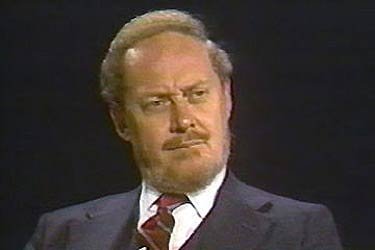
Walter Olson argues that Judge Bork lost the battle for his own Supreme Court Confirmation but, while the liberals weren’t noticing, has been winning the war of constitutional interpretation on behalf of fideism.
[T]he confirmation critique that makes it into every Bork obituary [is] Ted Kennedy’s blowhard caricature, intended for northern liberal consumption, of “Robert Bork’s America†as “a land in which women would be forced into back alley abortions, blacks would sit at segregated lunch counters, rogue police could break down citizens’ doors in midnight raids, school children could not be taught about evolution,†and so on.
Never in memory had a judicial nomination been fought in such language. Why?
As a constitutional law scholar, Bork had distinguished himself even among conservatives for his scathing critique of the Warren Court, which he accused essentially of having made up constitutional law as it went along. …
Within a few years, presidents of both parties were taking care to pick nominees with schmoozy as opposed to prickly personalities — and willing to submit to coaching on how to give off that oh-so-important empathetic vibe without actually committing to anything.
Ideologically predictable though some of these folks might be, they lacked the intellectual heft and daring paper trail of a Richard Epstein on the right, a Cass Sunstein on the left or a Richard Posner somewhere in between. …
But with regard to the Warren Court, it’s looking as if he’ll have the last laugh. Obama’s high court nominees are just as eager as George W. Bush’s to decry the practice of making up the constitution as one goes along, while “liberal originalism,†which takes seriously the insistence of critics like Bork that judges must adhere to what’s actually in the founding document, is making headway among scholars at places like Yale Law School.
Not such a bad legacy.
———————————–
David Frum also remembered the distinguished jurist as a man who believed in personal modesty and who exercised official responsibility with objectivity and restraint.
Pessimistic as he was, however, Robert Bork was in no way bitter or angry. “Mordant” is the word I think I want to describe his conversation. His bleak assessment of his fellow human creatures was based upon hard experience. He was used to hearing his ideas distorted, and his best actions distorted and vilified. Before his nomination to the Supreme Court, Bork was best known as the man who fired Watergate special prosecutor Archibald Cox. Bork’s two immediate superiors in the Department of Justice had resigned rather than execute the presidential order. Bork didn’t approve the order any more than the others did. But he also understood that the order was a legal one, and that somebody sooner or later was going to have to carry it out. This unpleasant duty had to be done, and since it had to be done, Bork’s sense of responsibility required him to do it.
The whole domain of law and judging was bounded, in Bork’s view, by a like sense of responsibility. Laywers and judges, as he saw it, were not knight-errant righters of wrong, not freelance agents of abstract justice, but fallible people no wiser than anyone else, entrusted only with certain defined powers to settle certain kinds of disputes. Those judges who claimed greater power received more applause than Robert Bork ever drew, but they did not deserve. Their actions were power-grabbing and their motives were arrogant. Bork made this case powerfully and vividly in the best book of his later years, Coercing Virtue.
Dan Greenfield turns out another brilliant essay as a better epitaph than New York’s long-time alternative newspaper really deserves.
The passing of the Village Voice, its thick greasy pages smudged with desperate cries for attention in between glossy cigarette ads and phone sex ads, also coincides with the passing of the bohemian nature of the East Village, now little more than tall glowering condos and coffee shops. To those residents who showed up there in the 70’s and 80’s bearing art school portfolios and a burning desire to be part of the “Scene”, it’s one more triumph of the capitalist running dogs over the “People”.
But the real reason that the Village Voice is dead is because the alternative media is dead and the alternative media is dead because there is nothing for it to be an alternative to. New Yorkers can just as easily read shrill rants about the NYPD in the Daily News, pretentious movie reviews for artsy films at The Onion and leftist denunciations of the War on Terror in the New York Times.
The way that the Village Voice used to cover Republicans is now the way that every media outlet, but the handful that aren’t part of the liberal collective, covers Republicans. Every mainstream media outlet is opposed to fighting terrorism, opposed to the police and opposed to any notion of balance in reporting. And every outlet is churning out the same tired 24/7 coverage of something provocative a Republican allegedly said because every outlet wants to be the Village Voice, the ink-stained pamphleteer on the corner screaming about capitalist pigs before heading off to a concert at CBGB’s, also as dead as the Village Voice and the rest of the East Village.
Newsweek, once the paragon of middlebrow inoffensiveness, now does the kind of covers that the Village Voice used to do. It still hasn’t run a picture of Bush drinking the blood out of the green neck of the Statue of Liberty, but, if Romney wins, you can expect that as the March cover. And by then even that might be considered tame.
If anyone deserves credit for killing the Village Voice, it’s George W. Bush, who was its unwitting cover boy more often than Obama has appeared on the cover of Essence. Under Bush the entire media became alternative and the alternative media became supplementary to requirements. When mainstream newspapers give positive reviews to books and movies that envision Bush’s assassination, cheerlead anti-war rallies run by militant Trotskyites and demand unilateral surrender in the War on Terror; what possible territory is left for the alternative media to explore?
All that was left for the alternative media was to run yet another profile of a new bar where people drink the tears of Ecuadoran children purchased through fair trade while looking at themselves doing it in video monitors as an artistic commentary on capitalism. And these days that’s what the internet is for.
Mike Blanchard’s “In Memoriam” notice from the Denver Post has gone viral internationally.
It was reported with appropriate admiration by Britain’s Daily Mail.
———————————
Charlie Martin added a bit more at the Daily Caller:
“What’s in the vial?â€
“Nitroglycerin.â€
According to lifelong friend Ron Remy, those were the first words he heard from Mike Blanchard when they met during high school.
“I was coming up the walk to his parents’ house when he came out, carrying a small vial, very carefully. He said it was nitroglycerin. He’d just cooked it up in his parents’ kitchen. We put it on a fence post and Mike shot it with a pellet gun, and it blew out a whole section of fence,†Remy said. “We all have these fantasies — but Mike would go out and just do it. I spent a year in Viet Nam, and some of the moments of stark terror I had with Mike eclipsed anything I saw there.†…
Collecting stories from Flathead’s life, however, initially presented a small problem. “I’m not sure of the statute of limitations,†one of his friends said. After assuring them we’d protect our sources, the stories flowed like whiskey.
“We had friends who joined these ‘outlaw’ motorcycle clubs. We decided we’d have our own. We called it the ‘Dead Cats MC,’†said one of the attendees who had been worried about misdeeds recent enough to prosecute. …
The stories Blanchard’s family and friends told certainly didn’t paint him as a boy scout. According to his friends, he was astonishingly intelligent and well read, with encyclopedic knowledge of Fords, guns, and explosives, but equally deep knowledge of European history and of prosaic topics like landscaping.
On the other hand, he had real difficulties with authority, and didn’t give in to social pressures — like hygiene.
“You could have drilled for oil in the leg of his jeans,†remembered one friend who wished to remain anonymous. …
As his obituary noted, Blanchard was a life-long Republican and an NRA member. And according to another friend, he had what we might now charitably call “old-fashioned†attitudes about race.





 .
.





