Category Archive 'Yale'
25 Sep 2016


Current Head of Silliman College: Laurie Santos, Harvard ’97 A.B psychology & biology, ’03 Ph.D. psychology.
A Yale alumn I know from Silliman (I was in Berkeley myself) passes along an email:
Excerpt below from actual email I received from actual grown-up in an important position at a once-prestigious Ivy League university (“HoC Santos,” who is the new don’t-call-it-Master of Silliman). Am I just old and out of it, or is it fundamentally undignified for someone in that sort of role to adopt the tone of a perky 19-year-old sorority social-events chair at some perfectly-okay state university somewhere out in flyover country?
“Our first ever Sing-Along will take you back to the days of flannel clothing, huge scrunchies and boy bands. It will be the ultimate celebration of all things ‘90s! From the Britney to Backstreet Boys, with plenty of Alanis and Nirvana mixed in, this is how we Sillimanders do it, even as we smell like teen spirit cuz we’re livin’ la vida loca.
8-9:30pm in Silliflicks. Word to your mutha.”
There was no email, not even any PCs, back when I was an undergraduate at Yale. In those days, all Yale Residential College Masters were middle-aged White Anglo-Saxon Protestant males and distinguished scholars. In Silliman’s case, the Master was one Elias Clark, a law professor with a background which included Yale and Andover and WWII military service.
Somehow, I cannot really picture Master Clark sending out to the Silliman Salamanders of my day a mimeograph announcement of a college shindig celebrating the music and pop stars of the 1950s couched in the Beatnik vernacular of Maynard G. Krebs. Still less, his screwing up and inadvertently forwarding such a missive to graduated alumni.
Professor Santos may very likely have been specifically chosen to make the Snowflakes of Color of Silliman College feel safer from improper Halloween costuming and more comfortable and at home there, which we all learned last year is the most essential function of the heads of Yale residential colleges.
Former Associate Masters Nicholas and Erika Christakis fell afoul of diverse student sensivities, when La Christakis responded to an admonitory Intercultural Affairs Council email edict warning students sternly against such Halloween transgressions as wearing blackface, sombreros, or turbans with a skeptical email of her own wondering aloud about the propriety and necessity of such politically correct pronunciamentos.
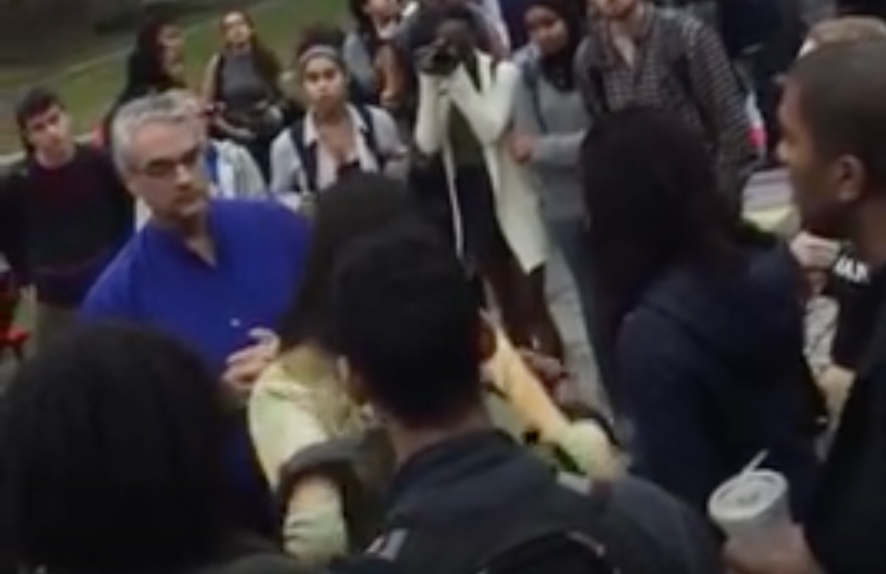
In response to Erika Christakis’s chin-stroking email, students went absolutely wild. Nicholas Christakis was confronted, shouted down, told he was not doing his job properly, and urged to resign. An African-American dean was similarly mobbed and lectured on his responsibility to be on the side of his own people. There were marches, one of which occurred at Midnight and featured the delivery of some pretty outrageous demands to the timid Yale President Peter Salovey at his house on Hillhouse Avenue.
The Yale Administration announced that it was firmly behind the free speech rights of the Christakises, which announcement was followed by Erika’s rapid departure in under a month, immediately thereafter by husband Nicholas’s departure on sabbatical, and finally (surprise! surprise!) by the announcement of his resignation during the summer. Yale was ever so solidly behind them. Adieu! Christakises and Adieu! the title of Master itself.
President Salovey previously announced that Yale would pay $50 million in Danegeld for more privileged-victim-group faculty recruitment and development (aka remedial education) and whatever else our contemporary Danes might desire. Yale’s concessions and surrenders will be continuing.

Master of Silliman College 1962-1981, Charles Elias “Eli” Clark, Andover ’39, Yale ’43 B.A. American history, Army Air Corps pilot 1944-1945, Yale Law ’47, Yale M.A. ’58.
16 Sep 2016

C. Wallace DeWitt ’03 delivers a Swiftian analysis of the recent epidemic of Political Correctness at Yale.
Next year marks the 350th anniversary of the birth of Jonathan Swift. I was delighted, therefore, to see that our alma mater has embarked on a yearlong celebration of the great Anglo-Irish wit and author of “Gulliver’s Travels,†“A Tale of a Tub†and other classic works of the satirical genre. Yale has come in for a lot of harsh and unforgiving press these past few years, and unjustly so in my considered view. It is therefore very meet, right and our bounden duty to offer Yale our thanks when due.
Yale’s wry sense of humor has been in rare form lately. Reminiscent of Swift’s famous suggestion that Irish poverty could be alleviated by selling Irish babies for consumption by the rich, Yale has not shied away from vigorously lampooning the politically correct contretemps that have plagued lesser universities. (I’m looking at you, Harvard Law!)
Thus, we now have the delightfully styled “Committee to Establish Principles on Renaming†and “Committee on Art in Public Spaces,†names so patently outlandish as to make the Ministry of Truth blush. Hilarious! George Orwell is surely looking down on us with a chuckle from that great Catalonia in the sky.
And then there’s the whole “Heads of Residential College†bit, a subtle dig at fanatics who suggest that Yalies aren’t capable of distinguishing between (i) an abominable relic of antebellum oppression and (ii) an utterly inoffensive term in continuous academic use since the Middle Ages. Ha! You’re killing me, Yale, stop it already!
Some practical jokers in the English major have even gotten in on the act. Like latter-day Voltaires, they proclaim that the “Major,†the “English†and the “Poets†must henceforth be stricken from a course sequence entitled “Major English Poets.†Priceless! Just imagine the look on those incoming majors’ faces when they get a load of the syllabus for the new “Minor Non-English Prosaists†requirement. Have fun with your Bourdieu and Schlegel, kids!
I’m afraid, however, that Yale’s waggish humor has been lost on some of our more earnest undergraduates, who perhaps have drunk too deeply the vintages of New Haven’s Congregationalist city fathers. The rampant sardonicism on campus seems to have gone over the heads of these students (and even the odd faculty member or administrator). They are still more juvenile than Juvenalian, you might say. But hey, no judgment here, that’s all part of the process of education. No doubt even Leo Strauss didn’t suss out all the esoteric subtexts of Plato and Machiavelli on his first try. No one ever said that persecution and the art of writing came easy, what what?
Read the whole thing.
12 Sep 2016
Take the quiz and find out!
27 Aug 2016

The Yale Class of 2020 arrived yesterday.
I felt older than dirt yesterday, when I (a member of the Yale Class of 1970, which arrived in New Haven in early September, 1966) got to read, via the Yale News:
(emphasis added)
Members of the Yale College Class of 2020 will arrive on campus today, taking part in one of the university’s most beloved traditions: freshman move-in day. The 1,373 new freshmen traveled from all 50 states and 50 different foreign countries to New Haven, where Yale President Peter Salovey, Dean of Yale College Jonathan Holloway, the deans and heads of the 12 residential colleges, and hundreds of student volunteers will officially welcome the newest members of the Yale community. …
More than 12% of the class attended high school abroad, and more than 60% of students from the United States attended a public high school [Up a whopping 2% in 50 years! –JDZ].
Students in the class speak more than 60 different languages, and 36% of freshmen speak a language other than English at home. Their hometowns range in size from fewer than 200 to more than 10 million. More than 200 freshmen are eligible for a federal Pell grant for low-income students, and 52 will receive a new Yale College Start-up Fund as part of the new $2 million undergraduate financial aid initiative announced last December. …
The Class of 2020 will include more U.S. citizens or permanent residents who identify as a member of a minority racial or ethnic group (43%), more students who will be the first in their family to graduate from college (15%), more international students (12%), and more students who are planning to major in a science or engineering field (46%) than any previous class in the university’s history. The class was selected from Yale’s largest-ever freshman applicant pool, which saw record numbers of applications in all of the above groups. A detailed profile of the Class of 2020 is available on the undergraduate admissions website, admissions.yale.edu. …
[T]he new freshmen all share an impressive record of academic success, extracurricular accomplishment, and community engagement, said Quinlan, noting that admitted students have reached some of the highest possible levels of achievement in the performing arts, scientific research, creative writing, global and community-based service leadership, athletics, entrepreneurship, technology, and political activism.
Members of the freshman class hold patents and run their own businesses. Their scientific pursuits have earned recognition from Intel, FIRST Robotics, the Siemens Foundation, Google, and Apple. They have performed at the White House, Carnegie Hall, and Lincoln Center. They have designed software that thousands of people use around the world. Their activism has spurred the creation of new academic courses, new laws, and new international organizations. Their writing has reached thousands of people through international publications and prestigious award programs. They have won state, regional, and national athletic competitions. Many have balanced their academic and extracurricular pursuits with extensive paid work experiences and caregiving responsibilities to support their families.
Yale 1970 differed from Yale 2020 in being about a third smaller. Our class was made up of 1025 “male leaders.” No coeducation yet back then.
But Yale was no less boastful back then about Yale’s commitment to meritocracy:
[T]he Class of 1970, arrived on campus in the fall of 1966. It was composed of 58 percent public school students, the highest percentage of high school students of any class in Yale history, and a jump from 52 percent the previous year. The class drew on more public schools than any other class (478), but also more private schools (196).
For the first time, the rate of matriculation of financial aid applicants was higher than for non-financial aid applicants. Financial aid jumped to nearly $1 million, 30 percent above what it had been the year before; gift aid from the University increased by almost 50 percent. The class included more minorities of every kind. …
The Class of 1970 entered with the highest SAT scores in Yale’s history; a student who scored its mean SAT verbal mark of 697 would have been in the 90th percentile of the Class of 1961, and the 75th percentile of the Class of 1966. Put in a national context, half of the incoming freshmen scored in the top 1 percent nationally on the verbal SAT. These SAT marks were higher than those scored by the incoming class at Harvard, also a first for Yale. By year’s end, the Class of 1970 would score an average mark of 81, another school record. [Grades were numerical and very stingy back then. -JDZ]
How else were things different?
I expect you would have seen a lot fewer freshman moving in dressed in short pants.
There were a lot fewer African Americans, and those who were admitted got in much more on the up-and-up. Totally blatant Affirmative Action had yet to arrive. There were basically no Asians or Hispanics or Amerindians at all. A 43% class composition today of self-identified whiny minorities vulnerable to trigger warnings and looking for safe spaces, lest somebody fail to protect them from uncomplimentary Halloween costumes, strikes me as very possibly excessively large.
We certainly had nothing like a third of the class coming from non-English-speaking homes.
We had, we thought, pretty good geographical distribution from all over the United States, but nothing like 12% of foreigners. When, one wonders, did Yale acquire such a major and distinct responsibility for supplying international leadership?
Looking at the detailed 2020 Class profile, I see that 13% are legacies. I am smiling reading that, because the 1999 “Birth of a New Institution” article was bragging that Inky Clark reduced legacy admissions (for my own era) to between “14.5 percent and 12 percent.”
1970 vs. 2020:
58% public school vs. 60% public school
“between 12 and 14.5% legacies” vs. 13% legacies
La plus ça change, plus c’est la même chose!
22 Jul 2016

Woodbridge Hall, home of the evil Yale Administration.
Yale News:
Pericles Lewis, currently the founding president of Yale-NUS College, will assume the combined role of vice president for global strategy and deputy provost for international affairs in the fall of 2017, President Peter Salovey and Provost Ben Polak announced.
Lewis will take up the new position at the conclusion of his five-year term in his current post.
This key post within the University Cabinet has been vacant since Linda Lorimer’s retirement in the spring of last year. Lewis’ appointment “will provide renewed and unified focus to a vitally important area of the university,†Salovey and Polak said in letter to Yale faculty and staff announcing the appointment.
Read the whole thing.
Founded as a Collegiate School in 1701 for the training of ministers for the Congregational Church in the Colony of Connecticut, Yale has come a long way.
We all know that, over time, Yale’s mission evolved into the molding and education of members of the national leadership class, but the question is: When exactly, and how, did Yale acquire a Global Mission and its own Foreign Policy?
If Yale already has a foreign policy of its own, isn’t it perhaps time that Yale begins building its own Navy and training officers to command the Yale Army? How about some Yale colonies to start off the construction of the Yale Empire? …
08 Jul 2016
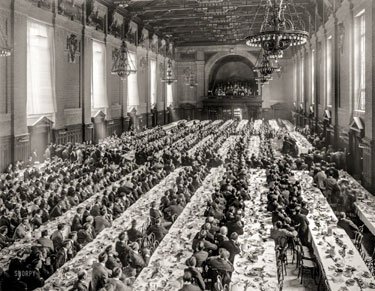
click on image for larger version
Via Shorpy.
I would guess that this was a Reunion Banquet. In my day, freshman ate their meals here in University Commons. Normally, this dining hall was far less crowded. There were many fewer individual tables, spaced a lot farther apart. Yale doesn’t use the space for student meals anymore, and I believe the whole building is being renovated and changed into some kind of multi-purpose student center. But, then, where will Yale hold these kind of banquets? one wonders.
08 Jul 2016
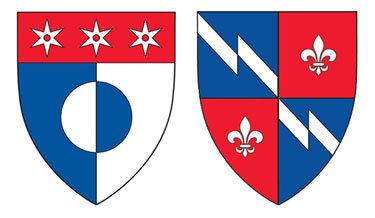
Somebody-You-Never-Heard-of College (left) and Benjamin Franklin College (right).
Yale News:
The inaugural heads of Yale’s two new residential colleges have been announced by President Peter Salovey and Yale College Dean Jonathan Holloway. Charles Bailyn, professor of astronomy and physics, will be the head of Benjamin Franklin College, and Tina Lu, professor of East Asian languages and literatures, will be the head of Pauli Murray College.
The new colleges will be finished by the time the incoming Class of 2021 arrives on campus. …
Bailyn has been a member of the Yale community since his undergraduate years, earning his B.S. in astronomy and physics from Yale College in 1981 [ Calhoun – JDZ ] and later returning to campus in 1990 to join the faculty ranks. In 2010 he was named the A. Bartlett Giamatti Professor of Astronomy and Physics. From 2011 to 2016 he served as the inaugural dean of the faculty of Yale-NUS College in Singapore.
In his research, Bailyn studies black holes and related sources of celestial X-rays, as well as dense star clusters and the effects of collisions between stars. His work on measuring the masses of black holes was awarded the 2009 Bruno Rossi Prize from the American Astronomical Society, and he has carried out research with a wide variety of ground- and space-based telescopes, including NASA’s Hubble Space Telescope. …
As a Yale undergraduate, Bailyn was awarded the George Beckwith Prize in astronomy and was an avid participant in the a cappella singing scene. Salovey and Halloway noted in their letter that Bailyn considers becoming a pitchpipe of the Duke’s Men at the age of 19 one of the highlights of his undergraduate experience. After completing his Yale College degree, he pursued graduate work at the University of Cambridge and at Harvard University, receiving his Ph.D. from Harvard in 1987 and spending three years as a member of Harvard’s Society of Fellows before returning to Yale as an assistant professor of astronomy. He has served both as chair and as director of undergraduate studies in the Department of Astronomy and was a member of the 2001-03 Committee on Yale College Education, which reviewed Yale’s undergraduate curriculum. He twice chaired the Teaching, Learning, and Advising Committee in Yale College. In his five years at Yale-NUS, he led the recruitment of more than 100 faculty members and supervised the development of the college’s common curriculum.
———————
Tina Lu joined Yale’s Department of East Asian Languages and Literatures (EALL) in 2008, with a secondary appointment in the Department of Comparative Literature. She has served as EALL’s director of graduate studies (from 2009-2010), director of undergraduate studies (2012-2013), and chair (2013-present). In 2009 she was a visiting professor with the Yale-PKU program in Beijing; since 2013 she has been a consulting faculty member to Yale-NUS College, where she taught as a visiting professor in spring 2015.
Specializing in Chinese literature from 1550 to 1750, Professor Lu has written three books — one on personal identity, one on the nature of the human community, and the most recent (still being completed) about materiality. Noted Salovey and Holloway: “In the course of them, she has discussed a portrait that comes to life, optical illusions, and stories about severed heads!†Her current work examines time travel and its pre-modern antecedents. With colleagues at other universities in art history and social history, she is also at work on a collaborative book about Xu Wei, the 16th-century polymath, playwright, and painter.
One of her major ongoing projects is The Ten Thousand Rooms, a web-based platform she is developing with grant support from the Mellon Foundation (and in collaboration with her colleague Mick Hunter) that will allow scholars around the world to work together on the transcription, translation, and commentary of pre-modern Chinese sources. She has been an invited speaker and panelist at dozens of universities and other forums in the United States and internationally. In 2009, she was awarded the Gustav Ranis Prize for Best Book on an International Subject by a Yale Faculty Member, and from 2005 to 2011 she was a Mellon Foundation New Directions Fellow. She has served on numerous Yale advisory groups, from the Humanities Program Executive Committee to the Digital Humanities Executive Committee to the Yale-NUS Advisory Committee and Curriculum Review Committee. Her undergraduate courses include EALL 200, “The Chinese Tradition,†an overview of Chinese culture and history from antiquity to the 20th century.
Lu earned her A.B. (in East Asian languages and civilizations) and Ph.D. (in comparative literature) from Harvard University. Prior to coming to Yale, she was a member of the faculty at the University of Pennsylvania from 1998 to 2008, earning tenure in 2004.
Yale’s residential college “heads” seem to be younger these days, not as distinguished as they used to be, and more commonly chosen on the basis of “diversity” (what some of us would call: favoritism), but Professor Bailyn looks to me like a decent choice. At least he’s a Yalie.
Professor Lu, appropriately for her new college, is diverse. But, at least, she has eccentric areas of academic study, so I suppose they could do worse.
What is up, however, with these new college coats of arms?
College and universities customarily assume the arms of their namesake. Benjamin Franklin had a real coat of arms, complete with dolphins no less. Why on earth aren’t they using it?
Whatever-her-name-was, doubtless, had no coat of arms, so Yale is free, I suppose, to invent one and confer it on her, but Yale ought to be aware that these are referred to coats of arms or armorial achievements, not “shields.” And unmarried ladies’ arms are displayed on a lozenge (a diamond) or an oval, and not upon a shield.
Yale can’t even do heraldry right today. Sigh.

Benjamin Franklin’s real coat of arms, blazoned: Argent on a bend between two lions’ heads erased gules, a dolphin embowed of the first between two martlets or.
30 Jun 2016
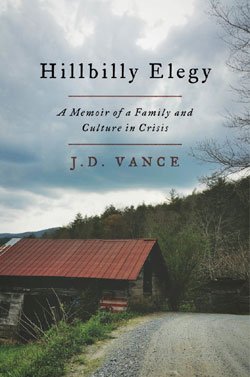
I grew up in a different portion of Appalachia and am of a different (Roman Catholic – Lithuanian) ethnic background, but I shared J.D. Vance’s experience, a generation earlier, of attending an elite Ivy League school as a blue-collar background outsider. Our town’s last coal mine closed in 1954, and my father had to bribe his way into the Steamfitters’ union, so that he could work all week four hours from home, and then return on weekends. The summer after my high school graduation, before entering Yale, I was working on the same kind of construction projects, installing new bathrooms in Scarsdale’s Taj Mahal High School. I can recall sitting on a box, during lunch, reading the Scarsdale High School Yearbook, and counting twelve graduates of that year who would be my classmates. Nobody in the entire history of Shenandoah, Pennsylvania, before me, had ever gone to Yale.
I am currently reading J.D. Vance’s Hillbilly Elegy, with which I have strong, natural sympathies.
Yale planted a seed of doubt in my mind about whether I belonged. This place was so beyond the pale for what I expected of myself. I knew zero Ivy League graduates back home; I was the first person in my nuclear family to go to college and the first person in my extended family to attend a professional school. When I arrived in August 2010, Yale had educated two of the three most recent Supreme Court justices and two of the most six recent presidents, not to mention the sitting secretary of state (Hillary Clinton). There was some- thing bizarre about Yale’s social rituals: the cocktail receptions and banquets that served as both professional networking and personal matchmaking events. I lived among newly christened members of what folks back home pejoratively call the “elites,†and by every outward appearance, I was one of them: I am a tall, white, straight male. I have never felt out of place in my entire life. But I did at Yale.
Part of it has to do with social class. A student survey found that over 95 percent of Yale Law’s students qualified as upper-middle-class or higher, and most of them qualified as outright wealthy. Obviously, I was neither upper-middle-class nor wealthy. Very few people at Yale Law School are like me. They may look like me, but for all of the Ivy League’s obsession with diversity, virtually everyone—black, white, Jewish, Muslim, whatever— comes from intact families who never worry about money. Early during my first year, after a late night of drinking with my classmates, we all decided to stop at a New Haven chicken joint. Our large group left an awful mess: dirty plates, chicken bones, ranch dressing and soda splattered on the tables, and so on. I couldn’t imagine leaving it all for some poor guy to clean up, so I stayed behind. Of a dozen classmates, only one person helped me: my buddy Jamil, who also came from a poorer background. Afterward, I told Jamil that we were probably the only people in the school who’d ever had to clean up someone else’s mess. He just nodded his head in silent agreement.
22 Jun 2016
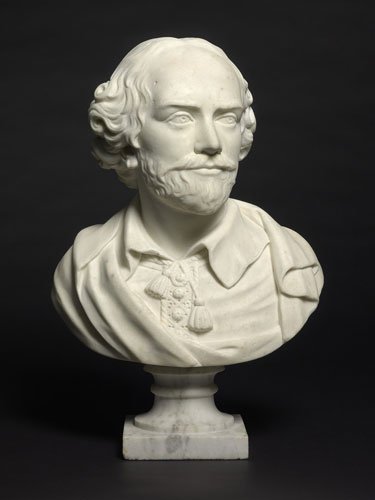
Shakespeare: Male, White, Christian, Married with Children, Get Over it.
Last month, 160 students in Yale’s (once first in the nation) English Department signed a petition demanding that the department “reevaluate the undergraduate curriculum, as well as reconsider the current core requirements and introductory courses… particularly .. the Major English Poets sequence, a longtime prerequisite for the major and “perhaps the most distinctive element of English at Yale.†The petition called for the removal of this prerequisite for the English major and for requirements “to refocus and include literature relating to gender, race and sexuality.” (Yale Daily News, May 26)
It appears that Yale’s current English Department Chairman, Langdon Hammer (a specialist in the likes of James Merrill and Hart Crane; Finalist, Lambda Literary Award for Gay Memoir/Biography, 2016; Larry Kramer Initiative for Gay and Lesbian Studies at Yale, 2003) intends to cave, while denying that that is what he is doing.
Professor Hammer (appropriately named like a character in a satirical novel by Evelyn Waugh) announced recently via the English Department news:
English 125/6 is a course that introduces students to a particular literary tradition, and the course itself has the status of a tradition. The thing about literary traditions is, they are always being upended and remade. That is the history of English poetry from Chaucer to Eliot (or to Hughes or Stein or Bishop or Walcott or Glück, who were all taught this spring in one or another section of this multi-section course). So it seems fitting for students and faculty to raise questions about the course and its role in the major.
The questions on my mind about English 125/6 are: How can this course be made better? What is its relationship to the rest of the English Department curriculum? What should and shouldn’t the faculty require of its majors? What does a strong education in the discipline of English look like today? And what should it look like tomorrow?
The English Department faculty is charged with asking those questions about all of our courses. We ask them in formal and informal ways every year, and we will again next year. We’ll be in conversation with our students, who have a range of views. And we’ll make decisions about what we teach and what we ask of students that seem appropriate to us.
The invertebrates in charge at Yale these days are always “having conversations” with the barbarians of the Left over insane and insolent demands delivered by the latter. These conversatione invariably amount to duplicitous attempts to save face and avoid the wrath of reactionary alumni by surrendering as little as possible to appease all the little Calibans they have intentionally admitted via extraordinary efforts and indulgences to the magic island. But there is always a surrender.
The sound you hear, in the distance, is all the great English professors of the past spinning in their graves as Langston Hughes replaces Milton and Dereck Walcott replaces Chaucer in Yale’s version of the canon.
14 Jun 2016

Yale in the 1960s
Uncle Rick explains the differences between college education in the Pre-Revolutionary 1960s and what goes on at colleges today.
Long ago, before 1965 say, college was understood to be for the intelligent and academically prepared among the young, who would one day both provide leadership for the country and set the tone of society. Perhaps ten percent, but no more than twenty percent, of high-school graduates were thought to have any business on a campus.
It was elitist and deliberately so. Individuals and groups obviously differed in character and aptitude. The universities selected those students who could profit by the things done at universities.
Incoming freshmen were assumed to read with fluency and to know algebra cold. They did, because applicants were screened for these abilities by the SATs. These tests, not yet dumbed down, then measured a student’s ability to handle complex ideas expressed in complex literate English, this being what college students then did.
There were no remedial courses. If you needed them, you belonged somewhere else. The goal of college was learning, not social uplift.
Colleges were a bit stodgy, a bit isolated from the world, and focused on teaching. Most had not adopted the grand-sounding title of “university.†Professors were hired for a few years to see whether they worked out with the expectation that if they did, they would get tenure. At schools I knew, “publish or perish†did not exist. The students, almost entirely white and with the cultural norms associated with that condition, were well behaved within the limits imposed by late adolescence.
The purpose of college was the making of cultivated men and women who would understand the world to the extent that it has proved willing to be understood. This meant the liberal arts. “Liberal†didn’t mean “lefty†or “nice.†It implied a broad grounding in languages, literature, history, the sciences, mathematics, economics, philosophy, and art and music.
The emphasis was on “broad.†For example, if the student took a reasonably rigorous course called “A Survey of Art from Classical Antiquity to the Present,†he—or, most assuredly she—could go into any museum or archaeological site in the Western world, and know what he was seeing. In discussions of politics or literature he would not feel like an orphaned guttersnipe and, having a basis in most fields, could rapidly master any that proved of importance or interest.
There was of course, the young being the young, parallel interest in beer, the other sex, and the usual foolishness that we geezers remember with fondness.
That is how things were. Then came what are roughly called the Sixties, actually the late Sixties and early Seventies.
They changed everything.
Read the whole thing.
Hat tip to Karen L. Myers.

Yale today
28 May 2016

The Shrieking Student confronting Master Christakis last November.
We saw this week the sad denouement of last Fall’s Great Halloween Costume Controversy at Yale.
The very liberal Master of Silliman College and his equally liberal wife and co-Master, were publicly denounced and vilified early last November for Mrs. Christakis’s daring to question the dictate on the vital issues of Halloween costuming laid down by Yale’s “Intercultural Affairs Committee,” a 13-member group of administrators from the Chaplain’s Office, campus cultural centers, and other campus organization. That committee urged students to be careful of the cultural implications of their Halloween costumes and to avoid trespassing upon the tender sensitivities of officially-recognized victim groups via the use of feathered headdresses, turbans, “war paint,†or blackface, all cases of inappropriate “cultural appropriation and/or misrepresentation.â€
Co-Master Erika Christakis responded two days later, the night before Halloween with her own email, based on her professional expertise as a child development specialist, questioning the appropriateness of the university policing students’ choices of Halloween costumes:
I don’t wish to trivialize genuine concerns about cultural and personal representation, and other challenges to our lived experience in a plural community. I know that many decent people have proposed guidelines on Halloween costumes from a spirit of avoiding hurt and offense. I laud those goals, in theory, as most of us do. But in practice, I wonder if we should reflect more transparently, as a community, on the consequences of an institutional (which is to say: bureaucratic and administrative) exercise of implied control over college students.
Christakis raised free speech and expression issues and then inquired philosophically:
Is there no room anymore for a child or young person to be a little bit obnoxious… a little bit inappropriate or provocative or, yes, offensive? American universities were once a safe space not only for maturation but also for a certain regressive, or even transgressive, experience; increasingly, it seems, they have become places of censure and prohibition.
Demonstrations ensued, an open letter denouncing Erika Christakis’s email was signed by hundreds and hundreds of students and faculty, Nicholas Christakis was confronted and abused by “the shrieking student,” Yale Dean Holloway was confronted and scolded by a crowd of students of color, demonstrators demanded the Yale Administration apologize and meet a long laundry list of demands, including the dismissal of both Christakises.
The University declined to fire the Christakises, and affirmed that they continued to have its support. But, Erika Christakis quit teaching at Yale last December, and her husband Nicholas announced soon thereafter that he would be taking a sabbatical for the Spring Semester.
On Wednesday this week, the Yale Daily News reported that, all that solid Administration support notwithstanding, what do you know? the Christakises will never be coming back.
Months after a controversial email helped spur sustained student protests last fall, Nicholas and Erika Christakis will step down as head and associate head of Silliman College, effective this July.
In a Wednesday afternoon email to the Silliman community, Nicholas Christakis announced that he submitted his resignation to University President Peter Salovey last week. The couple drew national attention last fall when a Halloween weekend email from Erika Christakis defending students’ rights to wear culturally appropriative costumes sparked outrage on campus.
At the time, many students and alumni called for the couple to resign their roles at the helm of Silliman College, arguing that the two could no longer serve as effective leaders of a college community designed to create a home for undergraduates. But others said their removal would constitute a serious blow to free speech on college campuses.
In his resignation announcement, Nicholas Christakis emphasized the importance of open intellectual debate, a stance which caused controversy last fall as many students argued that the emphasis on free speech came at the cost of student wellbeing and safety.
“We have great respect for every member of our community, friend and critic alike,†Nicholas Christakis wrote. “We remain hopeful that students at Yale can express themselves and engage complex ideas within an intellectually plural community. But we feel it is time to return full-time to our respective fields of public health and early childhood education.â€
The Foundation for Individual Rights in Education noted that Yale’s fidelity to its own supposed ironclad commitment to Free Speech seems to be less than ironclad in actual practice.
Now both professors have stepped down. The “glowing promises†… in Yale’s famed Woodward Report, which assures students and faculty members that they are free to “think the unthinkable, discuss the unmentionable, and challenge the unchallengeable†and states that “[a]mong the College’s most cherished principles is its commitment to freedom of expression.â€
With the Christakises’ resignation, it’s clear that Yale’s ability to live up to its public promise to provide an environment that fosters free and robust debate has been called into sharp question.
———————————————————
It is probably some Yale irate alumn who has singled out the shrieking student on Facebook for revenge.
14 May 2016

Yale Racial Protest, 2016
Jonathan Haidt demonstrates that that today’s climate of racial discontent on elite university campuses was predicted to occur at the very beginning of the adoption of large-scale Affirmative Action by those universities.
[I]n 1969, at the dawn of racial preferences,… Macklin Fleming, Justice of the California Court of Appeal …[wrote] a personal letter to Louis Pollack, the dean of Yale Law School. Fleming was concerned about the plan Dean Pollack had recently announced under which Yale would essentially implement a racial quota – 10% of each entering class would be composed of black students. To achieve this goal, Yale had just admitted 43 black students, only five of whom had qualified under their normal standards. …
Judge Fleming explained why he believed this new policy was a dangerous experiment that was likely to cause harmful stereotypes, rather than reduce them. …
The immediate damage to the standards of Yale Law School needs no elaboration. But beyond this, it seems to me the admission policy adopted by the Law School faculty will serve to perpetuate the very ideas and prejudices it is designed to combat. If in a given class the great majority of the black students are at the bottom of the class, this factor is bound to instill, unconsciously at least, some sense of intellectual superiority among the white students and some sense of intellectual inferiority among the black students. Such a pairing in the same school of the brightest white students in the country with black students of mediocre academic qualifications is social experiment with loaded dice and a stacked deck. The faculty can talk around the clock about disadvantaged background, and it can excuse inferior performance because of poverty, environment, inadequate cultural tradition, lack of educational opportunity, etc. The fact remains that black and white students will be exposed to each other under circumstances in which demonstrated intellectual superiority rests with the whites.
But Judge Fleming went much further. He made specific predictions about what the new policy would do to black students over the years, and how they would react. Here is his prophecy:
No one can be expected to accept an inferior status willingly. The black students, unable to compete on even terms in the study of law, inevitably will seek other means to achieve recognition and self-expression. This is likely to take two forms. First, agitation to change the environment from one in which they are unable to compete to one in which they can. Demands will be made for elimination of competition, reduction in standards of performance, adoption of courses of study which do not require intensive legal analysis, and recognition for academic credit of sociological activities which have only an indirect relationship to legal training. Second, it seems probable that this group will seek personal satisfaction and public recognition by aggressive conduct, which, although ostensibly directed at external injustices and problems, will in fact be primarily motivated by the psychological needs of the members of the group to overcome feelings of inferiority caused by lack of success in their studies. Since the common denominator of the group of students with lower qualifications is one of race this aggressive expression will undoubtedly take the form of racial demands–the employment of faculty on the basis of race, a marking system based on race, the establishment of a black curriculum and a black law journal, an increase in black financial aid, and a rule against expulsion of black students who fail to satisfy minimum academic standards.
If you read Judge Fleming’s predictions after watching the videos of student protests, and then reading the lists of demands posted at TheDemands.org, the match is uncanny.
Hat tip to Bird Dog.
/div>
Feeds
|