If Nathan Harden is not working as a symbolist poet, he really needs a haircut.
My wife Karen was wondering what kind of critical reception Nathan Harden’s Sex and God at Yale was receiving.
Well, Gawker responded first, unleashing its most fearsome attack-pansy Hamilton Nolan to sneer and condescend all over it.
If you don’t have a book contract right this minute, you should very ashamed. Consider: Nathan Harden…, a 2009 graduate of Yale, not only got a book contract, but has already written and published his book, and that book is about how bad it is that kids are into sex things at Yale—a topic that a professional book publishing house presumably considered sufficiently interesting to pay Nathan Harden U.S. currency, to write it. …
Yale has a Sex Week where they have panels that discuss SEX and SEX THINGS with COLLEGE STUDENTS. And… seems like a good topic for an outraged book by a young man, right? Sure, sure. But wait—there’s more:
Harden’s other examples of an institution run amok (an acting class run by a yoga fascist, a Spanish language class in which the professor shows a film with a lesbian sex scene) are revealing but not revealing enough to make one feel that an obsession with sex has turned Yale into a “great institution in decline – an institution of tremendous power and influence that is no longer aware of why it exists or for what purpose,” as Harden claims.
Not just sex discussion panels, but yoga and even very mildly racy films? Thank God someone has published this, in a book. The above paragraph is from a NYT book review, btw. Was your book reviewed in the NYT? No? Hmm.
————————-
The New York Times Hanna Rosin pegs Hardin as a rube and a naif, while simultaneously indicating that his book-length indignation is really just a cynical careerist pose.
The conservative movement loves an innocent. Better yet if he has attended an Ivy League college and witnessed the debauchery of the elites firsthand. For this particular position, Nathan Harden, the author of “Sex and God at Yale,†possesses impeccable credentials. He was home-schooled, was already married when he got to college and had worshiped the institution so blindly that he was bound to be disappointed. …
Harden finds himself much in the same situation as Brad Majors at Dr. Frank N. Furter’s convention in “The Rocky Horror Picture Showâ€; that is, a choirboy type faced with a cast of characters he had not at this point in his squeaky-clean life imagined existed. He sits in on a lecture called “Babeland’s Lip Tricks,†given by a burlesque performer named Darlinda, who leads the students in chanting unprintable words, and then demonstrates with great care and enthusiasm her whole foreplay array of lip, tongue and hand techniques. The fact that Yale lends its name and its classrooms to such a display is too much for Harden to stomach. He sits in the back where a couple of pervy professors are lurking, and watches his dreams die. …
Drinking the Ivy League poison is, of course, a great conservative tradition, a way for Young Turks to show they could be accepted into the elite even as they choose to set themselves apart.
————————-
Newsweek’s Daily Beast (a sort of anti-conservative punditocratic gay bar and home of Andrew Sullivan and David Frum) rustled up a couple of recent grad sophisters to pooh-pooh the significance of Sex Week at Yale (Harden’s central theme).
It doesn’t matter, you see, that the Yale Administration throws open its major lecture halls to sex toy demonstrations, bondage displays, and career talks by pornographers and porn stars. No undergraduates are actually in attendance. Everyone is at class.
Yale students go to class.
You wouldn’t get that impression reading the article by our classmate Nathan Harden. His is a Yale of “sex-toy pageants, porn-star lectures, sadomasochism seminars, and fellatio demonstrations.†Those things did happen, during Sex Week at Yale: a 10-day event held biennially that most students don’t really attend because they have other stuff to do. Like go to class.
And, besides, if anyone were actually there and attending these particular events, it would be an educational exercise in deconstructing their significance. Porn is a major part of every Yale student’s life, and like everything else in the universe, porn must be talked about and studied.
In 2012, however, most Yale students have watched approximately a billion hours of porn by the time they matriculate, from hentai (anime porn) to scat (poopy porn) to crying (porn where people cry). And because porn, we agree with Harden, “isn’t just fantasy, it’s a powerful force shaping our culture,†it needs to be unpacked, just like King Lear, the Illiad (sic), and Moby-Dick.
Sex (in every shape and form) is dignified and legitimated as a topic of interest and study on the basis of its political relevance to the struggle of a major victim group for liberation.
For feminists in particular, sex can’t be a private affair. And indeed, for women throughout history, sex never has been (see Anne Boleyn and her inability to give Henry VIII a son).
That’s because sex is the site of most of the struggles that women face as women: rape, sexual harassment, reproductive rights, the pressure to be impossibly skinny (so people will have sex with you), the pressure not to be too aggressive or loud or ambitious (so people will have sex with you), the pressure not to have too much sex so you’re not a slut, the fact that so many women never have good sex at all (college women have orgasms half as often as men on repeat hookups). …
Public discussions of sexual culture don’t turn people sexist. They make them less sexist. And Yale gives lots of controversial issues a public airing, and controversial people a podium. …
This year, a group of Yale students organized a “True Love Week†to run alongside “Sex Week,†with events like “The Person as Gift,†“Chastity and Human Goods,†and a traditional date night. …
A “Sex Week†and a “True Love Week†vying for classroom space, and students talking and writing and caring about it—that’s a perfect expression of what Yale’s mission is today.
What have you to recommend? I answer at once, Nothing. The whole current of thought and feeling, the whole stream of human affairs, is setting with irresistible force in that direction. The old ways of living, many of which were just as bad in their time as any of our devices are in ours, are breaking down all over Europe, and are floating this way and that like haycocks in a flood. Nor do I see why any wise man should expend much thought or trouble on trying to save their wrecks. The waters are out and no human force can turn them back, but I do not see why as we go with the stream we need sing Hallelujah to the river god.
61 years ago, the young William F. Buckley Jr. launched what would become a splendiferous career as celebrity commentator and public intellectual by publishing not long after his graduation from Yale a scathing critique of his alma mater, titled God and Man at Yale.
God and Man at Yale represented Buckley’s first major effort at “standing athwart history yelling ‘Stop!,'” and we may now read with a certain poignancy the report of Nathan Harden, Sex and God at Yale, compiled at a posting station considerably farther along the road to Hell in a handbasket, demonstrating just how little either History or Yale was listening.
The youthful naysayer of 1951, Buckley, was a classic version of the privileged insider. Buckley was rich, handsome, and stylish, educated at elite preparatory schools in Britain and the United States. At Yale, he was the kind of celebrity undergraduate BMOC that basically ceased to exist after coeducation: Captain of the Debating Team, Chairman of the Daily News, and –of course– member of Skull and Bones.
The contrast between Buckley and Harden could scarcely be more extreme. Nathan Harden was home-schooled, knows what manual labor is like, and grew up in a family that was short of cash living all over the Southern United States. Harden was turned down by Yale initially, attended one of the Claremont Colleges, then got into a one-term visiting student program at Yale, tried transferring and was turned down again, and finally re-applied and was accepted. He was 22 years old and already married by the time he started college in California, so he must have been 24 (and still married) by the time he finally got to Yale as a degree candidate. Harden did his junior year abroad in Rome and, though he speaks with some familiarity of Political Union debates, he clearly never became any kind of BMOC and obviously did not get into Bones.
Nathan Harden came to Yale with the ability to appreciate the richness of her centuries of history and tradition. He speaks openly of the intense pleasure to be found in exploring Yale’s incomparably rich academic offerings served up by some of the greatest living minds while living in the midst of a community of the most spectacularly talented people of one’s own generation sharing the same Arcadian existence. He also understands exactly why Yale is superior to Harvard.
But… like any representative of ordinary America studying at one of America’s most elite universities today, Nathan Harden was also frequently shocked by the estrangement from, and hostility toward, the America he came from of his alma mater, and appalled by the strange gods of Multiculturalism and Political Correctness who have ousted the Congregationalist Jehovah from that ancient university’s temple.
For Nathan Harden, Sex Week at Yale (which we learn from him recently constituted an eleven-day biennial Saturnalia of Smut in which all of the university’s best known lecture halls (!) were turned over to demonstrators of sex toys, porn stars, and dirty film moguls to dispense technical instruction and even career advice to the Yale undergraduate community) serves as a crucial synecdoche for the moral crisis at the heart of American university education generally and particularly at Yale.
Harden argues that “For God, For Country, and For Yale,” Yale’s motto, has become not so much a series of aspirative ends ranked in hierarchical order but rather an accurate historical description of Yale’s own primary locus of value.
Yale was founded as a college, intended to serve God by educating Congregationalist clergymen to fill the pulpits of the Colony of Connecticut. Over time it evolved into a national institution educating an elite group of leaders in business, the military, politics, the arts, and the sciences for the United States. Today Yale is decidedly a hotbed of infidelity to both Christianity and the United States. Secular Progressivism has thoroughly replaced Congregationalism and Christianity, and loyalty to an international elite community of fashion has supplanted any particularist sentiment in favor of the United States. The Yale Administration operates neither to serve God nor Country, but instead directs its efforts entirely toward forwarding its own goals and enhancing its own prestige.
Armed with an almost-unequaled cash endowment and an equally impressive historical legacy and accumulation of multi-generational glory and therefore a concomitant ability to attract talent and additional funding, the Yale Administration is formidably equipped to mold, educate, and inform in any direction it wishes, but as Nathan Harden explains, the problem that is increasingly evident is the practical inability of the University Administration to distinguish good from bad, right from wrong, or up from down in the complex contemporary world of conflicting claims.
Presidents Angell, Seymour, and Griswold would have had no difficulty at all in understanding why the University ought not to lend the principal lecture halls in Linsley-Chittenden, W.L. Harkness, and Sheffield-Sterling-Strathcona Halls for porn stars to demonstrate sexual techniques or heads of pornography studios to proffer career advice. Richard Levin obviously does not understand why Sex Week at Yale is inappropriate (to say the least), any more than he understands why Yale should not be devoting 10% of its undergraduate places to foreigners, or why Yale should not be renting out its name and reputation to Third World governments.
Harden understands the problem and, though he has very recently graduated, he’d be a lot more qualified to run Yale than the current administration.
Yale… enjoys a strong tradition of educating American political leaders. Over the course of its first two hundred years, as Yale’s spiritual mission faded slowly into the background, a political purpose emerged as a new defining agenda. Serving country became a proxy for serving God. A patriotic purpose replaced a spiritual one. It was assumed for a long time that the interests of America were, by extension, Yale’s interests as well. A large percentage of Yale graduates enrolled in the military immediately following graduation. And, of course, many went on to hold high political office.
The diversity that came to Yale in the sixties was a good thing. Other changes were less positive. In the late 1960s, Yale’s patriotic ethos disintegrated in the face of pressures from the radical new left. The old-guard liberals, who had long governed the university, were replaced by a new, younger set. The old-guard liberals were in the mold of Jack Kennedy—they were New Deal liberals who were sympathetic to religion and proud of their country. They were traditionalists. The new leftists, on the other hand, wanted radical social transformation. They wanted to challenge the old moral assumptions and revolutionize the economic system. Empowered by the backlash against the Vietnam War, and a sanctimonious belief in the justness of their cause, students rose up and violently took over the agenda of the American left. … About this same time, the patriotic purpose that had defined the university for two hundred years disappeared. The faculty had voted the year before to revoke academic credit for ROTC courses. Later, Yale moved to restrict military recruiters’ access to students. With the destruction of Yale’s patriotic ethos, the last remaining sense of Yale having any higher educational purpose in service of the nation went out the door.
That isn’t to say that Yale ceased being political. But from that point onward, Yale’s political agenda was no longer tied to American interests. In fact, Yale’s political climate came to be defined more and more by anti-Americanism. Economic theories in opposition to free markets became prevalent. Identity politics and interest-group politics began to take over academic life, endangering free speech in the name of cultural sensitivity, and ushering in a new era of suffocating political correctness.
The shift happened quickly. Only a couple of decades before, during World War II, faculty sentiment had been united against America’s enemies in Nazi Germany and Fascist Italy. Now, if the topic of international affairs happened to be raised in the faculty lounge, it had become fashionable to speak of America as the bad guy. Saying nice things about America’s enemies became a mark of intellectual sophistication—of rising above mindless nationalism-Patriotism, like religion, had become a mark of low intelligence, an anachronism. …
Yale is a place where one can find people expressing almost every imaginable viewpoint and belief system. But here is the unanswerable question: How does a secular university judge between the competing moral claims of its members when those claims breach the private sphere and enter the public realm? …
Nihilism is, ultimately, where Yale is headed. Yale was built in order to nurture ideas that would elevate the soul and advance human understanding, but it now has no governing moral principle-As a result, the knowledge generated there is divorced from any larger human purpose. Apart from a kind of vague appreciation or certain concepts like tolerance and diversity, Yale is a moral vacuum. Therefore, almost anything goes. Yale is among a dwindling number of institutions that provide a classical liberal education, focusing on the great books of the Western canon—topped off with porn in HD. As I observed, within its walls, images of women being beaten and humiliated for no other reason than the pleasure and profit of others, I became aware that I was witnessing much more than the decline of a great university. I was witnessing nothing less than a prophetic vision of America’s descent into an abyss of moral aimlessness, at the hands of those now charged with educating its future leaders.
K.C. Johnson, at Minding the Campus, devastatingly criticized the New York Times story.
When Times readers learned from Richard Perez-Pena that “a fellow student had accused Witt of sexual assault,” how many of them realized that Yale was actually using an “expansive definition” of this otherwise commonly-understood term? How many readers further realized that Yale had designed the procedure about which Perez-Pena wrote so as to give Witt’s accuser “control over the process,” including limited or no investigation? And how many readers could have dreamed that the procedures guiding the allegation against Witt have produced the extraordinary claim that sexual assault is far, far more common on this Ivy League campus than in the fourth most dangerous city in the country? And since the Times went to print without ever speaking to Witt or (it seems) anyone sympathetic to him in the Athletic Department, didn’t the paper at the very least have an obligation to provide the context that would explain the highly unusual procedures and definitions that Yale features?
Kathleen Parker, in the Washington Post, put the New York Times’s reporting standards on trial.
A  New York Times story on Friday… essentially indicted and convicted a 22-year-old star football player on an alleged sexual assault charge by an anonymous accuser. …
[W]ith throat-clearing authority, the story begins with the young man’s name — Patrick J. Witt, Yale University’s former quarterback — and his announcement last fall that he was withdrawing his Rhodes scholarship application so that he could play against Harvard. The game was scheduled the same day as the scholarship interview.
Next we are told that he actually had withdrawn his application for the scholarship after the Rhodes Trust had learned “through unofficial channels that a fellow student had accused Witt of sexual assault.†And there goes the gavel. Case closed.
But in fact, no one seems to know much of anything, and no one in an official capacity is talking. The only people advancing this devastating and sordid tale are “a half-dozen [anonymous] people with knowledge of all or part of the story.†All or part? Which part? As in, “Heard any good gossip lately?â€
A statement Friday afternoon on Witt’s behalf denied any connection between his withdrawal from the Rhodes application process and the alleged assault. Moreover, when Witt requested a formal inquiry into the allegations, he says, the university declined. “No formal complaint was filed, no written statement was taken from anyone involved, and his request . . . for a formal inquiry was denied because, he was told, there was nothing to defend against,†according to the statement.
The Times apparently didn’t know these facts, but shouldn’t it have known them before publishing the story? It’s not until the 11th paragraph that readers even learn about the half-dozen anonymous sources. Not until the 14th paragraph does the Times tell us that “many aspects of the situation remain unknown, including some details of the allegation against Witt; how he responded; how it was resolved; and whether Yale officials who handle Rhodes applications — including Richard C. Levin, the university’s president, who signed Witt’s endorsement letter — knew of the complaint.â€
Translation: We don’t know anything, but we’re smearing this guy anyway. …
By anyone’s understanding of fairness, Witt has been unjustly condemned by nameless accusers and a complicit press.
—————————
Reuters pointed out that the Times’ own commenters overwhelmingly condemned the newspaper’s decision to print that story.
The Times has already published a follow-up story that noted “diverging stories,†but only after comments and writers began questioning the Times’ editors and the paper’s editorial process.
The simplest summation of that criticism came from a commenter named ‘mystery shopper’ who posted that running the story was “a horrible editorial decision. Ethics classes in schools of journalism around the country will use this story as an example of an ill-advised story.â€
Reader John Lucas writes: “A red light violator facing a $50 fine gets more due process than a student at Yale (or most other universities) now.â€
Reader Dave Ivers writes: “I’ve wondered what would happen if every male athlete at Yale looked around a classroom and noticed a young woman looking at them and than filed an ‘informal’ complaint. Under the Yale rules that ‘looking’ at well-built athletes could be a sexual crime. Since the athletes don’t know for sure, shouldn’t they file to protect themselves and then get victim status?â€
The denouement in which Harvard proceeded to crush the Bulldogs 45-7 seemed a sufficiently inglorious return to ordinary reality, but the Kindly Ones were not finished with Patrick Witt and Yale.
The New York Slimes, last week, published a story based on information from anonymous sources (apparently from within the administration of Yale itself), flagrantly violating that institution’s confidentiality policies, alleging that Witt’s Rhodes application had been compromised by an “informal” sexual assault charge made against Witt in September by another student. The article went on to detail a couple of minor brushes with the law on the Yale senior’s record, hinting darkly at a pattern of criminality on the part of the Yale senior.
The New York Times’ decision to destroy a college senior’s personal reputation by elevating an anonymous allegation, unsupported by any evidence and purveyed by a secondary layer of anonymous sources, to national news provoked both astonishment from ESPN and well-deserved indignation from the Wall Street Journal.
What the Times’ smear article really represents is a shocking case of toxic spillover from the radical left-wing head of the Obama Administration’s Department of Education Office for Civil Rights (OCR), Russlyn Ali‘s personal campaign to reinvigorate Title IX Anti-Discrimination enforcement on American campuses.
Her approach amounted to nothing less than arm-twisting university administrations to participate in a federally-required witch hunt against “sexual harassment,†with sexual harassment defined in the broadest possible terms to include “verbal, nonverbal, or physical conduct†in any fashion connected with sex which is “unwelcome†to someone or anyone, and asserting that harassing conduct in general may create “a hostile environment†anytime the conduct is deemed “sufficiently serious†as to interfere with some student’s ability to participate in or benefit from the school’s program.
Russlyn Ali’s notorious “Dear Colleague” letter of 4 April 2011 essentially mandates new grievance procedures, processes, and tribunals, specifically reduces standards of proof, and threatens “appropriate remedies” for noncompliance including both withdrawal of all forms of federal funding and assistance and lawsuits by the Justice Department.
The Obama Administration’s Education Department mandates on-campus inquisitions into a supposititious pattern of nation-wide victimization of female students by sexual harassment and assault. Patrick Witt, a white male member of Yale’s Delta Kappa Epsilon fraternity, ideally fits the favored profile stereotype of male harassers and assaulters. These days, a politically incorrect smart remark or an unwelcome date request can be construed as a punishable offense. Who knows who accused Witt of exactly what or why? We can, I think, tell that the charge did not rise to what we usually think of as a crime since no police complaint was made. He hasn’t been arrested or charged with any crime. The assault the Times reported was clearly one of the notional assaults prosecutable only in the kind of jurisdictions, like our university campuses, successfully annexed by the radical left, where justice consists of whatever Russlyn Ali says it is.
Yale’s Kroon Hall, a recently built, fantabulously expensive ecological Taj Mahal proves that Harvard is not unique. In that building in order to reduce tapwater usage, “Stormwater is collected from the roof and grounds and filtered through native aquatic plants. Wastewater collected from sinks and showers is added to the stormwater and used for all non-potable needs such as toilets and irrigation. Water demand is further reduced by the installation of low-flow plumbing and irrigation fixtures.”
James Delingpole referred recently to the immense difficulty sane people face in trying to resist an unstoppable bandwagon of do-gooders and reformers, brainwashed kids, powerful NGOs, sanctimonious corporations, and politicians all pushing the party-line of Enviromentalist stupidity. At American Thinker, Peter Wilson admires the colossal scale of resources the other side has at its disposal, and notes just how deeply entrenched the green priesthood is at one of our most prestigious universities.
Australian science writer Jo Nova estimates that since 1989 the U.S. government has spent $79 billion on global warming-friendly climate research. Nova notes that the “figure does not include money from other western governments, private industry, [or universities] and is not adjusted for inflation,” and yet even this partial sum is 3,500 times the $23 million spent by Exxon in the same period. Global warming alarmists however continue to accuse skeptics of being duped by disinformation from well-funded carbon polluters, while they seem incapable of recognizing the far greater funding that supports their own efforts.
Case in point: I attended a “Harvard Thinks Green” program last week, which promised “6 all-star environmental faculty, 6 big green ideas.” (According to the flyer, “Green is the new crimson.”) The most polemical of the six speakers was medical doctor Eric Chivian, a founder of the International Physicians for the Prevention of Nuclear War, the nuclear freeze group that won the 1985 Nobel Peace Prize. One of Chivian’s big green ideas: “legal restrictions on oil consumption.” Dr. Chivian lashed out at the evil Koch brothers, enunciating their middle initials as further evidence of their perfidy: “Charles G. Koch and David H. Koch,” who together with “vested interests” like Exxon-Mobil, have spent “tens of millions of dollars” on a “disinformation campaign,” aided by the likes of Rush Limbaugh.
Vested interests? Take a look in the mirror, Dr. Chivian. His speech came from the podium in Saunders Theatre, a sumptuous wood-paneled auditorium in H.H. Richardson’s Memorial Hall, a clubhouse for the 1% at Harvard University. Dr. Chivian earns his generous salary as Founder/Director of the Harvard Medical School’s Center for Health and the Global Environment, which is “designated an official ‘Collaborating Center’ of the United Nations Environment Programme.” The Center’s Corporate Council includes 3M, Baxter (pharmaceuticals & medical devices), Johnson & Johnson, and Siemens. These are some deep pockets and vested interests.
Looking further: The sponsor of the evening was the Harvard Office for Sustainability, which is staffed by fifteen full-time employees, holding graduate degrees in things like Public Administration and the Sociology of Religion/Gender Studies. They hold titles like: Manager, Sustainability Communications; Manager, Sustainability Engagement; Coordinator, Business and Finance Sustainability Engagement Program; or Coordinator, FAS Green Resource Efficiency Program.
A separate department called Green Building Services employs seven full-time employees and manages student volunteer teams at Harvard College, the Business School and the Law School.
Harvard students can apply for the following 10-hour-a-week internships: Sustainability Innovation Challenge Engagement Assistant, OFS Events and Sustainability Engagement Intern, Housing and Real Estate Design Internship, Greenhouse Gas Reduction Program Research Assistant, Green Skillet Team Leader, Green Skillet Assessor, Green Office Liaison and the Green Ribbon Commission Internship.
Over at the Graduate School of Design there’s the Sustainable Design program G(SD)2. And Harvard Business School has a Green Living Program, “a peer-to-peer education program” that…well, you get the idea.
These various activities are supported by the Harvard University Task Force on Greenhouse Gas (GHG) Emissions, commissioned by President Drew Faust, which is committed to reduce the University’s GHGs through 2016. In other words, these people will not be losing their jobs any time soon, no matter what happens at COP-18.
Reading this, I was reflecting that, if Jonathan Edwards and the other “New Light” enthusiasts of the mid-18th century Great Awakening had only taken care to arrange for the construction of exceptionally architecturally distinguished buildings to serve as centers for the study the personal experience of religious revelation and the penning of passionate sermons, and taken care to establish well-paid corps of special managers, communicators, coordinators, deans and interns, all devoted to intensifying man’s consciousness of his sinfulness, unworthiness, and dependence of Divine restraint, why, the emotionalist version of Congregationalism and Sunday hell-fire sermons about sinners in the hands of an angry God might never have gone out of fashion at Harvard and Yale at all.
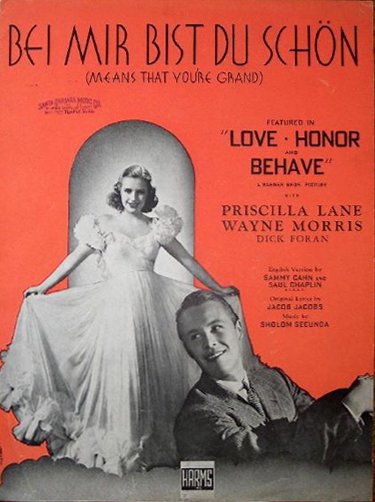
Karen and I recently had the opportunity to view on Turner Classic Movies a curious, low budget old movie, “Love, Honor and Behave” (1938), lacking entirely a memorable big name cast, but specifically focused on the subject of Yalie-ness, on the distinctive old-fashioned Yale ethos.
The plot.
The marriage of old-time Yale man Dan Painter (Thomas Mitchell) to the stately and quite attractive Sally Painter (Barbara O’Neil, best known for playing the role of Scarlett O’Hara’s mother in “Gone With the Wind”, one year later, at age 28!) breaks up over a brief indiscretion. Sally remarries Doctor MacConaghey, taking away Dan’s son, Ted Painter (Wayne Morris).
Sally insists on raising Ted, contrary to his father’s wishes, as the paradigmatic good loser. Losing gracefully and graciously is her idea of being a gentleman. She refuses to send Ted to Andover (Dan’s old preparatory school), enrolling him in a different (possibly fictional) preparatory school in New Haven which I’d never heard of, because she believes Andover would make him too manly, too ruthlessly aggressive, and competitive. She won’t even allow Ted to play football like his father, bringing him up instead to be a tennis player.
Ted, at least, is permitted by mom to go to Yale. During his son’s senior year, Dan Painter is horrified as he watches Ted, playing for Yale, deliberately throw a tennis match against a Harvard rival because he believes the referee had previously made an erroneous call in his favor. Dan believes you ought to play by the rules, but you have to play to win. Intentionally losing is decidedly not proper manly behavior, not the Yale way.
The unhappy consequences of Ted’s upbringing by his mother continue even after graduation. Ted does rebel against mom, refusing to go to Medical School (in order to follow in his stepfather’s footsteps), but instead getting into the soap business in New Rochelle with a classmate. Ted also marries his childhood sweetheart Barbara Blake (Priscilla Lane) contrary to mom’s intentions and designs. But mother’s character formation lessons in uncompetitive self-effacement and non-aggression take their inevitable toll. The soap business goes under, and Ted cannot make Barbara happy.
When Ted’s business fails, Dan refuses to give Ted a job in his own business on grounds of principle (Dan is not only a Yalie, he talks exactly like an Ayn Rand character), and Ted is reduced to settling for menial work as a construction laborer for $3 a day.
Having had his problems trying to make a living during the Depression, Ted has been too busy working to entertain Barbara satisfactorily. Since he’s not available to take her out, and too passive to lay down the law, Barbara begins stepping out on Ted with a former rival. Finally, the worm turns, the deep-blue hereditary Yale blood (even without Andover’s influence) boils over, and Ted initiates a knock-down, drag-out fight with Barbara, ending in his giving her a good spanking. He also rises to the occasion and knocks down his rival with a good punch in the nose, and then throws him physically out of the house.
Dan Painter (conveniently on-hand to see the whole thing) is absolutely delighted. He now knows that his son has learned his lesson: that a man has to fight for things in this world, for success in business, even for his woman, just as he needs to be determined to achieve victory in athletic contests. Ted is now a properly competitive Yale man, just like his father.
LHB is certainly not a great film, not even a good film, but it is extremely interesting as a period piece and a case of watermark evidence of national-level recognition of a specific culture and personality associated with Yale way back then.
I was at Yale 30 years later, much had changed in America and at Yale, but I would say that even 30 years later, the “no excuses, just succeed” ethos had definitely survived in a number of undergraduate organizations right up into my day.
By now, Dan Painter’s hearty and unabashed, manly competitiveness must be thickly encrusted with layers of political correctness grown all over it like barnacles but I wonder if the same thing in essence, today unglorified, unacknowledged and unavowed, does not yet still survive at dear old Yale.
The dining hall of Berkeley College, one of the twelve residential colleges at Yale.
This is where I used to eat lunch.
Michael Rubin (Davenport ’94) warns us that Yale is going to hell in a handbasket, the colleges are losing their distinctive individual identities, the left is running the place into the ground, and la patrie est en danger!
For decades, residential colleges have both been Yale University’s chief selling point and the feature by which the university differentiates itself from its Ivy League companions and other top tier universities. All freshmen are subdivided randomly into one of 12 colleges, remaining affiliated with it for four years and living there for three or four years. The net effect is that the colleges provide a sense of community—the chief benefit of a small college experience—with the classroom and campus resources of a much larger university. In a society in which identity groups often self-segregate themselves, the residential colleges also enable Yalies to meet a diverse array of people.
While in theory each residential college is equal, over time, they develop different characteristics. Each college is led by a master. Some masters are disinterested: When I was an undergraduate, I was in Davenport College. In my freshman year, the master was a professor of 19th-century Germany and ran the college like a Prussian general. In my subsequent three years, the master was a retired admiral, who, it turned out, was retired not only from the Navy but also from anything which required effort. In contrast, when I was a graduate student, I was for a year a resident graduate affiliate in Pierson College. Harvey Goldblatt, a professor of medieval Slavic literature, was master and quickly catapulted Pierson into the envy of all other colleges: He knew each student not only by name, but also made an effort to interact with everyone. He cheered on the residential college’s intramural sports teams, and even undertook his own alumni endowment to allow, for example, a spring break trip to Italy for most seniors. Behind the scenes, he was involved in administrative issues and stayed on top of everything from employee morale in the dining hall to the length of time scaffolding remained up after work was completed.
Alas, Yale has changed. In the twelve years since I have left New Haven, faculty members tell me that the number of administrators has almost doubled. While Yale University once encouraged autonomy among students to set up organizations, fix problems, and take responsibility for their own decisions, today, an ever-increasing number of deans get involved to regulate all aspects of life and administration. Whereas Yale students could once choose to excel in extracurricular activities or academics, today there is little differentiation: grade inflation and administration intervention has evened the playing field so that a lazy and irresponsible student will, from his or her record, appear equal to one who in the past might have been able to differentiate themselves academically.
The quest for equality and the bolstering of safety nets has not only blurred distinctions amongst students, but also faculty. At some point, administrators—for whom bureaucracy rather than education is a career—decided that it was unfair to have inequality among colleges. After all, if a college master managed to energize both students and alumni, students in other colleges might resent that another master was not up to the job.
Enter President Richard Levin: Replicating what too often happens in liberal society, rather than celebrating success or encouraging competition to keep up, Levin instead sought to encourage mediocrity by “equalizing†the college experience.
He’s basically not wrong, of course. But the rot set in long, long ago. Kingman Brewster, brilliant, talented, and impeccably bred from the bluest blood of Plymouth Colony descent, personified Yale’s style, ethos, and tradition perfectly, better, one thought inevitably, than any other living, breathing person could, but the King was already leading Yale full tilt down the primrose path of fashion, Modernism, and leftism.
One’s other quibble is that no one really goes to Yale for the residential colleges.
Most people admitted don’t even know about the residential college system, a New World, early 20th century attempt to emulate the British Oxbridge style of elite education, until they have read thoroughly their admissions material.
I think it isn’t really possible for Yale colleges to feature the colorful individuality and eclat, which in earlier days reflected the personalities of great men like Basil Duke Henning (a direct descendant of a famous Confederate Kentucky cavalry officer) or Beekman Cannon (whose marriage and private life inspired Edward Albee’s Who’s Afraid of Virginia Woolf). America just does not supply a suitable contigent of illustrious, flamboyant, and idiosyncratic WASP gentlemen scholars anymore. Besides, today’s Yale values “diversity” over cultural continuity and arete.
White buckskin shoes became a symbol of insouciant membership in the croquet-playing, country club elite when worn uncared for, unchalked, and as mere utilitarian foot gear with manifest indifference to their special twixt-Memorial and Labor Days proper place. The more neglected and decayed the better. The most “shoe” of all would be the ones repaired with tape.
We still refer to “white shoe law firms,” but young people at Yale today, alas! no longer remember the adjective which, back in my day, used to represent the supreme compliment.
Saying that someone was “shoe” described him as approximating the ideal of Yalieness itself. Being shoe meant that one possessed sophistication, the capacity for effortless achievement, and the specifically Prep School elite version of cool in its highest expression and form. The concept of shoe was essentially the same quality that Castiglione referred to in his treatise on The Courtier as sprezzatura.
The wearing of beat-up, ill-maintained (formerly white) bucks during school year, outside the proper Memorial-to-Labor-Day season, represented the perfect badge of membership in the elite because while mere ownership of white bucks in itself would serve as evidence of affluence and access to the sunlit fields of Gatsby-ish country club life, the ability to treat white bucks as fungible, the ownership of an older pair which could be demoted and conscripted into routine knock-around daily use demonstrated long-term upper caste membership, enough to wear out one’s white bucks.
Ivy Style has resurrected from the crypt of American culture a must-read 1953 Esquire magazine article discussing shoe in the concept’s heyday.
At Yale there is a system for pigeonholing the members of the college community which is based on the word “shoe.” Shoe bears some relation to the word chic, and when you say that a fellow is “terribly shoe” you mean that he is a crumb in the upper social crust of the college, though a more kindly metaphor might occur to you. You talk of a “shoe” fraternity or a “shoe” crowd, for example, but you can also describe a man’s manner of dress as “shoe.” The term derives, as you probably know, from the dirty white bucks which are the standard collegiate footwear (you can buy new ones already dirty in downtown New York to save you the embarrassment of looking as though you hadn’t had them all your life), but the system of pigeonholing by footwear does not stop there. It encompasses the entire community under the terms White Shoe, Brown Shoe, and Black Shoe.
Before and after images of one of the former Berkeley College plates, bearing the residential college’s coat of arms. They used to put the “Y” on the waffles.
The era of gracious living at Yale began to perish, before my time, sometime I believe late in the 1950s or early in the 1960s, when Yale’s residential colleges removed the white linen tablecloths and ceased using waitresses in the dining halls, and switched over to cafeteria style dining.
The late 1960s delivered another blow, when the silver sugar bowls and water pitchers disappeared. Too many were being appropriated as souvenirs by representatives of the new, more democratic Yale admitted by Dean of Admissions R. Inslee Clark.
In 2009, even the humble modern style of Yale dining experienced a seismic shock, when the Yale administration, responding with Pavlovian obedience to the preposterous demands of environmentally-minded whackjobs, suddenly removed all the plastic trays used for conveying your food and drinks from the cafeteria serving line to your table in the University Commons dining hall, used by Yale’s freshman class. No trays to run through Yale’s dishwasher would save some infinitesimal percentage of the water making up more than 70% of the planet’s surface from temporary contact with detergent.
Gaia would have been so pleased, but those inconsiderate freshmen rebelled at being asked to juggle plates, glass, and silverware, and demanded that the offending trays be brought back into service.
Director of Dining Rafi Taherian announced, after only a week of dissension, that it did not make sense to continue an initiative that seemed contrary to the wishes of the Yale community.
Food waste measurements performed by STEP determined that people who dine trayless waste half as much food as tray users. That adds up pretty quickly. Trayless dining also looks classier. And the dining halls save a lot of water when they don’t need to wash as many trays. These are all awesome thing.
And as this new academic year opens, Yale students found that one more traditional distinctive feature of life in Yale’s residential colleges was gone. The twelve Yale residential colleges’ individual dining services had been removed, replaced by a new, generic service, specifically designed to promote the “voluntary” trayless dining movement.
Yale Dining has replaced the custom china sets in the residential colleges with a uniform set that will be used all across campus. The new china set features white plates with an outline and a “Y†on the bottom.
The new set also has considerably fewer pieces than the old set – it includes only a big plate, a saucer, a mug and a bowl.
The new plates are bigger, and allow students to take more food without having to take a tray.
Isn’t it typical of the left? If open coercion is ever effectively resisted and fails, you then get constant nagging, nibbling away and step-by-step subversion until choice is finally eliminated and the petty dictators get their way.
The old Yale plates were smaller than conventional dinner plates, being designed for ease of handling in cafeteria style dining. They were made by Syracuse China. Though they weren’t luxurious fine china, the old services were sturdy and durable, visually gratifying, and individual to each residential college.
—————————-
I found the photograph of the plate from my own residential college here. The last six pictures feature the outside and the interior of the Berkeley Dining Hall.



 .
.