Donald Trump’s campaign is almost broke, and is paying an unusual amount of money to Trump-owned businesses. That’s according to the presumptive Republican presidential nominee’s FEC filing, details of which were released Monday night.
The report provided a number of rather shocking facts, including that his campaign raised just $3.1 million in May compared to Democratic rival Hillary Clinton’s $27 million.
In comparison, Mitt Romney’s campaign raised $86.5 million in May during the 2012 presidential race. And on Monday night alone, Clinton raised about $1.6 million at a celebrity-studded fundraiser in New York City.
Another eyebrow-raising tidbit: Of the $6.7 million the Trump campaign spent in May, nearly 20% went to Trump-owned businesses or family members.
Furthermore, the filing suggests that Trump himself is drawing a salary from the campaign, which would be highly unusual.
The campaign also spent $208,000 on hats.
The phrase “Crooked as a snake with appendicitis” comes to mind.
One of those Facebook friends I don’t really know yesterday posted a video of some amazing battle scenes from a South Indian epic film called Bahubali (released last year in two parts), made in Telugu and Tamil. (When’s the last time you saw a Tamil-language film?) Bahubali became the highest grossing Indian film of all-time, understandably since the fight scenes are pretty spectacular.
I discovered quickly that the DVD of Part 1 with English subtitles can be ordered from Amazon. (Part 2: The Conclusion does not seem to be out yet.)
Stalked by a wolf while picking mushrooms near Fort Smith in Canada’s North West Territories, Joanne Barnaby was forced to retreat farther and farther from the highway and her vehicle. She finally foiled her pursuer by enlisting the aid of a larger predator.
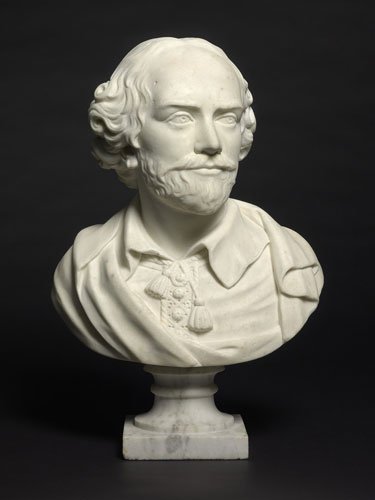
Shakespeare: Male, White, Christian, Married with Children, Get Over it.
Last month, 160 students in Yale’s (once first in the nation) English Department signed a petition demanding that the department “reevaluate the undergraduate curriculum, as well as reconsider the current core requirements and introductory courses… particularly .. the Major English Poets sequence, a longtime prerequisite for the major and “perhaps the most distinctive element of English at Yale.†The petition called for the removal of this prerequisite for the English major and for requirements “to refocus and include literature relating to gender, race and sexuality.” (Yale Daily News, May 26)
It appears that Yale’s current English Department Chairman, Langdon Hammer (a specialist in the likes of James Merrill and Hart Crane; Finalist, Lambda Literary Award for Gay Memoir/Biography, 2016; Larry Kramer Initiative for Gay and Lesbian Studies at Yale, 2003) intends to cave, while denying that that is what he is doing.
Professor Hammer (appropriately named like a character in a satirical novel by Evelyn Waugh) announced recently via the English Department news:
English 125/6 is a course that introduces students to a particular literary tradition, and the course itself has the status of a tradition. The thing about literary traditions is, they are always being upended and remade. That is the history of English poetry from Chaucer to Eliot (or to Hughes or Stein or Bishop or Walcott or Glück, who were all taught this spring in one or another section of this multi-section course). So it seems fitting for students and faculty to raise questions about the course and its role in the major.
The questions on my mind about English 125/6 are: How can this course be made better? What is its relationship to the rest of the English Department curriculum? What should and shouldn’t the faculty require of its majors? What does a strong education in the discipline of English look like today? And what should it look like tomorrow?
The English Department faculty is charged with asking those questions about all of our courses. We ask them in formal and informal ways every year, and we will again next year. We’ll be in conversation with our students, who have a range of views. And we’ll make decisions about what we teach and what we ask of students that seem appropriate to us.
The invertebrates in charge at Yale these days are always “having conversations” with the barbarians of the Left over insane and insolent demands delivered by the latter. These conversatione invariably amount to duplicitous attempts to save face and avoid the wrath of reactionary alumni by surrendering as little as possible to appease all the little Calibans they have intentionally admitted via extraordinary efforts and indulgences to the magic island. But there is always a surrender.
The sound you hear, in the distance, is all the great English professors of the past spinning in their graves as Langston Hughes replaces Milton and Dereck Walcott replaces Chaucer in Yale’s version of the canon.
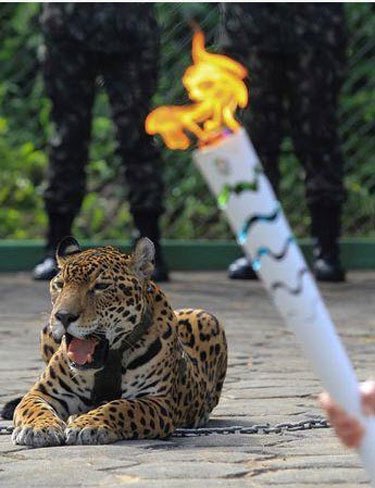
A jaguar is the mascot of Brazil’s Olympic Team in the upcoming Rio de Janiero Games, but a live jaguar which was included in the recent Olympic Torch Ceremony in Manaus came to a bad end.
A jaguar featured at an Olympic torch ceremony was shot dead by a soldier shortly after the event in the Brazilian Amazon city of Manaus as the animal escaped from its handlers, an army statement said.
The jaguar was killed on Monday at a zoo attached to a military training center when a soldier fired a single pistol shot after the animal, despite being tranquilized, approached the soldier, the army said.
“We made a mistake in permitting the Olympic torch, a symbol of peace and unity, to be exhibited alongside a chained wild animal. This image goes against our beliefs and our values,†the local organizing committee Rio 2016 said in a statement, adding: “We guarantee that there will be no more such incidents at Rio 2016.â€
Mark Cuban was invited to comment on the campaign performance of his former friend The Donald on the ABC program “Shark Tank.”
When Renee asked Cuban about his former friend, Republican presidential candidate Donald Trump, he held nothing back. He said, “You know what? It’s rare that you see someone get stupider before your eyes, but he’s really working at it…You have to give him credit. It’s a difficult thing to do, but he’s accomplished it.â€
We learned yesterday that parks are for white people. Today, Katherine DM Clover explains that travel is a privilege and that talking about travel is classist.
When the topic of travel comes up amongst friends or acquaintances, I either try to change the subject, or I try to convince everyone (myself included) that I don’t travel more because I’m just a homebody, OK?
I’m just more focused on trying to make this place the sanctuary of my dreams, rather than going other places.
Friends, if I have ever tried to sell you on that idea, hear me now: That is a lie.
I don’t travel much because I’m poor.
I’m more only “more focused on my home†in the sense that, well, my money has to be focused toward paying my rent so I don’t get evicted. My money also ends up getting focused toward buying groceries because I like eating food, and also, as a mammal, need it to survive.
Being able to travel great distances, just for the sheer joy of it, is actually an enormous privilege, one that has been out of most people’s reach, historically.
Air travel has made it somewhat more accessible, but the modern travel obsession still requires advanced technology, leisure time, and — critically — the expendable income to pay for it.
And while technology has certainly made it easier to get from place to place, in some ways things, haven’t changed much.
While the middle and upper classes may celebrate the many advantages of a life filled with travel (“It’s educational! It makes you a more well rounded person!â€), on the other end of the spectrum, there are still plenty of low-income people who rarely have the chance to leave their neighborhood, let alone their city.
And what does that look like for the global poor? I don’t have the stats on this, but I have a hard time imagining people who live on $2 a day taking vacations.
Aside from money, being able to travel safely and easily is still often dependent on privilege. For people with disabilities, any form of travel can pose myriad potential problems. For folks who aren’t white or are visibly LGBTQIA, travel can mean opening oneself up to harassment and even the very real risk of violence.
I’m not saying travel can’t be lovely and educational; it certainly can be. I’m also not claiming there aren’t less expensive ways to get from place to place; there undoubtedly are.
What I am saying, though, is that travel is complicated and it is often dependent on a certain amount of privilege.
I don’t get out much — and it’s not because I’m boring or don’t have a sense of adventure or don’t care about learning about the larger world: It’s because I’m broke.
And when you hold travel up on some kind of pedestal, you sound classist as hell, and I wish you would stop that.
In the final analysis, isn’t being currently alive and not a member of “the great majority” the biggest “privilege” of all? And, yet, we can rely upon perfect equality being achieved eventually for all of us.