Raindrops on roses
And whiskers on kittens
Bright copper kettles and warm woolen mittens
Brown paper packages tied up with strings
These are a few of my favorite things
Cream-colored ponies and crisp apple strudels
Doorbells and sleigh bells
And schnitzel with noodles
Wild geese that fly with the moon on their wings
These are a few of my favorite things
Girls in white dresses with blue satin sashes
Snowflakes that stay on my nose and eyelashes
Silver-white winters that melt into springs
These are a few of my favorite things
“You dirty racist!”
Do you like warm fires, candles, generalized coziness, intimate gatherings with family and friends, even pumpkin lattes and warm socks? Beware! you are guilty of fondness for Hygge, a Danish kind of reactionary thinking that Slate deplores.
Christina Cauterucci last Fall, in response to last years publication of several books on Hygge, mocked the hankering for candles, doubted that Hygge was even achievable for American residents of “drafty apartment[s] with no fireplace, no grandma, nothing but sweatsocks, and an understuffed sofa,” and described Hygge as essentially a yearning for a return to the uterus. She didn’t come right out and say so but, back in the uterus, there are no bearded Muslim refugees looking to cut your throat, shoot you full of holes, or blow you up.
More recently, Alex Robert Ross identified the sinister connection between a liking for candles and warm socks and Racism and Populist Xenophobia.
This all makes sense. A collective craving for childlike comforts in response to social trauma is a psychoanalytic classic. It was Carl Jung who wrote in The Practice of Psychotherapy, “The patient’s regressive tendency[…] is not just relapse into infantilism, but an attempt to get at something necessary[…] the universal feeling of childhood innocence, the sense of security, or protection, or reciprocated love, of trust.†He was a half-sentence away from extolling the virtues of homemade yogurt, eye contact with close family, and a deep, abiding hygge.
Hygge’s turning inward against the world outside comes with a more sinister edge, however. As Charlotte Higgins pointed out in her deep dive for the Guardian last month, hygge’s ties to the far-right in Denmark are remarkably strong. Pia Kjærsgaard, the leader of the right-wing, anti-immigrant Danish People’s Party, has publicly extolled the virtues of the lifestyle, insisting that her office remain cozy and hyggelig at all times. Denmark’s welfare state and reputation for tolerance may be admired by progressives in the U.K. and U.S., but, as Higgins points out, the country’s love of hyggefied thatched cottages with closed doors suggests a conservative undercurrent. “Anything that threatens that safe community, including alien values and ideologies, cannot be tolerated,†she writes.
The journalist and author Michael Booth had the same sensation when he moved from England to Denmark. “Hygge can seem like self-administered social gagging, characterized more by a self-satisfied sense of its own exclusivity than notions of shared conviviality,†he wrote in The Almost Nearly Perfect People: The Truth About the Nordic Miracle. Bloom says that it falls in line with a “postcolonial drawbridge theory—the ‘What was lost without [will be found within]’ way of valuing what little cultural and economic capital Denmark had left after the loss of its empire.â€
Indeed, Denmark has been struggling with its colonial legacy lately; a rise in the number of refugees over the past two years has uncovered the limits of Denmark’s famously progressive outlook. The government can now seize any item worth more than $1,450 from a refugee in order to pay for their sustenance and upkeep in the country. And after slashing refugee benefits last year, the government advertised the news in Lebanese newspapers, just to be sure that the country didn’t seem quite so attractive to newcomers. The far right Danskernes Parti, or “Danes’ Party,†handed out ‘Asylum Spray’ in the port town of Haderslev in September. Pepper spray being illegal, they filled the cans with hairspray instead, but the message remained hideously clear. “We wanted to figure out a way for Danish people, in particular women, to protect themselves,†party leader Daniel Carlsen said. “In the short run we want to provide solutions to make life better and safer for the Danish people.â€
If his words sounded a little hyggelig, it’s no coincidence. Poured into hygge’s candlelit sweetness, like a cloying cream filling, are inevitable and explicit cases of xenophobia and racism. In their recent study of online communities in Denmark, Ahmad Beltagui and Thomas Schmidt explored the hygge of the closed chat room. In one instance, this sense of community was fostered with “what one [user] referred to as a ‘‘little Hyggelig racist joke’.†This online interaction had an unsavory conclusion: “The rapid escalation saw the opponent being addressed in upper case text and accused of both not speaking Danish and being homosexual.†Though such bullying, the researchers write, would not ordinarily be particularly hyggelig, the abuse came “from a user with the word Hygge in their username.†With racist, homophobic abuse online being a cornerstone of right-wing populism today, this little hyggelig anecdote should raise doubts about just how apolitical hygge can claim to be.
John Scalzi’s first Mil SciFi novel Old Man’s War featured a plot with a natural appeal to aging boomers, and with a helpful plug from Instapundit quickly broke through to become a best-seller in the genre.
Conservative readers with a liking for Scalzi were soon to be dismayed when the formerly seemingly sympatico author came out as an Obama supporter and Gun Control advocate. John Scalzi has since distinguished himself within the Science Fiction Fandom Community as one of the loudest voices on the Social Justice Warrior side.
Naturally, many of us just stopped buying Scalzi’s books, but some remain really bitter. Chateau Heartiste (an Alt-Right blog) yesterday took aim at Scalzi as a representative of the beta male phenomenon, publishing photos and Scalzi’s 2016 Xmas card which portray him as a nerd, shorter, frailer, and more sensitive-looking than his wife. CH has a lot of fun mocking Scalzi, and promises more:
Reading Scalzi is like bathing in a vat of menstrual blood and having pure estrogen injected straight into the scrotum. One must exit Scalzi’s world through a decontamination chamber of red meat and range shooting. His sickness can’t be allowed to spread to vulnerable men. His dildology worldview is a disfigured anti-reality that will yield like buttery goodness to the shiv every time, because nothing substantial underlies it. And the Chateau will flay him, over and over, until his ugliness of mind and spirit perishes from the earth.
Yalies got Harvard fans to hold up these signs in 2004.
Harvard-man Teddy Wayne does not feel like dropping the H-bomb.
[A]fter several incidents that have besmirched the university’s reputation, and in an era of heightened self-consciousness over privilege, that formerly contrived embarrassment may be ceding to sincere shame and a reassessment of the merits of a Harvard education.
The university has been in the news quite a bit lately. Its gargantuan $35.7 billion endowment, the largest in the country by far, was cited in articles about dining-hall workers who went on a successful three-week strike for a salary increase to $35,000 per year. The school canceled the men’s soccer team’s season after the discovery of a 2012 “scouting report†in which team members rated the sexual appeal of individuals on the women’s team; the men’s cross-country team was just placed on athletic probation for doing the same thing in 2014.
Also, Harvard had the sixth-most-reported rape cases on campus in 2014, and its law school figured prominently in the controversial documentary about campus sexual assault, “The Hunting Ground.†Students in all-male final clubs, Harvard’s longstanding and exclusive version of fraternities, will now be penalized for their membership (as will members of female final clubs).
The brand has also had an unexpected collision with that of the incoming presidential administration. Stephen K. Bannon, Donald J. Trump’s chief strategist and the former executive chair of Breitbart News, is a 1985 graduate of Harvard Business School. More than 600 female students and alumnae signed a letter to The New York Times denouncing his selection by Mr. Trump, accusing him of engineering “a movement that preaches white nationalism, racism, misogyny and hatred.†Mr. Bannon dropped out of a postelection event at the John F. Kennedy School of Government at Harvard, perhaps because of a planned large protest.
Daniel Golden’s 2006 book, “The Price of Admission,†about how the rich buy their way into elite schools, has become newly relevant for its disclosure that Mr. Trump’s son-in-law, Jared Kushner, received acceptance to Harvard despite an unremarkable academic record, possibly thanks to his father’s donation of $2.5 million. (A spokeswoman for Mr. Kushner denied the allegation, noting that Mr. Kushner graduated with honors; Mr. Golden observed that, in a climate of rampant grade inflation, so did about 90 percent of Mr. Kushner’s graduating class of 2003.)
Beyond the unsavory headlines and questionable associations, swelling populist resentment for bastions of exclusivity and obscene wealth — from many of Mr. Trump’s supporters and critics alike — may inspire alumni of Harvard, and similarly elite schools, to be even less conspicuous about where they received their degrees.
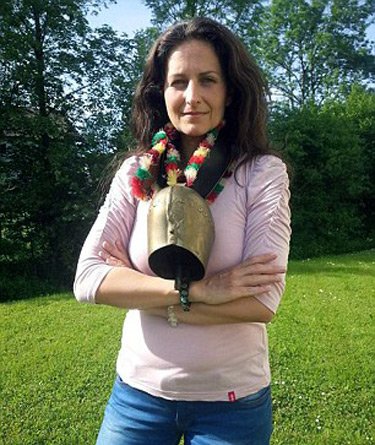
A left-wing Dutch vegan who campaigned against cowbells in the Swiss village where she lives has had a request for a Swiss passport thrown out after annoying the locals.
Nancy Holten, who was born in the Netherlands but moved to Switzerland at the age of eight, is a fluent speaker of Swiss German and has children who are Swiss nationals.
And she wanted a Swiss passport herself, but was refused after locals who were consulted about her request said they were ‘fed up’ of her challenging Swiss traditions by campaigning against the use of cow bells.
The campaign against cow bells by the 42-year-old vegan and animal-rights activist has made her unpopular in the Alpine confederation.
And now the majority of residents from Gipf-Oberfrick in the canton of Aargau have successfully blocked her second attempt to get a Swiss passport.
The resident’s committee argued that if she does not accept Swiss traditions and the Swiss way of life, she should not be able to become an official national.
She said of her situation: ‘The sound that cow bells make is a hundred decibel. It is comparable with a pneumatic drill. We also would not want such a thing hanging close to our ears?’
She also railed against the weight of the famous cow bells.
Nancy complained: ‘The bells, which the cows have to wear when they walk to and from the pasture, are especially heavy.
‘The animals carry around five kilograms around their neck. It causes friction and burns to their skin.’
The Dutchwoman, who describes herself as a freelance journalist, model and drama student, has also campaigned against a number of other Swiss traditions like hunting, pig races and the noisy church bells in town.
It’s a tradition for cows to wear bells in her Switzerland town. The bell is standard for alpine cattle when left to graze in alpine meadows.
In 2015 the villagers successfully stopped her application for naturalisation in a referendum.
While the town authorities wanted to give her the Swiss nationality, 144 out of 206 citizens voted against the plan.
This time her application was denied again, with locals especially angry about the increasing media coverage Holten seeks for railing against Swiss traditions.
Holten said she does not have anything against Swiss traditions but in the end only cares about animal welfare.
Local politician Tanja Suter agreed with the majority of the town’s citizens and said Holten had a ‘big mouth’, saying she did not deserve to get a Swiss passport ‘if she irritates us and does not respect our traditions’. …
The case has now been transferred to the Cantonal government in Aargau, which can overrule the decision and can still grant her a Swiss passport despite the objections of the locals.
Local residents in Switzerland often have a say in citizenship applications, which are decided by the cantons and towns where the applicants live rather than federal government.
About 20 per cent of the Swiss population is estimated to be foreign.
The Guardian can’t resist throwing in a snide attack on “Trump’s America” in the opening of a report on the discovery of a significant new piece of data from the life of Shakespeare, one confirming the poet’s worldly success and resulting rise to gentility.
Dr [Heather] Wolfe is a willowy, bright-eyed manuscript scholar, a paleographer specialising in Elizabethan England who in certain moods of candour might put you in mind of Portia or perhaps Cordelia. She’s also a Shakespeare detective who, last year, made the career-defining discovery that is going to transform our understanding of Shakespeare’s biography. In the simplest terms, Wolfe delivered the coup de grace to the wild-eyed army of conspiracy theorists, including Vanessa Redgrave and Derek Jacobi, who contest the authenticity, even the existence, of the playwright known to contemporaries as Master Will Shakespeare. …
Wolfe’s role as a curator at the Folger is to bring her expertise to bear on the tantalising mass of documents that survives from the late 16th century. And yet, despite a heap of legal, commercial and matrimonial evidence, Shakespeare the man continues to slip through scholars’ fingers. Four centuries after his death, apart from a handful of crabbed signatures, there is not one manuscript, letter or diary we can definitively attribute to the poet, sponsoring the pervasive air of mystery that surrounds his genius. Indeed, the most intimate surviving Shakespeare document remains that notorious will, in which he bequeathed his wife his “second best bedâ€.
Before Wolfe arrived on the scene, all that scholars could be certain about was that a man named Shaxpere, Shaxberd or Shakespear was born in Stratford in 1564, and that he was an actor whose name is printed in the collected edition of his work published in 1623. We also know that he married Anne Hathaway, and died in 1616, according to legend, on his birthday, St George’s Day. The so-called “Stratfordian†case for Shakespeare rested on these, and a few other facts, but basically, that was it. …
Wolfe’s appetite for manuscript corroboration has led her into many dusty corners of the Elizabethan archives. It was this research instinct that first led her to reopen the file on the coat of arms granted to Shakespeare’s father, the small-town glover, in 1596.
John Shakespeare, from Stratford-upon-Avon, was ambitious to rise in the world. He was certainly not the first Englishman keen to put his origins as a provincial tradesman behind him. Among his contemporaries in Stratford, he was a figure of fun for his social climbing. English class snobbery has a long pedigree. His son, who would continue the quest for official recognition after his father’s death, also attracted metropolitan disdain as “an upstart crow beautified with our feathersâ€. In 1601, after his father’s death, Shakespeare the upstart returned to the college of arms to renew the family application for a coat of arms. He had made a small fortune in the theatre, and was buying property in and around Stratford. Now he set out to consolidate his reputation as a “Gentlemanâ€. Under the rules that governed life at the court of Elizabeth I, only the Queen’s heralds could grant this wish.
A much-reproduced sketch for a coat of arms crystallised Shakespeare’s hopes for legitimacy in the antique jargon of heraldry: “On [Sic: should be “Or a Bend Sable”] a Bend Sables, a Speare of the first steeled argent. And for his Crest, a falcon, his winges displayed Argent, supporting a Speare Gould …†The needy applicant also attached a motto: Non Sanz Droit (“Not Without Rightâ€). All this, and much more, is buried in the archives of the college of arms in London. …
An adjunct to the court, the College of Heralds was not exempt from its own secret feuds. In 1602, the internecine rivalry between Sir William Dethick, the Garter King of Arms, and another herald, Ralph Brooke, burst into the open when Brooke released a list of 23 “mean persons†whose applications for crests (he claimed) had been wrongfully preferred by Dethick. When “Shakespeare the Player†found himself on this list, his campaign for social advancement seemed in jeopardy. A bitter row broke out at court between two factions. Shakespeare himself became an object of ridicule. Another rival, Ben Jonson, in his satire Every Man out of his Humour, poked fun at him as a rustic buffoon who pays £30 for a ridiculous coat of arms with the humiliating motto “Not Without Mustardâ€.
It’s at this point in the story that Wolfe discovered “the smoking gunâ€. In the Brooke-Dethick feud, it becomes clear that “Shakespeare, Gent. from Stratford†and “Shakespeare the Player†are the same man. In other words, “the man from Stratford†is indeed the playwright. Crucially, in the long-running “authorship†debate, this has been a fiercely contested point. But Wolfe’s research nails any lingering ambiguity in which the Shakespeare deniers can take refuge.
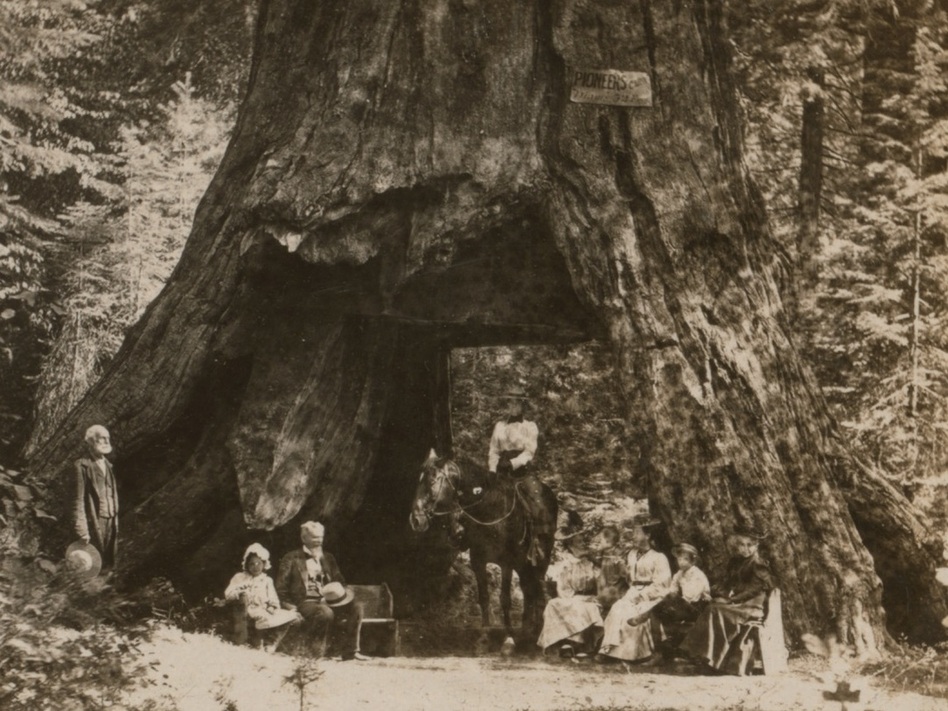
A powerful winter storm in California has brought down an ancient tree, carved into a living tunnel more than a century ago.
The “Pioneer Cabin Tree,” a sequoia in Calaveras Big Trees State Park, saw horses and cars pass through it over the years. More recently, only hikers were allowed to walk through the massive tree.
Over the weekend, a powerful winter storm slammed into California and Nevada, prompting flooding and mudslides in some regions. The Associated Press reports it might be the biggest storm to hit the region in more than a decade.
On Sunday, a volunteer at the state park reported that Pioneer Cabin had not survived.
“The storm was just too much for it,” the Calaveras Big Tree Association wrote on Facebook.
It’s unclear exactly how old the tree was, but The Los Angeles Times reports that the trees in the state park are estimated to be more than 1,000 years old. Sequoias can live for more than 3,000 years.
The iconic tree was one of just a few tunneled-through sequoias in California. The most famous was the Wawona Tree, in Yosemite National Park; it fell during a winter storm in 1969 at an estimated age of 2,100 years. The other remaining sequoia tunnels are dead or consist of logs on their side, the Forest Service says.
However, there are still three coastal redwoods (taller and more slender than sequoias) with tunnels cut through them. They’re all operated by private companies, the Forest Service says, and still allow cars to drive through.