Archive for March, 2018
12 Mar 2018

One of Noel Maurer’s commenters asks what would Mexico be like if the US had taken a larger slice of Northern Mexico after winning the Mexican War, Maurer has some intelligent analysis, arguing that those Northern portions of Mexico were precisely the regions that provided the leadership of Mexico’s Revolutionary, anti-clerical nasty totalitarianism, so with those territories gone, the residue of Mexico would have wound up a very different state. link
11 Mar 2018


Henry Racette is not one of those swaddled, buckled-up-for-safety types, begging for the Government to take away his guns and drive his car for him.
There’s talk – silly, absurd talk – of banning the private ownership of cars. Molon labe, baby! You can have my Yukon, my three-ton id, when you pry it from my cold dead hands. And you can forget the self-driving nonsense, too: up here where I live, you can’t see the lines on the road four months out of the year on account of the blowing snow. Good luck dealing with that, Google.
Ayn Rand, in one of her two major works of fiction (I’m going to go with Atlas Shrugged, but someone correct me if I’m wrong – it’s been almost 40 years since I read it) has her heroine wax rhapsodic (as if there’s any other way to wax) about the act of smoking. Dagney (or possibly Dominique) marvels at the flame held in obeisance inches from her, the spark of destruction so casually lashed into service for the pleasure of mankind. Never having been a smoker, and coming of age as I did during the first great anti-smoking crusades of the ’70s, I admit that the imagery was less compelling for me than it might have been for someone of my parents’ generation. But Dagney’s ruminations have remained with me, an oddly vivid example of our peculiar attraction to dangerous things – and to mastering them.
I like guns. I didn’t always: when I was a child, I was indifferent to them. Then I became a man, a lover of liberty, and an enthusiastic critic of the insipid and emasculating idea that safety comes first. Lots of things are ultimately more important than safety. Being able to credibly say “thus far, and no farther†is one of them; merely reaffirming that we have the right, the moral right and the legal right, to say that is another.
Safety is important, don’t get me wrong. But of all the parameters that define the human experience, safety isn’t the one we should seek to maximize. John Lennon’s “Imagine,†the most comprehensively evil song ever written, is an ode to safety above all else, the pathetic celebration of the apathy-induced coma. I’m glad Lennon never became a US citizen.
Living as an adult male – as opposed to an androgynous, pajama-clad, cocoa-sipping man-child – means spending years, decades even, standing precariously close to the edge of doing something stupid. (The life of a young man is a race between the rising arc of sensibility and the statistical certainty that, if we’re only given enough time, we’ll have our “hold my beer†moment and, if we’re lucky, the ER visit that goes with it.) That sometimes leads to tragedy, but most often to maturity, and there’s no path from baby to man that doesn’t, at least occasionally, tread close to a dangerous edge.
The best things in life are dangerous: freedom, love, faith, women, sex. Children – those raw nerves we thrust out into the world. Cars. Guns. Saying what you think.
RTWT
11 Mar 2018

From Alexis de Tocqueville, Democracy in America, Chapter XIII:
When all the privileges of birth and fortune are abolished, when all professions are accessible to all, and a man’s own energies may place him at the top of any one of them, an easy and unbounded career seems open to his ambition and he will readily persuade himself that he is born to no common destinies. But this is an erroneous notion, which is corrected by daily experience. The same equality that allows every citizen to conceive these lofty hopes renders all the citizens less able to realize them; it circumscribes their powers on every side, while it gives freer scope to their desires. Not only are they themselves powerless, but they are met at every step by immense obstacles, which they did not at first perceive. They have swept away the privileges of some of their fellow creatures which stood in their way, but they have opened the door to universal competition; the barrier has changed its shape rather than its position. When men are nearly alike and all follow the same track, it is very difficult for any one individual to walk quickly and cleave a way through the dense throng that surrounds and presses on him. This constant strife between the inclination springing from the equality of condition and the means it supplies to satisfy them harasses and wearies the mind.
It is possible to conceive of men arrived at a degree of freedom that should completely content them; they would then enjoy their independence without anxiety and without impatience. But men will never establish any equality with which they can be contented. Whatever efforts a people may make, they will never succeed in reducing all the conditions of society to a perfect level; and even if they unhappily attained that absolute and complete equality of position, the inequality of minds would still remain, which, coming directly from the hand of God, will forever escape the laws of man. However democratic, then, the social state and the political constitution of a people may be, it is certain that every member of the community will always find out several points about him which overlook his own position; and we may foresee that his looks will be doggedly fixed in that direction. When inequality of conditions is the common law of society, the most marked inequalities do not strike the eye; when everything is nearly on the same level, the slightest are marked enough to hurt it. Hence the desire of equality always becomes more insatiable in proportion as equality is more complete.
Among democratic nations, men easily attain a certain equality of condition, but they can never attain as much as they desire. It perpetually retires from before them, yet without hiding itself from their sight, and in retiring draws them on. At every moment they think they are about to grasp it; it escapes at every moment from their hold. They are near enough to see its charms, but too far off to enjoy them; and before they have fully tasted its delights, they die.
To these causes must be attributed that strange melancholy which often haunts the inhabitants of democratic countries in the midst of their abundance, and that disgust at life which sometimes seizes upon them in the midst of calm and easy circumstances. Complaints are made in France that the number of suicides increases; in America suicide is rare, but insanity is said to be more common there than anywhere else. These are all different symptoms of the same disease. The Americans do not put an end to their lives, however disquieted they may be, because their religion forbids it; and among them materialism may be said hardly to exist, notwithstanding the general passion for physical gratification. The will resists, but reason frequently gives way.
HT: The Barrister.
10 Mar 2018

Robert Boyers describes how, long ago, his professor, at the cost of some social discomfort, summoned him to his office and did him a very great favor.
In my freshman year at Queens College, I had a strange awakening—strange in that the attendant, overmastering emotion was a combination of humiliation and pleasure. My English professor had called me to his desk and handed me the A+ paper I had written on Orwell’s Homage to Catalonia and suggested that I make an appointment to see him. This was no ordinary suggestion at the City University of New York, where professors never scheduled regular office hours and only rarely invited students to private conferences.
I was uneasy about the meeting, though I imagined that Professor Stone wished simply to congratulate me further, perhaps even to recommend that I join the staff of the college literary magazine, or to enlist my assistance as a tutor. Delusions of grandeur. Modest grandeur.
Professor Stone’s office had been carved out of a warren of rooms in the fourth-floor attic of the English Department building, where I was greeted with a warm handshake and a “delighted you could come.†Though the encounter took place almost 60 years ago, I remember everything about it—the few books scattered on a small wooden table, the neatly combed silver hair on the professor’s head, his amiable, ironic eyes. Most clearly I remember the surprising moment when another professor named Magalaner was called in and stood next to Professor Stone, both men smiling and looming ominously over me. It was then that I was asked to describe—in a few sentences, or more, don’t hesitate—the paper I’d written on Orwell.
Which of course I did, picking up steam after the first few sentences of diffident preamble, until Professor Stone asked me to stop, that’s quite enough, and then turned to his colleague with the words “see what I mean?†and Magalaner assented. The two men only now pulled over two chairs and sat down, close enough that our knees almost touched, and seemed to look me over, as if taking my measure. Both of them were smiling, so that again I speculated that I was to be offered a prize, a summer job, or who knew what else.
“I’ve a feeling,†Professor Stone said, “that you may be the first person in your family to go to college.â€
“It’s true,†I replied.
“You write very well,†he offered.
“Very well,†said Magalaner, who had apparently also read my paper.
“But you know,†Stone went on, edging his chair just a bit closer to mine, “I didn’t call you here to congratulate you, but to tell you something you need to hear, and of course I trust that you’ll listen carefully—with Professor Magalaner here to back me up—when I tell you, very plainly, that though you are a bright and gifted young fellow, your speech, I mean the sounds you make when you speak, are such that no one will ever take you seriously. I repeat, no one will ever take you seriously, if you don’t at once do something about this. Do you understand me?â€
I’ve told this story over the years, starting on that very first night with my teenage sister, explaining what I understood: namely, that a man I admired, who had reason to admire me, thought that when I opened my mouth I sounded like someone by no means admirable. It was easy to accept that no one close to me would have mentioned this before, given that, presumably, we all shared this grave disability, and failed to think it a disability at all. Professor Stone didn’t sound like anyone in our family, we may have thought, simply because, after all, he was an educated man and was not supposed to sound or think like us.
In any event, my teacher moved at once to extract from me a promise that I would enroll in remedial speech courses for as long as I was in college, and not “so much as consider giving them up, not even if you find them tedious.†The proposal left me feeling oddly consoled, if also somewhat ashamed. Consoled by the thought that there might be a cure for my coarse Brooklynese, as my teacher referred to it, and that the prescription was indisputably necessary. Unsure whether to thank my interlocutors or just stand up and slink ignominiously away, I agreed to enroll immediately in one of those speech courses, ending the meeting with an awkward, “Is that all?â€
A former student, hearing my story a few years ago at our dinner table, after telling her own tale of a recent humiliation, asked, “Who the fuck did that guy think he was?†and added that he was “lucky you didn’t just kick his teeth out.†She was concerned, clearly, that even after so many years, my sense of self might still be at risk, the injury still alive within me. And yet, though I’ve often played out the whole encounter in my head, I had decided within hours of my escape that I had been offered a gift. An insult as well, to be sure, but delivered not with an intention to hurt but to save and uplift. It would have been easy to be offended by the attempt to impress upon someone so young the idea that he would undoubtedly want to become the sort of person whose class origins would henceforth be undetectable. But I had not been programmed to be offended, and was, in my innocent way, ambitious to be taken seriously, and though I rapidly came to loathe the speech exercises to which I was soon subjected, I thought it my duty and my privilege to be subjected to them. Night after night, standing before the mirror in my parents’ bathroom, I shaped the sounds I was taught to shape, and I imagined that one day Professor Stone would beam with satisfaction at the impeccably beautiful grace notes I would produce.
RTWT
I arrived at Yale in 1966 from a working class background in an Appalachian coal town. I had probably already shed my indigenous regional accent, but I was still undoubtedly horribly unpolished and decidedly non-U in all sorts of social-mobility-limiting ways. Yale professors, to my knowledge at least, never stooped to help out in manner of Professor Stone, but at Yale we had lots of judgmental and intolerant peers, from the poshest families, straight out of the nation’s top prep schools.
If you showed up wearing an unsuitable jacket, were badly groomed, or otherwise failed to meet proper Yale standards, it did not take long for you to hear about it. Our upperclass lords and masters in student organizations were not in the least inhibited in colorfully denouncing all freshmen failures and deficiencies. If you wanted to go anywhere, or do anything, you got with the program.
Today, of course, all that has changed. Coats and ties have gone the way of Nineveh and Tyre. Yale has been coed fifty years. Today’s students are typically left-wing snowflakes, thoroughly indoctrinated in intersectionality and the politics of identity. The process of removing Cockney-Flower-Girl mobility-limiting speech habits, poor grooming, and inappropriate forms of dress must still go on, but the process of sanding down rough edges must take place highly diplomatically and with great care. The former devastating quip has, I expect, been replaced with a minutely raised eyebrow. In the case of the most protected castes of students, I suppose, that process may not go on at all.
09 Mar 2018

1910 Republican campaign poster.
Charles G. Mills does a good, and succinct, job of explaining tariffs, historically and politically.
President Trump has proposed significant tariffs on the importation of steel and aluminum. Should we support or oppose these measures? The answer is not simple; it lies in the details of the tariff law, rather than in a single principle about all tariffs. On balance, a significant tariff on steel and aluminum is worthy of support, despite its harmful effects.
RTWT
08 Mar 2018

Brett Stevens wants reparations with repatriation.
For a moment, step back from your preconceptions and view this world from the viewpoint of a minority group who were not the founders of a nation.
This place was not designed for you. None of its symbols, customs, values, imagery, or history fits you. In fact, the majority only makes it worse when they try to include you, because this does not negate the fact that you were brought here as labor, whether in chains or as a low-paid immigrant.
You can try to “assimilate,†as the moron conservatives argue, but that means giving up who you are and admitting that you are a conquered people. In fact, no matter what you do, you will feel like a conquered people, at least until you live in a land founded by your people, designed for your people, commanded by your people.
This applies to every group but the founding Western Europeans. [Emphasis added] If you are not English, German, Scots, Dutch, northern French, or Nordic, you are going to find that the founding group look different from you and their values and customs are alien to you. Their ways exclude the ways you need to live and behave.
As a result, you are always looking for compensation. Not because you feel injured, per se, because you are living better here than in your source nation. You want compensation because you feel left out, and you are always going to feel left out until your people are in control.
And those nice majority people? They seem friendly, but you know that everyone acts in their own best interests and wants to live among people like themselves. When they run off to a Whitopia, you know that even if you batter down the doors and get in, that place is Not For You.
You contemplate going back to your source nation. It might be a little rough, but there are great places to live in Africa, Asia, and the Middle East. Your middle classes now have the knowledge they picked up at trade schools and business schools to make an American/European-style first world nation within the third world.
RTWT
OK, grumpy old un-PC type that I am, the idea of writing a check and then waving bye-bye to Ta-Nehisi Coates has more than a little appeal. But, what do you know? Micks, Wops, Bohunks and Polacks, all the Roman Catholic ethnic groups are also not “founding Western Europeans” and are evidently hopelessly unassimilable, even us Lithuanians (unless we get to sneak in, just like those non-founding square-headed Scandinavians, under the “Nordic” quota, based on conspicuously large percentages of people with blue eyes and blond hair).
If I’m going back to Lithuania, my reparations had better be large enough to acquire and restore a decent manor house.
And, just think, Dutchies like Vanderleun get to stay!
08 Mar 2018
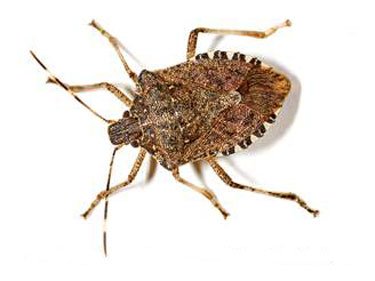
Brown marmorated stinkbug (Halyomorpha halys).
The New Yorker lavishes its prose upon the brown marmorated stinkbug.
The species is not native to this country, but in the years since it arrived it has spread to forty-three of the forty-eight continental United States, and—in patchwork, unpredictable, time-staggered ways—has overrun homes, gardens, and farms in one location after another. Four years before Stone’s encounter, a wildlife biologist in Maryland decided to count all the brown marmorated stinkbugs he killed in his own home; he stopped the experiment after six months and twenty-six thousand two hundred and five stinkbugs. Around the same time, entomologists documented thirty thousand stinkbugs living in a shed in Virginia no bigger than an outhouse, and four thousand in a container the size of a breadbox. In West Virginia, bank employees arrived at work one day to find an exterior wall of the building covered in an estimated million stinkbugs.
What makes the brown marmorated stinkbug unique, though, is not just its tendency to congregate in extremely large numbers but the fact that it boasts a peculiar and unwelcome kind of versatility. Very few household pests destroy crops; fleas and bedbugs are nightmarish, but not if you’re a field of corn. Conversely, very few agricultural pests pose a problem indoors; you’ll seldom hear of people confronting a swarm of boll weevils in their bedroom. But the brown marmorated stinkbug has made a name for itself by simultaneously threatening millions of acres of American farmland and grossing out the occupants of millions of American homes. The saga of how it got here, what it’s doing here, and what we’re doing about it is part dystopic and part tragicomic, part qualified success story and part cautionary tale. If you have never met its main character, I assure you: you will soon.
RTWT
IMHO, ground zero is Fauquier County, Virginia. At our home in Hume, we had them throughout the year with a short timeout resulting from the arrival of the first hard frost. They seemed to wake up again, though, right after Christmas. On a typical day, I would collect about 100 stinkbugs using a Dyson hand vacuum. They are here in Central Pennsylvania, too, just not in the same prodigious numbers.
One tip: Taigan puppies will eat stinkbugs!
08 Mar 2018

DC Whispers:
The REAL Reason Barack Obama Was Touting The Saudi-Funded Global Warming/Climate Change Hysteria
The Saudis (as well as Russia and China) spent billions of dollars in media propaganda, university funding, political donations, United Nations funding etc. during Barack Obama’s eight years in office to further push the global warming agenda. None of that effort had anything to do with global warming/climate change though. It had everything to do with trying to stop this from happening:

08 Mar 2018

Edouard Detaille, 1891, Art Gallery of New South Wales.
The painting depicts the cavalry charge of the 4th Hussars during the Battle of Friedland, 14 June 1807.
07 Mar 2018
Andrew Klavan:
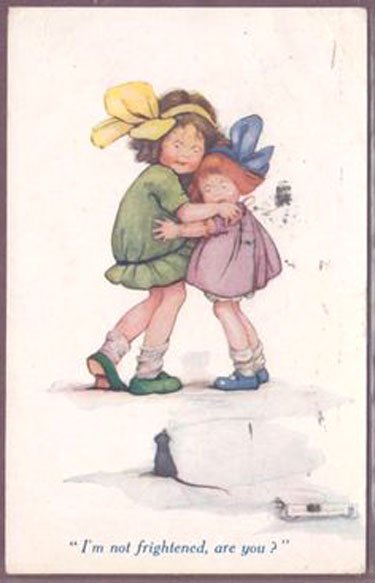
“On the left was The New York Times, a former newspaper, which now reads like a cross between Pravda and a cluster of six-year-old girls who have just seen a mouse.”
/div>

Feeds
|





