This [via a commenter], from Breitbart London and dated 9/11/18, pretty much sums up where the West is at since 9/11: ‘Austria has rejected the asylum claim of an Afghan national who claims to be fleeing persecution for being homosexual after not being able to find any gay pornography on his mobile phone.’ It sounds like the Babylon Bee, but isn’t.
Just so. When historians are poring through the rubble of our civilization, that one sentence will pretty much cover the entirety of the situation in 2018. In fact, denying asylum claims on the grounds of insufficient gay porn on applicants’ telephones may be the best shot Trump has at getting any meaningful immigration policy past the average District Court judge. Although maybe he should add trans porn, too.
Incidentally, for a Pushtun goatherd or whatever he is, the Afghan guy isn’t the least bit stupid: He’s smart enough to know that claiming to be LGBTQWERTY gets you into the express check-in, so why not give gay taqiyyah (tagayyah?) a whirl?
‘We took him in as if he were a son,’ the girl’s father said, according to the Bild tabloid newspaper. He has lost his only daughter. She was stabbed and killed by her former boyfriend, an unaccompanied refugee from Afghanistan.
And there is also a decadence to our stupidity. When Maria Ladenburger was raped and murdered by another fake “child migrant” from Afghanistan, her father, a senior official at the European Commission, asked for donations to be made in her memory to a “refugee charity“.
I hear echoes of poor Maria Ladenburger’s case in the reactions to other recent killings: we are tiptoeing very close to conscious child sacrifice in the cause of “diversity”. As I reminded Louise Arbour and Simon Schama in the Munk Debate, with regard to their own societies, the differences between Quebec francophones and Ontario anglophones or between Irish Catholics and Protestants are, in the scheme of things, peripheral and footling. Yet they have caused profound intractable divisions that echo down the centuries. But relax, the differences between, say, secular Swedes and Afghan Muslims are gonna be a breeze …because “diversity is our strength”.
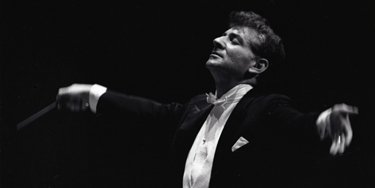
It’s Leonard Bernstein’s centenary this year, and Alex Ross, in the New Yorker, commemorates the great popularizing conductor with a tribute mixing praise, uncomplimentary gossip, and this regretful perspective on the passing of both Bernstein and his times.
His charisma was indeed potent, but as Bernstein recedes into history he seems more a product of his time than an agent of transformation. He came of age in the New Deal era, when the federal government sank hundreds of millions of dollars into the arts. He benefitted from the cultural politics of the Cold War, even as he suffered under McCarthyism. He launched music-appreciation projects on television at a time when network executives considered Stravinsky’s serialist score “The Flood,†with choreography by Balanchine, suitable for a mass public. The aspirational America of the mid-twentieth century was looking for a Bernstein—a native genius who could knock off Broadway tunes as fluently as he conducted Brahms—and one was duly found. There will not be another, not because talent is lacking but because the culture that fostered him is gone.
He was obviously talented, but he was, in my opinion, as a conductor, far too commonly heavily-handedly didactic, popularizing, and obvious in his approach. He usually seemed to be less conducting, than lecturing de haut en bas from his perch atop the American cultural establishment to a mass 1950s television audience. I thought his appointment to conduct the New York Symphony a terrible descent into vulgar American populism from the era of Bruno Walter. But every once it a while, he was very very good. I can recall hearing an excellent version of some Haydn Symphonies by Bernstein.
I remember, as the years went on, Bernstein became more political in an extremely obnoxious rich-fashionista-poseur-striking-revolutionary-poses manner. His obsequious dallying with Black Panthers brought down on him the gods’s wrath, delivered in the form of a scathing essay by Tom Wolfe which may become Bernstein’s best-remembered memorial:
It’s a long video, but definitely worth watching as it demonstrates clearly just how deeply embedded in the Progressive community of fashion world-view the people running this major communication company really are, and how much they look down on people with different views and hate and fear any position not their own.
I thought it was pretty striking to find that three out of four of the top panjandrums of Google are foreign-born immigrants to the United States. No wonder they neither identify with nor sympathize with the perspective of native-born Americans leading ordinary lives, who did not attend elite schools, who don’t fly around on private jets, and who don’t have $70 million hiring deals like Google’s CFO.
And just wait until you see some of the alternative lifestyle types from the mass Google employee audience bringing up their Identity politics issues. Can people this weird really code? My understanding was that you had to pass some very tricky intelligence test to get hired by Google, and I find it hard to believe that some of the fruitcake specimens that spoke up could successfully compose a sentence containing the words “hare,” hunter,” and “field.”
Google was embarrassed by this Breitbart leak, and issued a Twitter statement declaring: “Nothing was said at that meeting, or any other meeting, to suggest that any political bias ever influences the way we build or operate our products.” &c.
Sure. Right. That’s why, just for instance, we get an endless stream of special animated Google headers celebrating the natal anniversaries of every Diversity Group member they can think of, but Christian holidays like Easter are overlooked completely.
I once answered a question on Quora about Yale, so pretty much every day I receive a email asking to answer the question “How do I get into Yale?” from some exotic resident of the remote Third World.
Clearly, the mysteries of elite Ivy League admissions are an intriguing topic these days all over the world.
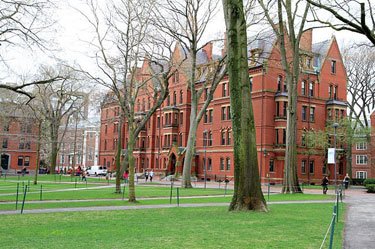
I ran into a Quora posting this morning from a U. Chicago guy named Hasnat, quoting an anonymous Harvard 2006 graduate who had worked in the Harvard Admissions Office.
I thought it pretty accurately captured a home truth applicable to Yale as well, that, beyond grades and test scores (which had better be high), they are looking for a certain kind of exceptionality and competitiveness. They want people out of the ordinary.
I think you need to join Quora and all that to open a link, so I cut-and-pasted the whole bloody thing to make life easier for NYM readers.
[A] little bit of advice.
“First of all, there are a number of small factors that can move the admissions needle in small amounts: location, economic background, race. You can just accept that these exist and don’t really count for much—a slight counterbalance to the general advantages that wealthier folks tend to enjoy as a rule. Or you can spend millions of dollars on lawyers and consultants, and hundreds of hours fighting in court in order to claw back this tiny little potential advantage from those in the lower half of the socioeconomic spectrum.
“Either way, these are things beyond your control, and I’d recommend not worrying about them. Frankly, it’s the cheaper and quicker option.
“Otherwise, the official party line, as taken verbatim from Harvard’s longtime Dean of Admissions, William Fitzsimmons (class of 1963, dean since 1986) is that Harvard selects for “academic excellence, extracurricular distinction, and personal qualities.” And that sounds good—who doesn’t love excellence?—until you think about it.
“What Dean Fitzsimmons really means is that he isn’t going to tell you anything substantial (that’s why he’s lasted for so long in his job). So I will tell you that in this context, measuring “academic excellence” really boils down to two things: Will this applicant graduate on time and happy?
“Pure intelligence is one part, hence the focus on scores and GPAs. Harvard is difficult, and someone who has never seen a differential equation will probably struggle in the basic required math courses; isomeone who has never read a Steinbeck novel or a Shakespeare play will probably feel excluded from general English Lit.
“But so is extracurricular activity. You might be smart, but do you have the discipline to keep going for four years? How do you respond to setbacks, challenges, opposition? Do you show signs of life in the wider world? In short: are you of sound mind?
“The 4.0 student who just works the ball-washing station at the country club does not necessarily demonstrate great time-management skills. On the other hand, we’ll take the person who has an A-minus GPA but spends most of her free time in a research lab breeding generations of flies for genetic tests, thank you very much. This is why admissions officers will say “well-rounded” until they’re blue in the face. There’s nothing wrong with plain old eggheads—but let’s try and get out there once in a while, too.
“And when the committee selects for the mysterious and ephemeral “personal qualities,” well, we want to know how much of a jerk the candidate is, and how well they’ll respond to a campus full of jerks.
“Let’s be honest: Harvard and its affiliates will inflict some kind of damage (academic, emotional, occasionally physical) on everyone who lingers there. It is a place where everyone is out to get everyone else. In a place where no one can be the best at everything, everyone takes any chance they can get to measure up to their peers. It is a mob of ruthless young overachievers with a taste for blood.
“Ayn Rand, eat your heart out. Your Objectivist paradise is alive and well, and its name is Harvard. Here, people believe that each of them is a “heroic being,” that their individual happiness is a moral absolute, that their own reason is ironclad and incorruptible. Just look at what four years of that does to a person. Never mind the outliers like Mark Zuckerberg and Ted Kaczynski. You just need to look at the offices of Wall Street investment banks (where half of the graduating class of Harvard ends up every year). Or the op-ed pages of New York newspapers. Or the halls of Congress (one shudders at the thought). Read the rest of this entry »
Nemesis, statue dedicated by Ptollanubis. Marble, found in Egypt, 2nd century AD. Louvre Ma 4873.
Noemie Emery gleefully observes that the day of reckoning for democrats for what they did to Robert Bork has arrived.
Are you happy now, Teddy Kennedy? Are you happy, Joe Biden? Are you happy now, Harry Reid? It’s due to the things that you did and said that Donald J. Trump is now naming his second Supreme Court justice in under two years in office. It is your fault that the once courtly process of Supreme Court appointments turned into the blood-and-thunder-eye-gouging drama that we hate and we live through today.
It was 31 years ago, in 1987, that Edward M. Kennedy burst on the floor of the Senate to tell us all that with Robert Bork on the Supreme Court, “women would be forced Into back-alley abortions,†blacks would eat at segregated lunch counters, writers and artists could be censored at the whim of the government, and the freedom of millions would hang by a thread.
Before it was over, liberals would raise and spend over $10 million in negative ads (quite a sum at the time) and in lobbying efforts. They would threaten black witnesses with career-ending reprisals and seize and search records of video rentals for signs of blue movies that were never found.
As Steve Hayward says, “The demagogic nature of the public campaign against him made it a watershed moment in American politics, permanently deforming the nomination process as for the judiciary, with ideological battles now extending to the lower federal courts as well.â€
Irony of ironies, Telly Davidson, in the Paleocon American Conservative, pays tribute to the passing, and has kind words for, the red rag Village Voice.
As a respected and accomplished Boomer-era composer recently told me, when he was making it as a young musician in the Big Apple in the early 1970s, he and his set thought of the Voice as “the New York Times for nonconformists.†It provided a truly alternative “voice†to the processed cheese pabulum and establishment headlines of the mainstream media. In its heyday, the Voice was a place where indisputably talented and iconoclastic writers who were too “out there†to get hired at the mainstream spots could not only pick up a paycheck and a byline credit but also have the chance to rub shoulders with Norman Mailer and Gore Vidal. Where writers who redefined arts criticism like Robert Christgau, Nat Hentoff, Andrew Sarris, and James Wolcott got some of their first and best breaks. Where conservatives and suburban liberals alike could shake their fists at Alexander Cockburn’s near-open communism, or the latest Robert Mapplethorpe exhibit.
The Voice employed to their very last day both new and old greats who did nothing but good by the standards of journalism and their communities. But it also housed writers and editors who were smug caricatures of everything they supposedly despised. Towards the end of the paper’s 63-year lifespan, it became an insular clique rather than a sanctuary for brilliant misfits and rebels. This was a storied institution that had earned respect but slowly lost it, thanks in part to the corporate buyouts and the inevitable dimming of its once strong independent compass.
Marie Antoinette playing shepherdess at the Petite Trianon.
Martin Hutchinson finds an excellent historical parallel to today’s divided-by-a-class-and-cultural-chasm American society.
With the important exception of the Trump administration, still young and possibly about to be cut off in the flower of its youth if the midterm elections go badly, the great majority of U.S. elites have a decidedly French air to them. They are now very separated from ordinary people, as Charles Murray brilliantly demonstrated in his “Coming Apart†a few years ago. The distance between Murray’s tony suburb of Belmont and his working-class community of Fishtown has only grown larger over the last few years, and the cultural gap, both in terms of interests and based on all kinds of other indicators, has also increased. Today’s intellectual Ivy-educated elite is wandering around the Petit Trianon playing at being a shepherdess, not playing cricket and hunting with ordinary folk.
In its economic attitudes, the U.S. elite is also 18th Century French. It sees essentially no limit to its ability to make economically damaging regulations if some pet cause is at stake. It takes a far greater interest in the theoretical possibility of global warming a century hence and in theoretical dangers to the environment from coal extraction than in the practical problems of generating electricity from wind power on a calm day or from solar power on a cloudy day. …
Today’s Marie Antoinettes have just one difference from the original: they take health-consciousness far more seriously than she did. Their advice for the rabble will thus be foul-tasting as well as disdainful: “Let them eat kale!â€
Captain Rescorla in action at Ia Drang, Republic of Vietnam, 15 November 1965. photograph: Peter Arnett/AP.
Born in Hayle, Cornwall, May 27, 1939, to a working-class family, Rescorla joined the British Army in 1957, serving three years in Cyprus. Still eager for adventure, after army service, Rescorla enlisted in the Northern Rhodesia Police.
Ultimately finding few prospects for advancement in Britain or her few remaining colonies, Rescorla moved to the United States, and joined the US Army in 1963. After graduating from Officers’ Candidate School at Fort Benning, Georgia in 1964, he was assigned as a platoon leader to Bravo Company of the 2nd Battalion, 7th Cavalry, Third Brigade of the 1st Cavalry Division (Airmobile). Rescorla’s serious approach to training and his commitment to excellence led to his men to apply to him the nickname “Hard Corps.”
The 2nd Battalion of the 7th Cavalry was sent to Vietnam in 1965, where it soon engaged in the first major battle between American forces and the North Vietnamese Army at Ia Drang.
The photograph above was used on the cover of Colonel Harold Moore’s 1992 memoir We Were Soldiers Once… and Young, made into a film starring Mel Gibson in 2002. Rescorla was omitted from the cast of characters in the film, which nonetheless made prominent use of his actual exploits, including the capture of the French bugle and the elimination of a North Vietnamese machine gun using a grenade.
For his actions in Vietnam, Rescorla was awarded the Silver Star, the Bronze Star (twice), the Purple Heart, and the Vietnamese Cross of Gallantry. After Vietnam, he continued to serve in the Army Reserve, rising to the rank of Colonel by the time of his retirement in 1990.
Rick Rescorla became a US citizen in 1967. He subsequently earned bachelor’s, master’s, and law degrees from the University of Oklahoma, and proceeded to teach criminal law at the University of South Carolina from 1972-1976, before he moved to Chicago to become Director of Security for Continental Illinois Bank and Trust.
In 1985, Rescorla moved to New York to become Director of Security for Dean Witter, supervising a staff of 200 protecting 40 floors in the South Tower of the World Trade Center. (Morgan Stanley and Dean Witter merged in 1997.) Rescorla produced a report addressed to New York’s Port Authority identifying the vulnerability of the Tower’s central load-bearing columns to attacks from the complex’s insecure underground levels, used for parking and deliveries. It was ignored.
On February 26, 1993, Islamic terrorists detonated a car bomb in the underground garage located below the North Tower. Six people were killed, and over a thousand injured. Rescorla took personal charge of the evacuation, and got everyone out of the building. After a final sweep to make certain that no one was left behind, Rick Rescorla was the last to step outside.
—————————————-
Directing the evacuation on September 11th.
Security Guards Jorge Velasquez and Godwin Forde are on the right. photograph: Eileen Mayer Hillock.
Rescorla was 62 years old, and suffering from prostate cancer on September 11, 2001. Nonetheless, he successfully evacuated all but 6 of Morgan Stanley’s 2800 employees. (Four of the six lost included Rescorla himself and three members of his own security staff, including both the two security guards who appear in the above photo and Vice President of Corporate Security Wesley Mercer, Rescorla’s deputy.) Rescorla travelled personally, bullhorn in hand, as low as the 10th floor and as high as the 78th floor, encouraging people to stay calm and make their way down the stairs in an orderly fashion. He is reported by many witnesses to have sung “God Bless America,” “Men of Harlech, ” and favorites from Gilbert & Sullivan operettas. “Today is a day to be proud to be an American,” he told evacuees.
A substantial portion of the South Tower’s workforce had already gotten out, thanks to Rescorla’s efforts, by the time the second plane, United Airlines Flight 175, struck the South Tower at 9:02:59 AM. Just under an hour later, as the stream of evacuees came to an end, Rescorla called his best friend Daniel Hill on his cell phone, and told him that he was going to make a final sweep. Then the South Tower collapsed.
Rescorla had observed a few months earlier to Hill, “Men like us shouldn’t go out like this.” (Referring to his cancer.) “We’re supposed to die in some desperate battle performing great deeds.” And he did.
—————————————-
His hometown of Hayle in Cornwall has erected a memorial.
Hussar, enormous Taigan puppy, just about in my lap.
Dogs!
We have two: Uhlan, a 9-year-old Tazy (a breed of sighthound from Kazakhstan) and Hussar, a one-year-old Taigan (a breed of sighthound from Kyrgysztan, a member of the first litter born in North America). (I have friends who are into weird dogs.)
The tazy is significantly smaller, but smarter and a lot more feral. Uhlan has all the unspoiled-by-civilization-and-domestication wildness and complete lack of subordination that crazy sighthound fanatics particularly prize.
The taigan is huge, black, and goofy. He is a lummox with no sense whatsover of how much space he takes up and no regard for human property. He is fanatically playful, in the manner of a puppy, and he loves to fetch and retrieve dog toys.
The tazy is like the Dragon Smaug in The Hobbit. He considers all dog toys his and will collect them and then sit gloating over the pile of them.
Smaug’s greed recently reached a new peak. When he hears the impact of a toy I’ve thrown for the puppy, Smaug will deliberately come downstairs, confiscate the toy, and remove it to his hoard upstairs.
Last night, Karen and I were watching a movie, and the puppy wanted to play, so he brought over the flat, entirely disemboweled rag that was once some kind of stuffed animal. Karen and I were distracted by the movie, so Uhlan’s sudden arrival was overlooked. A violent dog tussle and spinning canine tornado erupted in front of us, which quickly took hold of the power cord of my brand-new $1500 laptop PC, yanking it right off the table and hurling it to the floor.
The new Lenovo survived, but the male end of the power cord was twisted and bent. Last night, I thought it still made an electrical connection, but I was wrong. That cord is as dead as Fogarty’s goat.
I ordered a replacement last night. $47.00 and change, discounted from Amazon. It’s due to arrive tomorrow. Meanwhile, I’m back on my older, slower machine.
If anybody is planning any medical experiments, I know where he can get a couple of dogs.
It is also monsooning here and satellite Internet is out a great deal. Blogging will be light.
Buzzfeed reports that, just because Tommie Woodward ignored warnings and jumped into the bayou at 2 A.M., winding up killed by an alligator, his grieving family feels he should not have been made into a Darwin Awards national joke.
On the night of July 2, 2015, Tommie Woodward was doing what Tommie did on Thursday nights — shooting pool, playing shuffleboard, drinking beer, having a good time at Burkart’s Marina, a beer and burger joint in Orange, Texas. Sometime around 2 a.m. he decided to go for a swim in the murky waters of Adams Bayou.
Michelle Wright, the bartender on duty, became concerned upon hearing Tommie’s plans. A few weeks earlier, the bar’s owner, Allen Burkart, spotted an exceptionally large alligator patrolling the bayou. He immediately erected a “No Swimming†sign, which was disregarded. The people of Orange frequently swam with the reptiles, and even nicknamed two of them Cheeto and Marshmallow. Wright pleaded with Tommie, but he was stubborn, never backed down from anyone or anything. He was going swimming. Wright returned to her bartending duties.
Tommie removed his shirt and billfold and, joined by his companion Victoria LeBlanc, tiptoed toward the water. At this point LeBlanc saw a big gator — maybe the same animal Burkart had encountered — emerge from beneath the dock. She alerted Tommie to its presence, who shouted back, “Fuck that gator!†and plunged into the bayou.
Tommie was near a small island across the swamp when the gator got his arm. When LeBlanc jumped into the water to save him, he yelled for her to return to land. She obliged, then frantically ran inside for help. After dialing 911, Wright grabbed a flashlight, killed the lights to reduce the glare, and scanned the water for him. After five minutes or so — she’s unsure — Wright found him facedown near the pier. The gator quickly pulled Tommie under again. He resurfaced about 20 yards downstream, before disappearing into the darkness.
Two hours later Tommie’s body was found with the left arm missing from the elbow down. His cause of death was drowning.
Tommie Woodward was the first person to die from an alligator attack in Texas since 1836. Shortly after the start of the Runaway Scrape, the mass evacuation of Texans fleeing Santa Anna’s army during the Texas Revolution, an alligator killed a man identified as Mr. King in a bayou near the present-day Harris County border. Mr. King was leading his horses across water when an alligator thumped him with its tail and dragged him under. Luckily for Mr. King — and his friends and family — his death occurred before the advent of television and social media.
News of Tommie Woodward’s death went viral with articles on, among other places, BuzzFeed, the Daily Mail, Fox News, and Gawker; the Associated Press picked up the story; it led the local TV news, of course. The local Beaumont Enterprise published a cautionary op-ed. The comment sections were busy and typically unsympathetic. The particulars — an animal attack, his famous last words, according to the police report — provided irresistible content.
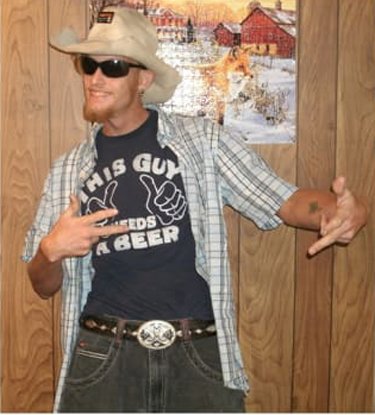
Some outlets used an image from Tommie’s Facebook page of him chugging a Miller High Life while wearing a T-shirt that reads “Classy Motherfuckerâ€; a news anchor for KFDM, the CBS affiliate in nearby Beaumont, breathlessly noted “the hundreds and thousands of pageviews and hundreds of comments†that the story generated on its website. Another circulated photo portrayed Tommie as the epitome of dudedom: grungy reddish-blonde chin strap beard, middle finger up, wearing a goofy cowboy hat, wraparound Guy Fieri shades, and a “This Guy Needs a Beer†shirt. On Facebook, strangers littered Tommie’s wall with comments like “lol rip dumbass†and “What. A. Dumb. Fuck.†A controversial hunt for the killer gator ensued, which only compounded the attention.
Tommie’s friends and family refuse to allow his final actions define the 28 years that preceded it. He loved Van Halen, Marilyn Monroe, and Ken Griffey Jr. He was good with his hands. He enjoyed assembling computers, building sandcastles with his nephew, fishing, swimming, camping, and grilling. He had an adoring big sister, a mom, a best friend, and an identical twin brother, Brian, all left to wrestle not just with grief over a freak tragedy, but also the aftermath of public humiliation. “I was severely pissed off at a lot of people that I’ve never met before,†his sister, Tabatha, says. “I was mad at everybody.â€
It’s No Joke: Students Can Minor in Marijuana At Stockton University
Students at Stockton University will soon be able to minor in marijuana.
The south Jersey school rolls out its new “Cannabis Studies†minor program next week. While several schools around the state offer courses in cannabis as part of their science programs, Stockton may be the first higher education institution in the Garden State to launch a program designed to prepare students for the rapidly expanding weed industry in New Jersey — and across the nation.
“It’s an industry that is developing and certainly there are a lot of possibilities and new jobs,†said Kathy Sedia, who is an associate professor of biology at Stockton and coordinator of the program. Stockton is nestled in the Pine Barrens just a short drive from the Jersey Shore.