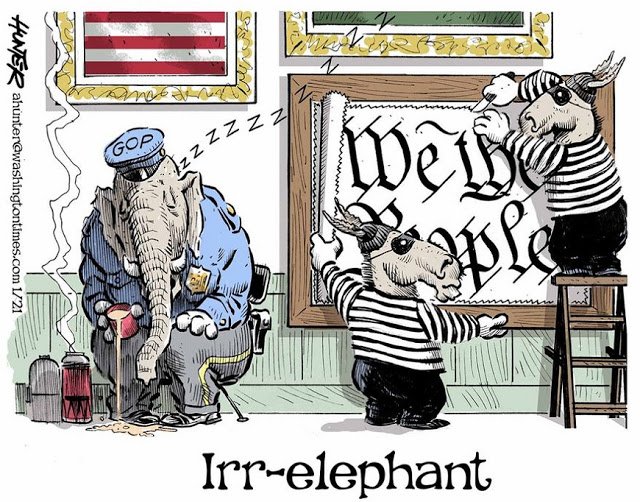
Imagine storming the Capital of the United States as the government of the country literally fucking flees and then just wandering around the building confused about why the level isn't ending instead of declaring a new government and issuing warrants for congressmen's arrest
Born: Richard II, King of England, 1366; Joan d’Arc, 1402; Peter Metastasio, poet, 1698; Benjamin Franklin, philosopher, Boston, U.S., 1706; David Dale, philanthropist, 1739; George Thomas Doo, engraver, 1800.
Feast Day: St. Melanius, bishop, 490. St. Nilammon, Hermit. St. Peter, abbot of St. Austin’s, Canterbury, 608.
TWELFTH-DAY
This day, called Twelfth-Day, as being in that number after Christmas, and Epiphany from the Greek ‘‘ΕπιΦáνєια”, signifying appearance, is a festival of the Church, in commemoration of the Manifestation of Christ to the Gentiles; more expressly to the three Magi, or Wise Men of the East, who came, led by a star, to worship him immediately after his birth. (Matt. ii. 1-12.) The Epiphany appears to have been first observed as a separate feast in the year 813. Pope Julius I is, however, reputed to have taught the Church to distinguish the Feasts of the Nativity and Epiphany, so early as about the middle of the fourth century.
The primitive Christians celebrated the Feast of the Nativity for twelve days, observing the first and last with great solemnity; and both of these days were denominated Epiphany, the first the greater Epiphany, from our Lord having on that day become Incarnate, or made his appearance in “the flesh;” the latter, the lesser Epiphany, from the three-fold manifestation of His Godhead—the first, by the appearance of the blazing star which conducted Melchior, Jasper, and Balthuzar, the three Magi, or wise men, commonly styled the three Kings of Cologne, out of the East, to worship the Messiah, and to offer him presents of “Gold, Frankincense, and Myrrh”—Melchior the Gold, in testimony of his royalty as the promised King of the Jews; Jasper the Frankincense, in token of his Divinity; and Balthuzar the Myrrh, in allusion to the sorrows which, in the humiliating condition of a man, our Redeemer vouchsafed to take upon him: the second, of the descent of the Holy Ghost in the form of a Dove, at the Baptism: and the third, of the first miracle of our Lord turning water into wine at the marriage in Cana. All of which three manifestations of the Divine nature happened on the same day, though not in the same year.
‘To render due honour to the memory of the ancient Magi, who are supposed to have been kings, the monarch of this country himself, either personally or through his chamberlain, offers annually at the altar on this day, Gold, Frank-incense, and Myrrh; and the kings of Spain, where the Feast of Epiphany is likewise called the “Feast of the Kings,” were accustomed to make the like offerings. — Brady.
In the middle ages, the worship by the Magi was celebrated by a little drama, called the Feast of the Star:
‘Three priests, clothed as kings, with their servants carrying offerings, met from different directions before the altar. The middle one, who came from the east, pointed with his staff to a star. A dialogue then ensued; and, after kissing each other, they began to sing, “Let us go and inquire;” after which the precentor began a responsory, “Let the Magi come.” A procession then commenced; and as soon as it began to enter the nave, a crown, with a star resembling a cross, was lighted up, and pointed out to the Magi, with, “Behold the Star in the East.” This being concluded, two priests standing at each side of the altar, answered meekly, “We are those whom you seek;” and, drawing a curtain, shewed them a child, whom, falling down, they worshipped. Then the servants made the offerings of gold, frankincense, and myrrh, which were divided among the priests. The Magi, meanwhile, continued praying till they dropped asleep; when a boy, clothed in an alb, like an angel, addressed them with, “All things which the prophets said are fulfilled.” The festival concluded with chanting services, &c. At Soissons, a rope was let down from the roof of the church, to which was annexed an iron circle having seven tapers, intended to represent Lucifer, or the morning star; but this was not confined to the Feast of the Star.’ — Fosbroke’s Antiquities, ii. 700.
At Milan, in 1336, the Festival of the Three Kings was celebrated in a manner that brings forcibly before us the tendency of the middle ages to fix attention on the historical externals of Christianity. The affair was got up by the Preaching Friars. The three kings appeared, crowned, on three great horses richly habited, surrounded by pages, body guards, and an innumerable retinue. A golden star was exhibited in the sky, going before them. They proceeded to the pillars of St. Lawrence, where King Herod was represented with his scribes and wise men. The three kings ask Herod where Christ should be born, and his wise men, having consulted their books, answer, at Bethlehem. On which the three kings, with their golden crowns, having in their hands golden cups filled with frankincense, myrrh, and gold, the star going before, marched to the church of St. Eustorgius, with all their attendants, preceded by trumpets, horns, asses, baboons, and a great variety of animals. In the church, on one side of the high altar, there was a manger with an ox and ass, and in it the infant Christ in the arms of his mother. Here the three kings offer Him gifts. The concourse of the people, of knights, ladies, and ecclesiastics, was such as was never before beheld.
In its character as a popular festival, Twelfth-Day stands only inferior to Christmas. The leading object held in view is to do honour to the three wise men, or, as they are more generally denominated, the three kings. It is a Christian custom, ancient past memory, and probably suggested by a pagan custom, to indulge in a pleasantry called the Election of Kings by Beans. In England, in later times, a large cake was formed, with a bean inserted, and this was called Twelfth-Cake. The family and friends being assembled, the cake was divided by lot, and who-ever got the piece containing the bean was accepted as king for the day, and called King of the Bean.
In England, it appears there was always a queen as well as a king on Twelfth-Night. A writer, speaking of the celebration in the south of England in 1774, says:
‘After tea, a cake is produced, with two bowls containing the fortunate chances for the different sexes. The host fills up the tickets, and the whole company, except the king and queen, are to be ministers of state, maids of honour, or ladies of the bed-chamber. Often the host and hostess, more by design, than accident, become king and queen. According to Twelfth-Day law, each party is to support his character till midnight.’
In the sixteenth century, it would appear that some peculiar ceremonies followed the election of the king and queen. Barnaby Goodge, in his paraphrase of the curious poem of Nagcorgus, The Popish Kingdom, 1570, states that the king, on being elected, was raised up with great cries to the ceiling, where, with chalk, he inscribed crosses on the rafters to protect the house against evil spirits.
A Twelfth-Day custom, connected with Paget’s Bromley in Staffordshire, went out in the seventeenth century. A man came along the village with a mock horse fastened to him, with which he danced, at the same making a snapping noise with a bow and arrow. He was attended by half-a-dozen fellow-villagers, wearing mock deers’ heads, and displaying the arms of the several chief landlords of the town. This party danced the Hays, and other country dances, to music, amidst the sympathy and applause of the multitude. There was also a huge pot of ale with cakes by general contribution of the village, out of the very surplus of which ‘they not only repaired their church, but kept their poor too; which charges are not now, perhaps, so cheerfully borne.’
On Twelfth-Night, 1606, Ben Jonson’s masque of Hymen was preformed before the Court; and in 1613, the gentleman of Gray’s Inn were permitted by Lord Bacon to perform a Twelfth-Day masque at Whitehall. In the masque the character of Baby cake is attended by ‘an usher bearing a great cake with a bean and all with good will have spared unto your lordship, please.’
On Twelfth-Day, 1563, Mary Queen of Scots celebrated the French pastime of the King of the Bean at Holyrood, but with a queen instead of a king, as more appropriate, in consideration of herself being a female sovereign. The lot fell to the real queen’s attendant, Mary Fleming, and the mistress good-naturedly arrayed the servant in her own robes and jewels, that she might duly sustain the mimic dignity in the festivities of the night. The English resident, Randolph, who was in love with Mary Beton, another of the queen’s maids of honour, wrote in excited terms about this festival to the Earl of Leicester.
‘Happy was it,’ says he, ‘unto this realm, that her reign endured no longer. Two such sights, in one state, in so good accord, I believe was never seen, as to behold two worthy queens possess, without envy, one kingdom, both upon a day. I leave the rest to your lordship to be judged of. My pen staggereth, my hand faileth, further to write.’
The queen of the bean was that day in a gown of cloth of silver; her head, her neck, her shoulders, the rest of her whole body, so beset with stones, that more in our whole jewel-house were not to be found. . . The cheer was great. I never found myself so happy, nor so well treated, until that it came to the point that the old queen [Mary] herself, to show her mighty power, contrary unto the assurance granted me by the younger queen [Mary Fleming], drew me into the dance, which part of the play I could with good will have spared unto your lordship, as much fitter for the purpose.”
Charles I had his masque on Twelfth-Day, and the Queen hers on the Shrovetide following, the expenses exceeding £2000; and on Twelfth-Night, 1633, the Queen feasted the King at Somerset House, and presented a pastoral, in which she took part.
Down to the time of the Civil Wars, the feast was observed with great splendour, not only at Court, but at the Inns of Court, and the Universities (where it was an old custom to choose the king by the bean in a cake), as well as in private mansions and smaller households.
Then, too, we read of the English nobility keeping Twelfth-Night otherwise than with cake and characters, by the diversion of blowing up pasteboard castles; letting claret flow like blood, out of a stag made of paste; the castle bombarded from a pasteboard ship, with cannon, in the midst of which the company pelted each other with egg-shells filled with rose-water; and large pies were made, filled with live frogs, which hopped and flew out, upon some curious person lifting up the lid.
Twelfth-Night grew to be a Court festival, in which gaming was a costly feature. Evelyn tells us that on Twelfth-Night, 1662, according to custom, his Majesty [Charles II] opened the revels of that night by throwing the dice himself in the Privy Chamber, where was a table set on purpose, and lost his £100. [The year before he won £1500.] The ladies also played very deep. Evelyn came away when the Duke of Ormond had won about £1000, and left them still at passage, cards, &c., at other tables.
The Rev. Henry Teonge, chaplain of one of Charles’s ships-of-war, describes Twelfth-Night on board:
‘Wee had a great kake made, in which was put a beane for the king, a pease for the queen, a cloave for the knave, &c. The kake was cut into several pieces in the great cabin, and all put into a napkin, out of which every one took his piece as out of a lottery; then each piece is broaken to see what was in it, which caused much laughter, and more to see us tumble one over the other in the cabin, by reason of the ruff weather.’
The celebrated Lord Peterborough, then a youth, was one of the party on board this ship, as Lord Mordaunt.
The Lord Mayor and Aldermen and the guilds of London used to go to St. Paul’s on Twelfth-Day, to hear a sermon, which is mentioned as an old custom in the early part of Elizabeth’s reign.
A century ago, the king, preceded by heralds, pursuivants, and the Knights of the Garter, Thistle, and Bath, in the collars of their respective orders, went to the Royal Chapel at St. James’s, and offered gold, myrrh, and frankincense, in imitation of the Eastern Magi offering to our Saviour. Since the illness of George III, the procession, and even the personal appearance of the monarch, have been discontinued. Two gentlemen from the Lord Chamberlain’s office now appear instead, attended by a box ornamented at top with a spangled star, from which they take the gold, frankincense, and myrrh, and place them on an alms-dish held forth by the officiating priest.
In the last century, Twelfth-Night Cards represented ministers, maids of honour, and other attendants of a court, and the characters were to be supported throughout the night. John Britton, in his Autobiography, tells us he ‘ suggested and wrote a series of Twelfth-Night Characters, to be printed on cards, placed in a bag, and drawn out at parties on the memorable and merry evening of that ancient festival. They were sold in small packets to pastrycooks, and led the way to a custom which annually grew to an extensive trade. For the second year, my pen-and-ink characters were accompanied by prints of the different personages by Cruikshank (father of the inimitable George), all of a comic or ludicrous kind.’ Such characters are still printed.
The celebration of Twelfth-Day with the costly and elegant Twelfth-cake has much declined within the last half-century. Formerly, in London, the confectioners’ shops on this day were entirely filled with Twelfth-cakes, ranging in price from several guineas to a few shillings; the shops were tastefully illuminated, and decorated with artistic models, transparencies, &c. We remember to have seen a huge Twelfth-cake in the form of a fortress, with sentinels and flags; the cake being so large as to fill two ovens in baking.
The military is different from civilian life. Officers in the course of their careers face a very real prospect of being forced to make life-or-death decisions, including decisions to sacrifice lives including their own, intentionally. Officers must be prepared to follow orders at any cost. And the word, the testimony, of an officer must be absolutely reliable.
The service academies are different from ordinary colleges. College students, in general, are having the time of their lives, partying, dating, experimenting with drugs, while service academy cadets are living monastic lives regulated by iron discipline.
A military officer’s career involves great responsibility and is held exceptionally in honor. Cadets traditionally pay a very serious four-year price for entry into the profession of arms.
There have in the past, on infrequent occasions, been service academy scandals, incidents of cadets cheating on exams and the like. Read about them in the newspapers, we civilians have invariably shuddered and experienced a sense of pity at the rigor and mercilessness of the service academies’ honor code. Similar behavior would almost certainly have gone utterly undetected at our own elite schools and, even had someone been caught, his punishment would most likely have been less severe.
Apparently, now, all that is over with. The famous West Point Honor Code is now just empty rhetoric.
There’s been a new West Point cheating scandal involving 73 cadets and a math test. Most of the guilty parties are described as athletes. The news accounts features the recognizable pause-and-throat-clearing before the code word. “Athletes” here is obviously the equivalent of “teens” in current news stories of looting and violent urban crime. Athletes means minority beneficiaries of affirmative action admission.
In past incidents, being detected cheating meant doom. Cheaters were expelled, period. Not today. Not for “athletes.” 55 of the guilty parties will be receiving “rehabilitation.”
Lt. Gen. Darryl Williams, the superintendent at West Point, offered a guarded explanation in a memo to the faculty. He said the Academy’s honor code “has resulted in an inequitable application of consequences and developmental opportunities for select groups of cadets.”
But what is “inequitable” about expelling all cadets caught cheating on an exam? The honor code applies to all cadets regardless of “class.” The past practice of expelling violators applies equally to all cheaters regardless of “class.” This is a classic neutral rule.
Clearly, Williams is concerned that application of the neutral rule has a “disparate impact” on particular subgroups of cadets. That’s why he’s departing from past practice.
Williams didn’t specify which groups of cadets he’s talking about. Conceivably he was talking about athletes. Fifty-five of the accused cheaters play sports for West Point. Nearly half of that group is on the football team.
However, I doubt that athletes are the main “select group” Williams is concerned about. I suspect that the primary concern of Williams is with the impact of enforcing the honor code on Black cadets. I can’t say this for certain. It’s not even certain that a disproportionate number of the cheaters are Black.
But there are sound reasons to believe that Williams, who is Black, had race in mind when he decided not to expel the cheating cadets. Rod Dreher explains the grounds for this suspicion in a post for The American Conservative.
He points out that when someone talks about “equity” these days in the context of unequal outcomes, he is usually talking about race. As Dreher says, “if [Williams] is not talking about race here, then what is he talking about?” Equity for football players? That would be a new one.
The notion that there’s inequity when neutral rules adversely affect Blacks in disproportionate numbers is a key element of “critical race theory.” And critical race theory has spread to West Point.
Gramsci’s Long March Through the Institutions has even marched right through West Point.
WASHINGTON, D.C.—A congressional prayer at Capitol Building took over 24 hours to complete as Rep. Emanuel Cleaver concluded his prayer with amen, awomen, and amen variations of all 5,787 other genders.
“Amen, Awomen, Anonbinary, Agenderqueer, Atwo-spirit, Apolygender… this could take a while,” Rep. Cleaver said. “If anyone needs to go out and get some refreshments, feel free.”
After the prayer seemed to be finished, congresspeople tried to get up and leave, but Rep. Cleaver then said he was going to list all the gods he was praying to for clarification. “Yahweh, Allah, Joseph Smith, Brahma, Flying Spaghetti Monster, Thor, Odin, Isaac Asimov, Ra, Zeus, Loki, Isis, Xenu, the Force, the Lords of Kobol, Din, Nayru, Farore…” This went on for a while.
A new congressional rule will only allow Republicans to lead prayer for the sake of time, since they’ll pray to one God and conclude with “Amanlyman.”
Smithsonian reports on another British coin hoard. Metal detectors really work, don’t they?
This September, a British birder who’d stopped on the edge of a farmer’s field to watch a buzzard and a pair of magpies stumbled onto a trove of 2,000-year-old Celtic coins worth an estimated £845,000 (around $1,150,000 USD).
As first reported by Julian Evan-Hart of Treasure Hunting magazine, the unnamed bird-watcher—who is also an amateur metal detectorist—unearthed the stash of some 1,300 gold coins in a field in the eastern English countryside. Dated to between roughly 40 and 50 A.D., the cache is the largest hoard of Iron Age Celtic coins found in the United Kingdom since 2008, when a car mechanic excavated a stash of 850 ancient staters, or handmade money, in Suffolk.
“I saw the glint of gold and realized it was a beautiful Celtic gold stater, which made me sit down in sheer shock,” the birder tells Treasure Hunting, as quoted by the Daily Mail’s Luke May. “I then spotted the second coin two feet away and rushed home to get my [metal detector].”
Upon his return, the man found that his detector produced a “really strong” signal—a sure sign that more treasures lingered below the surface. Digging down about 18 inches, he extracted a copper vessel brimming with gold coins dated back to the era when Celtic queen Boudica led a massive uprising against the Romans.
“I had to sit down to get my breath back,” the treasure hunter says. “I had only come out for a walk and found a Celtic hoard.”
Once the man overcame his initial shock, he filled two large shopping bags with the cache of coins and returned home. Then, he promptly contacted local authorities to report the find. If experts deem the discovery treasure, they will offer it to a museum and potentially offer a share of the reward to the finder. (Current guidelines define treasure very narrowly, but as Caroline Davies reports for the Guardian, the U.K. government is working to expand these parameters in order to better protect the country’s national heritage items.)
“The coins form a substantial if not enormous contribution to our academic numismatic knowledge and will undoubtedly be subject to much assessment over the coming year,” says Jules Evan-Hart, editor of Treasure Hunting, in a statement quoted by the New York Post’s Hannah Sparks. “It is possible that [the coins] may form a deposit as a ‘war chest’ for Boudica’s eastern campaigns.”
The Sun reports that you can be an ordained Methodist minister and be elected to Congress and not understand the meaning of the word “Amen” concluding Christian prayers.
A democratic congressman has sparked fury after ending a prayer with “amen and awomen”.
Rep. Emanuel Cleaver, an ordained United Methodist minister from Missouri, also mentioned the Hindu god Brahma while praying at the opening of Congress.
He said: “We ask it in the name of the monotheistic God, Brahma, and ‘god’ known by many names by many different faiths.”
“Amen and awomen,” he said as he closed the prayer.
Amen comes from Old English, via ecclesiastical Latin, via Greek amēn, from Hebrew ‘āmēn ‘truth, certainty’, and is used adverbially as an expression of agreement. It adopted in the Septuagint as a solemn expression of belief or affirmation.