“Homeless” (Left-wing weasel word for bums and winos) in Venice Beach.)
Freelance writer Amy Alkon does not like guns, but finds that liberal democrat policies may very well oblige her to become a gun owner.
I never wanted a gun. In fact, I wanted to never own one—until around noon on Thursday, August 20th.
Since the late 1990s, I’ve lived in Venice, California, renting a one-bedroom Craftsman house a mile from the ocean that someone built out of a Sears-catalog kit 100 years ago. I’m a science-based syndicated columnist and author, currently working all hours to complete a book that keeps trying to kill me. Luckily, I’m writing it in this cute little old lady of a house on my sweet Venice block.
Whenever it seems I’m pointlessly pushing words around the page, I’ll step out the front door and take in the sunny stretch of palm trees, cacti, and bougainvillea. I’ll spot a hummingbird, wave to my neighbor with his parrot on his shoulder, or maybe watch Joey the Aggressive Squirrel, my wee dog’s taunting nemesis. These brief distractions uncouple me from looming suspicions that I’m an incompetent dullard no one will want to read, and I often go back in, emotionally restored, and pound out a coherent and even reader-worthy paragraph. …
[A]bout a week and a half into August, a VW Vanagon Westfalia (circa 1987, tricked out with solar panels on top) appeared in front of my house and stayed there. A white woman, about 40, with long magenta-dyed hair, was living in the van with a big leather-muzzled Rottweiler. The dog was prone to barking jags, and the woman didn’t just close the van’s sliding door when she got in and out; she often slammed it so hard that it shook my little wooden house. …
here was door slamming all day and sometimes at night—a deliberate ritual to show me she was in control. She could disturb my work, my peace of mind, and my sleep whenever she felt like it.
I was frustrated and upset, but I wasn’t afraid—until August 14th. A tall, rough-looking white guy roared up on a shiny Harley, parked it in front of the van, and got in. Soon afterward, another dude got in, too.
The noise and abuse intensified, with the van’s occupants making it clear it was punishment for me calling the police about the noise. Throughout the day, the guy would turn on his motorcycle, get back in the van, and just leave the thing idling on the street for 10 minutes at a time. The Harley’s unmuffled open exhaust woke the neighbor’s new baby and disturbed everybody on my block, many of whom are working remotely from home.
I climbed on the base of my fence to ask the guy, seated in the van, to please be respectful—turn off the motorcycle when he wasn’t riding it. He said nothing, but got out and hand-revved the bike to amp up the noise and pump out exhaust fumes. I put a towel under my door to block the fumes, which helped not at all. I came out again to ask him to please stop. His only response: “Show me your tits.â€
The cops came out repeatedly, answering not just my calls but those of my neighbors. Time after time, the police apologized for the fact that they couldn’t do anything to alleviate the abuse, explaining that they’d been neutered by the mayor, with the support of our local city councilman, Mike Bonin. …
The biker guy turned out to be a violent felon, early-released from prison on August 14th—the Robert Presley Detention Center in Riverside, 70-some miles south-east of L.A. He’d been sentenced to remain in prison until October, but got popped ahead of time because of the pandemic, and came straight to my street.
I looked up his record. This 38-year-old man had so many violent felonies and restraining orders, I remarked to a friend, “How does one even find the time?†Even more disturbingly, in addition to an arrest for assaulting a police officer, I found a restraining order filed against him by a 60-year-old woman, whom I suspected could be his mother. Yes, exactly the sort of “neighbor†we’re all hoping for.
One morning, about a week after his arrival, I sat down at my computer and discovered it was feces o’clock (approximately 6am Pacific Time). The stench of human waste was wafting in from the sidewalk, which apparently was doubling as a toilet. I had become afraid to go out my locked gate, even to get the mail from the box just on the other side, so I got up on my kitchen step stool and leaned over the fence to hose off the sidewalk.
The felon, irate to be awakened by the rather normal neighborhood sound of a person using a garden house, flew out of the van in a rage. My gate is steel-frame, covered by wood planks, and six feet high like the rest of my fence, but it is still terrifying to have a man pounding on it with both fists and yelling “You bitch! I’ll get you, bitch!†Terrified, I dropped the hose, screamed, “I’m calling 911,†and ran inside. …
An hour and a half after I’d called 911, officers arrived. And it was then—noon, on Thursday, August 20th that I had an upsetting revelation: We citizens can no longer rely on the police to show up. And then the thought hit me: I need to get a gun.
You’ve got to love the irony. It’s the Democrats who push for gun control, yet it’s the Democrats in power in my city who are leaving me with no choice but to arm myself.
The truth is I shouldn’t have a gun. I’m a boob when I’m afraid. I lose all mental and physical capacity. I know, if you get a gun, you’re supposed to practice at a gun range regularly, and I would. Still, in a heated situation, I have my doubts that I could even find the “safety,†a term I know only from watching TV and movie crime dramas.
I emailed two libertarian lady friends with guns—subj: “Jenny From The Glockâ€â€”to ask for advice, and talked to some of the cops, too. The consensus: I’d do best with some Little House on the Prairie-type shotgun that sprayed buckshot, giving me the best chance, in a home invasion, of hitting someone other than myself.
The next morning, a sound from outside startled me. The guy was vandalizing my gate. This time, the police came, and one of the cops somehow succeeded in getting the couple to move the van down the street a bit, away from my house. This was a relief, but not a solution. There was further vandalism of my gate the next day.
The police told me they’d need me to file a restraining order to give them any power of enforcement. Assuming the judge approved it, they could finally make the guy move off our block, and they could arrest him if he came near me—assuming he didn’t kill me and take off on his bike before the overtaxed LAPD could get a cruiser out my way.
I was terrified to get a restraining order, because it would give the guy my name and other personal information while likely angering him further and putting me at increased risk of harm. It could also tie me up with days or weeks of paperwork and possible court appearances. But I had become a prisoner behind my gate, afraid to take out the trash, walk my tiny dog, or mail a letter. I was a stressed-out wreck, constantly on edge. I scared our poor sweet postman who delivers packages at odd hours, screaming in terror two nights in a row when a box thudded over my fence onto the pavement. This was no way to live, and thanks to Mayor Garcetti, it seemed that the only way to enable the LAPD to protect my block was to file for an order of protection, effectively turning myself into bait.
I called Legal Aid, and a compassionate young lawyer, Jenny N., helped me on the phone for about four hours over two days. I spent another six hours filling out 50 pages of restraining-order paperwork and making corrections to the parts that Jenny said I’d gotten wrong or omitted. It was unpaid work at a time when I had looming deadlines and was short on money—but what was my alternative? People suggested I move.
Military.com reports that the dictates of the god Equality may force the Marine Corps into drastic contortions in order to meet Congressional decrees.
The Marine Corps is considering a plan in which it could close its two existing boot camp locations and funnel all recruits to a new base where men and women would train together.
Marine entry-level training is a long way off from being able to meet a congressional mandate to make its East and West coast training bases both able to support gender-integrated training in the coming years, the Corps’ top general said on Thursday.
That is leading the service to study the option of opening a third training base in a new location to which all new recruits would ship, rather than spending cash on construction projects at aging training bases.
“Nothing, the way we’re organized right now, lends itself to integrated recruit training,” Commandant Gen. David Berger said on Thursday. “If that’s our start point — and it is — we have to get to a place on both coasts, or at third location or whatever we end up with, that … there are male and female recruits around.”
Both the Marine Corps’ recruit training depots have storied pasts — particularly Marine Corps Recruit Depot Parris Island in South Carolina, which was first used by Marines in the 1890s. Hundreds of thousands of Marines have stood on the famous yellow footprints on each base at the start of their careers before earning the coveted eagle, globe and anchor and title of Marine.
But with a new law bearing down on the service to make both locations support coed training — within five years at Parris Island and eight at San Diego — the Marine Corps is exploring different options, Maj. Eric Flanagan, Berger’s spokesman told Military.com.
“The question becomes, ‘Are we better off just using [military construction] dollars to create a new third site, or put that money into our existing sites?'” he said. “No decisions have been made. We’re not investing any money anywhere else. It’s just an option we’re talking about.”
The Marine Corps hasn’t yet identified a state where the new boot camp location might be located, Flanagan said.
One of the whips of the Culmstock Otter Hounds holds up a 22lb otter they killed on 13 September 1934, at Taunton Castle, Somerset.
A Medieval Studies Professor forwarded the following:
A student describing the ethical system of Dante’s Inferno noted that the first ring of the 7th circle encased those who committed violence against otters.
Here is Kristie Higgs’s petition that got her fired. (click on the image for larger version)
Toby Young, in the British Spectator, explains how you can lose your job even for anonymous on-line dissent.
Kristie Higgs, a 44-year-old school assistant, didn’t realise that criticising the sex education curriculum at her son’s school on Facebook would get her fired. For one thing, her account was set to ‘private’, so only her family and friends could read it. For another, she was posting under her maiden name, so no one could connect her with her employer. Finally, the school that sacked her for expressing these views wasn’t actually her son’s, but another one altogether. This seems a pretty clear case of a person losing her livelihood for dissenting from progressive orthodoxy.
Kristie’s case is being heard at an employment tribunal in Bristol this week. The dispute relates to two Facebook posts from two years ago. In one, Kristie urged her family and friends to sign a petition objecting to mandatory new sex and relationship lessons in English primary schools. In the other, she shared an article by an American conservative Christian commentator criticising the promotion of ‘transgender ideology’ in children’s books. ‘This is happening in our primary schools now!’ Kristie said.
Someone circulated screenshots of these posts to Kristie’s colleagues at Farmor’s School in Gloucestershire, where she had worked for seven years, and predictable outrage followed. Senior members of staff compared her views to those of ‘Nazi right-wing extremists’, according to Kristie, and someone lodged a formal complaint with the head, claiming her posts were ‘homophobic and prejudiced to the LGBT community’. Kristie was summoned to a ‘disciplinary’ at a hotel just before Christmas, where she was cross-examined for six hours by three of the governors, supported by three members of staff. When Kristie tried to explain that her objection to her son being taught that a woman could have a penis was rooted in her Christian beliefs, she was told: ‘Keep your religion out of it.’ After the hearing she was dismissed for ‘illegal discrimination’, ‘serious inappropriate use of social media’ and ‘online comments that could bring the school into disrepute’.
There are two free speech issues at stake here. The first is whether an employer’s social media policy, limiting what employees are allowed to say on Facebook and other platforms, can legitimately be extended to private conversations, particularly when the employee has taken steps to disguise her identity. On the face of it, that looks like a breach of Article 8 of the European Convention on Human Rights, which protects the right to privacy. The second is whether Kristie’s comments constituted ‘illegal discrimination’ as defined in the UK’s Equality Act 2010. Did they create an ‘intimidating, hostile, degrading, humiliating or offensive environment’ for LGBT colleagues, even though they wouldn’t have known about them if they hadn’t been circulated by someone trying to get her into trouble? Or is she permitted to express such views by Article 10 of the ECHR, which protects the right to freedom of expression?
Kristie’s legal team can also appeal to the Equality Act, which makes it illegal to discriminate against employees for their possessions of various ‘protected characteristics’, including religion and belief. Her lawyers will argue she lost her job because she expressed her belief about the immutability of natal sex. However, when Maya Forstater’s lawyers made that argument in an employment tribunal last year — she was sacked for refusing to use trans women’s preferred pronouns — the judge said her gender critical beliefs weren’t ‘worthy of respect in a democratic society’.
Kristie’s treatment is -obviously deeply concerning for believers in free speech, but there’s another aspect of her case that worries me. According to a recent white paper, a Bill will soon be brought before parliament empowering Ofcom to regulate the internet. Under the proposals, Ofcom will be able to impose punitive fines on Facebook for not removing content that political activists find ‘offensive’, even if it doesn’t fall foul of any existing speech laws.
Twitter already bans users for misgendering trans people, so it won’t take much of a push for all the social media companies to ban people for criticising trans ideology. The Free Speech Union has just produced a briefing paper warning of the dire consequences for free speech if the government’s internet censorship plans become law, and I urge you to read it. Soon, it won’t just be Kristie Higgs who is punished for challenging woke dogma. It will be all of us.
Politifact’s Tom Kertsher goes to unusual lengths in critiquing a tongue-in-cheek campaign ad for Georgia GOP Senator Kelly Loeffler in which a constituent admiringly describes her as “more conservative than Attila the Hun.”
[T]he comparison is largely misaligned with history. Attila isn’t regarded as “conservative” in the ideological sense, according to historians. If you had to peg him, you’d probably say “murderer” or “plunderer.”
As the Smithsonian Magazine put it, his name is synonymous with bloody massacres and forcing “the mighty Roman Empire almost to its knees.”
Attila, known as Flagellum Dei (Latin for “Scourge of God”), was the barbarian ruler of the Hun people from 434 to 453, when he died in his sleep. As king, he ruled jointly with his elder brother Bleda for the first 11 years, before murdering him.
Attila was a “supreme king” who was, “of course, neither a conservative nor liberal by modern standards,” said Hyun Jin Kim, a professor in classics at the University of Melbourne in Australia and author of “The Huns.” “By Hunnic standards, Attila was a more or less traditional ruler.”
Now, here is a pretty darn impressive display of liberal “fact-checking” in action. Someone should send Mr. Kertsher the old French adage: Ne perdrai pas votre temps à enculer des mouches.
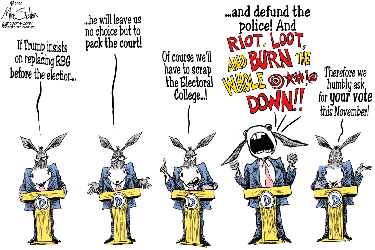
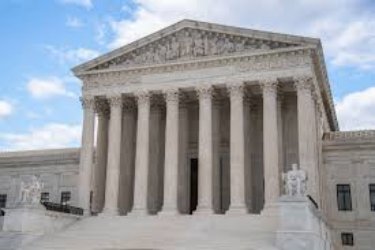
Glenn Reynolds points out very astutely that, if the Supreme Court were genuinely representative of the country, instead of a small, and currently intensely abberant elite cultural clique, and if the Court had properly limited itself to interpreting the Law, rather than following the grand Dred Scott tradition of exploiting an ephemeral Court majority to settle intensely divisive national issues by judicial fiat, we wouldn’t have the vicious political struggle over Supreme Court appointments that has become the norm in recent years.
The power of playing the decisive Platonic Guardian card and getting your way permanently is too valuable a prize.
Why does Justice Ginsburg’s replacement matter so much that even “respectable†media figures are calling for violence in the streets if President Trump tries to replace her? Because the Supreme Court has been narrowly balanced for a while, with first Justice Anthony Kennedy, and later Chief Justice John Roberts serving as a swing vote. Ginsburg’s replacement by a conservative will finally produce a long-heralded shift of the Supreme Court to a genuine conservative majority.
That shift matters because, for longer than I have been alive, all sorts of very important societal issues, from desegregation to abortion to presidential elections and state legislative districting — have gone to the Supreme Court for decision. Supreme Court nominations and confirmations didn’t used to mean much — Louis Brandeis was the first nominee to actually appear before the Senate Judiciary Committee — because the Court, while important, wasn’t the be-all and end-all of so many deeply felt and highly divisive issues. Now it very much is.
The point isn’t whether the Court got the questions right. The point is that it decided these important issues and, having done so, took them off the table for democratic politics. When Congress decides an issue by passing a law, democratic politics can change that decision by electing a new Congress. When the Court decides an issue by making a constitutional ruling, there’s no real democratic remedy.
That makes the Supreme Court, a source of final and largely irrevocable authority that is immune to the ordinary winds of democratic change, an extremely important prize. And when extremely important prizes are at stake, people fight. And get hysterical.
Almost as bad, the Court is highly unrepresentative. That doesn’t matter when it’s deciding technical legal issues, but once it starts ruling on social issues of sweeping importance to all sorts of Americans, its lack of diversity becomes a problem. And not just the usual racial and gender diversity. Every current member of the Court is a graduate of Harvard or Yale Law Schools. (Justice Ginsburg offered a bit of diversity there, having spent her third year, and gotten her degree from, that scrappy Ivy League upstart, Columbia University. But she spent her first two years at Harvard). All of them were elite lawyers, academics, or appellate judges before arriving on the Court. They are all card-carrying credentialed members of America’s elite political class. Which, as I mentioned earlier, is in general pretty terrible.
Justices used to come from much more diverse backgrounds. Until well into the 20th Century, many Justices — Justice Robert Jackson was the last — didn’t have law degrees, having “read law†after the fashion of Abraham Lincoln, and for that matter pretty much every lawyer and judge until the 20th Century. Many had been farmers, military officers, small (and large) businessmen, even in one case an actuary. But now they are all, in Dahlia Lithwick’s words, “judicial thoroughbreds†with very similar backgrounds, backgrounds that make them very different from most Americans, or even from most lawyers.
So to break it down: All the hysteria about a Ginsburg replacement stems from the fact that our political system is dominated by an allegedly nonpolitical Court that actually decides many political issues. And that Court is small (enough so that a single retirement can throw things into disarray) and unrepresentative of America at large.
In the liberal stronghold of the Atlantic, Minnesota Law Professor Alan Z. Rosenshtein warns his fellow lefties that the time of liberal goals being legislated from the bench is drawing to an inevitable close.
[T]he Warren and early Burger Courts painted a vivid, alluring picture of what justice by judiciary could look like. And even if liberals understood, deep down, that those two decades were an aberration in American legal history, the Court has given them just enough victories since then to keep the dream alive. For lawyers and law professors, there is also the simple matter of professional vanity: If the Supreme Court is the vanguard of American justice, then judges, and thus the lawyers who argue before them and the scholars who analyze (and, when necessary, chastise) them, are the nation’s most important profession—the priests and elders of the civic religion that is American constitutionalism.
Fundamentally, though, many liberals loved the Supreme Court for the same reason they loved the law: a vision of universal harmony and justice brought about by reason and persuasion, not the brute forces of political power. Victory in the political arena is always incomplete and uncertain, not to mention grubby. Politics appeals to our baser instincts of greed and fear and competition—which, of course, is why it is so powerful. By contrast, law—whether through “neutral principles†or “reasoned elaboration†or elaborate moral theories, to name a few of the core organizing ideas of 20th-century legal theory—holds out the promise of something objective, something True. To win in the court of the Constitution is to have one’s view enshrined as just, not only for today but with the promise of all time.
But eventually liberals lost faith that the Court would interpret the Constitution in their favor. What started as a trickle of disillusionment grew throughout the 1980s and ’90s and became a torrent when Roberts became chief justice in 2005 and led the conservative wing to undermine a number of liberal legal priorities, from gun control to campaign-finance law to voting rights. Although many liberal lawyers still dutifully fight in federal court to protect rights where they can, they do so with the increasing understanding that they are simply delaying the inevitable. And legal scholars have gradually given up on the Court as a guarantor of constitutional values, advancing theories of popular constitutionalism or progressive federalism to serve as a counterweight to the Court’s conservative transformation. Whatever was left of the Court’s sacred aura as above partisan politics was ripped away by Mitch McConnell’s denial of a vote to Merrick Garland in 2016 and the bitterness of the confirmation hearings over Brett Kavanaugh two years later.
The clearest sign that many liberals are giving up their remaining idealism about the Court is that, for many moderate Democrats (not to mention those on the progressive left), court packing has gone from a fringe theory to not just a viable option but a moral imperative if Joe Biden wins in November and the Democrats take back the Senate.
Woman had a TDS meltdown over a MAGA street corner rally then proceeded to hit the vehicle in front of her while police were behind her 🤣pic.twitter.com/rEVEGeKNaj
Vanity Fair identifies the next essential accessory for members of today’s urban haute bourgeois community of fashion.
Now that face masks and shields are officially a part of our everyday outfits for the foreseeable future, it makes sense that luxury designers would want to cash-in on the biggest accessory trend to come out of the pandemic. A number of brands have already made the foray into fancy masks, but Louis Vuitton is the first to offer a high-fashion face shield, with the price tag to match.
The French fashion house announced this week that it will be releasing its elegant $961 take on PPE as part of the label’s 2021 Cruise collection, available in stores worldwide on October 30th. The shield is composed of an elastic monogrammed strap that goes around the wearer’s head with a moveable shield attached by golden studs engraved with the LV logo. The shield itself also comes trimmed in Vuitton’s signature monogram print, can be flipped upwards to be worn as a peaked hat, and also comes with transition lens technology so it can go from clear to dark depending on the level of sunlight.
A press release announcing the shield describes it as “an eye-catching headpiece, both stylish and protective.†And once cities are allowed to safely have in-person runway shows again, these LV Shields are almost guaranteed to be the must-have accessory of fashion week.